What is the recommended treatment for tinea unguium?
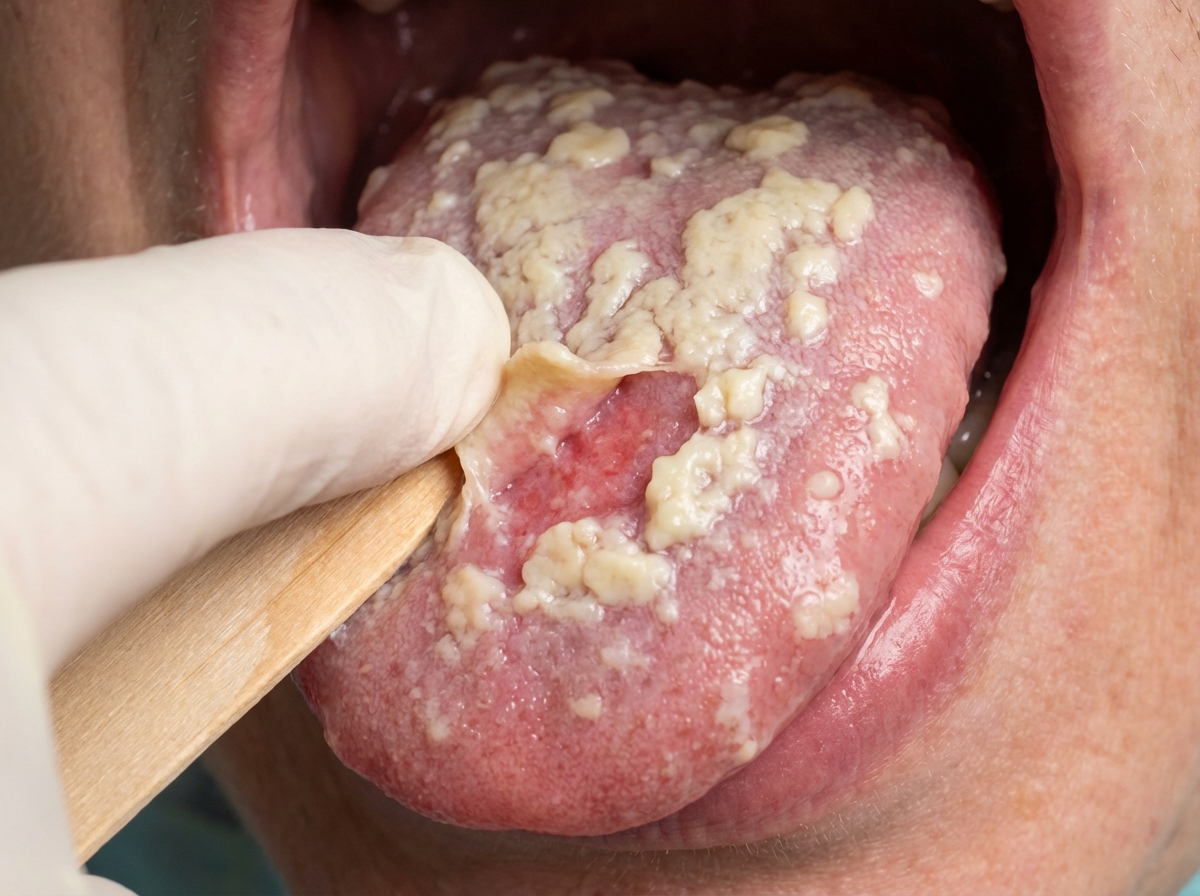
Which drug is used to treat oral thrush?
Angular stomatitis is associated with which of the following?
Candidal infection is not seen in which of the following conditions?
What is true about Thrush?
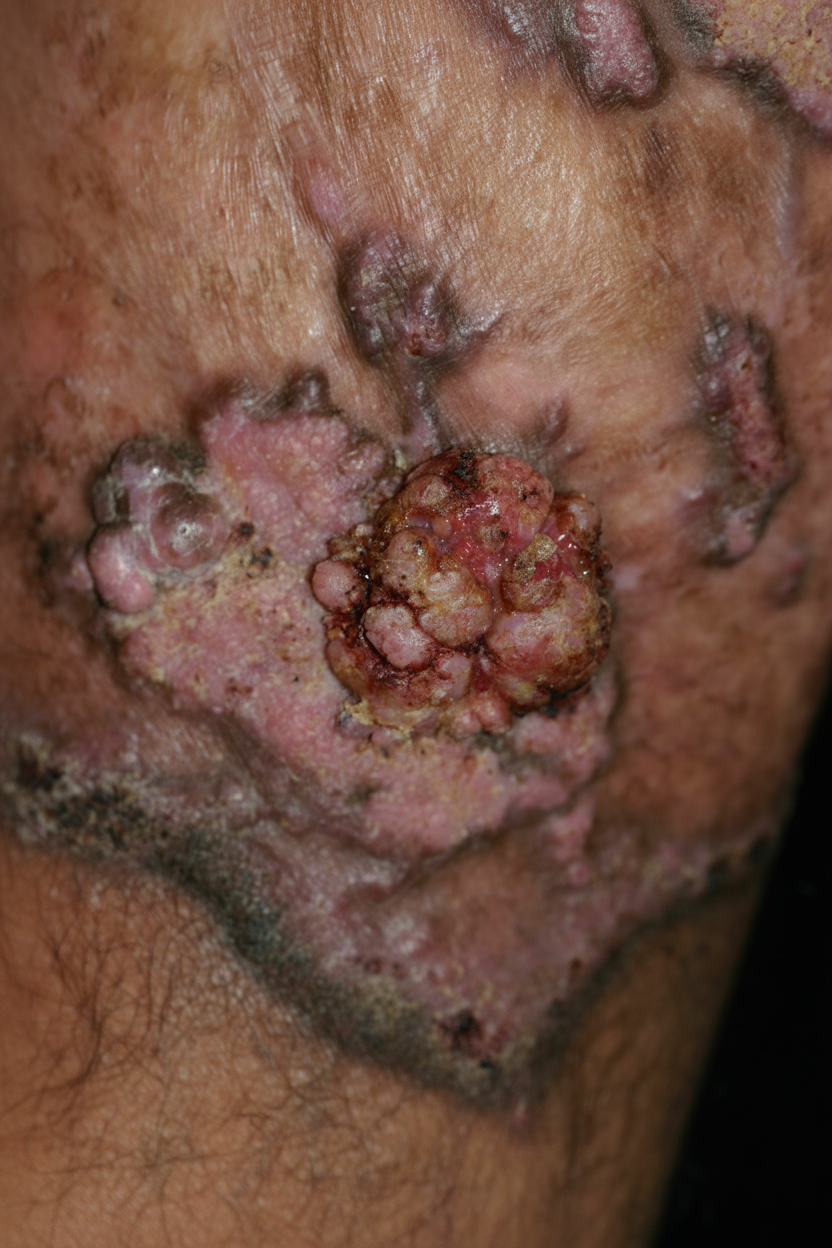
A 13-year-old girl presents with non-healing leg ulcers. Which of the following is likely to be the causative agent?
Black dot ringworm is caused by which of the following fungi?
What is tinea faciei?
What condition is described by the term "Karion"?
A teenage girl presents with multiple white macules on her upper trunk, showing scaling on scraping. KOH mount of the lesions revealed a specific organism. What is the most likely causative agent?
Explanation: **Explanation:** **Tinea unguium** (a form of onychomycosis) refers to a fungal infection of the nail plate caused by dermatophytes. Because the infection resides deep within the nail bed and the keratinized nail plate, topical antifungal agents often fail to penetrate effectively. Therefore, **systemic (oral) antifungal therapy** is the gold standard for treatment. **Why Itraconazole is correct:** Itraconazole is a broad-spectrum triazole that inhibits the enzyme lanosterol 14-α-demethylase, disrupting fungal cell membrane synthesis. It is highly lipophilic and keratophilic, allowing it to persist in the nail for months even after the drug is discontinued. In clinical practice, it is often administered as **"Pulse Therapy"** (200 mg twice daily for 7 days a month; 2 pulses for fingernails and 3 pulses for toenails) to minimize side effects while maintaining efficacy. **Why other options are incorrect:** * **Fluticasone:** This is a potent topical corticosteroid used for inflammatory conditions (like eczema or psoriasis). Using steroids on a fungal infection can lead to *Tinea incognito*, worsening the infection by suppressing the local immune response. * **Oleamine oil:** This is not a recognized antifungal treatment. While some oils have mild emollient properties, they have no role in eradicating dermatophyte infections of the nail. **High-Yield Clinical Pearls for NEET-PG:** * **Drug of Choice:** While Itraconazole is a standard option, **Terbinafine** (an allylamine) is often considered the first-line drug of choice for dermatophyte onychomycosis due to higher cure rates. * **Diagnosis:** The most sensitive test for diagnosis is **PAS (Periodic Acid-Schiff) stain** of nail clippings, though KOH mount is more commonly used in clinics. * **Monitoring:** When prescribing systemic antifungals (especially Itraconazole or Terbinafine), baseline **Liver Function Tests (LFTs)** should be monitored due to the risk of hepatotoxicity.
Explanation: ### Explanation **Correct Answer: C. Miconazole** **Medical Concept:** Oral thrush is a fungal infection of the oral mucosa caused by **Candida albicans**. It presents as creamy white, curd-like plaques that can be scraped off, leaving an erythematous (red) base. Since the causative agent is a fungus, treatment requires an **antifungal agent**. Miconazole is an imidazole derivative that works by inhibiting the enzyme *lanosterol 14α-demethylase*, thereby blocking the synthesis of ergosterol, a vital component of the fungal cell membrane. In clinical practice, miconazole is often administered as an oral mucoadhesive gel for local effect. **Why the other options are incorrect:** * **A. Clobetasol:** This is a potent **topical corticosteroid**. Using steroids in a fungal infection is contraindicated as they suppress local immunity, which would worsen oral candidiasis. * **B. Co-trimoxazole:** This is a combination **antibiotic** (Sulfamethoxazole + Trimethoprim). It is used for bacterial infections and *Pneumocystis jirovecii*, but it has no activity against *Candida*. * **D. Penicillin:** This is a **beta-lactam antibiotic** used for bacterial infections (e.g., Syphilis, Streptococcal pharyngitis). Antibiotics can actually *cause* oral thrush by disrupting the normal oral flora, allowing *Candida* to overgrow. **NEET-PG High-Yield Pearls:** * **First-line treatment:** Topical antifungals like **Nystatin** suspension (swish and swallow) or **Clotrimazole/Miconazole** troches/gels. * **Systemic treatment:** Oral **Fluconazole** is used for refractory cases or in immunocompromised patients (e.g., HIV/AIDS). * **Diagnosis:** KOH mount of the scrapings will show **pseudohyphae and budding yeast cells**. * **Predisposing factors:** Diabetes mellitus, inhaled corticosteroids (asthma patients), broad-spectrum antibiotics, and immunosuppression.
Explanation: **Explanation:** **Angular Stomatitis** (also known as Angular Cheilitis or Perleche) is a clinical condition characterized by erythema, maceration, and fissuring at the corners of the mouth. **Why Candidal infection is the correct answer:** The most common infectious cause of angular stomatitis is **Candida albicans**. The anatomical fold at the oral commissure often traps moisture (saliva), creating a warm, damp environment ideal for fungal proliferation. In clinical practice, it is frequently a mixed infection, but *Candida* is the primary pathogen identified in the majority of cases. **Analysis of Incorrect Options:** * **Adult population:** While it occurs in adults (especially those with ill-fitting dentures causing "sagging" of the commissures), it is equally common in **children** due to thumb-sucking, drooling, or frequent lip-licking. Therefore, it is not exclusively associated with adults. * **Streptococcus:** While *Staphylococcus aureus* and *Streptococcus* can cause secondary impetiginization of the fissures, they are less frequently the primary causative agent compared to *Candida*. * **Anaemia:** While nutritional deficiencies (Iron deficiency anemia, Vitamin B12, or Riboflavin deficiency) are significant **predisposing factors**, they are systemic conditions that lead to the clinical manifestation, whereas the question asks for the direct association, which is most strongly linked to the opportunistic fungal infection. **High-Yield Clinical Pearls for NEET-PG:** * **Predisposing factors:** Diabetes mellitus, immunosuppression, HIV, and riboflavin (B2) deficiency. * **Mechanical cause:** Loss of vertical dimension of the face (e.g., edentulous patients) leads to skin folds at the corners of the mouth, predisposing to moisture accumulation. * **Treatment:** Topical antifungals (Clotrimazole/Miconazole) are the mainstay, often combined with mild topical steroids or zinc oxide paste as a barrier.
Explanation: **Explanation:** The correct answer is **Geographic tongue** (Benign Migratory Glossitis). This is an inflammatory condition of unknown etiology, not an infectious one. It is characterized by the loss of filiform papillae, leading to smooth, red islands with "map-like" white borders that change position over time. While it may occasionally coexist with Candidiasis, *Candida* is not the causative agent. **Why the other options are incorrect:** * **Median Rhomboid Glossitis:** Historically thought to be a developmental defect, it is now recognized as a form of **Chronic Atrophic Candidiasis**. It presents as a persistent erythematous, rhomboid-shaped depapillated area in the midline of the posterior dorsal tongue. * **Oral Thrush (Acute Pseudomembranous Candidiasis):** This is the classic presentation of *Candida albicans* infection, characterized by "curd-like" white patches that **can be scraped off**, leaving an erythematous base. * **Denture Stomatitis (Chronic Atrophic Candidiasis):** Common in patients with ill-fitting dentures or poor oral hygiene. It presents as localized erythema of the palate beneath the denture base, heavily colonized by *Candida*. **High-Yield Clinical Pearls for NEET-PG:** * **Predisposing factors for Oral Candidiasis:** Diabetes mellitus, inhaled corticosteroids (asthma), broad-spectrum antibiotics, and HIV/AIDS (where it is an OIE). * **Diagnosis:** KOH mount shows budding yeast cells and **pseudohyphae**. * **Treatment:** Topical Nystatin or Clotrimazole; systemic Fluconazole for resistant or immunocompromised cases. * **Geographic Tongue Association:** Often associated with **Psoriasis** and Atopy.
Explanation: **Explanation:** **Oral Thrush (Pseudomembranous Candidiasis)** is a common fungal infection of the oral mucosa caused by the yeast-like fungus ***Candida albicans***. 1. **Why Option D is correct:** **Nystatin** is a polyene antifungal agent that works by binding to ergosterol in the fungal cell membrane, creating pores that lead to cell death. It is not absorbed from the gastrointestinal tract, making it the **topical treatment of choice** (as a "swish and swallow" suspension) for oral candidiasis. 2. **Why the other options are incorrect:** * **Option A:** Thrush is not exclusive to the elderly. It shows a **bimodal distribution**, commonly affecting infants (due to immature immunity) and the elderly. It also occurs in immunocompromised individuals (HIV/AIDS) or those using inhaled corticosteroids. * **Option B:** *Candida albicans* is a **fungus**, not a gram-negative bacterium. On Gram staining, it actually appears as **Gram-positive** budding yeast cells and pseudohyphae. * **Option C:** Clinically, thrush presents as **creamy white, curd-like patches** on the tongue or buccal mucosa. These are not proliferative (tumorous) lesions; rather, they are characterized by the fact that they **can be easily scraped off**, leaving behind an erythematous (red), friable base. **High-Yield NEET-PG Pearls:** * **Diagnostic Sign:** The ability to scrape off the white membrane distinguishes Thrush from **Leukoplakia** (which cannot be scraped off). * **Microscopy:** KOH mount shows budding yeast and **pseudohyphae**. * **Risk Factors:** Diabetes mellitus, broad-spectrum antibiotics, and xerostomia (dry mouth). * **Chronic Atrophic Candidiasis:** Also known as "Denture Stomatitis," it is the most common form of oral candidiasis in denture wearers.
Explanation: The correct answer is **A. Sporothrix**. ### **Explanation** The clinical presentation of non-healing ulcers, particularly in a young patient, points toward **Sporotrichosis** (Rose Gardener’s disease), caused by the dimorphic fungus *Sporothrix schenckii*. 1. **Mechanism:** Infection typically occurs via **traumatic inoculation** of soil, moss, or decaying vegetation into the skin. 2. **Clinical Presentation:** It begins as a painless papule at the site of inoculation (often the hand or leg), which eventually ulcerates. A classic high-yield feature is **lymphocutaneous spread**, where secondary nodules and ulcers develop along the lines of lymphatic drainage. ### **Analysis of Incorrect Options** * **B. Cladophora:** This is a genus of green algae, not a primary human pathogen. It is not associated with cutaneous ulcerations. * **C. Aspergillus:** While *Aspergillus* can cause cutaneous infections (Primary Cutaneous Aspergillosis), it typically occurs in severely immunocompromised patients (e.g., neutropenic) and presents as necrotic black eschars rather than simple chronic ulcers in a healthy 13-year-old. * **D. Bacteroides:** These are anaerobic bacteria primarily involved in intra-abdominal infections or abscesses. While they can be part of polymicrobial skin infections (like necrotizing fasciitis), they are not a classic cause of isolated, non-healing leg ulcers in this demographic. ### **NEET-PG High-Yield Pearls** * **Asteroid Bodies:** Histology may show a central fungal spore surrounded by eosinophilic radiating projections (Splendore-Hoeppli phenomenon). * **Culture:** At 25°C, it shows a "flower-like" or **rosette arrangement** of conidia. * **Drug of Choice:** **Itraconazole** is the gold standard. Historically, Saturated Solution of Potassium Iodide (SSKI) was used. * **Differential Diagnosis:** Always consider *Mycobacterium marinum* (Fish tank granuloma) if a similar lymphatic pattern is described.
Explanation: **Explanation:** **Black dot ringworm** is a clinical variant of **Tinea Capitis** characterized by the snapping of hair shafts at the level of the scalp surface, leaving behind small black dots within the follicular openings. 1. **Why Trichophyton is Correct:** This condition is caused by **endothrix** fungal infections, where the fungus grows *inside* the hair shaft, weakening it and making it brittle. The primary causative agents are **Trichophyton tonsurans** (most common worldwide) and **Trichophyton violaceum**. Because the infection is internal, the hair breaks flush with the scalp, creating the "black dot" appearance. 2. **Why Other Options are Incorrect:** * **Microsporum:** These species typically cause **ectothrix** infections (fungus grows on the outside of the hair shaft). This leads to "Grey Patch" Tinea Capitis, where hairs break 2–3 mm above the scalp, appearing dull and grayish, rather than black dots. * **Epidermophyton:** This genus (specifically *E. floccosum*) involves the skin and nails but **never infects the hair**. * **Candida:** While it causes various mucocutaneous infections (like oral thrush or intertrigo), it is not a cause of Tinea Capitis or the "black dot" clinical presentation. **High-Yield Clinical Pearls for NEET-PG:** * **Endothrix (Black Dot):** Trichophyton; **Negative** Wood’s lamp examination. * **Ectothrix (Grey Patch):** Microsporum; **Positive** Wood’s lamp (bright green fluorescence). * **Favus:** Caused by *T. schoenleinii*; characterized by **scutula** (cup-shaped crusts) and mousy odor. * **Kerion:** An inflammatory, boggy mass caused by a hypersensitivity reaction to zoophilic fungi (e.g., *T. verrucosum*).
Explanation: **Explanation:** **Tinea faciei** is a dermatophytosis involving the glabrous (hairless) skin of the face. The correct answer is **Option C** because the term specifically excludes the terminal hair-bearing areas of the face in adult males. It typically presents as well-demarcated, erythematous, pruritic, annular patches with central clearing and an active, scaling border. **Analysis of Options:** * **Option A & D:** These refer to **Tinea barbae**. Tinea barbae is a fungal infection specifically involving the beard and mustache areas of adolescent and adult males. While it occurs on the face, it is clinically and taxonomically distinct from tinea faciei due to the involvement of deep hair follicles. * **Option B:** This describes **Tinea imbricata**, caused by *Trichophyton concentricum*. It is characterized by multiple, overlapping, concentric rings of scales and is not synonymous with tinea faciei. **Clinical Pearls for NEET-PG:** * **Tinea Incognito:** This is a high-yield concept where tinea faciei is misdiagnosed as eczema or lupus and treated with topical steroids. This alters the classic morphology (losing the active border), making it difficult to diagnose. * **Common Pathogens:** The most frequent causative organisms are *T. rubrum*, *T. mentagrophytes*, and *Microsporum canis* (often via contact with pets). * **Differential Diagnosis:** Must be differentiated from Discoid Lupus Erythematosus (DLE), Seborrheic Dermatitis, and Psoriasis. * **Diagnosis:** Confirmed by **KOH mount** showing septate branching hyphae.
Explanation: **Explanation:** The term **Kerion** (often spelled "Karion" in some texts) refers to an inflammatory, boggy, and painful mass on the scalp. It is a severe inflammatory reaction to a **Dermatophytosis** (specifically Tinea Capitis). It occurs due to a delayed-type hypersensitivity reaction to the fungal elements, most commonly caused by zoophilic dermatophytes like *Trichophyton mentagrophytes* or *Microsporum canis*. Clinically, it presents with pustules, crusting, and easily pluckable hair, often leading to permanent scarring alopecia if not treated promptly with oral antifungals (e.g., Griseofulvin). **Analysis of Options:** * **Option A (Candida infection):** Candidiasis typically presents as intertrigo (satellite lesions) or oral thrush. While it is a fungal infection, it does not form a Kerion. * **Option B (Trichomoniasis):** This is a protozoal infection, usually causing vaginitis or urethritis, and is unrelated to fungal scalp pathology. * **Option C (Pityriasis):** Pityriasis versicolor is a superficial fungal infection caused by *Malassezia* furfur, presenting as hypo/hyperpigmented macules, not inflammatory masses. * **Option D (Dermatophytosis):** Correct. Kerion is a clinical variant of Tinea Capitis, which is a dermatophyte infection of the scalp hair follicles. **High-Yield Clinical Pearls for NEET-PG:** * **Favus:** Another variant of Tinea Capitis characterized by **scutula** (cup-shaped yellow crusts) and a "mousy odor," caused by *T. schoenleinii*. * **Black Dot Tinea:** Caused by endothrix organisms (*T. tonsurans*), where hair breaks at the surface. * **Diagnosis:** KOH mount shows spores/hyphae; Wood’s lamp shows fluorescence in certain species (e.g., *M. canis* glows bright green). * **Treatment:** Oral Griseofulvin remains the gold standard for Tinea Capitis/Kerion.
Explanation: ### Explanation **Correct Answer: A. Malassezia furfur** The clinical presentation of **hypopigmented (white) macules** on the upper trunk with fine scaling is classic for **Pityriasis versicolor** (Tinea versicolor). The characteristic "scaling on scraping" is known as the **Besnier’s sign** (or scratch sign). **Medical Concept:** *Malassezia furfur* is a lipophilic yeast that forms part of the normal skin flora. Under hot and humid conditions, it converts to a pathogenic mycelial form. It produces **azelaic acid**, which inhibits tyrosinase, leading to decreased melanin production and the characteristic hypopigmentation. On a KOH mount, it shows the pathognomonic **"Spaghetti and Meatballs" appearance** (short hyphae and thick-walled spores). **Why Incorrect Options are Wrong:** * **B. Tinea rubrum:** The most common cause of dermatophytosis (Tinea corporis/cruris). It typically presents as erythematous, itchy, annular plaques with a central clearing and an active scaling border, not isolated white macules. * **C. Epidermophyton floccosum:** A dermatophyte that affects skin and nails (never hair). It causes Tinea cruris and pedis, characterized by maceration or scaly plaques, rather than hypopigmented trunk lesions. * **D. Candida albicans:** Typically presents in intertriginous areas (skin folds) as erythematous "beefy red" plaques with characteristic **satellite lesions** and pustules. **High-Yield Clinical Pearls for NEET-PG:** * **Wood’s Lamp Examination:** Shows a characteristic **yellowish-gold fluorescence**. * **Microscopy:** KOH mount reveals short, curved hyphae and clusters of round yeast cells (Spaghetti and Meatballs). * **Treatment:** Topical antifungals (Ketoconazole shampoo, Selenium sulfide). Oral Fluconazole/Itraconazole is used for extensive cases. * **Culture:** Requires enrichment with lipids (e.g., olive oil) as *Malassezia* is lipophilic.
Dermatophytoses
Practice Questions
Tinea Versicolor
Practice Questions
Candidiasis
Practice Questions
Onychomycosis
Practice Questions
Subcutaneous Mycoses
Practice Questions
Systemic Mycoses with Cutaneous Manifestations
Practice Questions
Opportunistic Fungal Infections
Practice Questions
Mycetoma
Practice Questions
Tropical Fungal Infections
Practice Questions
Diagnosis of Fungal Infections
Practice Questions
Antifungal Therapy
Practice Questions
Preventive Strategies
Practice Questions
Get full access to all questions, explanations, and performance tracking.
Start For Free