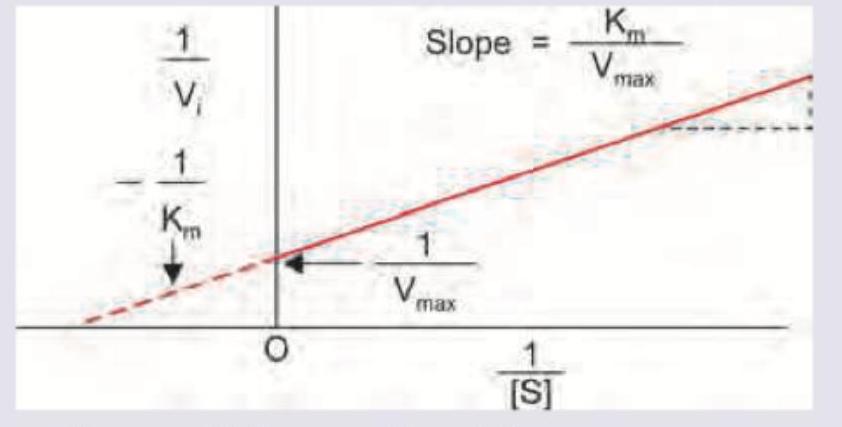
Name the plot dealing with kinetics of enzyme inhibition?
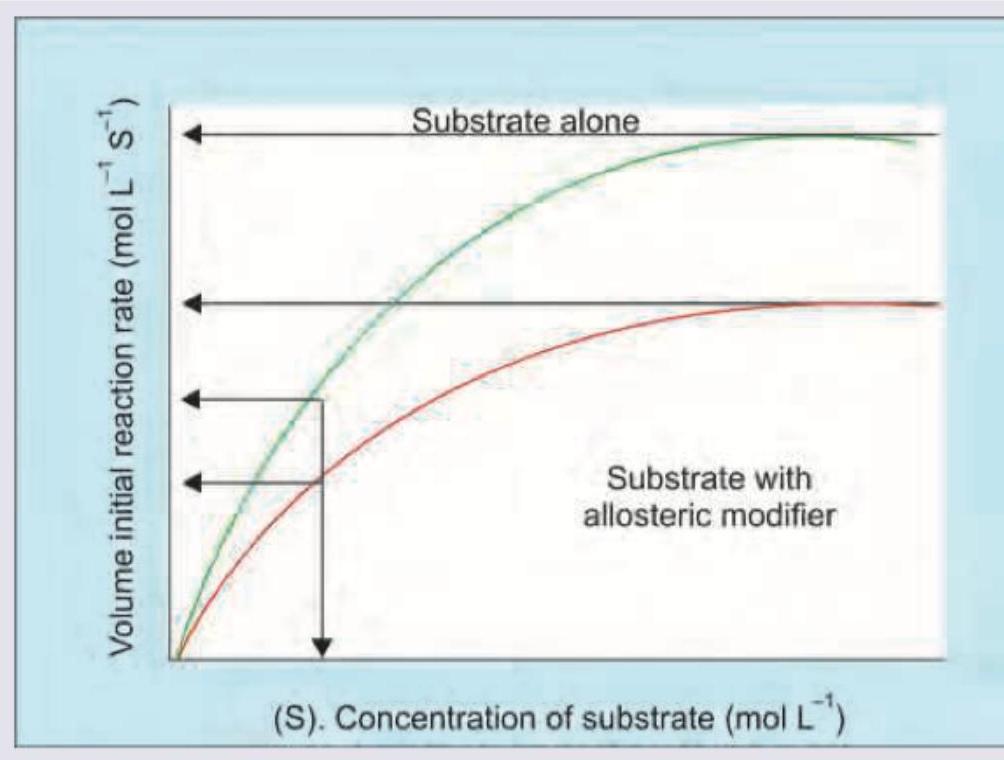
The curve below characterizes an allosteric enzyme system. Which of the following is correct about the given curve?
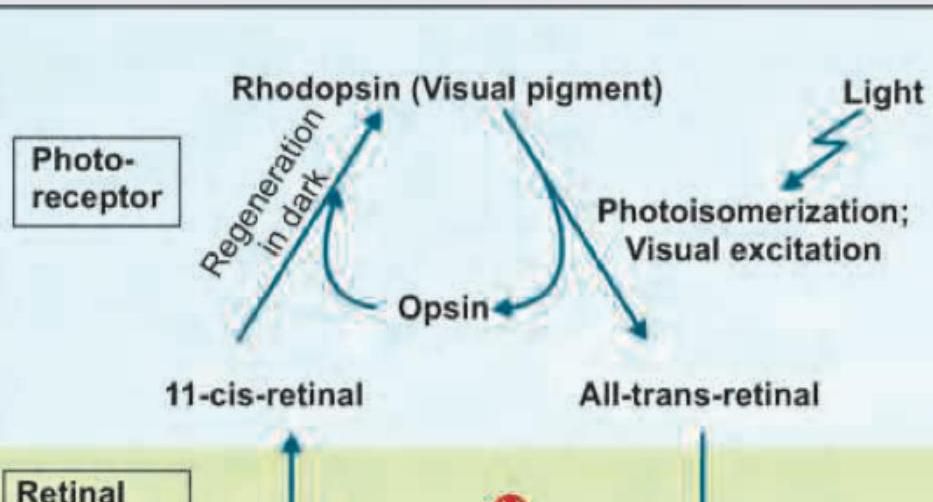
Name the enzyme involved in this cycle:
Identify the false statement regarding suicide inhibition
Fluoride, used in the collection of blood samples, inhibits which enzyme?
Zinc is cofactor of which enzyme?
Km increases, but Vmax remains same. This is which type of inhibition?
Enzymes, which play an important role in calcification, are:
Arsenic inhibits all except :
SGPT is found in:
Explanation: ***Dixon plot*** - The **Dixon plot** is specifically used to determine the type of enzyme inhibition and to calculate the **inhibition constant (Ki)**. - It plots the reciprocal reaction velocity (1/V) against the **inhibitor concentration ([I])** at different substrate concentrations. *Donnan-Gibbs equation plot* - The **Donnan-Gibbs equation** describes the distribution of charged particles across a semi-permeable membrane at equilibrium. - It is irrelevant to enzyme kinetics or inhibition. *Lineweaver-Burk plot* - While the Lineweaver-Burk plot is used in enzyme kinetics to determine **Km** and **Vmax** and analyze inhibition, it plots **1/V against 1/[S]**. - The image provided, showing 1/V against [I], is characteristic of a Dixon plot, not a Lineweaver-Burk plot which plots 1/V against 1/[S]. *Hanes-Woolf plot* - The **Hanes-Woolf plot** is another linearization of the Michaelis-Menten equation, plotting **[S]/V against [S]**. - Like the Lineweaver-Burk plot, it is used for analyzing general enzyme kinetics but not specifically for determining Ki from varying inhibitor concentrations in the manner shown.
Explanation: ***Modifier at allosteric site can affect the catalytic site*** - Allosteric inhibitors bind to a site other than the active site, causing a **conformational change** in the enzyme that **alters the activity of the catalytic site**, thereby reducing its affinity for the substrate or its maximal velocity, as seen by the lower reaction rate with the modifier. - The graph clearly shows that the presence of an **allosteric modifier** (red curve) leads to a lower initial reaction rate compared to when the substrate is alone (green curve), indicating that the modifier has an effect on the enzyme's function. *Substrate to enzyme is concentration independent* - Enzyme kinetics, including **Michaelis-Menten kinetics** and allosteric regulation, are fundamentally dependent on the **concentrations of substrate and enzyme**. - The graph itself shows reaction rate as a function of **substrate concentration**, demonstrating concentration dependency. *Allosteric modifier can be displaced by adding more substrate to the enzyme* - Allosteric modifiers bind to a **site distinct from the active site** and typically are **not competitively displaced** by increased substrate concentration. - While increasing substrate can eventually saturate the enzyme, it does not typically remove or displace the allosteric modifier from its binding site. *Allosteric modifier does not affect the velocity of reaction* - The graph explicitly demonstrates that the **allosteric modifier reduces the initial reaction rate** at all substrate concentrations shown until saturation. - This reduction in velocity is precisely how allosteric inhibition is characterized, contrasting with the "substrate alone" curve which shows a higher reaction rate.
Explanation: ***Retinal isomerase*** - This enzyme is crucial for the regeneration of **11-cis-retinal** from **all-trans-retinal** in the visual cycle. - It catalyzes the **isomerization** process, which is essential for rhodopsin to be reformed and ready to detect light again. *Retinol isomerase* - This term is a misnomer; the substrate that undergoes isomerization is retinal, not retinol. - While **retinol** is a precursor to retinal, it doesn't directly undergo the isomerization step that is vital for the visual cycle. *Transducin* - **Transducin** is a **G-protein** involved in signal transduction after light activates rhodopsin. - It binds to activated rhodopsin, triggering a cascade that ultimately leads to changes in membrane potential, but it is not an isomerase enzyme. *Gustducin* - **Gustducin** is a **G-protein** primarily involved in the **sensation of taste**, specifically bitter and sweet tastes. - It plays no role in the visual cycle or the isomerization of retinal.
Explanation: ***The inhibitor can bind with any site resulting in suicidal inhibition*** - Suicide inhibition, also known as **mechanism-based inhibition**, is highly specific and requires the inhibitor to bind to the **active site** of the enzyme. - The enzyme then catalyzes a transformation of the inhibitor into a **reactive intermediate** that irreversibly binds to the active site. *The binding of the enzyme to the substrate analogue is irreversible* - This statement is true; once the suicide inhibitor is metabolically activated by the enzyme, it forms a **covalent bond** with a residue in the active site. - This irreversible binding permanently inactivates the enzyme. *The inhibitor forms a product with the enzyme and the product inhibits it* - This statement is true; the enzyme's catalytic action converts the inhibitor (a substrate analogue) into a **highly reactive compound**. - This reactive product then binds covalently and irreversibly to the enzyme's **active site**, leading to its inactivation. *They are enzyme specific and used in rational drug design* - This statement is true; suicide inhibitors are designed to be highly specific for a particular enzyme, as they rely on that enzyme's catalytic mechanism for their activation. - Their specificity and irreversible action make them valuable tools in **drug discovery** and **rational drug design**, allowing for targeted inactivation of disease-related enzymes.
Explanation: ***Enolase*** - Fluoride is a potent inhibitor of **enolase**, an enzyme in the **glycolytic pathway**. - Inhibition of enolase prevents the conversion of **2-phosphoglycerate** to **phosphoenolpyruvate**, thereby halting glycolysis in collected blood samples. *Glucokinase* - Glucokinase is an enzyme primarily found in the **liver** and **pancreatic beta cells** that phosphorylates glucose. - Fluoride does not directly inhibit glucokinase; its primary site of action for preventing glycolysis in blood samples is enolase. *Glucose-6-phosphatase* - This enzyme is crucial for **glucose production** in the liver and kidneys, facilitating the dephosphorylation of **glucose-6-phosphate** to glucose. - Fluoride does not specifically target glucose-6-phosphatase as its mechanism for preventing glycolysis. *Hexokinase* - Hexokinase catalyzes the first step of glycolysis, phosphorylating **glucose to glucose-6-phosphate**. - While essential for glycolysis, hexokinase is not the primary target of fluoride's inhibitory action in blood collection, which specifically aims to stop the entire pathway further downstream at enolase.
Explanation: ***Carbonic anhydrase*** - **Zinc** is an essential cofactor for **carbonic anhydrase**, crucial for its enzymatic activity in catalyzing the reversible hydration of carbon dioxide. - This enzyme plays a vital role in processes like **pH regulation**, **carbon dioxide transport**, and **bicarbonate production** in various tissues. *Carboxylase* - Carboxylases typically require **biotin** as a cofactor for their activity, which involves the addition of a carboxyl group to a substrate. - Examples include **pyruvate carboxylase** and **acetyl-CoA carboxylase**, which are fundamental in metabolic pathways. *Kinase* - Kinases are enzymes that catalyze the transfer of a **phosphate group** from a high-energy donor molecule (like ATP) to a substrate. - Their activity often depends on cofactors like **magnesium (Mg2+)** or **manganese (Mn2+)**, not zinc. *Lysyl oxidase* - **Lysyl oxidase** is an enzyme that requires **copper** as a cofactor for its activity. - It plays a critical role in the **cross-linking of collagen and elastin**, essential for the integrity of connective tissues.
Explanation: ***Competitive*** - In **competitive inhibition**, the inhibitor **reversibly binds** to the **active site** of the enzyme, competing with the substrate. - This competition means that a higher substrate concentration is required to achieve half-maximal velocity, thus **increasing the Km**, while the maximum velocity (**Vmax**) remains unchanged if sufficient substrate is present. *Uncompetitive* - **Uncompetitive inhibition** involves the inhibitor binding only to the **enzyme-substrate complex**. - This type of inhibition typically leads to a **decrease in both Km and Vmax**. *Non-competitive* - In **non-competitive inhibition**, the inhibitor binds to a site other than the active site (allosteric site) on either the free enzyme or the enzyme-substrate complex. - This binding usually **decreases the Vmax** (due to reduced enzyme efficiency) but does not affect the Km (as substrate binding is not directly hindered). *Irreversible* - **Irreversible inhibition** involves the formation of a strong, often covalent, bond between the inhibitor and the enzyme, permanently inactivating it. - This type of inhibition effectively **reduces the concentration of active enzyme**, leading to a **decrease in Vmax** (as fewer enzyme molecules are available to catalyze the reaction) with varying effects on Km depending on the mechanism.
Explanation: ***Alkaline phosphatase and pyrophosphatase*** - **Alkaline phosphatase** plays a crucial role in bone mineralization by hydrolyzing pyrophosphate, thereby increasing the local concentration of **inorganic phosphate** necessary for calcium phosphate crystal formation. - **Pyrophosphatase** (often referring to the activity of alkaline phosphatase itself or other pyrophosphate-hydrolyzing enzymes) is critical because **pyrophosphate** is a potent inhibitor of calcification; its hydrolysis removes this inhibitor, allowing mineralization to proceed. *Pyrophosphatase and carbonic anhydrase* - While **pyrophosphatase** is involved, **carbonic anhydrase** primarily catalyzes the rapid interconversion of carbon dioxide and water to bicarbonate and protons. - Carbonic anhydrase is important for **pH regulation** and **bicarbonate transport**, but its direct role in calcification is not as central as alkaline phosphatase. *Enolase and Carbonic anhydrase* - **Enolase** is a key enzyme in glycolysis, involved in energy metabolism, and has no direct role in calcification. - As mentioned, **carbonic anhydrase** is involved in pH regulation and bicarbonate metabolism, not directly in the enzymatic cascade of calcification. *Alkaline phosphatase and catalase* - **Alkaline phosphatase** is indeed critical for calcification. - **Catalase** is an enzyme that catalyzes the decomposition of hydrogen peroxide to water and oxygen, protecting cells from **oxidative damage**, and has no role in calcification.
Explanation: ***Enolase*** - Enolase is **NOT directly inhibited** by arsenic's primary toxic mechanism. - Arsenic (arsenite) primarily exerts its toxic effects by binding to **sulfhydryl (-SH) groups** of enzymes and cofactors. - Enolase, a glycolytic enzyme that converts 2-phosphoglycerate to phosphoenolpyruvate, does not depend on sulfhydryl-containing cofactors and is therefore **not a direct target** of arsenic toxicity. - While arsenate can interfere with glycolysis at the **glyceraldehyde-3-phosphate dehydrogenase** step (forming unstable 1-arseno-3-phosphoglycerate), enolase itself remains functionally intact. *Lipoic acid* - Arsenic (arsenite) directly binds to the **sulfhydryl groups** of lipoic acid, inactivating this essential cofactor. - This binding disrupts the function of all lipoic acid-dependent enzyme complexes. *α-KG dehydrogenase* - The **α-ketoglutarate dehydrogenase complex** requires **lipoic acid** as a critical cofactor. - Arsenic's binding to lipoic acid's sulfhydryl groups **directly inhibits** this TCA cycle enzyme, impairing cellular respiration and ATP production. *PDH* - The **pyruvate dehydrogenase (PDH) complex** requires **lipoic acid** as an essential cofactor. - Arsenic directly inhibits PDH by binding to lipoic acid's sulfhydryl groups, blocking the conversion of pyruvate to acetyl-CoA and disrupting energy metabolism.
Explanation: ***Cytoplasm of hepatocytes*** - **SGPT** (serum glutamic-pyruvic transaminase), also known as **ALT** (alanine aminotransferase), is predominantly found in the **cytoplasm of hepatocytes**. - Its release into the bloodstream indicates **hepatocellular injury**, as the damaged cell membranes allow cytoplasmic enzymes to leak out. *Nucleus of hepatocytes* - The nucleus of hepatocytes primarily contains the cell's **genetic material** (DNA) and machinery for replication and transcription. - It does not contain significant amounts of **SGPT**. *Mitochondria of hepatocytes* - Mitochondria are responsible for **energy production** and contain enzymes like **SGOT** (AST), but not SGPT in significant quantities. - While mitochondrial damage can release other enzymes, **SGPT** is a cytoplasmic enzyme. *All of the options* - This statement is incorrect because **SGPT** is primarily located in the **cytoplasm** and not significantly distributed across all mentioned cellular compartments within hepatocytes. - Its cellular localization is specific and helps in differentiating various forms of liver injury.
Enzyme Classification and Nomenclature
Practice Questions
Enzyme Kinetics and Michaelis-Menten Equation
Practice Questions
Enzyme Inhibition: Competitive and Non-competitive
Practice Questions
Allosteric Regulation
Practice Questions
Coenzymes and Cofactors
Practice Questions
Isoenzymes and Clinical Significance
Practice Questions
Enzyme Regulation: Covalent Modification
Practice Questions
Enzyme Regulation: Zymogen Activation
Practice Questions
Enzyme Induction and Repression
Practice Questions
Ribozymes and Catalytic RNA
Practice Questions
Enzyme Diagnostic Applications
Practice Questions
Enzyme Therapy and Inhibitors as Drugs
Practice Questions
Get full access to all questions, explanations, and performance tracking.
Start For Free