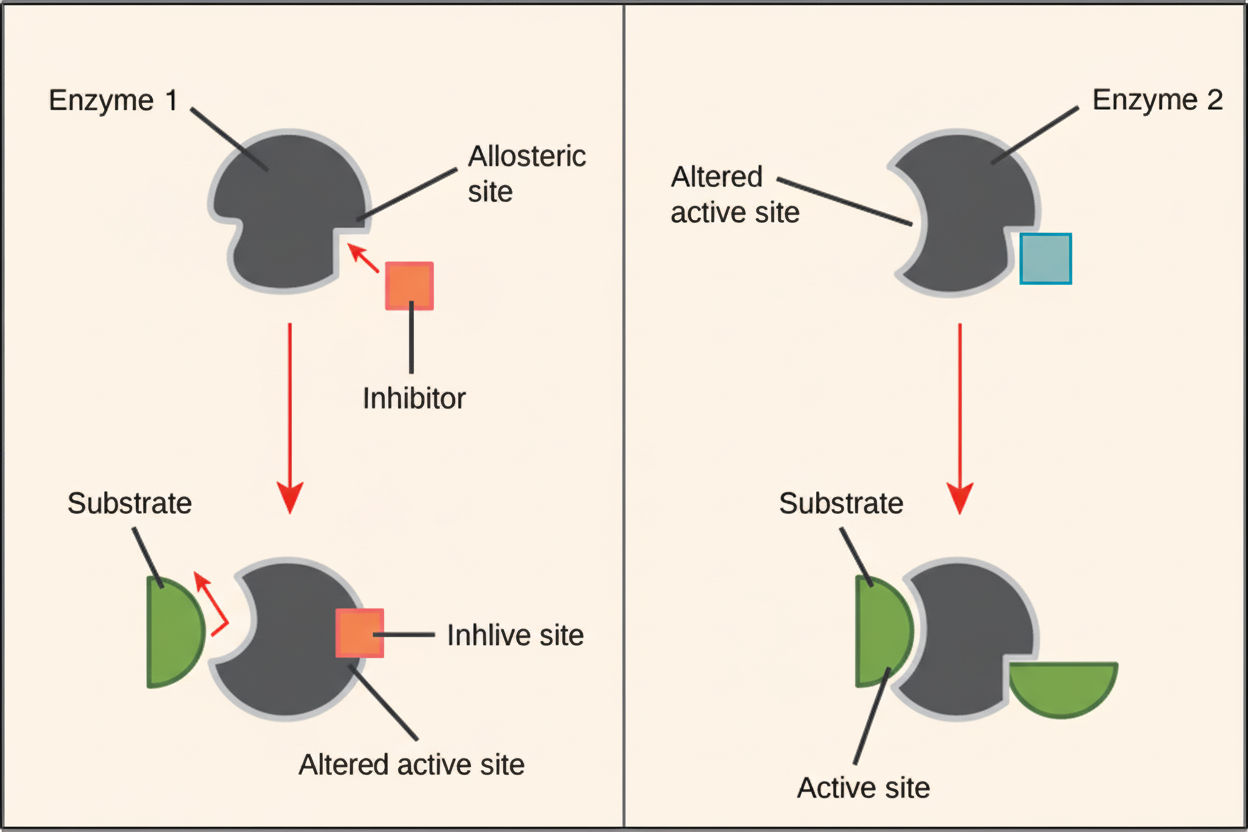
All the following coenzymes participate in the transfer of hydrogen and electrons, EXCEPT?
Which trace element is essential for the function of glutathione peroxidase?
Which of the following is an inhibitor of dihydrofolate reductase?
Which enzyme is typically absent in skeletal muscles?
Free radicals can be inactivated by the following enzymes EXCEPT?
The Rossmann fold associated NADH domain is found in which of the following enzymes?
Fluoride inhibits which enzyme?
Which of the following is responsible for respiratory burst and production of superoxide ions?
A 10-year-old boy presented with muscle weakness and fatigue with increased lead in the blood. Which enzyme production in the liver is increased?
What is the allosteric activator of NAG synthase?
Explanation: **Explanation:** The core concept here is distinguishing between **redox coenzymes** (involved in electron/hydrogen transfer) and **group-transfer coenzymes**. **Why PLP is the correct answer:** **Pyridoxal Phosphate (PLP)**, the active form of Vitamin B6, is primarily involved in **group transfer reactions**, specifically involving amino groups. It acts as a carrier for amino groups in **transamination**, decarboxylation, and deamination reactions. It does not participate in the transport of hydrogen or electrons. **Why the other options are incorrect:** * **NAD+ (Nicotinamide Adenine Dinucleotide):** Derived from Vitamin B3 (Niacin), it acts as a major electron acceptor in catabolic pathways (like Glycolysis and TCA cycle), accepting two electrons and one proton ($H^+$) to become NADH. * **NADP+:** Also derived from Niacin, it functions similarly to NAD+ but is primarily used in reductive biosynthesis (like fatty acid synthesis) and the HMP shunt. * **FAD (Flavin Adenine Dinucleotide):** Derived from Vitamin B2 (Riboflavin), it accepts two hydrogen atoms (two protons and two electrons) to become $FADH_2$, playing a crucial role in the Electron Transport Chain and the TCA cycle (Succinate dehydrogenase reaction). **High-Yield Clinical Pearls for NEET-PG:** * **PLP Requirement:** PLP is a mandatory cofactor for **ALT and AST** (Transaminases) and **Cystathionine beta-synthase** (deficiency leads to Homocystinuria). * **Drug Interaction:** **Isoniazid (INH)**, an anti-TB drug, inhibits pyridoxine kinase, leading to PLP deficiency and subsequent peripheral neuropathy. * **Redox Mnemonic:** NAD/FAD are "Hydrogen Taxis"—their primary job is to shuttle H+ and electrons to the mitochondria.
Explanation: **Explanation:** **Glutathione Peroxidase (GPx)** is a critical antioxidant enzyme that protects cells from oxidative damage by reducing lipid hydroperoxides and free hydrogen peroxide ($H_2O_2$) into water. The correct answer is **Selenium (Se)** because GPx is a **selenoprotein**. It contains the unique amino acid **selenocysteine** at its active site, which is often referred to as the "21st amino acid." Selenium is essential for the catalytic activity of the enzyme; without it, the body cannot effectively neutralize peroxides, leading to oxidative stress. **Analysis of Incorrect Options:** * **Copper (Cu):** While copper is a vital cofactor, it is associated with enzymes like **Superoxide Dismutase (Cytosolic Cu-Zn SOD)**, Cytochrome c Oxidase, and Tyrosinase, but not GPx. * **Iron (Fe):** Iron is the cofactor for **Catalase** (which also breaks down $H_2O_2$) and various cytochromes. It is not the primary trace element for GPx. * **Mercury (Hg):** Mercury is a heavy metal toxin. It actually **inhibits** selenium-dependent enzymes by binding to selenium with high affinity, thereby reducing antioxidant defenses. **Clinical Pearls for NEET-PG:** * **Keshan Disease:** A cardiomyopathy caused by Selenium deficiency, leading to decreased GPx activity. * **Selenocysteine:** Encoded by the **UGA stop codon** through a specialized recoding mechanism involving the SECIS element. * **Glutathione Reductase:** Do not confuse GPx with Glutathione Reductase, which requires **Riboflavin (Vitamin B2)** as a cofactor (FAD) and **NADPH** from the HMP shunt to regenerate reduced glutathione.
Explanation: ### Explanation **Correct Option: C. Methotrexate** Methotrexate is a structural analogue of folic acid. It acts as a **competitive inhibitor** of the enzyme **Dihydrofolate Reductase (DHFR)**. This enzyme is responsible for converting dihydrofolate (DHF) into tetrahydrofolate (THF), the active form of folic acid required for one-carbon metabolism and DNA synthesis (specifically the conversion of dUMP to dTMP). By inhibiting DHFR, methotrexate depletes the pool of THF, leading to the arrest of DNA synthesis and cell death, which explains its use as a potent anticancer and immunosuppressant drug. **Analysis of Incorrect Options:** * **A. Phenytoin:** This anticonvulsant causes folate deficiency not by enzyme inhibition, but by **inhibiting the intestinal absorption** of dietary folates (folate polyglutamates). * **B. Alcohol:** Ethanol interferes with folate metabolism primarily by impairing its **enterohepatic circulation** and increasing renal excretion, rather than direct DHFR inhibition. * **C. Yeast:** Yeast is actually a **rich dietary source of folic acid** (folates), making it a treatment/supplement rather than an inhibitor. **High-Yield Clinical Pearls for NEET-PG:** * **Antidote:** Methotrexate toxicity is managed with **Leucovorin (Folinic acid)**, which bypasses the blocked DHFR enzyme ("Leucovorin Rescue"). * **Other DHFR Inhibitors:** * **Trimethoprim:** Selective for bacterial DHFR. * **Pyrimethamine:** Selective for protozoal DHFR (used in Malaria/Toxoplasmosis). * **Side Effect:** A common side effect of DHFR inhibitors is **Megaloblastic Anemia** due to impaired DNA synthesis in RBC precursors.
Explanation: **Explanation:** The correct answer is **Glucose-6-phosphatase**. **1. Why Glucose-6-phosphatase is the correct answer:** Glucose-6-phosphatase is the enzyme responsible for converting Glucose-6-phosphate into free glucose. This enzyme is primarily located in the **liver** and **kidneys** (within the endoplasmic reticulum). Skeletal muscle lacks this enzyme; therefore, it cannot release free glucose into the bloodstream from its glycogen stores. Instead, the glucose-6-phosphate produced from muscle glycogenolysis enters the glycolytic pathway to provide ATP locally for muscle contraction. This ensures that muscle glycogen is a "selfish" fuel source, reserved strictly for the muscle's own energy needs. **2. Why other options are incorrect:** * **Creatine phosphokinase (CPK):** Highly abundant in skeletal muscle (CK-MM isoenzyme). It catalyzes the reversible transfer of phosphate between ATP and creatine, acting as a rapid energy buffer. * **Hexokinase:** The first enzyme of glycolysis in muscles. It phosphorylates glucose to glucose-6-phosphate, "trapping" it inside the cell. * **Phosphofructokinase (PFK-1):** The rate-limiting enzyme of glycolysis. It is present in high concentrations in skeletal muscle to regulate energy production. **3. Clinical Pearls & High-Yield Facts:** * **Von Gierke’s Disease (GSD Type I):** Caused by a deficiency of Glucose-6-phosphatase. It presents with severe fasting hypoglycemia and hepatomegaly because the liver cannot export glucose. * **Cori Cycle:** Since muscles cannot release glucose, they release **lactate** (during anaerobic exercise), which travels to the liver to be converted back into glucose via gluconeogenesis. * **Glucose-6-phosphatase** is also absent in the **brain**, which is why the brain cannot contribute to blood glucose levels.
Explanation: ### Explanation The core concept here is the distinction between **Antioxidant Enzymes** (which neutralize reactive oxygen species) and **Pro-oxidant Enzymes** (which generate them to kill pathogens). **Why Myeloperoxidase (MPO) is the correct answer:** Unlike the other options, Myeloperoxidase is **not** an antioxidant. It is a lysosomal enzyme found in the primary granules of neutrophils. During the "Respiratory Burst," MPO catalyzes the reaction between hydrogen peroxide ($H_2O_2$) and chloride ions ($Cl^-$) to produce **Hypochlorous acid (HOCl)**—the active ingredient in bleach. HOCl is a potent oxidant used to destroy bacteria; thus, MPO **generates** free radicals rather than inactivating them. **Why the other options are incorrect:** * **Superoxide Dismutase (SOD):** This is the first line of defense. It converts the highly reactive Superoxide radical ($O_2^{\cdot-}$) into less toxic Hydrogen Peroxide ($H_2O_2$). * **Catalase:** Found in peroxisomes, it converts $H_2O_2$ into water and oxygen, preventing the formation of the deadly hydroxyl radical. * **Glutathione Peroxidase:** This enzyme uses reduced glutathione (GSH) to neutralize $H_2O_2$ and lipid peroxides. It is crucial for protecting RBC membranes from oxidative damage. **High-Yield Clinical Pearls for NEET-PG:** 1. **MPO Deficiency:** Leads to impaired bacterial killing, but clinically, patients are often asymptomatic except for a predisposition to *Candida* infections. 2. **Glutathione Peroxidase** requires **Selenium** as a necessary cofactor (frequently asked). 3. **Superoxide Dismutase** requires **Copper, Zinc, or Manganese** depending on its cellular location (Cytosolic vs. Mitochondrial). 4. **Fenton Reaction:** The non-enzymatic conversion of $H_2O_2$ to the Hydroxyl radical ($\cdot OH$) in the presence of $Fe^{2+}$. This is the most damaging free radical in biological systems.
Explanation: **Explanation:** The **Rossmann fold** is a classic structural motif found in proteins that bind nucleotides, particularly the cofactor **Nicotinamide Adenine Dinucleotide (NAD+/NADH)**. Structurally, it consists of an alternating series of beta-strands and alpha-helices (beta-alpha-beta-alpha-beta units). **Lactate Dehydrogenase (LDH)** is the prototypical example of an enzyme containing the Rossmann fold. In LDH, this domain specifically facilitates the binding of NAD+, allowing the enzyme to catalyze the reversible conversion of pyruvate to lactate. This motif is essential for positioning the cofactor correctly for hydride transfer. **Analysis of Incorrect Options:** * **Pyruvate Dehydrogenase (PDH):** This is a multi-enzyme complex requiring five cofactors (TPP, Lipoate, CoA, FAD, and NAD+). While it uses NAD+, its structural domains are distinct and more complex than the classic Rossmann fold seen in simple dehydrogenases. * **Acetyl CoA Dehydrogenase:** This enzyme is involved in beta-oxidation and primarily utilizes **FAD** as a prosthetic group, not NADH, and lacks the characteristic Rossmann fold for NAD binding. * **Isocitrate Dehydrogenase (ICDH):** Although it uses NAD+ or NADP+, its nucleotide-binding site is structurally distinct from the classic Rossmann fold found in LDH. **High-Yield Facts for NEET-PG:** * **Rossmann Fold:** Always associate this with **nucleotide binding** (NAD, FAD, NADP). * **LDH Isoenzymes:** LDH-1 (Heart/RBCs) and LDH-5 (Liver/Muscle) are clinically significant markers for MI and liver injury, respectively. * **Metabolic Role:** LDH is crucial for regenerating NAD+ under anaerobic conditions to allow glycolysis to continue.
Explanation: **Explanation:** **1. Why Enolase is the Correct Answer:** Fluoride is a potent inhibitor of **Enolase**, the ninth enzyme in the glycolytic pathway. Enolase converts 2-phosphoglycerate (2-PG) to phosphoenolpyruvate (PEP). The mechanism of inhibition involves the formation of a complex: **Magnesium-Fluorophosphate**. Since Enolase requires magnesium ions ($Mg^{2+}$) as a cofactor for its activity, the fluoride ions sequester the magnesium, effectively halting glycolysis. **2. Analysis of Incorrect Options:** * **Aldolase:** This enzyme cleaves Fructose-1,6-bisphosphate into DHAP and Glyceraldehyde-3-phosphate. It is not inhibited by fluoride; however, it can be inhibited by chelating agents like EDTA in certain bacterial species. * **Aromatase:** This is a cytochrome P450 enzyme responsible for the conversion of androgens to estrogens. It is inhibited by drugs like Letrozole and Anastrozole (used in breast cancer treatment), not fluoride. **3. Clinical Pearls & High-Yield Facts for NEET-PG:** * **Blood Sample Collection:** In clinical practice, fluoride (as Sodium Fluoride) is added to grey-topped vacutainers used for blood glucose estimation. It prevents "in vitro" glycolysis by RBCs, ensuring the glucose level measured reflects the patient's actual blood sugar at the time of draw. * **Anticoagulant Pairing:** Sodium fluoride is usually paired with **Potassium Oxalate** (which acts as the anticoagulant by chelating calcium). * **Water Fluoridation:** While high doses inhibit enzymes, low levels of fluoride (1 ppm) are used in water fluoridation to prevent dental caries by converting hydroxyapatite in teeth to the more acid-resistant **fluoroapatite**.
Explanation: Explanation: 1. Why NADPH Oxidase is Correct: Respiratory burst (or oxidative burst) is a critical process in phagocytes (neutrophils and macrophages) used to kill ingested pathogens. The enzyme NADPH oxidase, located in the phagosomal membrane, catalyzes the transfer of an electron from NADPH to molecular oxygen ($O_2$). This reaction produces the superoxide anion ($O_2^•-$), which is the "starting gun" for the production of other reactive oxygen species (ROS) like hydrogen peroxide and hypochlorite [1]. 2. Why the Other Options are Incorrect: * Hydrolases (A): These are enzymes that catalyze the cleavage of bonds (like peptide or glycosidic bonds) by adding water. They are involved in digestion and lysosomal degradation, not the production of free radicals. * Catalase (B): This is an antioxidant enzyme that breaks down hydrogen peroxide ($H_2O_2$) into water and oxygen [1]. It protects cells from oxidative damage rather than initiating the respiratory burst [2]. * Peroxidase (C): While Myeloperoxidase (MPO) is involved in the respiratory burst pathway, its role is to convert $H_2O_2$ into hypochlorous acid (HOCl/bleach) [1]. It does not produce the initial superoxide ion. 3. Clinical Pearls & High-Yield Facts: * Chronic Granulomatous Disease (CGD): A high-yield deficiency of NADPH oxidase. Patients suffer from recurrent infections with catalase-positive organisms (e.g., *S. aureus, Aspergillus*) because they cannot produce their own ROS. * Nitroblue Tetrazolium (NBT) Test: Used to diagnose CGD. Normal cells turn blue (positive), while CGD cells remain colorless (negative). * Reaction Formula: $NADPH + 2O_2 \xrightarrow{\text{NADPH Oxidase}} NADP^+ + 2O_2^•- + H^+$
Explanation: **Explanation:** The correct answer is **ALA synthase**. This question tests the understanding of the heme biosynthetic pathway and the mechanism of lead poisoning. **Why ALA Synthase is correct:** Lead poisoning (Plumbism) primarily inhibits two enzymes in the heme synthesis pathway: **ALA dehydratase** (also known as Porphobilinogen synthase) and **Ferrochelatase**. When ALA dehydratase is inhibited, the production of heme decreases. Heme normally acts as a feedback inhibitor of **ALA synthase (ALAS-1)**, the rate-limiting enzyme of the pathway. Therefore, the deficiency of heme leads to the **derepression (upregulation)** of ALA synthase, causing an increase in its production and a subsequent accumulation of delta-aminolevulinic acid (ALA) in the blood and urine. **Why the other options are incorrect:** * **Ferrochelatase:** This enzyme is directly **inhibited** by lead, not increased. Its inhibition leads to the accumulation of Protoporphyrin IX (often measured as Zinc Protoporphyrin). * **Heme oxygenase:** This is the rate-limiting enzyme of **heme degradation** (converting heme to biliverdin). It is not the primary enzyme induced in response to lead-induced heme deficiency. * **Porphobilinogen deaminase:** This enzyme is involved in Acute Intermittent Porphyria. It is not specifically increased or inhibited by lead. **Clinical Pearls for NEET-PG:** * **Lead Poisoning Markers:** Increased urinary **delta-ALA** and increased **Zinc Protoporphyrin** (ZPP) in RBCs. * **Basophilic Stippling:** A classic peripheral smear finding in lead poisoning due to inhibition of pyrimidine 5'-nucleotidase. * **Clinical Signs:** "ABCDEF" – **A**nemia (Sideroblastic), **B**urton lines (gingival), **C**olic, **D**emyelination (wrist/foot drop), **E**ncephalopathy, **F**ree erythrocyte protoporphyrin. * **Antidotes:** Succimer (oral, preferred in children), CaNa₂EDTA, and Dimercaprol (BAL).
Explanation: **Explanation:** The correct answer is **Arginine**. **1. Why Arginine is Correct:** The Urea Cycle is the primary pathway for disposing of toxic ammonia. The rate-limiting step of this cycle is catalyzed by **Carbamoyl Phosphate Synthetase I (CPS-I)**. However, CPS-I is inactive without its obligatory allosteric activator, **N-acetylglutamate (NAG)**. NAG is synthesized from Acetyl-CoA and Glutamate by the enzyme **NAG Synthase**. **Arginine** acts as a potent allosteric activator of NAG Synthase. Therefore, when arginine levels are high (signaling an abundance of amino acids), it stimulates the production of NAG, which in turn activates CPS-I, accelerating the urea cycle to process the nitrogen load. **2. Why Other Options are Incorrect:** * **Aspartate:** This is a substrate in the urea cycle (combining with citrulline to form argininosuccinate), not an activator of NAG synthase. * **CPS-I:** This is the enzyme activated *by* NAG, not an activator of NAG synthase itself. * **CPS-II:** This is the rate-limiting enzyme of **Pyrimidine synthesis** located in the cytosol. It is inhibited by UTP and activated by PRPP; it has no role in the urea cycle or NAG regulation. **Clinical Pearls & High-Yield Facts:** * **Obligatory Activator:** Remember that CPS-I has an absolute requirement for NAG. Without NAG, urea synthesis ceases, leading to hyperammonemia. * **NAGS Deficiency:** A rare genetic defect in NAG Synthase presents clinically identical to CPS-I deficiency. It is treated with **Carglumic acid** (a synthetic analog of NAG). * **Mnemonic:** **A**rginine **A**ctivates the **A**ctivator (NAG).
Enzyme Classification and Nomenclature
Practice Questions
Enzyme Kinetics and Michaelis-Menten Equation
Practice Questions
Enzyme Inhibition: Competitive and Non-competitive
Practice Questions
Allosteric Regulation
Practice Questions
Coenzymes and Cofactors
Practice Questions
Isoenzymes and Clinical Significance
Practice Questions
Enzyme Regulation: Covalent Modification
Practice Questions
Enzyme Regulation: Zymogen Activation
Practice Questions
Enzyme Induction and Repression
Practice Questions
Ribozymes and Catalytic RNA
Practice Questions
Enzyme Diagnostic Applications
Practice Questions
Enzyme Therapy and Inhibitors as Drugs
Practice Questions
Get full access to all questions, explanations, and performance tracking.
Start For Free