Which coenzyme is essential for tissue respiration?
Serum gamma glutamyl transpeptidase is maximally increased in which of the following conditions?
In acute intermittent porphyria, which enzyme is deficient?
What is true about competitive inhibition of an enzyme?
Pyruvate dehydrogenase complex contains all of the following cofactors except:
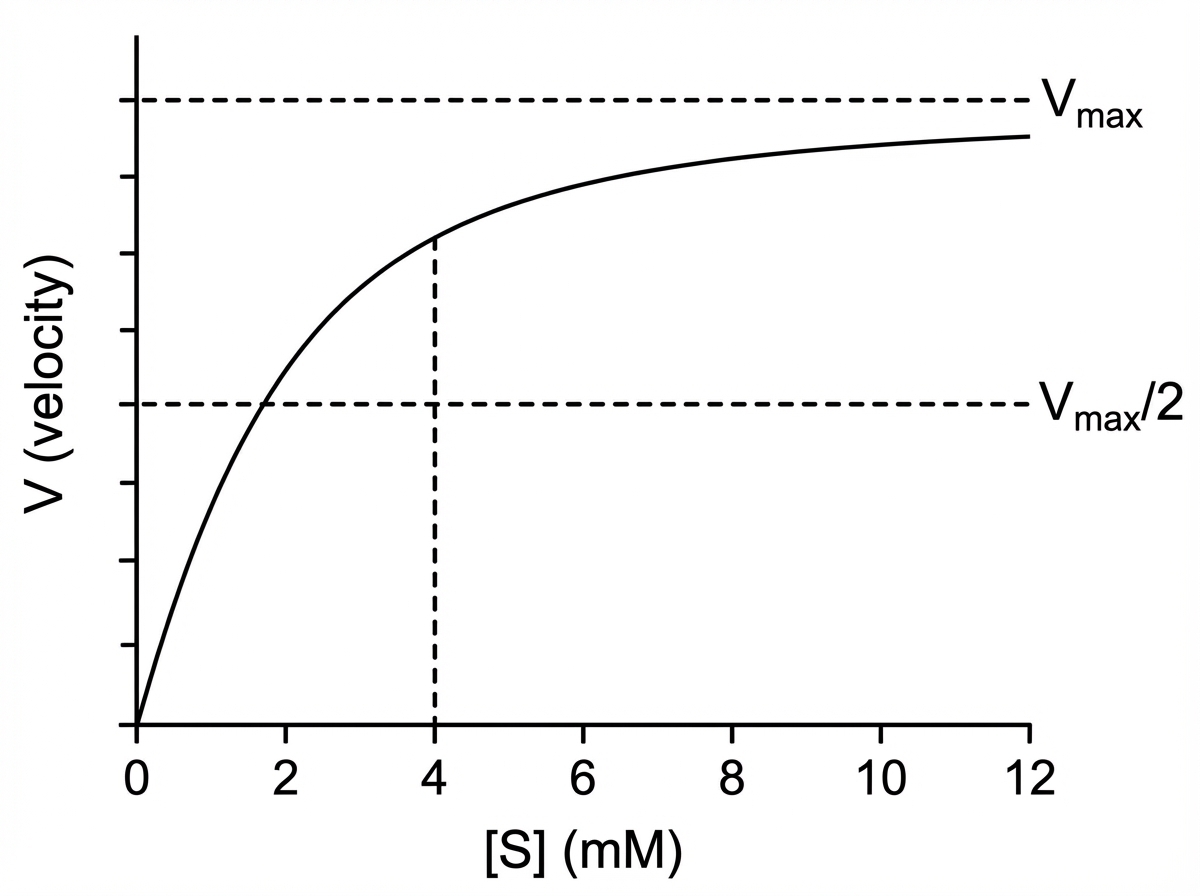
Which one of the following statements about Km value is true?
Which of the following is the major anaplerotic enzyme?
Which of the following is a lyase?
Selenium is a component of which enzyme?
What type of enzyme is Ribonuclease-P?
Explanation: **Explanation:** **Coenzyme Q (Ubiquinone)** is the correct answer because it is a vital component of the **Electron Transport Chain (ETC)**, which is the final pathway of tissue respiration (oxidative phosphorylation) occurring in the inner mitochondrial membrane. It acts as a mobile electron carrier, transferring electrons from Complex I (NADH dehydrogenase) and Complex II (Succinate dehydrogenase) to Complex III (Cytochrome bc1 complex). Its unique lipid-soluble nature allows it to diffuse freely within the mitochondrial membrane, facilitating the flow of electrons necessary for ATP production. **Analysis of Incorrect Options:** * **Coenzyme A (CoA):** Derived from Vitamin B5 (Pantothenic acid), it functions as a carrier of acyl groups (e.g., Acetyl-CoA). While it is essential for the TCA cycle and fatty acid metabolism, it does not directly participate in the respiratory chain electron transfer. * **NADP:** Primarily involved in **reductive biosynthesis** (e.g., fatty acid and steroid synthesis) and maintaining reduced glutathione in the HMP shunt. It is not a component of the mitochondrial respiratory chain. * **Cobamide:** This is the active coenzyme form of **Vitamin B12**. It is essential for DNA synthesis (via methionine synthase) and the conversion of methylmalonyl-CoA to succinyl-CoA, but not for tissue respiration. **High-Yield Clinical Pearls for NEET-PG:** * **Statins and CoQ10:** HMG-CoA reductase inhibitors (Statins) inhibit the synthesis of mevalonate, a precursor for both cholesterol and Coenzyme Q. This deficiency is a hypothesized cause of statin-induced myopathy. * **Inhibitors:** Drugs like **Rotenone** and **Amobarbital** inhibit electron transfer from Complex I to Coenzyme Q. * **Structure:** Coenzyme Q contains a quinone ring with a long isoprenoid side chain (10 units in humans, hence CoQ10).
Explanation: **Explanation:** **Gamma-glutamyl transpeptidase (GGT)** is a membrane-bound enzyme primarily found in the liver, biliary tract, and kidneys. While it is a sensitive marker for hepatobiliary disease, its most significant clinical utility in NEET-PG contexts is its role as a marker for chronic alcohol consumption. **Why Alcoholism is Correct:** Alcohol acts as a potent **enzyme inducer** of GGT in the hepatocytes. Even in the absence of significant liver damage, chronic alcohol intake stimulates the synthesis of GGT. It is the most sensitive indicator of alcohol abuse, as levels rise significantly (often the maximal increase seen across pathologies) and remain elevated for weeks after cessation. **Analysis of Incorrect Options:** * **Pancreatitis:** While GGT is present in the pancreas, it is not the primary marker. Amylase and Lipase are the diagnostic gold standards. * **Myocardial Infarction (MI):** GGT is not a cardiac marker. Historical markers for MI include CK-MB, LDH, and AST, while Troponins are the current standard. * **Hepatitis:** GGT levels do rise in hepatitis due to hepatocellular damage, but the increase is usually modest compared to the massive elevations of Transaminases (ALT/AST). **High-Yield Clinical Pearls for NEET-PG:** 1. **GGT vs. ALP:** Both are elevated in obstructive jaundice (cholestasis). However, GGT is **normal in bone disease**, whereas Alkaline Phosphatase (ALP) is elevated. Use GGT to differentiate if an elevated ALP is of hepatic or skeletal origin. 2. **Sensitivity:** GGT is the most sensitive liver enzyme for detecting early biliary obstruction and alcohol ingestion. 3. **Microsomal Induction:** Other drugs like phenytoin and phenobarbital can also induce GGT, similar to alcohol.
Explanation: **Explanation:** **Acute Intermittent Porphyria (AIP)** is an autosomal dominant metabolic disorder caused by a deficiency in the enzyme **Uroporphyrinogen I synthase**, also known as **Porphobilinogen (PBG) deaminase** or Hydroxymethylbilane synthase. 1. **Why the correct answer is right:** In the heme biosynthesis pathway, PBG deaminase converts four molecules of porphobilinogen into a linear tetrapyrrole called hydroxymethylbilane. A deficiency in this enzyme leads to the accumulation of upstream precursors, specifically **delta-aminolevulinic acid (ALA)** and **porphobilinogen (PBG)**. These accumulated precursors are neurotoxic, leading to the classic clinical triad of abdominal pain, neuropsychiatric symptoms, and peripheral neuropathy. 2. **Why the incorrect options are wrong:** * **ALA Synthase (Option A):** This is the rate-limiting enzyme of heme synthesis. Its deficiency is not associated with AIP; rather, its induction (by drugs like Barbiturates) precipitates AIP attacks. * **Uroporphyrinogen II synthase (Option B):** This enzyme does not exist in the human heme biosynthetic pathway. * **Uroporphyrinogen III synthase (Option D):** Deficiency of this enzyme leads to **Congenital Erythropoietic Porphyria (Gunther’s disease)**, characterized by extreme photosensitivity and erythrodontia. **High-Yield Clinical Pearls for NEET-PG:** * **The "5 Ps" of AIP:** **P**ainful abdomen, **P**ort-wine colored urine (on standing), **P**olyneuropathy, **P**sychological disturbances, and **P**recipitated by drugs (Cytochrome P450 inducers). * **Key Diagnostic Feature:** Urine turns dark/red upon exposure to light and air due to the oxidation of PBG to porphobilin. * **Management:** Treatment involves IV Hemin or Glucose (which inhibits ALA synthase via feedback) to reduce precursor production. * **Crucial Note:** Unlike most other porphyrias, AIP presents **without** cutaneous photosensitivity.
Explanation: In competitive inhibition, the inhibitor structurally resembles the substrate and competes for the same **active site** on the enzyme. ### 1. Why the correct answer (A) is right: * **Vmax remains unchanged:** Because the inhibitor and substrate compete for the same site, the inhibition can be overcome by increasing the substrate concentration. At infinitely high substrate concentrations, the substrate outcompetes the inhibitor, allowing the enzyme to reach its maximum velocity ($V_{max}$). * **Km increases:** $K_m$ (Michaelis constant) represents the substrate concentration at which the reaction velocity is half of $V_{max}$. Since the inhibitor interferes with substrate binding, a higher concentration of substrate is required to achieve the same velocity, indicating a **decreased affinity** of the enzyme for its substrate. ### 2. Why the incorrect options are wrong: * **Option B:** $K_m$ never decreases in inhibition; a decrease would imply increased affinity. * **Option C:** This describes **Non-competitive inhibition**, where the inhibitor binds to an allosteric site, reducing the overall catalytic power ($V_{max}$ ↓) regardless of substrate concentration, while the binding affinity ($K_m$) remains unchanged. * **Option D:** This would imply no inhibition is occurring. ### 3. High-Yield Clinical Pearls for NEET-PG: * **Lineweaver-Burk Plot:** In competitive inhibition, the lines intersect on the **Y-axis** ($1/V_{max}$ is constant). * **Classic Examples:** * **Statins** (HMG-CoA Reductase inhibitors) * **Methanol poisoning treatment:** Ethanol competes with methanol for Alcohol Dehydrogenase. * **Sulfa drugs:** Compete with PABA for dihydropteroate synthase. * **Malonate:** Competes with succinate for Succinate Dehydrogenase (TCA cycle).
Explanation: The **Pyruvate Dehydrogenase (PDH) Complex** is a multi-enzyme system that catalyzes the oxidative decarboxylation of pyruvate into Acetyl-CoA, linking glycolysis to the TCA cycle. ### Why Biotin is the Correct Answer **Biotin (Vitamin B7)** is a cofactor involved in **carboxylation** reactions (adding CO₂). It is a required coenzyme for enzymes like Pyruvate Carboxylase (which converts pyruvate to oxaloacetate), but it is **not** part of the PDH complex. PDH is a decarboxylation reaction, not a carboxylation reaction. ### Why the Other Options are Incorrect The PDH complex consists of three enzymes (E1, E2, E3) and requires **five** specific cofactors (Mnemonic: **"Tender Loving Care For Nancy"**): * **T**hiamine pyrophosphate (TPP/Vitamin B1) – Required by E1. * **L**ipoic acid – Required by E2. * **C**oenzyme A (**CoA**/Vitamin B5) – Required by E2 (Option D). * **F**lavin adenine dinucleotide (**FAD**/Vitamin B2) – Required by E3 (Option C). * **N**icotinamide adenine dinucleotide (**NAD+**/Vitamin B3) – Required by E3 (Option B). ### High-Yield Clinical Pearls for NEET-PG * **Arsenic Poisoning:** Arsenite inhibits the PDH complex by binding to the SH groups of **Lipoic acid**, leading to lactic acidosis and neurological symptoms. * **Thiamine Deficiency:** Since TPP is a vital cofactor, deficiency (as seen in Wernicke-Korsakoff syndrome) leads to PDH failure, severely affecting ATP production in the brain and heart. * **Location:** The PDH complex is located in the **mitochondrial matrix**. * **Regulation:** PDH is inhibited by its products (Acetyl-CoA and NADH) and by phosphorylation via PDH kinase.
Explanation: ### Explanation **1. Why Option C is Correct:** The Michaelis constant ($K_m$) is a characteristic property of an enzyme-substrate pair under specific conditions (pH, temperature). It represents the **intrinsic affinity** of the enzyme for its substrate. Since $K_m$ is a constant derived from rate constants ($k_{-1} + k_2 / k_1$), it does not change regardless of whether you have a small amount or a large amount of the enzyme. While the $V_{max}$ (maximal velocity) increases proportionally with enzyme concentration, the $K_m$ remains fixed. **2. Analysis of Incorrect Options:** * **Option A:** This is a common distractor. $K_m$ is the substrate concentration at which the reaction velocity is **half-maximal** ($1/2 V_{max}$). While this describes the *relationship*, the question asks for the most definitive "true" statement regarding its nature. (Note: In many contexts, A is also considered a definition, but in competitive exams like NEET-PG, the independence of $K_m$ from enzyme concentration is a higher-yield biochemical principle). * **Option B:** This statement is actually **true** in general biochemistry. However, in the context of this specific question (often sourced from standard textbooks like Harper’s), the emphasis is placed on $K_m$ being an intrinsic constant (Option C). * **Option D:** This is incorrect. The substrate concentration at which 100% of enzyme molecules are saturated is used to define **$V_{max}$**, not $K_m$. At $K_m$, only 50% of the enzyme active sites are occupied. **3. High-Yield Clinical Pearls for NEET-PG:** * **Low $K_m$ = High Affinity:** (e.g., **Hexokinase** has a low $K_m$ for glucose, allowing it to trap glucose even at low blood levels). * **High $K_m$ = Low Affinity:** (e.g., **Glucokinase** has a high $K_m$, functioning only when glucose levels are high, such as after a meal). * **Lineweaver-Burk Plot:** $K_m$ is determined by the **x-intercept** ($-1/K_m$). * **Competitive Inhibition:** $K_m$ increases (affinity decreases), but $V_{max}$ remains unchanged. * **Non-competitive Inhibition:** $K_m$ remains unchanged, but $V_{max}$ decreases.
Explanation: ### Explanation **1. Why Pyruvate Carboxylase is Correct:** Anaplerotic reactions (meaning "filling up") are chemical reactions that replenish intermediates of the Citric Acid Cycle (TCA cycle). **Pyruvate carboxylase** is the most important anaplerotic enzyme. It converts Pyruvate directly into **Oxaloacetate (OAA)** in the mitochondria. Since OAA is the "limiting factor" of the TCA cycle, its replenishment is essential to keep the cycle running, especially when intermediates are diverted for gluconeogenesis or amino acid synthesis. This enzyme requires **Biotin** as a cofactor and is allosterically activated by **Acetyl-CoA**. **2. Why the Other Options are Incorrect:** * **Acetyl-CoA carboxylase:** This is the rate-limiting enzyme for **fatty acid synthesis** (converting Acetyl-CoA to Malonyl-CoA). It does not replenish TCA cycle intermediates. * **Pyruvate dehydrogenase (PDH):** This enzyme converts Pyruvate to Acetyl-CoA. While it links glycolysis to the TCA cycle, it is a **catabolic** step, not anaplerotic, because it consumes pyruvate to produce a substrate that is completely oxidized. * **Succinate dehydrogenase:** This is an integral enzyme of the TCA cycle (Complex II of the ETC). It converts Succinate to Fumarate; it does not "fill up" the cycle from outside sources. **3. NEET-PG High-Yield Pearls:** * **Cofactor Trio:** Pyruvate carboxylase requires **ABC**: **A**TP, **B**iotin, and **C**O₂. * **Localization:** It is a mitochondrial enzyme. * **Clinical Correlation:** Deficiency of Pyruvate carboxylase leads to lactic acidosis and fasting hypoglycemia because OAA is essential for both the TCA cycle and Gluconeogenesis. * **Other Anaplerotic Reactions:** Degradation of odd-chain fatty acids (yielding Propionyl-CoA → Succinyl-CoA) and transamination of amino acids (e.g., Glutamate → α-ketoglutarate).
Explanation: **Explanation:** Enzymes are classified into six major classes by the IUBMB (International Union of Biochemistry and Molecular Biology) using the mnemonic **OTH LIL**. **Lyases (Class 4)** are enzymes that catalyze the cleavage of C-C, C-O, C-N, and other bonds by means other than hydrolysis or oxidation. This often results in the formation of a double bond or the addition of a group to a double bond. **Why "All of the Above" is correct:** * **Aldolase (Option A):** A key enzyme in glycolysis that cleaves Fructose 1,6-bisphosphate into two trioses (DHAP and Glyceraldehyde-3-phosphate). It is a classic C-C lyase. * **Fumarase (Option B):** Also known as Fumarate hydratase (TCA cycle), it catalyzes the reversible addition of water to the double bond of fumarate to form malate. Despite adding water, it is classified as a lyase, not a hydrolase, because it does not "split" the molecule using water. * **Decarboxylase (Option C):** These enzymes (e.g., Pyruvate decarboxylase) remove a carboxyl group and release $CO_2$, breaking a C-C bond without oxidation or hydrolysis. **High-Yield NEET-PG Pearls:** 1. **Mnemonic for Enzyme Classes:** **O**xidoreductases, **T**ransferases, **H**ydrolases, **L**yases, **I**somerases, **L**igases (**OTH LIL**). 2. **Lyase vs. Ligase:** Lyases break bonds without ATP; Ligases (Class 6) join two molecules together and **require ATP** (e.g., Pyruvate carboxylase). 3. **Synthase vs. Synthetase:** A "Synthase" is a Lyase (does not require ATP), whereas a "Synthetase" is a Ligase (requires ATP). 4. **Dehydratases** (removing water to form a double bond) are also categorized as Lyases.
Explanation: **Explanation:** The correct answer is **Glutathione peroxidase**. Selenium is an essential trace element incorporated into proteins as the amino acid **Selenocysteine** (often called the 21st amino acid). In Glutathione peroxidase, selenium acts as a redox center, catalyzing the reduction of hydrogen peroxide ($H_2O_2$) and lipid hydroperoxides to water and alcohols, respectively. This process protects cells from oxidative damage and requires reduced glutathione (GSH) as a co-substrate. **Analysis of Options:** * **Glutathione reductase (Option A):** This enzyme regenerates GSH from oxidized glutathione (GSSG). Its essential cofactor is **FAD (Vitamin $B_2$)**, not Selenium. * **Glutathione deiodinase (Option C):** This is a distractor. The correct selenium-containing enzyme involved in thyroid metabolism is **Iodothyronine deiodinase**, which converts $T_4$ to the active $T_3$. * **Thioredoxine peroxidase (Option D):** While Thioredoxin *reductase* is a known selenoprotein, the peroxidase form is typically referred to as Peroxiredoxin and is not the primary textbook example of a selenium-dependent enzyme compared to Glutathione peroxidase. **High-Yield Clinical Pearls for NEET-PG:** * **Selenocysteine:** Encoded by the **UGA stop codon** through a unique recoding mechanism involving the SECIS element. * **Key Selenoenzymes:** 1. **Glutathione peroxidase** (Antioxidant defense). 2. **Iodothyronine deiodinase** (Thyroid hormone activation). 3. **Thioredoxin reductase** (DNA synthesis and redox signaling). * **Clinical Deficiency:** **Keshan Disease** (an endemic cardiomyopathy) and **Kashin-Beck Disease** (an osteoarthropathy) are associated with selenium deficiency. * **Toxicity:** Excess selenium (Selenosis) leads to garlic breath, hair loss, and nail changes.
Explanation: **Explanation:** **Why Ribozyme is Correct:** Ribonuclease-P (RNase P) is a unique enzyme because its catalytic activity is mediated by an **RNA molecule** rather than a protein. Enzymes composed of ribonucleic acid are termed **Ribozymes**. RNase P is an endoribonuclease responsible for the processing of precursor tRNA (pre-tRNA) by cleaving the 5' extra sequence to generate mature tRNA. While it exists as a ribonucleoprotein complex, the RNA component alone is capable of catalysis in the presence of magnesium ions. **Why Other Options are Incorrect:** * **A. Ligase:** These enzymes catalyze the joining of two molecules (e.g., DNA ligase) using ATP. RNase P performs cleavage, not ligation. * **B. Lyase:** These enzymes catalyze the breaking of various chemical bonds by means other than hydrolysis and oxidation, often forming a new double bond. RNase P specifically utilizes a hydrolytic mechanism. * **C. Hydrolase:** While RNase P chemically functions as a phosphodiesterase (a type of hydrolase), the question asks for the *type* of enzyme based on its composition. In the context of NEET-PG, RNase P is the classic example of a Ribozyme. **High-Yield Clinical Pearls for NEET-PG:** * **Other Ribozymes to remember:** Peptidyl transferase (23S rRNA in prokaryotes/28S rRNA in eukaryotes), SnRNAs (involved in splicing), and self-splicing introns. * **Nobel Prize Connection:** Sidney Altman and Thomas Cech were awarded the Nobel Prize for the discovery of the catalytic properties of RNA. * **Function:** RNase P is essential in all three domains of life for the maturation of tRNA.
Enzyme Classification and Nomenclature
Practice Questions
Enzyme Kinetics and Michaelis-Menten Equation
Practice Questions
Enzyme Inhibition: Competitive and Non-competitive
Practice Questions
Allosteric Regulation
Practice Questions
Coenzymes and Cofactors
Practice Questions
Isoenzymes and Clinical Significance
Practice Questions
Enzyme Regulation: Covalent Modification
Practice Questions
Enzyme Regulation: Zymogen Activation
Practice Questions
Enzyme Induction and Repression
Practice Questions
Ribozymes and Catalytic RNA
Practice Questions
Enzyme Diagnostic Applications
Practice Questions
Enzyme Therapy and Inhibitors as Drugs
Practice Questions
Get full access to all questions, explanations, and performance tracking.
Start For Free