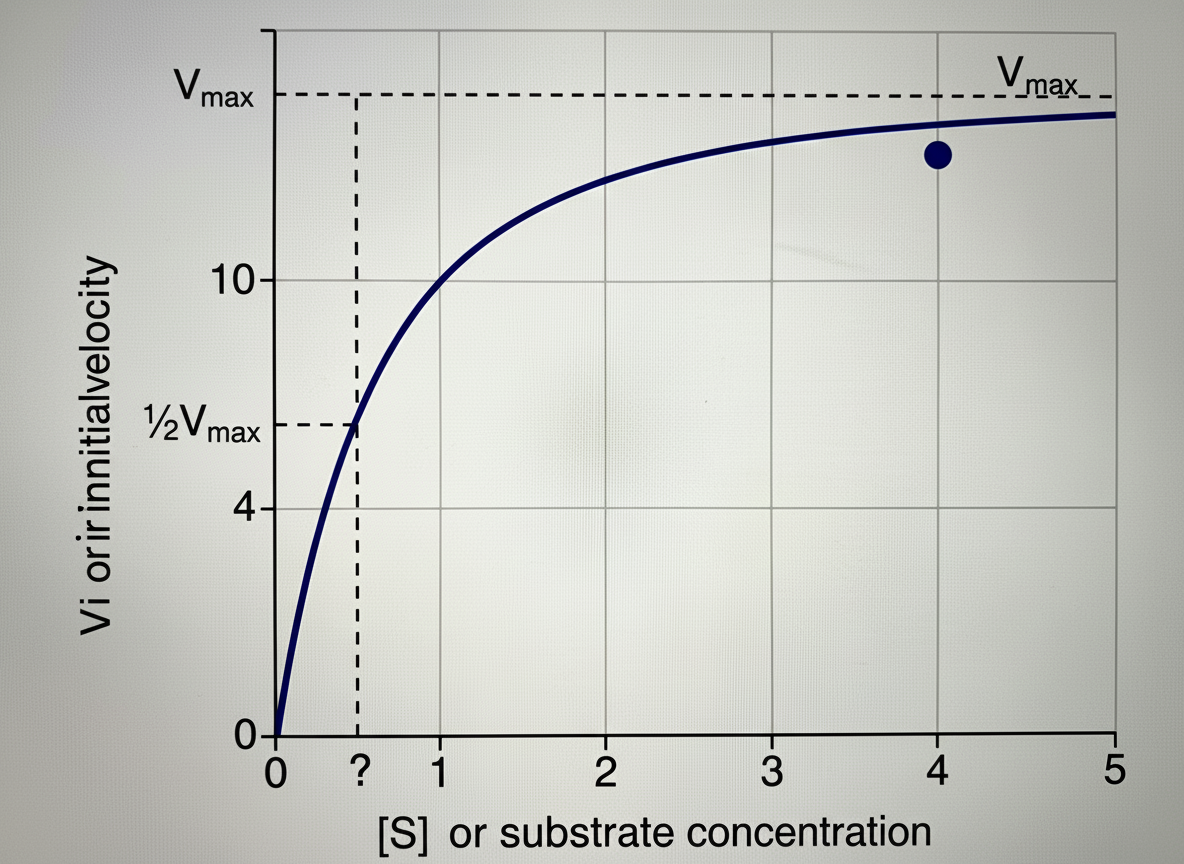
True about isoenzymes is/are?
Which of the following is a characteristic of serine proteases?
Which component transfers four protons?
Which of the following is NOT a mechanism for regulating enzyme activity?
Alcohol dehydrogenase belongs to which class of enzymes?
All of the following enzymes are active within a cell except:
Which enzyme is a marker for mitochondria?
Glutathione reductase contains which of the following prosthetic groups?
What is the relative Km of Hexokinase and Glucokinase?
Inhibition of placental alkaline phosphatase by phenylalanine is an example of which type of enzyme inhibition?
Explanation: **Explanation:** **Isoenzymes (or Isozymes)** are physical variants of the same enzyme. They catalyze the **same chemical reaction** but differ in their primary structure (amino acid sequence) because they are encoded by different genes or gene loci. 1. **Why Option A is Correct:** Since isoenzymes have different amino acid sequences, their active sites have varying affinities for the substrate. This results in **different $K_m$ (Michaelis constant)** and $V_{max}$ values. For example, **Glucokinase** (Liver) has a high $K_m$ for glucose, while **Hexokinase** (Muscle) has a low $K_m$, allowing them to function differently based on tissue-specific metabolic needs. 2. **Why Other Options are Incorrect:** * **Option B:** Isoenzymes, by definition, act on the **same substrate** to produce the same product. If they acted on different substrates, they would be classified as different enzymes entirely. * **Option C:** Due to differences in their amino acid composition, isoenzymes possess different net charges. This causes them to exhibit **different electrophoretic mobilities**, which is the primary laboratory method used to separate and identify them (e.g., LDH and CK patterns). **High-Yield Clinical Pearls for NEET-PG:** * **LDH (Lactate Dehydrogenase):** Has 5 isoenzymes. **LDH-1** (Heart) vs. **LDH-5** (Liver/Muscle). A "flipped pattern" (LDH1 > LDH2) is a classic marker for Myocardial Infarction. * **CK (Creatine Kinase):** Has 3 isoenzymes: **CK-BB** (Brain), **CK-MB** (Heart), and **CK-MM** (Skeletal Muscle). * **Alkaline Phosphatase (ALP):** Isoenzymes help differentiate the source of pathology (e.g., **Regan isoenzyme** is a heat-stable ALP found in certain cancers).
Explanation: **Explanation:** **Serine proteases** (e.g., Trypsin, Chymotrypsin, Elastase, and Thrombin) are a family of enzymes that utilize a uniquely reactive **serine residue** in their active site to hydrolyze peptide bonds. 1. **Why Option B is Correct:** Serine proteases are characterized by a specific **catalytic triad** (Aspartate, Histidine, and Serine) located within the active site. While many enzymes in this class function as monomers with one active site, the question refers to the structural hallmark where the serine residue is the nucleophile essential for catalysis. In the context of complex multi-subunit proteases or specific biochemical assays, the presence of these active serine residues defines the molecule's functional identity. 2. **Why Other Options are Incorrect:** * **Option A:** Serine proteases do not necessarily cleave *at* serine residues; rather, they use serine *to perform* the cleavage. For example, Trypsin cleaves at Lysine/Arginine, and Chymotrypsin cleaves at bulky aromatic residues. * **Option C:** This is a common distractor. While **Di-isopropyl-fluorophosphate (DFP)** is a potent irreversible inhibitor of serine proteases, it reacts with the active site serine. The stoichiometry is 1:1 *per active site*. If an enzyme has multiple subunits/active sites, it would require more than one molecule of DFP per molecule of protein for total inactivation. * **Option D:** Most serine proteases (like the digestive enzymes) are **endopeptidases**, meaning they cleave peptide bonds within the polypeptide chain, not at the ends. **High-Yield NEET-PG Pearls:** * **Catalytic Triad:** Remember the sequence **Ser 195, His 57, Asp 102** (numbering based on Chymotrypsin). * **Mechanism:** They involve a covalent **acyl-enzyme intermediate**. * **Clinical Link:** **Alpha-1 Antitrypsin deficiency** leads to uncontrolled activity of Neutrophil Elastase (a serine protease), causing emphysema and liver cirrhosis. * **Inhibitors:** DFP and Nerve gases (Sarin/Tabun) inhibit serine proteases and acetylcholinesterase.
Explanation: **Explanation:** The question refers to the **Electron Transport Chain (ETC)** located in the inner mitochondrial membrane, where the energy from redox reactions is used to pump protons ($H^+$) from the matrix into the intermembrane space. **Why NADH-Q oxidoreductase is correct:** **NADH-Q oxidoreductase (Complex I)** is the largest complex in the ETC. It accepts electrons from NADH and transfers them to Coenzyme Q (Ubiquinone). This exergonic transfer provides sufficient energy to pump exactly **four protons** across the membrane for every pair of electrons transferred. This establishes the electrochemical gradient necessary for ATP synthesis. **Analysis of Incorrect Options:** * **Cytochrome-Q c oxidoreductase (Complex III):** This complex also pumps **four protons** per pair of electrons. However, in standard medical examinations like NEET-PG, if both Complex I and III are listed, Complex I is often the primary focus for this specific metric, though technically both share this property. * **Cytochrome oxidase (Complex IV):** This complex transfers electrons from Cytochrome c to Oxygen. It pumps only **two protons** into the intermembrane space per pair of electrons (or 4 protons per $O_2$ molecule reduced). * **Isocitrate dehydrogenase:** This is an enzyme of the TCA cycle. While it generates NADH, it is not a transmembrane proton pump and does not directly participate in the ETC proton gradient. **High-Yield Clinical Pearls for NEET-PG:** * **P:O Ratio:** NADH (Complex I) yields ~2.5 ATP, while $FADH_2$ (Complex II) yields ~1.5 ATP because Complex II does **not** pump any protons. * **Inhibitors:** Rotenone, Amobarbital (Amytal), and Piericidin A inhibit **Complex I**. * **Complex IV Inhibitors:** Cyanide, Carbon Monoxide (CO), and Sodium Azide (high-yield for forensic/toxicology integration). * **Leber’s Hereditary Optic Neuropathy (LHON):** Often caused by mutations in Complex I subunits.
Explanation: ### Explanation The core of this question lies in distinguishing between **enzyme regulation** (physiological control of metabolic flux) and **enzyme inhibition** (reduction of activity by external or specific molecules). **Why Competitive Inhibition is the Correct Answer:** Competitive inhibition is a type of **reversible inhibition** where a substrate analogue competes for the active site. While it alters the $K_m$ of an enzyme, it is generally considered a mechanism of inhibition rather than a physiological regulatory process used by the cell to maintain homeostasis. Regulation typically involves shifting an enzyme between active and inactive states in response to cellular signals, whereas competitive inhibition is often the mechanism of action for drugs (e.g., Statins). **Analysis of Other Options:** * **Covalent Modification (A):** A rapid regulatory mechanism where the addition/removal of a group (most commonly **phosphorylation/dephosphorylation**) alters activity. Example: Glycogen phosphorylase. * **Allosteric Activation (B):** Involves molecules binding to a site other than the active site, causing a conformational change. This is the primary method for "fine-tuning" metabolic pathways (e.g., Fructose-2,6-bisphosphate activating PFK-1). * **Induction of Genes (D):** A form of **coarse control** where the total amount of enzyme is increased by enhancing gene expression. This is slower but long-lasting (e.g., Insulin inducing glucokinase). **High-Yield Clinical Pearls for NEET-PG:** * **Competitive Inhibition:** $V_{max}$ remains unchanged; $K_m$ increases. Classic example: **Methanol poisoning** treated with Ethanol (competitive inhibitor of Alcohol Dehydrogenase). * **Rate-Limiting Step:** Most regulatory mechanisms target the rate-limiting enzyme of a pathway. * **Zymogen Activation:** Another form of irreversible covalent regulation (e.g., Trypsinogen to Trypsin). * **Feedback Inhibition:** Usually occurs via allosteric modulation by the end-product of a pathway.
Explanation: **Explanation:** The International Union of Biochemistry (IUB) classifies enzymes into six major classes (EC 1 to EC 6). **Alcohol Dehydrogenase (ADH)** belongs to **Class 1: Oxidoreductases**. **1. Why Oxidoreductase is correct:** Oxidoreductases catalyze oxidation-reduction reactions involving the transfer of electrons or hydrogen atoms. Alcohol dehydrogenase facilitates the conversion of primary or secondary alcohols to aldehydes or ketones. In this reaction, the alcohol is oxidized while the coenzyme **NAD+** is reduced to **NADH**. Since it involves a redox reaction, it is fundamentally an oxidoreductase. **2. Analysis of Incorrect Options:** * **B. Dehydrogenase:** While ADH is indeed a dehydrogenase, this is a *sub-class*, not a primary IUB class. In NEET-PG, when asked for the "class," you must select from the six primary categories (Oxidoreductase, Transferase, Hydrolase, Lyase, Isomerase, Ligase). * **C. Hydrolase:** These enzymes (Class 3) catalyze the cleavage of bonds (C-O, C-N, C-C) by the addition of water (e.g., Pepsin, Urease). ADH does not use water to break bonds. * **D. Oxidase:** This is a sub-class of oxidoreductases where oxygen serves as the electron acceptor, often producing water or hydrogen peroxide (e.g., Cytochrome oxidase). ADH uses NAD+, not oxygen, as the primary electron acceptor. **Clinical Pearls for NEET-PG:** * **Metabolism:** ADH is the rate-limiting enzyme in ethanol metabolism, primarily located in the cytosol of hepatocytes. * **Inhibitor:** **Fomepizole** inhibits ADH and is used as an antidote in methanol or ethylene glycol poisoning to prevent the formation of toxic metabolites (formaldehyde/glycolic acid). * **Kinetics:** Alcohol metabolism follows **zero-order kinetics** because ADH becomes saturated at low ethanol concentrations.
Explanation: **Explanation:** The core concept tested here is the distinction between **intracellular enzymes** and **extracellular (secretory) enzymes**. **Why Trypsin is the correct answer:** Trypsin is a digestive protease synthesized in the pancreas as an inactive precursor called **trypsinogen**. It is secreted into the duodenum, where it is activated by enteropeptidase. Because active trypsin is highly proteolytic and would cause **autodigestion** (pancreatitis) if active within the pancreatic acinar cells, it remains inactive (as a zymogen) while inside the cell. Therefore, it is not "active" within the cell. **Why the other options are incorrect:** * **Fumarase:** An essential enzyme of the **TCA cycle** located in the mitochondrial matrix. It must be active within the cell to facilitate cellular respiration. * **Hexokinase:** The first enzyme of **glycolysis**, active in the cytosol of almost all cells. It phosphorylates glucose to glucose-6-phosphate, trapping it inside the cell. * **Alcohol Dehydrogenase:** Primarily located in the cytosol of **hepatocytes**. It is active within the cell to metabolize ethanol into acetaldehyde. **High-Yield Clinical Pearls for NEET-PG:** * **Zymogens:** Enzymes secreted in inactive forms (e.g., pepsinogen, chymotrypsinogen) to protect the site of synthesis. * **Pancreatitis:** Occurs when trypsin is prematurely activated within the pancreatic cells, often due to ductal obstruction or alcohol-induced injury. * **Alpha-1 Antitrypsin:** A critical serum protein that inhibits proteases like trypsin and elastase, preventing tissue damage. * **Marker Enzymes:** Remember specific localizations: **ALT/AST** (Cytosol/Mitochondria), **Acid Phosphatase** (Lysosomes), and **Catalase** (Peroxisomes).
Explanation: **Explanation:** In cell biology and biochemistry, specific enzymes are localized within particular organelles, serving as "biochemical markers" to identify the purity of subcellular fractions during centrifugation. **1. Why Glutamate Dehydrogenase (GDH) is correct:** Glutamate dehydrogenase is a key enzyme involved in nitrogen metabolism (oxidative deamination). It is located exclusively within the **mitochondrial matrix**. Since it is not found in the cytosol or other organelles, its presence in a cellular fraction confirms the presence of mitochondria. Other common mitochondrial markers include **Succinate Dehydrogenase (SDH)** (inner membrane) and **Cytochrome Oxidase**. **2. Analysis of Incorrect Options:** * **Acid Phosphatase:** This is the classic marker for **Lysosomes**. It is used clinically to detect lysosomal storage diseases and was historically used as a marker for prostatic carcinoma. * **Alkaline Phosphatase:** This is a marker for the **Plasma Membrane** (and also found in the endoplasmic reticulum). Clinically, it is elevated in obstructive jaundice and bone diseases. * **Hexokinase:** This is a key glycolytic enzyme located in the **Cytosol**. Note: While some isoforms can bind to the outer mitochondrial membrane, it is primarily considered a cytosolic marker. **3. High-Yield NEET-PG Clinical Pearls:** * **Marker for Peroxisomes:** Catalase. * **Marker for Golgi Apparatus:** Galactosyl transferase. * **Marker for Nucleus:** DNA Polymerase / RNA Polymerase. * **Marker for Microsomes (ER):** Glucose-6-phosphatase. * **Mitochondrial DNA:** It is circular, double-stranded, and maternally inherited (Mitochondrial Eve concept).
Explanation: **Explanation:** **Glutathione Reductase** is a critical enzyme in the antioxidant defense system, responsible for maintaining the pool of reduced glutathione (GSH) in the cell. **1. Why FAD is Correct:** Glutathione reductase is a flavoprotein. It utilizes **Flavin Adenine Dinucleotide (FAD)** as a tightly bound prosthetic group. The enzyme catalyzes the reduction of oxidized glutathione (GSSG) to reduced glutathione (GSH) using **NADPH** as a reducing equivalent. During this catalytic cycle, electrons are transferred from NADPH to the FAD prosthetic group, and then to the disulfide bond of GSSG. **2. Why Other Options are Incorrect:** * **NAD (Option B):** While NAD/NADH are common electron carriers, Glutathione Reductase specifically requires **NADPH** (derived from the HMP Shunt) as a co-substrate, not NAD. Furthermore, NADPH acts as a co-enzyme (dissociable), whereas FAD is the permanent prosthetic group. * **ATP (Option C):** ATP is the energy currency of the cell but does not participate in the redox reactions of the glutathione cycle. It is required for the *synthesis* of glutathione (via Glutamate-cysteine ligase), but not for its *regeneration* by the reductase. **3. Clinical Pearls & High-Yield Facts:** * **The HMP Shunt Connection:** The NADPH required for this reaction is primarily supplied by **Glucose-6-Phosphate Dehydrogenase (G6PD)**. * **G6PD Deficiency:** In G6PD deficiency, a lack of NADPH prevents Glutathione Reductase from functioning, leading to oxidative stress, Heinz body formation, and hemolytic anemia. * **Riboflavin Status:** Since FAD is derived from **Vitamin B2 (Riboflavin)**, the activity of erythrocyte glutathione reductase is used as a functional diagnostic marker to assess riboflavin deficiency. * **Active Site:** Besides FAD, the enzyme also contains a **selenocysteine** residue (in the case of glutathione peroxidase) or essential **thiol groups** (cysteine) at its active site.
Explanation: **Explanation:** The correct answer is **B: Glucokinase has a higher Km than hexokinase.** **1. Underlying Concept:** The Michaelis constant (**Km**) represents the substrate concentration at which an enzyme works at half its maximum velocity ($V_{max}$). Km is **inversely proportional** to the affinity of the enzyme for its substrate. * **Hexokinase** has a **low Km** (high affinity) for glucose. This allows it to function at maximum capacity even during fasting states, ensuring that tissues like the brain and muscles can utilize glucose even when blood levels are low. * **Glucokinase (Hexokinase IV)** has a **high Km** (low affinity). It only becomes significantly active when blood glucose levels are high (e.g., after a meal). This allows the liver to "buffer" blood glucose by converting it to glycogen only when there is an excess. **2. Analysis of Incorrect Options:** * **Option A:** Incorrect. If hexokinase had a higher Km, it would be unable to trap glucose in tissues during fasting, leading to cellular energy failure. * **Option C:** Incorrect. These are distinct isoenzymes with different kinetic properties ($V_{max}$ and $Km$) suited to their specific physiological roles. * **Option D:** Incorrect. Km is an intrinsic property of the enzyme itself and does not change based on the amount of glucose ingested (though the *rate* of the reaction will change). **3. NEET-PG High-Yield Pearls:** * **Location:** Hexokinase is ubiquitous (all tissues); Glucokinase is primarily in the **Liver** and **Pancreatic Beta-cells**. * **Vmax:** Glucokinase has a **high Vmax**, allowing it to process large amounts of glucose rapidly post-prandially. * **Inhibition:** Hexokinase is inhibited by its product (**Glucose-6-Phosphate**); Glucokinase is **not**. * **Clinical Correlation:** Mutations in the Glucokinase gene are associated with **MODY type 2** (Maturity-Onset Diabetes of the Young).
Explanation: ### Explanation **Correct Answer: C. Uncompetitive Inhibition** **Mechanism:** Uncompetitive inhibition occurs when the inhibitor binds **only** to the **Enzyme-Substrate (ES) complex**, and not to the free enzyme. This prevents the complex from proceeding to form the product. In this specific biochemical model, **phenylalanine** binds to the ES complex of **placental alkaline phosphatase (Regan isoenzyme)**. * **Kinetics:** It results in a **decrease in both $V_{max}$ and $K_m$**. The $V_{max}$ decreases because the inhibitor-bound ES complex is non-functional, and the $K_m$ decreases because the binding of the inhibitor shifts the equilibrium toward the ES complex, effectively increasing the enzyme's apparent affinity for the substrate. **Why other options are incorrect:** * **Competitive Inhibition:** The inhibitor binds to the active site of the free enzyme. $V_{max}$ remains unchanged while $K_m$ increases. (Example: Statins inhibiting HMG-CoA reductase). * **Noncompetitive Inhibition:** The inhibitor binds to both the free enzyme and the ES complex at a site other than the active site. $V_{max}$ decreases while $K_m$ remains unchanged. (Example: Cyanide inhibition of Cytochrome oxidase). * **Allosteric Inhibition:** Involves binding at a regulatory site, often causing a sigmoidal rather than hyperbolic curve. While phenylalanine acts at a site other than the active site here, the specific kinetic pattern defined for this reaction is classically uncompetitive. **High-Yield Clinical Pearls for NEET-PG:** 1. **Regan Isoenzyme:** This is a heat-stable placental alkaline phosphatase that acts as a **tumor marker** for various cancers (e.g., dysgerminoma, lung cancer). 2. **Inhibitors of ALP Isoenzymes:** * **Phenylalanine:** Inhibits Placental and Intestinal ALP. * **Levamisole:** Inhibits Liver, Bone, and Kidney ALP. 3. **Uncompetitive Inhibition** is rare in single-substrate reactions but is a classic "textbook" example when discussing phenylalanine and placental ALP.
Enzyme Classification and Nomenclature
Practice Questions
Enzyme Kinetics and Michaelis-Menten Equation
Practice Questions
Enzyme Inhibition: Competitive and Non-competitive
Practice Questions
Allosteric Regulation
Practice Questions
Coenzymes and Cofactors
Practice Questions
Isoenzymes and Clinical Significance
Practice Questions
Enzyme Regulation: Covalent Modification
Practice Questions
Enzyme Regulation: Zymogen Activation
Practice Questions
Enzyme Induction and Repression
Practice Questions
Ribozymes and Catalytic RNA
Practice Questions
Enzyme Diagnostic Applications
Practice Questions
Enzyme Therapy and Inhibitors as Drugs
Practice Questions
Get full access to all questions, explanations, and performance tracking.
Start For Free