A patient suffered splenic rupture. His BP is 90/60 mmHg, PR 126/min and SpO2 92%. What is the induction agent of choice?
What is the best predictor in the Glasgow Coma Scale?
A patient with traumatic paraplegia due to injury of the thoracic cord at T3 level is observed to have a blood pressure of 210/120. What should be the initial management?
An RTA patient has received 4 units of packed RBCs within a few hours. Which of the following will be seen?
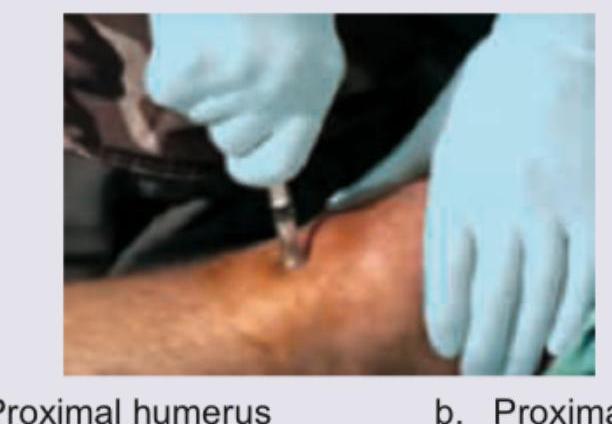
A soldier was buried in an avalanche and had multiple fractures in both legs. On evacuation and reaching base hospital, examination shows a heart rate = 60 / min, BP = 70/50 mm Hg. IV line access has failed on multiple occasions en route to the hospital. Hence the below shown route of administration of fluids was initiated on arrival to the hospital. Which site would enable fastest rate of administration?
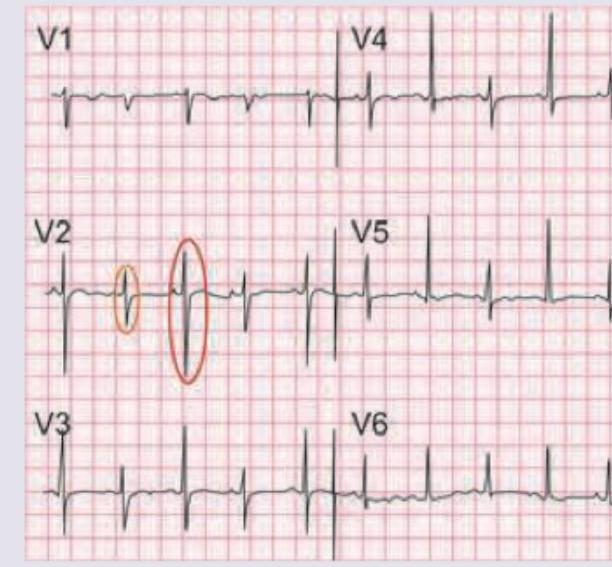
A 30-year-old male was brought to the ER after a car crash. On admission, pulse is weak with BP=80 / 60 mm Hg. ECG is shown below. Right heart catheter is placed. Which is the most consistent value with patient's diagnosis?
A case of trauma comes to the emergency. On examination there is evidence of head injury, BP is 90/60 mmHg, and pulse is 150/min. Which of the following anesthetic agent should be used for induction?
Massive transfusion is defined as transfusion of?
Which of the following anesthetics is contraindicated in head injury?
Explanation: **Explanation:** The patient is presenting with signs of **hypovolemic shock** (hypotension, tachycardia, and low oxygen saturation) secondary to splenic rupture. In hemodynamically unstable trauma patients, the primary goal of induction is to maintain cerebral and coronary perfusion pressures. **Etomidate** is the induction agent of choice because it is **hemodynamically neutral**. It has minimal effect on heart rate, systemic vascular resistance, and myocardial contractility. Unlike other agents, it does not suppress the sympathetic nervous system, which is crucial for maintaining blood pressure in a patient already compensating for blood loss. **Why other options are incorrect:** * **Remifentanil:** This is an ultra-short-acting opioid, not a primary induction agent. It can cause significant bradycardia and respiratory depression, which would worsen this patient’s status. * **Halothane:** This inhalational anesthetic is a potent myocardial depressant and vasodilator. It would lead to a further drop in blood pressure and is contraindicated in hypovolemic shock. * **Midazolam:** While used for sedation, induction doses of benzodiazepines can cause peripheral vasodilation and myocardial depression, leading to significant hypotension in hypovolemic patients. **High-Yield Clinical Pearls for NEET-PG:** * **Etomidate Side Effect:** The most characteristic side effect is **adrenal suppression** (inhibits 11-beta-hydroxylase). * **Ketamine:** Also an excellent choice for trauma (due to sympathetic stimulation), but Etomidate is often preferred if there is a risk of co-existing head injury or if a purely neutral profile is desired. * **Propofol:** Generally avoided in shock due to its profound vasodilatory and negative inotropic effects.
Explanation: **Explanation:** The **Motor Response (M)** is considered the most reliable and powerful predictor of clinical outcome in the Glasgow Coma Scale (GCS). This is because the motor component correlates most closely with the severity of brain injury and has the highest prognostic value for survival and functional recovery. * **Why Motor Response is the best predictor:** Unlike eye-opening or verbal responses, the motor score (ranging from 1 to 6) provides a more granular assessment of brainstem and cortical function. It is less likely to be confounded by factors like periorbital edema (which affects eye-opening) or intubation (which affects verbal response). In many trauma protocols, the motor score alone is used as a simplified tool (the Simplified Motor Score) because it retains almost the same predictive accuracy as the full GCS. **Analysis of Incorrect Options:** * **Eye Opening (E):** This primarily reflects the activity of the Reticular Activating System (arousal). While important, it does not necessarily reflect the depth of coma or the integrity of the motor pathways. * **Verbal Response (V):** This assesses higher cortical function and orientation. However, it is frequently "untestable" in trauma patients who are intubated or have facial trauma, making it a less consistent predictor across all clinical scenarios. **Clinical Pearls for NEET-PG:** * **GCS Range:** 3 (minimum) to 15 (maximum). A score of **≤ 8** is the classic indication for intubation ("8, isolate the bait/intubate"). * **Order of Assessment:** The GCS is recorded as E+V+M. If a component cannot be assessed (e.g., eyes swollen shut), it is marked as "1c" or "NT" (Not Testable). * **Prognosis:** A decreasing motor score is often the first sign of impending transtentorial herniation.
Explanation: ### Explanation The patient is presenting with **Autonomic Dysreflexia (AD)**, a life-threatening medical emergency occurring in patients with spinal cord injuries at or above the **T6 level**. **1. Why Nifedipine is Correct:** Autonomic dysreflexia is triggered by noxious stimuli (e.g., distended bladder, fecal impaction) below the level of the lesion. This causes a massive, uninhibited sympathetic discharge resulting in severe hypertension, bradycardia (due to baroreceptor reflex), and headache. The **initial management** involves: * Sitting the patient upright (to lower intracranial pressure). * Removing the triggering stimulus. * **Pharmacotherapy:** Rapid-acting antihypertensives are required if the BP remains high. **Nifedipine (immediate-release/bite and swallow)** or Nitrates are the preferred agents to prevent intracranial hemorrhage or seizures. **2. Why Other Options are Incorrect:** * **A. Subcutaneous LMWH:** While spinal cord injury patients are at high risk for DVT, LMWH is a prophylactic measure and does not address the acute hypertensive crisis. * **B. Steroids:** High-dose methylprednisolone was previously used for acute spinal cord injury to reduce edema, but it is no longer the standard of care due to complications and lacks efficacy in treating hypertensive emergencies. * **D. Normal Saline / Dextrose:** Fluid resuscitation is contraindicated here as it could further worsen the hypertension and increase the risk of pulmonary edema. **3. High-Yield Clinical Pearls for NEET-PG:** * **Level of Lesion:** AD typically occurs in lesions at **T6 or above** (above the splanchnic outflow). * **Classic Triad:** Hypertension, Pounding Headache, and Flushing/Sweating *above* the level of injury (with cold, pale skin *below* the injury). * **Most Common Trigger:** Bladder distension (check the Foley catheter first!). * **Reflex Bradycardia:** This is a key diagnostic feature distinguishing it from other causes of hypertension.
Explanation: ***Hypocalcemia***- The anticoagulant used in packed RBCs, **citrate**, chelates (binds strongly to) **ionized calcium** in the recipient's plasma. - Rapid infusion during massive transfusion overwhelms the liver's capacity to metabolize citrate, causing a rapid decrease in **serum calcium** levels, potentially leading to immediate complications like paresthesias or prolonged QT interval.*Hypernatremia*- Packed RBCs are suspended in solutions that are typically isotonic or slightly hypotonic in sodium, making **Hypernatremia** an unlikely direct complication of transfusion.- Resuscitation fluids (like Normal Saline) used alongside transfused blood are the more common cause of slight hypernatremia in trauma patients, not the blood components themselves.*Hyponatremia*- Although some older blood preservatives might contain less sodium, **Hyponatremia** is not a primary biochemical disturbance associated with massive blood product transfusion.- Dilutional effects or the use of specific hypotonic fluids would be required to induce significant **Hyponatremia**, which is rare with standard trauma protocols.*Hyperkalemia*- Stored RBCs leak **potassium** (K+) into the supernatant fluid during storage, making hyperkalemia a risk, especially with older units or in patients with impaired renal function.- However, **Hypocalcemia** due to immediate **citrate toxicity** is generally considered the most frequent and immediate metabolic derangement requiring intervention during massive transfusion.
Explanation: ***Sternum*** - The **sternum** is an excellent site for intraosseous access in adults due to its large area of accessible bone marrow and close proximity to the central circulation. - Studies have shown that the sternum allows for a **very rapid infusion rate** compared to other intraosseous sites, making it ideal for fluid resuscitation in critically ill patients. *Proximal humerus* - The proximal humerus is a commonly used intraosseous site, offering good flow rates, but typically **not as fast as the sternum**. - Its use can be challenging in patients with **humeral fractures** or significant soft tissue edema around the shoulder. *Proximal tibia* - The proximal tibia is a frequently chosen intraosseous site, especially in pediatric patients, known for its **ease of access and safety profile**. - However, the flow rates achieved via the proximal tibia are generally **lower** than those seen with sternal access, making it less optimal when the absolute fastest rate is required. *Distal tibia* - The distal tibia is another intraosseous access point, but it often has **slower infusion rates** compared to more proximal sites. - This site is generally considered a **secondary option** when proximal sites are inaccessible or contraindicated, and not the primary choice when rapid administration is paramount.
Explanation: ***16 | 34 / 16 | 16*** - The ECG shows low voltage QRS complexes and electrical alternans (alternating amplitude of P, QRS, and T waves), which are classic signs of **cardiac tamponade** due to fluid accumulation compromising cardiac filling. - In cardiac tamponade, there is an equalization of diastolic pressures in all four heart chambers, specifically the **right atrial (RA) pressure**, **right ventricular (RV) end-diastolic pressure**, and **pulmonary artery wedge pressure (PAWP)**, reflecting the extrinsic compression on the heart. *16 | 100 / 30 | 28* - This set of numbers (RA | RV | PAWP) shows a **significantly elevated RV systolic pressure (100 mmHg)**, which is indicative of **severe pulmonary hypertension** or right ventricular outflow tract obstruction, neither of which are consistent with tamponade. - While PAWP (28 mmHg) is elevated, the disparity between RV systolic pressure and RA pressure (16 mmHg) does not suggest the pressure equalization typical of tamponade. *16 | 45 / 22 | 20* - This data indicates an elevated RV systolic pressure (45 mmHg) and elevated RV end-diastolic pressure (22 mmHg), suggesting **right ventricular dysfunction** or pulmonary hypertension. - However, the PAWP (20 mmHg) is not significantly elevated to the point of equalizing with the RV end-diastolic pressure or RA pressure, which would signify cardiac tamponade. *16 | 75 / 30 | 11* - This option presents an **elevated RV systolic pressure (75 mmHg)** and an elevated RV end-diastolic pressure (30 mmHg), suggesting significant **right ventricular pressure overload**, likely due to severe pulmonary hypertension or a massive pulmonary embolism. - The **PAWP (11 mmHg)** is relatively low compared to the right-sided pressures, which rules out cardiac tamponade and suggests a problem primarily affecting the right heart and pulmonary circulation.
Explanation: ***Thiopentone*** - It is a **short-acting barbiturate** that causes **rapid unconsciousness** and **reduces cerebral blood flow** and **intracranial pressure (ICP)**, which is beneficial in head injury. - It also has **cardiovascular-depressant effects** that can help manage hypertension, though in this hypotensive patient, careful titration is needed, but its **ICP-lowering effect** is crucial. *Halothane* - Halothane is a **volatile anesthetic** that can cause **dose-dependent myocardial depression** and a **decrease in blood pressure**, which would worsen the patient's existing hypotension. - It also tends to **increase cerebral blood flow**, which is counterproductive in a patient with a head injury and potential increased ICP. *Succinylcholine* - Succinylcholine is a **neuromuscular blocker** used for **rapid sequence intubation**, not as an anesthetic induction agent. - It can cause a **transient increase in ICP** and **hyperkalemia**, both of which can be detrimental in a trauma patient with head injury. *Ketamine* - Ketamine is a dissociative anesthetic that can **increase heart rate** and **blood pressure**, which could be beneficial in a hypotensive patient. - However, it also tends to **increase cerebral blood flow** and **intracranial pressure (ICP)**, making it less ideal for a patient with a head injury.
Explanation: ***10 or more red cell products in 24 hours*** - This definition is widely accepted and used in clinical practice for identifying patients who have received a **massive transfusion**. - It signifies a significant loss of blood volume and often triggers specific protocols for **resuscitation** and **transfusion management**. *5 or more red cell products in 12 hours* - While a large volume, it does not meet the standard criteria for a **massive transfusion**, which typically requires a higher volume over a 24-hour period. - This volume could indicate significant bleeding but usually wouldn't activate the same **massive transfusion protocol** as the standard definition. *10 or more red cell products in 48 hours* - This duration is too long to be considered an acute **massive transfusion** event, which focuses on rapid blood loss and replacement. - A 48-hour period allows for more physiological compensation and typically does not reflect the immediate, life-threatening scenario associated with the standard definition. *5 or more red cell products in 24 hours* - This volume is generally insufficient to meet the established definition of a **massive transfusion**. - Although it represents substantial blood product usage, it falls short of the volume typically used to define **massive hemorrhage** that requires critical intervention.
Explanation: ***Ketamine*** - **Ketamine** increases **cerebral blood flow** and **intracranial pressure (ICP)**, which is detrimental in patients with head injury where elevated ICP can worsen neurological outcomes. - Its sympathomimetic effects can also lead to an increase in **mean arterial pressure**, further contributing to elevated ICP. *Halothane* - **Halothane** is a potent **cerebral vasodilator**, which can increase cerebral blood flow and ICP, making it generally avoided in head injury. - However, newer volatile agents like **isoflurane** and **sevoflurane** are often preferred as they have a more favorable ICP profile (less increase) and allow for faster emergence. *N2O* - **Nitrous oxide (N2O)** can cause **cerebral vasodilation** and increase ICP, especially when used in high concentrations or in patients with compromised intracranial compliance. - It also carries a risk of **air embolism expansion** in the presence of pneumocephalus, which can occur in head injury. *Propofol* - **Propofol** is an excellent choice for head injury patients because it **decreases cerebral blood flow**, **cerebral metabolic rate**, and consequently **intracranial pressure**. - It also has **neuroprotective properties** and allows for a rapid neurological assessment upon discontinuation due to its short half-life.
Initial Assessment of Trauma Patients
Practice Questions
Airway Management in Trauma
Practice Questions
Shock and Resuscitation
Practice Questions
Massive Transfusion Protocol
Practice Questions
Traumatic Brain Injury Management
Practice Questions
Spinal Cord Injury Considerations
Practice Questions
Chest Trauma Management
Practice Questions
Abdominal Trauma Management
Practice Questions
Orthopedic Trauma Anesthesia
Practice Questions
Burns Management
Practice Questions
Pediatric Trauma Anesthesia
Practice Questions
Damage Control Surgery Anesthesia
Practice Questions
Get full access to all questions, explanations, and performance tracking.
Start For Free