What is the primary benefit of using dexmedetomidine for sedation in ICU patients?
What is the primary advantage of compressions-only CPR compared to standard CPR with rescue breaths in out-of-hospital cardiac arrest?
In ACLS, which antiarrhythmic drug can be given following ventricular fibrillation after cardiac arrest other than epinephrine?
In the Maastricht classification of donation after cardiac death, what does stage 3 refer to?
What is the recommended compression-to-ventilation ratio for adult CPR according to the latest AHA guidelines?
In which vein is Central Venous Pressure (CVP) most accurately monitored?
All are major complications of massive transfusion except hypokalemia.
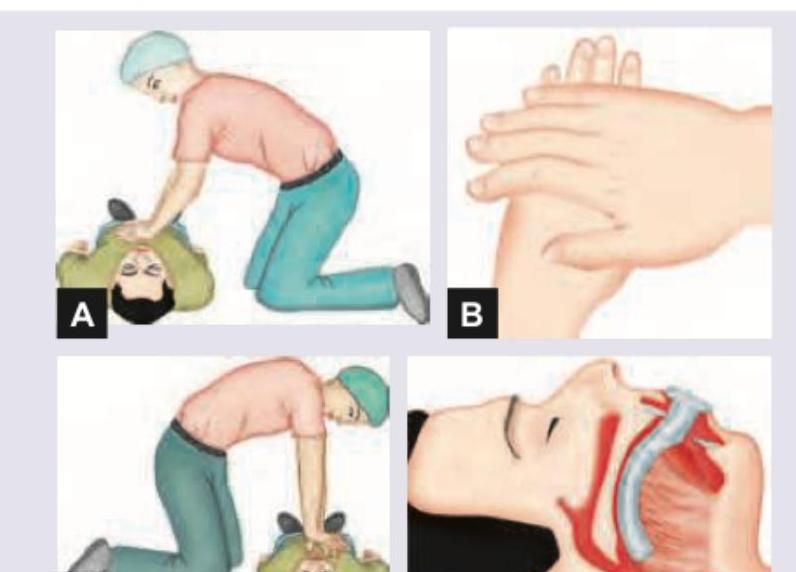
Which of the following is not true about cardiopulmonary resuscitation (CPR)?
As per the recent guidelines of resuscitation, what should be done if asystole is not responding to two consecutive doses of epinephrine?
What is the strength of shock given to a victim of cardiac arrest with a shockable rhythm?
Explanation: ***Minimal respiratory depression*** * It is an **alpha-2 adrenergic agonist** that provides sedation without significantly affecting **respiratory drive**, making it safer for patients who are difficult to wean from ventilation or have compromised respiratory function. * This differentiates it from other sedatives like benzodiazepines or propofol, which can cause significant **respiratory depression** and prolong mechanical ventilation. *Analgesic properties* * While dexmedetomidine does possess some **analgesic properties**, they are typically mild and often require co-administration with other analgesics for significant pain control. * Its **primary benefit** in ICU sedation relates more to its impact on respiratory function and the ability to achieve cooperative sedation. *Longer half-life* * Dexmedetomidine has a relatively **short half-life** of about 2-3 hours and a rapid distribution phase, allowing for quick titration and relatively rapid emergence from sedation once discontinued. * This is a desirable characteristic in the ICU setting for facilitating neurological assessments and weaning from mechanical ventilation, not a long half-life. *Not cost-effective* * While the acquisition cost of dexmedetomidine can be higher than some other sedatives, its overall cost-effectiveness can be favorable due to reduced time on **mechanical ventilation**, shorter ICU stays, and lower incidence of delirium. * Therefore, direct cost alone does not accurately reflect its value, and it is considered a valuable option despite initial price.
Explanation: ***Compressions-only CPR leads to higher survival rates and is easier to perform.*** - For **untrained lay rescuers** and those who are hesitant to perform mouth-to-mouth resuscitation, compressions-only CPR simplifies the process, making them more likely to intervene. - Studies have shown that for **unwitnessed out-of-hospital cardiac arrest**, compressions-only CPR can lead to comparable or even **improved survival rates** because it minimizes interruptions to chest compressions. *Standard CPR provides better neurological outcomes but is more difficult to perform.* - While standard CPR (with rescue breaths) is important, particularly in situations of **respiratory arrest** or **pediatric cardiac arrest**, its complexity can deter bystander intervention. - The claim of consistently better neurological outcomes with standard CPR over compressions-only in all out-of-hospital cardiac arrest scenarios for lay rescuers is **not broadly supported** by recent evidence, especially when considering the impact of delayed or omitted compressions. *Standard CPR is the recommended approach for all cardiac arrest situations.* - While standard CPR is the **gold standard for trained healthcare professionals** and in situations where the etiology is clearly respiratory (e.g., drowning), guidelines acknowledge the utility of compressions-only CPR for lay rescuers in witnessed adult cardiac arrest. - This option **overgeneralizes** the recommendation, as the approach can be tailored based on rescuer training and the presumed cause of arrest. *Compressions-only CPR is the most effective method for out-of-hospital cardiac arrest.* - While highly effective for certain scenarios, particularly **adult out-of-hospital cardiac arrest** of presumed cardiac origin, referring to it as the "most effective method" for all situations is an overstatement. - Its efficacy is particularly high when performed by **untrained bystanders** who might otherwise do nothing, but for trained professionals or in cases of hypoventilation, rescue breaths remain crucial.
Explanation: ***Amiodarone*** - **Amiodarone** is a Class III antiarrhythmic agent recommended in ACLS for **refractory ventricular fibrillation (VF)** or pulseless ventricular tachycardia (pVT) after initial defibrillation and epinephrine. - It works by blocking potassium channels, prolonging repolarization, and increasing the **refractory period** in the heart. *Dopamine* - **Dopamine** is a **vasopressor** used to improve **hemodynamics** in patients with symptomatic hypotension, not primarily as an antiarrhythmic for VF. - Its effects include increasing heart rate, myocardial contractility, and blood pressure. *Adenosine* - **Adenosine** is a drug of choice for **supraventricular tachycardia (SVT)** to interrupt reentry pathways in the AV node. - It is not indicated for ventricular fibrillation, as it would be ineffective in this rhythm. *Atropine* - **Atropine** is an **anticholinergic agent** used to treat **symptomatic bradycardia** by increasing heart rate. - It has no role in the management of ventricular fibrillation.
Explanation: ***Patients awaiting cardiac arrest*** - Stage 3 in the Maastricht classification refers to **controlled donation after cardiac death (DCD)**, where patients are withdrawn from life support with the expectation of cardiac arrest and subsequent organ donation. - These patients are typically in an intensive care setting, and the decision to withdraw life support and pursue DCD has been made. *Patients brought in dead* - This describes **uncontrolled DCD category I** in the Maastricht classification, which involves individuals who are found dead outside the hospital. - Organ preservation is challenging due to the lack of immediate medical intervention and potential prolonged warm ischemia time. *Patients with unsuccessful resuscitation* - This corresponds to **uncontrolled DCD category II**, where cardiac arrest occurs, and standard resuscitation efforts are unsuccessful. - This category is also considered uncontrolled DCD due to the unplanned nature of the cardiac arrest and the varying duration of ischemia before potential organ retrieval. *Patients who experience cardiac arrest after brain-stem death* - Patients declared **brain-stem dead** are typically eligible for donation after brain death (DBD), not DCD. - In DBD, the heart continues to beat with ventilator support, allowing for controlled organ retrieval and minimizing warm ischemia time.
Explanation: ***30 compressions to 2 ventilations*** - This ratio is recommended for **adult CPR** by the American Heart Association (AHA), ensuring an optimal balance between blood circulation and oxygen delivery. - It applies to both **single-rescuer** and **two-rescuer CPR** scenarios in adults to maximize effectiveness. *15 compressions to 1 ventilation* - This ratio is typically recommended for **pediatric CPR** (children and infants) when **two rescuers** are present, not for adults. - The higher ventilation frequency in children reflects their greater need for oxygen during resuscitation. *15 compressions to 2 ventilations* - This ratio is not the standard recommendation for adult CPR according to the **AHA guidelines**. - While it offers more ventilations than 15:1, it does not provide the appropriate balance of chest compressions necessary for effective adult resuscitation. *30 compressions to 1 ventilation* - This ratio significantly **reduces the number of ventilations** delivered, which can lead to inadequate oxygenation during adult CPR. - The AHA standard emphasizes the importance of two breaths after every 30 compressions to ensure sufficient oxygen supply.
Explanation: ***Internal jugular vein*** - The **internal jugular vein** provides the **most direct and consistent access** to the superior vena cava and right atrium, where CVP is accurately measured. - Its straight course and reliable anatomical landmarks make it a preferred site for CVP catheter insertion. *Anterior jugular vein* - The **anterior jugular vein** is smaller and often has a more tortuous course, making consistent and reliable CVP monitoring difficult. - It is not typically chosen for central venous access due to its anatomical variability and smaller caliber. *External jugular vein* - The **external jugular vein** is superficially located and easier to access but often has valves and a more oblique angle to the subclavian vein, making catheter advancement to the central circulation challenging. - Catheter tip placement is less consistent for accurate CVP measurements compared to the internal jugular vein. *Inferior vena cava* - While the **inferior vena cava** eventually drains into the right atrium, access is typically via the femoral vein, which is associated with a higher risk of infection and deep vein thrombosis for long-term CVP monitoring. - Measurements from the inferior vena cava or femoral vein can be affected by **intra-abdominal pressure** and are not as accurately reflective of right atrial pressure as those from the superior vena cava.
Explanation: ***Hypokalemia*** - Patients receiving massive transfusions are at risk for **hyperkalemia**, not hypokalemia, due to the release of potassium from stored red blood cells, especially in older units. - The citrate in transfused blood prevents clotting by chelating calcium, and while it does not directly cause hypokalemia, it can impact other electrolyte balances. *Hypothermia* - **Massive transfusion** often involves administering large volumes of intravenous fluids and blood products that are stored at room temperature or colder. - This can lead to a significant drop in the patient's core body temperature, potentially causing **hypothermia**. *Hypomagnesemia* - The **citrate** anticoagulant in transfused blood can chelate not only calcium but also **magnesium**. - This chelation reduces the free, physiologically active magnesium, potentially leading to **hypomagnesemia**. *Hypocalcemia* - **Citrate**, an anticoagulant in transfused blood, binds to **ionized calcium** in the recipient's blood. - In massive transfusions, the liver's ability to metabolize citrate can be overwhelmed, leading to a significant drop in ionized calcium and causing **hypocalcemia**.
Explanation: ***Closed chest massage is as effective as open chest massage*** - This statement is **not true** because **open-chest cardiac massage**, while more invasive, can provide significantly higher blood flow (coronary and cerebral) compared to closed-chest compressions. - Open-chest massage allows for direct compression of the heart, leading to better hemodynamics, especially in specific situations like **cardiac tamponade** or trauma. *The most common cause of sudden death is ischemic heart disease* - **Ischemic heart disease**, particularly conditions like myocardial infarction and severe coronary artery disease, is indeed the **leading cause of sudden cardiac death** in adults. - This is due to the high prevalence of atherosclerosis and its propensity to cause life-threatening arrhythmias such as **ventricular fibrillation**. *Standard chest massage generally provides less than 15% of normal coronary and cerebral blood flow* - Standard **closed-chest compressions** are known to generate only a fraction of normal cardiac output, typically **10-30% of normal cerebral blood flow** and **5-15% of normal coronary blood flow**. - This limited blood flow underscores the importance of high-quality, continuous compressions and prompt definitive treatment to improve outcomes. *Early defibrillation improves survival rates in ventricular fibrillation* - **Ventricular fibrillation (VF)** is a common cause of cardiac arrest, and **early defibrillation** (delivery of an electrical shock) is the most effective treatment to terminate VF and restore a perfusing rhythm. - The probability of successful defibrillation and survival **decreases significantly** with every minute that passes without defibrillation.
Explanation: ***Continue high-quality CPR and consider advanced airway management.*** - For **asystole** that is unresponsive to initial epinephrine doses, maintaining **high-quality CPR** is the cornerstone of resuscitation efforts, ensuring vital organ perfusion. - **Advanced airway management** (e.g., endotracheal intubation) should be considered early to secure the airway and facilitate ventilation, optimizing oxygen delivery during CPR. *Administer another dose of epinephrine.* - While epinephrine is the primary drug for asystole, repeating doses beyond the initial recommended schedule without other interventions is not indicated if there is no response, as it may not improve outcomes. - The focus shifts to identifying and treating reversible causes while maintaining high-quality CPR, rather than escalating epinephrine frequency. *Administer vasopressin as a second-line drug.* - **Vasopressin** is no longer recommended in adult cardiac arrest resuscitation algorithms, including for asystole, according to current guidelines from organizations like the American Heart Association. - Its use has not been shown to improve survival to hospital discharge or neurological outcomes compared to epinephrine. *Defibrillation with 200J.* - **Defibrillation** is only indicated for shockable rhythms such as **ventricular fibrillation (VF)** or **pulseless ventricular tachycardia (pVT)**. - Asystole is a **non-shockable rhythm**, meaning there is no electrical activity to defibrillate, and administering a shock is ineffective and can be harmful.
Explanation: ***200 J asynch. Shock*** - For **biphasic defibrillators**, the recommended initial energy dose for a shockable rhythm in adults is typically **200 Joules (J)**. - In cardiac arrest, the shock should be **asynchronous**, meaning it is delivered immediately without synchronization to the QRS complex, to convert the chaotic rhythm. *300 J AC shock* - **300 J** is not a standard initial energy setting for biphasic defibrillation for adult cardiac arrest. - **AC shock** implies alternating current, which is irrelevant; defibrillation uses direct current (DC). *200 J syn. Shock* - While **200 J** is a common energy level for biphasic defibrillation, **synchronized shock** is used for rhythms like **unstable ventricular tachycardia** or **atrial fibrillation**. - In cardiac arrest with a shockable rhythm (e.g., ventricular fibrillation or pulseless ventricular tachycardia), **synchronization is not possible** or appropriate, as there are no organized QRS complexes to synchronize with. *300 J syn. Shock* - **300 J** is not a standard initial energy setting for biphasic defibrillation, and **synchronized shock** is not used for cardiac arrest. - This option incorrectly combines a non-standard energy dose with an inappropriate synchronization method for cardiac arrest.
Applied Respiratory Physiology
Practice Questions
Mechanical Ventilation Principles
Practice Questions
Ventilator Management Strategies
Practice Questions
Acute Respiratory Distress Syndrome
Practice Questions
Shock: Classification and Management
Practice Questions
Hemodynamic Monitoring in ICU
Practice Questions
Acid-Base Disorders
Practice Questions
Fluid and Electrolyte Management
Practice Questions
Sedation and Analgesia in ICU
Practice Questions
Neurocritical Care
Practice Questions
Renal Replacement Therapy
Practice Questions
Nutrition in Critical Illness
Practice Questions
Get full access to all questions, explanations, and performance tracking.
Start For Free