
Acute Respiratory Distress Syndrome — MCQs

In high-income countries before widespread intrapartum antibiotic prophylaxis, what was the most common cause of early-onset neonatal bacterial pneumonia?
Answer: B. S. agalactiae
Creola bodies are seen in:
Answer: B. Bronchial asthma
Which is a characteristic non-metastatic endocrine manifestation of small-cell lung carcinoma?
Answer: D. Cushing syndrome
The Acute Physiology and Chronic Health Evaluation (APACHE) scoring system is used for what purpose?
Answer: D. Evaluating prognosis in critical care settings
Which physiological finding indicates late-stage ventilatory failure in acute severe asthma?
Answer: D. Hypercapnia
Which of the following is NOT a named component of the pediatric ABCDE primary assessment?
Answer: A. Dehydration
A haemodynamically stable adult has a high clinical probability of pulmonary embolism and no contraindication to iodinated contrast. Which is the preferred initial confirmatory investigation?
Answer: C. CT pulmonary angiography
A 64-year-old woman receiving mechanical ventilation for pneumonia-associated ARDS develops chest-wall crepitus after increased ventilator pressures. Pulse is 96/min and blood pressure 118/74 mm Hg, with stable oxygenation and ventilation. Her chest radiograph is shown. What is the appropriate management of this air-leak complication?
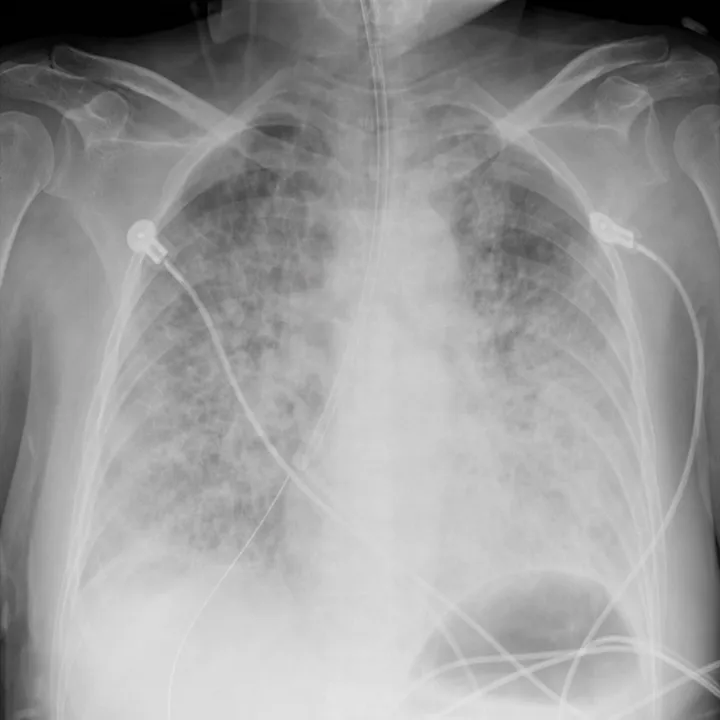
Answer: D. Lung-protective ventilation
After head injury, a patient develops rapidly worsening consciousness and a progressively dilating, fixed unilateral pupil. CT and timely transfer are unavailable. A trained surgeon, after neurosurgical consultation, must perform an exceptional rescue burr hole for impending herniation. Where should the first burr hole be placed relative to the abnormal pupil?
Answer: D. Ipsilateral temporal region
A 3-month-old infant has chest indrawing and a respiratory rate of 52 breaths/minute. Which term best describes the increased work of breathing?
Answer: B. Respiratory distress
Want unlimited practice?
Get full access to all questions, explanations, and performance tracking.
Scan to download app