Bimodality of incidence occurs in all, except?
Deiters cells are present in which structure?
Which mitochondrial enzyme is involved in the metabolism of clopidogrel and proton pump inhibitors?
What is the primary function of the corticospinal tract?
Vitamin K is required for which post-translational modification?
Which of the following is NOT a feature of unilateral 3rd Cranial nerve nuclear injury?
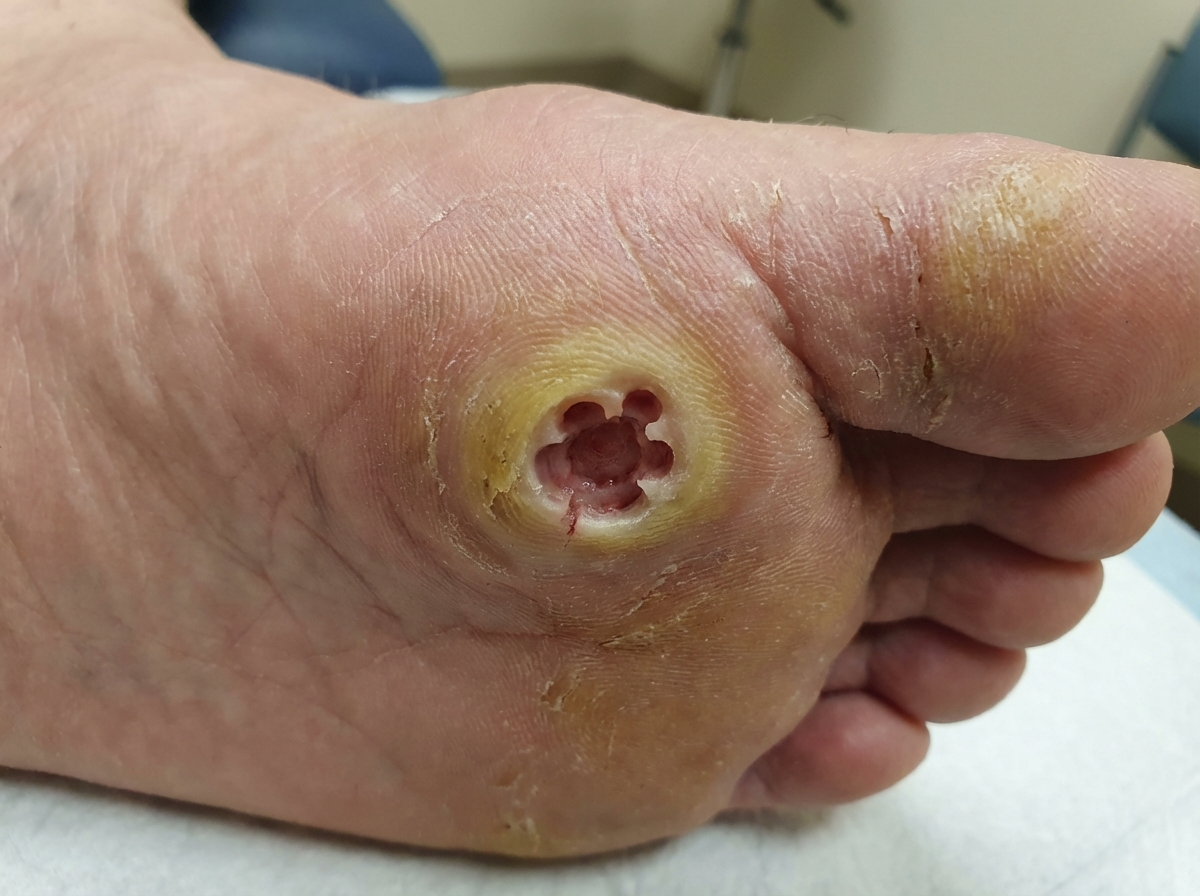
A 45-year-old male with a history of polyuria presents with a foot condition. What is the most likely diagnosis?
Which gyrus is not located on the lateral aspect of the cerebral hemisphere?
Which of the following drains directly into the inferior vena cava?
Which of the following is NOT a cytokine?
Explanation: In epidemiology, **bimodality of incidence** refers to a distribution where a disease shows two distinct peaks of occurrence at different ages or time periods. **Why Option A is Correct:** **Cancer of the Penis** does not show a bimodal distribution. Its incidence increases progressively with age, typically peaking in the **6th and 7th decades** of life. It is strongly associated with chronic irritation, phimosis, and HPV infection (types 16 and 18), but it lacks a distinct early-age peak. **Analysis of Incorrect Options (Bimodal Diseases):** * **Hodgkin’s Disease:** A classic example of bimodality. The first peak occurs in young adulthood (**20s**), and the second peak occurs in the elderly (**after age 50**). * **Breast Cancer in Females:** Shows a bimodal distribution related to menopausal status. The first peak occurs in **pre-menopausal** women (often associated with genetic factors like BRCA), and a larger second peak occurs **post-menopause**. * **Leukemia:** Specifically, **Acute Lymphoblastic Leukemia (ALL)** shows a peak in early childhood (2-5 years), while **Acute Myeloid Leukemia (AML)** and **Chronic Lymphocytic Leukemia (CLL)** peak in older populations, creating an overall bimodal pattern for the disease category. **High-Yield Clinical Pearls for NEET-PG:** * **Other Bimodal Conditions:** Osteosarcoma (peaks in adolescence and elderly due to Paget’s disease) [1] and Ulcerative Colitis. * **Penile Cancer Fact:** The most common histological type is **Squamous Cell Carcinoma**. Neonatal circumcision is a known protective factor. * **Hodgkin’s Lymphoma:** The bimodal distribution is more pronounced in developed countries; in developing countries, the first peak often occurs in childhood. **Additional Notes:** Molar pregnancy also exhibits an increased risk at the ends of reproductive life, specifically in teenagers and women aged 40-50 years [2].
Explanation: **Explanation:** **Deiters’ cells**, also known as **outer phalangeal cells**, are specialized supporting cells located within the **Organ of Corti** in the cochlea of the inner ear [1]. They are situated beneath the outer hair cells (OHCs). Each Deiters’ cell has a cup-shaped body that supports the base of an OHC and a long apical process (phalangeal process) that extends upward to form part of the **reticular lamina**. This structural arrangement is crucial for maintaining the mechanical stability of the sensory epithelium during sound transduction. **Analysis of Options:** * **Option A (Correct):** The Organ of Corti is the sensory organ for hearing, located on the basilar membrane [1]. It contains hair cells and various supporting cells, including Deiters’, Hensen’s, Claudius, and Pillar cells. * **Option B (Incorrect):** While the Organ of Corti is *located within* the Scala media (the cochlear duct), Deiters’ cells are specifically a histological component of the Organ of Corti itself, making Option A the more precise anatomical answer. * **Option C & D (Incorrect):** The pharynx and larynx are parts of the upper respiratory and digestive tracts and do not contain these specialized neuroepithelial supporting cells. **High-Yield Facts for NEET-PG:** * **Reticular Lamina:** Formed by the phalangeal processes of Deiters’ cells and the heads of pillar cells; it acts as a barrier separating endolymph from the underlying cortilymph. * **Other Supporting Cells:** * **Hensen’s cells:** Tall cells lateral to Deiters’ cells. * **Pillar cells:** Form the Tunnel of Corti. * **Clinical Pearl:** Damage to the Organ of Corti (including hair cells and supporting Deiters’ cells) due to loud noise or ototoxic drugs leads to **Sensorineural Hearing Loss (SNHL)**.
Explanation: The correct answer is **CYP 2C19**. **Understanding the Concept:** Clopidogrel is a **prodrug** that requires hepatic bioactivation to its active thiol metabolite to exert its antiplatelet effect (inhibition of P2Y12 receptors). This two-step oxidative process is primarily mediated by the Cytochrome P450 system. **CYP2C19** is the most critical enzyme involved in both steps of this metabolism. Similarly, most Proton Pump Inhibitors (PPIs), such as omeprazole and lansoprazole, are primarily metabolized by the same CYP2C19 isoenzyme in the liver. **Analysis of Options:** * **CYP 2C19 (Correct):** It is the principal enzyme for clopidogrel activation. Genetic polymorphisms (e.g., *2 or *3 alleles) lead to "poor metabolizers" who have reduced antiplatelet responses and higher risks of cardiovascular events. * **CYP 2A:** This subfamily (e.g., CYP2A6) is primarily involved in the metabolism of nicotine and some toxins, not clopidogrel. * **CYP 2B:** This subfamily (e.g., CYP2B6) metabolizes drugs like bupropion and efavirenz. While it plays a minor accessory role in clopidogrel metabolism, it is not the primary enzyme. * **CYP 2C20:** This is not a major functional human CYP enzyme involved in drug metabolism; it is likely a distractor. **Clinical Pearls for NEET-PG:** 1. **Drug-Drug Interaction:** Omeprazole (a PPI) inhibits CYP2C19. If co-administered with clopidogrel, it reduces the conversion of clopidogrel to its active form, potentially increasing the risk of stent thrombosis. **Pantoprazole** is preferred as it has less inhibitory effect on CYP2C19. 2. **Pharmacogenomics:** Patients with a "loss-of-function" CYP2C19 allele are at higher risk for Major Adverse Cardiovascular Events (MACE) when taking clopidogrel. 3. **Location:** While the question mentions "mitochondrial," it is important to note that most CYP450 enzymes are technically located in the **Smooth Endoplasmic Reticulum** (microsomes) of hepatocytes.
Explanation: The **Corticospinal Tract (CST)**, also known as the Pyramidal Tract, is the most important descending pathway in the human body responsible for **voluntary, skilled motor control** of the trunk and limbs [1]. ### Why Option A is Correct: The CST originates primarily from the primary motor cortex (Brodmann area 4) [1]. About 80-90% of fibers decussate at the lower medulla (lateral corticospinal tract) to supply the limbs, while the remaining fibers (anterior corticospinal tract) supply the axial/trunk muscles [1]. Its primary role is the execution of discrete, purposeful movements [1]. ### Why Other Options are Incorrect: * **Option B (Coordination):** This is the primary function of the **Cerebellum** and the extrapyramidal system (e.g., basal ganglia) [1]. While the CST executes movement, the cerebellum ensures it is smooth and accurate. * **Option C (Vibration/Proprioception):** These are ascending sensory modalities carried by the **Dorsal Column-Medial Lemniscus (DCML) pathway**. * **Option D (Pain/Temperature):** These sensations are transmitted via the **Lateral Spinothalamic Tract**. ### NEET-PG High-Yield Pearls: * **Origin:** Not just Area 4; fibers also arise from the Premotor cortex (Area 6) and Sensory cortex (Areas 3, 1, 2) [1]. * **Course:** It passes through the **posterior limb of the internal capsule** (highly high-yield for imaging questions) [1]. * **Clinical Sign:** Lesions of the CST result in **Upper Motor Neuron (UMN) signs**: spasticity, hyperreflexia, and a positive **Babinski sign** [1]. * **Betz Cells:** These are giant pyramidal cells found in Layer V of the motor cortex; they contribute about 3% of CST fibers [1].
Explanation: **Explanation:** Vitamin K acts as a vital cofactor for the enzyme **gamma-glutamyl carboxylase**. This enzyme is responsible for the **post-translational carboxylation** of glutamate residues into gamma-carboxyglutamate (Gla) on specific proteins [1]. This modification is essential because the added carboxyl groups create high-affinity binding sites for **Calcium ions (Ca²⁺)**, allowing these proteins to bind to phospholipid membranes and become biologically active. **Analysis of Options:** * **B. Carboxylation (Correct):** Vitamin K is essential for the gamma-carboxylation of Clotting Factors **II, VII, IX, and X**, as well as anticoagulant proteins **C and S** [1]. It also carboxylates **Osteocalcin** (in bone) and Matrix Gla protein. * **A. Oxidation:** While Vitamin K undergoes an oxidation-reduction cycle (the Vitamin K Epoxide Reductase pathway) to be recycled, it is not the modification it performs on substrate proteins. * **C. Methylation:** This typically involves Vitamin B12 and Folate (e.g., conversion of homocysteine to methionine). * **D. Hydroxylation:** This is the post-translational modification associated with **Vitamin C** (prolyl and lysyl hydroxylase in collagen synthesis) [2]. **High-Yield Clinical Pearls for NEET-PG:** * **Warfarin Mechanism:** Warfarin inhibits **Vitamin K Epoxide Reductase (VKOR)**, preventing the recycling of Vitamin K and thus inhibiting the carboxylation of clotting factors. * **Newborns:** They are deficient in Vitamin K due to sterile guts and poor placental transfer, necessitating a prophylactic IM injection at birth to prevent **Hemorrhagic Disease of the Newborn**. * **Bone Health:** Vitamin K-dependent carboxylation of **Osteocalcin** is necessary for normal bone mineralization.
Explanation: To understand this question, one must distinguish between a **3rd Nerve Trunk (Nerve) lesion** and a **3rd Nerve Nuclear lesion**. [1] ### 1. Why "Unilateral Ptosis" is the Correct Answer In a **nuclear** lesion of the 3rd nerve, **unilateral ptosis is anatomically impossible**. The Levator Palpebrae Superioris (LPS) muscles are supplied by a **single, midline subnucleus** (the Central Caudal Nucleus) that provides bilateral innervation. Therefore, a lesion at the nuclear level will always result in **Bilateral Ptosis**. Unilateral ptosis is a hallmark of a peripheral nerve trunk lesion, not a nuclear one. ### 2. Analysis of Incorrect Options * **A. Bilateral incomplete Ptosis:** This is a characteristic feature of a nuclear lesion because the single midline subnucleus for LPS is affected, impacting both eyelids. * **B & C. Weakness of Ipsilateral and Contralateral Superior Rectus:** The subnucleus for the Superior Rectus (SR) is unique; its fibers **decussate** within the midbrain to supply the **contralateral** eye. However, because these fibers pass through the opposite SR nucleus, a unilateral nuclear lesion typically destroys both the resident neurons (supplying the opposite eye) and the axons passing through from the other side. Thus, a unilateral nuclear lesion results in **bilateral SR weakness**. ### 3. NEET-PG High-Yield Pearls * **Rule of 3s for Nuclear Lesions:** A unilateral 3rd nerve nuclear lesion causes: 1. **Ipsilateral** weakness of MR, IR, and IO. 2. **Contralateral** weakness of SR. 3. **Bilateral** Ptosis (due to the single midline nucleus). * **Mnemonic:** "Nuclear is Near the Middle" — affecting shared structures like the LPS midline nucleus. * **Clinical Distinction:** If a patient has 3rd nerve palsy with **normal** contralateral SR function and **unilateral** ptosis, the lesion is in the **nerve trunk**, not the nucleus. [1]
Explanation: ***Diabetic foot ulcer*** - **Polyuria** is a classic symptom of **diabetes mellitus**, indicating poor glycemic control that predisposes to diabetic complications. - Diabetic foot ulcers typically occur over **pressure points** (metatarsal heads, heels) due to **peripheral neuropathy** and **vascular compromise**. *Venous ulcer* - Typically occurs in the **medial malleolar region** and is associated with **chronic venous insufficiency** and **edema**. - History of **polyuria** does not correlate with venous pathology, making this diagnosis unlikely. *Buerger's disease* - Primarily affects **young male smokers** and involves **small to medium-sized arteries** with inflammatory occlusion. - Presents with **claudication** and **rest pain**, but lacks association with **polyuria** or metabolic disorders. *Frostbite* - Results from **cold exposure** causing tissue freezing and subsequent **necrosis** and **gangrene**. - Has no relationship to **polyuria** or metabolic conditions, and requires a clear history of cold exposure.
Explanation: ### Explanation The cerebral hemisphere is divided into lateral, medial, and inferior surfaces. Understanding the topographical anatomy of these surfaces is crucial for localizing cortical functions and lesions. **Why Cingulate Gyrus is the Correct Answer:** The **Cingulate gyrus** is located exclusively on the **medial surface** of the cerebral hemisphere. It lies immediately superior to the corpus callosum, separated from it by the callosal sulcus, and is bounded superiorly by the cingulate sulcus. It is a key component of the **limbic system**, involved in emotional processing and memory. **Analysis of Incorrect Options:** * **Superior Temporal Gyrus (A):** Located on the lateral surface of the temporal lobe, just below the lateral sulcus. It contains the primary auditory cortex (Heschl’s gyri) and Wernicke’s area [1]. * **Middle Frontal Gyrus (B):** Situated on the lateral surface of the frontal lobe between the superior and inferior frontal sulci. It houses the frontal eye field (Brodmann area 8). * **Inferior Frontal Gyrus (D):** Located on the lateral surface of the frontal lobe. In the dominant hemisphere, its posterior part (pars opercularis and pars triangularis) constitutes **Broca’s motor speech area**. **High-Yield Clinical Pearls for NEET-PG:** * **Broca’s Area:** Located in the inferior frontal gyrus (Brodmann areas 44, 45). Damage leads to expressive aphasia. * **Wernicke’s Area:** Located in the posterior part of the superior temporal gyrus (Brodmann area 22). Damage leads to receptive aphasia [1]. * **Papez Circuit:** The cingulate gyrus is a vital link in this circuit, which is essential for the cortical control of emotions. * **Paracentral Lobule:** Another high-yield medial surface structure; it represents the motor and sensory areas for the lower limb and perineum.
Explanation: **Explanation:** The **Inferior Vena Cava (IVC)** is the large vein responsible for carrying deoxygenated blood from the lower half of the body directly to the right atrium. Understanding its tributaries is a high-yield topic for NEET-PG, specifically the asymmetry between the right and left sides of the venous drainage [1]. **Why Option C is Correct:** The **Right Suprarenal Vein** is a direct tributary of the IVC. Due to the anatomical position of the IVC (located to the right of the midline), the right-sided veins (right suprarenal and right gonadal) have a short, direct path into the IVC [1], [2]. **Why the Other Options are Incorrect:** * **A & B (Superior and Inferior Mesenteric Veins):** These veins belong to the **Portal Venous System**. They drain blood from the gastrointestinal tract into the Portal Vein, which passes through the liver before reaching the IVC via the Hepatic Veins. * **D (Renal Vein):** While both renal veins drain into the IVC, the question asks for the specific vessel that distinguishes itself through direct drainage versus indirect drainage. In the context of "suprarenal" and "gonadal" vessels, the **Left** suprarenal vein drains into the **Left Renal Vein**, whereas the **Right** suprarenal vein drains **directly** into the IVC [1]. **NEET-PG High-Yield Pearls:** 1. **The Rule of Asymmetry:** The Right Suprarenal and Right Gonadal veins drain directly into the **IVC**. The Left Suprarenal and Left Gonadal veins drain into the **Left Renal Vein** [1]. 2. **Clinical Correlation:** This asymmetry explains why **Varicocele** is more common on the left side; the left gonadal vein enters the left renal vein at a perpendicular (90°) angle, leading to higher hydrostatic pressure compared to the oblique entry of the right vein into the IVC. 3. **Tributaries of IVC:** Remember the mnemonic "I Like To Rise So High" (Iliac, Lumbar, Testicular/Gonadal, Renal, Suprarenal, Hepatic). Only the **right-sided** versions of the gonadal and suprarenal veins apply here [3].
Explanation: **Explanation:** The core of this question lies in distinguishing between endogenous signaling proteins (cytokines) and laboratory-engineered therapeutic agents. **Why Monoclonal Antibodies (mAbs) are the correct answer:** Monoclonal antibodies are **not** cytokines; they are laboratory-produced molecules engineered to serve as substitute antibodies. While they can mimic, enhance, or restore the immune system's attack on cells (like cancer cells), they are structurally complex glycoproteins (immunoglobulins) produced by a single clone of B-cells. In contrast, cytokines are naturally occurring, low-molecular-weight proteins produced by various cells to mediate and regulate immunity, inflammation, and hematopoiesis [1]. **Analysis of Incorrect Options:** * **Interleukins (B):** These are a large group of cytokines (e.g., IL-1 to IL-38) primarily synthesized by helper CD4 T lymphocytes and macrophages to promote the development and differentiation of T and B lymphocytes [1]. * **Chemokines (C):** These are a family of small "chemoattractant" cytokines (e.g., IL-8) that direct the migration of white blood cells to sites of inflammation or injury [3]. * **TNF (Tumor Necrosis Factor) (D):** TNF-alpha is a major pro-inflammatory cytokine produced mainly by activated macrophages [2]. It plays a critical role in systemic inflammation and the acute phase reaction. **NEET-PG High-Yield Pearls:** * **Cytokine Categories:** Remember the five main classes: Interleukins, Interferons, Chemokines, Tumor Necrosis Factors, and Colony Stimulating Factors [2]. * **Pleiotropy:** A single cytokine can act on multiple cell types (e.g., IL-4 acting on B-cells, T-cells, and mast cells) [1]. * **Redundancy:** Multiple cytokines can carry out the same function (e.g., IL-2, IL-4, and IL-5 all trigger B-cell proliferation) [1]. * **Clinical Link:** Monoclonal antibodies often *target* cytokines (e.g., **Infliximab** is a mAb that inhibits **TNF-alpha**), which is a common point of confusion in exams.
Organization of the Nervous System
Practice Questions
Spinal Cord Anatomy
Practice Questions
Brainstem Anatomy
Practice Questions
Cerebellum
Practice Questions
Diencephalon
Practice Questions
Cerebral Cortex
Practice Questions
Basal Ganglia
Practice Questions
Limbic System
Practice Questions
Cranial Nerves
Practice Questions
Autonomic Nervous System
Practice Questions
Neural Pathways and Tracts
Practice Questions
Neurovascular Anatomy
Practice Questions
Get full access to all questions, explanations, and performance tracking.
Start For Free