Which of the following does NOT act as an ionic channel?
What is the normal composition of vessels within the umbilical cord?
What is a Type B adverse drug reaction?
What is the most important structure involved in the development of the inferior vena cava?
What is the embryological origin of the epithelium lining the trigone of the bladder?
Which of the following cellular structures is functionally equivalent to the rough endoplasmic reticulum?
Which tissue from a rat is commonly used for the detection of antinuclear antibodies?
Reticulocytosis is seen in all except?
Which cranial nerve contributes 75% to the parasympathetic nervous system?
Which of the following statements regarding the medial longitudinal fasciculus (MLF) is incorrect?
Explanation: The core concept here is the classification of cell surface receptors. Receptors are broadly divided into **Ionotropic** (ligand-gated ion channels), **Metabotropic** (G-protein coupled), and **Enzyme-linked** receptors. **Why Insulin is the correct answer:** Insulin does not act via an ionic channel. Instead, it acts through a **Tyrosine Kinase receptor** (an enzyme-linked receptor) [1]. When insulin binds to the alpha subunits of its receptor, it triggers autophosphorylation of the beta subunits, activating a signaling cascade (MAP kinase and PI3K pathways) to regulate glucose uptake and metabolism [1]. **Analysis of incorrect options:** * **Nicotine:** Acts on **Nicotinic Acetylcholine Receptors (nAChR)**, which are classic pentameric ligand-gated **sodium/potassium channels**. Binding leads to rapid depolarization. * **Glibenclamide:** This is a Sulfonylurea that targets the **ATP-sensitive Potassium (K⁺-ATP) channel** in pancreatic beta cells [2]. By closing these channels, it induces depolarization and insulin release. * **Diazepam:** A Benzodiazepine that acts as a positive allosteric modulator of the **GABA-A receptor**, which is a ligand-gated **Chloride (Cl⁻) channel**. It increases the frequency of channel opening, leading to hyperpolarization. **High-Yield Clinical Pearls for NEET-PG:** * **Fastest receptors:** Ionotropic (milliseconds), e.g., GABA-A, nAChR, NMDA. * **Slowest receptors:** Nuclear receptors (hours to days), e.g., Steroids, Thyroid hormone. * **Insulin Receptor Structure:** It is a heterotetramer ($α_2β_2$) linked by disulfide bonds [1]. * **G-Protein Coupled Receptors (GPCR):** The largest family of receptors (e.g., Adrenergic, Muscarinic, Opioid receptors).
Explanation: ### Explanation The umbilical cord is the vital conduit between the developing fetus and the placenta. In a normal pregnancy, the umbilical cord contains **three vessels**: **two umbilical arteries** and **one umbilical vein**, all embedded within a gelatinous substance called **Wharton’s jelly**. **1. Why "Two Arteries and One Vein" is Correct:** * **Umbilical Arteries (2):** These carry **deoxygenated** blood and waste products from the fetus to the placenta [1]. They are branches of the fetal internal iliac arteries. * **Umbilical Vein (1):** This carries **oxygenated**, nutrient-rich blood from the placenta to the fetus [2]. While there are initially two umbilical veins during early embryonic development, the **right umbilical vein typically regresses** by the 8th week, leaving only the **persistent left umbilical vein**. **2. Analysis of Incorrect Options:** * **Option A & D:** These are incorrect because the right umbilical vein disappears early in gestation. The presence of two veins after the first trimester is a developmental anomaly. * **Option B:** A "Single Umbilical Artery" (SUA) occurs in about 1% of pregnancies. While it can be an isolated finding, it is clinically significant as it is often associated with congenital anomalies (renal or cardiac) and chromosomal trisomies. **3. NEET-PG High-Yield Pearls:** * **Mnemonic:** Remember **"AVA"** (Artery-Vein-Artery) or that the **Left** vein is the one that is **Left** behind. * **Wharton’s Jelly:** A mucoid connective tissue derived from extraembryonic mesoderm that prevents compression of the vessels. * **Remnants:** After birth, the umbilical vein becomes the **Ligamentum teres hepatis** (in the free edge of the falciform ligament), and the umbilical arteries become the **Medial umbilical ligaments**. * **Allantois:** The umbilical cord also contains the remnant of the allantois (urachus), which becomes the median umbilical ligament.
Explanation: Adverse Drug Reactions (ADRs) are traditionally classified using the **Rawlins and Thompson classification**, which categorizes reactions based on their predictability and mechanism. ### **Explanation of the Correct Answer** **Option B (An allergic effect)** is correct. **Type B (Bizarre)** reactions are idiosyncratic or immunologic (allergic) responses. Unlike Type A reactions, they are **not dose-dependent**, are unpredictable based on the drug’s known pharmacology, and carry a high morbidity and mortality rate. Examples include anaphylaxis to penicillin or Stevens-Johnson Syndrome (SJS). ### **Analysis of Incorrect Options** * **Option A (Augmented effect):** This describes **Type A** reactions. These are predictable, dose-dependent extensions of the drug’s primary pharmacological action (e.g., hypoglycemia from insulin or bradycardia from Beta-blockers). * **Option C (Chronic use):** This describes **Type C** reactions. These occur due to long-term drug accumulation or prolonged use (e.g., analgesic nephropathy or adrenal suppression by corticosteroids). * **Option D (Delayed effect):** This describes **Type D** reactions. These manifest long after the drug exposure has ceased, often involving carcinogenesis or teratogenesis (e.g., vaginal clear cell adenocarcinoma in daughters of women who took Diethylstilbestrol). ### **High-Yield NEET-PG Pearls** * **Type E (End-of-use):** Withdrawal symptoms occurring when a drug is stopped abruptly (e.g., seizures after stopping Benzodiazepines). * **Type F (Failure):** Unexpected failure of therapy, often due to drug interactions (e.g., Rifampicin reducing the efficacy of oral contraceptives). * **Mnemonic:** * **A** - **A**ugmented (Dose-related) * **B** - **B**izarre (Allergic/Idiosyncratic) * **C** - **C**hronic (Time-related) * **D** - **D**elayed (Time-related) * **E** - **End-of-use** (Withdrawal) * **F** - **F**ailure (Efficacy)
Explanation: The development of the **Inferior Vena Cava (IVC)** is a complex process involving the transformation and regression of three pairs of embryonic veins: the **supracardinal, subcardinal, and postcardinal veins**. ### Why Option A is Correct The IVC is not a single vessel but a composite structure formed by the fusion of segments from different venous systems. The two most significant contributors are: 1. **Subcardinal veins:** Form the **suprarenal (renal) segment**. 2. **Supracardinal veins:** Form the **infrarenal (postrenal) segment**. The hepatic segment is derived from the **hepatocardiac channel** (right vitelline vein). Since the majority of the IVC's length and its major tributaries (like the renal veins) arise from the coordination of these two systems, the combination of supra and subcardinal veins is the most accurate developmental description. ### Why Other Options are Incorrect * **Options B & C:** These are incomplete. Attributing the IVC to only one system ignores the multi-segmental nature of the vessel. The supracardinal system alone cannot form the renal segment, and the subcardinal system alone cannot form the infrarenal segment. * **Option D:** "Persistence" is a misleading term here. Development involves selective regression of parts of these veins and the formation of new anastomoses, rather than simple persistence of the entire embryonic systems. ### High-Yield Clinical Pearls for NEET-PG * **Double IVC:** Caused by the failure of the left supracardinal vein to regress. * **Absent IVC:** Results when the right subcardinal vein fails to connect with the hepatic segment; venous blood then reaches the heart via the **Azygos vein** (Azygos continuation of IVC) [1]. * **Left-sided IVC:** Occurs when the right supracardinal vein regresses and the left persists. * **Renal Segment:** Derived specifically from the **subcardinal** veins. * **Infrarenal Segment:** Derived specifically from the **supracardinal** veins.
Explanation: The urinary bladder has a dual embryological origin, making it a high-yield topic for NEET-PG. ### **Explanation** The correct answer is **Mesoderm**. While the majority of the bladder (the body and apex) is derived from the **endoderm** of the vesicourethral canal (a part of the urogenital sinus), the **trigone** has a distinct origin. The trigone is formed by the incorporation of the caudal ends of the **Mesonephric ducts** into the posterior wall of the bladder. Since the mesonephric ducts are derivatives of the **intermediate mesoderm**, the initial epithelial lining of the trigone is mesodermal. *Note: In later fetal life, this mesodermal lining is eventually replaced by endodermal epithelium from the surrounding bladder, but embryologically, its origin is defined as mesoderm.* ### **Analysis of Incorrect Options** * **A. Vesicourethral canal:** This is the endodermal precursor for the majority of the bladder (apex, body, and neck) and the female urethra, but not the initial trigone. * **C. Splanchnopleuric mesoderm:** This gives rise to the smooth muscle (detrusor muscle) and connective tissue of the bladder wall, but not the epithelial lining of the trigone. * **D. Urachus:** This is the remnant of the allantois that connects the bladder apex to the umbilicus. In adults, it persists as the **median umbilical ligament**. ### **Clinical Pearls for NEET-PG** * **Dual Origin:** Bladder = Endoderm (Vesicourethral canal) + Mesoderm (Trigone). * **The "Rule of 2s" for Trigone:** It is formed by 2 Mesonephric ducts [1]; it has 3 angles (2 ureteric orifices, 1 internal urethral orifice) [1]. * **Urachal Anomalies:** Failure of the urachus to obliterate can lead to a Urachal Fistula (urine leaking from the umbilicus), Urachal Cyst, or Urachal Sinus. * **Epithelium:** The entire bladder is lined by **Transitional epithelium (Urothelium)** [1], regardless of the embryological origin of the specific region [2].
Explanation: **Explanation:** **Why Nissl bodies are the correct answer:** Nissl bodies (also known as Nissl substance or chromophilic substance) are large granular structures found in the cytoplasm of neurons. Ultrastructurally, they are composed of **rosettes of free ribosomes and stacks of Rough Endoplasmic Reticulum (RER)** [1]. Their primary function is protein synthesis, specifically for the production of neurotransmitters and structural proteins required for neuronal maintenance. Because they contain high concentrations of RNA, they stain intensely with basic dyes (like Cresyl violet or Methylene blue), a property known as basophilia. **Why the other options are incorrect:** * **Axon:** The axon is a long projection specialized for the conduction of nerve impulses [2]. Crucially, axons **lack Nissl bodies** and a Golgi apparatus. Therefore, they cannot synthesize proteins locally and must rely on axonal transport from the cell body (soma). * **Dendrites:** While dendrites do contain some Nissl bodies in their proximal segments (near the cell body) [2], they are primarily receptive structures. They are not "functionally equivalent" to the RER; rather, they are extensions of the cell that may contain some RER. * **All of the above:** This is incorrect because the presence of RER is highly localized within the neuron. **High-Yield Clinical Pearls for NEET-PG:** * **Axon Hillock:** This is the cone-shaped area where the axon leaves the cell body [2]. It is characterized by the **absence of Nissl bodies**, making it a key histological landmark. * **Chromatolysis:** When an axon is injured, the Nissl bodies disappear or disperse (undergo lysis) as the cell body shifts its metabolic activity to repair. This is a classic pathological finding. * **Location:** Nissl bodies are found in the **soma (cell body)** and **proximal dendrites**, but never in the axon or axon hillock [2].
Explanation: **Explanation:** The detection of **Antinuclear Antibodies (ANA)** is a primary screening test for systemic autoimmune rheumatic diseases (SARDs), such as Systemic Lupus Erythematosus (SLE) [1]. While the gold standard for ANA testing is the Indirect Immunofluorescence (IIF) assay using human epithelial (HEp-2) cells, **rat liver tissue** is the classic substrate used in laboratory settings. **Why Liver?** The liver is chosen because its hepatocytes possess **large, prominent nuclei** with a relatively uniform distribution of chromatin. This provides a clear "background" for visualizing various staining patterns (homogeneous, speckled, nucleolar, etc.) when patient serum containing autoantibodies reacts with the nuclear antigens. **Analysis of Incorrect Options:** * **A. Kidney:** While rat kidney sections are used in immunofluorescence, they are primarily used to detect **Anti-Mitochondrial Antibodies (AMA)** (indicative of Primary Biliary Cholangitis) or Anti-LKM antibodies, rather than standard ANA screening. * **B. Brain:** Brain tissue is used to detect **anti-neuronal antibodies** (paraneoplastic syndromes) but lacks the high density of uniform nuclei required for routine ANA screening. * **C. Stomach:** Rat stomach sections are specifically used to detect **Anti-Smooth Muscle Antibodies (ASMA)**, which are markers for Autoimmune Hepatitis. **High-Yield Facts for NEET-PG:** * **Gold Standard Substrate:** **HEp-2 cells** (Human Epithelial type 2) are now preferred over rat liver because they have larger nuclei and higher expression of certain antigens (like SSA/Ro) that may be missed in rodent tissues. * **ANA Pattern:** The **Peripheral/Rim pattern** is highly specific for SLE (Anti-dsDNA). * **Drug-Induced Lupus:** Characterized by a **Homogeneous pattern** and the presence of **Anti-Histone antibodies** [1].
Explanation: Explanation: Reticulocytes are immature red blood cells that indicate the bone marrow's regenerative activity. A high reticulocyte count (reticulocytosis) occurs when the marrow is healthy and responding to a decrease in RBCs or hypoxia. Why Nutritional Anemia is the Correct Answer: In nutritional anemias (such as Iron, Vitamin B12, or Folate deficiency), the bone marrow lacks the essential "building blocks" required to produce RBCs [1]. This results in ineffective erythropoiesis or decreased production. Since the marrow cannot produce enough cells, the reticulocyte count is characteristically low (reticulocytopenia). Reticulocytosis only occurs in these patients after nutritional supplementation begins. Analysis of Other Options: * Hemolysis: In hemolytic states, RBCs are destroyed prematurely. A healthy bone marrow compensates by rapidly releasing immature reticulocytes into the circulation, leading to high counts. * Paroxysmal Nocturnal Hemoglobinuria (PNH): This is a type of acquired intravascular hemolytic anemia. Despite the stem cell defect, the primary clinical manifestation is hemolysis, which typically triggers a reticulocyte response. * Dyserythropoietic Syndrome: While these syndromes involve abnormal RBC development, they often present with varying degrees of compensatory marrow activity or are associated with hypercellular marrow that can release reticulocytes, unlike the absolute production failure seen in untreated nutritional deficiency. High-Yield NEET-PG Pearls: * Corrected Reticulocyte Count (CRC): In anemia, always use CRC [% Retic × (Patient Hct / Normal Hct)] to assess marrow response. * Reticulocyte Production Index (RPI): An RPI > 2% indicates an adequate marrow response (Hemolysis/Hemorrhage); an RPI < 2% indicates poor response (Nutritional/Aplastic anemia). * Supravital Stains: Reticulocytes are visualized using New Methylene Blue or Brilliant Cresyl Blue, which highlight the ribosomal RNA (precipitated reticulum).
Explanation: ### Explanation The parasympathetic nervous system (craniosacral outflow) is primarily mediated by four cranial nerves: CN III, VII, IX, and X [1]. Among these, the **Vagus nerve (CN X)** is the most significant, contributing approximately **75% of all parasympathetic outflow** in the body. **Why Vagus is the Correct Answer:** While other cranial nerves are restricted to the head and neck, the Vagus nerve has an extensive distribution. It provides preganglionic parasympathetic fibers to the thoracic and abdominal viscera, extending from the esophagus and heart down to the splenic flexure of the large intestine [1]. Its massive territory and high density of autonomic fibers account for its dominant percentage in the system. **Analysis of Incorrect Options:** * **A. Oculomotor (CN III):** Supplies the ciliary muscle and sphincter pupillae (constriction of the pupil) [1]. Its reach is limited strictly to the intraocular muscles. * **B. Facial (CN VII):** Supplies the lacrimal, submandibular, and sublingual glands, as well as glands of the nasal and palatine mucosa [1]. * **C. Glossopharyngeal (CN IX):** Provides parasympathetic innervation specifically to the parotid gland via the otic ganglion [1]. **High-Yield NEET-PG Pearls:** * **Nucleus Origin:** The parasympathetic fibers of the Vagus nerve originate in the **Dorsal Nucleus of the Vagus** (located in the medulla). * **Sacral Outflow:** The remaining parasympathetic supply (for pelvic organs and the distal colon) comes from the **S2–S4 spinal segments** (Pelvic splanchnic nerves) [1]. * **Vagal Reflexes:** The Vagus nerve is the afferent limb for the aortic arch baroreceptor reflex and the efferent limb for the carotid sinus reflex (slowing heart rate). * **Vagotomy:** Highly selective vagotomy is a surgical procedure used to treat peptic ulcers by reducing gastric acid secretion without affecting gastric emptying.
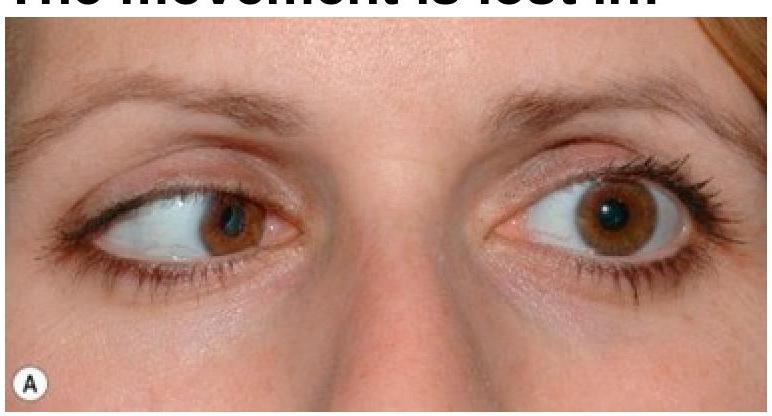
Explanation: The **Medial Longitudinal Fasciculus (MLF)** is a critical white matter tract in the brainstem responsible for coordinating eye movements and stabilizing gaze. ### **Why Option C is Incorrect (The Correct Answer)** The MLF is located on either side of the midline in the brainstem, but its anatomical position is **ventral (anterior)** to the periaqueductal gray matter and the cerebral aqueduct, not dorsal. It lies in the **tegmentum**, closely associated with the floor of the fourth ventricle in the pons and medulla. ### **Analysis of Other Options** * **Option A:** This is a core function. The MLF acts as the "bridge" connecting the **Abducens (VI)** nucleus on one side to the **Oculomotor (III)** and **Trochlear (IV)** nuclei on the opposite side to ensure conjugate horizontal gaze. * **Option B:** The MLF integrates input from the **Paramedian Pontine Reticular Formation (PPRF)** (horizontal gaze center) and the **vestibular nuclei** (head position) to coordinate head and eye movements. * **Option C:** The ascending fibers primarily originate from the **superior and medial vestibular nuclei**. These fibers are the anatomical basis for the **Vestibulo-Ocular Reflex (VOR)**, which keeps images stable on the retina during head rotation [1]. ### **High-Yield Clinical Pearls for NEET-PG** * **Internuclear Ophthalmoplegia (INO):** Caused by a lesion in the MLF. The classic presentation is **failure of adduction** of the ipsilateral eye on attempted lateral gaze, with **monocular nystagmus** of the contralateral abducting eye. * **Etiology:** In young adults, bilateral INO is highly suggestive of **Multiple Sclerosis**. In elderly patients, unilateral INO is usually due to an **Ischemic Stroke** (Basilar artery branches). * **Convergence:** In INO, convergence is usually **preserved** because it does not require the MLF pathway [2].
Organization of the Nervous System
Practice Questions
Spinal Cord Anatomy
Practice Questions
Brainstem Anatomy
Practice Questions
Cerebellum
Practice Questions
Diencephalon
Practice Questions
Cerebral Cortex
Practice Questions
Basal Ganglia
Practice Questions
Limbic System
Practice Questions
Cranial Nerves
Practice Questions
Autonomic Nervous System
Practice Questions
Neural Pathways and Tracts
Practice Questions
Neurovascular Anatomy
Practice Questions
Get full access to all questions, explanations, and performance tracking.
Start For Free