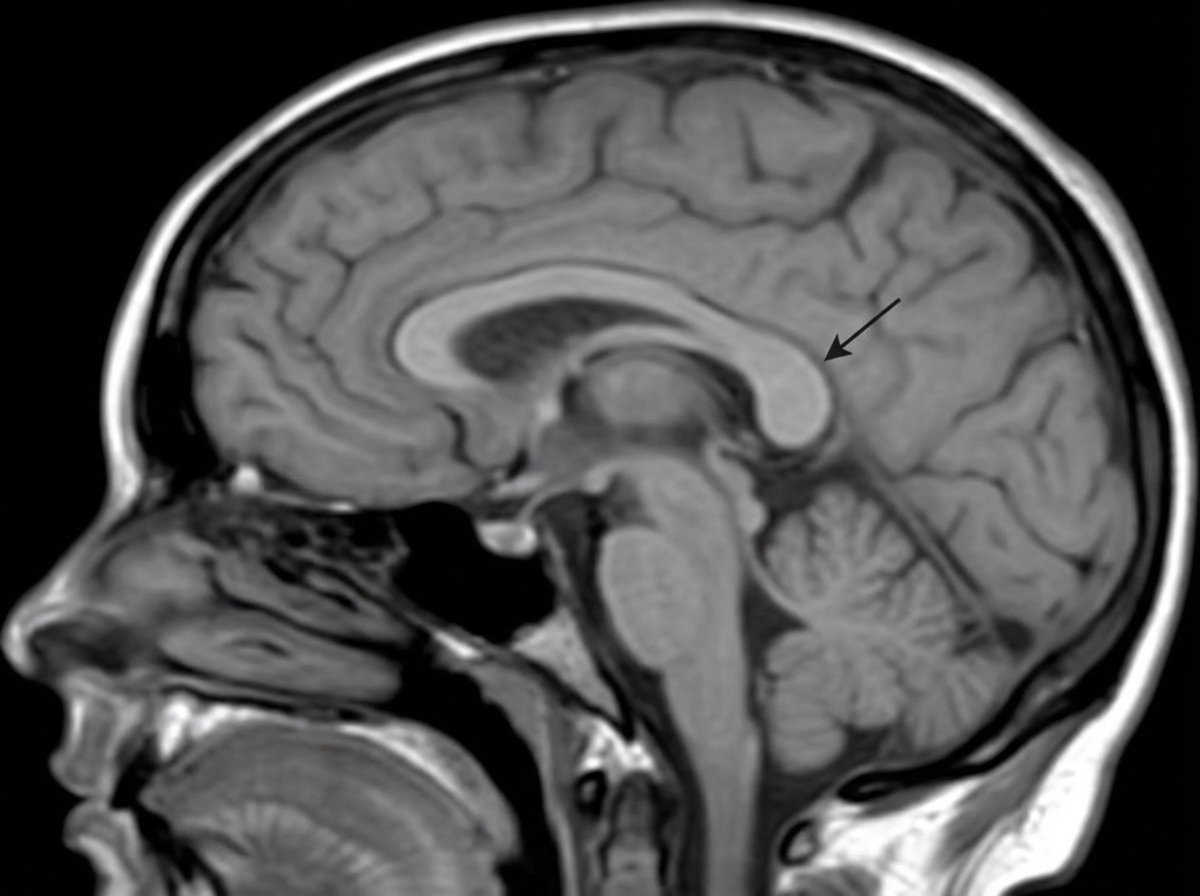
What is the most common primary malignant tumor of the liver in adults?
How many lobes are present in the cerebellum?
Which cells are not present in the cerebral cortex?
Which ion is primarily transported by the lysosomal membrane?
A patient, when asked about a particular topic, starts speaking irrelevant details that are not needed and finally reaches the goal. What is this type of formal thought disorder called?
What is true about the lateral corticospinal tract?
What is the major neurotransmitter released at the end-organ effectors of the sympathetic division of the autonomic nervous system?
What is a chicken fat clot?
The dartos muscle is supplied by which nerve?
Malignancy is typically associated with disordered differentiation and mutation. Which of the following options best describes anaplasia?
Explanation: **Explanation:** **Hepatocellular Carcinoma (HCC)** is the most common primary malignant tumor of the liver in adults, accounting for approximately 75–85% of all primary liver cancers. It typically arises in the setting of chronic liver disease, particularly **Cirrhosis** (most common cause in the West) [1] or **Chronic Hepatitis B/C infection** (most common cause globally) [1]. **Analysis of Options:** * **Hepatocellular Carcinoma (Correct):** It originates from the hepatocytes. High-yield associations include elevated **Alpha-Fetoprotein (AFP)** levels [2] and a tendency for **hematogenous spread**, specifically invading the portal or hepatic veins. * **Squamous Cell Carcinoma (Incorrect):** This is extremely rare as a primary liver tumor. It usually occurs as a secondary (metastatic) lesion or rarely from the epithelial lining of a hepatic cyst. * **Hepatoblastoma (Incorrect):** While this is a primary liver malignancy, it is the most common liver tumor in **children** (usually <3 years old), not adults [3]. * **Hepatoma (Incorrect):** This is an outdated and non-specific term. While it was historically used to refer to HCC, in modern pathology, "Hepatoma" can technically refer to any tumor of the liver (benign or malignant), making HCC the more precise and correct medical diagnosis. **NEET-PG High-Yield Pearls:** * **Risk Factors:** Aflatoxin B1 (produced by *Aspergillus flavus*), Hepatitis B (can cause HCC even without cirrhosis), and NASH [1]. * **Tumor Marker:** AFP is used for screening and monitoring (though not diagnostic alone) [2]. * **Radiology:** Characterized by **"Arterial enhancement with rapid venous washout"** on contrast-enhanced CT/MRI. * **Histology:** Look for **Mallory bodies** or **bile production** within tumor cells.
Explanation: The cerebellum is anatomically and functionally organized into specific lobes. While many students mistakenly count only the major anatomical divisions, the correct answer is **6** when considering both the anatomical and functional classifications relevant to neuroanatomy. [1] ### **Explanation of the Correct Answer (C)** The cerebellum is divided into **three anatomical lobes** and **three functional (phylogenetic) lobes**, totaling six distinct classifications often tested in competitive exams: 1. **Anatomical Lobes:** * **Anterior Lobe:** Located superior to the primary fissure. * **Posterior Lobe:** The largest part, located between the primary and posterolateral fissures. * **Flocculonodular Lobe:** The oldest part, separated by the posterolateral fissure. 2. **Functional/Phylogenetic Lobes:** * **Archicerebellum:** Corresponds to the flocculonodular lobe (maintains balance). [1] * **Paleocerebellum:** Corresponds primarily to the anterior lobe (regulates muscle tone). [1] * **Neocerebellum:** Corresponds to the posterior lobe (coordinates skilled movements). [1] ### **Why Other Options are Incorrect** * **A (2):** This refers to the **cerebellar hemispheres** (Right and Left), not the lobes. * **B (4):** This is a common distractor; while the cerebrum has four main lobes (Frontal, Parietal, Temporal, Occipital), the cerebellum does not follow this pattern. * **D (8):** There is no anatomical basis for eight lobes in the cerebellum. ### **NEET-PG High-Yield Pearls** * **Primary Fissure:** Separates the Anterior and Posterior lobes. * **Posterolateral Fissure:** Separates the Posterior and Flocculonodular lobes. * **Deep Nuclei (Lateral to Medial):** **D**entate, **E**mboliform, **G**lobose, **F**astigial (Mnemonic: **D**on't **E**at **G**reasy **F**ood). * **Clinical Sign:** Lesions in the midline (vermis/flocculonodular lobe) result in **truncal ataxia**, while lateral lesions result in **ipsilateral limb ataxia**.
Explanation: The cerebral cortex is organized into six distinct histological layers (neocortex) containing specific neuronal types. Understanding the localization of these cells is a high-yield topic for NEET-PG. **Why Purkinje cells are the correct answer:** **Purkinje cells** are exclusively found in the **cerebellar cortex**, not the cerebral cortex [1]. They constitute the middle layer (Purkinje cell layer) of the cerebellum and represent the sole output from the cerebellar cortex, sending inhibitory (GABAergic) projections to the deep cerebellar nuclei [1]. **Analysis of incorrect options:** * **Pyramidal cells:** These are the most abundant neurons in the cerebral cortex. They are found in all layers except Layer I and are especially prominent in Layer III (External Pyramidal) and Layer V (Internal Pyramidal). The giant cells of Betz in the motor cortex are a specialized type of pyramidal cell. * **Stellate (Granule) cells:** These are small, star-shaped interneurons found throughout the cerebral cortex, particularly concentrated in Layer IV (Internal Granular layer), which receives sensory input from the thalamus. * **Cajal-Retzius cells:** These are spindle-shaped cells located in the most superficial layer (**Layer I - Molecular layer**) of the cerebral cortex. They play a critical role during embryonic development in organizing cortical lamination. **High-Yield NEET-PG Pearls:** 1. **Betz Cells:** Largest pyramidal cells, found in Layer V of the primary motor cortex (Area 4). 2. **Layers of Cerebral Cortex:** Remember the sequence: Molecular (I), External Granular (II), External Pyramidal (III), Internal Granular (IV), Internal Pyramidal (V), and Multiform (VI). 3. **Afferents:** Thalamocortical fibers [2] primarily terminate in **Layer IV**. 4. **Efferents:** **Layer V** gives rise to long projection fibers (Corticospinal tract) [3], while **Layer VI** sends feedback to the thalamus.
Explanation: **Explanation:** The correct answer is **C. Hydrogen pump**. **1. Why the Hydrogen pump is correct:** Lysosomes are membrane-bound organelles responsible for intracellular digestion. To function effectively, they require an acidic internal environment (pH ~4.5 to 5.0). This acidity is maintained by a specialized **V-type ATPase (vacuolar H+ ATPase)** located in the lysosomal membrane. This pump actively transports hydrogen ions ($H^+$) from the cytosol into the lysosomal lumen against a concentration gradient, using ATP as an energy source. This low pH is essential for the activation of acid hydrolases (enzymes that break down proteins, lipids, and carbohydrates). **2. Why other options are incorrect:** * **A & B (Sodium and Potassium pumps):** The $Na^+/K^+$ ATPase pump is primarily located on the **plasma membrane** of cells, not the lysosomal membrane [1]. Its role is to maintain resting membrane potential and osmotic balance by pumping 3 $Na^+$ out and 2 $K^+$ in. While lysosomes have secondary transporters for various ions to maintain charge balance, they do not possess primary "sodium or potassium pumps" as their defining transport mechanism. **3. Clinical Pearls & High-Yield Facts for NEET-PG:** * **Acid Hydrolases:** These enzymes are only active at acidic pH. This serves as a protective mechanism; if a lysosome ruptures, the enzymes become inactive in the neutral pH of the cytosol (~7.2), preventing accidental self-digestion of the cell. * **Lysosomal Storage Diseases (LSDs):** Defects in lysosomal enzymes or the acidification process lead to the accumulation of undigested substrates (e.g., Gaucher’s, Tay-Sachs, and Pompe disease). * **I-Cell Disease:** A high-yield pathology where a defect in phosphotransferase prevents enzymes from being tagged with Mannose-6-Phosphate, leading to empty lysosomes and high serum levels of lysosomal enzymes.
Explanation: ### Explanation **Correct Answer: B. Circumstantiality** **Why it is correct:** Circumstantiality is a formal thought disorder where the patient includes excessive, tedious, and irrelevant details while answering a question. Although the patient takes a "long and winding road" through unnecessary information, they **eventually return to the point** and reach the original goal. It is often seen in individuals with obsessive-compulsive traits, epilepsy, or cognitive impairment. **Analysis of Incorrect Options:** * **A. Loosening of Association (Knight’s Move Thinking):** This involves a lack of logical connection between successive thoughts. The patient shifts from one topic to another that is completely unrelated, and unlike circumstantiality, they **never reach the goal.** It is a hallmark of Schizophrenia. * **C. Flight of Ideas:** Characterized by rapid, continuous speech where the patient jumps quickly from one idea to another. While there is usually a discernible link (often based on chance associations or wordplay), the patient is easily distracted and **fails to reach the original goal.** This is classic for Mania. * **D. Clang Association:** A disorder where the choice of words is governed by their sounds (rhyming or punning) rather than their meaning (e.g., "I am cold, bold, told, gold"). **Clinical Pearls for NEET-PG:** * **The "Goal" Rule:** In **Circumstantiality**, the goal is reached. In **Tangentiality**, the patient moves away from the topic and *never* reaches the goal. * **Thought Process vs. Content:** Formal thought disorders (like the options above) refer to the *way* a person thinks (process), whereas delusions refer to *what* a person thinks (content). * **Key Association:** Flight of ideas + Pressure of speech = **Mania**. Loosening of association = **Schizophrenia**.
Explanation: The **lateral corticospinal tract (LCST)** is the most clinically significant descending motor pathway, responsible for fine, skilled movements of the distal limbs [1]. ### **Explanation of the Correct Option** * **A. Crossed:** This is correct. Approximately **85-90%** of the fibers from the upper motor neurons (originating in the primary motor cortex) undergo decussation (crossing over) at the **lower medulla** (pyramidal decussation). After crossing, these fibers descend in the lateral column of the spinal cord as the lateral corticospinal tract [1]. ### **Explanation of Incorrect Options** * **B. Uncrossed:** This describes the **Anterior (Ventral) Corticospinal Tract**. About 10-15% of fibers do not cross in the medulla and descend ipsilaterally in the anterior column [1]. * **C. Stops in the midthoracic region:** This is incorrect. The LCST extends throughout the entire length of the spinal cord to synapse with lower motor neurons in the anterior horn at all levels (cervical to sacral). * **D. Crossed at the midspinal level:** This is incorrect. While the *anterior* corticospinal tract fibers eventually cross at the level of their destination spinal segment (via the anterior white commissure), the *lateral* tract has already crossed at the **medullary-spinal junction** [1]. ### **High-Yield Clinical Pearls for NEET-PG** * **Lesion Localization:** A lesion **above** the pyramidal decussation (e.g., in the internal capsule) results in **contralateral** motor deficits. A lesion **below** the decussation (in the spinal cord) results in **ipsilateral** motor deficits. * **Somatotopy:** In the spinal cord, the LCST is organized such that fibers for the **sacral** segments are most lateral, while **cervical** fibers are more medial. * **Function:** It primarily controls the **distal musculature** (fingers/toes), whereas the anterior tract controls proximal/axial muscles [1].
Explanation: The autonomic nervous system (ANS) is divided into the sympathetic and parasympathetic divisions. The sympathetic nervous system typically follows a two-neuron chain: a preganglionic neuron and a postganglionic neuron [1]. **Why Noradrenaline is correct:** In the sympathetic division, while **Acetylcholine (ACh)** is the neurotransmitter at the ganglia (preganglionic synapse), **Noradrenaline (Norepinephrine)** is the primary neurotransmitter released by the postganglionic neurons at the end-organ effectors [1]. It acts on alpha and beta-adrenergic receptors to mediate the "fight or flight" response [2]. **Analysis of Incorrect Options:** * **Adrenaline (Epinephrine):** While it is a major sympathetic hormone, it is primarily released into the bloodstream by the **adrenal medulla** rather than at the nerve endings of postganglionic fibers [1]. * **Dopamine:** This is a precursor to noradrenaline. While it acts as a neurotransmitter in the CNS and specific renal vascular sites, it is not the general sympathetic effector transmitter [1]. * **Acetylcholine:** This is the neurotransmitter for the entire parasympathetic system and all autonomic preganglionic terminals. Notably, it is also the transmitter for sympathetic fibers innervating **sweat glands** (an exception). **High-Yield Clinical Pearls for NEET-PG:** * **The "Sweat Gland" Exception:** Postganglionic sympathetic fibers to eccrine sweat glands are **cholinergic** (release ACh), not adrenergic. * **Adrenal Medulla:** Often considered a "modified sympathetic ganglion," its chromaffin cells release roughly 80% Adrenaline and 20% Noradrenaline directly into the blood [1]. * **Rate-limiting step:** Tyrosine hydroxylase is the rate-limiting enzyme in the synthesis of Noradrenaline.
Explanation: **Explanation:** The term **"chicken fat clot"** refers to a specific type of **postmortem clot**. After death, the settling of red blood cells (RBCs) due to gravity (sedimentation) occurs before the blood completely coagulates. This results in a layered appearance: the lower portion is dark red and firm (known as a "currant jelly" clot), while the upper portion consists of plasma and fibrin without RBCs. This upper layer is yellowish, translucent, and gelatinous, resembling chicken fat—hence the name. **Why the other options are incorrect:** * **Thrombus:** Unlike postmortem clots, a thrombus is formed *intravitally* (during life) within the cardiovascular system. Thrombi are typically firm, friable, and attached to the vessel wall. They often exhibit **Lines of Zahn** (alternating layers of platelets/fibrin and RBCs), which are absent in postmortem clots. * **Infarct:** An infarct is an area of ischemic necrosis caused by the occlusion of arterial supply or venous drainage. It is a tissue-level change, not a type of blood clot itself. **NEET-PG High-Yield Pearls:** 1. **Distinguishing Feature:** Postmortem clots are **not attached** to the vessel wall and take the shape of the vessel (molded), whereas thrombi are usually adherent to the endothelium. 2. **Lines of Zahn:** Their presence is the definitive histological marker that a clot formed while the patient was alive (thrombus). 3. **Chicken Fat vs. Currant Jelly:** Both are postmortem findings; the difference is simply the concentration of RBCs due to gravity.
Explanation: The **dartos muscle** is a layer of smooth muscle fibers located within the superficial fascia of the scrotum. Its primary function is to regulate the temperature of the testes by contracting (wrinkling the scrotal skin) to reduce heat loss or relaxing to increase surface area for cooling. ### Why Option A is Correct: The dartos muscle is composed of **smooth muscle**, which is under the control of the autonomic nervous system. Specifically, it is supplied by **postganglionic sympathetic nerve fibers**. These sympathetic fibers reach the scrotum by traveling along the **genital branch of the genitofemoral nerve** (L1, L2) and the posterior scrotal nerves. While the genitofemoral nerve is primarily known for its somatic motor supply to the cremaster muscle, its genital branch serves as the conduit for the sympathetic fibers destined for the dartos. ### Why the Other Options are Incorrect: * **Option B:** While the sympathetic nervous system controls the dartos, these fibers typically arise from the **lower lumbar splanchnic nerves** and the hypogastric plexus, not directly as a primary output of the sacral plexus. * **Option C:** The **pudendal nerve** (S2-S4) provides somatic sensory innervation to the perineum and scrotum (via posterior scrotal nerves) and motor supply to the external urethral and anal sphincters, but it is not the primary motor supply for the dartos muscle. * **Option D:** Since the specific sympathetic pathway via the genitofemoral nerve is the established anatomical answer, "All the above" is incorrect. ### NEET-PG High-Yield Pearls: * **Dartos vs. Cremaster:** The **Dartos** is smooth muscle (Sympathetic supply), whereas the **Cremaster** is skeletal muscle (Somatic supply via the genital branch of the genitofemoral nerve). * **Cremasteric Reflex:** The afferent limb is the femoral branch of the genitofemoral nerve (or ilioinguinal nerve), and the efferent limb is the genital branch of the genitofemoral nerve. * **Temperature Regulation:** The dartos muscle is essential for spermatogenesis, which requires a temperature approximately 2-3°C below core body temperature.
Explanation: **Explanation:** **Anaplasia** is defined as a lack of differentiation, representing a hallmark of malignancy. It implies a "reversal" to a primitive, undifferentiated state where cells lose the structural and functional characteristics of their tissue of origin. 1. **Why Option D is Correct:** In anaplastic tumors, cells exhibit **pleomorphism** (variation in size and shape), hyperchromatic nuclei, and high nuclear-to-cytoplasmic ratios [1]. The formation of **tumor giant cells** (large cells with single or multiple polymorphic nuclei) is a classic morphological feature of anaplasia. In muscle tumors (like rhabdomyosarcoma), the presence of these giant cells signifies a loss of normal myogenic differentiation, indicating a high-grade, anaplastic malignancy. 2. **Why Other Options are Incorrect:** * **Options A & B:** These describe **well-differentiated** tumors. If a hepatic tumor produces bile or a skin tumor produces keratin pearls, the cells are still performing the specialized functions of their parent tissue. This indicates low-grade malignancy, not anaplasia. * **Option C:** This describes **Metaplasia**. Bronchial epithelium (normally pseudostratified ciliated columnar) changing to keratin-producing squamous epithelium is a reversible adaptation to stress (e.g., smoking). While it can precede malignancy, the production of keratin pearls here represents squamous differentiation, not anaplasia. **NEET-PG High-Yield Pearls:** * **Hallmarks of Anaplasia:** Pleomorphism, abnormal nuclear morphology (hyperchromasia), increased/atypical mitoses (tripolar spindles), and loss of polarity [1]. * **Differentiation vs. Anaplasia:** Differentiation is the extent to which neoplastic cells resemble their normal ancestors. Anaplasia is the total lack of differentiation. * **Clinical Significance:** The degree of anaplasia is the primary basis for **histological grading** of a tumor; higher anaplasia correlates with increased aggressiveness and poorer prognosis [1].
Organization of the Nervous System
Practice Questions
Spinal Cord Anatomy
Practice Questions
Brainstem Anatomy
Practice Questions
Cerebellum
Practice Questions
Diencephalon
Practice Questions
Cerebral Cortex
Practice Questions
Basal Ganglia
Practice Questions
Limbic System
Practice Questions
Cranial Nerves
Practice Questions
Autonomic Nervous System
Practice Questions
Neural Pathways and Tracts
Practice Questions
Neurovascular Anatomy
Practice Questions
Get full access to all questions, explanations, and performance tracking.
Start For Free