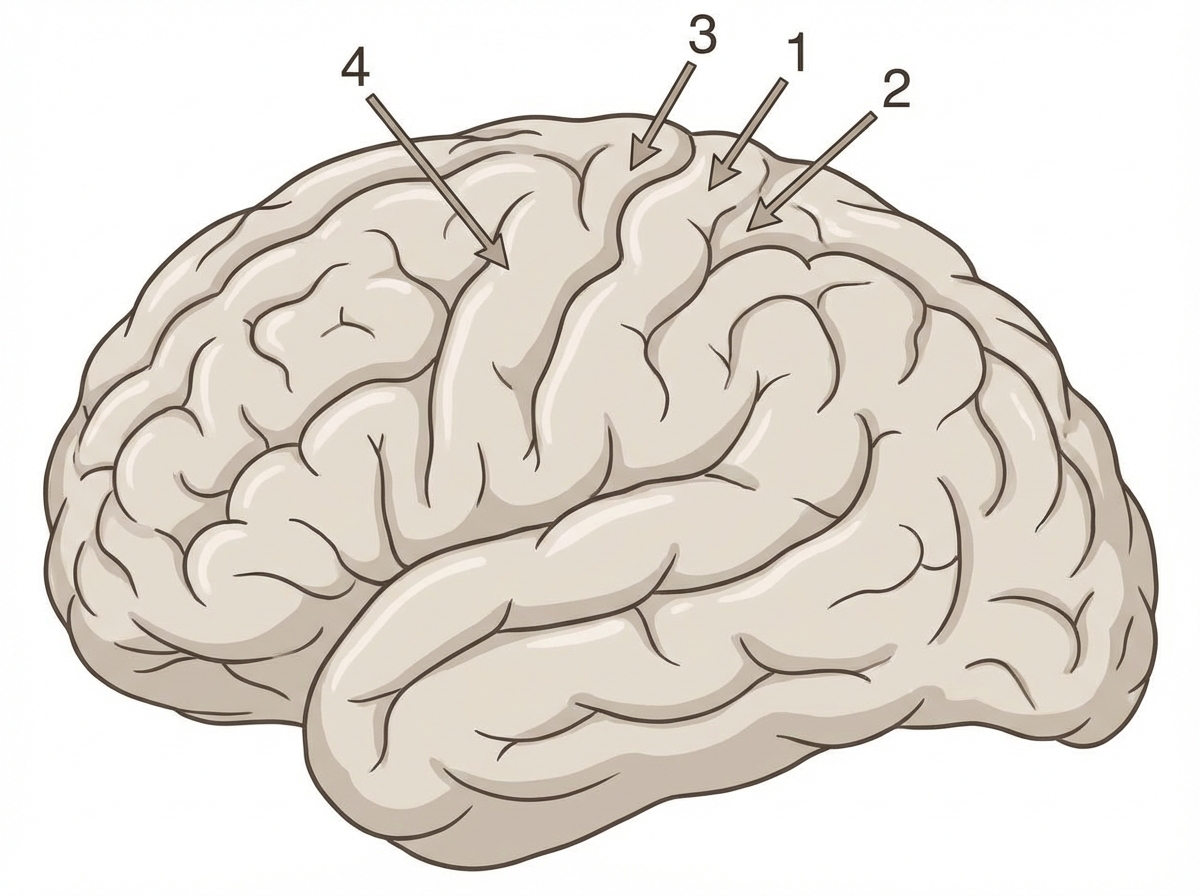
Infantile proportion in adults is seen in which of the following conditions?
At what stage of development is an embryo termed a fetus, according to embryologists?
Drugs used for rare diseases are known as?
In males, which structure is formed from the Mullerian duct?
Which of the following area lies immediately lateral to the anterior perforating substance?
Which of the following cells is most commonly affected by HIV?
Corticospinal fibers pass through which part of the internal capsule?
Which cellular organelle is primarily responsible for protein synthesis?
'Boiled lobster' skin appearance is seen in which type of poisoning?
Which of the following cranial nerves are present in the posterior cranial fossa?
Explanation: **Explanation:** The correct answer is **Achondroplasia**. **1. Why Achondroplasia is correct:** Achondroplasia is the most common cause of disproportionate short stature. It is an autosomal dominant condition caused by a mutation in the **FGFR3 gene**, which leads to failure of endochondral ossification [1]. In this condition, the limbs (long bones) are significantly shortened (rhizomelic shortening), while the trunk and head size remain relatively normal or enlarged (macrocephaly) [1]. Because the limbs fail to grow at the same rate as the torso, the adult retains the **infantile body proportion**, where the upper segment to lower segment (US:LS) ratio remains high (around 1.7:1), similar to a newborn, rather than the normal adult ratio of 1:1. **2. Why other options are incorrect:** * **Morquio’s Disease:** This is a mucopolysaccharidosis (MPS IV) characterized by short-trunk dwarfism. Unlike achondroplasia, the limbs are relatively long compared to the severely shortened spine, leading to a different set of proportions. * **Hypothyroidism (Cretinism):** While untreated congenital hypothyroidism causes stunted growth and delayed skeletal maturation, it typically presents with generalized growth failure and mental retardation rather than the classic "infantile proportion" skeletal phenotype seen in primary bone dysplasias. * **Malnutrition:** This leads to proportionate growth failure (stunting). The body remains in proportion, but the overall stature is small. **3. High-Yield Clinical Pearls for NEET-PG:** * **Inheritance:** Autosomal Dominant (80% are new mutations associated with advanced paternal age) [1]. * **Radiological Signs:** "Square iliac wings," "Champagne glass" pelvis, and narrowing of the interpedicular distance in the lumbar spine. * **Trident Hand:** A characteristic feature where there is a persistent space between the third and fourth fingers. * **Ossification:** Achondroplasia affects **endochondral ossification** (long bones); intramembranous ossification (flat bones like the vault of the skull) remains normal [1].
Explanation: In human embryology, the prenatal period is divided into two distinct stages: the **embryonic period** and the **fetal period**. [1] 1. **Embryonic Period (Fertilization to 8th week):** This is the stage of organogenesis where all major internal and external structures are established. [3] 2. **Fetal Period (9th week to Birth):** Beginning at the **start of the 9th week after fertilization**, the embryo is termed a **fetus**. This stage is characterized by the rapid growth of the body and the functional maturation of tissues and organs. [1] **Analysis of Options:** * **Option A (9 weeks after fertilization):** This is the correct anatomical and embryological definition. By this time, the crown-rump length (CRL) has increased significantly, and the head constitutes nearly half of the fetus. [1] * **Option B (10 weeks after fertilization):** This is incorrect as the transition occurs exactly at the beginning of the 9th week. * **Option C (12 weeks after LMP):** While 9 weeks post-fertilization corresponds roughly to 11 weeks after the Last Menstrual Period (LMP), "12 weeks" is an inaccurate marker for the start of the fetal period. [1] * **Option D (12 weeks after fertilization):** This marks the end of the first trimester, but the transition to "fetus" happens much earlier. **High-Yield NEET-PG Pearls:** * **Organogenesis** is most active during weeks 3–8; this is the period of **maximum teratogenicity**. * **The Fetal Period** is primarily concerned with **histogenesis** (tissue differentiation) and weight gain. [2] * **Viability:** A fetus is generally considered viable if it reaches 24 weeks of gestation or a weight of 500g (though this varies by legal and clinical guidelines).
Explanation: **Explanation:** **Correct Answer: A. Orphan drugs** Orphan drugs are medicinal products intended for the diagnosis, prevention, or treatment of life-threatening or very serious diseases that are rare. These diseases are termed "orphan diseases" because they affect a small percentage of the population (e.g., fewer than 200,000 people in the US). Because the market for these drugs is so small, pharmaceutical companies are often reluctant to develop them under normal marketing conditions. To encourage their production, governments provide incentives such as tax credits, patent extensions, and simplified marketing authorization. **Analysis of Incorrect Options:** * **B. Rare drugs:** This is a distractor term. While the diseases are rare, the pharmacological classification for the treatment is "Orphan drugs," not "rare drugs." * **C. Radioactive isotopes:** These are atoms with unstable nuclei used primarily in nuclear medicine for diagnostic imaging (e.g., Technetium-99m) or radiotherapy (e.g., Iodine-131 for thyroid cancer). * **D. Alkylating agents:** This is a class of chemotherapy drugs (e.g., Cyclophosphamide, Busulfan) that work by adding an alkyl group to DNA, preventing cell division. They are used for common cancers and are not synonymous with rare disease treatments. **High-Yield Clinical Pearls for NEET-PG:** * **Orphan Drug Act (1983):** The landmark legislation that first defined these drugs. * **Examples of Orphan Drugs:** **Digoxin Immune Fab** (for digitalis toxicity), **Fomepizole** (for ethylene glycol poisoning), and **Amphotericin B** (for systemic fungal infections in specific contexts). * **Criteria:** In India, a disease is often considered rare if it affects 1 in 5,000 people or less. * **Neuroanatomy Link:** Many orphan drugs target rare neurogenetic disorders like Spinal Muscular Atrophy (e.g., **Nusinersen**).
Explanation: In embryology, the **Mullerian ducts** (paramesonephric ducts) are the primordial structures that develop into the female reproductive tract (fallopian tubes, uterus, and upper vagina). In males, the secretion of **Anti-Mullerian Hormone (AMH)** by Sertoli cells causes these ducts to regress [1], leaving behind only small vestigial remnants. ### **Explanation of Options:** * **Appendix of testis (Correct):** This is a small, sessile body located at the upper pole of the testis. It represents the cranial end of the Mullerian duct that fails to degenerate. It is the most common vestigial remnant of this duct in males. * **Prostatic utricle:** While also a Mullerian duct remnant (representing the primitive uterus/vagina), it is located in the prostatic urethra. In many NEET-PG contexts, if both are options, the **Appendix of testis** is often cited as the primary cranial remnant, though both are technically correct. However, in this specific question format, the Appendix of testis is the classic textbook answer. * **Ductus deferens & Ejaculatory duct (Incorrect):** These structures are derived from the **Wolffian duct** (mesonephric duct) under the influence of testosterone [1]. The Wolffian duct also gives rise to the epididymis and seminal vesicles [1]. ### **High-Yield Clinical Pearls for NEET-PG:** 1. **Torsion of the Appendix Testis:** This is a common cause of acute scrotum in prepubertal boys. It presents with the pathognomonic **"Blue Dot Sign"** (a blue-colored nodule visible through the scrotal skin). 2. **Mullerian vs. Wolffian:** Remember: **M**ullerian = **M**aternal (Female structures); **W**olffian = **W**olf/Man (Male structures). 3. **Persistent Mullerian Duct Syndrome:** Occurs due to a deficiency of AMH or its receptors, leading to a male phenotype with a retained uterus and fallopian tubes.
Explanation: The **Anterior Perforating Substance (APS)** is a quadrilateral area of gray matter located at the base of the brain, just behind the olfactory trigone. It is named for the numerous small branches of the anterior and middle cerebral arteries (lenticulostriate arteries) that pierce it to supply the internal capsule and basal ganglia. **Why Limen Insulae is correct:** The APS is bounded: * **Anteriorly:** By the bifurcation of the olfactory tract (medial and lateral olfactory striae). * **Medially:** By the optic chiasma. * **Posteriorly:** By the optic tract. * **Laterally:** By the **Limen Insulae**. The limen insulae is the threshold of the insula, where the lateral olfactory stria meets the insular cortex. It serves as the anatomical bridge between the base of the brain and the lateral sulcus. **Analysis of Incorrect Options:** * **Uncus (A):** Located posterolateral to the APS, it is the anterior-most part of the parahippocampal gyrus. * **Orbital gyrus (B):** These lie on the inferior surface of the frontal lobe, anterior to the olfactory trigone and APS. * **Optic Chiasma (C):** This structure lies **medial** to the anterior perforating substance. **High-Yield Facts for NEET-PG:** 1. **Vascular Supply:** The APS is pierced by the **Lenticulostriate arteries** (branches of the M1 segment of the Middle Cerebral Artery). 2. **Clinical Significance:** Occlusion of the vessels piercing the APS leads to lacunar infarcts involving the internal capsule, often resulting in pure motor stroke. 3. **Posterior Perforating Substance:** Located in the interpeduncular fossa, it is pierced by branches of the **Posterior Cerebral Artery**.
Explanation: The Human Immunodeficiency Virus (HIV) primarily targets cells of the immune system that express the **CD4 receptor** on their surface. [1] **Why Helper Cells are correct:** CD4+ T-lymphocytes, commonly known as **Helper T-cells**, are the primary targets of HIV. [1] The viral envelope glycoprotein **gp120** binds specifically to the CD4 molecule. For successful entry, the virus also requires co-receptors, namely **CCR5** (found on macrophages/early infection) or **CXCR4** (found on T-cells/late infection). Once inside, the virus replicates and eventually destroys these cells, leading to profound immunodeficiency. [1] **Why the other options are incorrect:** * **Suppressor cells:** These are typically CD8+ T-cells. While they play a role in the immune response against HIV, they lack the CD4 receptor required for viral attachment and entry. * **Red blood cells (RBCs):** RBCs are anucleated and lack the CD4 receptors and co-receptors necessary for HIV infection. * **Platelets:** Like RBCs, platelets do not possess the molecular machinery or receptors required for HIV tropism. **High-Yield Clinical Pearls for NEET-PG:** * **Cellular Tropism:** HIV also affects **Macrophages** and **Microglial cells** (the resident macrophages of the CNS), which act as reservoirs for the virus. * **Diagnosis:** A CD4+ T-cell count below **200 cells/mm³** is the clinical definition for the progression to AIDS. [1] * **Neuroanatomy Link:** HIV enters the CNS via the
Explanation: The **Internal Capsule** is a massive bundle of projection fibers (both ascending and descending) that separates the thalamus and caudate nucleus from the lentiform nucleus. Understanding its topography is high-yield for neuroanatomy. **Why the correct answer is right:** The **Posterior Limb** of the internal capsule is situated between the thalamus (medially) and the lentiform nucleus (laterally). It is functionally divided: * **Anterior two-thirds:** Contains the **Corticospinal tract** (motor fibers for the body) [1]. These fibers are somatotopically organized, with the "arm" fibers located more anteriorly than the "leg" fibers. * **Posterior one-third:** Contains sensory fibers (thalamocortical radiations) and the auditory/visual radiations. **Analysis of Incorrect Options:** * **Options A, C, and D (Anterior Limb):** The anterior limb lies between the head of the caudate nucleus and the lentiform nucleus. It primarily carries **frontopontine fibers** and **anterior thalamic radiations** (connecting the mediodorsal nucleus of the thalamus to the prefrontal cortex). It does *not* carry motor fibers for the trunk or limbs. **Clinical Pearls for NEET-PG:** 1. **Genu of Internal Capsule:** Contains the **Corticobulbar (corticonuclear) tract**, which supplies the cranial nerve nuclei [1]. 2. **Blood Supply:** The posterior limb is primarily supplied by the **Lenticulostriate arteries** (branches of the Middle Cerebral Artery) and the **Anterior Choroidal artery** [1]. 3. **Charcot’s Artery of Cerebral Hemorrhage:** A specific lenticulostriate artery that frequently ruptures, leading to contralateral hemiplegia due to involvement of the corticospinal fibers in the posterior limb [1]. 4. **Retrolentiform part:** Contains optic radiations (geniculocalcarine tract). 5. **Sublentiform part:** Contains auditory radiations.
Explanation: **Explanation:** In the context of neuroanatomy and cell biology, protein synthesis is a coordinated process involving both **transcription** and **translation**. 1. **The Nucleus:** This is the site of **transcription** [2]. Here, the genetic code stored in DNA is transcribed into messenger RNA (mRNA). Without the nucleus, the "blueprint" for proteins cannot be generated. 2. **Rough Endoplasmic Reticulum (RER):** This is the site of **translation** [1]. The RER is studded with ribosomes that read the mRNA to assemble amino acids into polypeptide chains [1]. In neurons, the RER is exceptionally well-developed and aggregates into structures known as **Nissl bodies**, which are essential for synthesizing neurotransmitters and structural proteins. Therefore, while the RER is the physical site of assembly, the nucleus is functionally indispensable for the initiation of the protein synthesis pathway. **Analysis of Options:** * **Option A (Nucleus):** Incorrect as a standalone answer because it only handles the genetic coding (transcription), not the physical assembly of proteins [2]. * **Option B (Rough ER):** Incorrect as a standalone answer because, while it is the primary site of translation, it cannot function without the mRNA produced by the nucleus [1]. * **Option C (Both):** Correct, as protein synthesis is a two-step process requiring both organelles. **NEET-PG High-Yield Pearls:** * **Nissl Bodies:** These are composed of RER and free ribosomes. They are found in the **dendrites and cell body (soma)** but are notably **absent in the axon and axon hillock**. * **Chromatolysis:** This is the histological reaction to axonal injury where Nissl bodies disperse and the nucleus moves to the periphery, indicating an increase in protein synthesis for repair. * **Mitochondria:** While not the primary site, mitochondria contain their own DNA and ribosomes for synthesizing a small subset of mitochondrial proteins.
Explanation: **Explanation:** **Boric acid poisoning** is the correct answer. The characteristic **'Boiled Lobster' appearance** refers to an intense, generalized bright red erythroderma followed by extensive desquamation of the skin. This occurs due to the toxic effects of boron on the epithelial cells. It is most commonly seen in infants or children following accidental ingestion, topical application on broken skin, or accidental use in formula. The systemic toxicity also manifests with gastrointestinal distress (blue-green emesis/diarrhea) and CNS stimulation or depression. **Analysis of Incorrect Options:** * **Acetic Acid Poisoning:** Typically presents with severe corrosive injury to the upper GI tract, hemolysis, and hemoglobinuria. It does not produce a specific generalized skin rash. * **Alkali Poisoning:** Causes **liquefactive necrosis**, leading to deep tissue penetration and "soapy" skin (saponification) at the site of contact, rather than a systemic lobster-red appearance. * **Carbolic Acid (Phenol) Poisoning:** Known for causing **coagulative necrosis** and a characteristic "whitish/greyish" cooked-meat appearance of the skin/mucosa at the site of contact, along with ochronosis (darkening of tissues) in chronic cases. **High-Yield Clinical Pearls for NEET-PG:** * **Boric Acid:** Look for the triad of "Boiled lobster rash," "Blue-green vomit," and "Meningeal irritation." * **Nitric Acid:** Causes a characteristic **yellow discoloration** of the skin/tissues (Xanthoproteic reaction). * **Sulfuric Acid:** Causes **black charring** of tissues due to intense dehydration. * **Copper Sulfate:** Also associated with blue/green vomitus, but lacks the specific lobster-red dermatological finding.
Explanation: ### Explanation The **posterior cranial fossa** is the deepest and largest of the three cranial fossae, housing the brainstem (midbrain, pons, and medulla) and the cerebellum. The key to answering this question lies in understanding the **anatomical exit points** and the **origin** of the cranial nerves from the brainstem. **1. Why Option A (3rd to 12th) is Correct:** * **Midbrain:** The **Oculomotor nerve (CN III)** and **Trochlear nerve (CN IV)** originate from the midbrain. Although CN III exits the brainstem anteriorly into the interpeduncular fossa, it remains within the posterior cranial fossa before piercing the dura to enter the cavernous sinus. * **Pons:** The **Trigeminal (V)**, **Abducens (VI)**, **Facial (VII)**, and **Vestibulocochlear (VIII)** nerves emerge from the pons or the pontomedullary junction. * **Medulla:** The **Glossopharyngeal (IX)**, **Vagus (X)**, **Accessory (XI)**, and **Hypoglossal (XII)** nerves emerge from the medulla. Since the brainstem resides entirely in the posterior fossa, all nerves emerging from it (CN III through CN XII) are present here. **2. Why Other Options are Incorrect:** * **CN I (Olfactory):** Located in the **anterior cranial fossa** (cribriform plate). * **CN II (Optic):** Located in the **middle cranial fossa** (optic canal/chiasmatic groove). * Options B, C, and D are incorrect because they exclude the Oculomotor (III), Trochlear (IV), or Trigeminal (V) nerves, all of which are present in the posterior fossa. **Clinical Pearls & High-Yield Facts:** * **Smallest & Only Posterior Exit:** The **Trochlear nerve (CN IV)** is the only cranial nerve to emerge from the dorsal (posterior) aspect of the brainstem. * **Longest Intracranial Course:** CN IV has the longest intracranial course, making it highly susceptible to trauma. * **Internal Acoustic Meatus:** CN VII and VIII exit the posterior fossa through this opening. * **Jugular Foramen:** CN IX, X, and XI exit through this foramen, located between the petrous temporal and occipital bones.
Organization of the Nervous System
Practice Questions
Spinal Cord Anatomy
Practice Questions
Brainstem Anatomy
Practice Questions
Cerebellum
Practice Questions
Diencephalon
Practice Questions
Cerebral Cortex
Practice Questions
Basal Ganglia
Practice Questions
Limbic System
Practice Questions
Cranial Nerves
Practice Questions
Autonomic Nervous System
Practice Questions
Neural Pathways and Tracts
Practice Questions
Neurovascular Anatomy
Practice Questions
Get full access to all questions, explanations, and performance tracking.
Start For Free