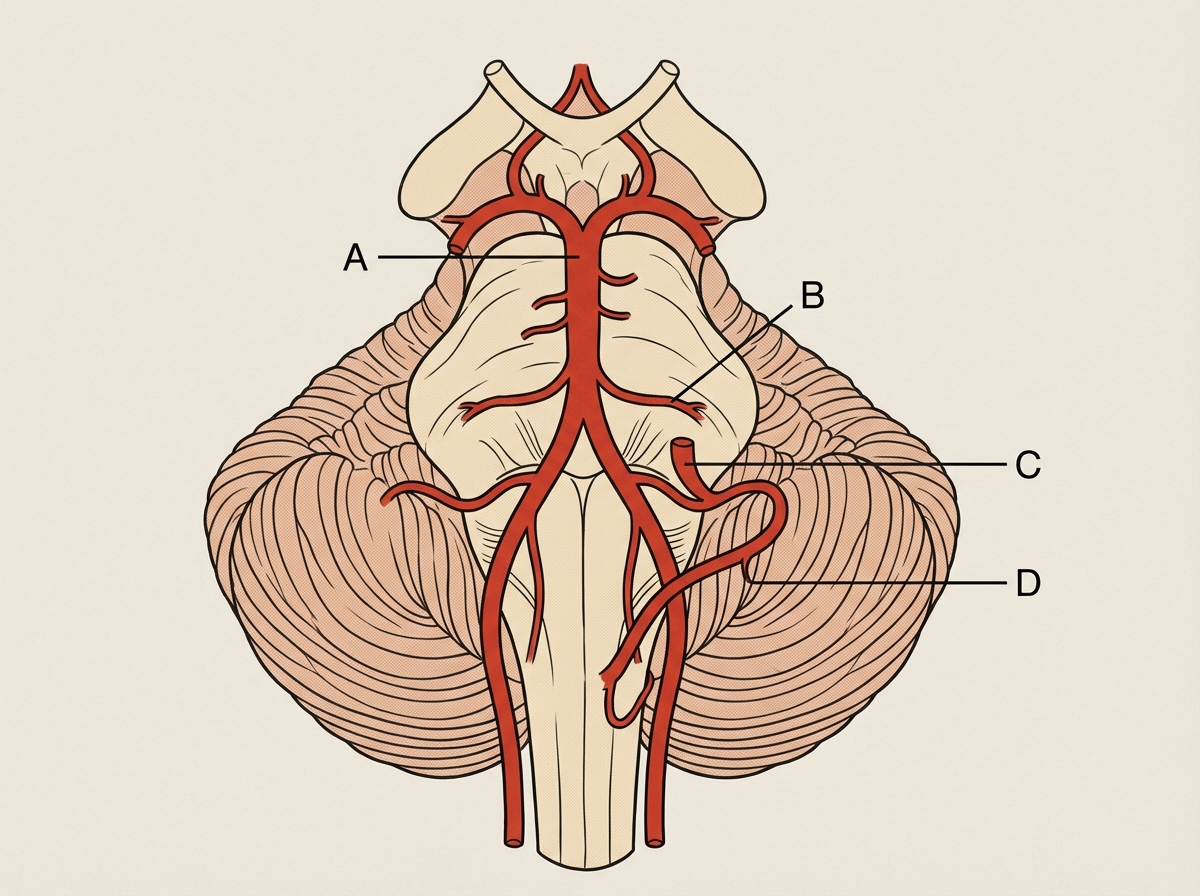
Which of the following structures does NOT pass through the internal auditory meatus?
A patient presented with acute abdominal pain and underwent cholecystectomy based on clinical suspicion. Histopathological examination of the removed gallbladder revealed normal findings. What type of epithelium lines the gallbladder?
In the optic pathway, which order of neuron does the ganglion cell belong to?
A continuous murmur is found in all, except?
Which of the following anatomical structures is not present at the petrous part of the temporal bone?
Which of the following is NOT a second messenger?
All of the following are pain insensitive structures except?
Infective endocarditis is least likely to occur in which of the following conditions?
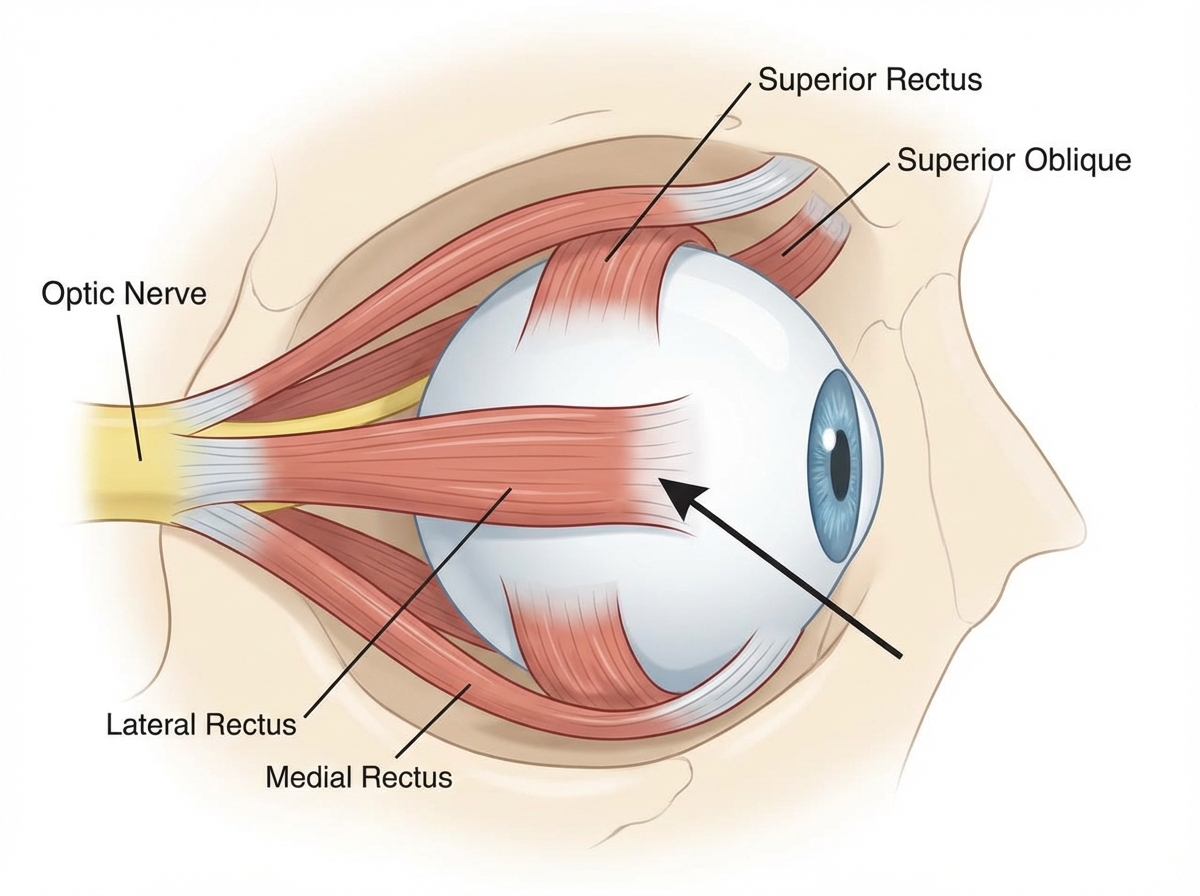
Which of the following anti-glaucoma medications is unsafe in infants?
Decrease in diffusion capacity of the lung for carbon monoxide (DLCO) is diagnosed by which of the following?
Explanation: The **internal auditory meatus (IAM)** is a bony canal in the petrous part of the temporal bone that serves as a conduit for cranial nerves and associated vasculature from the posterior cranial fossa to the inner ear. ### **Why Option B is Correct** The **Anterior Inferior Cerebellar Artery (AICA)** typically does not pass *through* the internal auditory meatus. Instead, it gives off a specific branch called the **Labyrinthine artery** (Internal Auditory artery), which enters the IAM. While the AICA is closely related to the meatus anatomically and may occasionally form a loop near its opening (porus acusticus), the standard anatomical teaching for NEET-PG is that the **Labyrinthine artery** is the vascular content of the IAM, not the parent AICA itself. ### **Analysis of Incorrect Options** The IAM is divided by a transverse crest and a vertical "Bill’s bar" into four quadrants. The structures passing through include: * **Nerve of Wrisberg (Option A):** This is the **sensory root of the Facial Nerve** (Nervus Intermedius). It travels alongside the motor root of CN VII through the anterosuperior quadrant. * **Superior Vestibular Nerve (Option C):** This nerve carries equilibrium sensations and occupies the **posterosuperior** quadrant. * **Cochlear Nerve (Option D):** This nerve carries auditory signals and occupies the **anteroinferior** quadrant. *(Note: The Inferior Vestibular nerve occupies the posteroinferior quadrant). ### **Clinical Pearls for NEET-PG** * **Mnemonic for IAM contents:** "7 up, Coke down" (CN **7** is **up**per/superior; **Coch**lear is **down**/inferior). * **Acoustic Neuroma (Vestibular Schwannoma):** Usually arises from the vestibular nerves within the IAM [1]. Early symptoms include tinnitus and hearing loss due to compression of the adjacent cochlear nerve [1]. * **Bill’s Bar:** A vertical ridge of bone in the IAM that separates the facial nerve from the superior vestibular nerve. It is a crucial surgical landmark.
Explanation: The gallbladder is a storage organ designed to concentrate bile by absorbing water and electrolytes. To facilitate this high-volume absorption, the gallbladder is lined by a **Simple Columnar Epithelium with a Brush Border**. **Why Option B is Correct:** The "brush border" consists of numerous **microvilli** on the apical surface of the columnar cells. These microvilli significantly increase the surface area for the absorption of water and inorganic salts, allowing bile to be concentrated up to 10-fold. Unlike the small intestine, the gallbladder epithelium lacks goblet cells and crypts. **Why Other Options are Incorrect:** * **Option A (Squamous):** Squamous epithelium is found in areas requiring rapid diffusion (alveoli) or protection against friction (skin/esophagus), not in absorptive visceral organs. * **Option B (Simple Columnar):** While technically columnar, this option is less specific than "brush border." In NEET-PG, always choose the most anatomically descriptive option. * **Option D (Simple Columnar with Stereocilia):** Stereocilia are long, non-motile microvilli found primarily in the **epididymis** and the sensory cells of the inner ear. **High-Yield NEET-PG Pearls:** 1. **Rokitansky-Aschoff Sinuses:** These are deep invaginations of the gallbladder mucosa into the muscularis externa, often seen in chronic cholecystitis [1]. 2. **Absence of Submucosa:** The gallbladder is unique among GI organs because it **lacks a submucosa layer**. The mucosa sits directly on the muscularis. 3. **Luschka’s Ducts:** Accessory bile ducts found in the connective tissue of the gallbladder wall (liver side). 4. **Hormonal Control:** Cholecystokinin (CCK), released by I-cells of the duodenum, causes gallbladder contraction and relaxation of the Sphincter of Oddi [2].
Explanation: In the visual pathway, the retina contains the first three orders of neurons, which is a unique anatomical feature [1]. Understanding the sequence is crucial for NEET-PG: **1. Why the Ganglion Cell is the 2nd Order Neuron:** The visual impulse begins when light hits the photoreceptors. The sequence is as follows: * **1st Order Neurons:** These are the **Bipolar cells** of the retina [1]. They receive signals from the photoreceptors (rods and cones) and synapse with the ganglion cells [3]. * **2nd Order Neurons:** These are the **Ganglion cells** [1]. Their axons converge at the optic disc to form the **Optic Nerve**. These fibers then travel through the optic chiasm and optic tract to reach the thalamus [2]. * **3rd Order Neurons:** These are located in the **Lateral Geniculate Body (LGB)** of the thalamus [2]. Their axons form the optic radiation (geniculocalcarine tract) which terminates in the primary visual cortex [2]. **2. Analysis of Incorrect Options:** * **Option A (1st Order):** Incorrect. The first order neurons are the Bipolar cells [1]. (Note: Photoreceptors are the receptors, not the first-order neurons). * **Option C (3rd Order):** Incorrect. These are the neurons in the Lateral Geniculate Body [2]. * **Option D (4th Order):** Incorrect. In some classifications, the neurons of the Visual Cortex (Area 17) are considered the 4th order, but the functional pathway typically emphasizes the first three [1]. **High-Yield Clinical Pearls for NEET-PG:** * **The "Rule of 3":** The retina contains 3 layers of neurons (Photoreceptors → Bipolar → Ganglion) [1]. * **LGB:** Remember "L" for **L**ateral Geniculate Body is for **L**ight (Vision), while "M" for **M**edial Geniculate Body is for **M**usic (Hearing). * **Axon Fact:** The Optic Nerve is technically a tract of the CNS (wrapped in oligodendrocytes), which is why it is affected in Multiple Sclerosis.
Explanation: ### Explanation **Correct Answer: A. Mitral stenosis with mitral regurgitation** A **continuous murmur** is defined as a murmur that begins in systole and continues without interruption through the second heart sound (S2) into all or part of diastole. This occurs when there is a persistent pressure gradient between two chambers or vessels throughout the entire cardiac cycle. **Why Option A is the correct answer:** In **Mitral Stenosis (MS) with Mitral Regurgitation (MR)**, the murmurs are distinct and separated. MR produces a holosystolic murmur, while MS produces a mid-diastolic rumble with presystolic accentuation. Because there is a brief pause or change in flow dynamics around the second heart sound, the sound is **not continuous**. Instead, these are referred to as "to-and-fro" murmurs. **Analysis of Incorrect Options (Causes of Continuous Murmurs):** * **Patent Ductus Arteriosus (PDA):** The most classic cause. Pressure in the aorta is higher than in the pulmonary artery during both systole and diastole, leading to a "Gibson’s machinery murmur." * **Rupture of Sinus of Valsalva:** If the sinus ruptures into a low-pressure chamber (like the right atrium or ventricle), a continuous gradient exists, creating a continuous murmur. * **Systemic Arteriovenous (AV) Fistula:** A direct communication between a high-pressure artery and a low-pressure vein maintains flow throughout the cycle. **High-Yield Clinical Pearls for NEET-PG:** 1. **To-and-Fro Murmur vs. Continuous Murmur:** A to-and-fro murmur (e.g., AS + AR) has a gap between the systolic and diastolic components; a continuous murmur (e.g., PDA) wraps around the S2. 2. **Venous Hum:** A common benign continuous murmur heard in children, abolished by compressing the jugular vein or turning the head. 3. **Cruveilhier-Baumgarten Murmur:** A continuous murmur heard over umbilical veins due to portal hypertension. 4. **Mammary Souffle:** A continuous murmur heard over the breast in late pregnancy/lactation.
Explanation: The temporal bone is divided into four main parts: **Squamous, Mastoid, Petrous, and Tympanic.** Understanding the boundaries of these parts is crucial for neuroanatomy and ENT questions. ### **Explanation of the Correct Answer** **A. Mastoid tip:** This is the correct answer because the mastoid tip is part of the **Mastoid part** of the temporal bone, not the petrous part. The mastoid process is a downward projection from the mastoid portion and serves as the attachment point for muscles like the sternocleidomastoid. ### **Analysis of Incorrect Options** * **B. Mastoid antrum:** Although named "mastoid," the antrum actually lies within the **petrous part** of the temporal bone in neonates. As the bone develops, it remains closely associated with the petrous apex and the tegmen tympani (a part of the petrous bone). * **C. Ethmoidal labyrinth:** This option is technically a distractor. While the ethmoid bone is separate, in the context of temporal bone anatomy questions, the **Petrous part** contains the inner ear structures. (Note: In some variations of this classic MCQ, "Ethmoidal labyrinth" is replaced by "Internal acoustic meatus," which is definitely in the petrous part). * **D. Endolymphatic sinus/sac:** The endolymphatic sac and duct are located within the **petrous part**, specifically on the posterior surface of the petrous temporal bone, housed within the vestibular aqueduct. ### **NEET-PG High-Yield Pearls** * **Petrous Part:** Known as the hardest bone in the body. It houses the inner ear (cochlea, vestibule), the internal carotid artery (carotid canal), and the facial nerve (internal acoustic meatus). * **Tegmen Tympani:** A thin plate of the **petrous bone** that forms the roof of the middle ear; its clinical significance is that infections can erode this plate to cause brain abscesses. * **Petrous Apex:** Contains the Trigeminal impression (Meckel’s cave) for the 5th cranial nerve. Gradeningo’s Syndrome involves petrous apicitis affecting CN VI and CN V.
Explanation: In cellular signaling, **second messengers** are small intracellular molecules that relay signals received by cell-surface receptors to target molecules inside the cell [1]. **Why Guanylyl Cyclase is the correct answer:** Guanylyl cyclase is an **enzyme**, not a second messenger [1]. It catalyzes the conversion of Guanosine Triphosphate (GTP) into **cyclic GMP (cGMP)**. While cGMP acts as a second messenger, the enzyme responsible for its production (Guanylyl cyclase) does not. It exists in two forms: membrane-bound (activated by Atrial Natriuretic Peptide) and soluble (activated by Nitric Oxide) [1]. **Analysis of incorrect options:** * **Cyclic AMP (cAMP):** One of the most common second messengers, produced from ATP by the enzyme Adenylyl cyclase [1]. It primarily activates Protein Kinase A (PKA). * **Diacylglycerol (DAG):** A lipid-derived second messenger produced by the cleavage of PIP₂ by Phospholipase C [1]. It remains in the plasma membrane to activate Protein Kinase C (PKC). * **Inositol triphosphate (IP₃):** Also produced from PIP₂ cleavage [1]. It is water-soluble and diffuses to the endoplasmic reticulum to trigger the release of **Calcium ions** (another vital second messenger) [1]. **High-Yield NEET-PG Pearls:** * **The "Big Five" Second Messengers:** cAMP, cGMP, IP₃, DAG, and Ca²⁺. * **Nitric Oxide (NO):** Acts via soluble guanylyl cyclase to increase cGMP, leading to smooth muscle relaxation (vasodilation) [1]. * **G-Protein Coupled Receptors (GPCRs):** Gs and Gi proteins regulate cAMP levels, while the Gq protein activates the PLC-IP₃-DAG pathway [1].
Explanation: The perception of headache or intracranial pain depends on the presence of nociceptors. In the cranial cavity, pain sensitivity is primarily restricted to the **dura mater**, its associated venous sinuses, and the proximal segments of large cerebral arteries. **1. Why Falx Cerebri is the Correct Answer:** The **Falx cerebri** is a large, sickle-shaped fold of the **dura mater**. The dura mater is highly sensitive to pain because it is richly innervated by branches of the **Trigeminal nerve (CN V)** (supratentorial) and the upper cervical nerves (infratentorial). Stretching, inflammation, or displacement of the Falx cerebri or other dural septa results in significant pain. **2. Why the Other Options are Incorrect:** * **Brain Parenchyma (C):** The functional tissue of the brain lacks nociceptors. This is why neurosurgeons can perform "awake craniotomies" where the brain tissue is manipulated while the patient is conscious without causing pain. * **Choroid Plexus (A) and Ventricular Ependyma (B):** These internal structures of the ventricular system do not possess sensory innervation. Consequently, they are insensitive to tactile or painful stimuli. **Clinical Pearls for NEET-PG:** * **Pain-Sensitive Structures:** Dura mater (especially near sinuses), dural arteries (Middle Meningeal), proximal parts of the Circle of Willis, and Cranial Nerves V, IX, and X. * **Pain-Insensitive Structures:** Brain parenchyma, arachnoid mater, pia mater (except near vessels), ependyma, and choroid plexus. * **High-Yield Fact:** Displacement of the dural venous sinuses or stretching of the middle meningeal artery is a common mechanism for "traction headaches."
Explanation: **Explanation:** The risk of **Infective Endocarditis (IE)** is primarily determined by the degree of **turbulence** and the **pressure gradient** across a cardiac lesion [2]. High-velocity jets cause endothelial damage, leading to the deposition of fibrin and platelets (Non-Bacterial Thrombotic Endocarditis), which serves as a nidus for bacterial colonization. **1. Why Atrial Septal Defect (ASD) is the correct answer:** In a secundum ASD, the pressure gradient between the left and right atrium is very low [1]. This results in **low-velocity, laminar flow** rather than turbulent flow. Consequently, there is minimal endocardial trauma, making IE extremely rare in isolated ASDs. **2. Analysis of Incorrect Options:** * **Small Ventricular Septal Defect (VSD):** Small VSDs (Maladie de Roger) create a high-pressure gradient between the left and right ventricles, resulting in high-velocity turbulent jets that significantly increase the risk of IE [1]. * **Mitral Valve Prolapse (MVP):** MVP, especially when associated with mitral regurgitation or thickened leaflets, creates turbulence and is one of the most common predisposing conditions for IE in developed countries [2]. * **Tetralogy of Fallot (TOF):** This is a high-risk cyanotic heart disease. The combination of VSD and right ventricular outflow tract obstruction creates significant turbulence, making IE a well-known complication. **High-Yield NEET-PG Pearls:** * **Highest Risk Lesions:** Prosthetic heart valves, previous IE, and cyanotic congenital heart disease (e.g., TOF). * **Intermediate Risk:** Bicuspid aortic valve, MVP with regurgitation, and VSD. * **Negligible Risk:** Isolated Secundum ASD, 6 months post-repair of VSD/ASD (without residual leaks), and physiological murmurs. * **Commonest site for IE in VSD:** The right ventricular side of the defect (due to the jet effect).
Explanation: **Explanation:** **Brimonidine** is a highly selective **alpha-2 adrenergic agonist**. It is strictly **contraindicated in infants and children under 2 years of age** because it can cross the blood-brain barrier (BBB). In neonates and infants, the BBB is relatively immature, allowing the drug to cause central nervous system (CNS) depression. This leads to life-threatening side effects, including **severe sedation, lethargy, bradycardia, hypotension, and central apnea.** **Analysis of Other Options:** * **A. Timolol:** A non-selective beta-blocker. While it must be used with caution in children with asthma or cardiac issues due to potential systemic absorption, it does not cause the profound CNS depression seen with Brimonidine. * **C. Latanoprost:** A prostaglandin analogue. It is generally considered safe in the pediatric population, though it is often less effective in congenital glaucoma compared to adult open-angle glaucoma. * **D. Dorzolamide:** A topical carbonic anhydrase inhibitor [1]. It is frequently used in pediatric glaucoma and is generally well-tolerated, with the primary side effect being local stinging or allergic reaction. **High-Yield Clinical Pearls for NEET-PG:** * **Mechanism of Brimonidine:** Decreases aqueous humor production [1] and increases uveoscleral outflow. * **The "3 S" Side Effects of Brimonidine:** Sedation, Somnolence, and Systemic hypotension (especially in kids). * **Drug of Choice (DOC) for Pediatric Glaucoma:** Surgery (Goniotomy or Trabeculotomy) [1] is the definitive treatment. Medical management is usually a bridge to surgery. * **Safe Administration Tip:** To minimize systemic absorption of any eye drop in children, perform **punctal occlusion** (pressing the inner corner of the eye) for 2–3 minutes after instillation.
Explanation: **Explanation:** The **DLCO (Diffusing Capacity of the Lung for Carbon Monoxide)** is a specific pulmonary function test used to assess the ability of the lungs to transfer gas from the inhaled air to the red blood cells in the pulmonary capillaries. **Why Option A is Correct:** DLCO measurement specifically evaluates the integrity of the **alveolar-capillary membrane**. Carbon monoxide (CO) is used because it has an extremely high affinity for hemoglobin, making its uptake limited only by diffusion rather than blood flow [1]. A decrease in DLCO indicates conditions that either reduce the surface area for gas exchange (e.g., Emphysema) or thicken the membrane (e.g., Interstitial Lung Disease/Fibrosis) [1]. **Why Other Options are Incorrect:** * **Option B (Spirometry):** Spirometry measures lung **volumes and flow rates** (like FEV1 and FVC). While it can diagnose obstructive or restrictive patterns, it cannot measure the gas exchange efficiency or the diffusion capacity across the membrane. * **Option C & D:** Since DLCO is a specialized test distinct from the mechanics measured by spirometry, these options are incorrect. **High-Yield NEET-PG Pearls:** * **Decreased DLCO:** Seen in Emphysema (loss of surface area), Idiopathic Pulmonary Fibrosis (thickened membrane), Anemia, and Pulmonary Embolism [1]. * **Increased DLCO:** Seen in Polycythemia, Alveolar Hemorrhage (e.g., Goodpasture syndrome), and sometimes in Asthma or during exercise. * **Note:** In **Chronic Bronchitis**, DLCO is typically **normal**, which helps differentiate it from Emphysema (where DLCO is decreased).
Organization of the Nervous System
Practice Questions
Spinal Cord Anatomy
Practice Questions
Brainstem Anatomy
Practice Questions
Cerebellum
Practice Questions
Diencephalon
Practice Questions
Cerebral Cortex
Practice Questions
Basal Ganglia
Practice Questions
Limbic System
Practice Questions
Cranial Nerves
Practice Questions
Autonomic Nervous System
Practice Questions
Neural Pathways and Tracts
Practice Questions
Neurovascular Anatomy
Practice Questions
Get full access to all questions, explanations, and performance tracking.
Start For Free