Good collateral circulation occurs in which of the following structures?
Eosinophils are activated by which cytokine?
Pulsus bisferiens is seen in all except?
Which of the following drugs is removed by dialysis?
Which statement is true about a morula?
The lentiform nucleus of the basal ganglia includes which of the following structures?
Which of the following is NOT a diagnostic criterion for infective endocarditis?
What is the normal gain in length for a full-term baby during the first 6 months of life?
In stable angina, what is the typical change in cardiac markers?
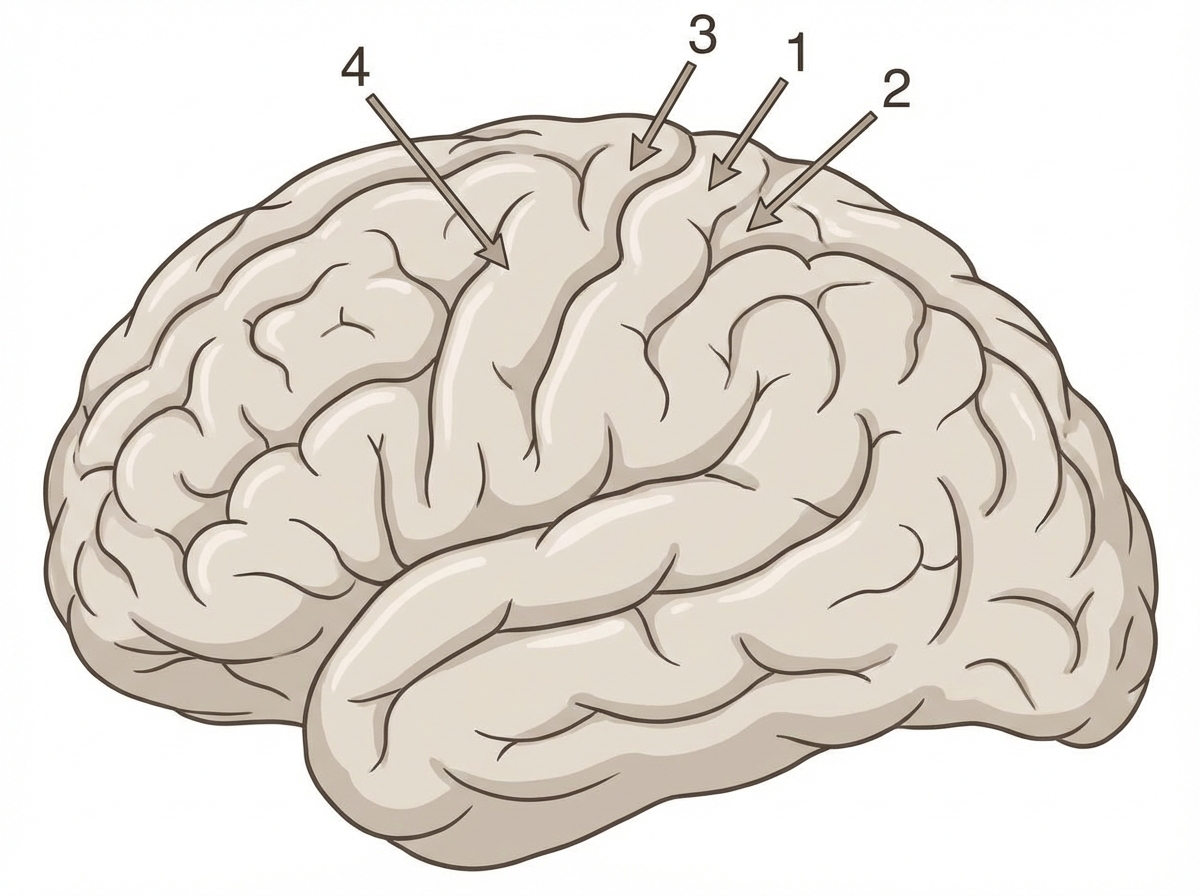
Which of the following areas of the brain is not a primary sensory cortex?
Explanation: The concept of **collateral circulation** refers to the redundant blood supply provided by an anastomosis between blood vessels [3]. This ensures that if one vessel is obstructed, the tissue remains viable through alternative pathways. **Why Skin is the Correct Answer:** The skin possesses an exceptionally rich and extensive network of anastomoses [3]. It is supplied by multiple systems, including **musculocutaneous** and **septocutaneous** perforators [1]. These vessels form several interconnected plexuses (subpapillary, dermal, and subdermal). This dense collateral network is the anatomical basis for the survival of various surgical flaps (random pattern flaps) used in reconstructive surgery, as blood can flow in multiple directions to reach the same area of tissue [1], [2]. **Analysis of Incorrect Options:** * **Muscle:** While muscles are vascular, they are often supplied by specific "dominant" pedicles [1]. Obstruction of a major feeding artery in many muscles can lead to localized ischemia or necrosis because the intramuscular collateralization is not as robust as that of the skin [1]. * **Fascia:** Fascia is relatively hypocellular and has a much lower metabolic demand and lower vascular density compared to the skin. While it has some supply, it does not exhibit the same degree of functional collateral "redundancy." * **Bone:** Bones are often supplied by specific nutrient arteries. In many areas (like the head of the femur or the scaphoid), the collateral circulation is poor, making bone highly susceptible to **avascular necrosis (AVN)** if the primary blood supply is disrupted. **NEET-PG High-Yield Pearls:** * **End Arteries:** These are vessels that do not anastomose with neighbors (e.g., Central artery of the retina). Obstruction leads to immediate infarction. * **Clinical Application:** The rich collateral supply of the skin allows for "delay phenomena" in plastic surgery, where blood flow can be redirected to support larger areas of tissue. * **Contrast:** The **Brain** and **Heart** have functional end arteries; despite having some anastomoses, they are often insufficient to prevent necrosis during acute occlusion [3].
Explanation: Interleukin-5 (IL-5) is the primary cytokine responsible for the recruitment, activation, and survival of eosinophils. It is produced mainly by T-helper 2 (Th2) cells and mast cells. IL-5 stimulates the production of eosinophils in the bone marrow and enhances their effector functions, such as degranulation and antibody-dependent cell-mediated cytotoxicity, making it a central mediator in allergic inflammation and parasitic infections. Analysis of Incorrect Options: * Interleukin-1 (IL-1): A pro-inflammatory cytokine produced by macrophages [1]. It primarily acts as an endogenous pyrogen (induces fever) and activates T-cells and neutrophils [1]. * Interleukin-4 (IL-4): This cytokine induces the differentiation of naive T-cells into Th2 cells and stimulates B-cell class switching to IgE [1]. While related to allergy, it does not directly activate eosinophils. * Interleukin-6 (IL-6): An acute-phase reactant mediator. It stimulates the liver to produce C-reactive protein (CRP) and promotes B-cell differentiation into plasma cells. High-Yield NEET-PG Pearls: * Mnemonic for Th2 Cytokines: "Hot T-Bone stEAk" (IL-1: Fever; IL-2: T-cells; IL-3: Bone marrow; IL-4: IgE; IL-5: IgA & Eosinophils). * Clinical Correlation: Mepolizumab and Reslizumab are monoclonal antibodies against IL-5 used in the treatment of severe eosinophilic asthma. * Eosinophilia: Defined as an absolute eosinophil count >500 cells/µL. Common causes include NAACP: Neoplasia, Asthma, Allergy, Collagen vascular diseases, and Parasites.
Explanation: **Explanation:** **Pulsus bisferiens** (or biphasic pulse) is a clinical sign where two systolic peaks are felt in the arterial pulse. The first peak represents the **percussion wave** (rapid ejection) and the second represents the **tidal wave** (reflected wave or continued ejection) [1]. **Why Tetralogy of Fallot (TOF) is the correct answer:** In TOF, the primary hemodynamic issue is right-to-left shunting across a VSD and pulmonary stenosis. This leads to a **reduced stroke volume** being ejected into the systemic circulation. The pulse in TOF is typically small in volume (pulsus parvus) or normal, but it never produces the double-systolic peak characteristic of bisferiens. **Analysis of Incorrect Options:** * **Aortic Regurgitation (AR) + Aortic Stenosis (AS):** This is the classic cause. The AS component creates a slow-rising percussion wave, while the large stroke volume from AR creates a prominent tidal wave. [1] * **Pure Aortic Regurgitation:** Severe AR causes a massive stroke volume ejected rapidly, which can reflect off the peripheral vessels to create a second systolic peak. [1] * **Hypertrophic Obstructive Cardiomyopathy (HOCM):** This produces a "spike and dome" pattern. The initial rapid ejection (spike) is followed by a sudden mid-systolic obstruction, with a subsequent slower ejection (dome). **High-Yield Clinical Pearls for NEET-PG:** 1. **Best site to palpate:** Pulsus bisferiens is best appreciated in the **brachial or femoral arteries** (peripheral arteries), unlike pulsus alternans which is best felt in the carotids. 2. **Differentiating HOCM from AR:** In HOCM, the pulse is "brisk," whereas in AS+AR, the initial rise is often delayed. [1] 3. **Pulsus Parvus et Tardus:** Characteristic of isolated severe Aortic Stenosis (small volume, slow rising). 4. **Water-hammer pulse:** Characteristic of isolated severe AR (rapid upstroke and rapid collapse) [1].
Explanation: Explanation: The dialyzability of a drug depends on four key pharmacokinetic properties: **molecular weight, water solubility, protein binding, and volume of distribution ($V_d$)**. For a drug to be effectively removed by hemodialysis, it should ideally have a low molecular weight, low $V_d$, and low protein binding. **Why Salicylates are the Correct Answer:** Salicylates (Aspirin) have a **low volume of distribution** ($<0.2$ L/kg) and are relatively small molecules. While they are highly protein-bound at therapeutic levels, this binding becomes saturated in overdose (toxic levels), leaving a large fraction of "free" drug in the plasma available for removal. Hemodialysis is the most efficient method for rapidly clearing salicylates and correcting the associated life-threatening acid-base imbalances. **Analysis of Incorrect Options:** * **Digoxin:** It has an extremely **large volume of distribution** ($V_d \approx 5-7$ L/kg) because it binds extensively to cardiac and skeletal muscle. It is not effectively removed by dialysis. * **Benzodiazepines:** These are highly **lipid-soluble** and have high protein binding and large $V_d$. Management is supportive or involves the antagonist Flumazenil. * **Organophosphates:** These toxins bind irreversibly to acetylcholinesterase and distribute widely into tissues. They are not dialyzable; treatment focuses on Atropine and Pralidoxime (PAM). **NEET-PG High-Yield Pearls:** * **Mnemonic for Dialyzable Drugs (BLAST-M):** **B**arbiturates (Phenobarbital), **L**ithium, **A**lcohols (Methanol/Ethylene glycol), **S**alicylates, **T**heophylline, and **M**etformin. * **Lithium** is the classic example of a drug where dialysis is the treatment of choice due to its very small $V_d$ and zero protein binding. * Drugs with $V_d > 1$ L/kg are generally **not** removable by dialysis.
Explanation: The **Morula** (derived from the Latin word *morum*, meaning mulberry) is a critical stage in early embryogenesis [1]. Following fertilization in the ampulla of the fallopian tube [2], the zygote undergoes a series of rapid mitotic divisions called **cleavage** [1]. 1. **Why Option B is Correct:** As the zygote divides, it reaches the **16-cell stage** approximately 3 days after fertilization. At this point, the solid ball of cells is termed the morula [1]. It is characterized by **compaction**, where outer cells bind tightly via junctions, sealing off the inner cell mass. This stage occurs just before the embryo enters the uterine cavity [1]. 2. **Why Other Options are Incorrect:** * **Option A (8-cell stage):** While cleavage passes through this stage, it is not yet called a morula [1]. At the 8-cell stage, cells are loosely arranged (pre-compaction). * **Options C & D (32/64-cell stage):** By the time the embryo reaches 32–64 cells, fluid begins to collect inside, forming a cavity (blastocele). At this stage, it is officially termed a **Blastocyst**. **High-Yield NEET-PG Pearls:** * **Timeline:** The morula enters the uterine cavity on **Day 4** post-fertilization [1]. * **Zona Pellucida:** The morula is still surrounded by the *zona pellucida*, which prevents premature implantation (ectopic pregnancy) [1]. * **Fate:** The inner cells of the morula become the **embryoblast** (fetus), while the outer cells become the **trophoblast** (placenta) [1]. * **Potency:** Cells of the morula are considered **totipotent**.
Explanation: ### Explanation The **Lentiform nucleus** is a lens-shaped mass of grey matter located lateral to the internal capsule. It is a functional and anatomical subdivision of the **Corpus Striatum** [1]. **1. Why Option C is Correct:** The lentiform nucleus is composed of two distinct parts separated by a thin layer of white matter (the external medullary lamina): * **Putamen:** The larger, darker, lateral portion [1]. * **Globus Pallidus:** The smaller, lighter, medial portion (further divided into internal and external segments) [1]. Together, these two structures form the "lens" shape that gives the nucleus its name. **2. Analysis of Incorrect Options:** * **Options A & B:** The **Caudate nucleus** is anatomically separated from the lentiform nucleus by the fibers of the **internal capsule**. While the Putamen and Caudate are collectively known as the **Neostriatum** (or Striatum) due to their shared development and histology, they are not both part of the lentiform nucleus [1]. * **Option D:** The **Subthalamic nucleus** is located in the diencephalon, below the thalamus. While it is functionally part of the basal ganglia circuit, it is anatomically distinct from the lentiform nucleus [1]. **3. High-Yield NEET-PG Pearls:** * **Corpus Striatum:** Comprises the Caudate nucleus + Lentiform nucleus. * **Striatum (Neostriatum):** Caudate nucleus + Putamen [1]. * **Paleostriatum:** Globus Pallidus. * **Blood Supply:** The lentiform nucleus is primarily supplied by the **Charcot’s artery** (Lenticulostriate branches of the Middle Cerebral Artery), which is a common site for hypertensive hemorrhage. * **Relations:** The **External Capsule** lies lateral to the putamen, separating it from the claustrum. The **Internal Capsule** lies medial to the lentiform nucleus.
Explanation: The diagnosis of **Infective Endocarditis (IE)** is clinically established using the **Modified Duke Criteria**, which categorizes findings into Major and Minor criteria. ### **Why "Raised ESR" is the Correct Answer** While a raised Erythrocyte Sedimentation Rate (ESR) is a very common finding in patients with IE due to chronic inflammation, it is **not** a formal diagnostic criterion in the Modified Duke schema. It is considered too non-specific, as ESR can be elevated in various infections, malignancies, and autoimmune conditions. ### **Analysis of Other Options** * **Positive Echocardiogram (Option A):** This is a **Major Criterion**. Diagnostic findings include an oscillating intracardiac mass (vegetation), abscess, or new partial dehiscence of a prosthetic valve. * **Positive Blood Culture (Option B):** This is a **Major Criterion**. It requires isolation of typical microorganisms (e.g., *S. viridans*, *S. aureus*, HACEK group) from two separate blood cultures. * **Positive Rheumatoid Factor (Option C):** This is a **Minor Criterion**. Immunological phenomena, including glomerulonephritis, Osler’s nodes, Roth’s spots, and a positive RF, are formal components of the Duke system. ### **High-Yield Clinical Pearls for NEET-PG** * **Duke’s Requirement:** Diagnosis requires **2 Major**, **1 Major + 3 Minor**, or **5 Minor** criteria. * **Most Common Valve Involved:** Mitral valve (overall); Tricuspid valve (in IV drug users). * **Most Common Organism:** *Staphylococcus aureus* (Acute IE); *Streptococcus viridans* (Subacute IE). * **Culture-Negative IE:** Most commonly caused by prior antibiotic use or fastidious organisms like *Coxiella burnetii* or *Bartonella*.
Explanation: ### Explanation The growth of a full-term infant follows a predictable pattern, which is a high-yield topic in both Anatomy (Developmental) and Pediatrics for NEET-PG. [1] **1. Why 15 cm is correct:** During the first year of life, an infant’s length increases by approximately **25 cm**. This growth is not linear but occurs more rapidly in the first half of the year: * **0–3 months:** ~3 cm/month (Total: 9 cm) [1] * **3–6 months:** ~2 cm/month (Total: 6 cm) * **Total for first 6 months:** 9 cm + 6 cm = **15 cm**. **2. Analysis of Incorrect Options:** * **Option A (6 cm):** This represents the growth specifically between months 3 and 6, rather than the cumulative gain from birth. * **Option B (9 cm):** This represents the growth specifically during the first 3 months of life. * **Option D (24 cm):** This is close to the total growth expected for the **entire first year** (25 cm), not just the first 6 months. **3. High-Yield Clinical Pearls for NEET-PG:** * **Average Birth Length:** ~50 cm. * **Length at 1 Year:** ~75 cm (50% increase from birth) [1]. * **Doubling of Birth Length:** Occurs at **4 years** (~100 cm). * **Tripling of Birth Length:** Occurs at **12 years** (~150 cm). * **Formula for Height (2–12 years):** (Age in years × 6) + 77 cm. * **Measurement:** Length is measured using an **infantometer** (recumbent) until age 2; height is measured using a **stadiometer** (standing) after age 2.
Explanation: **Explanation:** The fundamental pathophysiology of **Stable Angina** is a transient mismatch between myocardial oxygen supply and demand, typically due to fixed atherosclerotic coronary stenosis [1]. Crucially, this results in **reversible myocardial ischemia** without cell death (necrosis). **Why the correct answer is right:** Cardiac markers such as Troponin and CK-MB are intracellular proteins released into the bloodstream only when there is **irreversible damage** to the myocardial cell membrane (necrosis). Since stable angina involves only temporary ischemia that resolves with rest or nitroglycerin, the integrity of the myocytes remains intact. Therefore, cardiac markers remain within the normal reference range. **Analysis of Incorrect Options:** * **Options A, B, and C:** Elevations in **CK-MB, Troponin I/T, and Myoglobin** are diagnostic hallmarks of **Acute Myocardial Infarction (AMI)**. In the spectrum of Acute Coronary Syndrome (ACS), these markers are elevated in NSTEMI and STEMI, but remain negative in Unstable Angina. Their presence indicates that ischemia has progressed to actual tissue death [2]. **High-Yield NEET-PG Pearls:** * **Troponin I/T:** The most sensitive and specific markers for myocardial necrosis. Troponin I is highly specific as it is not expressed in skeletal muscle. * **Myoglobin:** The earliest marker to rise (1–3 hours) but lacks specificity. * **CK-MB:** Useful for detecting **re-infarction** because it returns to baseline faster (48–72 hours) than Troponins (which stay elevated for 7–14 days). * **Stable Angina Definition:** Chest pain brought on by exertion, relieved by rest/nitrates, lasting <20 minutes, with a normal biomarker profile [1].
Explanation: ***4*** - **Brodmann area 4** corresponds to the **primary motor cortex** located in the **precentral gyrus**, responsible for voluntary motor control, not sensory processing. - It contains **upper motor neurons** that initiate voluntary movements and send signals down the **corticospinal tract** to control muscles. *1* - **Brodmann area 1** is part of the **primary somatosensory cortex** located in the **postcentral gyrus**, processing tactile sensations. - It specifically processes information about **texture** and **spatial aspects** of touch from the body surface. *2* - **Brodmann area 2** is also part of the **primary somatosensory cortex** in the **postcentral gyrus**, involved in sensory processing. - It integrates tactile information with **proprioceptive input** and processes **size** and **shape** of objects. *3* - **Brodmann area 3** (subdivided into 3a and 3b) forms part of the **primary somatosensory cortex** in the **postcentral gyrus**. - Area **3a** processes **proprioceptive information** while area **3b** processes **cutaneous touch** sensations from the body.
Organization of the Nervous System
Practice Questions
Spinal Cord Anatomy
Practice Questions
Brainstem Anatomy
Practice Questions
Cerebellum
Practice Questions
Diencephalon
Practice Questions
Cerebral Cortex
Practice Questions
Basal Ganglia
Practice Questions
Limbic System
Practice Questions
Cranial Nerves
Practice Questions
Autonomic Nervous System
Practice Questions
Neural Pathways and Tracts
Practice Questions
Neurovascular Anatomy
Practice Questions
Get full access to all questions, explanations, and performance tracking.
Start For Free