All of the following are seen in cardiac tamponade except?
Which of the following are association fibers?
What is the role of bradykinin in the process of inflammation?
A U-shaped dose-response curve is typically observed with which of the following?
What is the normal capillary refill time in a child?
In the lipoxygenase pathway of arachidonic acid metabolism, which of the following products promotes platelet aggregation and vasoconstriction?
What is the pretrematic nerve of the 1st pharyngeal arch?
Which Brodmann area corresponds to the frontal eye field?
A lesion in which of the following areas will affect left-sided lateral gaze?
Which of the following drugs does not inhibit the COX pathway?
Explanation: **Explanation:** Cardiac tamponade is a clinical syndrome caused by the accumulation of fluid in the pericardial space, resulting in reduced ventricular filling and subsequent hemodynamic compromise. **Why Kussmaul’s Sign is the Correct Answer:** Kussmaul’s sign is the paradoxical rise in Jugular Venous Pressure (JVP) during inspiration. In cardiac tamponade, the heart is compressed, but it remains insulated from intrathoracic pressure changes by the fluid. During inspiration, the negative intrathoracic pressure is still transmitted to the vena cava, allowing blood to flow into the right atrium. Therefore, JVP typically decreases or remains flat. Kussmaul’s sign is classically seen in **Constrictive Pericarditis**, where the rigid pericardium prevents the right ventricle from expanding to accommodate increased venous return. **Analysis of Incorrect Options:** * **Pulsus Paradoxus:** A hallmark of tamponade. It is defined as an inspiratory fall in systolic blood pressure >10 mmHg. It occurs due to exaggerated ventricular septal shifting toward the left ventricle during inspiration (interventricular dependence). * **Diastolic Collapse of Right Ventricle:** This is the most specific echocardiographic finding. Since the pericardial pressure exceeds the intracavitary pressure during early diastole, the free wall of the right ventricle collapses inward. * **Electrical Alternans:** A pathognomonic ECG finding where the QRS amplitude varies from beat to beat. This is caused by the heart "swinging" back and forth within the large volume of pericardial fluid. **NEET-PG High-Yield Pearls:** * **Beck’s Triad:** Hypotension, Muffled heart sounds, and Raised JVP. * **JVP in Tamponade:** Shows a prominent **'x' descent** but an **absent 'y' descent** (due to restricted diastolic filling). * **Treatment:** Immediate ultrasound-guided pericardiocentesis.
Explanation: White matter fibers in the cerebrum are classified into three types: **Association**, **Commissural**, and **Projection** fibers. **Association fibers** are bundles of axons that connect different cortical areas within the **same hemisphere**. They are further divided into short association fibers (connecting adjacent gyri) and long association fibers (connecting distant lobes) [1]. * **Uncinate Fasciculus:** A long association fiber bundle that connects the orbitofrontal cortex with the anterior temporal lobe. It is hook-shaped and passes across the bottom of the lateral fissure. * **Cingulum:** A curved bundle of association fibers located within the cingulate gyrus. It connects the frontal and parietal lobes with the parahippocampal gyrus and adjacent temporal cortical regions, forming a key part of the limbic system. * **Superior Longitudinal Fasciculus:** The largest association bundle, connecting the frontal, parietal, occipital, and temporal lobes. A specialized component, the **Arcuate fasciculus**, specifically connects Broca’s area to Wernicke’s area. Since all three options represent fibers connecting regions within the same hemisphere, **Option D** is the correct answer. **High-Yield Facts for NEET-PG:** 1. **Arcuate Fasciculus Clinical Correlation:** Damage to these fibers results in **Conduction Aphasia**, characterized by poor repetition but intact comprehension and fluent speech. 2. **Commissural Fibers:** Connect corresponding areas of the two hemispheres (e.g., Corpus Callosum, Anterior Commissure). 3. **Projection Fibers:** Connect the cerebral cortex with lower centers like the brainstem or spinal cord (e.g., Internal Capsule). 4. **Corpus Callosum** is the largest commissural fiber bundle in the brain.
Explanation: **Explanation:** **Bradykinin** is a potent inflammatory mediator belonging to the kinin system, formed from high-molecular-weight kininogen (HMWK) by the action of the enzyme kallikrein [1]. 1. **Why Option D is Correct:** Bradykinin acts primarily on **B2 receptors** to cause potent **vasodilation** and **increased vascular permeability** [1]. It induces the contraction of endothelial cells and the widening of intercellular junctions in post-capillary venules. This allows fluid and plasma proteins to leak into the extravascular space, resulting in **edema**, a hallmark of acute inflammation. 2. **Why Other Options are Incorrect:** * **Option A (Vasoconstriction):** Bradykinin is a powerful vasodilator (via nitric oxide release). Vasoconstriction is typically mediated by substances like Thromboxane A2 or Endothelin. * **Option B (Bronchodilation):** Bradykinin causes **bronchoconstriction** (contraction of non-vascular smooth muscle). This is particularly relevant in the pathophysiology of asthma. * **Option C (Pain):** While Bradykinin *does* cause pain by sensitizing nociceptors, Option D is the more fundamental physiological role in the "process of inflammation" (exudate formation) [2]. Note: In many competitive exams, if both are present, vascular changes are prioritized as the primary inflammatory mechanism. **Clinical Pearls for NEET-PG:** * **ACE Inhibitors:** ACE (Angiotensin-Converting Enzyme) normally degrades bradykinin [1]. Therefore, ACE inhibitors lead to increased bradykinin levels, causing the classic side effects of **dry cough** and **angioedema**. * **Hereditary Angioedema:** Caused by **C1 esterase inhibitor deficiency**, leading to uncontrolled activation of the kinin system and excessive bradykinin production. * **Cardinal Signs:** Bradykinin contributes to *Rubor* (redness), *Calor* (heat), *Tumor* (swelling), and *Dolor* (pain).
Explanation: ### Explanation **Concept: The Hormetic (U-shaped) Dose-Response Curve** A **U-shaped (or J-shaped) dose-response curve** represents a phenomenon where both low and high levels of a substance result in adverse effects, while an intermediate dose is optimal for health. This is characteristic of essential nutrients, particularly **Vitamins** and trace elements [1]. 1. **Why Vitamins are Correct:** Vitamins are essential for physiological functions. At **low doses**, a deficiency occurs (e.g., Vitamin A deficiency causing night blindness) [2]. As the dose increases, health improves until it reaches an optimal plateau. However, at **high doses**, toxicity occurs (e.g., Hypervitaminosis A causing intracranial hypertension) [1]. This transition from deficiency $\rightarrow$ homeostasis $\rightarrow$ toxicity creates the characteristic U-shape. 2. **Analysis of Incorrect Options:** * **Anti-cancer drugs:** Typically follow a **sigmoidal (S-shaped)** log-dose response curve. Increased dosage generally leads to increased therapeutic effect followed by increased toxicity, without a "deficiency" state at low doses. * **Steroids:** Generally follow a linear or sigmoidal curve. While they have side effects at high doses, there is no physiological "deficiency syndrome" caused by the absence of exogenous steroid administration. * **Chelators:** These are used to remove heavy metals. Their effect is usually proportional to the concentration; they do not exhibit a U-shaped curve as they are not endogenous requirements for health. **High-Yield Clinical Pearls for NEET-PG:** * **Hormesis:** The term for a biological response where low doses of a toxin/stressor exert a beneficial effect, while high doses are inhibitory. * **Vitamin A Toxicity:** Look for "Pseudotumor cerebri" (idiopathic intracranial hypertension) in clinical vignettes [1]. * **Vitamin D Toxicity:** Look for hypercalcemia and metastatic calcification. * **Standard Curve:** Most drugs follow a **Sigmoid/S-shaped** curve when plotted as Log Dose vs. Response.
Explanation: **Explanation:** **Capillary Refill Time (CRT)** is a rapid clinical test used to assess peripheral perfusion and cardiac output. It measures the time taken for color to return to an external capillary bed (usually the nail bed or the sternum) after pressure is applied to cause blanching. **Why Option C is Correct:** In the pediatric population, a **normal CRT is less than 3 seconds**. According to Advanced Paediatric Life Support (APLS) guidelines and the World Health Organization (WHO), a CRT of $\geq$ 3 seconds is considered "prolonged" and is a critical clinical sign of dehydration, shock, or decreased peripheral perfusion. It indicates that the body is compensating for low circulatory volume by vasoconstricting peripheral vessels to prioritize blood flow to vital organs. **Analysis of Incorrect Options:** * **Option A (<1 sec):** This is too rapid and is rarely used as a clinical threshold. While a very fast refill isn't pathological, it is not the standard upper limit for "normal." * **Option B (<2 sec):** While <2 seconds is often cited as the normal limit for **healthy adults** in a warm environment, the pediatric standard allows for a slightly longer window (up to 3 seconds) before it is classified as a red flag. * **Option D (<4 sec):** A refill time of 4 seconds is definitively abnormal and indicates significant circulatory compromise or severe dehydration. **High-Yield Clinical Pearls for NEET-PG:** * **Technique:** Apply pressure for 5 seconds at the level of the heart. * **Environmental Factor:** Ambient temperature significantly affects CRT. Cold environments can falsely prolong CRT even in the absence of shock. * **Shock Assessment:** In pediatric emergencies, a prolonged CRT is one of the earliest signs of **compensated shock**, appearing before a drop in blood pressure (hypotension is a late sign in children). * **Dehydration:** CRT >3 seconds is a highly specific sign for identifying $\geq$ 5% dehydration in children with gastroenteritis. (No suitable reference from the provided materials covers the specific threshold for pediatric Capillary Refill Time; therefore, no inline citations were added to the explanation text.)
Explanation: The metabolism of arachidonic acid occurs via two primary pathways: the **Cyclooxygenase (COX) pathway** and the **Lipoxygenase (LOX) pathway**. [1] 1. **Why Thromboxane A2 (TXA2) is correct:** TXA2 is a potent product of the **Cyclooxygenase pathway** (specifically synthesized by platelets). It acts as a powerful **vasoconstrictor** and a mediator of **platelet aggregation** [3]. While the question mentions the "lipoxygenase pathway," TXA2 is the only option listed that performs the physiological functions of vasoconstriction and aggregation. (Note: In competitive exams like NEET-PG, if a question contains a technical inaccuracy in the stem—as TXA2 is a COX product—you must prioritize the functional description provided). 2. **Analysis of Incorrect Options:** * **Leukotriene B4 (LTB4):** This is a product of the **Lipoxygenase pathway** [2]. Its primary role is **chemotaxis** (recruiting neutrophils to inflammation sites). It does not cause platelet aggregation. * **C5a:** This is a component of the **Complement system**. It is a potent anaphylatoxin and chemotactic agent but is not a metabolite of arachidonic acid. * **C1 activators:** These are proteins involved in the initiation of the classical complement pathway, unrelated to arachidonic acid metabolism. **High-Yield Clinical Pearls for NEET-PG:** * **Prostacyclin (PGI2):** Produced by vascular endothelium; it is the functional antagonist to TXA2, causing **vasodilation** and **inhibiting** platelet aggregation. * **Aspirin:** Irreversibly inhibits COX-1, leading to decreased TXA2 production, which explains its use as an anti-platelet "blood thinner" [2]. * **Leukotrienes (C4, D4, E4):** Known as the "Slow-reacting substances of anaphylaxis," they cause intense bronchoconstriction and increased vascular permeability [2].
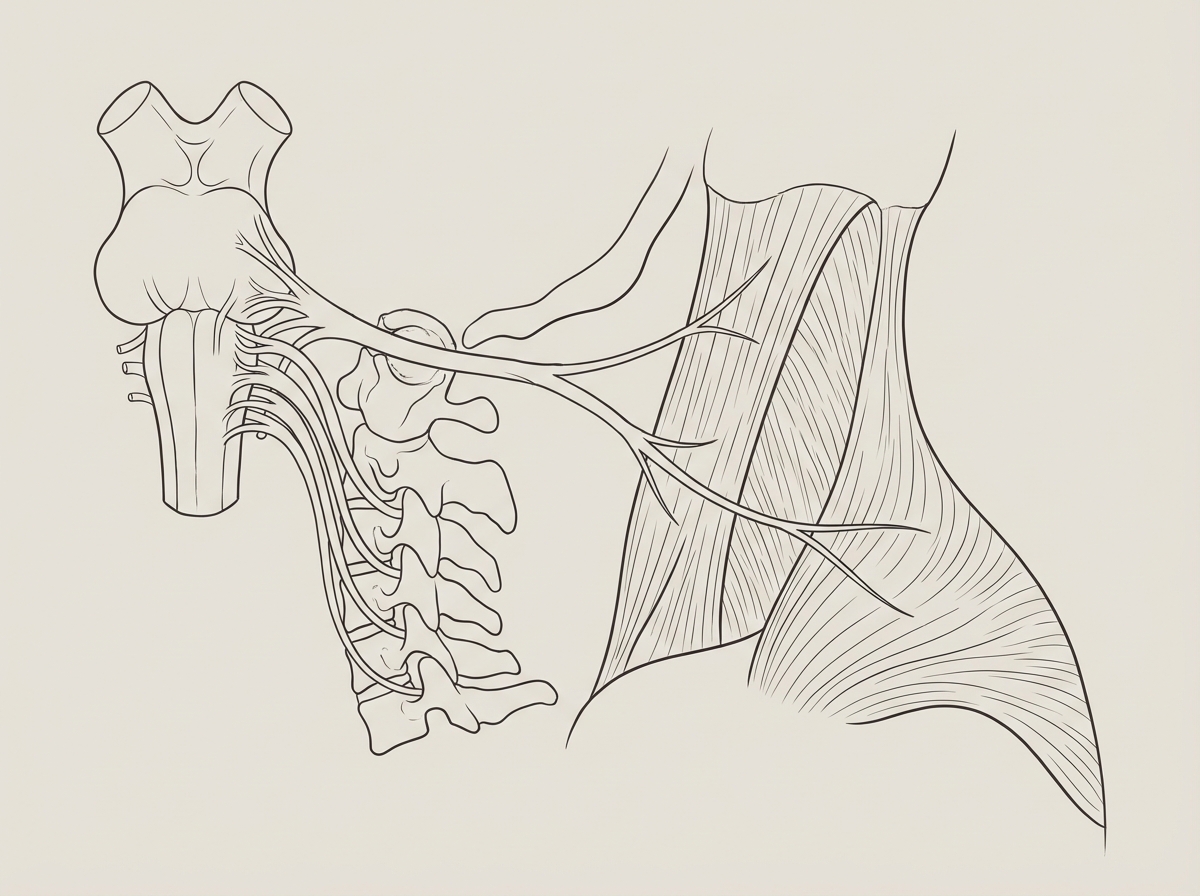
Explanation: ### Explanation In embryology, each pharyngeal arch is supplied by a specific cranial nerve known as the **post-trematic nerve** (the principal nerve of that arch). However, some arches also receive a sensory or parasympathetic branch from the nerve of the *succeeding* arch; this branch runs along the cranial (anterior) border of the arch and is called the **pretrematic nerve**. **Why Chorda Tympani is correct:** The **1st pharyngeal arch** (Mandibular arch) is primarily supplied by the Mandibular nerve ($V_3$). However, the **Chorda tympani** (a branch of the Facial nerve, which is the nerve of the 2nd arch) enters the 1st arch to provide taste sensation to the anterior two-thirds of the tongue. Therefore, the Chorda tympani is the pretrematic nerve of the 1st arch. **Analysis of Incorrect Options:** * **Vagus nerve (A):** This is the nerve of the 4th and 6th arches. Its pretrematic branch is the **Auricular branch (Arnold's nerve)**, which supplies the 1st/2nd arch derivatives (external auditory canal). * **Glossopharyngeal nerve (B):** This is the nerve of the 3rd arch. Its pretrematic branch is the **Tympanic nerve (Jacobson's nerve)**, which goes to the 2nd arch (middle ear). * **Trigeminal nerve (D):** Specifically the Mandibular division ($V_3$), this is the **post-trematic** (main) nerve of the 1st arch, not the pretrematic nerve. **High-Yield NEET-PG Pearls:** 1. **1st Arch:** Post-trematic = Mandibular nerve ($V_3$); Pretrematic = Chorda tympani. 2. **2nd Arch:** Post-trematic = Facial nerve; Pretrematic = None (usually). 3. **3rd Arch:** Post-trematic = Glossopharyngeal nerve; Pretrematic = Tympanic branch. 4. **Concept:** Pretrematic nerves always belong to the nerve of the *next* succeeding arch (e.g., the 1st arch's pretrematic nerve comes from the 2nd arch nerve).
Explanation: **Explanation:** The **Frontal Eye Field (FEF)** is located in the posterior part of the **middle frontal gyrus**, specifically corresponding to **Brodmann area 8**. **Why Option C is correct:** Brodmann area 8 is responsible for the control of **voluntary (saccadic) horizontal conjugate gaze** to the opposite side [3]. When these neurons fire, they project to the contralateral Parapontine Reticular Formation (PPRF), causing the eyes to move together toward the side opposite the stimulus. **Analysis of Incorrect Options:** * **Option A (Area 4):** This is the **Primary Motor Cortex**, located in the precentral gyrus [1]. It is responsible for the execution of voluntary motor movements on the contralateral side of the body. * **Option B (Area 6):** This is the **Premotor Cortex and Supplementary Motor Area** [2]. It is involved in planning complex movements and postural adjustments. While it lies adjacent to area 8, it does not primarily control eye movements. * **Option D (Area 41):** This is the **Primary Auditory Cortex**, located in the superior temporal gyrus (Heschl’s gyri). It is responsible for processing sound frequency and pitch. **Clinical Pearls for NEET-PG:** 1. **Destructive Lesion:** A stroke or lesion in Area 8 causes the eyes to **"look toward the lesion"** (ipsilateral deviation) because the opposing FEF is unopposed. 2. **Irritative Lesion:** During a focal seizure involving Area 8, the eyes **"look away from the lesion"** (contralateral deviation). 3. **Pathway:** FEF → Contralateral PPRF → Abducens nucleus → MLF → Contralateral Oculomotor nucleus.
Explanation: ### Explanation The control of horizontal conjugate gaze involves a complex pathway originating in the **Frontal Eye Fields (FEF)**, located in the posterior part of the middle frontal gyrus (Brodmann area 8). **Mechanism of the Correct Answer (A):** The FEF controls **voluntary saccadic eye movements to the contralateral side** [1]. When the **Right Frontal Lobe** (specifically the Right FEF) fires, it sends signals that decussate (cross over) in the lower pons to stimulate the **Left Parapontine Reticular Formation (PPRF)**. The Left PPRF then activates the Left Abducens nucleus (CN VI) to move the left eye laterally and the Right Oculomotor nucleus (CN III) via the medial longitudinal fasciculus (MLF) to move the right eye medially. Therefore, a lesion in the **Right Frontal Lobe** results in an inability to perform a **left-sided lateral gaze**. **Analysis of Incorrect Options:** * **B & C (Occipital Lobes):** The occipital cortex (specifically the visual association areas) is primarily involved in **smooth pursuit** movements (tracking a moving object) rather than voluntary saccadic gaze [1]. * **D (Left Frontal Lobe):** A lesion here would impair the ability to look toward the **right** side. **Clinical Pearls for NEET-PG:** 1. **"Gaze preference":** In a destructive cortical lesion (e.g., stroke), the eyes "look toward the lesion" because the opposing FEF is unopposed. Thus, a Right FEF lesion causes the eyes to deviate to the **right**. 2. **Pons vs. Cortex:** While a cortical lesion causes the eyes to look *away* from the hemiparesis, a **Pontine lesion** (PPRF) causes the eyes to look *toward* the hemiparesis (away from the lesion). 3. **Destructive vs. Irritative:** A destructive lesion (stroke) causes gaze toward the lesion; an irritative lesion (seizure) causes gaze away from the lesion.
Explanation: The question asks to identify the drug that does not inhibit the **Cyclooxygenase (COX)** pathway. The COX pathway is responsible for converting arachidonic acid into prostaglandins and thromboxanes, which are key mediators of inflammation and pain. **Why Betamethasone is the correct answer:** Betamethasone is a potent **Glucocorticoid (Corticosteroid)**. Unlike Non-Steroidal Anti-Inflammatory Drugs (NSAIDs), corticosteroids do not directly inhibit the COX enzyme [2]. Instead, they act further upstream in the inflammatory cascade by inducing the synthesis of **Lipocortin-1 (Annexin A1)**. Lipocortin-1 inhibits the enzyme **Phospholipase A2**, thereby preventing the release of arachidonic acid from the cell membrane [2]. By cutting off the supply of the precursor, corticosteroids suppress both the COX and the LOX (Lipoxygenase) pathways. **Why the other options are incorrect:** * **Aspirin:** A salicylate that irreversibly inhibits COX-1 and COX-2 by acetylating a serine residue at the active site [1]. * **Indomethacin:** A potent, non-selective reversible inhibitor of COX-1 and COX-2, commonly used in the management of PDA (Patent Ductus Arteriosus) and gout [1]. * **Diclofenac:** A phenylacetic acid derivative that is a non-selective COX inhibitor, widely used for musculoskeletal pain [1]. **High-Yield Clinical Pearls for NEET-PG:** * **Upstream Inhibition:** Corticosteroids (like Betamethasone) inhibit **Phospholipase A2**, whereas NSAIDs inhibit **COX** [2]. * **Dual Pathway Suppression:** Because corticosteroids inhibit Phospholipase A2, they decrease both **Prostaglandins** (COX pathway) and **Leukotrienes** (LOX pathway) [2]. * **Aspirin Uniqueness:** It is the only NSAID that binds **irreversibly** to the COX enzyme; all others are reversible [1]. * **Steroid Potency:** Betamethasone and Dexamethasone have minimal mineralocorticoid activity and are long-acting glucocorticoids.
Organization of the Nervous System
Practice Questions
Spinal Cord Anatomy
Practice Questions
Brainstem Anatomy
Practice Questions
Cerebellum
Practice Questions
Diencephalon
Practice Questions
Cerebral Cortex
Practice Questions
Basal Ganglia
Practice Questions
Limbic System
Practice Questions
Cranial Nerves
Practice Questions
Autonomic Nervous System
Practice Questions
Neural Pathways and Tracts
Practice Questions
Neurovascular Anatomy
Practice Questions
Get full access to all questions, explanations, and performance tracking.
Start For Free