3rd and 4th lumbrical (lateral two lumbricals) of foot are supplied by ?
Which of the following statements is true about the inferior extensor retinaculum?
Which of the following statements about the popliteus muscle is false?
Hunter's canal is seen in?
Which of the following muscles is responsible for dorsiflexing the foot?
All are true about short saphenous vein except which one?
Which of the following statements about the tibia and fibula is FALSE?
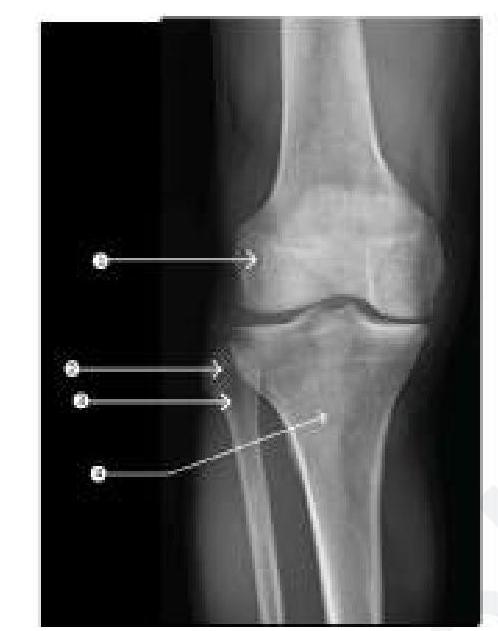
Injury at which of the following marked sites on the leg causes failure of dorsiflexion?
Which of the following statements about the adductor muscles of the thigh is correct?
Which of the following statements about the femoral triangle is NOT true?
Explanation: ***Lateral plantar nerve*** - The **lateral plantar nerve** innervates the **lateral two lumbricals (3rd and 4th)** of the foot, mirroring the ulnar nerve's innervation of the medial two lumbricals in the hand. - This nerve is a branch of the **tibial nerve** and is responsible for motor innervation to most of the intrinsic foot muscles, including those in the lateral and central compartments. *Medial plantar nerve* - The **medial plantar nerve** supplies the **medial two lumbricals (1st and 2nd)** of the foot, similar to the median nerve in the hand. - It also provides motor innervation to the flexor digitorum brevis, abductor hallucis, and flexor hallucis brevis muscles. *Peroneal nerve* - The **peroneal nerve (fibular nerve)** is primarily responsible for innervating muscles in the **anterior and lateral compartments of the leg**, which control dorsiflexion and eversion of the foot. - It does not innervate the lumbrical muscles of the foot. *None of the options* - This option is incorrect because the **lateral plantar nerve** does specifically innervate the 3rd and 4th lumbricals of the foot.
Explanation: ***Y shaped*** - The **inferior extensor retinaculum** is indeed described as a **Y-shaped** band of deep fascia located on the anterior aspect of the ankle. - This characteristic shape is its most distinctive and clinically important feature, with the stem attaching to the calcaneus, the upper limb extending to the medial malleolus, and the lower limb blending with the plantar aponeurosis. *Inferior slip attached to calcaneum* - While the **stem** of the Y-shaped retinaculum does attach to the **anterosuperior surface of the calcaneum**, describing this as simply "inferior slip attached to calcaneum" is imprecise and incomplete. - The inferior (lower) limb of the Y actually extends **medially** from the stem to blend with the plantar aponeurosis, not directly to the calcaneum. - This statement is partially true but less specific and accurate than the Y-shaped description. *Lateral attached to talus* - The **lateral attachment** of the inferior extensor retinaculum is primarily to the **lateral aspect of the calcaneum**, not the talus. - The stem of the Y attaches to the calcaneus on its lateral side (anterosuperior surface). *Superior slip attached to lower end of fibula* - The **superior (upper) limb** of the inferior extensor retinaculum attaches to the **medial malleolus** (distal tibia), not the lateral malleolus (lower end of fibula). - The lateral malleolus of the fibula is associated with the superior extensor retinaculum, not the inferior one.
Explanation: ***Causes locking of knee*** - The popliteus muscle acts as the key to **unlocking the knee** from its fully extended, locked position, not causing it to lock. [1] - It achieves this by producing **internal rotation of the tibia** on the femur (or external rotation of the femur on the tibia) at the beginning of knee flexion. *Flexor of knee* - The popliteus muscle contributes to **flexion of the knee joint**, working in conjunction with the hamstrings. - This action is particularly important during the initial phases of knee flexion. *Intracapsular origin* - The popliteus muscle originates from the **lateral condyle of the femur**, specifically from an impression just anterior and inferior to the groove for the popliteal tendon. - This origin point is indeed **intracapsular**, lying within the fibrous capsule of the knee joint. *Supplied by tibial nerve* - The popliteus muscle receives its innervation from the **tibial nerve**, a branch of the sciatic nerve. - The nerve typically arises from the posterior aspect of the tibial nerve trunk as it passes through the popliteal fossa.
Explanation: ***Thigh*** - **Hunter's canal**, also known as the **adductor canal**, is an intermuscular passageway located in the **middle third of the thigh**. - It transmits the **femoral artery and vein**, the **saphenous nerve**, and the **nerve to the vastus medialis**. *Cubital fossa* - The **cubital fossa** is a triangular depression located anterior to the elbow joint. - It contains structures like the **brachial artery**, **median nerve**, and biceps tendon, but not Hunter's canal. *Popliteal fossa* - The **popliteal fossa** is a diamond-shaped space located posterior to the knee joint. - It contains the **popliteal artery and vein**, **tibial and common fibular nerves**, and lymph nodes, but not Hunter's canal. *Calf* - The **calf** refers to the posterior compartment of the lower leg. - It houses muscles like the gastrocnemius and soleus, as well as the tibial nerve and posterior tibial artery, but not Hunter's canal.
Explanation: ***Tibialis anterior*** - The **tibialis anterior** is the **primary muscle responsible for dorsiflexion** of the foot, which means lifting the foot upwards towards the shin. - It also aids in **inversion** of the foot. - While other muscles like extensor hallucis longus and extensor digitorum longus also contribute to dorsiflexion, the tibialis anterior is the most powerful and clinically significant dorsiflexor. *Tibialis posterior* - The **tibialis posterior** primarily functions in **plantarflexion** and **inversion** of the foot and plays a crucial role in supporting the medial arch. - Its action is opposite to dorsiflexion. *Peroneus brevis* - The **peroneus brevis** (also known as fibularis brevis) is involved in **plantarflexion** and **eversion** of the foot. - It helps stabilize the ankle joint during gait. *Extensor digitorum brevis* - The **extensor digitorum brevis** is a muscle on the dorsal aspect of the foot that extends the toes, specifically the second to fourth toes. - It does not significantly contribute to dorsiflexion of the entire foot.
Explanation: ***Runs on lateral side of leg*** - The **short saphenous vein** is located on the **posterior aspect** of the calf, beginning behind the lateral malleolus and ascending the back of the leg. - While it originates on the lateral side of the foot, its primary course is **posterior**, not strictly lateral, making this statement the exception or incorrect. *Runs behind lateral malleolus* - The **short saphenous vein** (SSV) originates from the dorsal venous arch of the foot and passes **posterior to the lateral malleolus**. - This is a well-established anatomical landmark for the beginning of the SSV's course up the calf. *Accompanied by sural nerve* - The **sural nerve** travels closely with the **short saphenous vein** along its course up the posterior calf. - This anatomical relationship is clinically significant, especially in procedures involving the SSV. *Achilles tendon is medial to vein* - As the **short saphenous vein** ascends the posterior calf, it lies between the **Achilles tendon** (medially) and the lateral border of the fibula. - Therefore, the **Achilles tendon** is indeed **medial** to the short saphenous vein.
Explanation: ***Proximal end of tibia is related to common peroneal nerve*** - This statement is **FALSE** and is the correct answer to this question. - The **common peroneal nerve** (common fibular nerve) winds around the **neck of the fibula**, NOT the proximal end of the tibia. - The nerve is vulnerable to injury at the fibular neck due to its superficial location, which can result in **foot drop** and sensory deficits over the dorsum of the foot. - The proximal tibia forms the knee joint and is related to structures like the patellar ligament and pes anserinus, but not the common peroneal nerve. *Tibia is the most common site of osteomyelitis* - This statement is debatable but **not clearly false**. - The **tibia** and **femur** are among the most commonly affected bones in osteomyelitis, particularly in children. - The metaphyseal regions of long bones (including proximal and distal tibia, distal femur) are frequently involved due to their rich vascular supply and slower blood flow in metaphyseal vessels. - While some sources cite the femur as slightly more common, the tibia is certainly one of the top sites. *Nutrient artery of tibia is from posterior tibial artery* - This statement is **TRUE**. - The **nutrient artery of the tibia** originates from the **posterior tibial artery** near its origin. - It enters the tibia on its posterior surface and provides blood supply to the diaphyseal cortex and medullary cavity. *Nutrient artery of fibula is from peroneal artery* - This statement is **TRUE**. - The **nutrient artery of the fibula** arises from the **peroneal artery** (fibular artery). - It enters the fibula on its posterior surface and supplies the fibular shaft.
Explanation: ***Lateral aspect of the leg (site 3)*** - Site 3 points to the **fibula head** and the adjacent region on the lateral aspect of the leg. This is the anatomical location where the **common fibular nerve (peroneal nerve)** wraps around. - The common fibular nerve innervates the muscles responsible for **dorsiflexion** and eversion of the foot. Damage to this nerve, often due to trauma at the fibular neck, leads to **foot drop** and an inability to dorsiflex the foot. *Anterior aspect of the thigh (site 1)* - Site 1 points to the distal femur, which is part of the thigh. Nerves in the anterior thigh (e.g., **femoral nerve**) primarily control hip flexion and knee extension. - Damage here would affect movements of the hip and knee, not directly causing failure of dorsiflexion of the foot. *Medial aspect of the leg (site 4)* - Site 4 points to the medial tibia. This area is associated with the **tibial nerve** and saphenous nerve, which primarily innervate muscles for plantarflexion and inversion of the foot, or provide sensory innervation. - Injury to the tibial nerve would result in an inability to plantarflex and invert the foot, not dorsiflexion. *Posterior aspect of the thigh (site 2)* - Site 2 points to the posterior aspect of the thigh, which is the region for the hamstrings. The **sciatic nerve** and its branches (tibial and common fibular) pass through this region. - While the common fibular nerve originates from the sciatic nerve in the posterior thigh, an injury at this level would likely cause more widespread motor and sensory deficits than isolated dorsiflexion failure, and site 3 is a more common and specific site for common fibular nerve injury isolated to foot drop.
Explanation: The adductor magnus has two parts: adductor and hamstring portions. - The **adductor portion** originates from the **inferior pubic ramus** and **ischial ramus**, inserting on the **linea aspera**. - The **hamstring portion** (also known as the ischial part) originates from the **ischial tuberosity** and inserts on the **adductor tubercle** of the femur. - This dual origin and dual insertion pattern makes adductor magnus unique among the adductor muscles. *The adductor magnus originates entirely from the pubic ramus.* - This is **incorrect** because adductor magnus has a **dual origin**: - The **adductor part** originates from the **inferior pubic ramus and ischial ramus** - The **hamstring part** originates from the **ischial tuberosity** - No part of adductor magnus originates "entirely" from just the pubic ramus. *Adductor magnus is the largest muscle of the thigh.* - The **quadriceps femoris** group, particularly the **vastus lateralis** and **vastus intermedius**, is generally considered the largest and most voluminous muscle group in the thigh. - While adductor magnus is indeed the **largest adductor muscle**, it is not the largest muscle in the entire thigh. *The main blood supply to the adductor muscles is the obturator artery.* - While the **obturator artery** does supply the adductor compartment, the **profunda femoris artery** (deep femoral artery) and its **perforating branches** provide the main blood supply to the adductor muscles, particularly adductor magnus. - The obturator artery primarily supplies adductor longus and brevis, with contributions to other adductors.
Explanation: ***Floor is formed by adductor longus*** - The floor of the femoral triangle is actually formed by the **iliopsoas** laterally and the **pectineus** medially. - The **adductor longus** forms part of the medial boundary of the femoral triangle, not its floor. - This is the INCORRECT statement (correct answer for a "NOT true" question). *Contains the femoral vessels* - The femoral triangle is a crucial anatomical space containing the **femoral artery**, **femoral vein**, and **femoral nerve**. - These structures are organized from lateral to medial as nerve, artery, vein (NAVY). *Lateral margin is formed by sartorius* - The **sartorius muscle** forms the lateral boundary of the femoral triangle. - Its medial border defines one of the triangle's sides. *Medial margin is formed by adductor longus* - The **adductor longus** does form the medial boundary of the femoral triangle. - This is anatomically correct along with the inguinal ligament (superior boundary) and sartorius (lateral boundary).
Gluteal Region and Hip
Practice Questions
Thigh and Popliteal Fossa
Practice Questions
Leg and Foot
Practice Questions
Joints of Lower Limb
Practice Questions
Nerves of Lower Limb
Practice Questions
Arterial Supply and Venous Drainage
Practice Questions
Lymphatic Drainage
Practice Questions
Muscles and Their Actions
Practice Questions
Gait Analysis and Biomechanics
Practice Questions
Applied Anatomy and Clinical Correlations
Practice Questions
Get full access to all questions, explanations, and performance tracking.
Start For Free