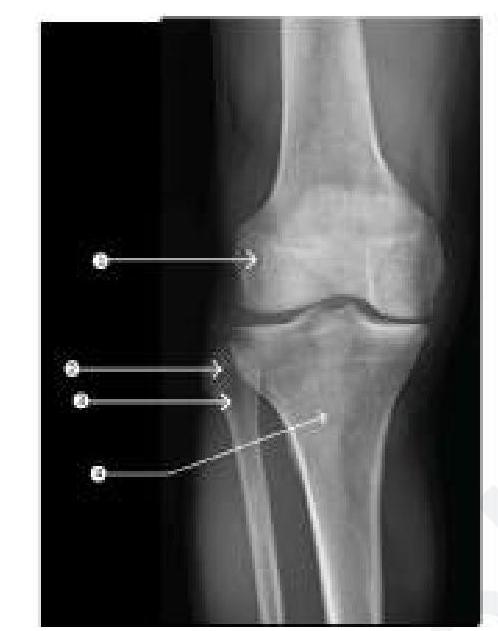
Regarding the lateral meniscus, all the following statements are true EXCEPT:
The stability of the ankle joint is maintained by all of the following, except?
Which muscle is primarily responsible for the dorsiflexion of the ankle joint?
Which of the following muscles is NOT part of the pes anserinus?
All statements concerning the conjoint tendon are true, except?
A secondary ossification center appears before birth at which anatomical location?
Which nerve supplies the gluteus medius muscle?
Which of the following is NOT found within the adductor canal of Hunter?
What is the main action of the gamellius muscle?
What is the major arterial supply to the anterior cruciate ligament?
Explanation: ### Explanation The correct answer is **D (It is more prone to injury)** because this statement is false. In clinical practice, the **medial meniscus** is injured approximately 10 to 20 times more frequently than the lateral meniscus. #### Why Option D is the Correct Choice (The False Statement): The lateral meniscus is **less prone to injury** because it is highly mobile. It is not attached to the fibular collateral ligament and is separated from the joint capsule by the tendon of the popliteus muscle. This mobility allows it to "glide" out of the way during forceful movements, protecting it from being crushed between the femoral and tibial condyles. In contrast, the medial meniscus is fixed to the tibial collateral ligament, making it rigid and vulnerable to tearing. #### Analysis of Other Options: * **A. Smaller in diameter:** True. The lateral meniscus forms a smaller, tighter circle compared to the larger, broader medial meniscus. * **B. Semicircular in shape:** True. The lateral meniscus is nearly circular (almost a complete ring), whereas the medial meniscus is "C-shaped" or semi-oval. * **C. More mobile:** True. Due to the lack of peripheral attachments (specifically the absence of attachment to the lateral collateral ligament) and the action of the popliteus muscle, it has a greater range of excursion during knee flexion and extension. #### NEET-PG High-Yield Pearls: * **The Unhappy Triad (O'Donoghue):** Consists of injury to the **Anterior Cruciate Ligament (ACL)**, **Medial Collateral Ligament (MCL)**, and **Medial Meniscus**. * **Popliteus Muscle:** Known as the "Key to the knee," its tendon passes between the lateral meniscus and the fibular collateral ligament. * **Blood Supply:** The peripheral 1/3 (Red zone) is vascularized, while the inner 2/3 (White zone) is avascular and relies on synovial fluid for nutrition, leading to poor healing of central tears.
Explanation: **Explanation:** The ankle joint (talocrural joint) is a hinge-type synovial joint. Its stability is primarily maintained by the bony architecture of the mortise and strong collateral ligaments. **Why Option A is the correct answer:** The **Plantar calcaneonavicular (spring) ligament** is the primary stabilizer of the **medial longitudinal arch of the foot** and the **talocalcaneonavicular joint**. It supports the head of the talus but does not directly cross or stabilize the ankle joint (talocrural joint) itself. Therefore, it is the "except" in this list. **Analysis of Incorrect Options:** * **Deltoid Ligament (Option B):** This is a very strong, triangular medial ligament of the ankle. It prevents over-eversion and is a major stabilizer of the ankle joint. * **Lateral Ligament (Option C):** Comprising the anterior talofibular (ATFL), posterior talofibular (PTFL), and calcaneofibular (CFL) ligaments, it stabilizes the lateral aspect of the ankle against over-inversion. * **Shape of the superior talar articular surface (Option D):** The trochlea of the talus is wider anteriorly than posteriorly. During dorsiflexion, the wider anterior part wedges into the malleolar mortise, providing maximum bony stability to the joint. **High-Yield Clinical Pearls for NEET-PG:** * **Most common ankle injury:** Inversion sprain, usually involving the **Anterior Talofibular Ligament (ATFL)**. * **Strongest ligament:** The Deltoid ligament is so strong that forced eversion often results in an avulsion fracture of the medial malleolus (Pott’s fracture) rather than a ligament tear. * **Stability:** The ankle joint is most stable in **dorsiflexion** and least stable in **plantarflexion**.
Explanation: ### Explanation **1. Why Tibialis Anterior is Correct:** The **Tibialis anterior** is the most medial and superficial muscle of the anterior compartment of the leg. It originates from the lateral condyle and upper two-thirds of the tibial shaft and inserts into the medial cuneiform and the base of the first metatarsal. Its primary action is **dorsiflexion** of the ankle joint and **inversion** of the foot. It is supplied by the **deep peroneal nerve (L4, L5)**. **2. Why the Other Options are Incorrect:** * **Peroneus longus:** Located in the lateral compartment of the leg, its primary functions are **eversion** of the foot and weak plantarflexion. It is supplied by the superficial peroneal nerve. * **Tibialis posterior:** Located in the deep posterior compartment, it is the principal **invertor** of the foot and also assists in plantarflexion. It is supplied by the tibial nerve. * **Soleus:** Along with the gastrocnemius, it forms the triceps surae in the posterior compartment. It is a powerful **plantarflexor** of the ankle, essential for walking and standing. **3. NEET-PG High-Yield Clinical Pearls:** * **Foot Drop:** Injury to the **Common Peroneal Nerve** (e.g., neck of fibula fracture) leads to paralysis of the Tibialis anterior, resulting in "foot drop" and a high-stepping gait. * **Shin Splints:** Tibialis anterior strain is a common cause of "anterior tibial stress syndrome" in runners. * **Antagonist:** The primary antagonist to the Tibialis anterior (dorsiflexion) is the Gastrocnemius-Soleus complex (plantarflexion). * **Inversion Duo:** Remember that both Tibialis anterior (anterior compartment) and Tibialis posterior (posterior compartment) act together to **invert** the foot.
Explanation: The **Pes Anserinus** (Latin for "goose's foot") is a high-yield anatomical landmark referring to the conjoined tendons of three specific muscles that insert onto the **medial surface of the proximal tibia**. ### Why Semimembranosus is the Correct Answer: The **Semimembranosus** is not part of the pes anserinus. While it is a hamstring muscle, it inserts primarily onto the **posteromedial aspect of the medial tibial condyle**. It does not join the common tendinous expansion of the other three muscles. ### Analysis of Incorrect Options: The pes anserinus is formed by three muscles derived from three different compartments of the thigh, each supplied by a different nerve: * **Sartorius (Option D):** The most superficial component. It originates from the anterior compartment (Femoral nerve). * **Gracilis (Option C):** The middle component. It originates from the medial compartment (Obturator nerve). * **Semitendinosus (Option A):** The deepest component. It originates from the posterior compartment (Sciatic nerve, tibial component). ### High-Yield Clinical Pearls for NEET-PG: * **Mnemonic:** Remember **"Say Grace before Tea"** (Sartorius, Gracilis, semiTendinosus) to recall the muscles from anterior to posterior. * **Nerve Supply Mnemonic:** **F-O-S** (Femoral, Obturator, Sciatic). * **Pes Anserine Bursitis:** This is a common cause of medial knee pain, often seen in runners or patients with osteoarthritis. It involves inflammation of the bursa located between the pes anserinus tendons and the underlying tibial collateral ligament. * **Stability:** These muscles collectively act as internal rotators of the leg and provide dynamic stability against valgus stress.
Explanation: ### Explanation The **conjoint tendon** (falx inguinalis) is a critical anatomical structure formed by the fusion of the lower fibers of the **internal oblique** and **transversus abdominis** muscles [1]. **1. Why Option C is the correct (false) statement:** The conjoint tendon is **not** continuous with the inguinal ligament. The inguinal ligament is the folded lower border of the **external oblique aponeurosis**, extending from the ASIS to the pubic tubercle [2]. In contrast, the conjoint tendon inserts into the pubic crest and the pectineal line. These are distinct anatomical entities derived from different muscle layers. **2. Analysis of other options:** * **Option A:** The conjoint tendon forms the **medial part of the posterior wall** of the inguinal canal, strengthening the area directly behind the superficial inguinal ring. * **Option B:** This is the anatomical definition. It represents the common insertion of the internal oblique and transversus abdominis [1]. * **Option C:** Direct inguinal hernias occur through **Hesselbach’s triangle**, which is medial to the inferior epigastric vessels [3]. Since the conjoint tendon forms the posterior wall in this region, a direct hernia must push against or pass medially to it to exit the superficial ring. **Clinical Pearls for NEET-PG:** * **Hesselbach’s Triangle Boundaries:** Lateral (Inferior epigastric artery), Medial (Rectus abdominis), Inferior (Inguinal ligament) [1]. * **Weakness of Conjoint Tendon:** Predisposes to direct inguinal hernias. * **Nerve Relation:** The **ilioinguinal nerve** (L1) passes between the internal oblique and transversus abdominis, eventually lying anterior to the conjoint tendon near the superficial ring. * **Mnemonic:** "MALT" (Muscles of the inguinal canal): **M**edial (Conjoint tendon), **A**nterior (External oblique aponeurosis), **L**ateral (Internal oblique), **T**op/Roof (Arching fibers of internal oblique and transversus).
Explanation: ### Explanation In human anatomy, most secondary ossification centers appear after birth. However, the **lower end of the femur** is a notable exception and a high-yield fact for medical exams [1]. **Why the lower end of the femur is correct:** The secondary ossification center for the distal femur appears during the **9th month of intrauterine life** (approximately 36-40 weeks of gestation). Because it is consistently present at birth in full-term infants, its presence is used in forensic medicine and pediatrics as a **medicolegal indicator of fetal maturity**. **Analysis of incorrect options:** * **Upper end of femur:** The center for the head of the femur typically appears between **4 to 6 months after birth**. * **Lower end of tibia:** This center appears approximately **6 months after birth**. * **Lower end of fibula:** This center appears around **1 year after birth**. **Clinical Pearls & High-Yield Facts for NEET-PG:** 1. **Rule of Exceptions:** There are only three secondary ossification centers usually present at birth: * **Lower end of femur** (36-40 weeks) * **Upper end of tibia** (40 weeks/at birth) * **Cuboid bone** (just before or at birth) 2. **The "Growing End":** In the lower limb, the growing ends of long bones are the **lower end of the femur** and the **upper end of the tibia** (mnemonic: *"To the knee I flee, from the elbow I go"*). 3. **Forensic Significance:** If a newborn's body is found, an X-ray or dissection showing the distal femoral epiphysis confirms the fetus reached full-term maturity [1].
Explanation: The **Superior Gluteal Nerve (L4, L5, S1)** is a branch of the sacral plexus that exits the pelvis through the greater sciatic foramen, passing **above** the piriformis muscle. It provides motor innervation to three key muscles: the **gluteus medius**, the **gluteus minimus**, and the **tensor fasciae latae (TFL)**. ### Analysis of Options: * **A. Superior gluteal nerve (Correct):** It supplies the gluteus medius and minimus, which are the primary abductors and medial rotators of the hip. * **B. Inferior gluteal nerve (L5, S1, S2):** This nerve exits **below** the piriformis and exclusively supplies the **gluteus maximus**, the chief extensor of the hip. * **C. Nerve to obturator internus (L5, S1, S2):** Supplies the obturator internus and the superior gemellus muscles. * **D. Nerve to quadratus femoris (L4, L5, S1):** Supplies the quadratus femoris and the inferior gemellus muscles. ### High-Yield Clinical Pearls for NEET-PG: 1. **Trendelenburg Sign:** Paralysis or weakness of the gluteus medius (due to superior gluteal nerve injury, often from misplaced intramuscular injections) leads to a "dipping" of the pelvis toward the unsupported side when the patient stands on the affected leg. 2. **Trendelenburg Gait:** To compensate for the pelvic drop, the patient tilts their trunk toward the affected side (the side of the nerve lesion) while walking; this is known as a **Lurching gait**. 3. **Safe Zone for Injections:** Intramuscular injections in the gluteal region should be given in the **upper outer quadrant** to avoid injuring the sciatic nerve and the gluteal nerves.
Explanation: The **Adductor Canal (Hunter’s Canal)** is an aponeurotic tunnel located in the middle third of the medial thigh. It serves as a passage for structures moving from the femoral triangle to the popliteal fossa. ### Why the Popliteal Artery is the Correct Answer: The **Femoral artery** enters the adductor canal at its apex. However, it only becomes the **Popliteal artery** *after* it exits the canal through the **adductor hiatus** (an opening in the Adductor magnus muscle). Therefore, the popliteal artery is located in the popliteal fossa, not within the adductor canal itself. ### Analysis of Incorrect Options: * **Femoral Artery (A):** This is the primary vascular content of the canal. It enters superiorly and traverses the entire length of the tunnel. * **Nerve to Vastus Medialis (C):** This is the thickest muscular branch of the posterior division of the femoral nerve. It enters the canal and supplies the vastus medialis before terminating. * **Saphenous Nerve (D):** This is the longest cutaneous branch of the femoral nerve. It travels within the canal but exits by piercing the fascial roof (vastoadductor membrane) to become superficial. ### NEET-PG High-Yield Pearls: * **Boundaries:** Anterolaterally (Vastus medialis), Posteriorly (Adductor longus and magnus), and Medially/Roof (Sartorius). * **Contents:** Femoral artery, Femoral vein, Saphenous nerve, and Nerve to vastus medialis. * **Clinical Significance:** The canal is a common site for an **Adductor Canal Block**, used for regional anesthesia in knee surgeries (e.g., TKR) because it provides sensory blockade (Saphenous nerve) while sparing the motor strength of the Quadriceps (except Vastus medialis).
Explanation: The **Gemellus muscles** (Superior and Inferior) belong to the group of **short lateral rotators** of the hip. ### Why Option B is Correct The Gemelli muscles act as "accessories" to the **Obturator internus**. They originate from the ischial spine (Superior) and ischial tuberosity (Inferior) and insert into the medial surface of the **greater trochanter** of the femur via the obturator internus tendon. Because their fibers pass posterior to the vertical axis of the hip joint, their contraction pulls the greater trochanter posteriorly, resulting in **lateral (external) rotation** of the extended thigh. They also help stabilize the femoral head in the acetabulum. ### Why Other Options are Incorrect * **Option A (Medial Rotation):** This is primarily performed by the **Gluteus medius, Gluteus minimus**, and **Tensor fasciae latae**. These muscles are located anterior to the axis of rotation or have fibers that pull the trochanter forward. * **Option C (Flexion):** The primary flexor of the hip is the **Iliopsoas**. The Gemelli are situated too far posteriorly to contribute significantly to flexion. * **Option D (Extension):** This is the domain of the **Gluteus maximus** and the **Hamstrings**. While the Gemelli are posterior muscles, their horizontal orientation makes them rotators rather than extensors. ### NEET-PG High-Yield Pearls * **The "Triceps Coxae":** The Superior Gemellus, Obturator Internus, and Inferior Gemellus are collectively known as the *Triceps Coxae* because they share a common insertion. * **Nerve Supply:** * Superior Gemellus: Nerve to Obturator Internus (L5, S1). * Inferior Gemellus: Nerve to Quadratus Femoris (L4, L5, S1). * **Clinical Significance:** These muscles are part of the "crucial zone" during posterior approaches to the hip joint; they must be reflected to visualize the joint capsule.
Explanation: **Explanation:** The **Middle Genicular Artery (MGA)** is a small branch of the **popliteal artery** that pierces the oblique popliteal ligament to enter the knee joint. It is the primary and most significant source of blood supply to the **Anterior Cruciate Ligament (ACL)** and the Posterior Cruciate Ligament (PCL). 1. **Why Middle Genicular Artery is Correct:** The MGA supplies the synovial membrane covering the cruciate ligaments. It forms a periligamentous vascular network from which small vessels penetrate the ligaments transversely. While the ACL also receives minor contributions from the distal branches of the lateral and medial inferior genicular arteries, the MGA is the dominant source. 2. **Why Other Options are Incorrect:** * **Medial and Lateral Genicular Arteries (Superior/Inferior):** These arteries primarily contribute to the **genicular anastomosis** around the knee, supplying the joint capsule, bones, and menisci. While they provide minor terminal branches to the fat pad and synovial lining, they are not the "major" supply to the intra-articular ligaments. **High-Yield Clinical Pearls for NEET-PG:** * **Avascular Zones:** Despite having a blood supply, the ACL has relatively "hypovascular" zones, particularly at its fibrocartilaginous insertions. This contributes to its **poor spontaneous healing** capacity after a complete tear. * **Hemarthrosis:** An acute ACL tear is the most common cause of traumatic hemarthrosis (blood in the joint). This occurs due to the rupture of the periligamentous vessels derived from the MGA. * **Nerve Supply:** The ACL is innervated by the **posterior articular nerve** (a branch of the tibial nerve).
Gluteal Region and Hip
Practice Questions
Thigh and Popliteal Fossa
Practice Questions
Leg and Foot
Practice Questions
Joints of Lower Limb
Practice Questions
Nerves of Lower Limb
Practice Questions
Arterial Supply and Venous Drainage
Practice Questions
Lymphatic Drainage
Practice Questions
Muscles and Their Actions
Practice Questions
Gait Analysis and Biomechanics
Practice Questions
Applied Anatomy and Clinical Correlations
Practice Questions
Get full access to all questions, explanations, and performance tracking.
Start For Free