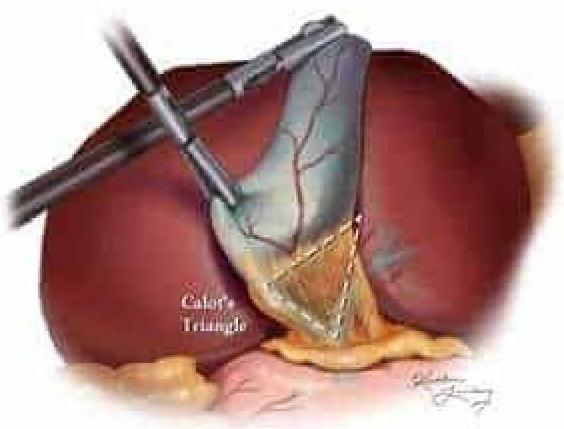
What anatomical structure separates the gallbladder from the inferior vena cava?
Luminal narrowing of which of the following vessels would compromise blood flow through the renal artery?
In case of inferior vena cava (IVC) obstruction, which of the following collaterals opens up, except?
Which of the following is NOT a tributary of the left renal vein?
Which of the following muscles act as the primary flexor(s) of the lumbar spine?
The inguinal ligament is formed from which structure?
A 61-year-old woman was scheduled for a cholecystectomy. During the operation, surgical scissors accidentally entered the tissues immediately posterior to the epiploic (omental) foramen. The surgical field was immediately filled with profuse bleeding. Which of the following vessels was the most likely source of bleeding?
Which anatomical structure is NOT present at the transpyloric level?
Intestine gets strangulated most commonly in which anatomical space?
A 45-year-old female presents with symptoms of an upper bowel obstruction. A CT examination reveals that the third (transverse) portion of the duodenum is being compressed by a large vessel. Which of the following vessels is most likely causing the compression?
Explanation: The correct answer is **Right and left lobe of the liver**. This question relates to the functional anatomy of the liver and the orientation of **Cantlie’s Line**. [1] 1. **Why the correct answer is right:** Cantlie’s Line is an imaginary plane that divides the liver into functional right and left halves. It extends from the **gallbladder fossa** (anteriorly/inferiorly) to the **groove for the inferior vena cava (IVC)** (posteriorly/superiorly). [1] Therefore, the liver tissue lying along this plane—specifically the junction of the right and left lobes—is the anatomical bridge separating these two structures. 2. **Analysis of Incorrect Options:** * **Option A:** This simply restates the structures mentioned in the question and does not describe the separating anatomy. * **Option B:** The Portal vein and IVC are both vascular structures; the portal vein lies within the porta hepatis, anterior to the IVC, but it does not serve as the primary anatomical separator between the gallbladder and IVC. * **Option C vs D:** While the **Caudate lobe** lies between the IVC and the ligamentum venosum, and the **Quadrate lobe** lies between the gallbladder and ligamentum teres, they do not form the continuous plane separating the gallbladder from the IVC. The functional division (Right/Left) is the more accurate anatomical description for this specific axis. **High-Yield Clinical Pearls for NEET-PG:** * **Cantlie’s Line:** Used by surgeons to perform bloodless liver resections (hepatectomies). [1] It corresponds to the path of the **Middle Hepatic Vein**. * **Morphological vs. Functional:** Morphologically, the Falciform ligament divides the liver; functionally, Cantlie’s line (Gallbladder to IVC) is the true divider. [1] * **Couinaud Classification:** The liver is divided into 8 functional segments based on vascular inflow and biliary drainage. [1] The IVC and Gallbladder fossa are key landmarks for identifying the boundary between Segment IV and Segments V/VIII.
Explanation: The **renal arteries** are direct lateral branches of the **abdominal aorta**, typically arising at the level of the **L1-L2** intervertebral disc, just below the origin of the superior mesenteric artery [2]. Since the renal artery originates directly from the aorta, any luminal narrowing (stenosis) or obstruction in the abdominal aorta proximal to or at the site of the renal ostia will directly compromise blood flow to the kidneys [1]. **Analysis of Options:** * **A. Abdominal Aorta (Correct):** As the parent vessel, its patency is essential for maintaining renal perfusion pressure. Conditions like aortic atherosclerosis or a dissecting aneurysm can lead to secondary renal artery stenosis [1]. * **B. Celiac Trunk:** This is the artery of the foregut. It arises from the aorta at the T12 level and supplies the stomach, liver, and spleen. It has no anatomical connection to the renal circulation. * **C. Common Iliac Artery:** These are the terminal branches of the aorta, beginning at the **L4** level. Since they are located distal to the origin of the renal arteries, narrowing here would affect the lower limbs and pelvis, not the kidneys [2]. * **D. Inferior Mesenteric Artery (IMA):** This is the artery of the hindgut, arising at the **L3** level. Like the iliacs, it originates distal to the renal arteries. **NEET-PG High-Yield Pearls:** * **Level of Origin:** Right renal artery is usually longer and passes **posterior** to the Inferior Vena Cava (IVC). * **Renal Artery Stenosis (RAS):** The most common cause of secondary hypertension. In older adults, it is usually due to atherosclerosis; in young females, it is often due to **Fibromuscular Dysplasia (FMD)** [1]. * **Accessory Renal Arteries:** Common (approx. 25-30% of population); they are "end arteries," meaning their occlusion leads to segmental renal infarction.
Explanation: In cases of **Inferior Vena Cava (IVC) obstruction**, the body utilizes several collateral pathways to return blood from the lower limbs and pelvis to the heart via the Superior Vena Cava (SVC). ### Why Option C is Correct The **Superficial epigastric vein** (tributary of the femoral vein) and the **Thoracoepigastric vein** (tributary of the axillary vein) form a vital collateral pathway. However, the **Ileolumbar vein** is a tributary of the internal iliac vein, which drains into the IVC system itself. Therefore, a connection between the superficial epigastric and ileolumbar vein does not bypass the IVC obstruction; it remains within the infra-renal drainage system. The actual functional collateral is the **Superficial epigastric vein connecting to the Lateral thoracic vein**. ### Analysis of Other Options * **Option A:** The **Superior epigastric** (SVC system) and **Inferior epigastric** (IVC system) veins anastomose within the rectus sheath, providing a deep venous bypass [1]. * **Option B:** The **Azygos system** is the most important collateral. The **Ascending lumbar veins** connect the common iliac veins directly to the Azygos (right) and Hemiazygos (left) veins, bypassing the IVC entirely. * **Option D:** **Lateral thoracic veins** (SVC) communicate with superficial abdominal veins. **Prevertebral/Vertebral venous plexuses (Batson’s plexus)** provide a valveless communication between the pelvic veins and the azygos/cranial system. ### NEET-PG High-Yield Pearls * **Clinical Sign:** IVC obstruction presents with prominent veins on the lateral abdominal wall. In IVC obstruction, the direction of flow in these veins is **upward** (towards the heart) [1]. * **Caput Medusae vs. IVC Obstruction:** In Portal Hypertension (Caput Medusae), blood flows **away from the umbilicus** (downward below the umbilicus). In IVC obstruction, flow is **always upward** even below the umbilicus. * **Most common site of IVC obstruction:** Hepatic segment (often due to thrombosis or tumors like Renal Cell Carcinoma).
Explanation: The **left renal vein** is significantly longer than the right (approx. 7.5 cm vs. 2.5 cm) because it must cross the midline, passing between the abdominal aorta and the superior mesenteric artery to reach the Inferior Vena Cava (IVC). Due to its length and developmental origin, it receives several tributaries that the right renal vein does not. **Why "Left Lumbar Vein" is the correct answer:** The **left lumbar veins** (specifically the 1st and 2nd) typically drain directly into the **Ascending Lumbar Vein** or the **IVC**. While the left renal vein may occasionally communicate with the lumbar veins via the hemiazygos system, the lumbar veins are not considered standard tributaries. **Analysis of incorrect options:** * **Left Adrenal (Suprarenal) Vein:** On the left side, this vein drains directly into the superior aspect of the left renal vein [1]. On the right, it drains directly into the IVC [1]. * **Left Testicular/Ovarian (Gonadal) Vein:** This vein enters the inferior aspect of the left renal vein at a perpendicular (90°) angle. On the right, it drains directly into the IVC. * **Diaphragmatic (Left Inferior Phrenic) Vein:** This vein usually joins the left suprarenal vein or drains directly into the left renal vein. **High-Yield Clinical Pearls for NEET-PG:** 1. **Nutcracker Syndrome:** Compression of the left renal vein between the SMA and Aorta. This leads to left-sided hematuria, flank pain, and **left-sided varicocele** (due to retrograde pressure in the gonadal vein). 2. **Varicocele:** More common on the left because the left gonadal vein enters the renal vein at a right angle, increasing hydrostatic pressure compared to the oblique entry of the right gonadal vein into the IVC. 3. **Renal Cell Carcinoma (RCC):** Often spreads via the renal vein; the left renal vein's involvement can present with a sudden onset of a non-reducible left varicocele.
Explanation: The **Psoas Major** is a long, fusiform muscle located in the lateral aspect of the lumbar region. It originates from the transverse processes and bodies of the T12–L5 vertebrae. Because it lies anterior to the axis of the lumbar spine, its contraction creates a moment arm that results in **flexion of the lumbar spine** (especially when the femur is fixed) and flexion of the hip. While the Rectus Abdominis is the primary flexor of the *trunk*, among the options provided, the Psoas Major is the specific muscle acting directly on the lumbar vertebrae to initiate flexion. **Analysis of Incorrect Options:** * **A. Erector spinae:** This is a massive muscle group (comprising Iliocostalis, Longissimus, and Spinalis) located posteriorly. Its primary function is **extension** of the vertebral column and maintaining upright posture; it acts as an antagonist to the flexors. * **B & C. External and Internal Obliques:** These muscles primarily function in rotating the trunk, lateral flexion, and increasing intra-abdominal pressure. While they assist in general trunk flexion, they are not considered the primary flexors of the lumbar spine specifically. **High-Yield Clinical Pearls for NEET-PG:** * **Psoas Sign:** Pain on passive extension of the right hip is a classic clinical sign of **Appendicitis**, as the inflamed appendix may lie in contact with the psoas muscle. * **Psoas Abscess:** Infections (often TB of the spine/Pott’s disease) can track down the psoas fascia and present as a swelling in the femoral triangle (groin). * **Innervation:** Psoas major is supplied by the anterior rami of **L1, L2, and L3**.
Explanation: ### Explanation The **inguinal ligament (Poupart’s ligament)** is a dense band of connective tissue that forms the floor of the inguinal canal [2]. It is formed by the **lower thickened border of the external oblique aponeurosis**, which folds backward (recurved) upon itself [1], [2]. It extends from the Anterior Superior Iliac Spine (ASIS) to the Pubic Tubercle [2]. #### Why the correct option is right: * **External oblique aponeurosis:** As the fibers of the external oblique muscle move medially and inferiorly, they transition into a broad aponeurosis [1]. The inferior margin of this aponeurosis thickens and rolls inward to form the inguinal ligament, serving as a landmark separating the abdomen from the thigh [2]. #### Why the other options are incorrect: * **Internal oblique & Transversus abdominis:** These muscles do not form the inguinal ligament. Instead, their lower arching fibers join to form the **Conjoint Tendon** (Falx Inguinalis), which inserts into the pecten pubis and forms the posterior wall of the inguinal canal medially [1]. * **Inguinal muscle:** This is not a recognized anatomical term. The inguinal region consists of various ligaments and canal structures, but no specific "inguinal muscle" exists. #### High-Yield Clinical Pearls for NEET-PG: * **Mid-inguinal point:** Midpoint between ASIS and Pubic Symphysis (site of Femoral Artery pulsation). * **Midpoint of inguinal ligament:** Midpoint between ASIS and Pubic Tubercle (site of Deep Inguinal Ring). * **Extensions:** The inguinal ligament gives rise to the **Lacunar ligament** (Gimbernat’s) and the **Pectineal ligament** (Cooper’s). * **Mnemonic (MALT):** Contents of the Inguinal Canal walls: **M**uscles (Internal oblique/Transversus), **A**poneurosis (External oblique), **L**igaments (Inguinal/Lacunar), **T**endon (Conjoint).
Explanation: The **Epiploic Foramen (Foramen of Winslow)** is a critical anatomical communication between the greater and lesser sacs of the peritoneum. To answer this question, one must recall the boundaries of this foramen, as they are high-yield for surgical anatomy: * **Anterior:** Free edge of the lesser omentum containing the **Portal Triad** (Portal vein, Hepatic artery, and Common bile duct). * **Posterior:** **Inferior Vena Cava (IVC)** [1] and the right crus of the diaphragm. * **Superior:** Caudate lobe of the liver [1]. * **Inferior:** First part of the duodenum. In this scenario, the injury occurred **immediately posterior** to the foramen. The IVC lies directly behind the posterior wall of the foramen; hence, accidental trauma here results in profuse venous bleeding. **Analysis of Incorrect Options:** * **A. Aorta:** The aorta lies to the left of the IVC and is separated from the epiploic foramen by the IVC and the right crus of the diaphragm. * **C. Portal Vein:** This is located in the **anterior** boundary of the foramen (within the hepatoduodenal ligament). * **D. Right Renal Artery:** This artery arises from the aorta and runs behind the IVC, but it is located more inferiorly and is not the immediate posterior boundary of the foramen. **Clinical Pearls for NEET-PG:** 1. **Pringle Maneuver:** This involves compressing the hepatoduodenal ligament (anterior boundary of the foramen) to control bleeding from the hepatic artery or portal vein during liver surgery. 2. **Internal Hernia:** The epiploic foramen is a potential site for internal herniation of a loop of small intestine. 3. **Memory Aid:** Remember the "IVC is behind the door" (the foramen is the door to the lesser sac).
Explanation: The **transpyloric plane (of Addison)** is a key anatomical landmark located midway between the jugular notch and the pubic symphysis, passing through the level of the **L1 vertebra**. ### Why "Fundus of stomach" is the correct answer: The **fundus** is the most superior part of the stomach, typically situated in the left hypochondrium at the level of the **5th intercostal space** (behind the apex of the heart). The transpyloric plane passes through the **pylorus** of the stomach, which is its most distal part, not the fundus. ### Why the other options are incorrect: * **Neck of pancreas:** The transpyloric plane passes directly through the neck of the pancreas. The head lies below and the body/tail lie slightly above this plane. * **Left and right colic flexure:** While the right colic (hepatic) flexure is slightly lower than the left (splenic) flexure, both are generally intersected by or situated very close to the L1 level. * **L1 vertebra:** By definition, the transpyloric plane passes through the lower border of the L1 vertebral body. ### High-Yield NEET-PG Clinical Pearls: To remember the structures at the **L1 level**, use the mnemonic **"9 P's of the Transpyloric Plane"**: 1. **P**ylorus of stomach 2. **P**ancreas (Neck) 3. **P**oles of kidneys (Upper pole of Right, Hilum of Left) 4. **P**ortal vein formation (union of SMV and splenic vein) 5. **P**ars transversa (Horizontal part of Duodenum - *Note: actually the 1st part/duodenal cap*) 6. **P**elvis of ureter 7. **P**re-aortic origin of **Superior Mesenteric Artery** 8. **P**oint of gallbladder (Fundus) 9. **P**roximal Cisterna Chyli
Explanation: The correct answer is **A. Omental bursa**. ### **Explanation** The **Omental bursa (Lesser Sac)** is the most common site for **internal hernias** in the abdominal cavity. An internal hernia occurs when a loop of the small intestine protrudes through a natural or pathological opening within the peritoneal cavity. The specific anatomical gateway involved is the **Foramen of Winslow (Epiploic Foramen)**. This is the only natural communication between the Greater Sac and the Lesser Sac. If a loop of the intestine (usually the ileum) passes through this foramen into the omental bursa, it can become trapped. Because the boundaries of the Foramen of Winslow are rigid (containing the portal triad anteriorly and the IVC posteriorly), the herniated bowel is highly prone to **strangulation**, leading to ischemia and necrosis. ### **Analysis of Incorrect Options** * **B. Paraduodenal space:** While common sites for internal hernias (e.g., Fossa of Landzert), they occur less frequently than herniations into the lesser sac in clinical practice and standard anatomical teaching [1]. * **C. Rectouterine space (Pouch of Douglas):** This is the most dependent part of the female peritoneal cavity. While it frequently collects fluid (pus/blood), it is a wide-open space and does not typically "trap" or strangulate the intestine unless there are pathological adhesions. * **D. Subphrenic space:** These are potential spaces between the diaphragm and liver. They are common sites for **abscess formation** but do not possess the anatomical "neck" required to cause intestinal strangulation. ### **NEET-PG High-Yield Pearls** * **Boundaries of Foramen of Winslow:** Anterior (Hepatoduodenal ligament/Portal triad), Posterior (IVC), Superior (Caudate lobe of liver), Inferior (1st part of duodenum). * **Clinical Presentation:** Internal hernias often present as acute intestinal obstruction with epigastric pain [2]. * **Lesser Sac:** It lies behind the stomach and lesser omentum; its surgical access is often through the gastrocolic ligament.
Explanation: ### Explanation **Correct Option: B. Superior Mesenteric Artery (SMA)** This clinical scenario describes **Superior Mesenteric Artery Syndrome** (also known as Wilkie’s syndrome) [1]. The third (transverse) part of the duodenum passes horizontally between the **Abdominal Aorta** (posteriorly) and the **Superior Mesenteric Artery** (anteriorly). The SMA arises from the aorta at the level of L1 at an acute angle (normally 38°–56°). If this angle narrows—often due to rapid weight loss and loss of the intervening mesenteric fat pad—the SMA compresses the third part of the duodenum against the aorta, leading to proximal bowel obstruction [1]. **Analysis of Incorrect Options:** * **A. Inferior Mesenteric Artery (IMA):** Arises much lower (at L3 level) and supplies the hindgut; it does not cross the duodenum. * **C. Inferior Mesenteric Vein (IMV):** Runs to the left of the duodenojejunal flexure and joins the splenic vein; it is not in a position to compress the transverse duodenum. * **D. Portal Vein:** Formed behind the neck of the pancreas (superior to the third part of the duodenum) by the union of the splenic and superior mesenteric veins. **High-Yield Clinical Pearls for NEET-PG:** * **Nutcracker Syndrome:** A related condition where the **Left Renal Vein** is compressed between the SMA and the Aorta, leading to hematuria and left-sided varicocele. * **Anatomical Relations:** The 3rd part of the duodenum is retroperitoneal and is crossed anteriorly by the **Root of the Mesentery** containing the SMA and SMV. * **Predisposing Factors:** Rapid weight loss (e.g., malignancy, eating disorders) or prolonged bed rest in a body cast ("Cast Syndrome") [1].
Anterior Abdominal Wall
Practice Questions
Peritoneum and Peritoneal Cavity
Practice Questions
Stomach and Intestines
Practice Questions
Liver, Gallbladder and Biliary Tract
Practice Questions
Pancreas and Spleen
Practice Questions
Kidneys and Suprarenal Glands
Practice Questions
Abdominal Vasculature
Practice Questions
Posterior Abdominal Wall
Practice Questions
Innervation of Abdominal Viscera
Practice Questions
Applied Anatomy and Clinical Correlations
Practice Questions
Get full access to all questions, explanations, and performance tracking.
Start For Free