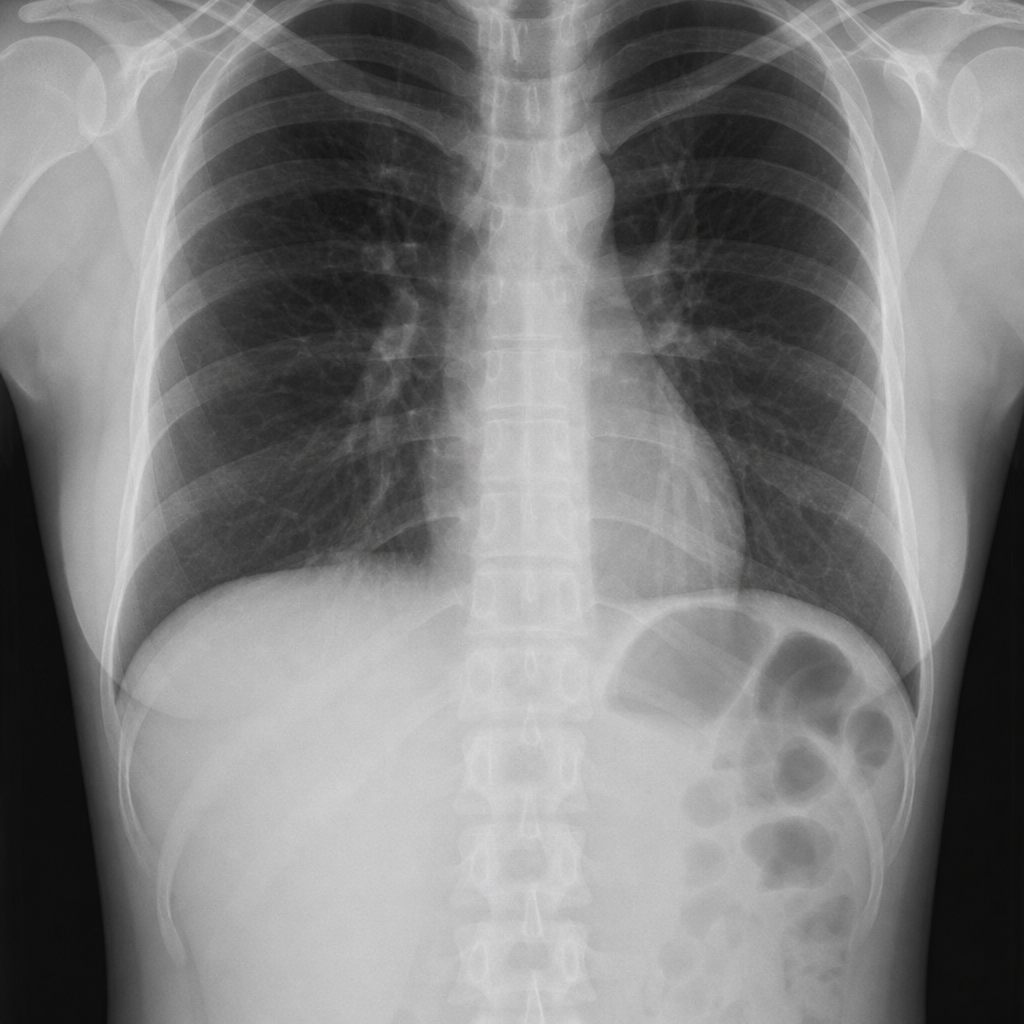
A 45-year-old male presents with acute abdominal pain that appears to have spread to retroperitoneal structures. Which of the following is most likely to be affected?
Which structure lies in the paraduodenal fold?
The gastroduodenal artery is derived from which artery?
Which of the following is NOT true about the ureters?
The portal vein is formed posterior to which anatomical structure?
Which statement best describes the stomach?
What is the average weight of an adult spleen?
When extravasated urine passes from the superficial perineal space into the anterior abdominal wall, it is found immediately deep to which layer of the anterior abdominal wall?
An indirect inguinal hernia lies:
Which of the following structures is NOT supplied by the Superior mesenteric artery?
Explanation: **Explanation:** The core concept tested here is the classification of abdominal organs based on their peritoneal relationship: **Intraperitoneal vs. Retroperitoneal.** **1. Why the Correct Answer is Right:** The **Descending colon** is a **primarily retroperitoneal** (specifically, secondarily retroperitoneal) organ. During embryological development, it loses its mesentery and becomes fixed against the posterior abdominal wall, covered by peritoneum only on its anterior surface. Therefore, any pathology involving the retroperitoneal space is most likely to involve the descending colon (along with the ascending colon, kidneys, pancreas, and duodenum). A retroperitoneal location can alter the clinical presentation of inflammation, often manifesting as flank or back pain [1]. **2. Why the Other Options are Incorrect:** * **Stomach (A):** It is an **intraperitoneal** organ completely enveloped by peritoneum (except at the attachments of the greater and lesser omenta). * **Transverse colon (B):** Unlike the ascending and descending colon, the transverse colon is **intraperitoneal** and suspended by the transverse mesocolon, allowing it significant mobility. * **Jejunum (C):** The entire small intestine (except the duodenum) is **intraperitoneal** and attached to the posterior abdominal wall by "The Mesentery." This distinguishes it from retroperitoneal structures where inflammation may present as localized or generalized process based on its relation to the parietal peritoneum [2]. **3. NEET-PG High-Yield Pearls:** * **Mnemonic for Retroperitoneal Organs (SAD PUCKER):** **S**uprarenal glands, **A**orta/IVC, **D**uodenum (2nd, 3rd, 4th parts), **P**ancreas (except tail), **U**reters, **C**olon (Ascending & Descending), **K**idneys, **E**sophagus (thoracic), **R**ectum (partial). * **Clinical Correlation:** Retroperitoneal air (pneumoretroperitoneum) on an X-ray often indicates a perforation of the duodenum or the ascending/descending colon. * **Tail of the Pancreas:** Remember that while the pancreas is retroperitoneal, the **tail** is intraperitoneal as it lies within the splenorenal ligament.
Explanation: The **paraduodenal fold** (fold of Landzert) is a peritoneal fold located to the left of the ascending part of the duodenum. It is a high-yield anatomical landmark because it forms the anterior boundary of the **paraduodenal recess**, which is a potential site for internal hernias. **Why the Inferior Mesenteric Vein (IMV) is correct:** The paraduodenal fold is formed by the elevation of the peritoneum by two key structures: the **Inferior Mesenteric Vein** and the **ascending branch of the left colic artery**. The IMV runs upwards in the free margin of this fold to join the splenic vein behind the body of the pancreas. **Analysis of Incorrect Options:** * **Superior Mesenteric Artery (SMA):** This artery lies within the root of the mesentery and crosses the third (horizontal) part of the duodenum anteriorly. It is not contained within the paraduodenal fold. * **Splenic Vein:** This vein runs horizontally behind the neck and body of the pancreas. While the IMV drains into it, the splenic vein itself does not reside within the paraduodenal fold. * **Gastroduodenal Artery:** This artery descends behind the first part of the duodenum. It is a key relation for posterior duodenal ulcers but is not related to the paraduodenal folds. **Clinical Pearls for NEET-PG:** * **Paraduodenal Hernia:** This is the most common type of internal hernia. A left-sided paraduodenal hernia occurs through the fossa of Landzert. * **Surgical Caution:** During the repair of a left paraduodenal hernia, the IMV and the left colic artery are at risk because they lie in the anterior wall of the hernial sac (the paraduodenal fold). * **Location:** The paraduodenal fossa is present in approximately 2% of the population and is located at the level of the L2 vertebra.
Explanation: The **gastroduodenal artery (GDA)** is a crucial branch of the **common hepatic artery**, which itself originates from the celiac trunk [1]. The common hepatic artery travels toward the liver and, upon reaching the superior aspect of the first part of the duodenum, divides into the **proper hepatic artery** and the **gastroduodenal artery** [1]. Therefore, the GDA is directly derived from the hepatic artery (specifically the common hepatic). **Analysis of Options:** * **Celiac Artery (A):** While the celiac trunk is the "grandfather" vessel of the GDA, it first gives off the common hepatic artery [1]. The GDA is a direct branch of the hepatic artery, not the celiac trunk itself. * **Splenic Artery (C):** This is one of the three main branches of the celiac trunk [1]. it runs along the superior border of the pancreas to supply the spleen, stomach (via short gastrics), and pancreas, but does not give rise to the GDA. * **Cystic Artery (D):** This artery typically arises from the right hepatic artery and supplies the gallbladder [1]. It is a distal branch in the biliary tree, whereas the GDA arises much more proximally [1]. **High-Yield Clinical Pearls for NEET-PG:** * **Peptic Ulcer Disease:** The GDA runs posterior to the first part of the duodenum. A **perforated posterior duodenal ulcer** can erode into the GDA, leading to life-threatening hematemesis. * **Branches of GDA:** It terminates by dividing into the **right gastro-epiploic artery** and the **superior pancreaticoduodenal artery**. * **Surgical Landmark:** The GDA serves as a key landmark during a Whipple procedure (pancreaticodenectomy) to identify the junction of the common hepatic and proper hepatic arteries.
Explanation: This question is a classic "except" style question common in NEET-PG, requiring a precise understanding of ureteric anatomy and histology. ### **Explanation of the Correct Answer** The correct answer is **D** because the statement is actually **true**, but the question asks for what is **NOT true**. In many competitive exams, if all options are factually correct, the question may be flawed or require identifying the "most" or "least" accurate detail. However, in the context of standard anatomical teaching: * **Histology:** The ureter is indeed lined by **transitional epithelium (urothelium)**, which allows for distension [1]. * *Note:* If this was a "single best response" where one option must be false, there may be a typographical error in the question source. However, based on standard anatomy, all four options provided are technically **true** statements. In such cases, students should re-verify the specific anatomical relations. ### **Analysis of Other Options** * **Option A (True):** The ureter has three physiological constrictions where stones (calculi) are likely to lodge: 1) Pelvi-ureteric junction, 2) Crossing the pelvic brim (iliac vessels), and 3) Vesico-ureteric junction (narrowest part). * **Option B (True):** The average length of the ureter is **25 cm** (10 inches), similar to the esophagus and duodenum. * **Option C (True):** The **testicular (or ovarian) vessels** cross **anteriorly** to the ureter [3]. A helpful mnemonic is *"Water (ureter) under the bridge (gonadal vessels/uterine artery)."* ### **NEET-PG High-Yield Pearls** 1. **Blood Supply:** The ureter receives a segmental blood supply. In the abdomen, it is supplied from the **medial** side; in the pelvis, it is supplied from the **lateral** side. This is crucial for surgeons to avoid ischemia. 2. **Relation to Uterine Artery:** In females, the ureter passes **posterior/inferior** to the uterine artery ("Water under the bridge") [2]. This is a high-risk site for injury during hysterectomy [3]. 3. **Nerve Supply:** T10–L1 segments. Referred pain from ureteric colic radiates from **"loin to groin."**
Explanation: **Explanation:** The portal vein is a vital venous channel that drains blood from the gastrointestinal tract and associated organs to the liver. It is formed by the union of the **Superior Mesenteric Vein (SMV)** and the **Splenic Vein** [1]. **Why the Neck of the Pancreas is Correct:** The formation of the portal vein occurs at the level of the **L2 vertebra**, specifically **posterior to the neck of the pancreas** [1]. This is a classic anatomical landmark. The splenic vein runs behind the body of the pancreas and joins the SMV (which ascends anterior to the uncinate process) right behind the constricted neck to form the portal vein [1]. **Analysis of Incorrect Options:** * **A. The Spleen:** The splenic vein originates at the hilum of the spleen, but the portal vein itself is formed much further medially, near the midline. * **B. The Tail of the Pancreas:** The tail of the pancreas is located near the splenic hilum within the lienorenal ligament. The portal vein formation occurs more medially, behind the neck. * **C. The Second Part of the Duodenum:** While the portal vein eventually ascends behind the *first* part of the duodenum (within the lesser omentum) [1], it is formed behind the pancreas, not the second part of the duodenum. **High-Yield Clinical Pearls for NEET-PG:** * **Length:** The portal vein is approximately 8 cm long [1]. * **Course:** It travels in the **hepatoduodenal ligament** (the free margin of the lesser omentum) as part of the portal triad, situated posterior to the hepatic artery and common bile duct [1]. * **Tributaries:** The Inferior Mesenteric Vein (IMV) usually drains into the splenic vein before the portal vein is formed. * **Portal-Systemic Anastomosis:** Obstruction of the portal vein (e.g., in liver cirrhosis) leads to portal hypertension, manifesting as esophageal varices, caput medusae, and hemorrhoids.
Explanation: ### Explanation **1. Why Option B is Correct:** The lymphatic drainage of the stomach follows the arterial supply. The stomach is a foregut organ, and its primary arterial supply originates from the **coeliac trunk**. Consequently, all lymphatic channels from the various regions of the stomach (left and right gastric, gastro-epiploic, and short gastric areas) eventually converge and drain into the **coeliac group of lymph nodes** located around the root of the coeliac artery [1]. This makes the coeliac nodes the "final common pathway" for gastric lymphatic drainage before reaching the cisterna chyli. **2. Why the Other Options are Incorrect:** * **Option A:** Lymph from the superior 2/3 of the stomach primarily drains into the **gastric lymph nodes** (along the lesser curvature) and **pancreaticosplenic nodes** (along the greater curvature), not specifically the suprapancreatic nodes as a rule for that entire region. * **Option C:** The gastric branches of the vagi (Anterior and Posterior Vagal Trunks) enter the stomach along the **lesser curvature**, not the greater curvature. * **Option D:** The **Nerves of Latarjet** are the terminal branches of the vagus nerve that supply the body and antrum of the stomach (specifically the "crow’s foot" appearance at the pylorus) [2]. The lower esophageal sphincter is supplied by the esophageal plexus and the main vagal trunks. **3. NEET-PG High-Yield Pearls:** * **Troisier’s Sign:** Enlargement of the left supraclavicular node (Virchow’s node) is a classic sign of metastatic gastric cancer, reached via the thoracic duct. * **Nerve of Latarjet:** In a **Highly Selective Vagotomy**, these nerves are preserved to maintain the motor function of the pyloric antrum, avoiding the need for a drainage procedure [2]. * **Blood Supply:** The stomach has a rich collateral circulation; it can survive even if three out of its four major arteries are ligated.
Explanation: The spleen is the largest lymphoid organ in the body, and its dimensions and weight are traditionally taught using the **"Harris's Rule of Odd Numbers"** (1, 3, 5, 7, 9, 11). This mnemonic is a high-yield favorite for NEET-PG. ### **Explanation of Options** * **Correct Answer: B (7 ounces).** According to the Rule of Odd Numbers, the average weight of a healthy adult spleen is **7 ounces** (approximately 150–200 grams). * **Option A (5 ounces):** This represents the average **width** of the spleen (approximately 3.5 to 5 inches), not its weight. * **Option C (14 ounces):** This is double the normal weight. A spleen of this size would be considered enlarged (splenomegaly). * **Option D (21 ounces):** This represents massive splenomegaly, often seen in conditions like Chronic Myeloid Leukemia (CML) or Malaria. ### **High-Yield Facts: Harris’s Rule of Odd Numbers** To master the anatomy of the spleen for exams, remember the sequence **1, 3, 5, 7, 9, 11**: * **1 inch:** Thickness * **3 inches:** Breadth (Width) * **5 inches:** Length * **7 ounces:** Weight * **9 to 11:** Relation to the ribs (The spleen lies deep to the 9th, 10th, and 11th ribs on the left side). ### **Clinical Pearls for NEET-PG** 1. **Axis:** The long axis of the spleen lies parallel to the **10th rib**. 2. **Palpability:** A normal spleen is not palpable. It must enlarge to at least **2–3 times** its normal size to be felt below the left costal margin. 3. **Kehr’s Sign:** Referred pain to the left shoulder due to diaphragmatic irritation from a ruptured spleen (supplied by the phrenic nerve, C3-C5). 4. **Notch:** The **superior border** of the spleen is notched, which helps clinically differentiate an enlarged spleen from a renal mass during palpation.
Explanation: ### Explanation The correct answer is **Scarpa’s fascia**. This question tests the understanding of the **fascial planes of the perineum and the anterior abdominal wall**, which are continuous with one another [2]. **Why Scarpa’s Fascia is Correct:** The superficial fascia of the perineum (Colles’ fascia) is continuous with the deep membranous layer of the superficial fascia of the abdomen (**Scarpa’s fascia**) [2]. In cases of rupture of the spongy urethra, urine extravasates into the superficial perineal pouch. Because Colles’ fascia is attached posteriorly to the perineal membrane and laterally to the ischiopubic rami, the fluid can only track anteriorly. It passes over the symphysis pubis into the anterior abdominal wall. Here, it remains trapped in the potential space **immediately deep to Scarpa’s fascia** and superficial to the deep fascia covering the abdominal muscles [2]. **Why Incorrect Options are Wrong:** * **External oblique, Internal oblique, and Transversus abdominis muscles:** These are the three flat muscles of the abdominal wall [1]. They are covered by their own deep investing fascia. Extravasated urine does not penetrate the deep fascia of these muscles; instead, it remains in the subcutaneous plane, specifically deep to the membranous Scarpa’s fascia [2]. **Clinical Pearls for NEET-PG:** * **Continuity:** Colles’ fascia (perineum) = Scarpa’s fascia (abdomen) = Dartos muscle/fascia (scrotum/penis). * **Boundaries:** Extravasated urine in this space cannot pass into the **thigh** because Scarpa’s fascia fuses with the fascia lata of the thigh just below the inguinal ligament (Holden’s line). * **Clinical Sign:** This often presents as a "butterfly-shaped" swelling in the perineum and scrotal/abdominal wall edema.
Explanation: ### Explanation The classification of inguinal hernias is based on their relationship to the **inferior epigastric artery**, which serves as the key anatomical landmark in the inguinal region. **1. Why the Correct Answer is Right:** An **indirect inguinal hernia** occurs when abdominal contents protrude through the **deep inguinal ring** [1]. Anatomically, the deep inguinal ring is located **lateral to the inferior epigastric vessels** [1]. Because the hernia sac follows the path of the spermatic cord (or round ligament) through this ring, it must lie lateral to these vessels. This type of hernia is often due to a patent processus vaginalis (congenital) [1]. **2. Why the Incorrect Options are Wrong:** * **Options A & B (Superior Epigastric Vessels):** The superior epigastric vessels are located in the upper rectus sheath, near the costal margin. They are not involved in the anatomy of the inguinal canal or inguinal hernias. * **Option C (Medial to Inferior Epigastric Vessels):** This describes a **direct inguinal hernia**. Direct hernias push forward through a weakness in the posterior wall of the inguinal canal (Hesselbach’s triangle), which is located medial to the inferior epigastric vessels. **3. Clinical Pearls for NEET-PG:** * **Hesselbach’s Triangle Boundaries:** Medial—Lateral border of rectus abdominis; Lateral—Inferior epigastric vessels; Inferior—Inguinal ligament. * **Coverings:** An indirect hernia is covered by all three layers of the spermatic fascia (internal, cremasteric, and external), whereas a direct hernia is usually only covered by the external spermatic fascia. * **Internal Ring Test:** If the hernia is controlled by occluding the deep inguinal ring (1.25 cm above the mid-inguinal point), it is an indirect hernia. * **Relationship to Pubic Tubercle:** Inguinal hernias are generally above and medial to the pubic tubercle, while femoral hernias are below and lateral.
Explanation: The **Superior Mesenteric Artery (SMA)** is the artery of the **midgut**. It supplies all structures derived from the embryonic midgut, which extends from the second part of the duodenum (distal to the opening of the bile duct) to the junction between the proximal two-thirds and distal one-third of the transverse colon [1]. ### Why Option D is Correct: The **Descending colon** is a derivative of the **hindgut**. All hindgut structures (distal 1/3rd of the transverse colon down to the upper half of the anal canal) are supplied by the **Inferior Mesenteric Artery (IMA)** via its branch, the left colic artery [1]. Therefore, the SMA does not supply the descending colon. ### Why the other options are Incorrect: * **A. Jejunum:** The SMA gives off several jejunal and ileal branches that form arterial arcades within the mesentery [2]. * **B. Appendix:** The appendix is supplied by the **appendicular artery**, which is a branch of the ileocolic artery (a major branch of the SMA). * **C. Ascending colon:** This is supplied by the **right colic artery** and the colic branch of the **ileocolic artery**, both of which originate from the SMA. ### High-Yield Clinical Pearls for NEET-PG: * **Watershed Area:** The **splenic flexure** (Griffith’s point) is the junction between the SMA and IMA territories [1]. It is the most common site for **ischemic colitis** due to its position at the distal-most reach of both arterial systems. * **SMA Syndrome:** Compression of the third part of the duodenum between the SMA and the Abdominal Aorta, often seen after rapid weight loss [2]. * **Nutcracker Syndrome:** Compression of the **left renal vein** between the SMA and the Abdominal Aorta. * **Level of Origin:** The SMA arises from the abdominal aorta at the level of the **L1 vertebra**, just below the celiac trunk.
Anterior Abdominal Wall
Practice Questions
Peritoneum and Peritoneal Cavity
Practice Questions
Stomach and Intestines
Practice Questions
Liver, Gallbladder and Biliary Tract
Practice Questions
Pancreas and Spleen
Practice Questions
Kidneys and Suprarenal Glands
Practice Questions
Abdominal Vasculature
Practice Questions
Posterior Abdominal Wall
Practice Questions
Innervation of Abdominal Viscera
Practice Questions
Applied Anatomy and Clinical Correlations
Practice Questions
Get full access to all questions, explanations, and performance tracking.
Start For Free