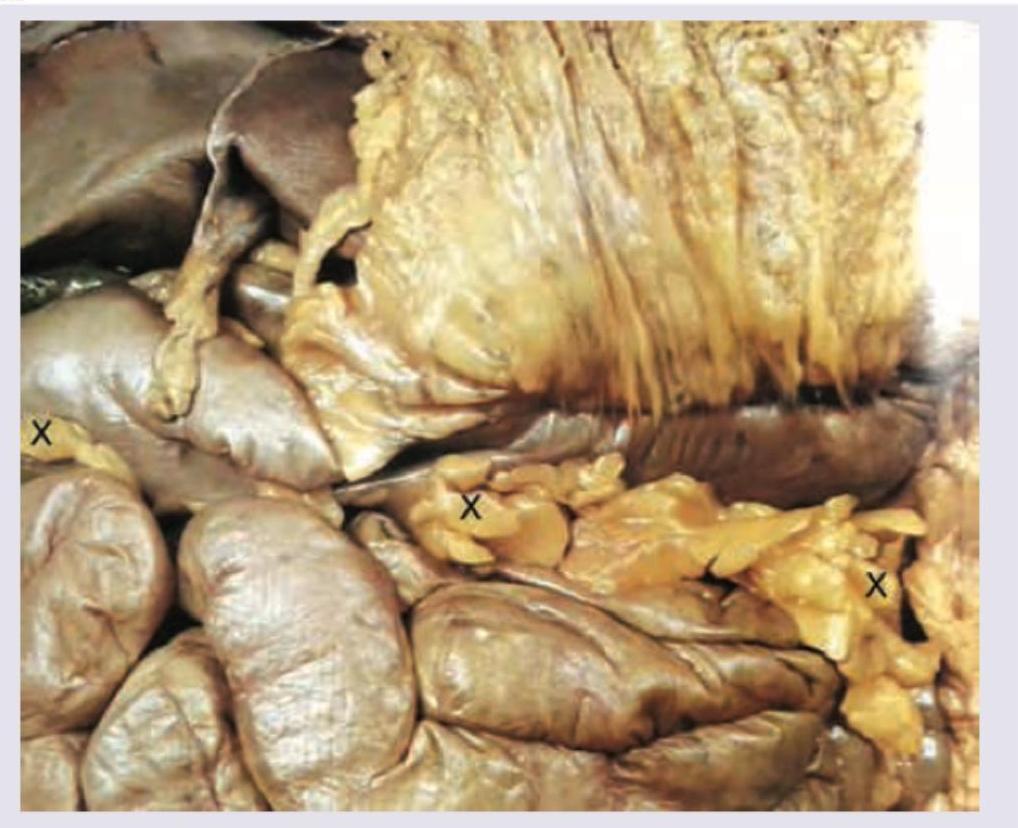
Which of the following structures does NOT lie posterior to the spleen?
Which of the following statements about the valves of Houston is true?
The splenic vein originates from which of the following structures?
The ureter derives its blood supply from which of the following vessels?
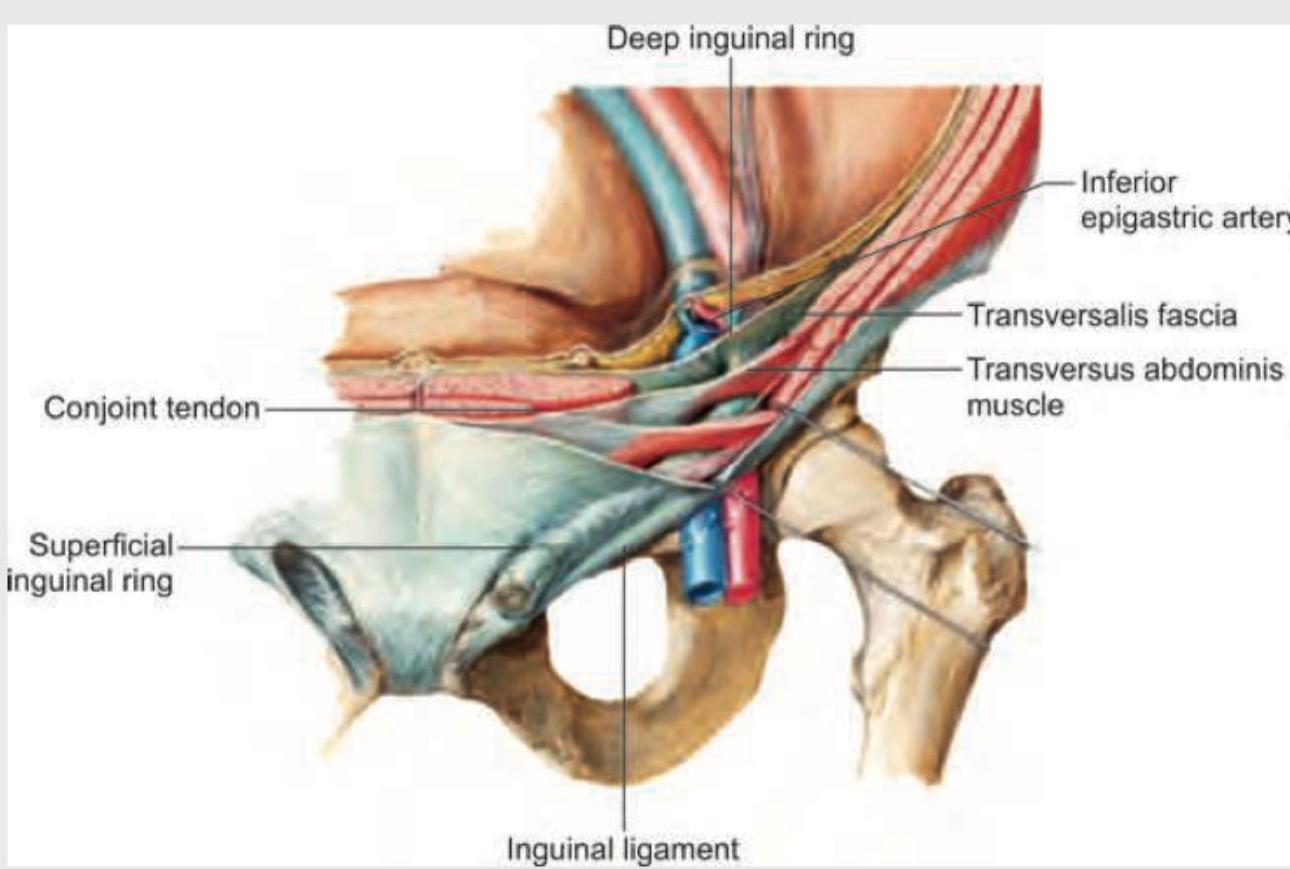
Which of the following structures is common to both Hesselbach's triangle and the femoral triangle?
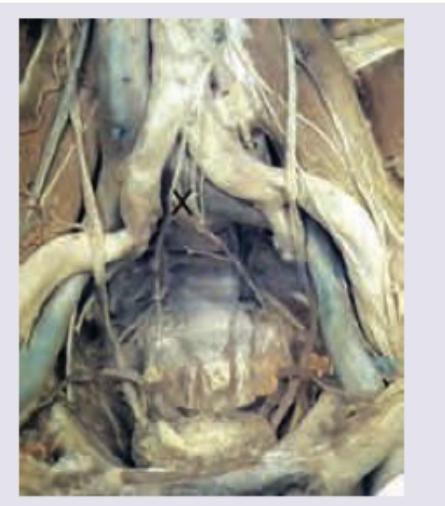
A 34-year-old man with multiple abdominal traumas develops a high fever postoperatively following reconstructive surgery. Radiographic examination reveals that the lower descending colon and rectum have become septic and require excision. Six months after surgery, the patient complains of impotence. Which of the following structures was most likely injured during the second operation?
In complete duplication of ureters, what is the anatomical position of the proximal segment?
The dartos muscle is innervated by which nerve?
All of the following statements about suprarenal glands are true except:
Which of the following structures is present at the superior border of the pancreas?
Explanation: To master the anatomy of the spleen for NEET-PG, it is essential to distinguish between its **visceral (anterior)** and **diaphragmatic (posterior)** relations. ### **Explanation** The **stomach** is the correct answer because it lies **anterior** (specifically anteromedial) to the spleen. The spleen’s visceral surface is indented by the organs it touches; the largest of these is the gastric impression, where the fundus of the stomach rests against the spleen. [1] **Why the other options are incorrect (Posterior Relations):** The posterior (diaphragmatic) surface of the spleen is smooth, convex, and related to the following structures, separated only by the diaphragm: * **The Diaphragm (C):** This is the immediate posterior relation, separating the spleen from the pleura and ribs. * **The 11th Rib (A):** The spleen lies deep to the **9th, 10th, and 11th ribs** on the left side. * **Left Lung and Pleura (B):** The costodiaphragmatic recess of the pleura and the lower margin of the left lung descend posteriorly to the spleen. ### **High-Yield NEET-PG Pearls** * **Axis of the Spleen:** It lies along the long axis of the **10th rib** (Harris's Dictum). * **Kehr’s Sign:** Rupture of the spleen causes irritation of the diaphragm, leading to referred pain in the **left shoulder** (via the phrenic nerve, C3-C5). * **Splenic Infarction:** Since the splenic artery is a functional end artery, occlusion leads to wedge-shaped infarcts. * **Surgical Landmark:** The tail of the pancreas lies within the **lienorenal ligament** and can be accidentally injured during a splenectomy. [1]
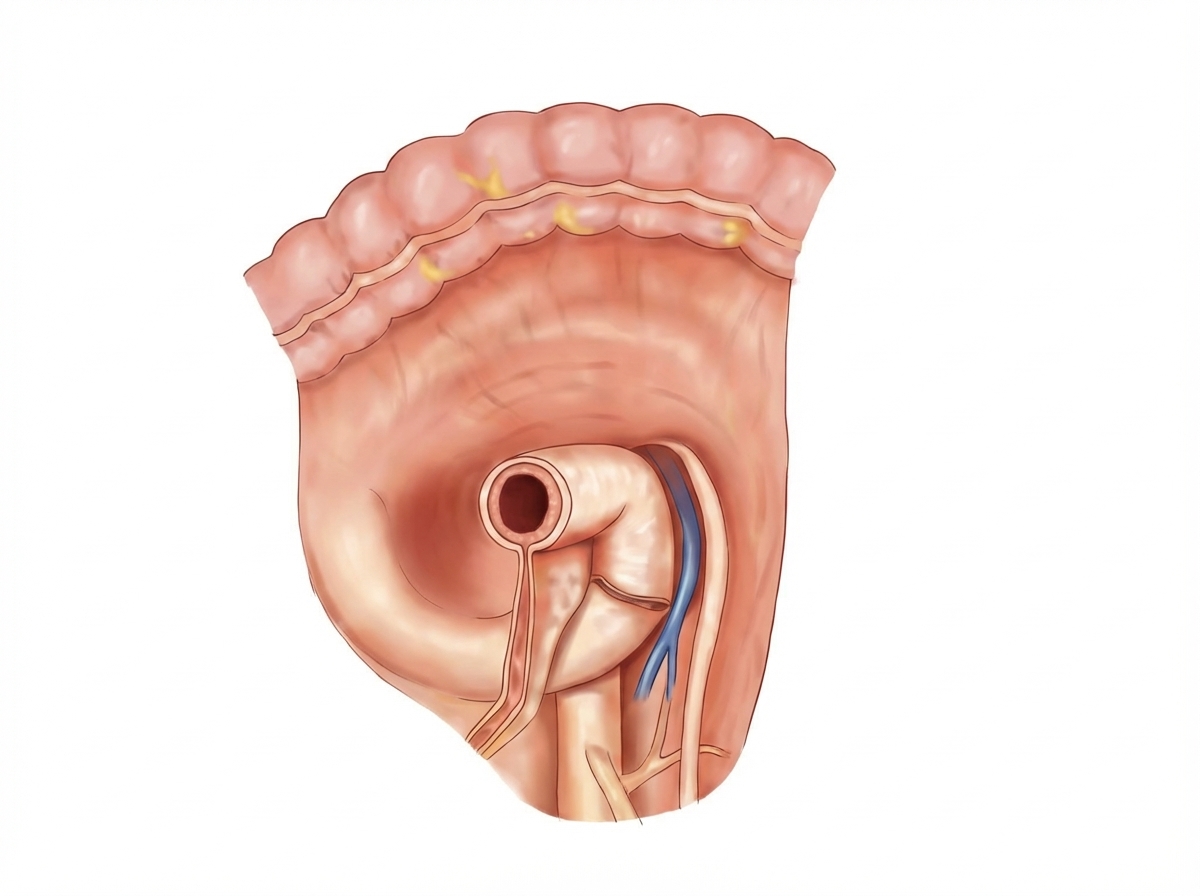
Explanation: ### Explanation The **Valves of Houston** (Plicae Circulares) are permanent, crescentic transverse folds of the rectal mucosa and circular muscle. **1. Why Option A is Correct:** The rectum follows the sacral and coccygeal curvatures, resulting in three lateral flexures (superior, middle, and inferior). The valves of Houston are located at the site of these flexures [1]. They are not merely mucosal folds; they are maintained by the **taeniae coli** (which spread out to form the longitudinal muscle layer) being shorter than the rectum itself [1]. When the rectum is surgically mobilized and straightened (removing its attachments and curvatures), these flexures are lost, and the valves disappear. **2. Analysis of Incorrect Options:** * **Option B:** There are typically three valves. The upper and lower valves project from the **left** side, while the **middle valve** (the largest and most constant, also known as Kohlrausch’s fold) projects from the **right** side. * **Option C:** The middle valve is the landmark for the **anterior peritoneal reflection**. The upper valve is located higher up, where the rectum begins [1]. * **Option D:** The valves consist of the mucosa, submucosa, and the **circular muscle layer** only. They do **not** contain the longitudinal muscle layer. **3. High-Yield Clinical Pearls for NEET-PG:** * **Distance from Anal Verge:** The middle valve is located approximately **7–8 cm** from the anal verge and serves as a crucial landmark during proctoscopy. * **Function:** They support the weight of fecal matter, preventing it from putting continuous pressure on the anal sphincter. * **Surgical Landmark:** The middle valve marks the level of the **rectovesical pouch** in males and the **rectouterine pouch (of Douglas)** in females [2].
Explanation: **Explanation:** The splenic circulation follows a specific hierarchical flow. The **splenic vein** is formed by the union of several **trabecular veins**, which emerge from the splenic parenchyma. The venous drainage of the spleen begins at the **splenic sinusoids** (in the red pulp). These sinusoids drain into the **pulp veins**, which then coalesce to form **trabecular veins**. These veins travel within the connective tissue trabeculae and eventually exit the splenic hilum to form the splenic vein. The splenic vein then joins the superior mesenteric vein behind the neck of the pancreas to form the portal vein [2]. **Analysis of Incorrect Options:** * **A & B (Central and White Pulp Arteries):** These are part of the **arterial** supply. The splenic artery branches into trabecular arteries, which become central arteries as they are surrounded by the Periarteriolar Lymphoid Sheath (PALS) in the white pulp. * **C (Penicillar Arterioles):** These are the terminal branches of the central arteries located in the red pulp. They represent the arterial side of the circulation just before the blood enters the sinusoids (closed circulation) or the splenic cords (open circulation). **High-Yield Facts for NEET-PG:** * **Splenic Vein Landmarks:** It runs posterior to the body and tail of the pancreas [1]. Thrombosis of this vein can lead to **isolated gastric varices**. * **Open vs. Closed Circulation:** Humans primarily have "open circulation" where blood from penicillar arterioles empties into the splenic cords before entering sinusoids. * **Nutcracker Syndrome:** Compression of the left renal vein between the SMA and Aorta; however, the splenic vein is a key landmark located superior to this site.
Explanation: The ureter is a long, muscular tube that receives a segmental blood supply from multiple sources along its course. It does not rely on a single artery but rather a longitudinal anastomotic network within its adventitia. ### **Explanation of the Correct Answer** **C. Common iliac artery:** As the ureter descends into the pelvis, it crosses the bifurcation of the **common iliac artery** (or the beginning of the external iliac) [3]. At this specific anatomical landmark, it receives direct arterial branches. In the context of this specific question (likely a "recall" or "single best" format), the common iliac is a primary contributor to the middle segment of the ureter. ### **Analysis of Incorrect Options** * **A, B, & D:** While these vessels **do** contribute to the ureteric blood supply, they are often considered "incorrect" in a single-choice format if the question implies a specific segment or if the examiner is looking for the most common site of surgical injury/blood supply transition. * **Renal artery** supplies the upper (proximal) part. * **Gonadal (Testicular/Ovarian) vessels** supply the abdominal part [1]. * **Inferior vesical artery** (in males) or **Uterine artery** (in females) supplies the pelvic (distal) part [2]. ### **High-Yield NEET-PG Pearls** * **Segmental Supply Rule:** * **Upper part:** Renal artery. * **Middle part:** Gonadal, Common Iliac, and Abdominal Aorta. * **Lower part:** Internal iliac, Vesical, Uterine, and Middle rectal arteries. * **Surgical Importance:** During surgery, the ureter should be retracted **medially** in the abdomen (to preserve blood supply coming from the lateral side) and **laterally** in the pelvis (to preserve supply coming from the medial side). * **Anastomosis:** The arteries form a continuous plexus in the **adventitia**. Stripping the adventitia during surgery leads to ischemia and stricture formation. * **Water under the bridge:** The ureter passes **posterior** to the uterine artery (female) or ductus deferens (male).
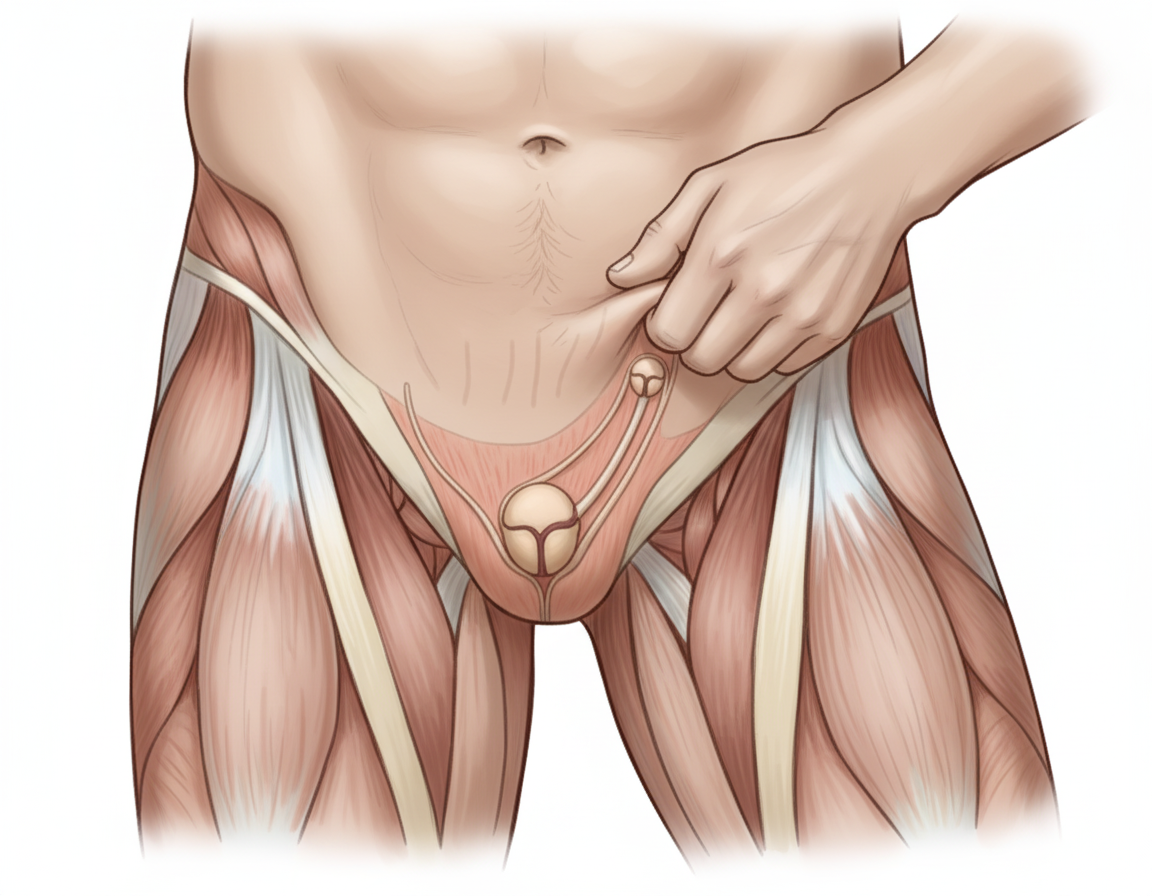
Explanation: The **Inguinal Ligament** (Poupart’s ligament) is the correct answer because it serves as a critical anatomical boundary for both regions, acting as the "dividing line" between the abdomen and the thigh [1]. ### Why Inguinal Ligament is Correct: * **Hesselbach’s Triangle (Inguinal Triangle):** Its boundaries are the lateral border of the Rectus abdominis (medial), the Inferior epigastric artery (lateral), and the **Inguinal ligament** (inferior/base) [1]. * **Femoral Triangle:** Its boundaries are the Sartorius (lateral), the Adductor longus (medial), and the **Inguinal ligament** (superior/base). Thus, the ligament forms the floor of the Hesselbach’s triangle and the roof/base of the femoral triangle [1]. ### Why Other Options are Incorrect: * **A. Conjoint Tendon:** Formed by the fusion of Internal Oblique and Transversus Abdominis; it forms the posterior wall of the inguinal canal but has no relation to the femoral triangle [1]. * **C. Inferior Epigastric Artery:** This forms the lateral boundary of Hesselbach’s triangle [1]. It arises from the external iliac artery just above the inguinal ligament and does not enter the femoral triangle. * **D. Rectus Femoris:** This is a muscle of the anterior compartment of the thigh. While it is near the femoral triangle, it does not form its boundaries and has no relation to the abdominal Hesselbach’s triangle. ### NEET-PG Clinical Pearls: * **Direct Inguinal Hernia:** Occurs *inside* Hesselbach’s triangle, medial to the inferior epigastric artery [1]. * **Indirect Inguinal Hernia:** Occurs lateral to the inferior epigastric artery through the deep inguinal ring [2]. * **Mnemonic for Femoral Triangle contents (Lateral to Medial):** **N**erve, **A**rtery, **V**ein, **E**mpty space, **L**ymphatics (**NAVEL**). * The Inguinal ligament is the folded lower border of the **External Oblique aponeurosis** [1].
Explanation: **Explanation:** The patient is presenting with **impotence (erectile dysfunction)** following surgery on the lower descending colon and rectum. In the pelvis, the autonomic nerves responsible for erection are located in close proximity to these structures. **1. Why Pelvic Splanchnic Nerves are correct:** Erection is a **parasympathetic** function (mnemonic: **P**oint = **P**arasympathetic; **S**hoot = **S**ympathetic). The **Pelvic Splanchnic Nerves (S2, S3, S4)** carry preganglionic parasympathetic fibers to the inferior hypogastric plexus. These fibers eventually form the **cavernous nerves**, which innervate the erectile tissue of the penis. During deep pelvic dissections (like rectal excision), these nerves are highly vulnerable to injury, leading to postoperative impotence. **2. Why the other options are incorrect:** * **Pudendal Nerve (S2-S4):** This is the primary **somatic** nerve of the perineum. While it provides sensory innervation to the penis and motor control to the external anal sphincter, it does not mediate the autonomic process of erection. * **Sacral Splanchnic Nerves:** These carry **sympathetic** fibers from the sacral sympathetic trunk. Sympathetic nerves are primarily involved in ejaculation and vasoconstriction, not the initiation of an erection. * **Sympathetic Chain:** Similar to sacral splanchnics, the sympathetic chain is responsible for "fight or flight" responses and ejaculation. Damage here would more likely cause retrograde ejaculation rather than impotence. **Clinical Pearls for NEET-PG:** * **Nerve of Erection:** Erigentes nerves (Pelvic splanchnics, S2-S4). * **Nerve of Ejaculation:** Sympathetic nerves (L1-L2). * **Surgical Risk:** Total Mesorectal Excision (TME) for rectal cancer carries a high risk of damaging the inferior hypogastric plexus, leading to urinary and sexual dysfunction [1]. * **Pudendal Nerve Block:** Performed by palpating the **ischial spine** transvaginally or transperineally.
Explanation: ### Explanation This question tests the knowledge of the **Weigert-Meyer Law**, a fundamental principle in embryology describing the relationship between duplicated ureters. #### 1. Why the Correct Answer is Right (Option C) In a complete duplication of the ureter (duplex kidney), two separate ureteric buds arise from the mesonephric duct. [1][2] * The **upper pole (proximal segment)** ureteric bud arises more cranially on the mesonephric duct. * As the duct is incorporated into the urogenital sinus, the upper pole ureter is carried further downward and medially. * Consequently, the ureter draining the **upper pole** opens into the bladder at a position that is **caudal and medial** to the lower pole ureter. [2] * **But**, the question asks for the anatomical position of the **proximal segment (upper pole)** relative to the lower pole within the kidney/retroperitoneum. In the renal parenchyma, the segment is **Cephalad (Superior) and Medial**. #### 2. Why the Incorrect Options are Wrong * **Option A & D:** The upper pole of the kidney is naturally positioned more medially than the lower pole due to the oblique axis of the kidneys along the psoas muscle. [1] Therefore, "lateral" is anatomically incorrect for the proximal/upper segment. * **Option B:** While the **insertion point** in the bladder for the upper pole ureter is "caudal and medial" (Weigert-Meyer Law), the **proximal segment** itself (the portion in the kidney) is located **cephalad**. #### 3. Clinical Pearls for NEET-PG * **Weigert-Meyer Law:** The ureter from the upper pole opens low (caudal/medial) and is prone to **obstruction** (often associated with a ureterocele). [2] The ureter from the lower pole opens high (lateral) and is prone to **vesicoureteral reflux (VUR)**. * **Mnemonic:** "Upper-Downer" (Upper pole ureter ends up Down/Lower in the bladder). * **Embryology:** Duplication occurs when two ureteric buds arise from a single mesonephric duct or when a single bud bifurcates prematurely.
Explanation: The **dartos muscle** is a layer of smooth muscle fibers located within the superficial fascia of the scrotum. Its primary function is to regulate the temperature of the testes by contracting (wrinkling the scrotal skin) to reduce heat loss. ### **Why Option C is Correct:** The dartos muscle is innervated by **sympathetic nerve fibers** that travel via the **genital branch of the genitofemoral nerve** (L1, L2). While the muscle itself is smooth muscle (involuntary), its nerve supply is derived from the autonomic nervous system, specifically utilizing the genitofemoral nerve as a pathway to reach the scrotum. ### **Analysis of Incorrect Options:** * **A. Ilioinguinal nerve (L1):** This nerve provides sensory innervation to the skin of the root of the penis and the anterior 1/3rd of the scrotum (or labia majora). It does not supply the dartos muscle. * **B. Iliohypogastric nerve (L1):** This nerve supplies the skin above the pubis and the lateral gluteal region, as well as the internal oblique and transversus abdominis muscles. * **D. Pudendal nerve (S2-S4):** This is the main nerve of the perineum. Its branch, the posterior scrotal nerve, provides sensory innervation to the posterior 2/3rd of the scrotum, but it does not innervate the dartos. ### **High-Yield NEET-PG Clinical Pearls:** 1. **Dartos vs. Cremaster:** Do not confuse the two. The **Dartos** (smooth muscle) is supplied by the **Genitofemoral nerve (Sympathetic)**, while the **Cremaster** (skeletal muscle) is supplied by the **Genital branch of the Genitofemoral nerve (Motor)**. 2. **Cremasteric Reflex:** The afferent limb is the **Femoral branch** of the genitofemoral nerve (or ilioinguinal nerve), and the efferent limb is the **Genital branch** of the genitofemoral nerve. 3. **Layers:** The dartos muscle is continuous with **Colles’ fascia** of the perineum and **Scarpa’s fascia** of the abdominal wall. It replaces the fatty layer of superficial fascia in the scrotum.
Explanation: ### Explanation The correct answer is **C**, as the venous drainage of the suprarenal glands is asymmetrical, which is a high-yield anatomical fact for NEET-PG. **1. Why Option C is the correct answer (The "Except" statement):** While each suprarenal gland is supplied by three arteries, they are usually drained by a **single vein** [2]. * **Right Suprarenal Vein:** Drains directly into the **Inferior Vena Cava (IVC)** [2], [3]. * **Left Suprarenal Vein:** Drains into the **Left Renal Vein** (often joining the left inferior phrenic vein first) [2]. Therefore, the statement that *both* drain into the renal vein is incorrect. **2. Analysis of other options:** * **Option A:** The right suprarenal gland is pyramidal. Its anterior surface is related medially to the **IVC** and laterally to the **bare area of the liver** [1], [2]. * **Option B:** The left suprarenal gland is semilunar. Its medial border is related to the **left inferior phrenic artery** and the celiac ganglion. * **Option D:** The arterial supply is triple: 1. *Superior suprarenal:* Branch of the Inferior Phrenic artery. 2. *Middle suprarenal:* Direct branch of the **Abdominal Aorta**. 3. *Inferior suprarenal:* Branch of the Renal artery. **Clinical Pearls for NEET-PG:** * **Origin:** The Cortex develops from the **mesoderm** (coelomic epithelium), while the Medulla develops from **neural crest cells** (ectoderm). * **Waterhouse-Friderichsen Syndrome:** Hemorrhagic necrosis of the suprarenal glands, typically associated with *Neisseria meningitidis* sepsis. * **Surgical Landmark:** During a right-sided adrenalectomy, the short right suprarenal vein is a critical structure as it enters the IVC directly and can be easily torn [3].
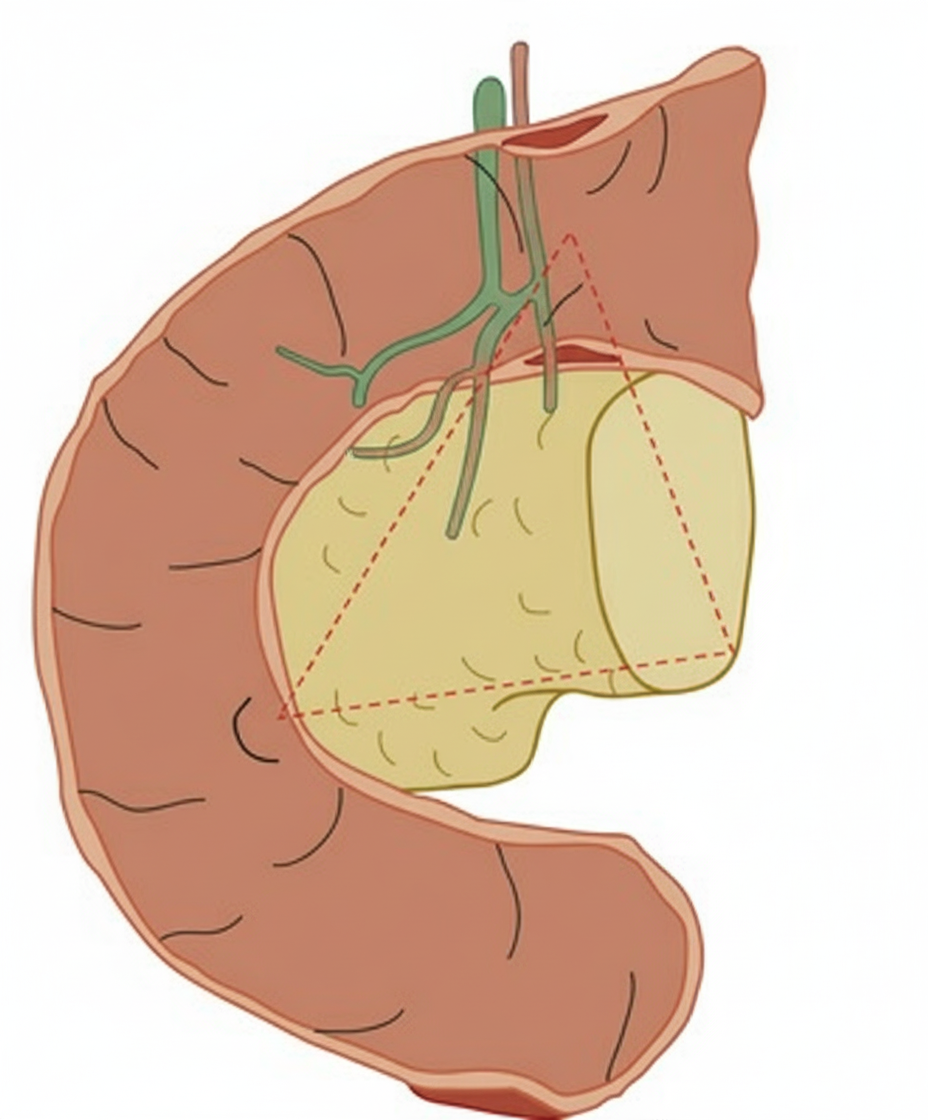
Explanation: **Explanation:** The pancreas is a retroperitoneal organ with specific anatomical relations that are frequently tested in NEET-PG. **1. Why Splenic Artery is Correct:** The **splenic artery**, a branch of the celiac trunk, follows a characteristic **tortuous course** along the **superior border** of the body and tail of the pancreas. It runs toward the hilum of the spleen within the splenorenal ligament. Its position makes it a vital landmark during pancreatic surgeries. **2. Why Other Options are Incorrect:** * **Portal Vein:** This is formed **behind the neck** of the pancreas by the union of the superior mesenteric and splenic veins [3]. It is a posterior relation, not a superior one. * **Left Kidney:** The left kidney lies **posterior** to the tail of the pancreas [1]. The two are separated by the perirenal fat and fascia [2]. * **Inferior Vena Cava (IVC):** The IVC is located **posterior** to the head of the pancreas and the third part of the duodenum. **Clinical Pearls & High-Yield Facts:** * **Splenic Vein:** Unlike the artery, the splenic vein runs **posterior** to the pancreas (embedded in a groove), not along the superior border [2]. * **Blood Supply:** The head is supplied by the superior and inferior pancreaticoduodenal arteries (forming an anastomosis), while the body and tail are supplied by branches of the splenic artery. * **Annular Pancreas:** A developmental anomaly where the ventral pancreatic bud migrates abnormally, encircling the **2nd part of the duodenum**, potentially causing obstruction. * **Transpyloric Plane (L1):** The pancreas lies at this level, with the head slightly below and the tail slightly above.
Anterior Abdominal Wall
Practice Questions
Peritoneum and Peritoneal Cavity
Practice Questions
Stomach and Intestines
Practice Questions
Liver, Gallbladder and Biliary Tract
Practice Questions
Pancreas and Spleen
Practice Questions
Kidneys and Suprarenal Glands
Practice Questions
Abdominal Vasculature
Practice Questions
Posterior Abdominal Wall
Practice Questions
Innervation of Abdominal Viscera
Practice Questions
Applied Anatomy and Clinical Correlations
Practice Questions
Get full access to all questions, explanations, and performance tracking.
Start For Free