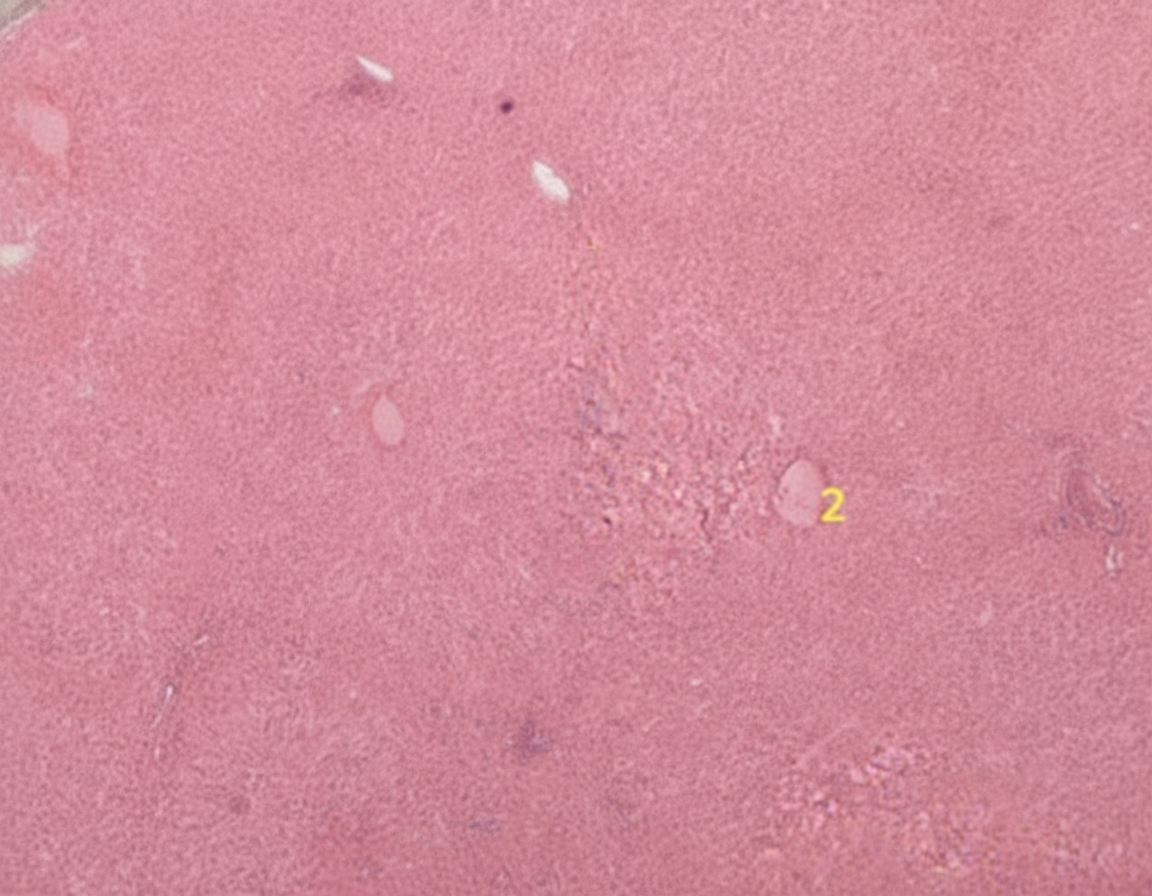
Plica circularis is absent in which part of the small intestine?
Which blood vessel supplies the liver?
Which of the following is not a permanent mucosal fold?
What is the typical length of the common bile duct (CBD)?
A 43-year-old woman is admitted to the hospital because of deep abdominal pain in her epigastric region. On examination, it is observed that a retroperitoneal infection erodes an artery that runs along the superior border of the pancreas. Which of the following arteries is likely injured?
All of the following are true about the relations of the left kidney, except:
What is the most common cranial nerve palsy associated with a basilar skull fracture?
What forms the posterior boundary of the epiploic foramen?
Which of the following blood vessels is Drummond's Artery?
The ligamentum teres of the liver is a remnant of which embryonic structure?
Explanation: ### Explanation **Plica circularis** (also known as Valves of Kerckring) are large, permanent circular folds of the mucosa and submucosa. Unlike rugae in the stomach, these folds do not disappear when the organ is distended. Their primary function is to increase the surface area for absorption and slow down the passage of chyme [1]. #### Why Distal Ileum is the Correct Answer: The distribution of plica circularis follows a specific gradient along the small intestine. They begin in the second part of the duodenum and reach their maximum development (tallest and most numerous) in the jejunum. As we move distally toward the ileum, they become smaller and more widely spaced. In the **distal (terminal) ileum**, they are almost entirely **absent**, making the internal surface relatively smooth. #### Analysis of Incorrect Options: * **A. Duodenum:** Plica circularis appear starting from the second (descending) part of the duodenum [2]. They are absent only in the first part (duodenal cap). * **B. Jejunum:** This is where plica circularis are most prominent, thick, and closely packed [2]. This is a key histological and gross feature used to distinguish the jejunum from the ileum. * **C. Proximal Ileum:** While fewer and smaller than in the jejunum, they are still present in the proximal portion of the ileum. #### NEET-PG High-Yield Pearls: * **Duodenal Cap:** The first 2 cm of the duodenum is smooth and lacks plica circularis; this is the most common site for peptic ulcers. * **Jejunum vs. Ileum:** On X-ray, the jejunum shows a "feathery" appearance due to prominent plica circularis, whereas the ileum appears smoother. * **Peyer’s Patches:** These lymphoid follicles are characteristic of the ileum (especially the distal part) and are located on the antimesenteric border, often situated where plica circularis are absent [3].
Explanation: **Explanation:** The liver has a unique dual blood supply, receiving oxygenated blood via the **Hepatic Artery** (25%) and nutrient-rich, deoxygenated blood via the **Portal Vein** (75%) [1], [3]. The Hepatic Artery is a branch of the Celiac Trunk, while the Portal Vein is formed by the union of the Superior Mesenteric and Splenic veins [1], [2]. **Analysis of Options:** * **Option B (Liver):** This is the correct answer as the question asks for the vessel supplying the liver. The hepatic artery proper and the portal vein enter the liver at the *porta hepatis* to provide its blood supply [1], [2]. * **Option A (Spleen):** The spleen is supplied by the **Splenic Artery**, the largest branch of the celiac trunk [2]. It does not supply the liver; rather, the splenic vein joins the portal system which eventually flows *into* the liver. * **Option C (Pancreas):** The pancreas receives a complex supply from the **Superior and Inferior Pancreaticoduodenal arteries** and branches of the splenic artery. * **Option D (Colon):** The colon is supplied by the **Superior and Inferior Mesenteric arteries**. **High-Yield Clinical Pearls for NEET-PG:** * **Porta Hepatis Content:** From anterior to posterior: Hepatic Duct, Hepatic Artery, and Portal Vein (Mnemonic: **D-A-V**) [2], [3]. * **Venous Drainage:** The liver is drained by three **Hepatic Veins** (Right, Middle, Left) which open directly into the **Inferior Vena Cava (IVC)**. * **Pringle Maneuver:** A surgical technique used to control hepatic bleeding by clamping the hepatoduodenal ligament, which contains the hepatic artery and portal vein.
Explanation: The correct answer is **Gastric rugae**. [1] ### **Explanation** The distinction between mucosal folds depends on whether they are permanent structures or transient features that disappear upon organ distension. 1. **Gastric Rugae (Correct Answer):** These are longitudinal folds of the gastric mucosa and submucosa. They are **transient/temporary**. [1] When the stomach fills with food or is distended with air, the rugae flatten out to increase the organ's volume. Therefore, they are not permanent. 2. **Spiral Valve of Heister:** Located in the cystic duct, these are permanent mucosal folds that prevent the duct from collapsing or over-distending, facilitating the passage of bile. 3. **Plica Semilunaris:** These are permanent crescentic folds found in the **colon** (between the haustra). Unlike the rugae, they do not disappear when the colon is distended. 4. **Transverse Rectal Folds (Valves of Houston):** These are permanent shelf-like mucosal folds in the rectum (usually three in number) that support the weight of fecal matter. --- ### **High-Yield Clinical Pearls for NEET-PG** * **Plicae Circulares (Valves of Kerckring):** These are permanent circular folds of the **small intestine**. They are most prominent in the duodenum and jejunum and do *not* disappear upon distension (unlike gastric rugae). * **Stomach Bed:** The stomach rests on the "stomach bed," which includes the pancreas, left kidney, left suprarenal gland, splenic artery, and transverse mesocolon. * **Magenstrasse:** The "gastric pathway" along the lesser curvature where liquids pass quickly; it is a common site for gastric ulcers.
Explanation: The **Common Bile Duct (CBD)** is formed by the union of the Common Hepatic Duct and the Cystic Duct. In standard anatomical texts (such as Gray’s Anatomy), the typical length of the CBD in an adult is cited as **7 to 11 cm**, with an average diameter of about 4 to 8 mm. [1] * **Why Option C is correct:** The CBD must traverse a significant distance from the porta hepatis, passing behind the first part of the duodenum and through the head of the pancreas to reach the second part of the duodenum. This anatomical course consistently requires a length of approximately 7–11 cm. [1] * **Why Options A & B are incorrect:** These lengths (2.5–7 cm) are too short to account for the four distinct segments of the CBD (Supraduodenal, Retroduodenal, Infraduodenal/Pancreatic, and Intramural). A duct this short would imply an abnormally low junction of the cystic duct or a high duodenal position. [1] * **Why Option D is incorrect:** A length of 10–15 cm is excessive for the standard human anatomy and would likely result in significant tortuosity. **High-Yield Clinical Pearls for NEET-PG:** 1. **Parts of CBD:** The **Retroduodenal part** is the most fixed, while the **Supraduodenal part** is the most accessible during surgery (Choledochotomy). 2. **Blood Supply:** The CBD is primarily supplied by the **Cystic artery** (superiorly) and the **Posterior Superior Pancreaticoduodenal artery** (inferiorly). [2] The "3 o'clock and 9 o'clock" longitudinal arteries are critical to preserve during surgery to prevent ischemic strictures. [1] 3. **Calot’s Triangle:** The CBD forms the lateral boundary of the **Hepatobiliary Triangle (of Calot)**, a crucial landmark for identifying the cystic artery during cholecystectomy. [2] 4. **Termination:** It joins the Main Pancreatic Duct to form the **Ampulla of Vater**, which opens at the Major Duodenal Papilla.
Explanation: ### Explanation The correct answer is **C. Splenic artery**. **1. Why the Splenic Artery is Correct:** The pancreas is a retroperitoneal organ (except for the tail). The **splenic artery**, a major branch of the celiac trunk, follows a characteristic **tortuous course** along the **superior border** of the body and tail of the pancreas [1]. Because of its intimate anatomical relationship with the posterior abdominal wall and the pancreatic margin, a retroperitoneal infection or a posterior penetrating gastric ulcer can easily erode this vessel. **2. Why the Other Options are Incorrect:** * **A. Right gastric artery:** This artery arises from the hepatic artery proper and runs along the **lesser curvature** of the stomach, not the pancreas. * **B. Left gastroepiploic artery:** This is a branch of the splenic artery that runs along the **greater curvature** of the stomach within the gastrosplenic ligament [1]. * **D. Gastroduodenal artery:** This artery descends **posterior to the first part of the duodenum** and anterior to the head of the pancreas. While it is related to the pancreas, it does not run along its superior border. **3. NEET-PG High-Yield Pearls:** * **Pancreatic Blood Supply:** The head is supplied by the superior (from gastroduodenal) and inferior (from SMA) pancreaticoduodenal arteries. The body and tail are supplied mainly by the **splenic artery**. * **Clinical Correlation:** A posterior gastric ulcer most commonly erodes the **splenic artery**, leading to massive hematemesis. * **Retroperitoneal Structures:** Remember the mnemonic **SAD PUCKER** (Suprarenal glands, Aorta/IVC, Duodenum [2nd/3rd part], Pancreas [except tail], Ureters, Colon [ascending/descending], Kidneys, Esophagus, Rectum). * **Splenic Artery Course:** It travels within the **splenorenal (lienorenal) ligament** along with the tail of the pancreas to reach the splenic hilum [1].
Explanation: To master the relations of the kidneys, one must distinguish between the right and left sides based on the surrounding viscera. [1] **Why Option D is the Correct Answer (The Exception):** The **hilum of the left kidney** is related to the **tail of the pancreas** and the splenic vessels. [1] The **duodenum** (specifically the second part) is a key anterior relation of the **right kidney**, not the left. [1] In the left kidney, the duodenum is situated medially and does not come into contact with the hilum. **Analysis of Other Options:** * **Option A:** The body and tail of the **pancreas** cross the middle of the left kidney. [1] Since the pancreas is a retroperitoneal organ, it lies directly on the renal fascia **without intervening peritoneum**. * **Option B:** The **splenic flexure** (left colic flexure) sits against the lateral aspect of the lower pole of the left kidney. * **Option C:** The **jejunum** covers the lower medial area of the left kidney. The **left colic artery** (a branch of the IMA) also passes in this region to reach the descending colon. **High-Yield NEET-PG Pearls:** * **Transpyloric Plane (L1):** Passes through the hila of both kidneys (the left hilum is slightly higher than the right). * **Bare Areas:** The areas related to the suprarenal gland, pancreas, and colon are "bare" (no peritoneum). Areas related to the stomach, spleen, and jejunum are "peritoneal." * **Morphology:** The left kidney is usually longer, narrower, and situated higher (reaches the 11th rib) than the right kidney (reaches the 11th intercostal space).
Explanation: **Explanation:** The **Facial nerve (CN VII)** is the most common cranial nerve injured in basilar skull fractures. This is primarily due to its long and tortuous course through the **petrous part of the temporal bone**, which is the most frequently fractured site in the skull base. Specifically, fractures involving the internal auditory canal or the fallopian canal often lead to nerve compression or transection. **Analysis of Options:** * **Facial nerve (Correct):** Its vulnerability stems from being encased in a rigid bony canal within the petrous temporal bone; even minor shifts or edema can cause palsy. * **Olfactory nerve (B):** While frequently injured in anterior fossa fractures (leading to anosmia), it is statistically less common than facial nerve involvement in general basilar fractures. * **Auditory nerve (D):** The vestibulocochlear nerve travels with the facial nerve but is slightly less prone to isolated mechanical injury compared to the facial nerve's motor fibers. * **Optic nerve (A):** This is typically associated with fractures of the sphenoid bone or orbital apex, which are less common than temporal bone fractures. **NEET-PG High-Yield Pearls:** * **Battle’s Sign:** Post-auricular ecchymosis indicating a fracture of the posterior cranial fossa (petrous temporal bone). * **Raccoon Eyes:** Periorbital ecchymosis indicating an anterior cranial fossa fracture. * **Delayed vs. Immediate Palsy:** Immediate facial palsy suggests nerve transection (requires surgery), while delayed onset (2-3 days) suggests edema (managed with steroids). * **CSF Rhinorrhea/Otorrhea:** Always suspect a basilar skull fracture if clear fluid leaks from the nose or ear.
Explanation: The **Epiploic Foramen** (also known as the Foramen of Winslow) is a slit-like communication between the greater sac and the lesser sac (omental bursa). Understanding its boundaries is a high-yield topic for NEET-PG. [1] ### **Explanation of the Correct Answer** The posterior boundary of the epiploic foramen is formed by the **Inferior Vena Cava (IVC)** and the **T12 vertebra**. Specifically, the IVC lies directly behind the foramen, resting upon the body of the T12 vertebra. [1] Therefore, Option B is the correct anatomical landmark. ### **Analysis of Incorrect Options** * **Option A (L1 vertebra):** The L1 level corresponds to the transpyloric plane. While the pancreas and the renal hila are located here, the epiploic foramen is situated slightly higher, at the level of the T12 vertebral body. * **Options C & D (T11 and T10 vertebrae):** These levels are too superior. T10 is the level of the esophageal opening in the diaphragm, and T11 is associated with the cardiac orifice of the stomach. ### **High-Yield Boundaries of the Epiploic Foramen** To master this topic, remember the "Four Boundaries": 1. **Anterior:** Right free margin of the **lesser omentum**, containing the portal vein (posterior), hepatic artery (left), and bile duct (right). [1] 2. **Posterior:** **Inferior Vena Cava** and the **T12 vertebra**. [1] 3. **Superior:** **Caudate process** of the liver. [1] 4. **Inferior:** **First part of the duodenum** and the horizontal part of the hepatic artery. ### **Clinical Pearl for NEET-PG** **Pringle’s Maneuver:** During surgery, if there is heavy bleeding from the liver, a surgeon can compress the structures in the anterior boundary of the epiploic foramen (within the hepatoduodenal ligament) to control hemorrhage. If bleeding continues, the source is likely the IVC (posterior boundary) or hepatic veins.
Explanation: ***Marginal artery*** - **Drummond's artery** is the **marginal artery of the colon**, which runs along the **mesenteric border** of the entire colon from cecum to rectum. - It forms a continuous **vascular arcade** that provides **collateral circulation** between the superior and inferior mesenteric arterial territories, crucial in preventing **colonic ischemia**. *Arc of Riolan* - Also known as the **meandering mesenteric artery**, it is a **central anastomotic channel** between SMA and IMA territories. - It runs more **centrally** in the mesentery, closer to the **aorta**, unlike Drummond's artery which runs at the colonic border. *Inferior mesenteric artery* - A **major branch of the abdominal aorta** that supplies the **left colic**, **sigmoid**, and **superior rectal arteries**. - It is a **primary vessel**, not an anastomotic artery like Drummond's artery. *Superior mesenteric artery* - Another **major aortic branch** that supplies the **small intestine** and **right side of the colon** via branches like the **ileocolic** and **right colic arteries**. - It is a **main arterial trunk**, not the marginal anastomotic vessel described as Drummond's artery.
Explanation: The **ligamentum teres hepatis** (round ligament of the liver) is the fibrous remnant of the **left umbilical vein**. In fetal circulation, the left umbilical vein carries oxygenated and nutrient-rich blood from the placenta to the fetus [1]. After birth, when the umbilical cord is clamped, the vein collapses and undergoes fibrosis to form this ligament, which runs in the free margin of the falciform ligament [1]. **Analysis of Options:** * **Left Umbilical Vein (Correct):** Becomes the ligamentum teres. Note that the right umbilical vein disappears early in embryonic development. * **Umbilical Arteries:** These carry deoxygenated blood from the fetus to the placenta. Postnatally, their distal parts obliterate to form the **medial umbilical ligaments** on the anterior abdominal wall. * **Ductus Venosus:** This fetal shunt allows blood to bypass the liver sinusoids, flowing directly from the left umbilical vein to the IVC [1]. After birth, it fibroses to become the **ligamentum venosum**. * **Ductus Arteriosus:** A shunt between the pulmonary artery and the aorta. It obliterates to form the **ligamentum arteriosum**. **High-Yield Clinical Pearls for NEET-PG:** * **Caput Medusae:** In portal hypertension, the paraumbilical veins (which run along the ligamentum teres) can recanalize, leading to dilated veins around the umbilicus. * **Bedside Landmark:** The ligamentum teres divides the left lobe of the liver into the medial segment (quadrate lobe) and the lateral segment. * **Mnemonic:** **V**enosum comes from Ductus **V**enosus; **T**eres comes from Umbilical **V**ein (Think: "TV" – **T**eres/**V**ein).
Anterior Abdominal Wall
Practice Questions
Peritoneum and Peritoneal Cavity
Practice Questions
Stomach and Intestines
Practice Questions
Liver, Gallbladder and Biliary Tract
Practice Questions
Pancreas and Spleen
Practice Questions
Kidneys and Suprarenal Glands
Practice Questions
Abdominal Vasculature
Practice Questions
Posterior Abdominal Wall
Practice Questions
Innervation of Abdominal Viscera
Practice Questions
Applied Anatomy and Clinical Correlations
Practice Questions
Get full access to all questions, explanations, and performance tracking.
Start For Free