Anatomy
3 questionsA patient after a road traffic accident presents to the emergency room with difficulty in swallowing and slurred speech. Investigations reveal fractures in the occipitotemporal region. Which of the following areas should be tested in order to find the nerve which is involved?
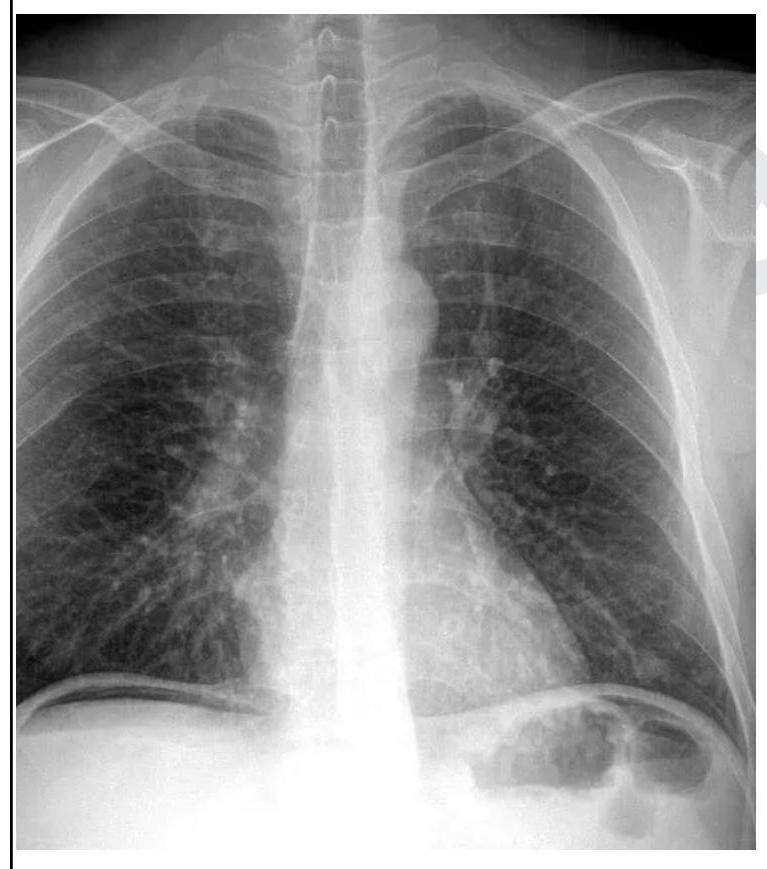
The marked structure develops from which of the following structures?

Inferior thyroid artery supplies which of the following structures? 1. Thyroid 2. Parathyroid 3. Esophagus 4. Thymus
INI-CET 2021 - Anatomy INI-CET Practice Questions and MCQs
Question 121: A patient after a road traffic accident presents to the emergency room with difficulty in swallowing and slurred speech. Investigations reveal fractures in the occipitotemporal region. Which of the following areas should be tested in order to find the nerve which is involved?
- A. Posterior one-third of tongue (Correct Answer)
- B. Anterior two-thirds of tongue
- C. Hard palate
- D. Soft palate
Explanation: ***Posterior one-third of tongue*** - This symptom complex of **dysphagia** (difficulty swallowing) and **dysarthria** (slurred speech) after trauma to the occipitotemporal region is highly suggestive of damage to **Cranial Nerves IX (Glossopharyngeal)** and **X (Vagus)**. - The **Glossopharyngeal nerve (CN IX)** supplies general and special sensation (taste) to the **posterior one-third of the tongue** [1]. *Anterior two-thirds of tongue* - The **facial nerve (CN VII)** is responsible for taste sensation from the **anterior two-thirds of the tongue** [1]. - General sensation from the anterior two-thirds of the tongue is supplied by the **trigeminal nerve (CN V)** via the lingual nerve. *Hard palate* - Sensation to the **hard palate** is primarily supplied by branches of the **trigeminal nerve (CN V)**, specifically the greater palatine and nasopalatine nerves. - Damage to these nerves would primarily affect sensation in the palate, not cause dysphagia and dysarthria. *Soft palate* - The **vagus nerve (CN X)** is responsible for motor innervation to most muscles of the **soft palate**, allowing for its elevation during swallowing and speech. - While soft palate dysfunction can contribute to dysphagia and dysarthria, directly testing sensation here would be less specific than testing the posterior tongue for Glossopharyngeal involvement.
Question 122: The marked structure develops from which of the following structures?
- A. Anterior cardinal vein
- B. Subcardinal vein
- C. Supracardinal vein (Correct Answer)
- D. Common cardinal vein
Explanation: ***Supracardinal vein*** - The arrow points to the **azygos vein**, which drains the thoracic wall. - The azygos vein is primarily derived from the right **supracardinal vein**. *Anterior cardinal vein* - The anterior cardinal veins contribute to the formation of the **superior vena cava** and internal jugular veins. - They are located more superiorly and drain the head and upper limbs. *Subcardinal vein* - The subcardinal veins are involved in the formation of the **renal veins**, gonadal veins, and a segment of the inferior vena cava. - These veins are found in the abdominal region, inferolateral to the developing kidneys. *Common cardinal vein* - The common cardinal veins fuse to form the **superior vena cava** and enter the sinus venosus. - They are important in the early embryonic stage for collecting blood from the anterior and posterior cardinal veins.
Question 123: Inferior thyroid artery supplies which of the following structures? 1. Thyroid 2. Parathyroid 3. Esophagus 4. Thymus
- A. 1 and 2 only
- B. 1,2 and 3 (Correct Answer)
- C. 1,2 and 4 only
- D. 1,2,3 and 4
Explanation: ***1,2 and 3*** - The **inferior thyroid artery** is a branch of the **thyrocervical trunk** and supplies the **thyroid gland**, **parathyroid glands**, and the **cervical part of the esophagus** [1]. - It also gives branches to the **trachea** and **larynx** (via the inferior laryngeal artery). - These are the standard, consistently described structures supplied by this artery in anatomical texts. *1 and 2 only* - This option is incomplete as the inferior thyroid artery provides blood supply to more structures than just the thyroid and parathyroid glands. - It also supplies the **cervical portion of the esophagus** through its esophageal branches. *1,2 and 4 only* - This option is incorrect because the inferior thyroid artery does supply the **esophagus** (cervical part), which is missing from this option. - The **thymus** is primarily supplied by branches of the **internal thoracic artery**, not the inferior thyroid artery. *1,2,3 and 4* - This option is incorrect because the **thymus** is NOT a standard structure supplied by the inferior thyroid artery. - The thymus receives its blood supply primarily from the **internal thoracic artery** (anterior mediastinal branches) and sometimes from the **superior thyroid artery**. [1] - The inferior thyroid artery's distribution includes thyroid, parathyroid, esophagus, trachea, and larynx—but not the thymus.
Anesthesiology
1 questionsWhich nerve is targeted in the nasociliary nerve block?
INI-CET 2021 - Anesthesiology INI-CET Practice Questions and MCQs
Question 121: Which nerve is targeted in the nasociliary nerve block?
- A. Greater palatine nerve
- B. Sphenopalatine nerve
- C. Anterior ethmoidal nerve
- D. Nasociliary nerve (Correct Answer)
Explanation: ***Nasociliary nerve*** - A nasociliary nerve block specifically targets the **nasociliary nerve** itself. - This block is used to anesthetize the sensory innervation of structures supplied by the nasociliary nerve, such as parts of the **nasal cavity**, **eyeball**, and **skin of the nose**. *Greater palatine nerve* - The **greater palatine nerve** supplies sensation to the posterior hard palate and is targeted in a **greater palatine nerve block**. - This nerve is a branch of the **maxillary nerve** and is primarily involved in dental and palatal anesthesia. *Sphenopalatine nerve* - The **sphenopalatine nerve**, or pterygopalatine ganglion, contains sensory fibers for the nasal cavity, palate, and pharynx, and its block is distinct from a nasociliary block. - A **sphenopalatine ganglion block** is mainly used for conditions like cluster headaches and facial pain, not for direct eyeball sensation. *Anterior ethmoidal nerve* - The **anterior ethmoidal nerve** is a branch of the nasociliary nerve, but a nasociliary nerve block targets the main trunk, which includes all its branches. - While the anterior ethmoidal nerve supplies the anterior part of the nasal septum and lateral wall, it is a **component** of the nasociliary innervation rather than the sole target.
Biochemistry
1 questionsmiRNA binds to which part of the mRNA to inhibit translation?
INI-CET 2021 - Biochemistry INI-CET Practice Questions and MCQs
Question 121: miRNA binds to which part of the mRNA to inhibit translation?
- A. Gene promoter
- B. 3'UTR (Correct Answer)
- C. Gene body
- D. 5'UTR
Explanation: ***3'UTR*** - MicroRNAs (miRNAs) are small non-coding RNA molecules that regulate gene expression. - They primarily bind to the **3' untranslated region (3'UTR)** of messenger RNA (mRNA) molecules, leading to translational repression or mRNA degradation. *Gene promoter* - The **gene promoter** is a region of DNA located upstream of a gene, where regulatory proteins bind to initiate transcription. - miRNAs do not directly bind to gene promoters to inhibit translation. *Gene body* - The **gene body** refers to the entire transcribed region of a gene, including exons and introns. - While some regulatory elements can be found within the gene body, the primary binding site for miRNAs to exert translational control is the 3'UTR. *5'UTR* - The **5' untranslated region (5'UTR)** is located at the 5' end of an mRNA molecule, upstream of the start codon. - While the 5'UTR can play a role in regulating translation initiation, it is not the primary target for miRNA binding to inhibit translation.
Microbiology
1 questionsWhich pathogen causes attachment - effacement lesion in the intestinal mucosa as shown in the image?

INI-CET 2021 - Microbiology INI-CET Practice Questions and MCQs
Question 121: Which pathogen causes attachment - effacement lesion in the intestinal mucosa as shown in the image?
- A. Enteropathogenic Escherichia coli (Correct Answer)
- B. Enterotoxigenic Escherichia coli
- C. Diffusely adherent Escherichia coli
- D. Enteroinvasive Escherichia coli
Explanation: ***Enteropathogenic Escherichia coli*** - **Enteropathogenic E. coli (EPEC)** is characterized by its ability to cause **"attachment and effacement" (A/E) lesions** on intestinal epithelial cells, as depicted in the image. This involves the effacement of microvilli and pedestal formation. - EPEC utilizes the **Type III secretion system** to inject effector proteins into the host cell, leading to actin rearrangement and the characteristic A/E lesion. *Enterotoxigenic Escherichia coli* - **Enterotoxigenic E. coli (ETEC)** causes diarrhea by producing **heat-labile (LT) and/or heat-stable (ST) toxins**, which stimulate fluid and electrolyte secretion. - ETEC primarily mediates its effects through toxins that cause increased cAMP/cGMP, leading to secretory diarrhea without significant host cell damage. *Diffusely adherent Escherichia coli* - **Diffusely adherent E. coli (DAEC)** is known to adhere to the entire surface of epithelial cells in a diffuse pattern. - While it can cause diarrhea, its mechanism involves a different adhesion pattern and does not typically result in the dramatic attachment/effacement changes seen with EPEC. *Enteroinvasive Escherichia coli* - **Enteroinvasive E. coli (EIEC)** invades and destroys the epithelial cells of the colon, leading to symptoms similar to **shigellosis**, including dysentery (bloody, mucoid stools). - Its pathogenic mechanism involves intracellular replication and direct destruction of host cells, not the localized attachment and effacement seen in the image.
Pathology
1 questionsFluorescence in situ hybridization (FISH) is required in which of the following interpretations of Her2/neu?
INI-CET 2021 - Pathology INI-CET Practice Questions and MCQs
Question 121: Fluorescence in situ hybridization (FISH) is required in which of the following interpretations of Her2/neu?
- A. All of the options
- B. 2+ (Correct Answer)
- C. 1+
- D. 3+
Explanation: ***Correct: 2+*** A **Her2/neu immunohistochemistry (IHC) score of 2+** is considered **equivocal**, meaning it's uncertain whether Her2/neu is overexpressed. In such cases, **Fluorescence In Situ Hybridization (FISH)** is required to determine the amplification status of the *HER2* gene, which guides treatment decisions regarding anti-HER2 therapy (trastuzumab) [1], [2]. The 2+ score shows incomplete and weak to moderate membrane staining in >10% of tumor cells, necessitating gene amplification confirmation. *Incorrect: All of the options* While FISH is crucial for equivocal interpretations, it is **not required for all** possible Her2/neu IHC results [2]. Some scores (1+ and 3+) definitively indicate Her2/neu status without requiring confirmatory testing. Routinely performing FISH for all IHC scores would be unnecessary and costly. *Incorrect: 1+* An IHC score of **1+** indicates **no Her2/neu overexpression** (faint/barely perceptible incomplete membrane staining in >10% of tumor cells). In this situation, the patient is considered **Her2-negative**, and FISH testing is **not required** as the result is clearly negative. *Incorrect: 3+* An IHC score of **3+** indicates **clear Her2/neu overexpression** (strong, complete membrane staining in >10% of tumor cells) [1]. Patients with an IHC 3+ score are considered **Her2-positive**, and typically **FISH testing is not required** to confirm this result, as the overexpression is unequivocal [2]. **References:** [1] Cross SS. Underwood's Pathology: A Clinical Approach. 6th ed. (Basic Pathology) introduces the student to key general principles of pathology, both as a medical science and as a clinical activity with a vital role in patient care. Part 2 (Disease Mechanisms) provides fundamental knowledge about the cellular and molecular processes involved in diseases, providing the rationale for their treatment. Part 3 (Systematic Pathology) deals in detail with specific diseases, with emphasis on the clinically important aspects., pp. 256-259. [2] Kumar V, Abbas AK, et al.. Robbins and Cotran Pathologic Basis of Disease. 9th ed. The Breast, pp. 1064-1066.
Surgery
3 questionsYou are suturing a laceration in the ER using the interrupted suturing technique. What is the angle of needle placement?
A 26 year old male patient was brought to the emergency department with abdominal pain and obstipation for 3 days. He gives a history of bull gore to the abdomen 3 days back. His chest X-ray is given below. What is the probable diagnosis?

A 50 year old male patient came to the outpatient department with complaints of hematuria. A 2 x 2 cm bladder mass is seen which is low grade transitional cell carcinoma. Which among the following is the ideal management?
INI-CET 2021 - Surgery INI-CET Practice Questions and MCQs
Question 121: You are suturing a laceration in the ER using the interrupted suturing technique. What is the angle of needle placement?
- A. 80 degrees
- B. 70 degrees
- C. 60 degrees
- D. 90 degrees (Correct Answer)
Explanation: ***90 degrees*** - Placing the needle at a **90-degree angle** to the skin surface ensures that the suture comes out perpendicular to the skin edge, creating an **eversion of the wound edges**. - This perpendicular entry allows for an equal amount of tissue to be grasped on both sides of the wound, promoting proper **wound approximation** and healing. *80 degrees* - An 80-degree angle, while close, would not provide the ideal **perpendicular entry** needed to properly evert the wound edges. - This slight deviation from 90 degrees could lead to less precise **tissue approximation** and potentially an inverted wound edge. *70 degrees* - A 70-degree angle is too shallow and would result in the suture entering the wound more tangentially, leading to **inverted wound edges**. - **Inverted wound edges** hinder optimal healing and can result in a less aesthetically pleasing scar. *60 degrees* - A 60-degree angle is significantly too shallow, which would cause the suture to be placed too superficially and horizontally, resulting in **poor wound edge eversion**. - This angle would make it difficult to adequately appose the deeper dermal layers, compromising **tensile strength** and increasing the risk of scar formation.
Question 122: A 26 year old male patient was brought to the emergency department with abdominal pain and obstipation for 3 days. He gives a history of bull gore to the abdomen 3 days back. His chest X-ray is given below. What is the probable diagnosis?
- A. Hemothorax
- B. Hollow viscus perforation (Correct Answer)
- C. Pneumothorax
- D. Intestinal obstruction
Explanation: ***Hollow viscus perforation*** - The chest X-ray clearly shows **free air under the diaphragm** (pneumoperitoneum), which is a hallmark sign of a perforated hollow viscus in the abdomen. - The history of **bull gore to the abdomen** and subsequent abdominal pain and obstipation further supports a traumatic perforation of a stomach or intestinal segment. *Hemothorax* - Hemothorax would present as **fluid in the pleural space**, typically seen as blunting of the costophrenic angles or an effusion on X-ray, which is not evident here. - While trauma can cause hemothorax, the prominent finding on this X-ray is intra-abdominal air, not intrathoracic fluid. *Pneumothorax* - Pneumothorax is characterized by the presence of **air in the pleural space**, leading to lung collapse and absence of lung markings in the affected area, which is not observed on this X-ray. - The air seen is clearly **below the diaphragm**, indicating intra-abdominal free air, not air in the chest cavity surrounding the lung. *Intestinal obstruction* - Intestinal obstruction typically presents with **dilated bowel loops** and **air-fluid levels** on an abdominal X-ray, along with abdominal pain and obstipation. - While the patient has obstipation, the primary X-ray finding is free air under the diaphragm, which is not characteristic of an uncomplicated intestinal obstruction.
Question 123: A 50 year old male patient came to the outpatient department with complaints of hematuria. A 2 x 2 cm bladder mass is seen which is low grade transitional cell carcinoma. Which among the following is the ideal management?
- A. Resection with ileal conduit
- B. Partial cystectomy with bladder reconstruction
- C. Neoadjuvant chemotherapy
- D. Transurethral resection of the tumour (Correct Answer)
Explanation: ***Transurethral resection of the tumour*** - For a **low-grade transitional cell carcinoma** that is 2x2 cm and thus considered small and localized, **transurethral resection of the tumor (TURBT)** is the initial and often definitive treatment. - This procedure allows for both **diagnosis** by obtaining tissue samples and **complete removal** of the visible tumor. *Resection with ileal conduit* - This option, involving a **radical cystectomy** and urinary diversion, is a more aggressive treatment reserved for **invasive, high-grade, or recurrent bladder cancers** that cannot be managed by less invasive means. - It would be **overtreatment** for a low-grade, relatively small bladder mass. *Partial cystectomy with bladder reconstruction* - **Partial cystectomy** is considered for solitary, muscle-invasive tumors located away from critical areas (like the trigone) when bladder preservation is desirable. - It is generally not the first-line treatment for **non-muscle-invasive, low-grade tumors** due to the potential for recurrence in the remaining bladder and the morbidity of open surgery compared to TURBT. *Neoadjuvant chemotherapy* - **Neoadjuvant chemotherapy** is typically administered before radical cystectomy for **muscle-invasive bladder cancer** to improve oncologic outcomes. - It is not indicated for **low-grade, non-muscle-invasive bladder cancer** which is usually managed surgically first, without systemic chemotherapy.