Anatomy
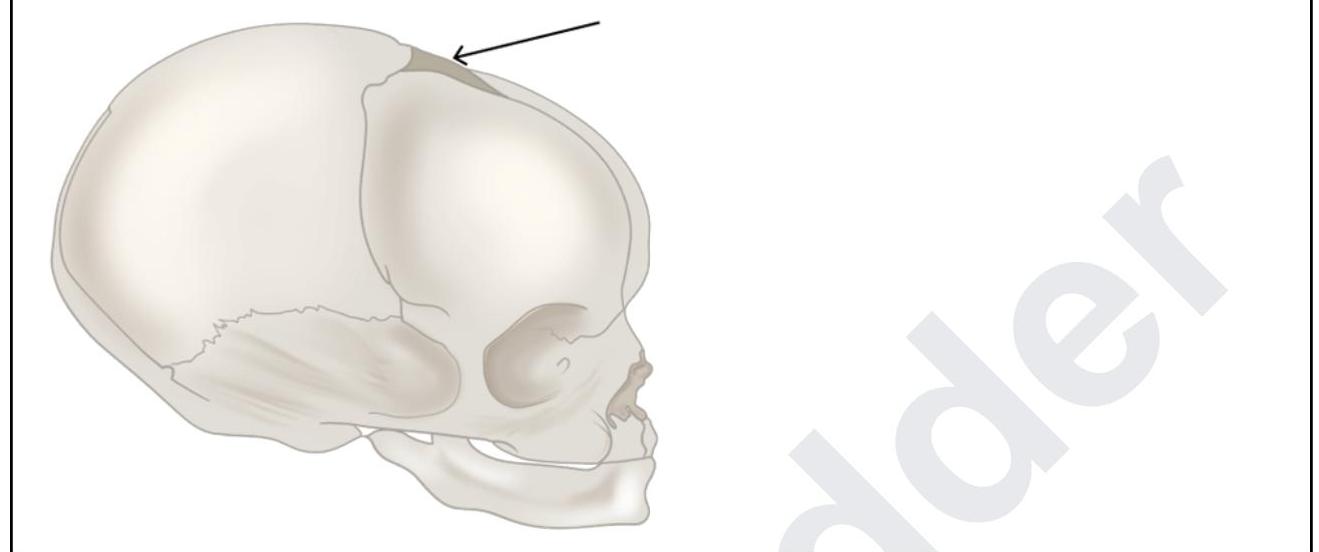
1 questionsA 6-month-old boy was brought to the casualty with seizures. The pediatrician tries to do CSF sampling. What are the structures punctured by the pediatrician while piercing through the marked structure?
INI-CET 2021 - Anatomy INI-CET Practice Questions and MCQs
Question 101: A 6-month-old boy was brought to the casualty with seizures. The pediatrician tries to do CSF sampling. What are the structures punctured by the pediatrician while piercing through the marked structure?
- A. Scalp, dura, arachnoid (Correct Answer)
- B. Scalp, epicranium, endocranium and dura
- C. Scalp, synchondral membrane, dura, arachnoid
- D. Pericranium, dura, arachnoid
Explanation: ***Scalp, dura, arachnoid*** - The image shows a needle piercing through the **anterior fontanelle**, which allows direct access to the intracranial space. - When accessing the **subarachnoid space** via the fontanelle, the needle would penetrate the overlying **scalp**, then the outer and inner layers of the **dura mater**, and finally the **arachnoid mater** before reaching the cerebrospinal fluid. *Scalp, epicranium, endocranium and dura* - The terms **epicranium** and **endocranium** refer to layers associated with the bone itself, which is largely absent as a solid structure at the fontanelle in an infant. - CSF sampling through the fontanelle bypasses the need to penetrate mature bone layers like epicranium and endocranium. *Scalp synchondral membrane, dura, arachnoid* - A **synchondral membrane** is found between bones that are joined by cartilage, such as at the base of the skull, not typically within the fontanelle itself. - The primary layers to be penetrated at the fontanelle are the soft tissues of the scalp and the meningeal layers. *Pericranium, dura, arachnoid* - The **pericranium** is the dense connective tissue layer that covers the outer surface of the bones of the skull. - While present, it's considered part of the overall scalp layers and is not a separate primary penetration layer in the same context as the meninges for CSF sampling.
Internal Medicine
1 questionsAn HIV positive woman on ART was prescribed ergotamine for a migraine attack 4 days back. She presented with complaints that she is unable to feel her legs from the mid - thigh to her toes, for the past two days. The angiography image is given below. What is the likely diagnosis?

INI-CET 2021 - Internal Medicine INI-CET Practice Questions and MCQs
Question 101: An HIV positive woman on ART was prescribed ergotamine for a migraine attack 4 days back. She presented with complaints that she is unable to feel her legs from the mid - thigh to her toes, for the past two days. The angiography image is given below. What is the likely diagnosis?
- A. Ergotism (Correct Answer)
- B. Polyradicular neuropathy
- C. Atherosclerosis
- D. Vasculitis
Explanation: ***Ergotism*** - The patient's inability to feel her legs from mid-thigh to toes, following ergotamine use, combined with the angiography showing **vasoconstriction** and absent distal flow, strongly suggests ergotism. - **Ergotamine** is a potent vasoconstrictor and its adverse effects are exacerbated by drug interactions with certain antiretroviral therapies (ART) used in HIV treatment, leading to severe **ischemia**. *Atherosclerosis* - While atherosclerosis can cause peripheral arterial disease, it usually presents with more gradual onset of symptoms and **claudication** rather than acute, severe sensory loss as described. - The angiography in atherosclerosis typically shows **localized plaques** and stenoses, which are not the primary finding here of widespread peripheral vasoconstriction. *Polyradicular Neuropathy* - Polyradicular neuropathy involves nerve damage causing sensory and motor deficits but does not directly cause the **vascular changes** seen on angiography. - The clinical presentation of sudden, severe sensory loss in the context of recent ergotamine use and the angiographic findings point away from a primary neurological disorder as the sole cause. *Vasculitis* - While vasculitis can occur in HIV patients and cause limb ischemia, the **temporal relationship** with ergotamine use (symptoms starting 2 days after medication) strongly suggests a drug-related cause. - Vasculitis typically presents with more systemic features and would not have such an acute onset directly following ergotamine administration.
Obstetrics and Gynecology
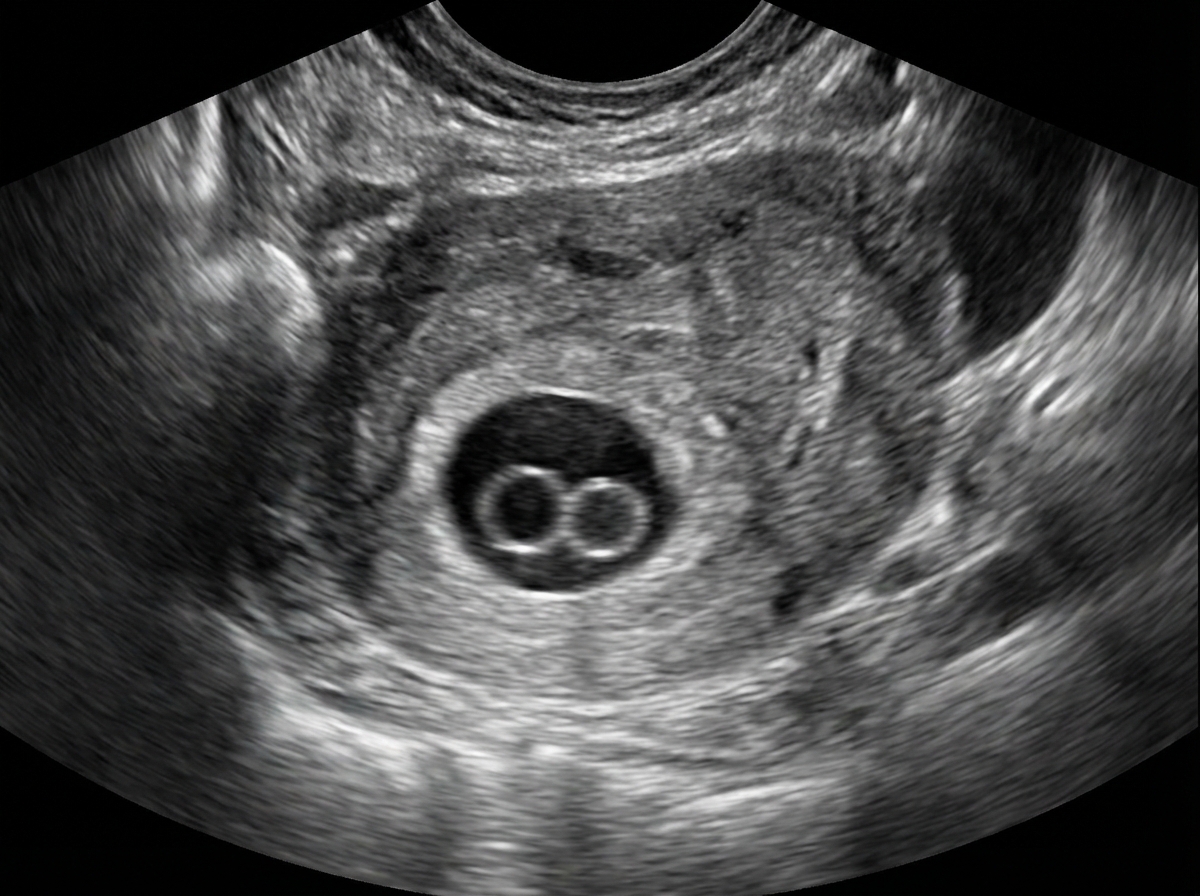
1 questionsDouble bleb sign seen in early pregnancy is due to?

INI-CET 2021 - Obstetrics and Gynecology INI-CET Practice Questions and MCQs
Question 101: Double bleb sign seen in early pregnancy is due to?
- A. Amnion and chorion
- B. Yolk sac and amniotic sac (Correct Answer)
- C. Twin pregnancy
- D. Chorion and decidua
Explanation: ***Yolk sac and amniotic sac*** - The **double bleb sign** on ultrasound refers to the separate visualization of the **yolk sac** and the **amniotic sac** within the gestational sac. - This sign is a crucial indicator of a **viable intrauterine pregnancy** in the early stages, typically between 5.5 and 6.5 weeks of gestation. *Amnion and chorion* - The **amnion** and **chorion** are membranes that form later in pregnancy and eventually fuse. - While they are distinct structures, their visualization does not constitute the "double bleb sign," which specifically refers to the distinct spaces of the yolk sac and amniotic sac. *Chorion and decidua* - The **chorion** is the outer fetal membrane, and the **decidua** is the modified endometrium during pregnancy. - While both are important structures in early pregnancy, they are not the structures visualized in the double bleb sign. *Twin pregnancy* - A **twin pregnancy** would involve two separate gestational sacs or, in the case of monochorionic-diamniotic twins, two amniotic sacs within one chorion, each containing a fetus. - The double bleb sign is a feature of a **single intrauterine pregnancy** and is not indicative of twins.
Pediatrics
2 questionsMatch the following 1. Hirschsprung's disease 2. Posterior urethral valve 3. Choledochal cyst 4. Intussusception A. Jaundice B. Currant jelly stools C. Distended abdomen D. Oligohydramnios
A mother notices a swelling in the abdomen of her 3-year-old child while bathing him. He had a history of hematuria two weeks back, which resolved spontaneously. On examination, a right-sided reniform ballotable mass was found. What is the most appropriate initial investigative approach?
INI-CET 2021 - Pediatrics INI-CET Practice Questions and MCQs
Question 101: Match the following 1. Hirschsprung's disease 2. Posterior urethral valve 3. Choledochal cyst 4. Intussusception A. Jaundice B. Currant jelly stools C. Distended abdomen D. Oligohydramnios
- A. 1-C, 2-D, 3-B, 4-A
- B. 1-A, 2-D, 3-B, 4-C
- C. 1-C, 2-D, 3-A, 4-B (Correct Answer)
- D. 1-D, 2-C, 3-A, 4-B
Explanation: ***Correct Answer: 1-C, 2-D, 3-A, 4-B*** **Correct Associations:** - **Hirschsprung's disease (1) → Distended abdomen (C)**: Congenital absence of ganglion cells in the distal bowel leads to functional obstruction and subsequent abdominal distension. This is a hallmark presentation in neonates and infants. - **Posterior urethral valve (2) → Oligohydramnios (D)**: Urethral obstruction in utero prevents normal fetal urine output, resulting in decreased amniotic fluid (oligohydramnios). This can be detected on prenatal ultrasound. - **Choledochal cyst (3) → Jaundice (A)**: Congenital dilatation of the bile ducts causes biliary obstruction, presenting with jaundice as part of the classic triad (jaundice, abdominal mass, and pain). - **Intussusception (4) → Currant jelly stools (B)**: Telescoping of bowel causes mucosal ischemia and venous congestion, leading to bloody mucoid stools with characteristic "currant jelly" appearance. This is a pathognomonic feature. *Incorrect: 1-C, 2-D, 3-B, 4-A* - Incorrectly associates choledochal cyst with currant jelly stools (which is specific to intussusception) and intussusception with jaundice (which indicates biliary pathology). *Incorrect: 1-A, 2-D, 3-B, 4-C* - Wrongly links Hirschsprung's disease with jaundice instead of its characteristic abdominal distension, and misidentifies intussusception's primary feature. *Incorrect: 1-D, 2-C, 3-A, 4-B* - Swaps the associations between Hirschsprung's disease and PUV. Oligohydramnios is specific to urinary tract obstruction (PUV), not intestinal pathology (Hirschsprung's).
Question 102: A mother notices a swelling in the abdomen of her 3-year-old child while bathing him. He had a history of hematuria two weeks back, which resolved spontaneously. On examination, a right-sided reniform ballotable mass was found. What is the most appropriate initial investigative approach?
- A. Ultrasound, CT scan with contrast, CBC, and Bone marrow biopsy
- B. Ultrasound, CT scan with contrast, and CBC (Correct Answer)
- C. Ultrasound and CT scan with contrast
- D. CT scan with contrast and Bone marrow biopsy
Explanation: ***Ultrasound, CT scan with contrast, and CBC*** - This combination allows for comprehensive **assessment of the kidney mass**, its extent, and helps differentiate it from other abdominal masses, while a CBC checks for paraneoplastic anemia or polycythemia. - **Ultrasound** is typically the initial imaging modality due to its non-invasiveness and ability to characterize the mass as solid or cystic, followed by a **CT scan with contrast** for detailed anatomical information and staging. *Ultrasound, CT scan with contrast, CBC, and Bone marrow biopsy* - While ultrasound, CT scan with contrast, and CBC are appropriate, a **bone marrow biopsy** is usually reserved for suspected metastasis or specific types of tumors like neuroblastoma, not as an initial step for a primary renal mass presentation in a 3-year-old child. - The initial focus is on characterizing the renal mass and systemic workup, and bone marrow biopsy would be considered later if there's evidence or high suspicion of metastatic disease to the bone marrow. *Ultrasound and CT scan with contrast* - While these imaging studies are crucial for diagnosing and staging the renal mass, neglecting a **complete blood count (CBC)** would be an oversight. - A CBC can reveal important information such as anemia (common with renal tumors), thrombocytosis, or other hematological abnormalities that might influence treatment decisions or indicate prognosis. *CT scan with contrast and Bone marrow biopsy* - Relying solely on a **CT scan with contrast** as the initial imaging can be less efficient than starting with ultrasound, especially in children, and lacks the preliminary information provided by a CBC. - A **bone marrow biopsy** is not typically part of the initial workup for a suspected Wilms' tumor unless there is specific concern for bone marrow involvement or to rule out a neuroblastoma.
Pharmacology
3 questionsWhich of the following is false about the selection of essential drugs?
A patient who was diagnosed with epilepsy was put on retigabine TDS. Now phenytoin is being added. Which of the following changes should be made to retigabine?
A patient with history of ischemic stroke was started on clopidogrel. However, she had another attack of stroke after 6 months. Which of the following is likely to be responsible for the failure of clopidogrel in this patient?
INI-CET 2021 - Pharmacology INI-CET Practice Questions and MCQs
Question 101: Which of the following is false about the selection of essential drugs?
- A. Cost to benefit has to be considered
- B. Fixed drug combination is preferred over single drugs (Correct Answer)
- C. An adequate safety profile needs to be established
- D. Disease prevalence is considered
Explanation: ***Fixed drug combination is preferred over single drugs*** - The statement that **fixed-drug combinations (FDCs)** are preferred over single drugs for essential drug selection is false. Generally, **single drugs are preferred** to allow for individual dose adjustments and minimize potential adverse effects from unnecessary components. - FDCs are only considered essential when they offer specific advantages, such as **improved adherence** (e.g., in tuberculosis treatment) or a **synergistic effect** not achievable with individual drugs. *Cost to benefit has to be considered* - This statement is true; the **cost-effectiveness** and **cost-benefit ratio** are crucial factors in selecting essential drugs. - Essential drugs aim to provide the most public health benefit at an **affordable cost**, ensuring access for a broad population. *An adequate safety profile needs to be established* - This statement is true; essential drugs must have a **well-established safety profile** with acceptable risks. - The benefits of the drug must significantly outweigh its potential harms, with minimal serious **adverse reactions**. *Disease prevalence is considered* - This statement is true; essential drugs are selected based on their ability to address the **most prevalent diseases** and health needs of a population. - Prioritizing drugs for common conditions ensures that public health resources are effectively allocated to where they are most needed.
Question 102: A patient who was diagnosed with epilepsy was put on retigabine TDS. Now phenytoin is being added. Which of the following changes should be made to retigabine?
- A. Stop the drug
- B. Stop retigabine and start on carbamazepine
- C. Increase the dose (Correct Answer)
- D. Decrease the dose
Explanation: ***Increase the dose*** - **Phenytoin** is a potent **enzyme inducer** that induces hepatic enzymes including **UGT (glucuronidation) enzymes**. - **Retigabine** is primarily metabolized by **N-acetylation and glucuronidation** (not significantly by CYP450 enzymes). - Phenytoin induces UGT enzymes, which **increases retigabine metabolism and clearance**, leading to **decreased plasma concentrations**. - To maintain therapeutic levels and seizure control, the **dose of retigabine needs to be increased** when co-administered with phenytoin. *Stop the drug* - There is no clinical indication to completely **stop retigabine** simply because phenytoin is being added, as both can be used concurrently with dose adjustment. - Doing so might lead to a **loss of seizure control** if retigabine was providing effective seizure management. *Stop retigabine and start on carbamazepine* - This is an unnecessary and unindicated change; there is no medical reason to **switch from retigabine to carbamazepine** due to phenytoin addition. - Like phenytoin, **carbamazepine is also a strong enzyme inducer**, so similar drug interactions would occur. *Decrease the dose* - **Decreasing the dose** would be appropriate if phenytoin were an enzyme inhibitor, leading to higher retigabine levels. - Since phenytoin is an **enzyme inducer**, decreasing the dose would further reduce retigabine's therapeutic concentration, potentially leading to **breakthrough seizures**.
Question 103: A patient with history of ischemic stroke was started on clopidogrel. However, she had another attack of stroke after 6 months. Which of the following is likely to be responsible for the failure of clopidogrel in this patient?
- A. Upregulation of CYP1A1
- B. Downregulation of CYP2E1
- C. Downregulation of CYP2C19 (Correct Answer)
- D. Downregulation of CYP2D6
Explanation: ***Reduced function/Loss of function of CYP2C19*** - **Clopidogrel** is a **prodrug** that requires activation by **hepatic cytochrome P450 (CYP) enzymes**, primarily **CYP2C19**, to its active metabolite. - **Genetic polymorphisms** causing **reduced function or loss of function of CYP2C19** (e.g., CYP2C19*2, *3 alleles) result in insufficient conversion of clopidogrel to its active form, leading to **clopidogrel resistance** and increased risk of thrombotic events like recurrent stroke. - These **poor metabolizers** have significantly reduced antiplatelet response to standard clopidogrel doses. *Upregulation of CYP1A1* - **CYP1A1** is involved in the metabolism of various xenobiotics but plays a **minimal role** in clopidogrel activation. - Upregulation of CYP1A1 would not be a primary factor in clopidogrel failure as it is not the main enzyme responsible for its bioactivation. *Downregulation of CYP2E1* - **CYP2E1** is primarily involved in the metabolism of small organic molecules, some drugs, and toxins, and has **no significant role** in the bioactivation of clopidogrel. - Therefore, changes in its expression would not impact clopidogrel's efficacy. *Downregulation of CYP2D6* - **CYP2D6** is a major enzyme involved in the metabolism of many psychoactive drugs, beta-blockers, and opioids, but plays only a **minor role** in clopidogrel activation compared to CYP2C19. - Downregulation of CYP2D6 would not be the primary cause of clopidogrel failure.
Radiology
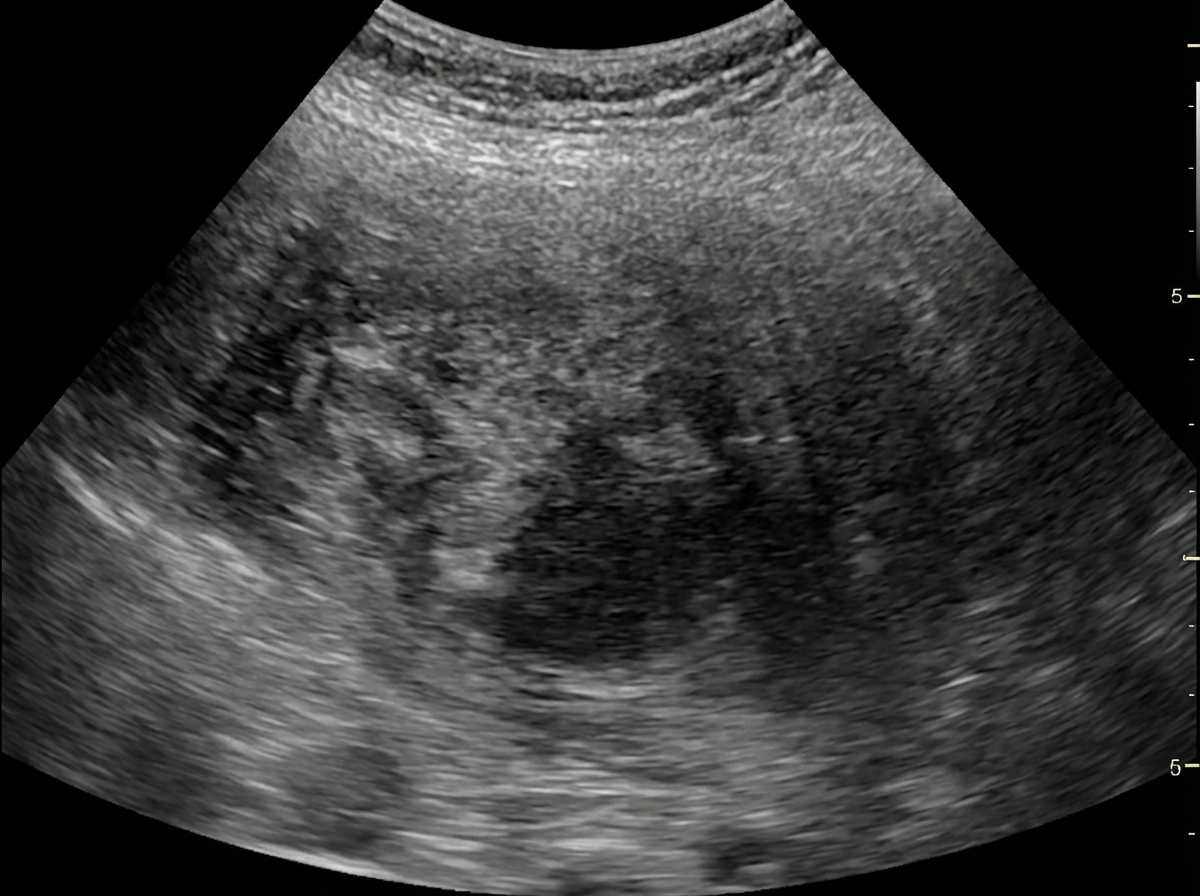
1 questionsIdentify the imaging modality given below.

INI-CET 2021 - Radiology INI-CET Practice Questions and MCQs
Question 101: Identify the imaging modality given below.
- A. USG (Correct Answer)
- B. Fluoroscopy
- C. X-Ray
- D. MRI
Explanation: ***USG*** - The image displays characteristic **gray-scale imaging** with an **echogenic appearance** of tissues, typical of an ultrasound. - Presence of annotations like "10 MHz G 64%" for **frequency and gain**, and "PRC" suggest ultrasound parameters. *Fluoroscopy* - Fluoroscopy provides **real-time X-ray images** and often involves the use of contrast agents, appearing as a dynamic, darker image with high contrast. - The image lacks the distinct bone and air contrast and dynamic motion typical of fluoroscopy. *X-Ray* - X-ray images depict a **static shadowgram** of dense structures like bones as white, and air as black, with sharp delineation. - The image shows a **granular texture** and fluid-filled structures that are characteristic of soft tissue imaging through ultrasound, not X-ray. *MRI* - MRI produces **cross-sectional images** with high soft tissue contrast in multiple planes (axial, sagittal, coronal). - The image shows real-time B-mode ultrasound characteristics with **probe frequency notation**, not the slice-based imaging of MRI.
Surgery
1 questionsA 12-year-old presented with fever and difficulty swallowing. He had swelling in the marked region and was advised to undergo tonsillectomy. Post-surgery the gauze continued to soak with blood. Which of the following vessels must have been injured?

INI-CET 2021 - Surgery INI-CET Practice Questions and MCQs
Question 101: A 12-year-old presented with fever and difficulty swallowing. He had swelling in the marked region and was advised to undergo tonsillectomy. Post-surgery the gauze continued to soak with blood. Which of the following vessels must have been injured?
- A. Ascending pharyngeal artery
- B. Tonsillar branch of facial artery
- C. Retromandibular vein
- D. Paratonsillar vein (Correct Answer)
Explanation: ***Paratonsillar vein*** - The **paratonsillar vein**, also known as the **external palatine vein**, is the major vein draining the palatine tonsil and usually the primary source of **post-tonsillectomy hemorrhage**. - Its superficial location and tendency to be large and thin-walled make it particularly vulnerable to injury during **tonsillectomy**, leading to persistent bleeding. *Ascending pharyngeal artery* - The ascending pharyngeal artery contributes to the blood supply of the tonsil, but it is a **deep-seated artery** that is less frequently injured during tonsillectomy compared to the paratonsillar vein. - While its injury could lead to significant bleeding, it's not the most common vascular source of hemorrhage in this context. *Tonsillar branch of facial artery* - The **tonsillar branch of the facial artery** is a significant arterial supply to the tonsil. However, arterial bleeding is typically more pulsatile and rapid, whereas persistent soaking of gauze suggests venous bleeding. - While injury to this artery can occur, the **paratonsillar vein** is a more common source of persistent oozing hemorrhage post-tonsillectomy. *Retromandibular vein* - The **retromandibular vein** is located posterior to the mandible and is not directly associated with the tonsillar bed. - Injury to this vein during a **tonsillectomy** is highly unlikely due to its anatomical position.