A primigravida is in labor. Her per-vaginal examination revealed a posterior cervix with 5 cm cervical length, 1 cm dilatation, soft consistency, and head at -1 station. Calculate the Bishop score.
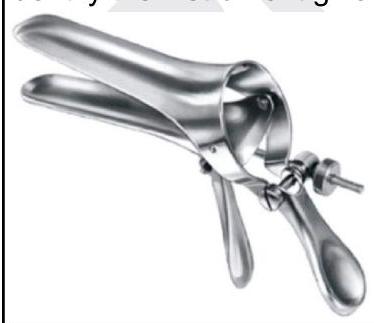
Identify the instrument given below.

Double bleb sign seen in early pregnancy is due to?

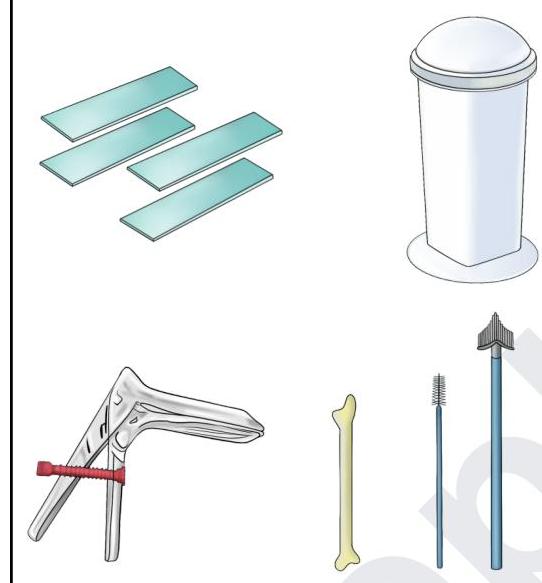
The following set of instruments are used for which procedure?
Which of the following is not a long-acting reversible contraceptive method?
A teenage girl presented with irregular cycles and increased facial hair. Her ovaries showed increased volume. Which of the following are used in the first line treatment? 1. Laparoscopic ovarian drilling 2. Anti-androgens 3. Lifestyle modifications 4. Combined oral contraceptive pills
INI-CET 2021 - Obstetrics and Gynecology INI-CET Practice Questions and MCQs
Question 11: A primigravida is in labor. Her per-vaginal examination revealed a posterior cervix with 5 cm cervical length, 1 cm dilatation, soft consistency, and head at -1 station. Calculate the Bishop score.
- A. 5 (Correct Answer)
- B. 0
- C. 8
- D. 3
Explanation: ***5*** - The Bishop score calculation: **cervical position** (posterior = 0), **cervical effacement** (5 cm length = 0), **dilation** (1 cm = 1), **consistency** (soft = 2), and **station** (-1 = 1). - According to standard **Dutta textbook** references, this totals to 5 points (0 + 0 + 1 + 2 + 1), with soft consistency correctly scoring 2 points. *3* - This score incorrectly assigns only **1 point for soft consistency** instead of the standard 2 points. - The miscalculation underestimates the **cervical readiness** for labor induction. *0* - A score of 0 would require all parameters to be at their **minimum values** (firm consistency, closed cervix, high station). - The given parameters show **1 cm dilation**, **soft consistency**, and **-1 station**, each contributing positive points. *8* - A high score of 8 indicates a **very favorable cervix** with significant effacement, anterior position, and greater dilation. - The current findings show **minimal effacement** (5 cm length), **posterior position**, and only **1 cm dilation**, inconsistent with such a high score.
Question 12: Identify the instrument given below.
- A. Sims' speculum
- B. Graves' speculum
- C. Auvard's speculum
- D. Cusco's speculum (Correct Answer)
Explanation: ***Cusco's speculum*** - This is a **bivalved, self-retaining speculum** with two articulated blades that open and close using a **thumbscrew/locking mechanism** at the handle. - Commonly used for **per speculum examination** to visualize the **cervix and vaginal walls** during gynecological procedures. *Sims' speculum* - A **single-bladed (univalve) speculum** that requires an **assistant to hold** during examination, unlike the self-retaining instrument shown. - Used to retract the **posterior vaginal wall** but lacks the dual-blade design visible in the image. *Graves' speculum* - Similar bivalved design to Cusco's but features **longer and wider blades** for better visualization in larger patients. - More commonly used in the **United States**, with a bulkier appearance than the instrument pictured. *Auvard's speculum* - A **weighted, self-retaining single-blade speculum** used as a **posterior vaginal retractor**. - Completely different design from the bivalved instrument shown, with only **one blade** and no locking mechanism.
Question 13: Double bleb sign seen in early pregnancy is due to?
- A. Amnion and chorion
- B. Yolk sac and amniotic sac (Correct Answer)
- C. Twin pregnancy
- D. Chorion and decidua
Explanation: ***Yolk sac and amniotic sac*** - The **double bleb sign** on ultrasound refers to the separate visualization of the **yolk sac** and the **amniotic sac** within the gestational sac. - This sign is a crucial indicator of a **viable intrauterine pregnancy** in the early stages, typically between 5.5 and 6.5 weeks of gestation. *Amnion and chorion* - The **amnion** and **chorion** are membranes that form later in pregnancy and eventually fuse. - While they are distinct structures, their visualization does not constitute the "double bleb sign," which specifically refers to the distinct spaces of the yolk sac and amniotic sac. *Chorion and decidua* - The **chorion** is the outer fetal membrane, and the **decidua** is the modified endometrium during pregnancy. - While both are important structures in early pregnancy, they are not the structures visualized in the double bleb sign. *Twin pregnancy* - A **twin pregnancy** would involve two separate gestational sacs or, in the case of monochorionic-diamniotic twins, two amniotic sacs within one chorion, each containing a fetus. - The double bleb sign is a feature of a **single intrauterine pregnancy** and is not indicative of twins.
Question 14: The following set of instruments are used for which procedure?
- A. Biopsy
- B. Dilatation and curettage
- C. Pap smear (Correct Answer)
- D. Hysteroscopy
Explanation: ***Pap smear*** - The image displays a complete set of instruments used for a **Pap smear**, including **glass slides** for sample collection, a **cervical brush**, a **spatula** (cytobrush and Ayre spatula), and a **speculum** to visualize the cervix. - These tools are specifically designed for collecting cervical cells to screen for **cervical cancer** and **precancerous changes**. *Biopsy* - A biopsy typically involves specialized instruments like **punch biopsy tools**, **forceps**, or needles to extract tissue samples, which are not depicted here. - While glass slides might be used for processing biopsy samples, the primary collection tools are absent. *Dilatation and curettage* - This procedure requires instruments such as **dilators** to open the cervix and **curetters** to scrape the uterine lining, which are not shown in the image. - The instruments shown are for surface cell collection, not for uterine cavity procedures. *Hysteroscopy* - Hysteroscopy uses a **hysteroscope**—a thin, lighted tube with a camera—to visualize the inside of the uterus. - The instruments in the image are for external examination and cervical cell collection, not for direct visualization of the uterine cavity.
Question 15: Which of the following is not a long-acting reversible contraceptive method?
- A. Combined oral contraceptives (Correct Answer)
- B. Implanon
- C. Copper T
- D. Depo-Provera injection
Explanation: ***Combined oral contraceptives*** - While effective, **combined oral contraceptives** require daily adherence and are not typically classified as long-acting due to their need for frequent, consistent administration. - Their mechanism involves **exogenous hormones** that suppress ovulation and thicken cervical mucus, but their contraceptive effect relies on continuous daily intake. *Implanon* - **Implanon** (etonogestrel implant) is a **subdermal contraceptive implant** that provides effective contraception for up to three years. - It works by slowly releasing progestin, making it a **long-acting reversible contraceptive (LARC)**. *Copper T* - The **Copper T intrauterine device (IUD)** is a non-hormonal LARC that can prevent pregnancy for **up to 10 years**. - It acts by creating an inflammatory reaction in the uterus that is toxic to sperm and eggs, preventing fertilization. *Depo-Provera injection* - The **Depo-Provera injection** (medroxyprogesterone acetate) is a progestin-only contraceptive given every **3 months**. - While it offers extended protection, it is **not universally classified as a LARC** by major guidelines (WHO, ACOG, CDC), which typically reserve this designation for IUDs and implants that do not require regular clinic visits.
Question 16: A teenage girl presented with irregular cycles and increased facial hair. Her ovaries showed increased volume. Which of the following are used in the first line treatment? 1. Laparoscopic ovarian drilling 2. Anti-androgens 3. Lifestyle modifications 4. Combined oral contraceptive pills
- A. 2,3,4 (Correct Answer)
- B. 1,2,3
- C. 1,2,4
- D. 1,3,4
Explanation: ***2,3,4 (Correct Answer)*** - **Lifestyle modifications (3)** are the foundational first-line intervention for all PCOS patients, particularly those who are overweight or obese, as they improve insulin sensitivity, reduce androgen levels, and improve both metabolic and reproductive outcomes. - **Combined oral contraceptive pills/COCs (4)** are the first-line pharmacological treatment for menstrual irregularity and hyperandrogenism in PCOS when fertility is not desired. They regulate cycles, suppress ovarian androgen production, and reduce hirsutism and acne. - **Anti-androgens (2)** such as spironolactone are used in first-line management of moderate-to-severe hirsutism and acne in PCOS, typically in combination with COCs. They block androgen receptors or inhibit androgen synthesis, providing additional benefit for hyperandrogenic symptoms like the increased facial hair in this patient. *1,2,3* - **Laparoscopic ovarian drilling (1)** is a second-line surgical treatment reserved for anovulatory infertility in PCOS patients who fail to respond to ovulation induction with clomiphene citrate. It is NOT a first-line treatment for menstrual irregularity and hirsutism. - While lifestyle modifications (3) and anti-androgens (2) are appropriate first-line components, the inclusion of ovarian drilling makes this combination incorrect as a first-line approach. *1,2,4* - **Laparoscopic ovarian drilling (1)** is an invasive procedure indicated only as second-line therapy for specific cases of anovulatory infertility, not for initial management of irregular cycles and hirsutism. - Although anti-androgens (2) and COCs (4) are appropriate first-line pharmacological treatments, the inclusion of ovarian drilling excludes this from being a correct first-line treatment combination. *1,3,4* - This combination includes two appropriate first-line treatments: **lifestyle modifications (3)** and **combined oral contraceptive pills (4)**. - However, **laparoscopic ovarian drilling (1)** is a second-line or third-line surgical intervention for very specific indications (anovulatory infertility resistant to medical management), making this combination incorrect as a first-line approach for this clinical presentation.