Infectious Diseases Indian Medical PG Flashcards - Medical Study Cards
Master Infectious Diseases with OnCourse flashcards. These spaced repetition flashcards are designed for medical students preparing for NEET PG, USMLE Step 1, USMLE Step 2, MBBS exams, and other medical licensing examinations.
Infectious Diseases Flashcard Deck - 101 Cards
Flashcard 1: _____ is aka 100 days cough
Answer: pertusis
Extra:
Flashcard 2: fully immunised child is who _____
Answer: has take all the vaccines til 1 year of age
Extra:
Flashcard 3: HIV progression is _____ in infants and children
Answer: rapid
Extra:
Flashcard 4: acellular pertussis vaccine(DTaP) indication is
Answer: severe immunological deficits or
progressive neurological dysfunction
Extra:
Flashcard 5: rare adverse effect of measles vaccine is _____
Answer: subacute sclerosing pan encephalitis(SSPE)
Extra:
Flashcard 6: 2c81993a56154e059965c33d86098fe2-ao-4
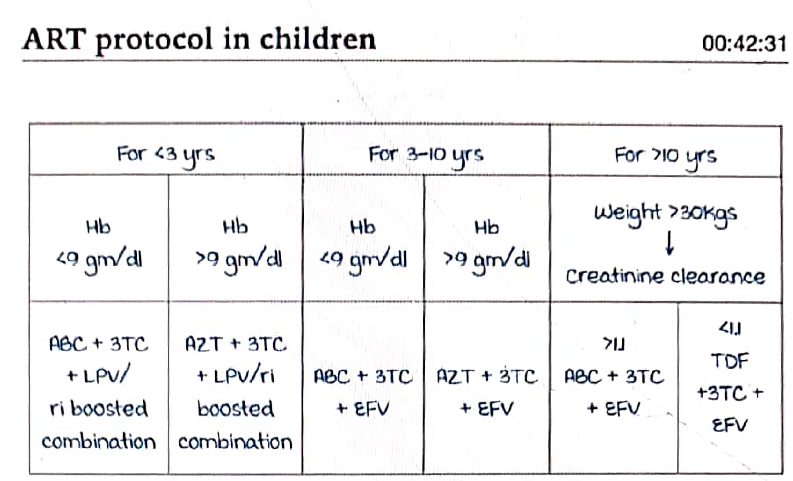
Answer: ART(anti retroviral therapy) protocol in children
Extra:
Flashcard 7: MC age of presentation of pertusis is _____
Answer: <5 years
Extra:
Flashcard 8: measles vaccine in HIV patients should be given at _____ of age
Answer: 6 months
Extra:
Flashcard 9: mc feature of measles is _____
Answer: diarrhea
Extra:
Flashcard 10: rubella is aka _____
Answer: 3 day measles
Extra:
Flashcard 11: 2c81993a56154e059965c33d86098fe2-ao-1
Answer: ART(anti retroviral therapy) protocol in children
Extra:
Flashcard 12: a child born to malaria immune mother is immune for _____ of age
Answer: 3-5 months
Extra:
Flashcard 13: measles Ig are given within _____ of exposure
Answer: 3-4 days
Extra:
Flashcard 14: dose schedule of Hep B vaccine in children is
Answer: 4 dose schedule
Extra:
Flashcard 15: 2c81993a56154e059965c33d86098fe2-ao-6
Answer: ART(anti retroviral therapy) protocol in children
Extra:
Flashcard 16: 2nd dose of varicella active vaccine is given at _____
Answer: 2 years
Extra:
Flashcard 17: dose of rotasil/rotavac vaccine is _____
Answer: 2.5 ml
Extra:
Flashcard 18: 2c81993a56154e059965c33d86098fe2-ao-3
Answer: ART(anti retroviral therapy) protocol in children
Extra:
efavirenz is not CI in 3-10 years
CI in <3 years
tenofovir=CI in <10 yrs and >1.1 creatinine
only used in >10 yrs with <1.1 creat
lamivudine =no CI
zidovudine-CI in anemia
abacavir =indicated in anemia <10 yrs
Flashcard 19: yellow fever vaccine can be given to children aged >_____
Answer: 9 months
Extra:
Flashcard 20: mc age of presentation of diptheria is _____
Answer: 1-5 years
Extra:
Flashcard 21: mc complication of measles is _____
Answer: otitis media
Extra:
Flashcard 22: yellow fever vaccine is contraindicated in children aged <_____
Answer: 6 months
Extra:
Flashcard 23: _____ spots inside mouth are diagnostic of measles
Answer: koplic's
Extra:
Flashcard 24: 2c81993a56154e059965c33d86098fe2-ao-5
Answer: ART(anti retroviral therapy) protocol in children
Extra:
Flashcard 25: MC cause of death in measles is _____
Answer: severe pneumonia
Extra:
Flashcard 26: 2c81993a56154e059965c33d86098fe2-ao-2
Answer: ART(anti retroviral therapy) protocol in children
Extra:
Flashcard 27: ratio of anicteric to icteric cased of Hep A in children is _____
Answer: 12:1
Extra:
Flashcard 28: 2 doses of mumps vaccine are given at
Answer: 1.1 year
2.4-6 years of age
remember large gap
Extra:
Flashcard 29: 3 stages of pertusis are
Answer:
Extra:
Flashcard 30: _____ and CMV are 2 ToRCHeS infections that are associated with a "blueberry muffin" rash.
Answer: Rubella
Flashcard 31: A mnemonic used to remember the infectious agents which may cross the placenta and cause congenital infection isToRCHeS:_____RubellaCMVHIVHerpes virusSyphilis (treponema pallidum)VZVParvovirus B19*Zika
Answer: Toxoplasmosis
Flashcard 32: Haemophilus influenzae classically causes _____, which can be described as 'cherry-red' on gross appearance
Answer: epiglottitis
Flashcard 33: _____ is due to Clostridium botulinum infection;seen in babies following ingestion of spores in honey.
Answer: Floppy Baby Syndrome
Flashcard 34: The measles rash starts on the _____ and moves down-wards
Answer: face
Flashcard 35: Pastia lines or _____ sign is pathognomonic for scarlet fever
Answer: Thompson's
Flashcard 36: Congenital rubella syndrome is diagnosed by presence of Ig_____ antibodies in the infant shortly after birth or persistence of IgG antibodies for >6 months
Answer: M
Flashcard 37: The _____ of erythema infectiosum develops after the fever (fever/rash)
Answer: rash
Flashcard 38: _____ is the most common cause of febrile seizures in children
Answer: Roseola
Flashcard 39: Scarlet fever can present with a red, swollen, "_____" tongue,pharyngitis, and a diffuse, "sandpaper-like" rash that spares the face
Answer: strawberry
Flashcard 40: _____ causes diaper rash due to the heat and humidity within a baby's diaper
Answer: Candida albicans
Flashcard 41: Sensorineural deafness is a complication of which (4) congenital (ToRCHeS) infections?_____
Answer: CMV
Flashcard 42: _____ Syphilis is characterized by "Saber Shins", with an anterior bowing of the tibia
Answer: Congential
Flashcard 43: A minimum period of _____ weeks course of Nevirapine prophylaxis has to be given to an infant, if the mother has taken ART for less than 4 weeks in the antenatal period and the infant is to be breastfed
Answer: 12
Flashcard 44: The _____ of roseola infection develops after the fever (fever/rash)
Answer: rash
Flashcard 45: _____ syndrome is classically seen in children with E. coli O157:H7 dysentery, which results from exposure to undercooked beef
Answer: Hemolytic uremic
Flashcard 46: The _____ of Roseola lasts 3 - 5 days (duration)
Answer: fever
Flashcard 47: Which two viruses can result in hydrops fetalis?_____
Answer: CMV
Flashcard 48: _____ Syphilis is characterized by 'saddle-shaped' nose
Answer: Congential
Flashcard 49: _____ can result in viral gastroenteritis and ultimately intussusception of the bowel
Answer: Adenovirus
Flashcard 50: What viruses classically cause Reye syndrome when treated with aspirin?_____ and VZV
Answer: Influenza B
Flashcard 51: What are the 4 C's of Measles?_____Coryza (runny/stuffy nose due to inflammation)ConjunctivitisKoplik spots
Answer: Cough
Flashcard 52: _____ is associated with bloody diarrhea, commonly in toddlers (age group)
Answer: Yersinia enterocolitica
Flashcard 53: Severe, permanent symptoms of congenital_____ infection are remembered via the mnemonic MR DICS
Answer: CMV
Flashcard 54: Hutchinson's triad consists of _____ teeth (notched upper incisors) + Interstitial keratitis + sensorineural deafness
Answer: Hutchison s
Flashcard 55: Ulcers at the uvulopalatoglossal junction maybe seen in _____ which are also called Nagayama spots
Answer: Roseola infantum
Flashcard 56: Chlamydia trachomatis serotypes _____ infected neonates can develop neonatal pneumonia, with a characteristic staccato cough and eosino-philia
Answer: D-K
Flashcard 57: _____ prophylactic therapy initiation and early infant diagnosis with use of HIV DNA PCR at 6 weeks after birth, is done according to PPTCT
Answer: Co-trimoxazole
Flashcard 58: _____ triad is seen in congenital syphilis
Answer: Hutchinson's
Flashcard 59: Congenital Rubella infection is characterized by a classic triad of _____, patent ductus arteriosus, and sensorineural deafness
Answer: cataracts
Flashcard 60: Clutton's joint, scaphoid scapula and Sabre shins are seen in _____ syphilis
Answer: congenital
Flashcard 61: Bony nodules on the skull of infants with congenital syphilis, is known as _____ nodes
Answer: Parrot's
Flashcard 62: Hecht's pneumonia, also known as giant cell pneumonia is a fatal but rare complication of _____
Answer: measles
Flashcard 63: _____ is the most common complication that can occur in a child with mumps.
Answer: Meningoencephalitis
Flashcard 64: Most common complication of measles is _____
Answer: acute otitis media
Flashcard 65: Tripod sign is when a child suffering from _____ is asked to sit up unassisted, the child assumes the tripod posture
Answer: poliomeylitis
Flashcard 66: _____ is the most common manifestation of congenital toxoplasmosis.
Answer: Chorioretinitis
Flashcard 67: Which vaccines can be caught-up if at least one dose has been given already before one year of age?_____
Answer: Pentavalent, PCV, IPV and Rotavirus
Flashcard 68: The most common etiological agent, in India, of acute epiglottitis in the pediatric age group, now is _____.
Answer: H. influenzae type B
Flashcard 69: _____ is the most common cause of orbital cellulitis in children.
Answer: Ethmoidal sinusitis (not organism)
Flashcard 70: _____ is the most common manifestation of congenital toxoplasmosis
Answer: Chorioretinitis
Flashcard 71: Children pneumococcal vaccine 2 weeks before splenectomy?_____
Answer: Pneumococcal 7-valent
Flashcard 72: The most common cause of unilateral proptosis in children is _____.
Answer: orbital cellulitis
Flashcard 73: Vesiculobullous lesions are a feature of _____ syphilis
Answer: early congenital
Flashcard 74: The most common infectious etiology for adrenal insufficiency in children is _____
Answer: meningococcemia
Flashcard 75: A patient of dengue hemorrhagic fever can be discharged if the platelet count is >_____/cu.mm
Answer: 50,000
Flashcard 76: Rash of chickenpox is deemed non-contagious after the lesions have _____.
Answer: crusted
Flashcard 77: Infants born to HbsAg-positive mothers should receive _____ immunization at birth
Answer: both active and passive (active/passive)
Flashcard 78: A child born to a mother who was diagnosed to have TB in pregnancy should receive INH prophylaxis for _____ months, provided congenital TB has been ruled out.
Answer: 6
Flashcard 79: What is the upper limit of CD4 count for starting ART in children?_____
Answer: None
Flashcard 80: For diagnosing congenital CMV infection, _____ examination by PCR is the best method
Answer: blood
Flashcard 81: What is the most characteristic finding seen universally in HIV in children?_____
Answer: Failure to thrive
Flashcard 82: What is a common ocular manifestation of whooping cough?_____
Answer: Subconjunctival hemorrhage
Flashcard 83: Most common cause of death in measles is _____
Answer: pneumonia
Flashcard 84: _____ treatment consists of hot moist packs applied to muscles to relieve pain and spasm in poliomyelitis
Answer: Sister Kenny s
Flashcard 85: Gumma on the nasal septum are seen in _____ congenital syphilis
Answer: late
Flashcard 86: In a baby born to an HIV-infected mother, HIV infection is diagnosed using _____ PCR
Answer: HIV DNA
Flashcard 87: Postnatal infections of HSV are more common due to type _____
Answer: 1
Flashcard 88: _____ is the most common complication that can occur in an adolescent with mumps.
Answer: Orchitis/oophoritis
Flashcard 89: Osteomyelitis of the _____ is more often seen in infants and children
Answer: maxilla (facial bone)
Flashcard 90: Interstitial keratitis and Hutchinson's teeth are features of _____ congenital syphilis
Answer: late
Flashcard 91: Kassowitz rule is related to _____ syphilis.
Answer: congenital
Flashcard 92: Toxoplasmosis in children may lead to _____ hydrocephalus
Answer: obstructive
Flashcard 93: In the third stage of erythema infectiosum, also called as the _____ stage, the eruption may recur after exposure to heat when bathing, or sunlight or while crying
Answer: recurring
Flashcard 94: The most common etiological agent, overall in the world, of acute epiglottitis in the pediatric age group, now is _____.
Answer: Streptococcus
Flashcard 95: An infant born to a mother who is newly identified as HIV-positive within _____ weeks of delivery should be considered as high risk.
Answer: 6
Flashcard 96: Infants may develop a symmetrical _____ type of Chik rash and acrocyanosis, when infected with chikungunya
Answer: vesiculobullous
Flashcard 97: Most frequently, the completely affected muscle in polio is _____
Answer: tibialis anterior
Flashcard 98: _____ is associated with post-infectious thrombocytopenia
Answer: Rubella (RNA virus)
Flashcard 99: _____ is the initial investigation of choice in congenital syphilis
Answer: VDRL/RPR
Flashcard 100: Hennebert sign is seen in _____.
Answer: congenital syphilis
Flashcard 101: The four symptoms (4S) screening for TB in children with HIV includes:Current _____FeverWeight loss or failure to gain weightHistory of _____
Answer: cough; contact with a TB case
Keywords: Infectious Diseases flashcards, medical flashcards, NEET PG preparation, USMLE Step 1 flashcards, Anki alternative, spaced repetition medical, OnCourse flashcards