Renal Pathology Indian Medical PG Flashcards - Medical Study Cards
Master Renal Pathology with OnCourse flashcards. These spaced repetition flashcards are designed for medical students preparing for NEET PG, USMLE Step 1, USMLE Step 2, MBBS exams, and other medical licensing examinations.
Renal Pathology Flashcard Deck - 163 Cards
Flashcard 1: The given immunoflorescence pattern is suggestive of _____:
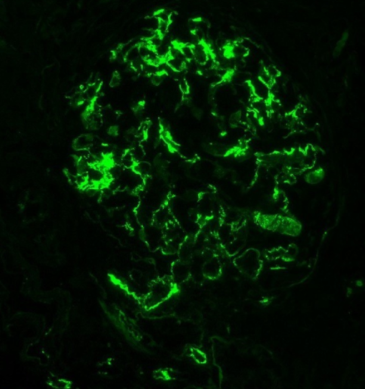
Answer: Membranous nephropathy
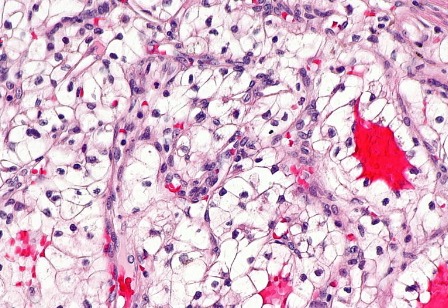
Flashcard 2: Presence of yellow-colored spherical mass associated with tumor cells invading the renal vein is characteristic of _____ carcinoma
Answer: clear cell
Flashcard 3: _____ crystals on urine microscopy appear as spheres with radial or concentric striations and irregular projections or thorns, referred to as thorn apples
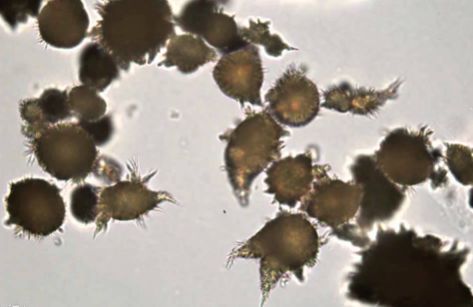
Answer: Ammonium biurate
Flashcard 4: Sites of Deposits in Glomerular diseases: No answer _____
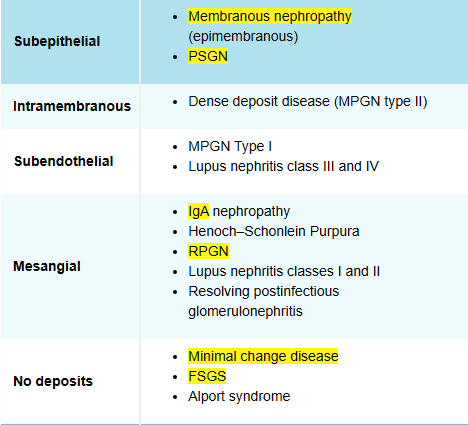
Answer: :)
Flashcard 5: PSGN occurs with nephritogenic strains of group A -hemolytic streptococcus, which carry the _____ virulence factor and is caused by glomerular deposition of nephritogenic antigens such as SpeB
Answer: M protein
Flashcard 6: 85% of autosomal dominant PKD is due to a _____ mutation on chromosome 16
Answer: PKD1
Flashcard 7: _____ stones: Hexagonal
Answer: Cystine
Flashcard 8: _____ glomerulonephritis is associated with a 'tram-track' appearance on PAS and H&E stain
Answer: Membranoproliferative
Flashcard 9: _____ is a type of nephritic syndrome that arises after a group A -hemolytic streptococcal infection of the skin (impetigo) or pharynx
Answer: Poststreptococcal glomerulonephritis (PSGN)
Flashcard 10: 15% of autosomal dominant PKD is due to a _____ mutation on chromosome 4
Answer: PKD2
Flashcard 11: _____ kidney stones are characterized by urine crystals in the shape of a rhomboid or rosettes
Answer: Uric acid
Flashcard 12: _____ arteriolosclerosis classically causes acute renal failure with a 'flea-bitten' appearance
Answer: Hyperplastic
Flashcard 13: The second most common type of kidney stone (15%) is an _____ stone, also known as struvite
Answer: ammonium magnesium phosphate
Flashcard 14: Henoch-Schonlein purpura is associated with _____ (Berger disease)
Answer: IgA nephropathy
Flashcard 15: Amyloid staining: _____ and S give secondary immunofluorescence with ultraviolet light*Which one is more useful for demonstrating JGA of kidney?
Answer: Thioflavin T
Flashcard 16: In _____ syndrome, the charge barrier of the glomerular filtration barrier is lost
Answer: nephrotic
Flashcard 17: Type _____ MPGN is associated with C3 nephritic factor, an autoantibody that stabilizes C3 convertase
Answer: II
Flashcard 18: _____ is a drug-induced hypersensitivity reaction involving the interstitium and tubules of the kidney
Answer: Acute interstitial nephritis
Flashcard 19: _____ casts in the urine are diagnostic of acute tubular necrosis
Answer: Muddy brown
Flashcard 20: MPGN type _____ is associated with intramembranous immune complex deposits
Answer: II
Flashcard 21: Minimal change disease is characterized by loss of _____, but not immunoglobulin in the urine (selective proteinuria)
Answer: albumin
Flashcard 22: Acute tubular necrosis is caused by _____ or nephrotoxic injury
Answer: ischemic
Flashcard 23: _____ is associated with granular "muddy brown" casts in the urine
Answer: Acute tubular necrosis
Flashcard 24: _____ pyelonephritis is characterized by widespread kidney damage due to granulomatous tissue containing foamy macrophages (rare)
Answer: Xanthogranulomatous
Flashcard 25: The presence of casts in the urine indicates that hematuria/pyuria is of _____ or renal tubular origin
Answer: glomerular
Flashcard 26: Primary _____ is associated with autoantibodies against the transmembrane phospholipase A2 receptor found in high concentrations in glomerular podocytes
Answer: membranous nephropathy
Flashcard 27: Hepatitis B virus results in _____ glomerulonephropathy transitioning to membranoproliferative glomerulonephropathy
Answer: membranous
Flashcard 28: MPGN type _____ is associated with subendothelial immune complex deposits
Answer: I
Flashcard 29: _____ is a uncapsulated renal hamartoma comprised of blood vessels, smooth muscle, and adipose tissue
Answer: Angiomyolipoma
Flashcard 30: _____ kidney represents a developmental defect affecting the formation of collecting ducts of the kidney
Answer: Medullary sponge
Flashcard 31: _____ kidney stones often precipitate due to hypocitrat-uria
Answer: Calcium oxalate
Flashcard 32: Acute tubular necrosis due to ischemic injury most commonly affects the _____ and the medullary segment of the thick ascending limb
Answer: proximal tubule
Flashcard 33: The 'lumpy-bumpy' appearance of PSGN on immunofluorescence is due to deposits with immune complexes consisting of _____ / IgM and C3
Answer: IgG
Flashcard 34: The most common cytogenetic abnormalities in _____ variant of papillary renal cell carcinoma are trisomies 7 and 17 and loss of Y chromosome
Answer: sporadic
Flashcard 35: Chronic _____ is characterized histologically by renal tubules containing eosinophilic proteinaceous material resembling thyroid follicles
Answer: pyelonephritis
Flashcard 36: The most common cytogenetic abnormalities in _____ variant of papillary renal cell carcinoma is trisomy 7
Answer: familial
Flashcard 37: _____ necrosis is a renal pathology associated with obstetric catastrophes and septic shock
Answer: Diffuse cortical
Flashcard 38: Saturnine gout is associated with _____ failure and interstitial fibrosis.
Answer: renal
Flashcard 39: Initially, NEG of the glomerular basement membrane (diabetes mellitus) causes hyperfiltration injury which leads to the development of _____-uria by promoting production of heparanase
Answer: microalbumin
Flashcard 40: Renal cell carcinoma is associated with "PEAR-aneoplastic" syndromes, producing:- P_____- EPO- ACTH- Renin
Answer: THrP
Flashcard 41: Autosomal dominant polycystic kidney disease is characterized by cysts in the renal _____ and medulla
Answer: cortex
Flashcard 42: Berger disease is characterized by Ig_____-based immune complex deposits in the mesangium (seen with immunofluorescence)
Answer: A
Flashcard 43: _____ kidney stones are characterized by urine crystals in the shape of a coffin lid
Answer: Ammonium magnesium phosphate
Flashcard 44: Focal segmental glomerulosclerosis is characterized by _____ of foot processes on electron microscopy
Answer: effacement
Flashcard 45: _____ azotemia is generally due to acute tubular necrosis or ischemia/toxins
Answer: Intrarenal
Flashcard 46: Nephritic syndrome is a group of glomerular disorders characterized by glomerular _____ and bleeding
Answer: inflammation
Flashcard 47: _____ glomerulonephritis is characterized by 'wire looping' of capillaries on light microscopy
Answer: Diffuse proliferative
Flashcard 48: Minimal change disease is characterized by _____ of foot processes on electron microscopy
Answer: effacement
Flashcard 49: Hemolytic uremic syndrome (HUS) from Shigella dysenteriae results when shiga toxin damages the _____, activating platelets
Answer: glomerulus
Flashcard 50: DPGN is characterized by _____ and sometimes intramembranous immune complexes on electron microscopy
Answer: subendothelial
Flashcard 51: _____ is a form of RPGN that presents with a linear pattern on immunofluorescence
Answer: Goodpasture syndrome
Flashcard 52: Destroyed muscle cells release large amounts of _____ and purines, which lead to acute tubular necrosis
Answer: myoglobin
Flashcard 53: _____ kidney stones are characterized by urine crystals in the shape of a wedge-shaped prism
Answer: Calcium phosphate
Flashcard 54: The immune complexes in DPGN are Ig_____-based and often have C3 deposition
Answer: G
Flashcard 55: Chronic _____ is characterized by coarse, asymmetric corticomedullary scarring and blunted calyces in the kidney
Answer: pyelonephritis
Flashcard 56: Renal cell carcinoma is associated with loss of the _____ tumor suppressor gene on chromosome 3p
Answer: VHL
Flashcard 57: _____ nephropathy is characterized by subepithelial deposits with a 'spike and dome' appearance on electron microscopy
Answer: Membranous
Flashcard 58: _____ kidney stones are characterized by urine crystals that are hexagonal in shape
Answer: Cystine
Flashcard 59: PSGN is characterized by _____ immune complex "humps" on electron microscopy
Answer: subepithelial
Flashcard 60: _____ tumor is a malignant kidney tumor composed primarily of blastema +/- primitive glomeruli, tubules, and stromal cells
Answer: Wilms
Flashcard 61: Membranoproliferative glomerulonephritis is associated with _____ thickening and splitting on light microscopy
Answer: basement membrane
Flashcard 62: Renal _____ carcinoma has the worst prognosis
Answer: medullary
Flashcard 63: Acute tubular necrosis is characterized histologically by loss of _____ and detachment of tubular cells from the basement membrane
Answer: nuclei
Flashcard 64: The _____ form of renal cell carcinoma arises as a single tumor(s) in the upper pole of the kidney
Answer: sporadic
Flashcard 65: Acute pyelonephritis is characterized by _____ infiltration of the renal interstitium
Answer: neutrophilic
Flashcard 66: _____ syndrome is associated with frothy urine with fatty casts
Answer: Nephrotic
Flashcard 67: Focal segmental glomerulosclerosis is characterized by focal and segmental _____ and hyalinosis on light microscopy
Answer: sclerosis
Flashcard 68: Acute tubular necrosis may be caused by ingestion of _____, which is associated with oxalate crystals in the urine
Answer: ethylene glycol
Flashcard 69: Calcium _____ kidney stones precipitate with increased urine pH
Answer: phosphate
Flashcard 70: _____ glomerulonephritis is characterized by crescents in Bowman's space of the glomeruli (light microscopy)
Answer: Rapidly progressive
Flashcard 71: For the diagnosis of glomerular diseases from urine 40/5/1 rule is followed which includes:40% _____5% acanthocytesEven a single RBC cast
Answer: dismorphic RBCs
Flashcard 72: The crescents seen in RPGN are composed of _____ and macrophages
Answer: fibrin
Flashcard 73: The _____ form of renal cell carcinoma classically arises in adult males (average age is 60)
Answer: sporadic
Flashcard 74: Renal cell carcinoma is CK 7 _____ and CK 20 negative
Answer: negative
Flashcard 75: ADTKD is associated with tubulointerstitial _____, resulting in shrunken kidneys
Answer: fibrosis
Flashcard 76: ARPKD is secondary to a mutation of the PKHD1 gene (encodes a protein called _____) on chromosome 6p.
Answer: fibrocystin
Flashcard 77: _____ syndrome is characterized by thinning and splitting of the glomerular basement membrane
Answer: Alport
Flashcard 78: In _____, the combination of elevated PTH and decreased 1,25-(OH)2D3 produces renal osteodystrophy, in which there is increased bone resorption and osteomalacia
Answer: chronic renal failure
Flashcard 79: Membranous nephropathy is characterized by diffuse capillary and _____ thickening on light microscopy
Answer: GBM
Flashcard 80: _____ casts ("oval fat bodies") are often associated with the "Maltese cross" sign
Answer: Fatty
Flashcard 81: In minimal change disease (lipoid nephrosis), _____ may be seen in proximal tubule cells of the nephron (light microscopy)
Answer: lipids
Flashcard 82: Nephrotic syndrome occurs due to _____ damage disrupting the glomerular filtration charge barrier
Answer: podocyte
Flashcard 83: Minimal change disease is characterized by _____-mediated damage of foot processes and loss of glomerular basement anions
Answer: cytokine
Flashcard 84: Renal _____ is a benign encapsulated epithelial cell tumor arising from the intercalated cells of the collecting ducts (location)
Answer: oncocytoma
Flashcard 85: Patients with chronic interstitial nephritis have a _____ elevation of BUN and creatinine due to a mononuclear infiltrate of tubules causing fibrosis and atrophy
Answer: mild
Flashcard 86: Damage to the glomerulus in Shigella-induced HUS results in platelet aggregation, _____ the platelet count when microthombi form
Answer: decreasing
Flashcard 87: _____ is characterized by a 'lumpy bumpy (granular)'' immunofluorescence pattern due to immune complex deposition
Answer: PSGN
Flashcard 88: Patients with interstitial cystitis may under go transmural fibrosis later in the disease course, leading to _____ bladder
Answer: contracted
Flashcard 89: _____ cystitis occurs because prolonged urinary retention, or intravesicular rx or BCG
Answer: Follicular
Flashcard 90: Thin basement membrane lesion is characterised by diffuse thinning of the GBM, presenting with _____ w/o hearing loss or ocular abnormalities (unlike Alport syndrome)
Answer: hematuria
Flashcard 91: Which renal pathology is associated with corticomedullary cysts along with salt-wasting, growth retardation and anemia?_____
Answer: Familial juvenile nephronophthisis
Flashcard 92: The most common cytogenetic abnormalities in familial and sporadic variant of clear-cell renal cell carcinoma is _____ deletions
Answer: 3p
Flashcard 93: Polypoid cystitis occurs due to irritation of the bladder mucosa; typically involving the _____ wall of the bladder
Answer: posterior
Flashcard 94: Spread of RCC to involve ipsilateral adrenal or invading beyond gerota's fascia classifies it as T_____
Answer: 4
Flashcard 95: In _____, epithelial cells in the center of the urothelial nests (Brunn nests) retract to produce cystic spaces lined by flattened urothelium (metaplastic lesion)
Answer: cystitis cystica
Flashcard 96: What is most important determinant of malignant potential in the "papillary" type of renal tumors?_____
Answer: Size
Flashcard 97: Focal lupus nephritis is also known as class _____
Answer: III
Flashcard 98: Which proteins are increased in nephrotic syndrome (apart from LDL)?_____
Answer: Fibrinogen
Flashcard 99: Membranous lupus nephritis is also known as class _____
Answer: V
Flashcard 100: CK7 is diffusely positive in _____ RCC
Answer: chromophobe (clear-cell/chromophobe)
Flashcard 101: Which type of RCC has multiple losses of entire chromosomes?_____
Answer: Chromophobe type
Flashcard 102: Mesangial proliferative lupus nephritis is also known as class _____
Answer: II
Flashcard 103: Uric acid stones: Varying shapes _____
Answer: (rhomboids or parallelograms)
Flashcard 104: What type of RCC presents with psammoma bodies on histology?_____
Answer: Papillary type
Flashcard 105: Type _____ papillary RCC shows pseudostratification of cells and usually has high-grade nuclear features
Answer: 2
Flashcard 106: Extension of pyonephrosis or tuberculous renal abscess in the perinephric space leads to _____
Answer: perinephric abscess
Flashcard 107: What is the second most common type of RCC?_____
Answer: Papillary type RCC
Flashcard 108: The earliest lesion of renal tuberculosis is a _____
Answer: papillary ulcer.
Flashcard 109: Which morphological abnormalities can lead to the development of nephrogenic diabetes insipidus?_____
Answer: ureteral obstruction
Flashcard 110: Hobnail pattern is characteristic of _____ type of renal cell carcinoma
Answer: collecting duct
Flashcard 111: Renal cell carcinoma (RCC) is also known as hypernephroma or _____ tumor.
Answer: Grawitz
Flashcard 112: _____ carcinoma is the most common type, accounting for 65% of renal cell cancers.
Answer: Clear-cell
Flashcard 113: Resolving phase of post-streptococcal glomerulonephritis will present with deposits in the _____
Answer: mesangium
Flashcard 114: Diffuse lupus nephritis is also known as class _____
Answer: IV
Flashcard 115: Multiple or bilateral _____ maybe seen associated with tuberous sclerosis complex and Birt-Hogg-Dub syndrome
Answer: oncocytomas (renal neoplasm)
Flashcard 116: Cal. Oxalate Dihydrate: _____ shaped
Answer: Octahedral or envelope
Flashcard 117: Mutations in genes that encode proteins localized to the slit diaphragm can lead to idiopathic _____
Answer: FSGS
Flashcard 118: Renal papillary adenomas are of size d_____ cm and are now recognized as a potential precursor lesion to papillary RCC
Answer: 1.5
Flashcard 119: Renal biopsy in patients of Fabry disease will show glomerular visceral epithelial cells with clear vacuoles containing _____
Answer: globotriaosylceramide
Flashcard 120: Zebra bodies are seen in _____ disease due to renal phosopholipidosis
Answer: Fabry
Flashcard 121: Which variant of focal segmental glomerulosclerosis (FSGS) is the most common?_____
Answer: Not otherwise specified (NOS)
Flashcard 122: Which type of RCC originates from the principal cells of the collecting duct?_____
Answer: Collecting duct carcinoma
Flashcard 123: Type _____ papillary RCC has a single layer of cells on the basement membrane and low-grade nuclear features
Answer: 1
Flashcard 124: _____ crystals on urine microscopy appear as spheres with radial or concentric striations and irregular projections or thorns, referred to as thorn apples
Answer: Ammonium biurate
Flashcard 125: Which glomerulonephritis is associated with malignancies, particularly chronic lymphocytic leukemia?_____
Answer: Membranoproliferative glomerulonephritis
Flashcard 126: Hemolytic uremic syndrome, Graft rejection, Acute cortical necrosis, Chronic glomerulonephritis and Alport syndrome, all lead to _____ nephrocalcinosis
Answer: cortical
Flashcard 127: Which part of the nephron is most affected in acute tubular injury?_____
Answer: proximal convoluted tubules
Flashcard 128: Benign nephrosclerosis will present with _____symmetric contracted kidneys
Answer:
Flashcard 129: AR steroid resistant focal segmental glomerulosclerosis (non-Finnish) can be caused by mutation in _____ gene.
Answer: NPHS 2 (podocin)
Flashcard 130: The most common site for secondary metastasis in renal cell carcinoma (hypernephroma) is the _____
Answer: lungs
Flashcard 131: Renal segmental hypoplasia is also referred to as _____ kidney
Answer: Ask-Upmark
Flashcard 132: HIV-1-associated nephropathy (HIVAN) a form of _____
Answer: Focal segmental glomerulosclerosis (FSGS) (nephrotic syndrome subtype)
Flashcard 133: _____ is a form of renal dysplasia characterized by the presence of multiple, non-communicating cysts of varying size separated by dysplastic parenchyma
Answer: Multicystic dysplastic kidney (MCDK)
Flashcard 134: _____-deficient renal cell carcinoma is a malignant epithelial tumor composed of vacuolated eosinophilic to clear cells, imparting a bubbly appearance
Answer: Succinate dehydrogenase (enzyme)
Flashcard 135: _____ Renal cell carcinoma has the best prognosis
Answer: Chromophobe
Flashcard 136: The necks of the calyces and the renal pelvis in GUTB get stenosed by fibrosis and confine the infection, resulting in _____
Answer: tuberous pyonephrosis.
Flashcard 137: What type of RCC is associated with sickle cell trait?_____
Answer: Renal medullary carcinoma
Flashcard 138: Struvite stones: _____ shape
Answer: Rectangular or coffin lid
Flashcard 139: _____ casts are known as renal failure casts, and are associated with a poor prognosis
Answer: Broad
Flashcard 140: The cutoff for a renal papillary adenoma to be called a papillary type of renal cell carcinoma is _____cm
Answer: 1.5
Flashcard 141: A patient with Alagille syndrome may have renal dysplasia, glomerular _____ or renal tubular acidosis
Answer: mesangiolipidosis
Flashcard 142: _____ occurs due to implantation of shed renal tubular cells at the sites of an injured urothelium in the bladder
Answer: Nephrogenic adenoma
Flashcard 143: _____ cystitis is morphologically and probably pathogenetically similar to malakoplakia, but it lacks Michaelis Gutmann bodies
Answer: Xanthogranulomatous
Flashcard 144: What nephrotic/nephritic variant can occur secondary to congenital malformations and reflux nephropathy?_____
Answer: Focal segmental glomerulonephritis
Flashcard 145: _____ is associated with casts of bile, and is seen in hepatorenal syndrome
Answer: Cholemic nephrosis
Flashcard 146: _____ change can occur infrequently in all types of renal cell carcinoma (RCC) and is an ominous feature.
Answer: Sarcomatoid
Flashcard 147: In _____ nephritis, immunofluorescence (IF) on kidney biopsy specimen shows positive IF IgM, IgG, IgA and Complement C1q, C3c.
Answer: Lupus
Flashcard 148: More than one third of Wilms tumor contain precursor lesions known as _____
Answer: nephrogenic rests
Flashcard 149: Which RCC subtype is a papillary neoplasm composed of epithelioid clear cells with abundant psammoma bodies?_____
Answer: Xp11 translocation RCC
Flashcard 150: Which variant of focal segmental glomerulosclerosis (FSGS) has a good prognosis?_____
Answer: Glomerular tip variant
Flashcard 151: Calcium oxalate Monohydrate: _____ shaped
Answer: Dumbbell
Flashcard 152: Collecting duct type of RCC has a _____ prognosis
Answer: poor
Flashcard 153: Which variant of focal segmental glomerulosclerosis (FSGS) has a poor prognosis?_____
Answer: Collapsing variant
Flashcard 154: Which type of RCC originates from the intercalated cells of the collecting duct?_____
Answer: Chromophobe and renal medullary carcinoma
Flashcard 155: Macrophages and giant cells can be demonstrated by CD_____ staining in xanthogranulomatous pyelonephritis
Answer: 68
Flashcard 156: _____ convoluted tubule of the nephron is usually the site of origin of clear cell RCC.
Answer: Proximal
Flashcard 157: _____ nephropathy will show granular deposits of IgG along the basement membrane.
Answer: Membranous
Flashcard 158: Maltese cross crystals in the urine are seen in _____.
Answer: Fabry's disease::Lysosomal storage disorder
Flashcard 159: _____ glomerulonephritides are associated with Circulatory _____ antibodies.
Answer: Pauci immune; ANCA
Flashcard 160: Presence of yellow-colored spherical mass associated with tumor cells invading the renal vein is characteristic of _____ carcinoma
Answer: clear cell::renal subtype
Flashcard 161: _____ glomerulonephritides are associated with Circulatory _____ antibodies.
Answer: Pauci immune; ANCA
Flashcard 162: Principle lesion in minimal change disease is in the _____ epithelial cells, in the form of diffuse effacement of foot processes.
Answer: visceral::Parietal/visceral
Flashcard 163: The given immunoflorescence pattern is suggestive of _____:
Answer: Membranous nephropathy
Keywords: Renal Pathology flashcards, medical flashcards, NEET PG preparation, USMLE Step 1 flashcards, Anki alternative, spaced repetition medical, OnCourse flashcards