
Tubular and Interstitial Diseases — Flashcards

Hemolytic uremic syndrome, Graft rejection, Acute cortical necrosis, Chronic glomerulonephritis and Alport syndrome, all lead to _____ nephrocalcinosis
_____ is associated with granular "muddy brown" casts in the urine
Acute tubular necrosis due to ischemic injury most commonly affects the _____ and the medullary segment of the thick ascending limb
Acute pyelonephritis is characterized by _____ infiltration of the renal interstitium
Acute tubular necrosis may be caused by ingestion of _____, which is associated with oxalate crystals in the urine
Chronic _____ is characterized histologically by renal tubules containing eosinophilic proteinaceous material resembling thyroid follicles
The earliest lesion of renal tuberculosis is a _____
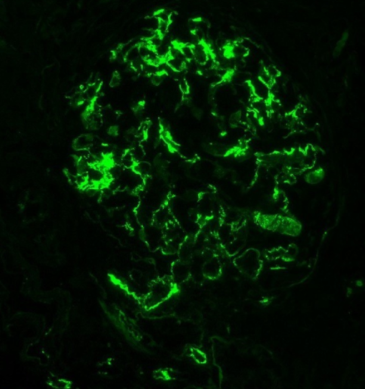
The given immunoflorescence pattern is suggestive of _____:
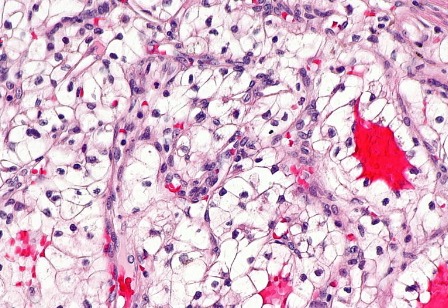
Presence of yellow-colored spherical mass associated with tumor cells invading the renal vein is characteristic of _____ carcinoma
Hint: renal subtype
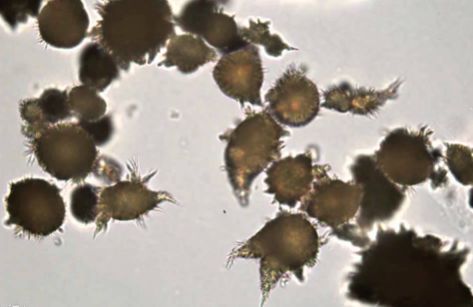
_____ crystals on urine microscopy appear as spheres with radial or concentric striations and irregular projections or thorns, referred to as thorn apples
Tubular and Interstitial Diseases Flashcards for NEET-PG
Study 10 flashcards on Tubular and Interstitial Diseases for NEET-PG Pathology. These active recall cards cover the key concepts, clinical associations, and high-yield facts from this chapter of Renal Pathology. Each card is designed to test your understanding rather than just recognition, building stronger and more durable memories for exam day.
For personalised spaced repetition scheduling and unlimited flashcards, download the Oncourse app.
Frequently Asked Questions
Are Tubular and Interstitial Diseases flashcards free?
How many flashcards does this chapter have?
How should I use these flashcards for NEET-PG?
Are there more flashcards for Renal Pathology?
Want unlimited flashcards?
Get full access to all flashcards, spaced repetition, and progress tracking.
Scan to download app