
Tubular and Interstitial Diseases — MCQs

A male child presents with repeated urinary infections and failure to gain weight. A MCU was carried out as shown in the provided image. What is the most probable diagnosis?
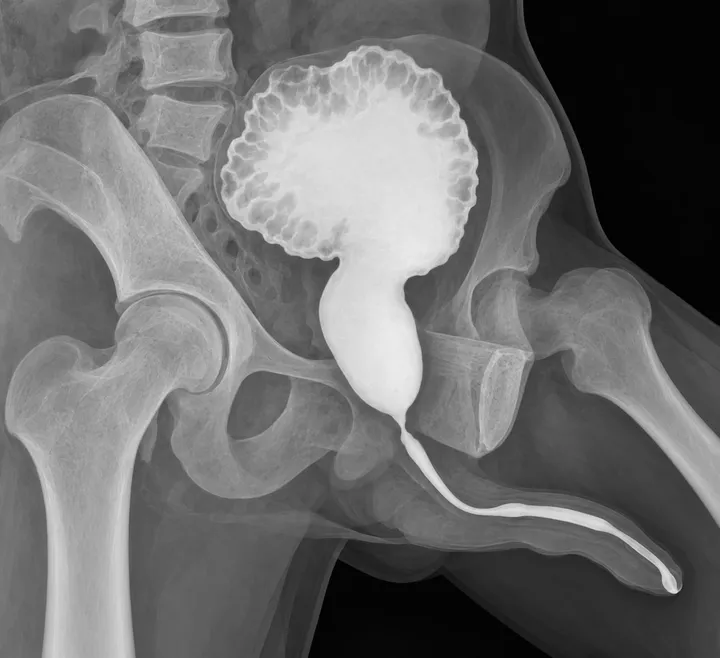
Answer: C. Posterior urethral valve
Polyuria with urine specific gravity fixed at approximately 1.010 is characteristic of which condition?
Answer: A. Chronic GN
In a boy with suspected acute pyelonephritis, which investigation confirms significant bacteriuria and identifies the causative organism?
Answer: A. Urine bacterial culture
All of the following are recognized predisposing conditions for renal vein thrombosis EXCEPT:
Answer: D. Hemophilia A
Which finding is NOT a typical diagnostic clue to renovascular hypertension due to renal artery stenosis?
Answer: B. Good antihypertensive response
A 45-year-old man with a 20-year smoking history develops hypertension. The renal angiogram is shown. What is the most likely cause of the arterial lesion?
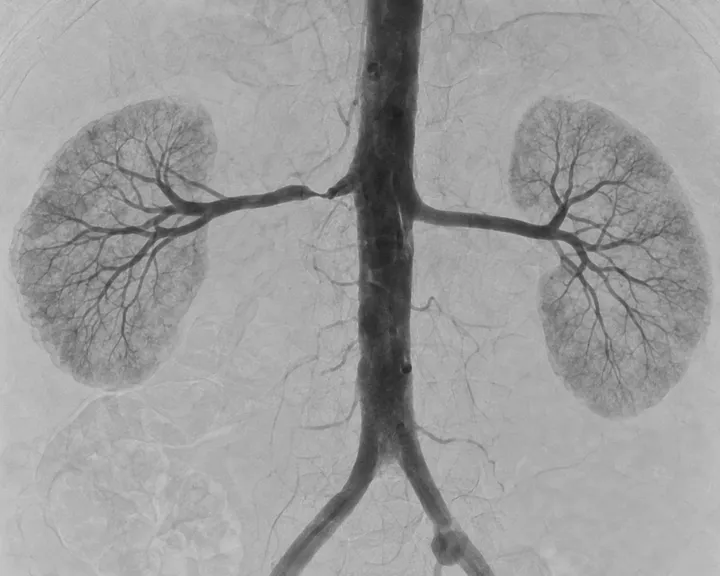
Answer: C. Atherosclerosis
Which of the following factors most directly contributes to the development of edema in patients with nephrotic syndrome?
Answer: C. Hypoalbuminemia
Which of these conditions is classified as a nephritic syndrome?
Answer: C. Post Infectious Glomerulonephritis
Which light-microscopic appearance is characteristic of minimal change disease?
Answer: C. Unremarkable glomeruli
A patient with longstanding vesicoureteric reflux and recurrent febrile urinary tract infections has an irregularly scarred kidney. Gross examination shows coarse corticomedullary scars, predominantly at the poles, directly overlying dilated, blunted and deformed calyces. What is the most likely diagnosis?
Answer: D. Chronic pyelonephritis
Want unlimited practice?
Get full access to all questions, explanations, and performance tracking.
Scan to download app