Neuropathology Indian Medical PG Flashcards - Medical Study Cards
Master Neuropathology with OnCourse flashcards. These spaced repetition flashcards are designed for medical students preparing for NEET PG, USMLE Step 1, USMLE Step 2, MBBS exams, and other medical licensing examinations.
Neuropathology Flashcard Deck - 166 Cards
Flashcard 1: What CNS tumor is seen in the histology slide below?
_____
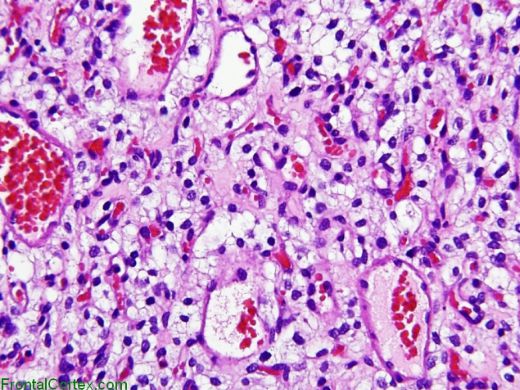
Answer: Hemangioblastoma (closely arranged, thin-walled capillaries with minimal intervening parenchyma)
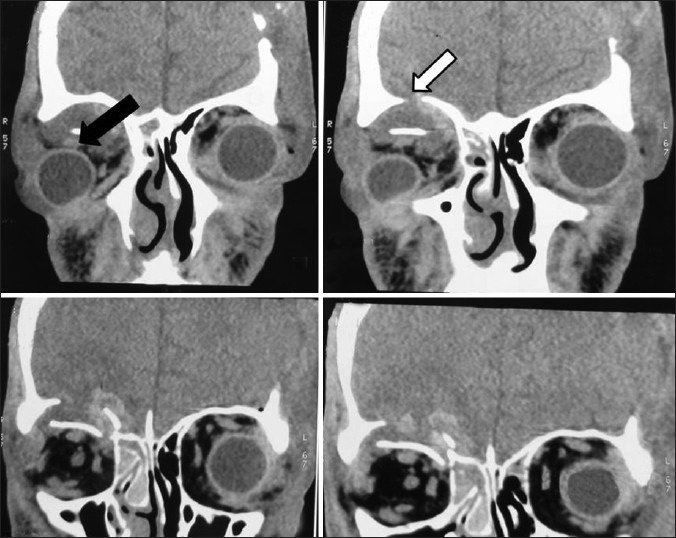
Flashcard 2: Spheno-orbital encephalocoele, due to dysplasia of the greater wing of the sphenoid is commonly seen in _____
Answer: neurofibromatosis type 1
Flashcard 3: Which feature of von Hippel-Lindau disease is seen in the image below?
_____
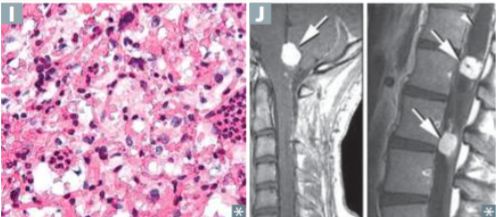
Answer: Hemangioblastoma (high vascularity with hyperchromatic nuclei)
Flashcard 4: Which virus/viral family will have cytoplasmic, eosinophilic inclusions within neuronal cells?
_____
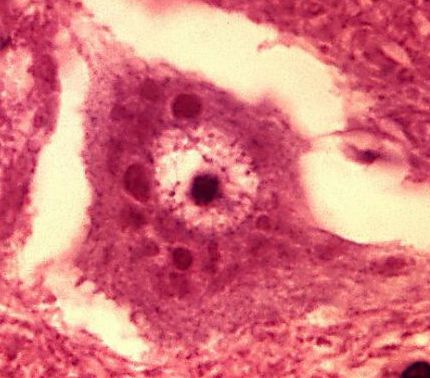
Answer: Rabies virus
Negri bodies
Flashcard 5: Which rosettes are seen in Neuroblastoma?
_____
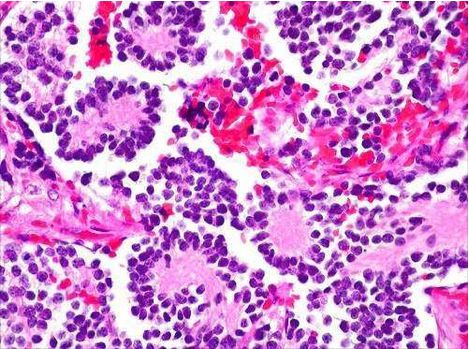
Answer: Homer-Wright Rosettes
Flashcard 6: The given histology is suggestive of globoid cells in brain parenchyma found in _____ disease.
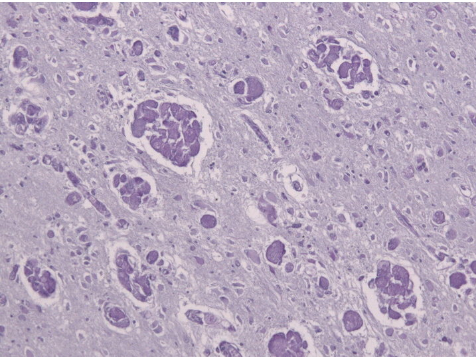
Answer: Krabbe
Flashcard 7: _____ herniation may result in compression of the anterior cerebral artery, which causes infarction
Answer: Subfalcine
Flashcard 8: _____ (children) and Papillary (adult) are two variants of craniopharyngioma.
Answer: Adamantinomatous
Flashcard 9: Vitamin E deficiency may cause _____ and Spinocerebellar tract demyelination
Answer: Posterior (Dorsal) Column
Flashcard 10: The given histology is suggestive of _____ cells in brain parenchyma found in Krabbe disease.
Answer: globoid
Flashcard 11: _____ is characterized by round aggregates (shape) of hyperphosphorylated tau protein known as Pick bodies; may be seen with silver stain
Answer: Frontotemporal dementia (Pick disease)
Flashcard 12: Shrunken, yellow-brown, cystic lesions in the gyri and subarachnoid space associated with _____ are called as plaque jaune.
Answer: head injury
Flashcard 13: Moderate global cerebral ischemia typically affects the _____ (most vulnerable), neocortex, cerebellum, and watershed areas
Answer: hippocampus
Flashcard 14: _____ are the characteristic histologic feature of adamantinomatous type of craniopharyngioma
Answer: Wet keratin nodules
Flashcard 15: The earliest _____ evidence for Diffuse Axonal Injury appears at? (Bonus Q: And what is it?)12 hours
Answer: histological
Flashcard 16: Glioblastoma multiforme is characterized histologically by "_____" tumor cells, which are tumor cells surrounding regions of necrosis, hemorrhage and / or microvascular proliferation
Answer: pseudo-palisading
Flashcard 17: HSV causes hemorrhagic necrosis of the inferomedial _____ and frontal lobe.
Answer: temporal
Flashcard 18: _____ (CNS tumor) may cause precocious puberty in males due to -hCG production
Answer: Pinealoma
Flashcard 19: Downward transtentorial (central) herniation may result in rupture of the _____ branches of the basilar artery, which cause Duret hemorrhages
Answer: paramedian
Flashcard 20: Medulloblastoma is characterized histologically by small _____ cells (color) with Homer-Wright rosettes
Answer: blue
Flashcard 21: Glioblastoma multiforme (GBM) is a _____, high-grade tumor of astrocytes
Answer: malignant
Flashcard 22: Multiple sclerosis is an _____ destruction of CNS myelin and oligodendrocytes
Answer: autoimmune
Flashcard 23: In Punch-Drunk syndrome, the _____ leads to stretching of the bridging veins, which predisposes to a subdural haemorrhage.
Answer: cortical atrophy
Flashcard 24: _____ is a CNS tumor that arises from epithelial remnants of Rathke's pouch (oral ectoderm)
Answer: Craniopharyngioma
Flashcard 25: In diabetes patients, _____ occurs as a result of osmotic damage to Schwann cells
Answer: peripheral neuropathy
Flashcard 26: Which two areas of the CNS are rabies virus Negri bodies found?_____
Answer: Hippocampus (pyramidal cells)
Flashcard 27: Sturge-Weber syndrome is a developmental anomaly of _____ derivatives due to somatic mosaicism
Answer: neural crest
Flashcard 28: Tabes dorsalis is a progressive demyelination of the _____ and dorsal roots
Answer: dorsal columns
Flashcard 29: What is the prognosis of glioblastoma multiforme? _____
Answer: Poor
Flashcard 30: One histological feature seen after an ischemic stroke is the presence of a _____, which appears after 2 weeks
Answer: glial scar
Flashcard 31: Earliest autolytic changes occur in _____ tissues and in brain
Answer: parenchymatous and glandular
Flashcard 32: _____ to a site of CNS or PNS axon injury there is retrograde degeneration
Answer: Proximal
Flashcard 33: Gross pathology of _____ infection appears as 'soap-bubble' lesions in the gray matter of the brain
Answer: Cryptococcus
Flashcard 34: Mononuclear inflammatory infiltration in the leptomeninges, including microglial nodules called _____ are seen in polio
Answer: Babes nodules
Flashcard 35: One histological feature seen after an ischemic stroke is the presence of _____, which appear between 12 - 24 hours
Answer: red neurons
Flashcard 36: _____ ischemic strokes result in a hemorrhagic (red) infarct at the periphery of the cortex
Answer: Embolic
Flashcard 37: Progressive multifocal leukoencephalopathy is characterized by destruction of _____ and astrocytes; typically in the parietal and occipital areas
Answer: oligodendrocytes
Flashcard 38: Cerebral ischemia of the neocortex typically affects layers _____, 5, and 6, causing cortical laminar necrosis
Answer: 3
Flashcard 39: Enlargement of the nucleus to two to five times the normal size in Schwann cells of the dorsal root ganglia and peripheral nerves, also called as _____ is seen in ataxia-telangiectasia
Answer: amphicytes
Flashcard 40: _____ are microscopic nodular collections of glial cells at abnormal locations, often in the superficial and deep layers of cerebral cortex seen in neurofibromatosis type 2
Answer: Glial hamartia
Flashcard 41: In response to axon damage, the neuron cell body undergoes _____, which is the swelling of the cell body and dispersion of Nissl substance (chromatolysis)
Answer: Axonal reaction
Flashcard 42: _____ disseminates upon reaching the blood vessels, resulting in ring enhancing brain lesions
Answer: Angioinvasive aspergillosis
Flashcard 43: There is loss of _____ and granule cells from the cerebellum in ataxia telangectasia
Answer: Purkinje
Flashcard 44: Schwannomas are biphasic tumors; containing dense, hypercellular areas (Antoni A) containing _____ cells alternating with hypocellular, myxoid areas (Antoni B)
Answer: spindle
Flashcard 45: _____ is a CNS tumor that usually arises in the cerebral hemispheres and characteristically crosses the corpus callosum ("butterfly glioma")
Answer: Glioblastoma multiforme
Flashcard 46: _____ is characterized grossly by gray-appearing plaques in the white matter
Answer: Multiple sclerosis
Flashcard 47: _____ is a primary CNS tumor characterized histologically by "fried egg" cells with a "chicken-wire" capillary pattern
Answer: Oligodendroglioma
Flashcard 48: _____ hemorrhage most commonly occurs due to rupture of Charcot-Bouchard microaneurysms, secondary to chronic hypertension
Answer: Intraparenchymal
Flashcard 49: Bacterial meningitis may lead to high pressure hydrocephalus, _____ (most common sequelae), and seizures, secondary to fibrosis
Answer: hearing loss
Flashcard 50: _____ disease is characterized histologically by Lewy bodies, which are round, eosinophilic inclusions composed of -synuclein
Answer: Parkinson
Flashcard 51: Biopsy of a _____ shows Rosenthal fibers, which are eosinophilic, corkscrew fibers
Answer: pilocytic astrocytoma
Flashcard 52: The earliest _____ evidence for Diffuse Axonal Injury appears at? (Bonus Q: And what is it?)2-3 hours
Answer: immunohistochemical
Flashcard 53: _____ nucleus shrinks dramatically in Huntington's disease and if affected is also a major cause of chorea movements.
Answer: Caudate
Flashcard 54: Patients with MSA-C show characteristic glial inclusions of _____ and ubiquitin demonstrated in oligodendrocytes on silver impregnation
Answer: -synuclein
Flashcard 55: Subacute sclerosing panencephalitis is diagnosed with presence of _____ in CSF
Answer: anti-measles antibodies
Flashcard 56: _____ can present histologically with Hirano bodies which are eosinophilic proteinaceous rods in the hippocampus.
Answer: Alzheimer disease
Flashcard 57: Neuroblastoma is characterized by the serum markers _____ and neuron specific enolase
Answer: bombesin
Flashcard 58: Expansion of the ventricles in _____ hydrocephalus results in distortion of the fibers of the corona radiata
Answer: normal pressure
Flashcard 59: In metachromatic leukodystrophy, _____ accumulate in the lysosomes of oligodendrocytes
Answer: sulfatides
Flashcard 60: The conversion of prions from PrPc (normal) to PrPsc (diseased) can be _____, inherited, or transmitted
Answer: sporadic
Flashcard 61: Amyotrophic lateral sclerosis will present with _____ and FUS inclusions
Answer: TDP-43
Flashcard 62: One histological feature seen after an ischemic stroke is the presence of _____, which appear between 3 - 5 days
Answer: microglia
Flashcard 63: _____ fuse to form multinucleated giant cells in the CNS when infected by HIV
Answer: Microglia
Flashcard 64: The pathophysiology of headaches is related to release of vasoactive peptides, _____, and calcitonin gene-related peptide (CGRP)
Answer: substance P
Flashcard 65: One histological feature seen after an ischemic stroke is the presence of _____ which cause liquefactive necrosis, appearing between 1 - 3 days
Answer: neutrophils
Flashcard 66: On gross examination, glioblastomas are soft and poorly defined with areas of _____ and hemorrhage
Answer: necrosis
Flashcard 67: Meningioma is a _____ tumor of arachnoid cells
Answer: benign
Flashcard 68: _____ is a sporadic disease that affects several functional systems in the brain which is characterized by primary pathology in the glial/oligodendrocyte cells
Answer: Multiple system atrophy
Flashcard 69: Metachromatic leukodystrophy is characterized by central and peripheral demyelination with subsequent _____ and dementia
Answer: ataxia
Flashcard 70: _____ are glial cells that are responsible for reactive gliosis in response to neural injury
Answer: Astrocytes
Flashcard 71: In Punch-drunk syndrome, the gross brain shows some _____ and slight hydrocephalus
Answer: cortical atrophy
Flashcard 72: _____ disease is associated with increased 14-3-3 protein in CSF
Answer: Creutzfeldt-Jakob
Flashcard 73: What CNS tumors are associated with neurofibromatosis II? _____ and ependymoma
Answer: Meningioma
Flashcard 74: _____ bands of IgG on high resolution electrophoresis is diagnostic of multiple sclerosis
Answer: Oligoclonal
Flashcard 75: Schwannoma is a _____ tumor of Schwann cells
Answer: benign
Flashcard 76: Alzheimer disease is characterized by _____, which are intracellular aggregates of hyperphosphorylated tau protein
Answer: neurofibrillary tangles
Flashcard 77: _____ atrophy is the congenital degeneration of the anterior horns of the spinal cord
Answer: Spinal muscular
Flashcard 78: One histological feature seen after an ischemic stroke is the presence of _____ and vascular proliferation, which appear between 1 - 2 weeks
Answer: reactive gliosis
Flashcard 79: Pilocytic astrocytoma is a _____, well-circumscribed tumor of astrocytes
Answer: benign
Flashcard 80: _____ are CNS tumors characterized histologically by perivascular pseudorosettes
Answer: Ependymomas
Flashcard 81: _____ Cancer can produce anti-Hu antibodies which can cause both Paraneoplastic Cerebellar Degeneration and Paraneoplastic Encephalomyelitis
Answer: Small Cell Lung
Flashcard 82: _____ encephalopathy is a degenerative disease due to abnormal prion proteins
Answer: Spongiform
Flashcard 83: CNS involvement of disseminated Mycobacteria tuberculosis can result in_____ as well as cavitary lesions known as tuberculomas
Answer: meningitis
Flashcard 84: Neurofibromatosis type II is associated with mutations in the _____ tumor suppressor gene on chromosome 22
Answer: NF2
Flashcard 85: The _____ and fourth cortical layers are best for displaying the histological changes of hypoxia.
Answer: third
Flashcard 86: What neurotransmitters are decreased in Huntington disease? _____, GABA, and substance P
Answer: Acetylcholine
Flashcard 87: _____ - considered to be the most reliable indicator of axon damage in Diffuse Axonal Injury
Answer: Beta-amyloid precursor protein
Flashcard 88: What is the gold standard for the diagnosis of Pure Neuritic Leprosy?_____
Answer: Nerve biopsy
Flashcard 89: _____ is the most common epithelial lacrimal gland tumor.
Answer: Pleomorphic adenoma
Flashcard 90: Nasal gliomas have a _____ consistency
Answer: firm
Flashcard 91: Bunina bodies are PAS positive cytoplasmic inclusion bodies seen inside neurons of the spinal cord in _____
Answer: ALS
Flashcard 92: What is the age distribution of Esthesioneuroblastoma?_____
Answer: Bimodal (10-20 and 50-60 years)
Flashcard 93: Schizencephaly and Lissencephaly are two types of neuronal _____ defects
Answer: migration
Flashcard 94: _____ is the second most common adult primary intracranial neoplasm.
Answer: Glioblastoma
Flashcard 95: Pilomyxoid astrocytoma and Diffuse astrocytoma is a grade _____ astrocytoma
Answer: II
Flashcard 96: Is vascular inflammation a feature of Moyamoya disease?_____
Answer: No
Flashcard 97: Bergmann gliosis is seen in _____ in advanced cases of chronic alcohol intake
Answer: cerebellum
Flashcard 98: Evidence of _____ stroma is associated with a good prognosis in neuroblastoma
Answer: schwannian
Flashcard 99: Isochromosome 17q in medulloblastoma signals _____ prognosis
Answer: poor
Flashcard 100: Some large mitotically active Schwannomas lacking Antoni _____ areas can mimic a sarcoma.
Answer: B
Flashcard 101: _____ matter lesions are common in tuberous sclerosis and include nodules, cysts, and areas of gliosis and hypomyelination
Answer: White
Flashcard 102: Classical histological finding in progressive supranuclear palsy will be ballooned neurons and "tufted astrocytes" in the _____ lobes
Answer: anterior parietal
Flashcard 103: In patients with cerebral involvement, Gaucher cells are seen in the _____ spaces.
Answer: Virchow Robin
Flashcard 104: What is the classical pathology seen in a kid of spastic diplegia?_____
Answer: Periventricular leukomalacia
Flashcard 105: Arteries in CADASIL, may show basophilic, periodic acid Schiff (PAS)-_____ deposits, which contain the NOTCH3 protein
Answer: positive
Flashcard 106: _____ are the earliest morphologic markers of neuronal cell death
Answer: Red neurons
Flashcard 107: For the diagnosis of oligodendroglioma, it is essential to have both IDH mutation and _____ codeletion
Answer: 1p/19q
Flashcard 108: What is the most common type of astrocytoma in children?_____
Answer: Pilocytic astrocytoma
Flashcard 109: Most cases of secondary glioblastoma, with a prior hx of lower-grade diffuse glioma are of the IDH-_____ type.
Answer: mutant
Flashcard 110: The most common cytogenetic abnormality in meningioma is _____
Answer: 22q del
Flashcard 111: Tuberculous granuloma occurring in the cortex of the brain is also known as _____ focus
Answer: Rich
Flashcard 112: The cell of origin in the glomus tumour (of the mastoid) is _____
Answer: paraganglionic cells
Flashcard 113: Mature ganglion cells and schwann cells on microscopy are pathognomonic of _____
Answer: ganglioneuromas
Flashcard 114: CSF _____ stiffen the handkerchief.
Answer: DOES NOT (does/does not)
Flashcard 115: Mutations in intermediate filament proteins such as _____ cause Alexander disease
Answer: GFAP
Flashcard 116: Loss of _____ matter of the brain on post-mortem is seen in cyanide poisoning
Answer: grey
Flashcard 117: _____ mutation is seen in Neuroblastoma.
Answer: ALK
Flashcard 118: Lhermitte Duclos disease is the cerebellar _____ leading to focal enlargement of cerebellum and macrocephaly, cerebellar signs, and seizures
Answer: dysplasia
Flashcard 119: Canavan disease is characterised by _____
Answer: leukodystrophy
Flashcard 120: RELA fusion protein positive ependymomas carry the _____ prognosis.
Answer: worst
Flashcard 121: _____ maybe done for diagnosis of leprosy in a patient presenting with a thick, nodular and beaded nerve
Answer: FNAC (Biopsy/FNAC)
Flashcard 122: Which brain tumor shows perineural satellitosis?_____
Answer: Oligodendroglioma
Flashcard 123: What is the classical pathology seen in a kid of spastic hemiplegia?_____
Answer: MCA infarct
Flashcard 124: Corticobasal degeneration will present with _____ inclusions
Answer: tau protein
Flashcard 125: Which leukodystrophy will present with red rosenthal fibres?_____
Answer: Alexander disease
Flashcard 126: The nuclear-free zones seen in-between the Antoni A palisading of schwannoma are termed as _____ bodies.
Answer: Verocay
Flashcard 127: Swollen neurons in Pick disease are called as _____
Answer: Pick cells
Flashcard 128: _____ classification is used for classifying neuroblastoma.
Answer: Shimada
Flashcard 129: The _____ is most likely to show evidence of damage in the case of a hypoxic brain injury.
Answer: hippocampus (part of brain)
Flashcard 130: Oligodendrogliomas with 9p loss, 10q loss, or CDKN2A mutation are chemo-_____
Answer: resistant
Flashcard 131: The most common variant of Charcot-Marie-Tooth disease is CMT1A is caused by a duplication of a region on chromosome _____
Answer: 17
Flashcard 132: Triton tumor is a malignant peripheral nerve sheath tumor with _____ differentiation, seen commmonly in neurofibromatosis type 1
Answer: rhabdomyoblastic
Flashcard 133: Medulloblastoma corresponds to WHO grade _____ CNS tumors
Answer: IV
Flashcard 134: Is acoustic neuroma benign or malignant?_____
Answer: Benign
Flashcard 135: In meningiomas without NF2 mutations, the most common mutations occur in _____
Answer: TNF receptor-associated factor 7 (TRAF7)
Flashcard 136: _____ is characterized by the thickening of the arachnoid membrane and dura mater
Answer: Arachnoiditis
Flashcard 137: Transcriptional repressor Capicua (CIC) mutations are found exclusively in which brain tumor?_____
Answer: Oligodendroglioma
Flashcard 138: What is the most common primary CNS tumor across all age groups?_____
Answer: Glioma
Flashcard 139: Stage 4S is associated with a _____ prognosis in neuroblastoma
Answer: good
Flashcard 140: What is the classical pathology seen in a kid of spastic quadriplegia?_____
Answer: Parasaggital brain injury
Flashcard 141: Which gene mutations are seen in oligodendroglioma?_____
Answer: IDH1 and IDH2
Flashcard 142: Medulloblastoma and malignant pinealoblastoma is a grade _____ astrocytoma
Answer: IV
Flashcard 143: The most commonly affected gene in Frontotemporal Dementia is C9ORF72, in which _____ expansion mutation occurs
Answer: hexanucleotide repeat
Flashcard 144: Optic nerve glioma (15 40%), a pilocytic astrocytoma, is commonly seen in _____
Answer: neurofibromatosis type 1 (inherited condition)
Flashcard 145: Anaplastic astrocytoma is a grade _____ astrocytoma
Answer: III
Flashcard 146: Leptomeningeal metastases, also known as _____, refers to the spread of malignant cells through the CSF space
Answer: carcinomatous meningitis
Flashcard 147: Most cases of primary glioblastoma are of the IDH-_____ type.
Answer: wild
Flashcard 148: Tuberculous caseous foci in brain, meninges and spinal cord is known as _____ focus.
Answer: Rich
Flashcard 149: TRKB expression is associated with a _____ prognosis in neuroblastoma
Answer: poor
Flashcard 150: What is the classical pathology seen in a kid of dyskinetic CP?_____
Answer: Basal ganglia involvement
Flashcard 151: Chromosome 1p and 11q losses are associated with a _____ prognosis in neuroblastoma
Answer: poor
Flashcard 152: Myxopapillary ependymomas are classified under WHO grade _____ tumors
Answer: 1
Flashcard 153: Focal collections of cells mimicking the appearance of Meissner corpuscles (pseudo-Meissner corpuscles) are seen in _____
Answer: diffuse neurofibroma
Flashcard 154: Transverse section of nerve shows cut onion appearance first in _____ leprosy
Answer: borderline (BB)
Flashcard 155: Preferential involvement of the subcortical U fibers early on is characteristic of which demyelinating disease?_____
Answer: Canavan disease
Flashcard 156: Mutations in the gene encoding LRKK2 (leucinerich repeat kinase 2) are a common cause of autosomal dominant _____
Answer: Parkinson's disease
Flashcard 157: _____ is one of the commonest infratentorial tumors in childhood
Answer: Pilocytic astrocytoma
Flashcard 158: What is the gold standard for the diagnosis of Pure Neuritic Leprosy?
Answer: Nerve biopsy
Flashcard 159: _____ classification describes neuroblastoma.
Answer: Shimada
Flashcard 160: In chronic cases of Korsakoff's psychosis, there will be atrophy of the _____.
Answer: mamillary bodies
Flashcard 161: Negri bodies are seen in the _____ layer of the cerebellar cortex.
Answer: Purkinje cell
Flashcard 162: _____ granulomas are seen in cerebral malaria.
Answer: Durck
Flashcard 163: A _____ appearance is seen in the case of plexiform neurofibroma
Answer: bag of worms
Flashcard 164: Pick bodies are inclusions that stain strongly with _____ stain.
Answer: silver
Flashcard 165: _____ has superoxide dismutase type 1 (SOD1) inclusions.
Answer: ALS
Flashcard 166: Craniopharyngiomas are _____ tumors derived from Rathke's pouch
Answer: benign::benign/malignant
Keywords: Neuropathology flashcards, medical flashcards, NEET PG preparation, USMLE Step 1 flashcards, Anki alternative, spaced repetition medical, OnCourse flashcards