Environmental Health Indian Medical PG Flashcards - Medical Study Cards
Master Environmental Health with OnCourse flashcards. These spaced repetition flashcards are designed for medical students preparing for NEET PG, USMLE Step 1, USMLE Step 2, MBBS exams, and other medical licensing examinations.
Environmental Health Flashcard Deck - 10 Cards
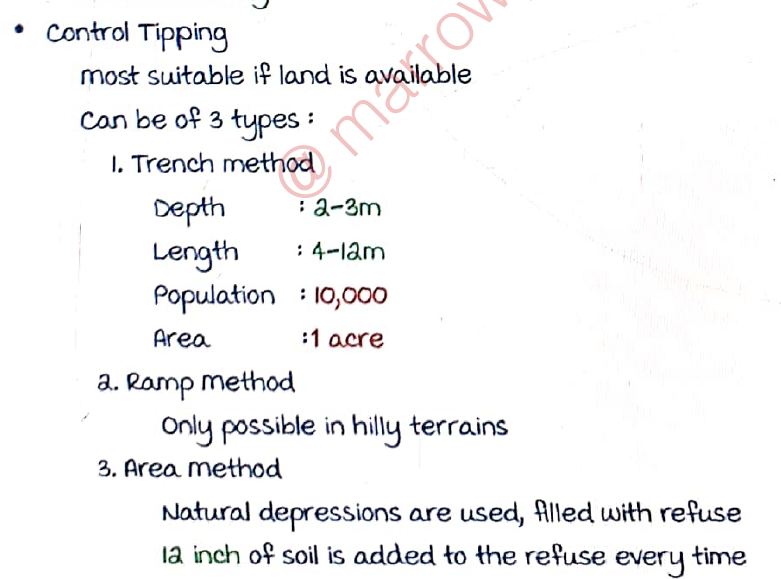
Flashcard 131: 568ee3640c184fbaa2379da689136973-ao-4
Answer: trench method of solid waste disposal
Extra: ���������
Flashcard 132: High test hypochlorite (HTH) contains _____% available chlorine
Answer: 60-70
Extra: High Test Hypochlorite (HTH) is more stable than bleaching powder and contains 60-70% available chlorine. Bleaching powder contains approximately 33% available chlorine.
Flashcard 133: there should be 1 urinal for every _____ students in school
Answer: 60
Extra: ��������������������
Flashcard 134: _____ filter is choked most commonly in RO filters
Answer: carbon block
Extra: ��������������������
Flashcard 135: Ideally, water turbidity should be <_____ NTU
Answer: 1
Extra: Drinking water standards (BIS IS 10500):
- Acceptable limit: 1 NTU
- Permissible limit: 5 NTU
Flashcard 136: Mercury waste should be _____
Answer: collected separately and returned to the manufacturer
Extra: According to Bio-Medical Waste Management Rules 2016, mercury waste (from broken thermometers, BP apparatus) should be collected separately and sent back to the manufacturer/vendor for recovery. It is not placed in yellow bags (which are for other chemical wastes) because mercury is a heavy metal that shouldn't be incinerated.
Flashcard 137: sandbed size is _____ in rapid sand filter
Answer: 1 meter
Extra: ��������������������
Flashcard 138: In the **Holder method** of pasteurisation, milk is heated to _____°C for 30 minutes.
Answer: 63–66
Extra: The milk is rapidly cooled to 5°C or below after heating.
Note:
- Holder Method: 63–66°C for 30 minutes.
- Flash (HTST) Method: 72°C for 15 seconds.
Flashcard 139: Instrument: _____
Use: To measure humidity
Answer: Psychrometer
Extra: The psychrometer (e.g., sling psychrometer) consists of two thermometers: a dry-bulb and a wet-bulb thermometer. The difference in their readings is used to determine relative humidity.
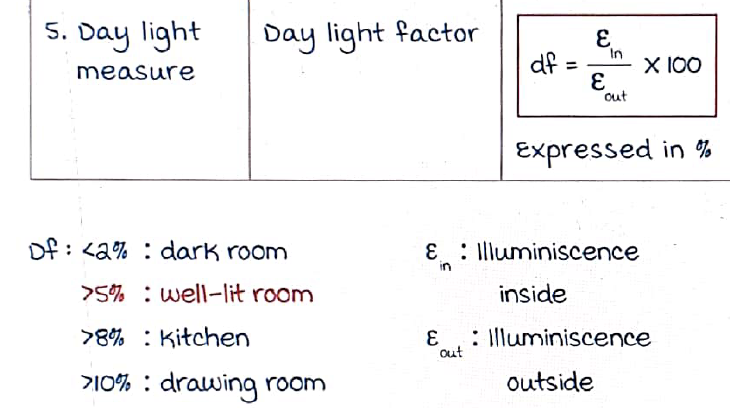
Flashcard 140: 125d773b33354caf968a6f58399e48a9-ao-2
Answer: day light factor
Extra: ���������
Keywords: Environmental Health flashcards, medical flashcards, NEET PG preparation, USMLE Step 1 flashcards, Anki alternative, spaced repetition medical, OnCourse flashcards