
Complications in Anesthesia — Flashcards

On this page
The following capnography waveform represents: _____
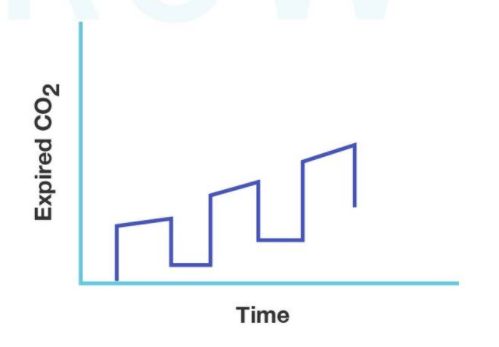
The following capnographic waveform is suggestive of _____:
Tuberculin syringe 1ml or insulin syringe _____units, without fixed needle x3 are one of the components of the anaphylaxis kit
Malignant hyperthermia is usually related to a defect in _____ receptors, which causes increased Ca2+ release from the SR
Propofol infusion syndrome is seen when the dose of propofol infusion is greater than _____ mg/kg/hour for 48 hours or longer
Dantrolene sodium reconstituted in _____ is the mainstay of therapy for malignant hyperthermia
Masseter spasm is an _____ sign of malignant hyperthermia
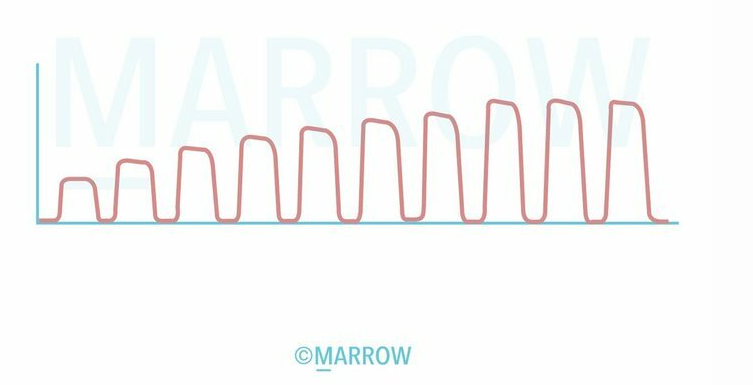
The following capnography waveform represents:_____
Elevated end tidal carbon dioxide is an _____ sign of malignant hyperthermia
The most common anaphylactic agent during anesthesia is _____
Study by Chapter
Adverse Drug Reactions
Flashcards
Anaphylaxis and Allergic Reactions
Flashcards
Malignant Hyperthermia
Flashcards
Local Anesthetic Toxicity
Flashcards
Perioperative Cardiac Complications
Flashcards
Pulmonary Complications
Flashcards
Awareness Under General Anesthesia
Flashcards
Neurological Complications
Flashcards
Postoperative Visual Loss
Flashcards
Perioperative Renal Dysfunction
Flashcards
Transfusion-Related Complications
Flashcards
Risk Management and Prevention
Flashcards
About Complications in Anesthesia Flashcards for NEET-PG
These Complications in Anesthesia flashcards are designed for NEET-PG Anesthesiology preparation, using active recall to help you retain high-yield concepts, clinical correlations, and commonly tested facts. Each card prompts you to retrieve information from memory rather than passively reviewing notes, which research shows leads to significantly better exam performance.
The 28 cards in this deck cover the most important topics in Complications in Anesthesia, including key mechanisms, diagnostic criteria, treatment protocols, and clinical pearls that frequently appear in NEET-PG examinations. Cards are organised by chapter so you can focus on specific areas or work through the entire topic systematically.
For personalised spaced repetition scheduling that adapts to your performance, unlimited flashcards, and detailed progress analytics, download the Oncourse app.
Frequently Asked Questions
Are Complications in Anesthesia flashcards free on Oncourse?
How do flashcards help with NEET-PG preparation?
How many Complications in Anesthesia flashcards are available?
Can I study Complications in Anesthesia flashcards by chapter?
What topics do these Anesthesiology flashcards cover?
Want unlimited flashcards?
Get full access to all flashcards, spaced repetition, and progress tracking.
Start For Free