
Local Anesthetic Toxicity — Flashcards

The next best step in the management of vasospasm and gangrene following accidental intra-arterial thiopental administration is to leave the needle in place and administer _____ via the same needle.
A sudden fall in EtCO2 with hypotension along with normal airway pressure during surgery is suggestive of _____.
The most common anaphylactic agent during anesthesia is _____
What is a major life-threatening anesthesia-related complication in patients with Duchenne muscular dystrophy?
_____ is the mainstay rx for cardiac arrest due to bupivacaine
A drastic fall in etCO2 with hypotension during neck surgery is most likely due to _____.
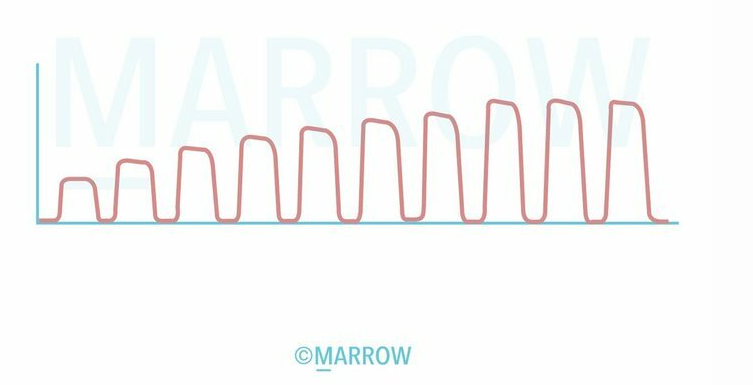
The following capnography waveform represents: _____
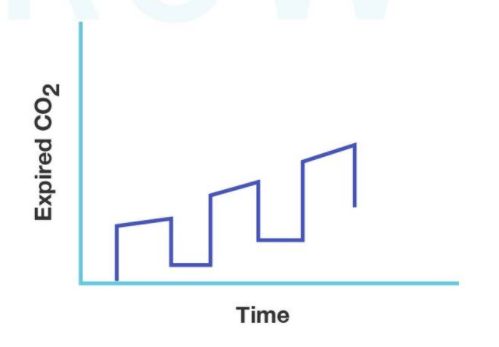
The following capnographic waveform is suggestive of _____:
Tuberculin syringe 1ml or insulin syringe _____units, without fixed needle x3 are one of the components of the anaphylaxis kit
Malignant hyperthermia is usually related to a defect in _____ receptors, which causes increased Ca2+ release from the SR
Local Anesthetic Toxicity Flashcards for NEET-PG
Study 10 flashcards on Local Anesthetic Toxicity for NEET-PG Anesthesiology. These active recall cards cover the key concepts, clinical associations, and high-yield facts from this chapter of Complications in Anesthesia. Each card is designed to test your understanding rather than just recognition, building stronger and more durable memories for exam day.
For personalised spaced repetition scheduling and unlimited flashcards, download the Oncourse app.
Frequently Asked Questions
Are Local Anesthetic Toxicity flashcards free?
How many flashcards does this chapter have?
How should I use these flashcards for NEET-PG?
Are there more flashcards for Complications in Anesthesia?
Want unlimited flashcards?
Get full access to all flashcards, spaced repetition, and progress tracking.
Scan to download app