Lower Limb Indian Medical PG Flashcards - Medical Study Cards
Master Lower Limb with OnCourse flashcards. These spaced repetition flashcards are designed for medical students preparing for NEET PG, USMLE Step 1, USMLE Step 2, MBBS exams, and other medical licensing examinations.
Lower Limb Flashcard Deck - 121 Cards
Flashcard 1: The structure marked is the _____ ligament.
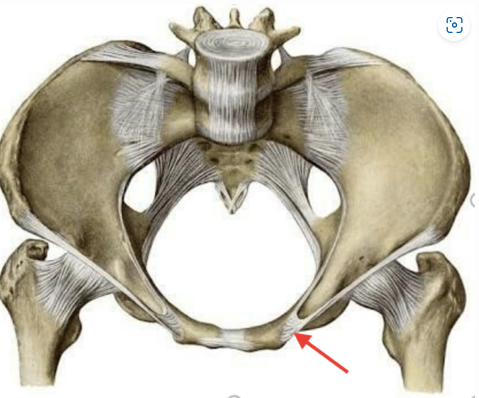
Answer: lacunar
Flashcard 2: Ligaments aroud the knee: No answer _____
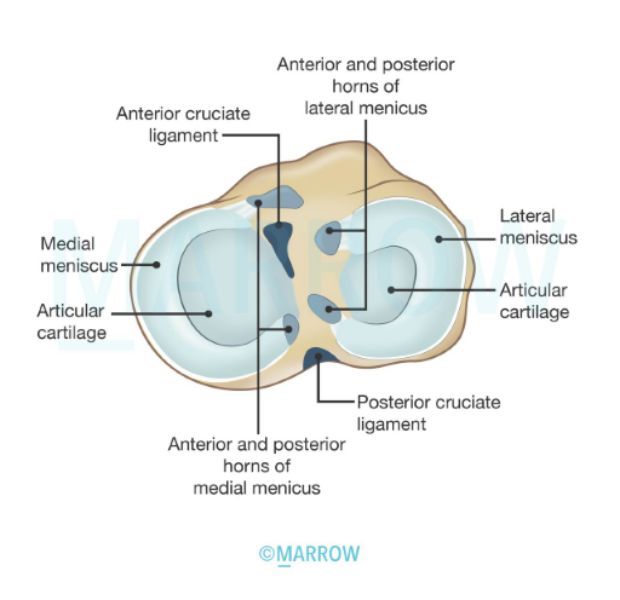
Answer: :)
Flashcard 3: The following are the structures passing deep to the superior and inferior extensor retinacula: (4 tendons 1 nerve)
_____
Answer:
Flashcard 4: The muscle marked as 1 in the given image is the _____, which is a hybrid muscle.
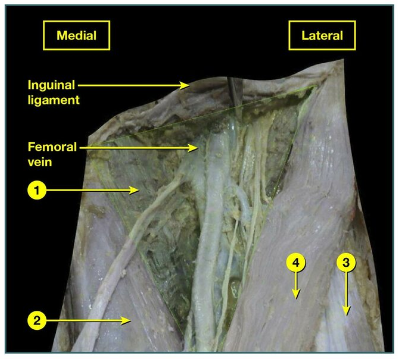
Answer: pectineus
Flashcard 5: Vastus _____ muscle prevents the lateral displacement of the patella.
Answer: medialis
Flashcard 6: Attached to the sustentaculum tali are 3 Ligaments: -_____ ligament (anterior surface)-Deltoid ligament (medial surface)-Medial talocalcaneal ligament
Answer: Plantar calcaneonavicular
Flashcard 7: The _____ nerve (L5-S2) provides:- sensory innervation to the none - motor innervation to the gluteus maximus.
Answer: inferior gluteal
Flashcard 8: The anterior pillar of the _____ longitudinal arch of the foot is formed by 4th and 5th metatarsals and the cuboid
Answer: lateral
Flashcard 9: The posterior pillar of the _____ longitudinal arch of the foot is formed by the medial half of the calcaneum
Answer: medial
Flashcard 10: _____ of the knee is brought by the action of popliteus muscle.
Answer: Unlocking
Flashcard 11: The intersegmental ties involved in _____ longitudnal arch are the long and short plantar ligaments.
Answer: lateral
Flashcard 12: The inferior surface of the _____ has a groove along which the tendon of flexor hallucis longus muscle travels into the sole of the foot
Answer: sustentaculum tali
Flashcard 13: When the knee is flexed, the _____ bundle of ACL is tight, and the PL bundle is moderately lax.
Answer: AM
Flashcard 14: The _____ nerve (L4-S2 (nerve roots)) provides:- sensory innervation to the dorsum of the foot - motor innervation to the biceps femoris, tibialis anterior, and extensor muscles of the foot.
Answer: common peroneal
Flashcard 15: _____ ligament is thick band connecting the anterior margin of the sustentaculum tali to the plantar surface of the navicular.
Answer: Spring
Flashcard 16: There are _____ cuneometatarsal interosseous ligaments and the strongest ligament is Lisfranc's ligament.
Answer: three
Flashcard 17: The ligament related to the _____ surface of the head of the talus is the spring ligament.
Answer: inferior
Flashcard 18: Linea aspera gives attachment to the _____, intermuscular septa and the short head of biceps femoris. (muscle and fascia)
Answer: adductor longus
Flashcard 19: Gluteus _____ muscle is attached to the lateral surface of the greater trochanter.
Answer: medius
Flashcard 20: _____ ligament is the stabilizer of medial longitudinal arch and the head of the talus
Answer: Spring
Flashcard 21: _____ ligaments are also known as meniscotibial ligament.
Answer: Coronary
Flashcard 22: The _____ nerve splits into the common peroneal/fibular nerve and the tibial nerve
Answer: sciatic
Flashcard 23: The common peroneal nerve splits into the deep peroneal nerve (supplying the _____ compartment) and the superficial peroneal nerve (supplying the lateral compartment)
Answer: anterior
Flashcard 24: Peroneus _____ muscles belongs to the lateral compartment of the leg.
Answer: brevis and longus
Flashcard 25: The great saphenous vein courses superiorly from the _____, anterior to the medial malleolus, and up the medial aspect of the leg / thigh
Answer: medial foot
Flashcard 26: Peroneus _____ is inserted on base of first metatarsal & medial cuneiform bone
Answer: longus
Flashcard 27: The blood supply of the femoral head is derived from an arterial ring (trochanteric anastomosis) around the neck of femur constituted by:-_____ arteries, which are the branches of profunda femoris artery.-Superior and inferior gluteal vessels (minor contributions).
Answer: Medial and lateral circumflex femoral
Flashcard 28: The saphenous nerve is _____ to the femoral artery in the adductor canal.
Answer: anterior
Flashcard 29: The slings involved in _____ longitudinal arch are the peroneus longus and brevis muscles.
Answer: lateral
Flashcard 30: _____ division of obturator nerve supplies adductor magnus, obturator externus.
Answer: Posterior
Flashcard 31: _____ nerve runs along with long saphenous vein and supplies the skin on the medial side of knee, leg and foot as far as up to the first metatarsophalangeal joint.
Answer: Saphenous
Flashcard 32: The _____ nerve travels with the popliteal artery through the popliteal fossa.
Answer: tibial
Flashcard 33: The _____ and adductor magnus belongs to the medial compartment of the thigh.
Answer: gracilis
Flashcard 34: The distal end of the iliotibial tract is attached to the _____ tubercle present on the lateral condyle of the tibia
Answer: Gerdys
Flashcard 35: The _____ extends from the medial femoral condyle to the posterior tibia.
Answer: posterior cruciate ligament (PCL)
Flashcard 36: Branches of femoral artery are:Superficial _____Superficial circumflex iliacSuperficial external pudendalDeep external pudendal Muscular branchesProfunda femoris arteryDescending genicular artery
Answer: epigastric
Flashcard 37: The _____ layer of the sole consists offlexor hallucis brevis, adductor hallucis and flexor digiti minimi brevis.
Answer: third
Flashcard 38: The adductor canal is _____ in cross-section and is bounded:Anterolaterally by vastus medialisPosteromedially by adductor longus and adductor magnusAnteromedially by sartorius and the roof by a dense fascia (extending from vastus medialis to the medial edge of adductor longus and magnus muscle.)*what are the contents?
Answer: triangular
Flashcard 39: Knee joint is a _____ synovial joint consisting of tibiofemoral and patellofemoral articulations.
Answer: complex
Flashcard 40: Inversion and eversion movement takes place mainly at the _____, calcaneocuboid, and talonavicular joints.
Answer: talocalcaneal
Flashcard 41: The _____ is a deep fascial investment of the whole thigh musculature.
Answer: fascia lata
Flashcard 42: _____ ligament is related to both calcaneocuboid and calcaneonavicular joints.
Answer: Chopart's
Flashcard 43: The _____ layer of the sole consists of abductor hallucis, abductor digiti minimi and flexor digitorum brevis.
Answer: first
Flashcard 44: _____ is a plica present at the intercondylar notch of the knee joint.
Answer: Ligamentum mucosum
Flashcard 45: The _____ nerve is the largest branch of the sacral plexus
Answer: sciatic
Flashcard 46: The _____ (two heads) and soleus muscles are collectively known as triceps surae
Answer: gastrocnemius
Flashcard 47: The _____ nerve (L4-S3 (nerve roots)) provides:- sensory innervation to the sole of foot - motor innervation to the triceps surae (soleus and gastrocnemius), plantaris, popliteus, flexor muscles of the foot, and tibialis posterior
Answer: tibial
Flashcard 48: The _____ nerve (L4-S1) provides:- sensory innervation to the none - motor innervation to the gluteus medius, gluteus minimus, and tensor fascia latae.
Answer: superior gluteal
Flashcard 49: The patella is an example of _____ bone, which is formed within the tendon of quadriceps femoris muscle.
Answer: sesamoid
Flashcard 50: The structure related to the _____ surface of proximal femur is the intertrochanteric line.
Answer: anterior
Flashcard 51: The _____ nerve travels with the posterior tibial artery posterior to the medial malleolus.
Answer: tibial
Flashcard 52: The _____ nerve (L2-L4 (nerve roots)) provides:- sensory innervation to the anterior thigh and medial leg- motor innervation to the quadriceps, iliopsoas, pectineus, and sartorius
Answer: femoral
Flashcard 53: _____ is the point where the tendon of flexor hallucis longus passes deep to the tendon of flexor digitorum longus to reach the medial side of sole of foot.
Answer: Knot of Henry
Flashcard 54: The _____ layer of the sole consists of plantar and dorsal interossei and the tendons of tibialis posterior and peroneus longus
Answer: fourth
Flashcard 55: Cruciate ligaments of the knee are _____capsular & extrasynovial
Answer: intra
Flashcard 56: Action of pyriformis is _____ of the thigh in extension and abduction of the thigh in the flexed position
Answer: Lateral rotation
Flashcard 57: The _____ vessels pass deep to the superior extensor retinaculum, while the dorsalis pedis vessels pass deep to the inferior extensor retinaculum.
Answer: anterior tibial
Flashcard 58: _____ epiphyseal vessels supplying the femur head derive their nutrition from from the foveolar artery, which is a branch of the obturator artery
Answer: Medial
Flashcard 59: Boundaries of popliteal fossa:Superomedially: _____Superolaterally: Biceps femorisInferomedially: Medial head GastrocnemiusInferolaterally:Lateral Head Gastrocnemius
Answer: Semimembranosus, Semitendinosus
Flashcard 60: The structures passing through canals formed by flexor retinaculum are as follows: (Starting from the medial side): 3 tendons, 1 vessel, 1 nerve (To Dump a Very Nasty Ho)_____Flexor Digitorum longusPosterior tibial VesselsTibial NerveFlexor Hallucis longus
Answer: Tibialis posterior
Flashcard 61: The main joint involved in _____ longitudinal arch is the Talocalcaneonavicular joint.
Answer: medial
Flashcard 62: The _____ extends from the lateral femoral condyle to the anterior tibia.
Answer: anterior cruciate ligament (ACL)
Flashcard 63: The _____ perforating branch of the profunda femoris artery is the nutrient artery to the femur.
Answer: second
Flashcard 64: _____ division of obturator nerve supplies pectineus (occasionally), adductor longus, adductor brevis, and gracilis
Answer: Anterior
Flashcard 65: The _____ layer of the sole consists of flexor accessorius and the four lumbrical muscles,the tendons of flexor hallucis longus and flexor digitorum longus
Answer: second
Flashcard 66: The piriformis normally acts to:- _____ the thigh when extended - abduct the thigh when flexed
Answer: externally rotate
Flashcard 67: _____ nerve is a branch of the lateral plantar nerve.
Answer: Baxters
Flashcard 68: The _____ nerve (L4-S3 (nerve roots)) provides:- sensory innervation to the posterior thigh - motor innervation to the semitendinosus, semimembranosus, biceps femoris, and hamstring portion of the adductor magnus
Answer: sciatic
Flashcard 69: _____ is the most commonly injured ligament of ankle on the lateral side seen in inversion sprains
Answer: ATFL
Flashcard 70: Inferior extensor retinaculum is a _____-shaped band, who's medial end is attached to the medial malleolus of the tibia and lateral end is attached to the calcaneus
Answer: Y
Flashcard 71: The _____ artery (branch of the posteror tibial artery) is the nutrient artery to the fibula.
Answer: peroneal
Flashcard 72: The lateral surface of the fibula is related to _____ muscles, the anteromedial surface is related to extensors and the posterior surface is related to flexor muscles.
Answer: fibular
Flashcard 73: The iliotibial band is a fibrous band that originates from the _____ to the proximal tibia and provides lateral knee stability
Answer: iliac crest
Flashcard 74: The saphenous nerve is the largest pure sensory branch of the _____ nerve and supplies the medial aspect of the leg
Answer: femoral
Flashcard 75: Important ligaments of ankle present on the medial side, and therefore likely to be injured in _____ sprains include:1. Deltoid ligament (Medial collateral ligament)2. Spring ligament (calcaneonavicular ligament)
Answer: eversion
Flashcard 76: The main joint involved in _____ longitudinal arch is the Calcaneocuboid joint.
Answer: lateral
Flashcard 77: The structure related to the _____ surface of proximal femur is the intertrochanteric crest.
Answer: posterior
Flashcard 78: The _____joint is predominantly involved in plantar flexion and dorsiflexion of the foot.
Answer: tibiotalar
Flashcard 79: Peroneus tertius is supplied by _____ nerve
Answer: deep peroneal
Flashcard 80: The _____ metatarsophalangeal joint is supplied by the medial plantar nerve.
Answer: 2nd
Flashcard 81: Ligamentum patellae is attached to _____
Answer: tibial tuberosity
Flashcard 82: Disruption of which ligament leads to collapse of medial longitudinal arch and flat foot?_____
Answer: Spring ligament
Flashcard 83: _____ is the only bone which does not follow the law of ossification
Answer: Fibula
Flashcard 84: The talocalcaneonavicular joint is a _____ joint.
Answer: ball and socket
Flashcard 85: The femoral nerve is split into the anterior and posterior divisions by the _____ artery.
Answer: lateral circumflex femoral
Flashcard 86: What muscles are attached to the lesser trochanter?_____
Answer: Iliacus and psoas major
Flashcard 87: The small saphenous vein is present on the _____ surface of the lateral malleolus
Answer: behind
Flashcard 88: Tibial collateral ligament is a degenerated part of the _____ muslce
Answer: adductor magnus
Flashcard 89: Which meniscus is semicircular in shape?_____
Answer: medial
Flashcard 90: The following are the structures passing deep to the superior and inferior extensor retinacula: (4 tendons 1 nerve)_____
Answer:
Flashcard 91: Which nerve gives articular branches to Ankle joint, Tarsal joints, Tarsometatarsal joints and 1st metatarsophalangeal joint?_____
Answer: Deep peroneal nerve
Flashcard 92: _____ anastomosis lies near the trochanteric fossa of the femur
Answer: Trochanteric
Flashcard 93: The short head of biceps femoris is attached to the _____ lip of the linea aspera
Answer: lateral
Flashcard 94: What structures are attached to the head of fibula? (2)_____
Answer: Fibular collateral ligament and biceps femoris (2)
Flashcard 95: _____ vein is the longest vein in the body.
Answer: Long saphenous
Flashcard 96: Rectus femoris originates from _____
Answer: Anterior inferior iliac spine
Flashcard 97: The gluteus maximus muscle is attached to the _____ of the fascia lata.
Answer: iliotibial tract
Flashcard 98: The branch of the _____ artery is the nutrient artery to the tibia.
Answer: posterior tibial
Flashcard 99: _____ anastomosis lies at the level of the lesser trochanter of the femur
Answer: Cruciate
Flashcard 100: Eversion of the foot is carried out by?_____
Answer: Peroneus longus, brevis and tertius (3)
Flashcard 101: Which meniscus covers more area?_____
Answer: Lateral
Flashcard 102: _____ bursa is the superior extension of knee joint cavity
Answer: Suprapatellar
Flashcard 103: Which branch of femoral nerve arises from its main trunk and passes below the inguinal ligament?_____
Answer: nerve to pectineus
Flashcard 104: The _____ nerve can be rolled against the neck of fibula.
Answer: common peroneal
Flashcard 105: Inversion of the foot is carried out by?_____
Answer: Tibialis anterior and posterior
Flashcard 106: The arterial supply to the femoral head is mostly by the _____
Answer: medial circumflex femoral artery.
Flashcard 107: The adductor hiatus is an opening in the tendon of adductor _____, present adjacent to the femoral shaft.
Answer: magnus
Flashcard 108: The apex of the tibial triangular area is formed by _____
Answer: tibial tuberosity
Flashcard 109: Below knee perforators- _____ perforator veins
Answer: Boyd
Flashcard 110: The _____ saphenous vein is present at the adductor tubercle
Answer: great
Flashcard 111: Distal thigh level perforators- _____ perforator veins
Answer: Dodd
Flashcard 112: The great saphenous vein is present on the _____ surface of the medial malleolus
Answer: anterior
Flashcard 113: The keystone of the medial longitudinal arch is formed by the _____.
Answer: talus
Flashcard 114: Lateral rotation of the flexed knee is produced by: _____
Answer: biceps femoris
Flashcard 115: _____ prevents hyperextension of knee
Answer: ACL (ACL/PCL)
Flashcard 116: Neck-shaft angle or angle of inclination of the femur is approximately _____.
Answer: 125
Flashcard 117: Medial rotation of the flexed knee is produced by: _____
Answer: popliteus, semimembranosus, and semitendinosus (3)
Flashcard 118: Zona orbicularis is related to the _____ of femur.
Answer: neck
Flashcard 119: _____ compartment of the leg does not contain any neurovascular bundle.
Answer: Posterior superficial
Flashcard 120: Neutral triangle is an area that contains relatively less amount of _____ bone and hence is more prone to the calcaneal fractures.
Answer: trabecular
Flashcard 121: Femoral branch of the genitofemoral nerve is _____ a content of the triangle of doom.
Answer: not
Keywords: Lower Limb flashcards, medical flashcards, NEET PG preparation, USMLE Step 1 flashcards, Anki alternative, spaced repetition medical, OnCourse flashcards