
Muscles and Their Actions — Flashcards

The _____ nerve (L4-S2) provides: - sensory innervation to the dorsum of the foot - motor innervation to the short head of biceps femoris, tibialis anterior, and extensor muscles of the foot.
The _____ nerve (L2-L3 (nerve roots)) provides sensory innervation to the anterior and lateral thigh and motor innervation to the none.
Inversion of the foot is carried out by?_____
The _____ layer of the sole consists of plantar and dorsal interossei and the tendons of tibialis posterior and peroneus longus
The _____ nerve (L4-S3 (nerve roots)) provides: - motor innervation to the semitendinosus, semimembranosus, biceps femoris, and hamstring portion of the adductor magnus - sensory innervation to the leg and foot (via terminal branches)
The _____ and adductor magnus belongs to the medial compartment of the thigh.
Hint: muscle
The gluteus maximus muscle is attached to the _____ of the fascia lata.
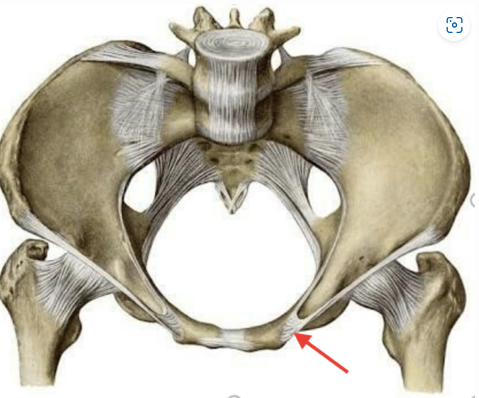
The structure marked is the _____ ligament.
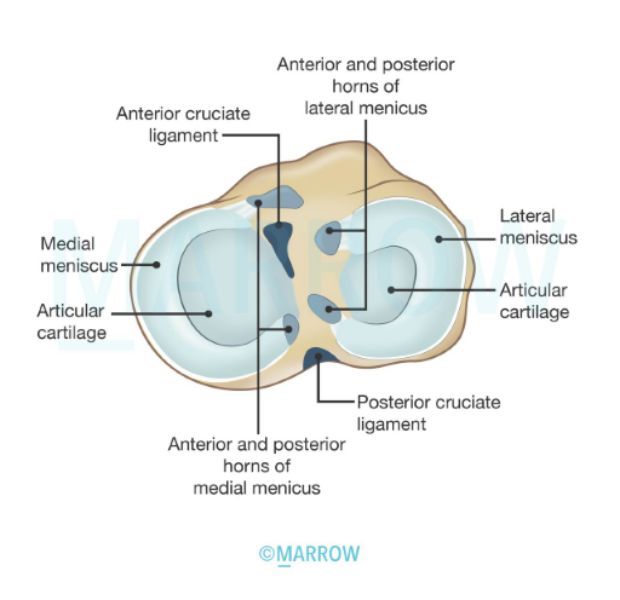
What are the four primary ligaments of the knee joint?
What structures pass deep to the superior and inferior extensor retinacula of the ankle? (List 4 tendons and 1 nerve from medial to lateral)
Muscles and Their Actions Flashcards for NEET-PG
Study 10 flashcards on Muscles and Their Actions for NEET-PG Anatomy. These active recall cards cover the key concepts, clinical associations, and high-yield facts from this chapter of Lower Limb. Each card is designed to test your understanding rather than just recognition, building stronger and more durable memories for exam day.
For personalised spaced repetition scheduling and unlimited flashcards, download the Oncourse app.
Frequently Asked Questions
Are Muscles and Their Actions flashcards free?
How many flashcards does this chapter have?
How should I use these flashcards for NEET-PG?
Are there more flashcards for Lower Limb?
Want unlimited flashcards?
Get full access to all flashcards, spaced repetition, and progress tracking.
Scan to download app