How to Use Spaced Repetition to Master Medical Subjects in 2026
Master medical subjects 10x faster with spaced repetition. Learn the science-backed technique that helps medical students retain 90% more information for NEET-PG, USMLE & UKMLA exams.
How to Use Spaced Repetition to Master Medical Subjects in 2026
Medical school demands memorizing thousands of facts, from drug mechanisms to anatomical structures to disease pathways. Traditional cramming fails when you need to retain information for months or years. Spaced repetition—a learning technique that schedules reviews at scientifically-optimized intervals—can help you retain 90% more information with less study time.
This evidence-based method transforms how medical students approach subjects like pharmacology, anatomy, and pathology. Instead of forgetting 80% of what you study within days, spaced repetition ensures knowledge sticks long-term, making it invaluable for NEET-PG, USMLE, UKMLA, and clinical practice.
What Is Spaced Repetition?
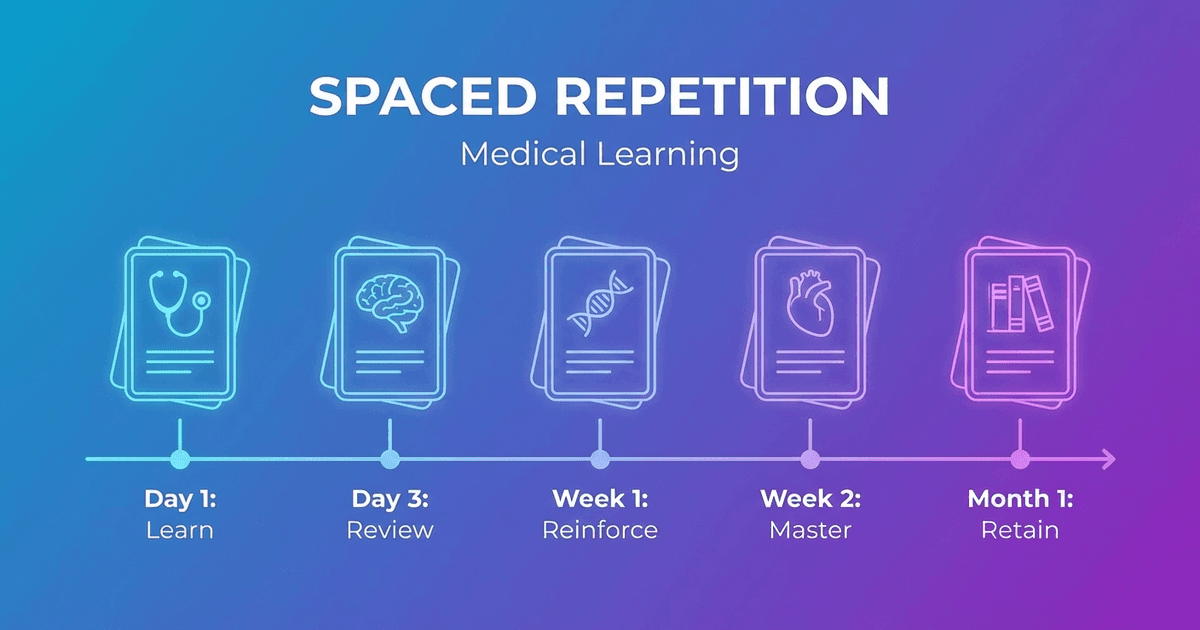
Spaced repetition is a learning technique where you review information at increasing time intervals. Instead of cramming everything at once, you revisit material just as you're about to forget it—typically after 1 day, 3 days, 1 week, 2 weeks, 1 month, and so on.
The technique exploits the psychological spacing effect: our brains retain information better when learning sessions are distributed over time rather than massed together. German psychologist Hermann Ebbinghaus first documented this phenomenon in 1885, showing how strategic timing dramatically improves long-term retention.
The Science Behind Spaced Repetition
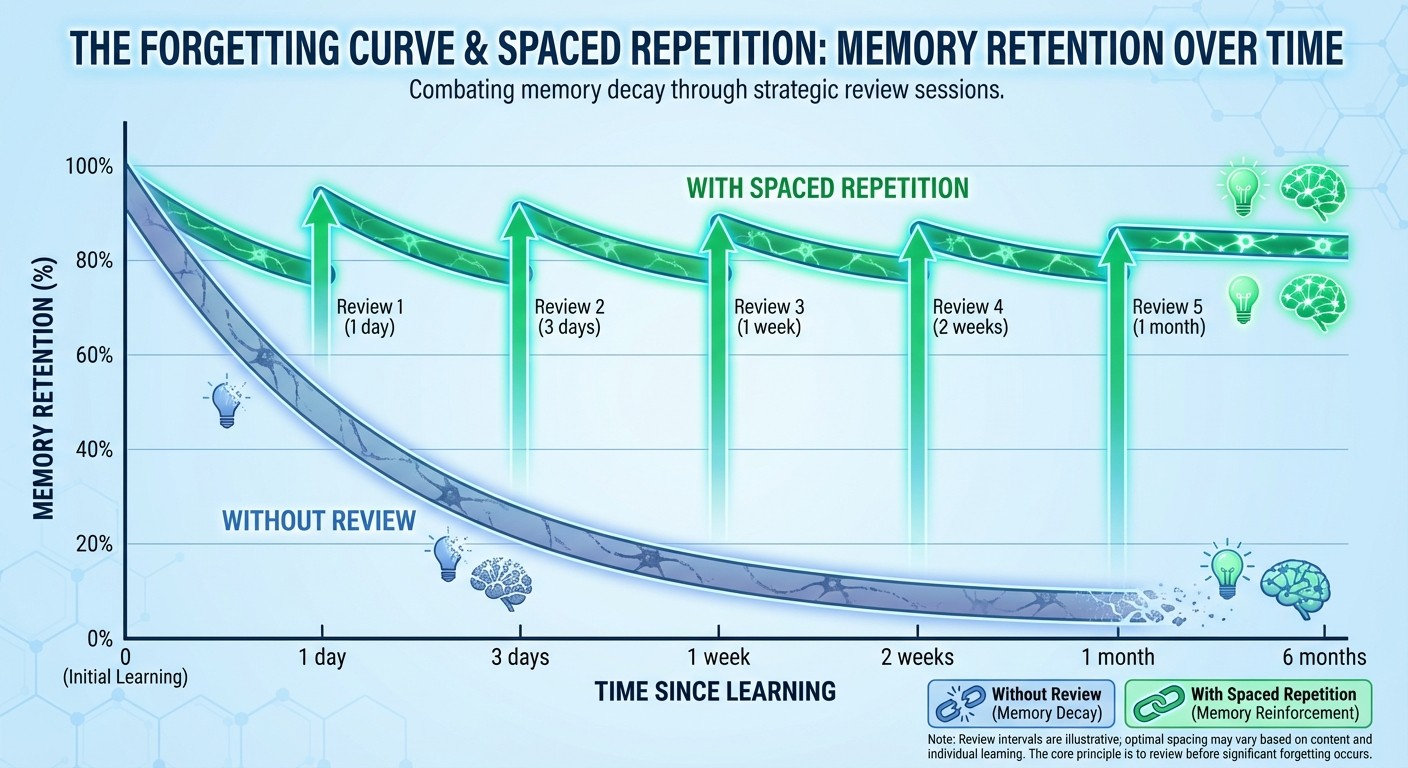
Research consistently demonstrates spaced repetition's effectiveness:
90% retention rate after multiple spaced reviews vs. 20% with traditional studying
Reduces study time by 50-70% compared to massed practice
Strengthens neural pathways through repeated activation at optimal intervals
Improves transfer of knowledge to new clinical contexts
The forgetting curve shows how rapidly we lose new information. Without review, we forget 50% within an hour and 90% within a week. Spaced repetition interrupts this decline by scheduling reviews precisely when memory strength begins to fade.
Why Medical Students Need Spaced Repetition
Medical education presents unique challenges that make spaced repetition particularly valuable:
Volume and Complexity
Medical students must master 10,000+ facts across multiple subjects simultaneously. Traditional review methods can't handle this volume efficiently.
Long-Term Retention Requirements
Unlike other fields where short-term memorization suffices, medical knowledge must be accessible years later during clinical practice. A pharmacology fact learned in second year needs instant recall during residency.
Integration Across Subjects
Medical concepts interconnect—understanding cardiac pharmacology requires knowledge of anatomy, physiology, pathology, and biochemistry. Spaced repetition helps maintain this integrated knowledge base.
High-Stakes Testing
Medical licensing exams like NEET-PG, USMLE, and UKMLA test knowledge accumulated over years of study. Traditional cramming fails for such comprehensive exams.
How Spaced Repetition Works: The Algorithm
Modern spaced repetition systems use algorithms that adjust review intervals based on your performance:
Initial Learning Phase
1. First exposure: Learn new material 2. First review: 1 day later 3. Performance assessment: Rate difficulty (Easy/Good/Hard)
Interval Calculation
Easy cards: Longer intervals (multiply by 2.5x)
Good cards: Standard intervals (multiply by 2x)
Hard cards: Shorter intervals (multiply by 1.2x)
Failed cards: Reset to 1 day
Progressive Scheduling
A typical progression might look like:
Day 1: Learn
Day 2: Review (if Good → next review in 4 days)
Day 6: Review (if Good → next review in 10 days)
Day 16: Review (if Good → next review in 25 days)
Day 41: Review (if Good → next review in 2.5 months)
This creates optimal memory consolidation while minimizing review burden.
Setting Up Your Spaced Repetition System
Choose Your Platform
1. Oncourse (Recommended for Medical Students) Oncourse provides the most comprehensive spaced repetition system designed specifically for medical education. With 40,000+ pre-made medical flashcards covering NEET-PG, USMLE, and UKMLA topics, you can start reviewing immediately without creating cards from scratch.
Key features:
Subject-specific decks: Pre-organized by specialty (Cardiology, Pharmacology, etc.)
Integrated AI: Rezzy AI explains difficult concepts during review
Cross-platform sync: Study on mobile, tablet, or computer
Progress analytics: Track retention rates and identify weak areas
Free tier available with premium plans for unlimited access
2. Anki
The gold standard for customizable spaced repetition. Free, open-source, with extensive add-ons. Requires more setup but offers maximum flexibility.
3. Quizlet
User-friendly with pre-made medical decks. Limited spaced repetition algorithm compared to dedicated SRS tools.
Create Effective Medical Flashcards
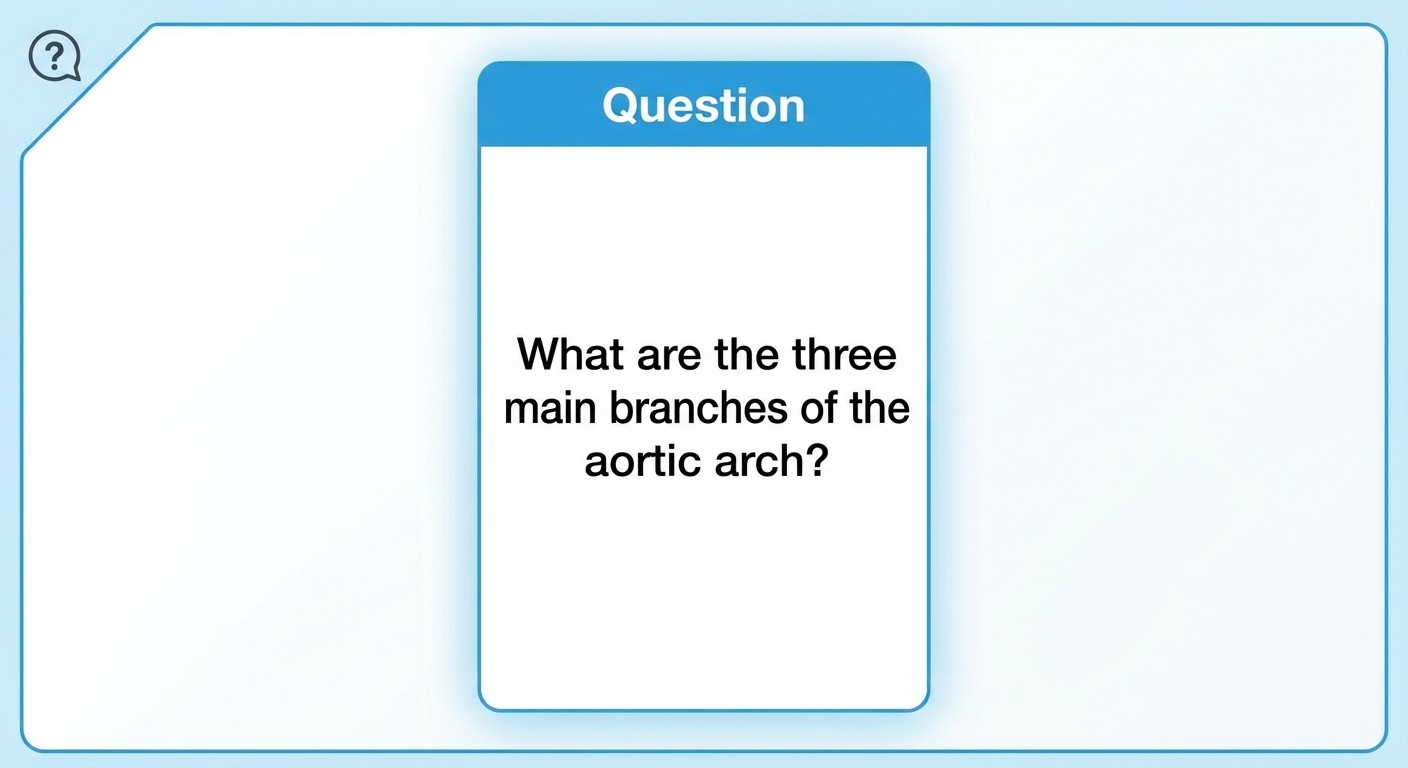
Follow the Minimum Information Principle
Break complex concepts into atomic facts. Instead of:
❌ Poor: "Explain ACE inhibitors"
✅ Good: "What is the mechanism of action of ACE inhibitors?"
Use Active Recall Questions
Frame cards as questions that require retrieval:
"What drug treats X condition?"
"Which nerve innervates Y muscle?"
"What are the side effects of Z medication?"
Include Context and Mnemonics
Add memory aids, clinical correlations, and visual cues:
Question: "First-line treatment for hypertension in diabetes?"
Answer: "ACE inhibitors (protect kidneys) - Remember: ACE saves the KIDNEY"
Create Bidirectional Cards
For drug-disease relationships, create cards in both directions:
Card 1: "Metformin treats?" → "Type 2 diabetes"
Card 2: "First-line medication for Type 2 diabetes?" → "Metformin"
Subject-Specific Strategies
Anatomy
Use image occlusion: Hide parts of anatomical diagrams
Create layered cards: Start with broad structures, drill down to details
Include clinical correlations: "Which artery is affected in STEMI?"
Practice with anatomy flashcards that include high-yield anatomical diagrams and clinical correlations.
Pharmacology
Drug classification trees: Organize by mechanism/class
Side effect patterns: Group drugs with similar adverse effects
Mechanism linking: Connect MOA to therapeutic effect to side effects
Explore comprehensive pharmacology flashcards covering drug classifications, mechanisms, and clinical applications.
Pathology
Disease progression cards: Sequence pathophysiological steps
Diagnostic criteria: Create cards for key findings/lab values
Treatment algorithms: Build decision trees for management
Physiology
Process sequences: Break complex pathways into steps
Normal values: Memorize reference ranges with clinical significance
Integration cards: Connect systems (cardio-renal, neuro-endocrine)
Daily Implementation Strategy
Morning Review (15-20 minutes)
Start each day reviewing cards due for repetition. This primes your brain and reinforces yesterday's learning.
Study Session Integration (Throughout the day)
After each lecture or reading session:
1. Immediate review: Go through related flashcards 2. Add new cards: Create 5-10 cards from new material 3. Quick practice: Review new cards 2-3 times
Evening Consolidation (10-15 minutes)
End your day with a final review of difficult cards and tomorrow's preview.
Weekly Maintenance
Sunday planning: Preview the week's card load
Deck organization: Update tags and categories
Performance analysis: Identify problematic topics
Advanced Techniques
Interleaving Different Subjects
Mix flashcards from different medical subjects in single sessions. This improves discrimination between similar concepts and enhances transfer.
Elaborative Interrogation
Don't just memorize—ask "why" and "how" questions:
"Why does this drug cause this side effect?"
"How does this relate to what I learned in physiology?"
Connecting to Clinical Cases
Link flashcard facts to patient scenarios you've encountered or studied. This strengthens clinical application.
Using Memory Palaces
For complex sequences (like drug metabolism pathways), combine spaced repetition with spatial memory techniques.
Common Mistakes to Avoid
Creating Cards That Are Too Complex
Long, paragraph-style cards defeat the purpose. If you can't answer in 10-15 seconds, break it down further.
Inconsistent Review Schedule
Skipping reviews disrupts the spacing algorithm. Consistency matters more than perfection—better to do 15 minutes daily than 2 hours twice a week.
Passive Recognition vs. Active Recall
Don't just flip cards and think "I knew that." Force yourself to actively retrieve the answer before checking.
Ignoring Difficult Cards
Repeatedly failing cards indicates a knowledge gap. Don't just keep reviewing—go back to source material and rebuild understanding.
Not Updating Cards Based on New Learning
As your knowledge deepens, update cards to reflect more sophisticated understanding or correct errors.
Measuring Success and Optimization
Key Metrics to Track
Daily review completion rate: Aim for 95%+ consistency
Average retention rate: Target 80-85% correct responses
Mature card stability: Cards should reach 3+ month intervals
New cards added daily: Balance learning new material with reviews
Signs You're Succeeding
Decreased study time for better exam performance
Improved confidence in clinical scenarios
Faster recall during case discussions
Better performance on practice questions
Troubleshooting Common Issues
"I'm overwhelmed by daily reviews"
Reduce new cards per day
Increase ease factor for cards you know well
Focus on high-yield topics first
"I keep forgetting the same cards"
Check if cards are too complex
Add more context or mnemonics
Review source material to strengthen understanding
"Reviews feel boring and mechanical"
Add clinical correlations
Use image occlusion for visual learners
Integrate case-based examples
Integration with Other Study Methods
Spaced repetition works best as part of a comprehensive study strategy:
Active Learning Combination
Lectures: Create cards from key points immediately after class
Textbook reading: Convert important facts into question-answer format
Practice questions: Turn missed questions into flashcards for review
Clinical Skills Integration
Patient encounters: Create cards from interesting cases
Procedures: Break skills into component steps for review
Differential diagnosis: Practice pattern recognition through cards
Enhance your spaced repetition with clinical case practice and comprehensive question banks.
Exam Preparation Strategy
For major exams like NEET-PG or USMLE:
6+ months before: Build comprehensive card database covering all topics 3-6 months before: Focus reviews on weak areas while maintaining overall coverage 1-3 months before: High-yield review with emphasis on frequently tested concepts Final month: Mature card maintenance with intensive daily practice
Technology and Tools
Synchronization Across Devices
Modern spaced repetition apps sync across smartphone, tablet, and computer, allowing study anywhere. This flexibility increases consistency—review during commutes, between rotations, or while waiting for rounds.
Analytics and Progress Tracking
Advanced platforms provide detailed analytics:
Heat maps: Show daily review consistency
Retention graphs: Track learning curve over time
Difficulty analysis: Identify subjects needing more attention
Forecast models: Predict future review workload
Integration with AI
Next-generation platforms like Oncourse integrate artificial intelligence to:
Auto-generate cards from textbooks and lectures
Explain difficult concepts during review sessions
Adapt difficulty based on your learning patterns
Suggest related topics for comprehensive understanding
Conclusion: Transform Your Medical Education
Spaced repetition isn't just another study technique—it's a fundamental shift toward evidence-based learning that mirrors how memory actually works. Medical students who master this approach consistently outperform peers while studying less, retain knowledge longer, and feel more confident in clinical settings.
The key to success lies in consistent daily practice, well-designed flashcards, and integration with your broader study strategy. Start small with high-yield topics, build the habit, then expand your spaced repetition system as it proves its value.
Whether you're preparing for NEET-PG, USMLE, UKMLA, or simply want to excel in medical school, spaced repetition provides the foundation for long-term learning success. The investment in setting up your system pays dividends throughout your medical career—knowledge that stays accessible when you need it most.
Ready to get started? Try Oncourse's medical flashcards with a free tier that includes thousands of high-yield cards across all medical subjects. Join over 10,000 medical students who've transformed their learning with science-backed spaced repetition.