How to Study Anesthesia for NEET PG 2026: High-Yield Topics, Drug Classifications and Exam Checklist
Master anesthesia for NEET PG 2026 with this complete study guide covering high-yield topics, drug classifications, regional techniques, and emergency management protocols.
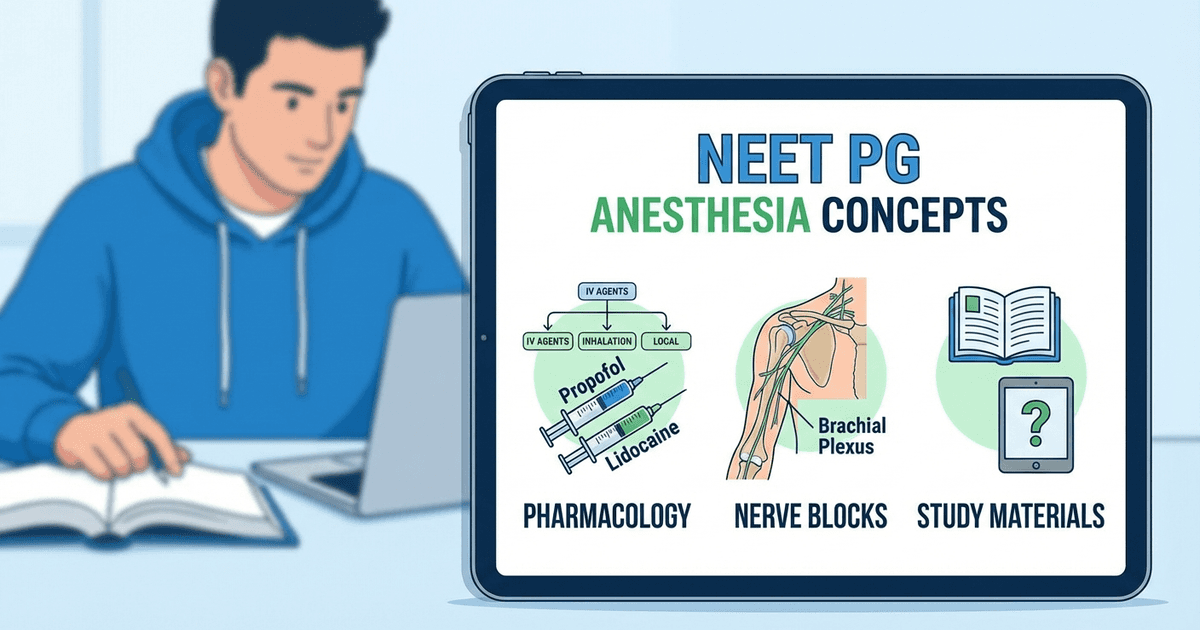
How to Study Anesthesia for NEET PG 2026: High-Yield Topics, Drug Classifications and Exam Checklist
You probably think anesthesia is just about putting people to sleep and waking them up. Wrong. NEET PG 2026 wants you to know the molecular mechanisms behind propofol, the exact contraindications for spinal anesthesia, and why succinylcholine can kill certain patients. Anesthesia carries 8-12 questions in NEET PG, and every single one tests precision — not memorization.
The catch? Most students treat anesthesia like a minor subject and get blindsided by questions that demand detailed pharmacokinetics and clinical decision-making. You have 200 questions total and 180 minutes. That gives you 54 seconds per question. When you see "A 65-year-old diabetic needs emergency surgery. Which anesthetic technique is contraindicated?" — you need the answer in 20 seconds, not 2 minutes of deliberation.
This guide breaks down exactly how to master anesthesia for NEET PG 2026. No generic study advice. Just the high-yield topics that show up repeatedly, the drug classifications that trip up 80% of candidates, and a final month checklist that ensures you dont miss easy marks.
Understanding Anesthesia in NEET PG 2026 Pattern
NEET PG tests anesthesia through three distinct question types. Clinical scenario-based questions make up 60% — you'll get case presentations requiring you to choose the best anesthetic technique. Pharmacology-focused questions account for 30%, testing drug mechanisms, interactions, and adverse effects. The remaining 10% covers equipment, monitoring, and complications.
The examiners favorite topics remain consistent year after year. General anesthesia pharmacology appears in 3-4 questions every exam. Local anesthetic toxicity and contraindications show up in 2-3 questions. Regional anesthesia techniques, especially spinal and epidural, generate 2-3 questions focusing on anatomy and complications.
Here's what changed in recent patterns: more questions on pediatric and obstetric anesthesia, increased emphasis on emergency airway management, and detailed testing of neuromuscular blocking agents. The difficulty level stays moderate, but precision matters more than before.
Essential Drug Classifications You Must Master
Inhalational Anesthetics
The halogenated ethers dominate this category. Sevoflurane offers rapid onset and recovery with minimal airway irritation — making it ideal for pediatric cases. Isoflurane provides stable cardiovascular effects but causes more airway irritation. Desflurane has the fastest recovery profile but requires heated vaporizers and costs more.
Know these specific values: Sevoflurane MAC is 2.05%, isoflurane MAC is 1.15%. Blood-gas solubility coefficients determine onset speed — desflurane (0.42) fastest, sevoflurane (0.65) moderate, isoflurane (1.4) slowest.
Nitrous oxide deserves special attention. It's 34 times more soluble than nitrogen, causing expansion of gas-filled spaces. Never use in pneumothorax, bowel obstruction, or middle ear surgery. Its MAC is 105% — meaning it cant produce anesthesia alone at atmospheric pressure.
Intravenous Anesthetics
Propofol remains the gold standard induction agent. Onset time: 30-40 seconds. Duration: 5-10 minutes. Major advantage: antiemetic properties. Major disadvantage: cardiovascular depression and injection pain. The white emulsion supports bacterial growth — never save opened vials.
Etomidate causes minimal cardiovascular effects, making it perfect for hemodynamically unstable patients. But it suppresses adrenal function for 6-8 hours and causes myoclonus in 80% of patients. Ketamine provides dissociative anesthesia with preserved airway reflexes and blood pressure — ideal for trauma and pediatric cases. Watch for emergence delirium and increased intracranial pressure.
Rezzy AI can quiz you on these drug interactions and help you remember which agent works best for specific patient populations. The key is connecting each drug's pharmacology to its clinical applications rather than memorizing isolated facts.
Neuromuscular Blocking Agents
Depolarizing blockers: only succinylcholine remains clinically relevant. Onset: 60-90 seconds. Duration: 5-10 minutes. Use for rapid sequence intubation when you need fast, reliable paralysis. Contraindications include hyperkalemia, burns older than 24 hours, spinal cord injuries, and malignant hyperthermia susceptibility.
Non-depolarizing blockers split into two families. Benzylisoquinolines (atracurium, mivacurium) undergo Hofmann degradation — metabolism independent of kidney/liver function. Aminosteroids (vecuronium, rocuronium) depend on hepatic elimination. Rocuronium offers the fastest onset among non-depolarizers at 90-120 seconds.
Reversal agents matter more than before. Neostigmine works for all non-depolarizing blockers but needs 30-60 minutes and causes muscarinic side effects. Sugammadex specifically reverses rocuronium and vecuronium in 2-3 minutes without side effects — but costs significantly more.
Local Anesthetics
Two chemical classes determine everything: esters and amides. Esters (procaine, chloroprocaine) get metabolized by plasma cholinesterases and cause more allergic reactions. Amides (lidocaine, bupivacaine) undergo hepatic metabolism and rarely cause true allergies.
Potency correlates with lipid solubility. Bupivacaine is 4 times more potent than lidocaine. Duration correlates with protein binding. Bupivacaine lasts 4-8 hours, lidocaine lasts 1-3 hours. Onset speed correlates with pKa — chloroprocaine (pKa 8.7) works fastest, bupivacaine (pKa 8.1) works slowest.
Toxicity follows predictable patterns. CNS toxicity appears before cardiac toxicity except with bupivacaine — which causes sudden cardiac arrest. Maximum safe doses: lidocaine 4.5 mg/kg (7 mg/kg with epinephrine), bupivacaine 2.5 mg/kg (3 mg/kg with epinephrine).
High-Yield Topics That Appear Every Year
Airway Management Essentials
Difficult airway prediction uses multiple factors. Mallampati class III-IV predicts difficulty but lacks sensitivity. Thyromental distance less than 6 cm suggests difficult laryngoscopy. Neck extension less than 35 degrees impairs visualization. Body mass index over 35 increases both mask ventilation and intubation difficulty.
Failed intubation protocols save lives. After 3 attempts or 10 minutes, declare failed intubation. Maintain oxygenation with supraglottic airways or face mask. Consider surgical airway if "cannot intubate, cannot ventilate" situation develops. Know your rescue devices: laryngeal mask airway, intubating LMA, fiberoptic bronchoscope.
Rapid sequence intubation requires specific steps. Preoxygenation for 3-5 minutes. Cricoid pressure (Sellick maneuver) to prevent aspiration. No positive pressure ventilation between induction and intubation. Intubate within 45-60 seconds to prevent desaturation.
Regional Anesthesia Techniques
Spinal anesthesia anatomy determines success. The spinal cord ends at L1-L2 in adults, L3 in children. Perform lumbar puncture below L2-L3 to avoid cord injury. CSF pressure is 10-15 mmHg in lateral position. Total CSF volume is 150 mL with 30 mL in spinal space.
Contraindications include patient refusal, infection at injection site, coagulopathy (INR >1.5, platelets <100,000), and increased intracranial pressure. Relative contraindications include severe aortic stenosis, severe hypovolemia, and certain neurologic diseases.
Epidural anesthesia offers more flexibility but higher failure rates. The epidural space extends from foramen magnum to sacral hiatus. Contains fat, blood vessels, and lymphatics — no CSF. Negative pressure helps identify the space using loss of resistance technique.
Complications differ between techniques. Spinal anesthesia causes post-dural puncture headache in 1-3% of cases — higher with cutting needles and younger patients. Epidural anesthesia risks intravascular injection (1:1000) and epidural hematoma (1:150,000 in anticoagulated patients).
Our anesthesiology lessons cover these techniques with detailed anatomical diagrams and step-by-step procedures.
Monitoring and Safety Standards
Standard monitoring saves lives when used correctly. Pulse oximetry detects hypoxemia but has limitations — poor perfusion, motion artifact, and abnormal hemoglobins cause false readings. Carboxyhemoglobin and methemoglobin cause falsely normal readings.
Capnography provides more information than oxygen saturation. Normal ETCO2 is 35-40 mmHg. Sudden drop to zero suggests esophageal intubation, circuit disconnection, or cardiac arrest. Gradual rise indicates rebreathing, hypoventilation, or increased CO2 production.
Blood pressure monitoring requires proper cuff sizing. Cuff width should equal 40% of arm circumference. Too small cuffs overestimate pressure, too large cuffs underestimate pressure. Invasive monitoring becomes necessary when beat-to-beat control matters or frequent sampling is needed.
Temperature monitoring prevents hypothermia and malignant hyperthermia. Core temperature drops 1-3°C in first hour under general anesthesia. Hypothermia below 35°C causes coagulopathy, delayed drug metabolism, and increased infection risk.
Pharmacokinetics and Drug Interactions
Understanding how anesthetic drugs move through the body predicts their clinical effects. Propofol's rapid onset results from high lipid solubility and rich brain blood supply. Redistribution to muscle and fat terminates its effect within minutes. This explains why continuous infusion causes accumulation and prolonged recovery.
Drug interactions become critical in anesthesia. Volatile anesthetics potentiate neuromuscular blockers — reduce dose by 30-50%. Beta-blockers and calcium channel blockers enhance cardiovascular depression. ACE inhibitors increase hypotension risk during induction.
Aging changes everything. Decreased plasma proteins increase free drug concentrations. Reduced hepatic blood flow slows drug clearance. Lower lean body mass and higher fat percentage alter distribution. MAC decreases 6% per decade after age 40.
Protein binding affects drug activity. Only unbound drug crosses membranes and produces effects. Albumin binds acidic drugs (thiopental), alpha-1 acid glycoprotein binds basic drugs (lidocaine). Hypoalbuminemia increases free drug concentrations and toxicity risk.
Practice these concepts with anesthesiology practice questions that test real clinical scenarios.
Special Populations: Pediatric and Obstetric Anesthesia
Pediatric Considerations
Children are not small adults. Higher metabolic rate increases oxygen consumption and carbon dioxide production. Larger head and tongue with smaller airway diameter create different intubation challenges. Use straight blade laryngoscopes for children under 2 years.
Drug dosing differs significantly. Induction agents require higher mg/kg doses due to larger cardiac output and higher distribution volume. Maintenance requirements increase due to faster drug clearance. Muscle relaxants need higher initial doses but shorter redosing intervals.
Temperature regulation becomes critical. Large surface area to volume ratio promotes heat loss. Hypothermia develops quickly in cold operating rooms. Use forced air warming, warm IV fluids, and low fresh gas flows to maintain normothermia.
Obstetric Anesthesia
Pregnancy changes everything about anesthesia. Increased cardiac output, decreased functional residual capacity, and elevated oxygen consumption create rapid desaturation during apnea. Always preoxygenate thoroughly and consider awake intubation for difficult airways.
Regional anesthesia dominates obstetric care. Epidural analgesia for labor uses low-concentration local anesthetics with opioids. Spinal anesthesia for cesarean section requires T4 sensory level — test with ice or pinprick. Hypotension occurs in 80% of cases — prevent with IV fluids and vasopressors.
Complications require immediate recognition. Local anesthetic systemic toxicity presents with seizures or cardiac arrest. High spinal block causes respiratory paralysis and cardiovascular collapse. Total spinal anesthesia is a life-threatening emergency requiring immediate airway support.
Explore detailed protocols in our obstetric anesthesia lessons with case-based learning modules.
Emergency Scenarios and Crisis Management
Malignant Hyperthermia
This autosomal dominant disorder affects 1:50,000-100,000 anesthetics. Triggering agents include all volatile anesthetics and succinylcholine. Avoid these completely in susceptible patients. Safe agents include propofol, barbiturates, benzodiazepines, opioids, non-depolarizing muscle relaxants, and nitrous oxide.
Early signs include unexplained tachycardia, increased ETCO2, and muscle rigidity. Late signs include hyperthermia (temperature may be normal initially), hyperkalemia, and metabolic acidosis. Masseter muscle rigidity after succinylcholine suggests MH susceptibility.
Treatment protocol requires immediate action. Discontinue triggering agents and hyperventilate with 100% oxygen. Give dantrolene 2.5 mg/kg IV push, repeat every 3 minutes until symptoms resolve. Cool the patient aggressively and treat hyperkalemia. Continue dantrolene 1-3 mg/kg every 6 hours for 24-48 hours.
Local Anesthetic Systemic Toxicity
LAST occurs when plasma concentrations exceed the toxic threshold. Risk factors include accidental intravascular injection, excessive dosing, and reduced clearance. CNS toxicity appears first with confusion, seizures, then coma. Cardiac toxicity follows with arrhythmias and arrest.
Prevention requires careful technique. Always aspirate before injection and inject slowly. Use ultrasound guidance when possible. Monitor patients continuously during and after injection. Know maximum safe doses and adjust for patient weight.
Treatment follows specific protocols. Stop injection immediately and call for help. Manage seizures with benzodiazepines, avoid propofol. Start lipid emulsion therapy: 1.5 mL/kg of 20% lipid as bolus, then 0.25 mL/kg/min infusion. Repeat bolus every 5 minutes if needed.
Using spaced repetition flashcards helps cement these emergency protocols. Our anesthesiology flashcards include crisis management scenarios with step-by-step responses.
Final Month Preparation Checklist
Week 4: Foundation Review
Master the basic pharmacology first. Create charts comparing induction agents, volatile anesthetics, and neuromuscular blockers. Focus on onset times, duration, contraindications, and side effects. Spend 2 hours daily on drug mechanisms and interactions.
Review anatomy for regional blocks. Draw cross-sections of lumbar spine showing ligaments, spaces, and structures. Practice identifying landmarks for common nerve blocks. Use anatomical models or apps to visualize three-dimensional relationships.
Complete practice questions covering basic concepts. Aim for 50 questions daily from general anesthesia, pharmacology, and monitoring. Focus on understanding explanations rather than memorizing answers. Track your weak areas for targeted review.
Week 3: High-Yield Topics
Concentrate on topics that appear most frequently. Airway management scenarios, regional anesthesia complications, and pediatric considerations generate multiple questions each exam. Dedicate entire study sessions to these areas.
Practice clinical decision-making questions. These require you to choose the best anesthetic technique based on patient factors, surgical requirements, and risk assessment. Work through case presentations systematically and justify your choices.
Review recent exam patterns and new guidelines. Professional societies occasionally update recommendations for difficult airway management, regional anesthesia safety, and monitoring standards. These changes often appear in upcoming exams.
Week 2: Integration and Application
Focus on multi-system scenarios combining anesthesia with internal medicine, surgery, or obstetrics. These questions test your ability to manage patients with multiple comorbidities and complex surgical requirements.
Practice time-limited question sessions. Set 54-second timers for each question to simulate exam pressure. Identify questions you can answer quickly versus those requiring more thought. Develop strategies for difficult questions.
Create memory aids for complex topics. Drug interaction charts, complication timelines, and decision trees help organize information for quick recall. The mnemonic SLUDGE helps remember anticholinesterase effects: Salivation, Lacrimation, Urination, Defecation, GI upset, Emesis.
Week 1: Final Review and Confidence Building
Review only your error log and weak areas. Avoid learning new topics that might confuse established knowledge. Focus on reinforcing concepts you already understand but sometimes miss under pressure.
Practice mock exams under strict timing conditions. Complete 200-question practice tests in 180 minutes. Analyze performance patterns — which topics slow you down, which question types cause errors, which time of day you perform best.
Maintain your routine and avoid cramming. Sleep 7-8 hours nightly, exercise regularly, and eat balanced meals. Confidence comes from preparation, not last-minute panic. Trust your knowledge and techniques.
Strategic Study Tips for Maximum Retention
Active recall beats passive reading every time. Instead of highlighting textbooks, create questions from the material and test yourself later. Turn drug charts into fill-in-the-blank exercises. Convert mechanism diagrams into unlabeled images you must complete.
Space your reviews intelligently. Study new material, review it after 1 day, then 3 days, then 1 week, then 2 weeks. This spaced repetition schedule maximizes long-term retention while minimizing study time.
Connect concepts across subjects. Anesthetic drug interactions relate to pharmacology principles. Regional anesthesia anatomy connects to surgical approaches. Physiologic monitoring reflects pathophysiology concepts. These connections create stronger memory traces.
Use multiple senses when studying. Read aloud when memorizing drug names and doses. Draw diagrams while learning anatomy. Explain concepts to study partners or family members. The more pathways you create, the better your recall under stress.
Frequently Asked Questions
How many questions on anesthesia appear in NEET PG?
NEET PG typically includes 8-12 anesthesia questions out of 200 total questions. The exact number varies yearly, but you can expect 4-5% of the exam to cover anesthesia topics including pharmacology, regional techniques, monitoring, and clinical scenarios.
Which anesthesia topics carry the highest weightage?
General anesthesia pharmacology (induction agents, volatile anesthetics, muscle relaxants) appears most frequently with 3-4 questions per exam. Regional anesthesia techniques and complications generate 2-3 questions, while monitoring, pediatric considerations, and emergency management account for the remaining questions.
How much time should I spend studying anesthesia for NEET PG?
Allocate 8-10% of your total preparation time to anesthesia, roughly 2-3 weeks of dedicated study. Spend the first week on basic pharmacology and anatomy, the second week on clinical applications and complications, and the final week on practice questions and integration with other subjects.
What are the most commonly tested anesthetic drugs?
Focus on propofol, thiopental, and ketamine among induction agents. Master sevoflurane, isoflurane, and nitrous oxide for inhaled anesthetics. Know succinylcholine, vecuronium, and rocuronium for neuromuscular blocking agents. Among local anesthetics, emphasize lidocaine and bupivacaine mechanisms and toxicity.
Should I memorize all drug doses and concentrations?
Memorize maximum safe doses for local anesthetics (lidocaine 4.5 mg/kg, bupivacaine 2.5 mg/kg) and MAC values for volatile anesthetics. Focus on clinically relevant doses and concentrations rather than obscure pharmacokinetic data. Understanding mechanisms matters more than memorizing every number.
How important is regional anesthesia anatomy for the exam?
Very important. Spinal and epidural anatomy appears in multiple questions focusing on contraindications, complications, and proper technique. Know the vertebral levels, ligaments, and spaces. Understand the differences between spinal and epidural anesthesia regarding onset, duration, and complications.
Prepare smarter with Oncourse AI — adaptive MCQs, spaced repetition, and AI explanations built for NEET PG. Download free on Android and iOS.