Pigmentary Disorders — Dermatology
Free FMGE lesson notes, MCQs, tables, flowcharts & PYQ papers for Dermatology
Try 10 free Pigmentary Disorders questions
Answer each MCQ to check yourself, then unlock the explanation with your email.
A 50-year-old man with Fitzpatrick type V skin has persistent melasma despite 12 weeks of triple-combination cream and daily photoprotection. If a procedure is selected for refractory disease, which of the following is generally preferred?
Answer: B. Low-fluence Q-switched Nd:YAG
Which of the following diseases shares an autoimmune predisposition with vitiligo?
Answer: B. Type 1 diabetes mellitus
The compound shown is used in the treatment of which condition?
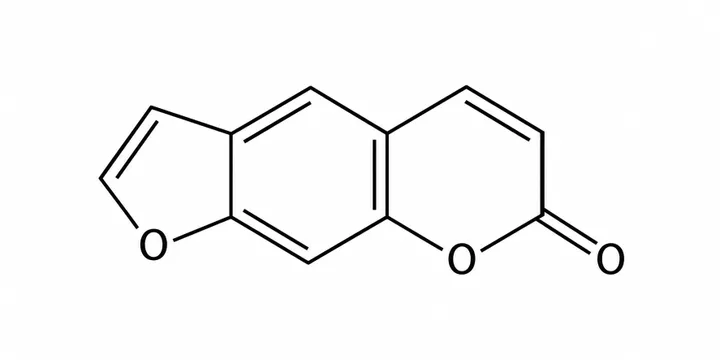
Answer: C. Vitiligo
A child has a flat slate-blue patch over the lumbosacral region since birth. In which layer are the pigment-containing melanocytes characteristically located?
Answer: B. Deep dermis
A large, dark brown patch is noted on the back. What is the most likely diagnosis?
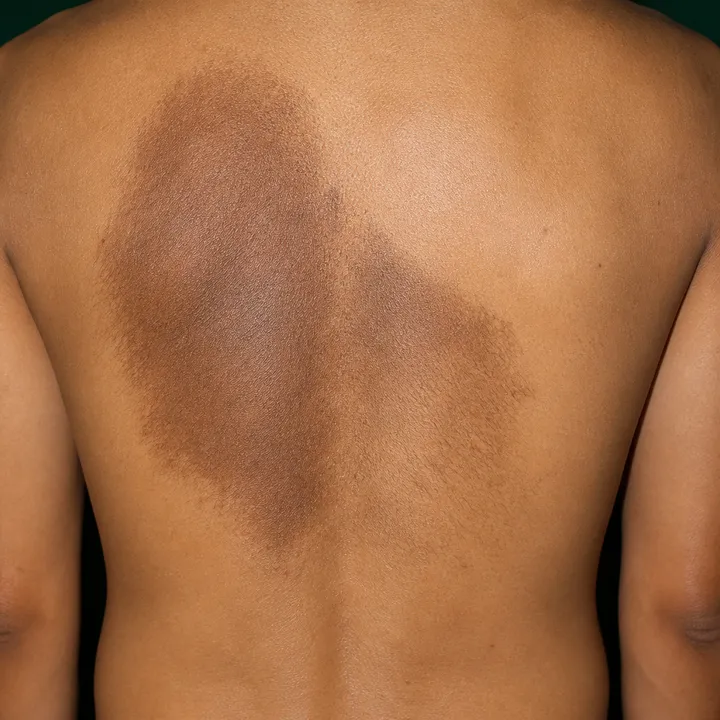
Answer: D. Becker nevus
A 19-year-old woman develops gradually progressive, bilateral, symmetric light-brown macules coalescing into patches over both malar eminences. The patches are non-scaly and non-inflammatory, become darker with sun exposure, and are not associated with a discrete evolving lesion. The sclerae are normal. What is the most likely diagnosis?
Answer: C. Facial melasma
Which of the following is NOT true about acanthosis nigricans?
Answer: B. Predominance in lean PCOS
A lady develops pigmentation on the bridge of her nose and cheeks upon exposure to sunlight. What is the most likely diagnosis?
Answer: B. Facial chloasma
A 28-year-old female presents with a rash. Which of the following conditions is NOT associated with an increased risk of developing this rash?
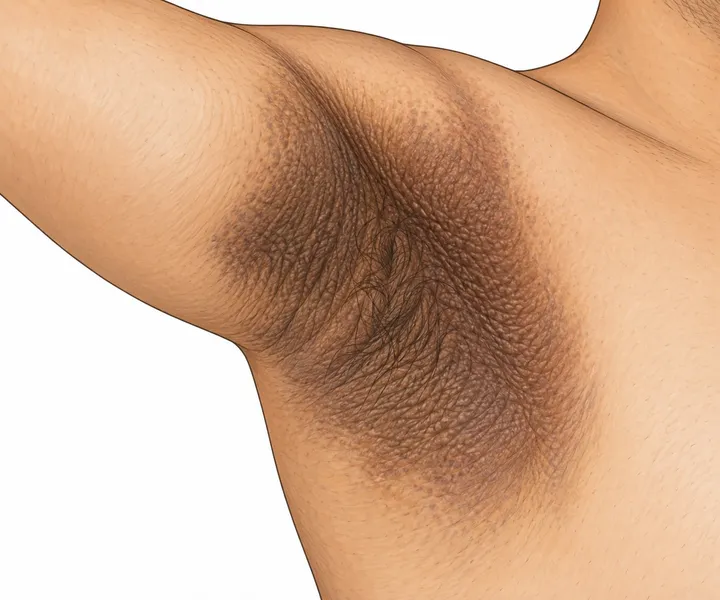
Answer: D. Niacin deficiency
Cafe-au-lait spots on the skin are characteristic of which of the following conditions?
Answer: D. Recklinghausen disease
Chapter Downloads
12 chapters


About Pigmentary Disorders for FMGE
Pigmentary Disorders is an important topic within Dermatology for FMGE preparation. Understanding the core concepts, key applications, and frequently tested areas in Pigmentary Disorders can make a significant difference in your exam performance. This page brings together all the study resources you need for Pigmentary Disorders in one place.
The downloadable PDFs include a comprehensive MCQ question bank with answer keys, concise lesson notes that cover high-yield points, comparison tables for quick revision, and flowcharts that simplify complex mechanisms and classifications. Previous year questions (PYQs) are also available so you can see exactly how Pigmentary Disorders has been tested in past FMGE exams.
All resources are free to download and designed for offline study. Whether you are doing a first read or a last-minute revision, these PDFs give you a structured way to cover Pigmentary Disorders under Dermatology. For an even more interactive experience — with spaced-repetition flashcards, adaptive question practice, and AI-powered explanations — download the Oncourse app.
Frequently Asked Questions
How do I download Pigmentary Disorders MCQ PDF for FMGE?
Are the Pigmentary Disorders question banks free?
How many Pigmentary Disorders MCQs can I get for FMGE?
What formats are available for Pigmentary Disorders study material?
Is the Pigmentary Disorders content updated for the latest FMGE syllabus?
More Dermatology downloads
Browse other topics