
Valvular heart disease — MCQs

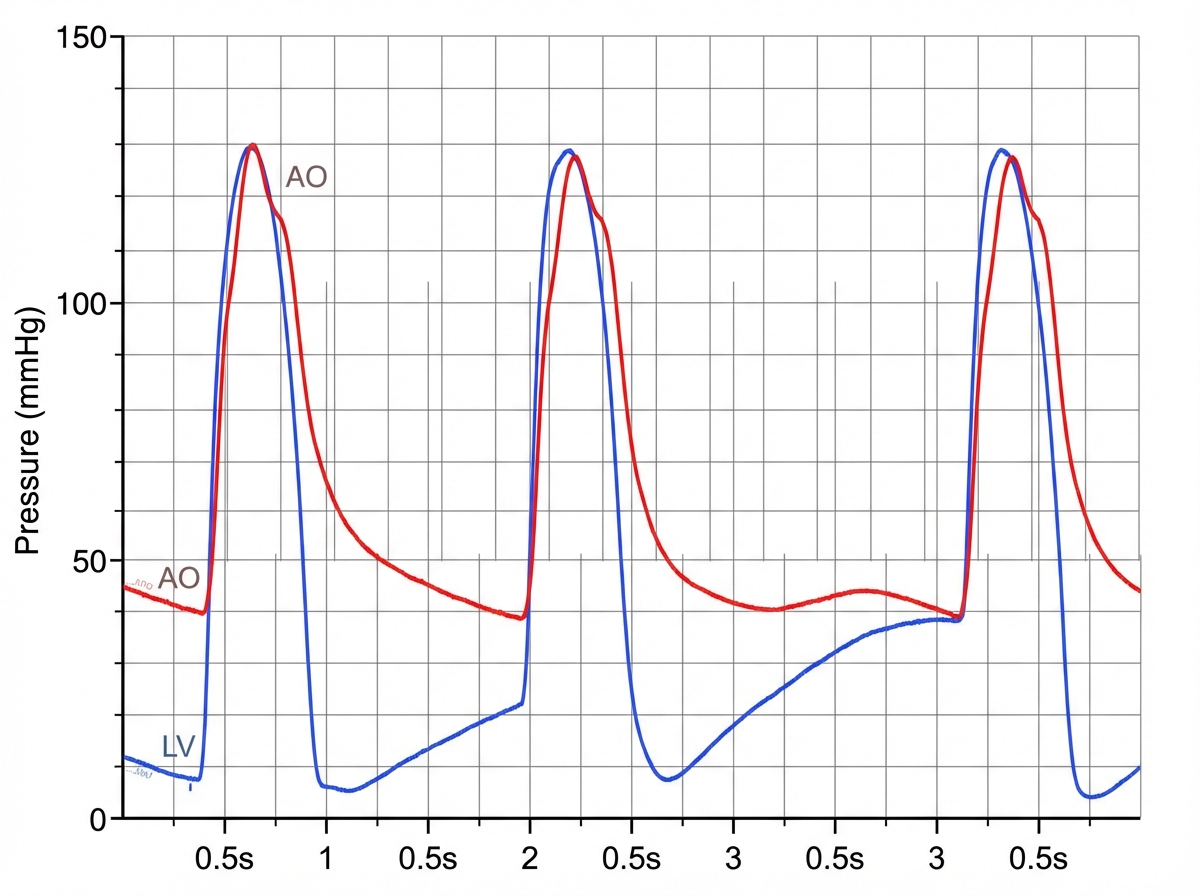
A 31-year-old man comes to the physician because of a 5-day history of fever, chills, and dyspnea. His temperature is 38.9°C (102°F) and pulse is 90/min. Cardiac examination shows a murmur. In addition to other measures, cardiac catheterization is performed. A graph showing the results of the catheterization is shown. This patient most likely has which of the following valvular heart defects?
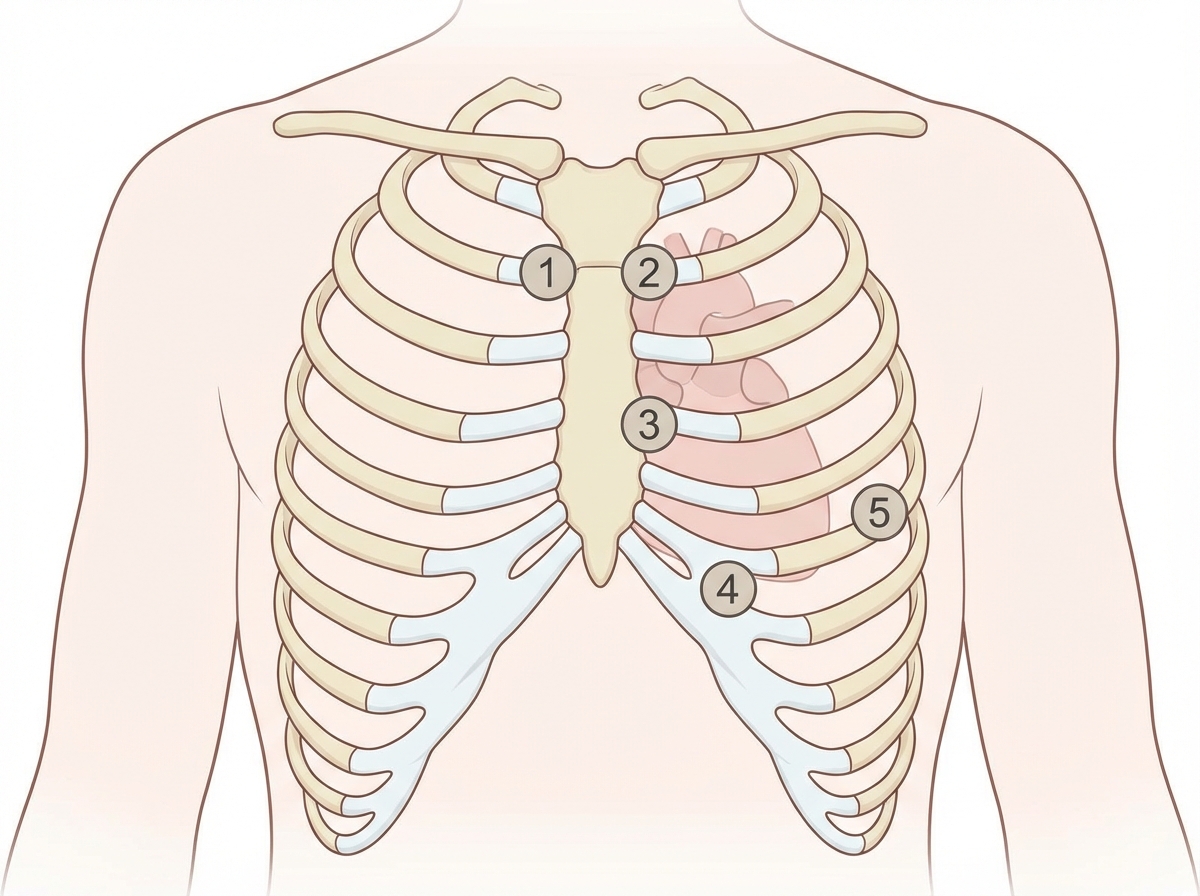
A 27-year-old woman, who recently immigrated from Bangladesh, presents to her primary care physician to discuss birth control. During a review of her past medical history, she reports that as a child she had a recurrent sore throat and fever followed by swollen and aching hip and knee joints. These symptoms returned every season and were never treated but went away on their own only to return with the next typhoon season. When asked about any current complaints, the patient says that she sometimes has shortness of breath and palpitations that do not last long. A physical exam is performed. In which of the auscultation sites will a murmur most likely be heard in this patient?
A 62-year-old man comes to the physician for decreased exercise tolerance. Over the past four months, he has noticed progressively worsening shortness of breath while walking his dog. He also becomes short of breath when lying in bed at night. His temperature is 36.4°C (97.5°F), pulse is 82/min, respirations are 19/min, and blood pressure is 155/53 mm Hg. Cardiac examination shows a high-pitch, decrescendo murmur that occurs immediately after S2 and is heard best along the left sternal border. There is an S3 gallop. Carotid pulses are strong. Which of the following is the most likely diagnosis?
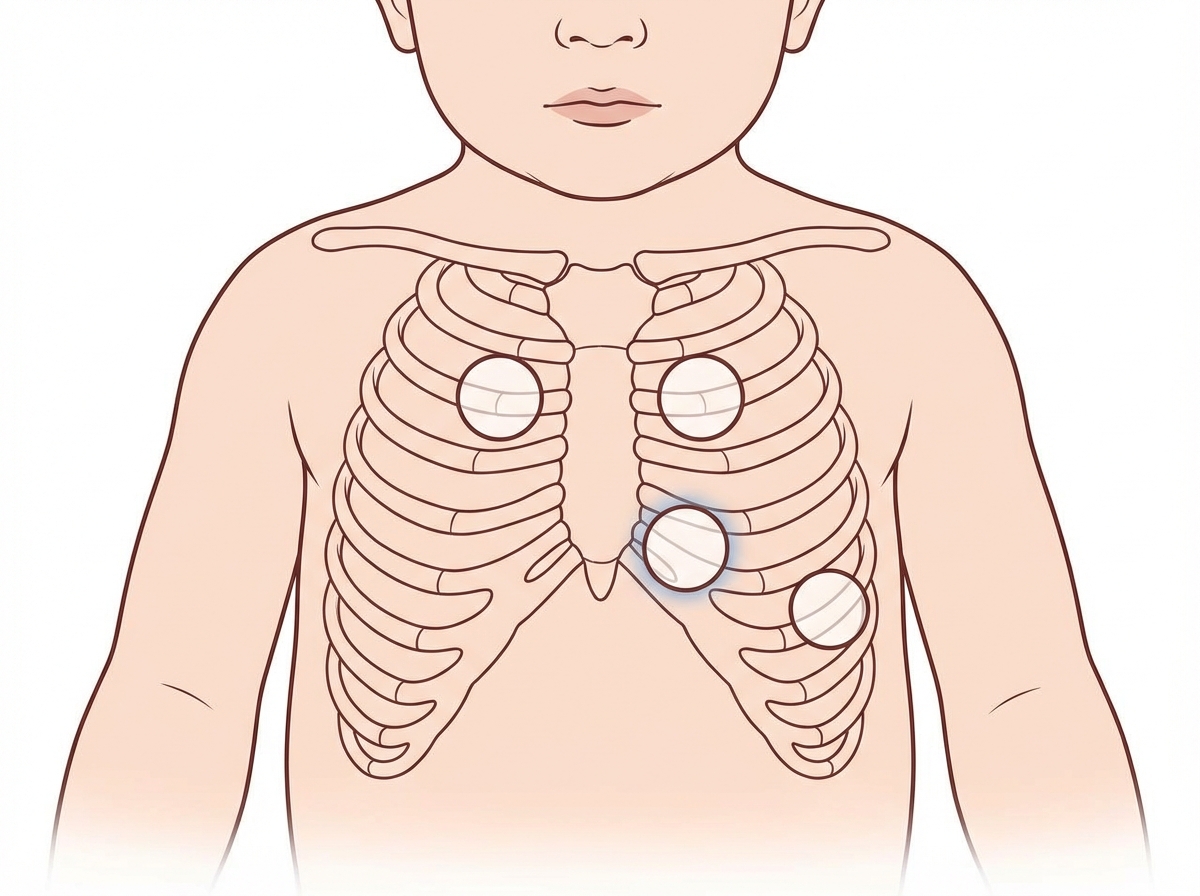
A 2-year-old girl is brought to the physician by her mother for a well-child examination. Cardiac auscultation is shown. When she clenches her fist forcefully for a sustained time, the intensity of the murmur increases. Which of the following is the most likely cause of this patient's auscultation findings?
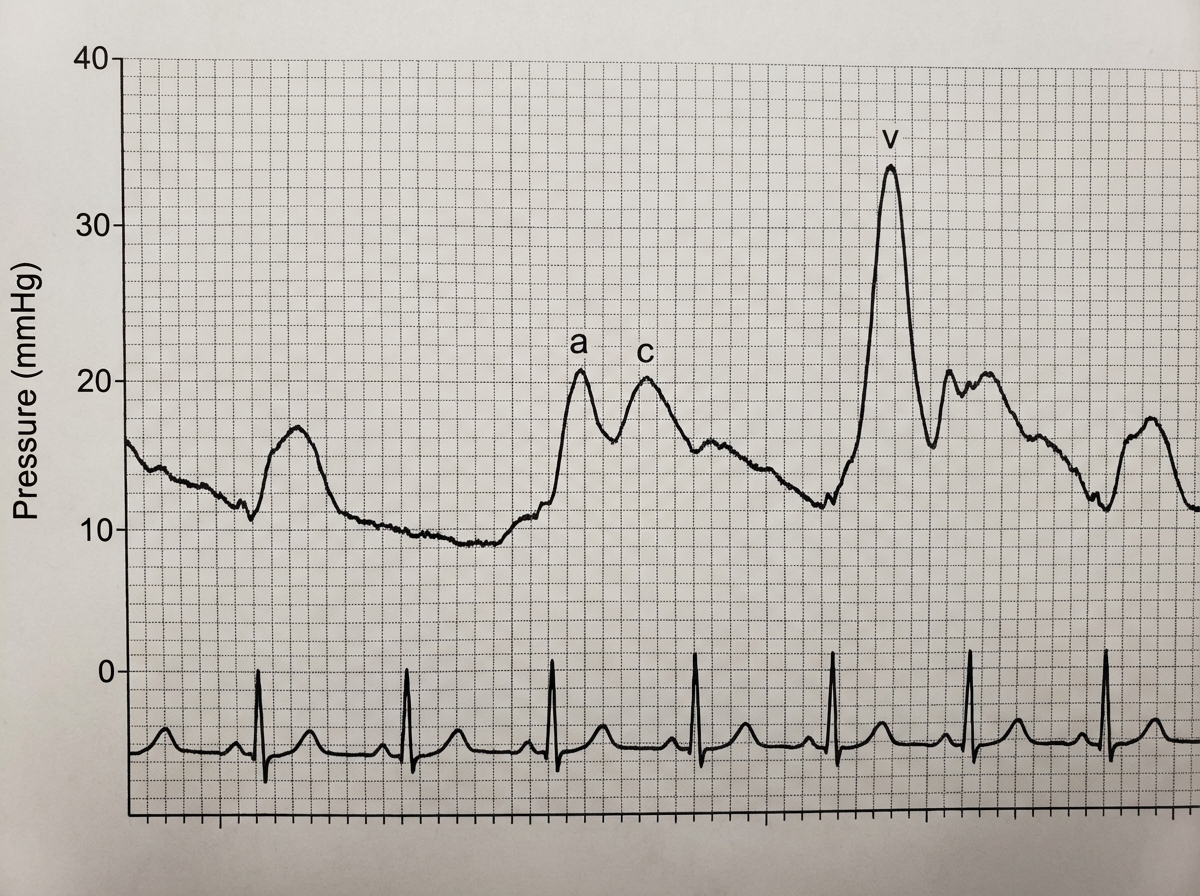
A 61-year-old man comes to the physician because of a 3-month history of fatigue and progressively worsening shortness of breath that is worse when lying down. Recently, he started using two pillows to avoid waking up short of breath at night. Examination shows a heart murmur. A graph with the results of cardiac catheterization is shown. Given this patient's valvular condition, which of the following murmurs is most likely to be heard on cardiac auscultation?
A 47-year-old man presents for a routine physical examination as part of an insurance medical assessment. He has no complaints and has no family history of cardiac disease or sudden cardiac death. His blood pressure is 120/80 mm Hg, temperature is 36.7°C (98.1°F), and pulse is 75/min and is regular. On physical examination, he appears slim and his cardiac apex beat is of normal character and non-displaced. On auscultation, he has a midsystolic click followed by a late-systolic high-pitched murmur over the cardiac apex. On standing, the click and murmur occur earlier in systole, and the murmur is of increased intensity. While squatting, the click and murmur occur later in systole, and the murmur is softer in intensity. Echocardiography of this patient will most likely show which of the following findings?
A 32-year-old male presents for a new patient visit. He states that he is in good health but has had decreasing exercise tolerance and increased levels of shortness of breath over the past 5 years. He believed that it was due to aging; he has not seen a doctor in 10 years. On auscultation, you note an early diastolic decrescendo blowing murmur that radiates along the left sternal border. In the United States, what is the most likely cause of this patient's condition?
A 43-year-old man presents to his primary care physician for his yearly check-up exam. He has no new concerns but wants to make sure that his hypertension and diabetes are properly controlled. His past medical history is otherwise unremarkable and his only medications are metformin and lisinopril. He has smoked a pack of cigarettes per day since he was 16 years of age and drinks 3 beers per night. Physical exam is remarkable for a murmur best heard in the 5th intercostal space at the left mid-clavicular line. The murmur is high-pitched and blowing in character and can be heard throughout systole. Which of the following properties is characteristic of this patient's most likely disorder?
A 7-year-old boy is brought to the pediatrician by his parents for a routine checkup. The parents note that the patient recently joined a baseball team and has had trouble keeping up with his teammates and gets short of breath with exertion. The patient has otherwise been healthy and has no known history of asthma or allergic reaction. Today, the patient’s temperature is 98.2°F (36.8°C), blood pressure is 112/72 mmHg, pulse is 70/min, and respirations are 12/min. The physical exam is notable for a heart murmur that decreases when the patient bears down. Additionally, the hand grip and rapid squatting maneuvers increase the severity of the murmur. Which of the following is likely heard on auscultation?
A 34-year-old male is brought to the emergency department. He has prior hospitalizations for opiate overdoses, but today presents with fever, chills, rigors and malaise. On physical exam vitals are temperature: 100.5 deg F (38.1 deg C), pulse is 105/min, blood pressure is 135/60 mmHg, and respirations are 22/min. You note the following findings on the patient's hands (Figures A and B). You note that as the patient is seated, his head bobs with each successive heart beat. Which of the following findings is most likely present in this patient?

Want unlimited practice?
Get full access to all questions, explanations, and performance tracking.
Scan to download app