Six days after being admitted to the hospital for a cholecystectomy, a 56-year-old woman has high-grade fevers, chills, malaise, and generalized weakness. She has been hospitalized twice in the last year for acute cholecystitis. She had a molar extraction around 2 weeks ago. Her last colonoscopy was 8 months ago and showed a benign polyp that was removed. She has mitral valve prolapse, hypertension, rheumatoid arthritis, and hypothyroidism. Current medications include metformin, rituximab, levothyroxine, and enalapril. Her temperature is 38.3°C (101°F), pulse is 112/min, and blood pressure is 138/90 mm Hg. Examination shows painless macules over her palms and soles and linear hemorrhages under her nail beds. The lungs are clear to auscultation. There is a grade 3/6 systolic murmur heard best at the apex. Blood is drawn and she is started on intravenous antibiotic therapy. Two sets of blood cultures grow coagulase-negative staphylococci. An echocardiography shows a large oscillating vegetation on the mitral valve and moderate mitral regurgitation. Which of the following is the strongest predisposing factor for this patient's condition?
Q952
A 35-year-old male is brought to the emergency room after he was found to have a blood pressure of 180/100 mm Hg during a routine health check-up with his family physician. Past medical history is insignificant and both of his parents are healthy. He currently does not take any medication. The patient's blood pressure normalizes before the emergency department physician can evaluate him. During the physical examination, his blood pressure is 148/80 mm Hg, heart rate is 65/min, temperature is 36.8°C (98.2°F), and respirations are 14/min. He has a round face, centripetal obesity, and striae on the skin with atrophy over the abdomen and thighs. On visual field examination, he is found to have loss of vision in the lateral visual fields bilaterally. You order a low dose dexamethasone suppression test, which is positive, and you proceed to measure ACTH and obtain a high-dose dexamethasone suppression test. If this is a pituitary gland disorder, which of the following lab abnormalities is most likely present in this patient?
Q953
A 23-year-old man comes to the physician with a 1-week history of sharp, substernal chest pain that is worse with inspiration and relieved with leaning forward. He has also had nausea and myalgias. His father has coronary artery disease. His temperature is 37.3°C (99.1°F), pulse is 110/min, and blood pressure is 130/84 mm Hg. Cardiac examination shows a high-pitched rubbing sound between S1 and S2 that is best heard at the left sternal border. An ECG shows depressed PR interval and diffuse ST elevations. What is the most likely diagnosis?
Q954
A 67-year-old man comes to the physician because of difficulty walking for 2 months. He has been falling to his left side when he walks more than a few feet. His speech has also changed in the past few months, and he now pauses between each syllable. He has never had similar symptoms before. He has hypertension and cirrhosis as a result of alcoholic liver disease. He does not smoke and he no longer drinks alcohol. His current medications include lisinopril and hydrochlorothiazide daily. His vital signs are within normal limits. Physical examination shows discrete scleral icterus and jaundice. There is ascites and gynecomastia present. Neurological examination shows nystagmus with fast beats toward the left. He has dysmetria and tremor when performing left-sided finger-nose-finger testing, and dysdiadochokinesia with rapid alternating movements. He has a wide-based gait and a pronator drift of the left arm. He has full range of motion in his arms and legs without rigidity. He has full muscle strength, and sensation to light touch is intact. Further evaluation is most likely to show which of the following?
Q955
A 56-year-old man comes to the physician because of chest pain and shortness of breath for 3 days. The pain is present at rest and worsens with deep inspiration. His temperature is 37.2°C (99°F), pulse is 102/min, respirations are 23/min, and blood pressure is 135/88 mm Hg. Examination shows decreased breath sounds at the left lower lobe. Laboratory studies show:
Hematocrit 42%
Leukocyte count 6,500/μL
Serum
Fasting glucose 90 mg/dL
Lactate dehydrogenase 75 U/L
Total protein 7.2 g/dL
An x-ray of the chest shows a small left-sided pleural effusion but no other abnormalities. A diagnostic thoracentesis is performed and 100 mL of bloody fluid are aspirated from the left pleural space. Pleural fluid analysis shows a lactate dehydrogenase of 65 U/L and a total protein of 5.1 g/dL. Pleural fluid cytology shows normal cell morphology. Further evaluation of this patient is most likely to show a history of which of the following?
Q956
A 27-year-old man comes to the physician because of a 4-month history of unintentional weight gain, fatigue, and decreased sexual desire. There is no personal or family history of serious illness. His blood pressure is 149/88 mm Hg. Physical examination shows central obesity and abdominal striae. He has a prominent soft tissue bulge at the dorsum of his neck. Laboratory studies show a 24-hour urinary free cortisol of 200 μg (N < 50) and a morning serum ACTH of 1 pg/mL (N = 7–50). Which of the following tests is most likely to confirm the underlying etiology of this patient's symptoms?
Q957
An overweight 57-year-old woman comes to her primary care physician for a routine checkup. She has no current complaints and takes no medications. Her mother and brother have type 2 diabetes mellitus and hypertension. Vital signs show a blood pressure of 145/95 mmHg, temperature of 37°C (98.6°F), and a pulse of 85/minute. Her lab results are shown:
Fasting blood glucose 158 mg/dL
HbA1c 8.6%
Low-density lipoprotein 210 mg/dL
High-density lipoprotein 27 mg/dL
Triglycerides 300 mg/dL
Which of the following tests is recommended for this patient?
Q958
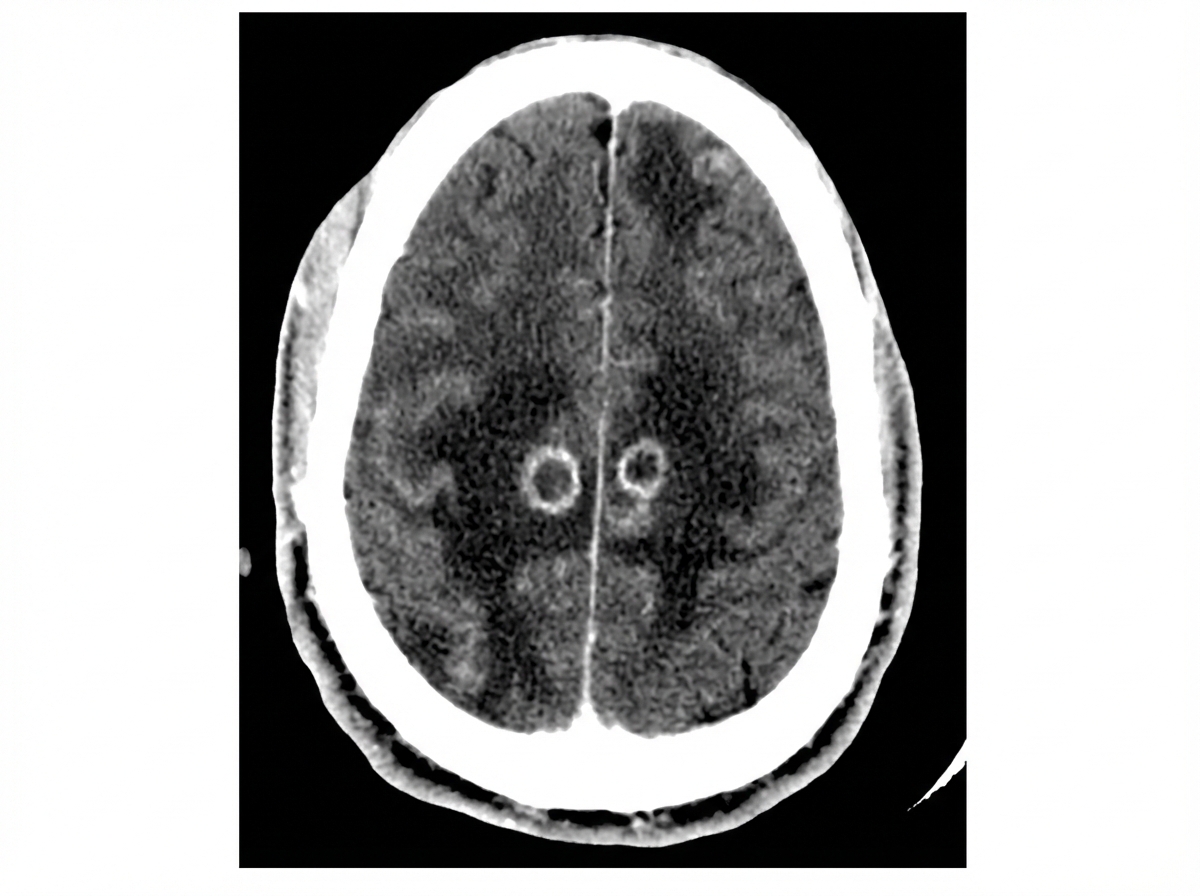
A 35-year-old patient presents to the emergency department with sudden onset severe headache and dizziness following a motor vehicle accident. After initial assessment, the patient is sent for an urgent CT scan of the head. CT scan reveals a mild hypodensity in the left cerebellum. What is the most likely etiology/cause?
Q959
A 67-year-old woman is brought to the emergency department by her caretakers for a change in behavior. The patient lives in a nursing home and was noted to have abnormal behavior, urinary incontinence, and trouble walking. The patient has been admitted to the hospital before for what seems to be negligence from her caretakers. Laboratory values are ordered as seen below.
Serum:
Na+: 120 mEq/L
Cl-: 98 mEq/L
K+: 4.3 mEq/L
HCO3-: 25 mEq/L
BUN: 20 mg/dL
Glucose: 99 mg/dL
Creatinine: 1.1 mg/dL
Ca2+: 10.2 mg/dL
Urinalysis is notable for bacteruria without pyuria or nitrates. Physical exam is notable for a confused woman who is unable to answer questions appropriately. She states she has no pain or symptoms and is not sure why she is here. She thinks the year is 1982. Which of the following complications could be seen with treatment of this patient?
Q960
A 77-year-old male presents to the emergency department because of shortness of breath and chest discomfort. The patient states his ability to withstand activity has steadily declined, and most recently he has been unable to climb more than one flight of stairs without having to stop to catch his breath. On physical exam, the patient has a harsh crescendo-decrescendo systolic murmur heard over the right sternal border, with radiation to his carotids. Which of the following additional findings are most likely in this patient?
Cardiology US Medical PG Practice Questions and MCQs
Question 951: Six days after being admitted to the hospital for a cholecystectomy, a 56-year-old woman has high-grade fevers, chills, malaise, and generalized weakness. She has been hospitalized twice in the last year for acute cholecystitis. She had a molar extraction around 2 weeks ago. Her last colonoscopy was 8 months ago and showed a benign polyp that was removed. She has mitral valve prolapse, hypertension, rheumatoid arthritis, and hypothyroidism. Current medications include metformin, rituximab, levothyroxine, and enalapril. Her temperature is 38.3°C (101°F), pulse is 112/min, and blood pressure is 138/90 mm Hg. Examination shows painless macules over her palms and soles and linear hemorrhages under her nail beds. The lungs are clear to auscultation. There is a grade 3/6 systolic murmur heard best at the apex. Blood is drawn and she is started on intravenous antibiotic therapy. Two sets of blood cultures grow coagulase-negative staphylococci. An echocardiography shows a large oscillating vegetation on the mitral valve and moderate mitral regurgitation. Which of the following is the strongest predisposing factor for this patient's condition?
A. Recent dental procedure
B. Colonic polyp
C. Immunosuppression
D. Predamaged heart valve
E. Infected peripheral venous catheter (Correct Answer)
Explanation: ***Infected peripheral venous catheter***
- The patient has **coagulase-negative Staphylococci** (e.g., *Staphylococcus epidermidis*) growing in blood cultures and a **mitral valve vegetation**. This organism is a common cause of **catheter-related bloodstream infections** and **prosthetic valve endocarditis**.
- Given her recent hospitalization for cholecystectomy, it's highly probable she had an **intravenous catheter** inserted, which could have been the source of infection, leading to infective endocarditis.
*Recent dental procedure*
- Dental procedures can cause **transient bacteremia** and are a risk factor for endocarditis, typically involving **viridans group streptococci**, not coagulase-negative staphylococci.
- The molar extraction occurred two weeks ago, and while still plausible, the current organism points to a different source.
*Colonic polyp*
- Colon polyps and malignancy are associated with ***Streptococcus gallolyticus* (formerly *bovis*) endocarditis**, which is not the organism isolated here.
- The polyp was benign and removed, reducing its likelihood as a direct source of infection.
*Immunosuppression*
- The patient is on **rituximab** for rheumatoid arthritis, which causes B-cell depletion and **immunosuppression**, increasing susceptibility to various infections, including endocarditis.
- While immunosuppression is a risk factor for infection in general, it doesn't specifically predispose to coagulase-negative *Staphylococcus* endocarditis more than a direct portal of entry like a catheter.
*Predamaged heart valve*
- **Mitral valve prolapse** is a known risk factor for infective endocarditis due to turbulent flow and damage to the valve leaflets, providing a nidus for bacterial adherence.
- However, the specific organism, **coagulase-negative Staphylococci**, strongly suggests a healthcare-associated or catheter-related source as a more direct predisposing factor over a pre-existing valve condition.
Question 952: A 35-year-old male is brought to the emergency room after he was found to have a blood pressure of 180/100 mm Hg during a routine health check-up with his family physician. Past medical history is insignificant and both of his parents are healthy. He currently does not take any medication. The patient's blood pressure normalizes before the emergency department physician can evaluate him. During the physical examination, his blood pressure is 148/80 mm Hg, heart rate is 65/min, temperature is 36.8°C (98.2°F), and respirations are 14/min. He has a round face, centripetal obesity, and striae on the skin with atrophy over the abdomen and thighs. On visual field examination, he is found to have loss of vision in the lateral visual fields bilaterally. You order a low dose dexamethasone suppression test, which is positive, and you proceed to measure ACTH and obtain a high-dose dexamethasone suppression test. If this is a pituitary gland disorder, which of the following lab abnormalities is most likely present in this patient?
A. Before test: ACTH low, after test: cortisol elevation
B. Before test: ACTH high, after test: aldosterone suppression
C. Before test: ACTH high, after test: cortisol suppression (Correct Answer)
D. Before test: ACTH low, after test: aldosterone normalizes
E. Before test: ACTH high, after test: cortisol elevation
Explanation: ***Before test: ACTH high, after test: cortisol suppression***
- A diagnosis of **Cushing's disease** (pituitary ACTH overproduction) is supported by **high ACTH** levels before the high-dose dexamethasone suppression test.
- **Cortisol suppression** after a high-dose dexamethasone test helps differentiate Cushing's disease from ectopic ACTH production or adrenal tumors, as pituitary adenomas retain some sensitivity to feedback inhibition.
*Before test: ACTH low, after test: cortisol elevation*
- **Low ACTH** levels would indicate an adrenal etiology of Cushing's syndrome (e.g., adrenal adenoma), not a pituitary disorder.
- **Cortisol elevation** after the high-dose test would suggest an ectopic ACTH-producing tumor or adrenal tumor, as these are typically resistant to suppression.
*Before test: ACTH high, after test: aldosterone suppression*
- While ACTH may be high in Cushing's disease, the high-dose dexamethasone test primarily evaluates **cortisol suppression**, not aldosterone.
- Aldosterone levels are primarily regulated by the **renin-angiotensin-aldosterone system**, and its suppression is not a direct diagnostic feature of Cushing's disease in this context.
*Before test: ACTH low, after test: aldosterone normalizes*
- **Low ACTH** contradicts a pituitary origin, pointing towards an adrenal cause where adrenal cortisol overproduction suppresses ACTH.
- Normalization of aldosterone is not the expected or primary diagnostic outcome of a high-dose dexamethasone suppression test for Cushing's syndrome.
*Before test: ACTH high, after test: cortisol elevation*
- Although ACTH would be high before the test in a pituitary disorder, **cortisol elevation** *after* the high-dose dexamethasone test would indicate resistance to suppression.
- Resistance to suppression with high ACTH usually points towards **ectopic ACTH production** (e.g., from small cell lung cancer), not a pituitary adenoma.
Question 953: A 23-year-old man comes to the physician with a 1-week history of sharp, substernal chest pain that is worse with inspiration and relieved with leaning forward. He has also had nausea and myalgias. His father has coronary artery disease. His temperature is 37.3°C (99.1°F), pulse is 110/min, and blood pressure is 130/84 mm Hg. Cardiac examination shows a high-pitched rubbing sound between S1 and S2 that is best heard at the left sternal border. An ECG shows depressed PR interval and diffuse ST elevations. What is the most likely diagnosis?
A. Dressler syndrome
B. Acute pericarditis (Correct Answer)
C. Mycobacterium tuberculosis infection
D. Systemic lupus erythematosus
E. Acute myocardial infarction
Explanation: ***Acute pericarditis***
- The patient's **sharp, substernal chest pain** that is **worse with inspiration** and **relieved by leaning forward** is a classic presentation of acute pericarditis.
- The **pericardial friction rub** on cardiac examination and **diffuse ST elevations** with a **depressed PR interval** on ECG are highly characteristic findings.
*Dressler syndrome*
- Dressler syndrome is a **late complication of myocardial infarction or cardiac surgery**, typically occurring weeks to months afterward.
- This patient's symptoms developed over a week and are not preceded by such events.
*Mycobacterium tuberculosis infection*
- While *Mycobacterium tuberculosis* can cause pericarditis, it typically presents as **chronic constrictive pericarditis** with effusions and more systemic symptoms like significant fever and night sweats.
- The acute onset and classic ECG findings are less consistent with tuberculous pericarditis.
*Systemic lupus erythematosus*
- SLE can cause pericarditis, but it's usually part of a **multi-system inflammatory picture** with other classic SLE symptoms (e.g., malar rash, arthralgias, renal involvement).
- There are no other features to suggest SLE in this case, and the isolated, acute presentation points more directly to infectious or idiopathic pericarditis.
*Acute myocardial infarction*
- While an MI causes chest pain and ST elevations, the pain is usually described as **crushing or heavy**, not typically pleuritic or relieved by leaning forward.
- **PR depression** is not seen in MI, and the ST elevations are usually localized to specific arterial territories, not diffuse.
Question 954: A 67-year-old man comes to the physician because of difficulty walking for 2 months. He has been falling to his left side when he walks more than a few feet. His speech has also changed in the past few months, and he now pauses between each syllable. He has never had similar symptoms before. He has hypertension and cirrhosis as a result of alcoholic liver disease. He does not smoke and he no longer drinks alcohol. His current medications include lisinopril and hydrochlorothiazide daily. His vital signs are within normal limits. Physical examination shows discrete scleral icterus and jaundice. There is ascites and gynecomastia present. Neurological examination shows nystagmus with fast beats toward the left. He has dysmetria and tremor when performing left-sided finger-nose-finger testing, and dysdiadochokinesia with rapid alternating movements. He has a wide-based gait and a pronator drift of the left arm. He has full range of motion in his arms and legs without rigidity. He has full muscle strength, and sensation to light touch is intact. Further evaluation is most likely to show which of the following?
A. Increased number of trinucleotide CAG repeats
B. Periventricular plaques
C. Left-sided posterior capsular infarct
D. Left-sided cerebellar tumor (Correct Answer)
E. Decreased serum thiamine levels
Explanation: ***Left-sided cerebellar tumor***
- The patient presents with classic signs of **cerebellar dysfunction**, including **ataxia** (difficulty walking, falling to the left), **dysarthria** (speech pauses, known as **scanning speech**), **nystagmus**, **dysmetria**, **dysdiadochokinesia**, and a **wide-based gait**.
- The symptoms are predominantly left-sided (**left pronator drift, falling to the left, left-sided dysmetria and dysdiadochokinesia, nystagmus with fast beats toward the left**), localizing the lesion to the left cerebellum. Given the progressive nature and the patient's age, a **tumor** is a likely etiology.
*Increased number of trinucleotide CAG repeats*
- This is characteristic of **Huntington's disease**, which typically presents with **chorea**, psychiatric symptoms, and cognitive decline, not primarily cerebellar signs.
- While some cerebellar symptoms can occur, the prominent and specific cerebellar findings described are not the hallmark presentation of Huntington's.
*Periventricular plaques*
- **Periventricular plaques** are characteristic lesions of **multiple sclerosis (MS)**.
- MS usually presents in younger adults and often has a relapsing-remitting course; the patient's age and the specific constellation of symptoms are less typical for MS.
*Left-sided posterior capsular infarct*
- A **posterior capsular infarct** would primarily cause **contralateral motor and sensory deficits**, such as hemiparesis or hemianesthesia.
- It would not typically explain the extensive cerebellar signs like **dysmetria**, **dysdiadochokinesia**, **nystagmus**, and **scanning speech**.
*Decreased serum thiamine levels*
- **Thiamine deficiency** can lead to **Wernicke-Korsakoff syndrome**, characterized by **ataxia**, **ophthalmoplegia**, and **confusion**.
- While ataxia is present, the specific combination of left-sided cerebellar signs, scanning speech, and nystagmus with fast beats toward one side points more strongly to a focal cerebellar lesion rather than a diffuse metabolic encephalopathy, especially given the history of chronic alcohol use but recent sobriety.
Question 955: A 56-year-old man comes to the physician because of chest pain and shortness of breath for 3 days. The pain is present at rest and worsens with deep inspiration. His temperature is 37.2°C (99°F), pulse is 102/min, respirations are 23/min, and blood pressure is 135/88 mm Hg. Examination shows decreased breath sounds at the left lower lobe. Laboratory studies show:
Hematocrit 42%
Leukocyte count 6,500/μL
Serum
Fasting glucose 90 mg/dL
Lactate dehydrogenase 75 U/L
Total protein 7.2 g/dL
An x-ray of the chest shows a small left-sided pleural effusion but no other abnormalities. A diagnostic thoracentesis is performed and 100 mL of bloody fluid are aspirated from the left pleural space. Pleural fluid analysis shows a lactate dehydrogenase of 65 U/L and a total protein of 5.1 g/dL. Pleural fluid cytology shows normal cell morphology. Further evaluation of this patient is most likely to show a history of which of the following?
A. Infliximab use
B. Oropharyngeal dysphagia
C. Asbestos exposure (Correct Answer)
D. Congestive heart failure
E. Prolonged immobilization
Explanation: ***Asbestos exposure***
- This patient has a **bloody exudative pleural effusion** (meets Light's criteria with pleural protein/serum protein ratio of 0.71 and pleural LDH/serum LDH ratio of 0.87) with **normal initial cytology**.
- The combination of bloody effusion, exudative characteristics, and pleuritic chest pain raises concern for **malignant mesothelioma**, which is strongly associated with **asbestos exposure** (often 20-40 years after exposure).
- While the presentation is relatively acute (3 days of symptoms), mesothelioma patients often notice symptoms acutely even though the disease has been developing insidiously. Normal cytology on first thoracentesis does not exclude malignancy—**repeat sampling, immunohistochemistry, or thoracoscopic biopsy** may be needed.
- Further workup would likely include detailed occupational/environmental history focusing on asbestos exposure.
*Prolonged immobilization*
- This is a major risk factor for **pulmonary embolism (PE)**, which can present with pleuritic chest pain, dyspnea, tachycardia, and bloody pleural effusion.
- PE is an important differential, especially given the acute 3-day presentation and vital sign abnormalities (tachycardia, tachypnea).
- However, PE-related effusions are typically **small and exudative**, and the question context (emphasizing the bloody exudative nature and workup direction) suggests a focus on identifying underlying malignancy risk factors rather than acute thrombotic causes.
*Congestive heart failure*
- CHF causes **transudative pleural effusions** due to increased hydrostatic pressure, characterized by pleural fluid protein <3 g/dL, protein ratio <0.5, and LDH ratio <0.6.
- This patient's effusion is **exudative** (protein 5.1 g/dL with ratio 0.71, LDH ratio 0.87), ruling out CHF as the primary cause.
- Additionally, CHF effusions are typically **non-bloody** and bilateral.
*Infliximab use*
- TNF-alpha inhibitors like infliximab can cause **drug-induced lupus** with serositis and pleural effusions.
- However, these effusions are typically **non-bloody**, accompanied by other lupus manifestations (fever, arthritis, rash, positive ANA), and occur in the context of chronic inflammatory disease treatment.
- The bloody nature and isolated presentation make this unlikely.
*Oropharyngeal dysphagia*
- Suggests risk for **aspiration pneumonia** with possible parapneumonic effusion.
- Parapneumonic effusions can be exudative but are usually associated with **fever, infiltrate on chest X-ray, and elevated WBC count**—none of which are present.
- Bloody effusions are uncommon with aspiration, and there are no clinical clues suggesting aspiration (no cough, choking, or recurrent pneumonias).
Question 956: A 27-year-old man comes to the physician because of a 4-month history of unintentional weight gain, fatigue, and decreased sexual desire. There is no personal or family history of serious illness. His blood pressure is 149/88 mm Hg. Physical examination shows central obesity and abdominal striae. He has a prominent soft tissue bulge at the dorsum of his neck. Laboratory studies show a 24-hour urinary free cortisol of 200 μg (N < 50) and a morning serum ACTH of 1 pg/mL (N = 7–50). Which of the following tests is most likely to confirm the underlying etiology of this patient's symptoms?
A. Abdominal CT (Correct Answer)
B. Chest CT
C. ACTH stimulation test
D. Brain MRI
E. CRH stimulation test
Explanation: ***Abdominal CT***
- The clinical picture of **weight gain**, **fatigue**, decreased sexual desire, **hypertension**, **central obesity**, **abdominal striae**, and a **dorsocervical fat pad ("buffalo hump")** is highly suggestive of **Cushing's syndrome**.
- The laboratory results, specifically the **elevated 24-hour urinary free cortisol** and the **very low morning serum ACTH (1 pg/mL)**, indicate **ACTH-independent Cushing's syndrome**, most commonly caused by an **adrenal adenoma** (autonomous cortisol production). An abdominal CT would be used to visualize the adrenal glands and identify such a tumor.
*Chest CT*
- A chest CT would be indicated if there was suspicion for **ectopic ACTH production** (e.g., small cell lung carcinoma), but this is ruled out by the **low ACTH level**.
- Ectopic ACTH production would lead to **high ACTH levels**, which is contrary to this patient's findings.
*ACTH stimulation test*
- The **ACTH stimulation test (Cosyntropin test)** is used to evaluate **adrenal insufficiency**, not Cushing's syndrome.
- In Cushing's syndrome, the adrenal glands are already overproducing cortisol, so further stimulation would not be informative for diagnosis or etiology.
*Brain MRI*
- A brain MRI would be performed if **Cushing's disease** (pituitary adenoma secreting ACTH) was suspected.
- However, the patient's **very low ACTH level** contradicts Cushing's disease, which would cause an **elevated or inappropriately normal ACTH** level.
*CRH stimulation test*
- The **CRH stimulation test** is used to distinguish between **Cushing's disease** and **ectopic ACTH production** or **adrenal tumors**.
- Given the patient's **low ACTH level**, an adrenal tumor (ACTH-independent Cushing's) is the most likely cause, making this test less relevant for confirming the underlying etiology in this specific case.
Question 957: An overweight 57-year-old woman comes to her primary care physician for a routine checkup. She has no current complaints and takes no medications. Her mother and brother have type 2 diabetes mellitus and hypertension. Vital signs show a blood pressure of 145/95 mmHg, temperature of 37°C (98.6°F), and a pulse of 85/minute. Her lab results are shown:
Fasting blood glucose 158 mg/dL
HbA1c 8.6%
Low-density lipoprotein 210 mg/dL
High-density lipoprotein 27 mg/dL
Triglycerides 300 mg/dL
Which of the following tests is recommended for this patient?
A. Monofilament test after 5 years, then yearly follow-up
B. Digital fundus photography after 5 years, then yearly follow-up
C. Digital fundus photography now, then yearly follow-up (Correct Answer)
D. Fasting lipid profile every 5 years
E. Albumin-to-creatinine ratio after 5 years, then yearly follow-up
Explanation: ***Digital fundus photography now, then yearly follow-up***
- This patient has newly diagnosed **Type 2 Diabetes Mellitus**, as indicated by a fasting blood glucose of 158 mg/dL and an HbA1c of 8.6%. According to guidelines, all patients with newly diagnosed **Type 2 DM** should undergo a comprehensive dilated eye examination (or fundus photography) at the time of diagnosis.
- This is crucial for early detection of **diabetic retinopathy**, which can be asymptomatic in its early stages but can lead to irreversible vision loss if not managed.
*Monofilament test after 5 years, then yearly follow-up*
- The **monofilament test** is used to screen for **diabetic neuropathy**, which typically develops over several years in patients with diabetes.
- For Type 2 DM, screening with monofilament testing should begin **at the time of diagnosis**, not after 5 years. The 5-year delay is appropriate for Type 1 DM patients.
- This option is incorrect because it delays initial screening inappropriately for a Type 2 DM patient.
*Digital fundus photography after 5 years, then yearly follow-up*
- This timing is generally recommended for **Type 1 Diabetes Mellitus**, where retinopathy typically develops after several years of disease.
- For **Type 2 Diabetes Mellitus**, retinopathy can be present at the time of diagnosis due to an often prolonged asymptomatic period, so immediate screening is recommended.
*Fasting lipid profile every 5 years*
- This patient has significant dyslipidemia (LDL 210 mg/dL, HDL 27 mg/dL, Triglycerides 300 mg/dL) at the time of diagnosis of diabetes.
- Patients with diabetes are at higher risk for cardiovascular disease, necessitating more frequent monitoring and management of lipids, typically yearly or as needed based on treatment response, not every 5 years.
*Albumin-to-creatinine ratio after 5 years, then yearly follow-up*
- The **albumin-to-creatinine ratio** screens for **diabetic nephropathy**, which, like retinopathy, can be present at the time of diagnosis for Type 2 DM.
- The recommended practice is to screen for microalbuminuria starting **at diagnosis for Type 2 DM** (or five years after diagnosis for Type 1 DM), then yearly thereafter.
- This option is incorrect because it inappropriately delays initial screening by 5 years for a Type 2 DM patient.
Question 958: A 35-year-old patient presents to the emergency department with sudden onset severe headache and dizziness following a motor vehicle accident. After initial assessment, the patient is sent for an urgent CT scan of the head. CT scan reveals a mild hypodensity in the left cerebellum. What is the most likely etiology/cause?
A. Lacunar infarction
B. Cardiac emboli
C. Arterial blood leakage
D. Carotid stenosis
E. Arterial dissection (Correct Answer)
Explanation: ***Arterial dissection***
- The patient's presentation with **sudden onset severe headache** and dizziness following a **motor vehicle accident (MVA)** is highly suggestive of arterial dissection, particularly of the vertebral arteries, which supply the cerebellum.
- Trauma from an MVA can cause tears in the arterial walls, leading to dissection and subsequent **stroke** or **transient ischemic attack (TIA)** symptoms related to the affected vessel.
*Lacunar infarction*
- **Lacunar infarcts** typically result from occlusion of small penetrating arteries and are often associated with **chronic hypertension** and diabetes, which are not mentioned here.
- Their symptoms are usually focal and can include pure motor stroke, pure sensory stroke, or ataxic hemiparesis, which is not the primary presentation.
*Cardiac emboli*
- While cardiac emboli can cause cerebellar stroke, the **sudden onset headache** and history of **MVA** make arterial dissection a more likely cause.
- A cardiac source would typically be suspected in patients with **atrial fibrillation** or other cardiac conditions predisposing to clot formation.
*Arterial blood leakage*
- This term is vague and does not represent a specific cerebrovascular event. While dissection involves a tear in the arterial wall, the consequence is often **ischemia** or **infarction**, not just "leakage" as a primary diagnosis described by CT hypodensity.
- Hypodensity on CT typically indicates an **ischemic stroke** (infarction), not active blood leakage.
*Carotid stenosis*
- **Carotid stenosis** primarily affects the anterior circulation of the brain, leading to symptoms like **amaurosis fugax**, hemiparesis, or aphasia, which are not consistent with a cerebellar stroke.
- While it can cause embolic strokes, it would not typically cause a direct cerebellar infarct in the absence of other symptoms.
Question 959: A 67-year-old woman is brought to the emergency department by her caretakers for a change in behavior. The patient lives in a nursing home and was noted to have abnormal behavior, urinary incontinence, and trouble walking. The patient has been admitted to the hospital before for what seems to be negligence from her caretakers. Laboratory values are ordered as seen below.
Serum:
Na+: 120 mEq/L
Cl-: 98 mEq/L
K+: 4.3 mEq/L
HCO3-: 25 mEq/L
BUN: 20 mg/dL
Glucose: 99 mg/dL
Creatinine: 1.1 mg/dL
Ca2+: 10.2 mg/dL
Urinalysis is notable for bacteruria without pyuria or nitrates. Physical exam is notable for a confused woman who is unable to answer questions appropriately. She states she has no pain or symptoms and is not sure why she is here. She thinks the year is 1982. Which of the following complications could be seen with treatment of this patient?
A. Osmotic demyelination (Correct Answer)
B. Diarrhea and flora destruction
C. Autoimmune pontine demyelination
D. Central nervous system infection
E. Cerebral edema
Explanation: ***Osmotic demyelination***
- This patient presents with **severe hyponatremia (Na+ 120 mEq/L)**, likely chronic given her baseline dementia and nursing home status, requiring cautious correction.
- Rapid correction of chronic hyponatremia can lead to **osmotic demyelination syndrome (ODS)**, also known as central pontine myelinolysis, a devastating neurological complication.
*Diarrhea and flora destruction*
- While antibiotic treatment for a **urinary tract infection (UTI)** can cause diarrhea and disrupt gut flora, this is a common side effect of antibiotics in general, not a specific complication tied to the severe hyponatremia or its correction.
- The primary concern with hyponatremia treatment is neurological damage, not gastrointestinal upset.
*Autoimmune pontine demyelination*
- **Autoimmune pontine demyelination** is not a recognized complication of hyponatremia assessment or treatment.
- Osmotic demyelination syndrome is iatrogenic, caused by overly rapid correction of a chronic electrolyte imbalance.
*Central nervous system infection*
- Although the patient has **bacteriuria without pyuria or nitrates**, suggesting colonization rather than an active UTI, an untreated UTI could theoretically spread to the CNS.
- However, CNS infection is not a direct complication of *treatment* for hyponatremia; rather, it would be a complication of an untreated or severe infection.
*Cerebral edema*
- **Cerebral edema** is a complication of *acute hyponatremia* if not treated, as water shifts into brain cells due to the osmotic gradient.
- In a chronic setting, the brain has usually adapted to the low sodium; rapid *correction* of hyponatremia causes water to move *out* of brain cells, leading to demyelination, not edema.
Question 960: A 77-year-old male presents to the emergency department because of shortness of breath and chest discomfort. The patient states his ability to withstand activity has steadily declined, and most recently he has been unable to climb more than one flight of stairs without having to stop to catch his breath. On physical exam, the patient has a harsh crescendo-decrescendo systolic murmur heard over the right sternal border, with radiation to his carotids. Which of the following additional findings are most likely in this patient?
A. A constant, machine-like murmur heard between the scapulae
B. A wide and fixed split S2
C. A high-pitched, blowing, holosystolic murmur
D. A diastolic murmur heard at the cardiac apex
E. A paradoxically split S2 (Correct Answer)
Explanation: ***A paradoxically split S2***
- The patient's symptoms (shortness of breath, chest discomfort, decreased exercise tolerance) and physical exam findings (harsh **crescendo-decrescendo systolic murmur** over the right sternal border radiating to the carotids) are classic for **aortic stenosis**.
- In severe aortic stenosis, the **aortic valve closes late**, causing a paradoxical split S2 where P2 precedes A2 upon inspiration.
*A constant, machine-like murmur heard between the scapulae*
- This description is characteristic of a **patent ductus arteriosus (PDA)**, which typically presents in infancy or early childhood and is associated with a continuous murmur.
- The patient's age and specific murmur characteristics (crescendo-decrescendo systolic) do not align with PDA.
*A wide and fixed split S2*
- A fixed and wide split S2 is a hallmark of an **atrial septal defect (ASD)**, where the S2 split does not change with respiration.
- This finding is unrelated to the pathophysiology of aortic stenosis.
*A high-pitched, blowing, holosystolic murmur*
- This type of murmur is characteristic of **mitral regurgitation** or **tricuspid regurgitation**.
- These conditions present differently on physical exam and often have distinct symptom profiles compared to aortic stenosis.
*A diastolic murmur heard at the cardiac apex*
- A diastolic murmur heard at the cardiac apex primarily suggests **mitral stenosis** or **tricuspid stenosis**.
- **Aortic stenosis** is a systolic event, and while it can sometimes be associated with other murmurs, this specific finding is not a primary or most likely additional finding.