A previously healthy 21-year-old man is brought to the emergency department 4 hours after the sudden onset of shortness of breath and pleuritic chest pain. He has smoked 1 pack of cigarettes daily for the past 3 years. He is 188 cm (6.2 ft) tall and weighs 70 kg (154 lb); BMI is 19.8 kg/m2. Physical examination shows decreased tactile fremitus and diminished breath sounds over the left lung. Which of the following is the most likely cause of this patient's symptoms?
Q732
A 32-year-old woman comes to the physician because of a 2-month history of fatigue, muscle weakness, paresthesias, headache, and palpitations. Her pulse is 75/min and blood pressure is 152/94 mm Hg. Physical examination shows no abnormalities. Serum studies show:
Sodium 144 mEq/L
Potassium 2.9 mEq/L
Bicarbonate 31 mEq/L
Creatinine 0.7 mg/dL
Further evaluation shows low serum renin activity. Which of the following is the most likely diagnosis?
Q733
A 12-year-old boy presents to the emergency department with a swollen and painful knee. He says that he was exploring with his friends when he tripped and hit his knee against the ground. He didn't feel like he hit it very hard but it started swelling and becoming very painful. His mom reports that he has always been prone to bleeding from very minor trauma and that others in the family have had similar problems. Based on clinical suspicion a coagulation panel was obtained showing a prothrombin time (PT) of 10 seconds (normal range 9-11 seconds), a partial thromboplastin time (PTT) of 45 seconds (normal 20-35 seconds), and a normal ristocetin cofactor assay (equivalent to bleeding time). Mixing tests with factor IX and XI do not show complementation, but mixing with factor VIII reverses the coagulation abnormality. Which of the following is the most likely diagnosis for this patient?
Q734
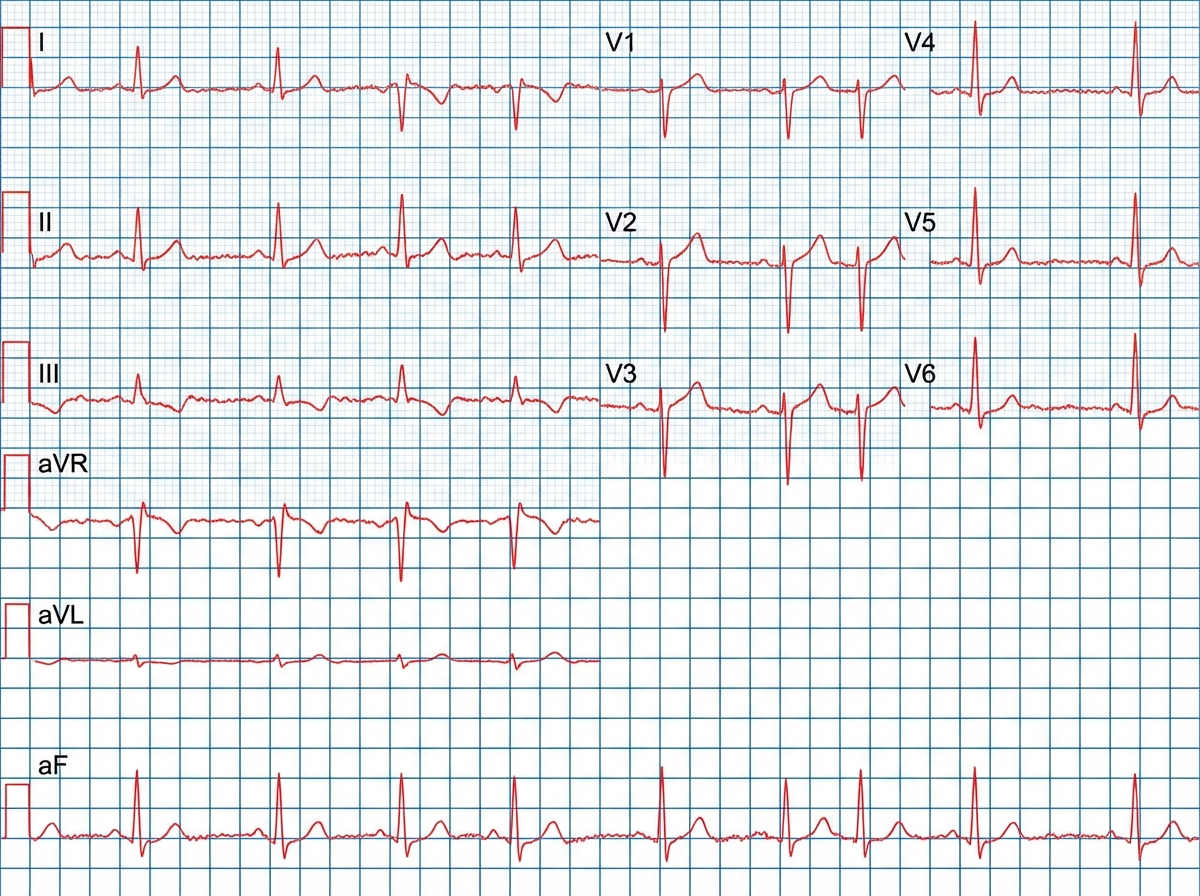
A 54-year-old woman presents to the emergency ward with a chief complaint of chest pain. The pain is sharp and present in the anterior part of the chest. There is no radiation of the pain; however, the intensity is decreased while sitting and leaning forward. There is no associated shortness of breath. Vital signs are the following: blood pressure is 132/84 mm Hg; pulse rate is 82/min, rhythmic, and regular. Lungs are clear on auscultation and cardiovascular examination demonstrates scratchy and squeaking sounds at the left sternal border. Kussmaul sign is positive and ECG shows new widespread ST segment elevation and PR depression. The most likely cause for these findings in this patient is?
Q735
A previously healthy 33-year-old woman comes to the emergency department 1 hour after falling from a ladder. She is conscious. She does not smoke, drink alcohol, or use illicit drugs. There is no family history of serious illness. Her pulse is 72/min, respirations are 17/min, and blood pressure is 110/72 mm Hg. Physical examination shows ecchymosis and point tenderness over the right clavicle. An x-ray of the chest shows a nondisplaced fracture of the midshaft of the right clavicle and a 3.5-mm pulmonary nodule in the central portion of the left upper lung field. No previous x-rays of the patient are available. The fracture is treated with pain management and immobilization with a sling. A CT scan of the chest shows that the pulmonary nodule is solid and has well-defined, smooth borders. Which of the following is the most appropriate next step in management of this patient's pulmonary nodule?
Q736
A 72-year-old man with longstanding history of diabetes mellitus and hypertension presents to the emergency department with sudden-onset numbness. On your neurological exam, you note that he has loss of sensation on the left side of his face, arm, and leg. His motor strength exam is normal, as are his cranial nerves. Which of the following is the most likely explanation for his presentation?
Q737
A 72-year-old man presents to the physician with blood in his sputum for 3 days. He also mentions that he has had a cough for the last 3 months but thought that it was because of the winter season. He also has often experienced fatigue recently. His temperature is 37.0°C (98.6°F), the respiratory rate is 15/min, the pulse is 67/min, and the blood pressure is 122/98 mm Hg. Auscultation of his chest reveals normal heart sounds but localized rhonchi over the right infrascapular region. A detailed diagnostic evaluation including a complete blood count and other serum biochemistry, chest radiogram, computed tomography of chest and abdomen, magnetic resonance imaging of the brain, bone scan, and pulmonary function tests are ordered, which confirm a diagnosis of limited-disease small cell lung cancer of 2.5 cm (1 in) in diameter, located in the lower lobe of the right lung, with the involvement of ipsilateral hilar lymph nodes and intrapulmonary lymph nodes. The mediastinal, subcarinal, scalene or supraclavicular lymph nodes are not involved, and there is no distant metastasis. There is no additional comorbidity and his performance status is good. The patient does not have any contraindication to any chemotherapeutic agents or radiotherapy. Which of the following is the best treatment option for this patient?
Q738
A 29-year-old woman comes to the physician for the evaluation of progressive loss of vision in her left eye and gradual blurring of vision in her right eye over the past 2 months. She also says that she has had occasional headaches and has noticed a decrease in her sense of smell lately. The patient's only medication is fexofenadine for seasonal allergies. She is 158 cm (5 ft 2 in) tall and weighs 61 kg (135 lbs); BMI is 24.7 kg/m2. Vital signs are within normal limits. Visual acuity is 20/40 in the right eye and there is minimal light perception in the left eye. In the swinging flashlight test, both of her eyes dilate as the light moves from the right to left eye. Fundoscopy shows papilledema in the right optic disc and a pale left optic disc. The remainder of the examination shows no abnormalities. Which of the following is the most likely diagnosis?
Q739
A 55-year-old woman who is an established patient presents to your office. She is complaining of increased urination and increased thirst. She has recently began taking several over-the-counter vitamins and supplements. On further review, she reports she has also been having abdominal pain and constipation. She denies significant weight changes. Her fingerstick blood glucose in your office is 96 mg/dL.
Which of the following test is most likely to provide the diagnosis?
Q740
A 15-year-old girl comes to the physician for a well-child examination. She feels well. Her father has coronary artery disease and hypertension. Her mother has type 2 diabetes mellitus, hypercholesterolemia, and had a myocardial infarction at the age of 52 years. She is at the 25th percentile for height and above the 95th percentile for weight. Her BMI is 32 kg/m2. Her temperature is 37°C (98.6°F), pulse is 99/min, and blood pressure is 140/88 mm Hg. Physical examination shows no abnormalities. Random serum studies show:
Glucose 160 mg/dL
Creatinine 0.8 mg/dL
Total cholesterol 212 mg/dL
HDL-cholesterol 32 mg/dL
LDL-cholesterol 134 mg/dL
Triglycerides 230 mg/dL
In addition to regular aerobic physical activity, which of the following is the most appropriate next step in management?
Cardiology US Medical PG Practice Questions and MCQs
Question 731: A previously healthy 21-year-old man is brought to the emergency department 4 hours after the sudden onset of shortness of breath and pleuritic chest pain. He has smoked 1 pack of cigarettes daily for the past 3 years. He is 188 cm (6.2 ft) tall and weighs 70 kg (154 lb); BMI is 19.8 kg/m2. Physical examination shows decreased tactile fremitus and diminished breath sounds over the left lung. Which of the following is the most likely cause of this patient's symptoms?
A. Embolic occlusion of the pulmonary artery
B. Inflammation of the costal cartilage
C. Rupture of a subpleural bleb (Correct Answer)
D. Infection with gram-positive diplococci
E. Hyperresponsiveness of the bronchial system
Explanation: ***Rupture of a subpleural bleb***
- The patient's presentation with **sudden onset shortness of breath**, **pleuritic chest pain**, and physical findings of **decreased tactile fremitus** and **diminished breath sounds** on one side are classic for **spontaneous pneumothorax**.
- A **tall, thin young male smoker** is a typical demographic for a **primary spontaneous pneumothorax**, which results from the rupture of subpleural blebs.
*Embolic occlusion of the pulmonary artery*
- While **pulmonary embolism** can cause sudden shortness of breath and pleuritic chest pain, it wouldn't typically manifest with **decreased tactile fremitus** or **diminished breath sounds** as a primary finding.
- Pulmonary embolism is less likely without risk factors like prolonged immobility, surgery, or hypercoagulable states, although smoking is a minor risk factor.
*Inflammation of the costal cartilage*
- **Costochondritis** causes localized chest pain, often reproducible with palpation, but does not present with **sudden onset dyspnea** or significant changes in lung examination findings like **diminished breath sounds**.
- Systemic symptoms like shortness of breath and physical exam findings of reduced lung sounds are not characteristic of costochondritis.
*Infection with gram-positive diplococci*
- This suggests **bacterial pneumonia**, which typically presents with fever, productive cough, and more gradual onset of symptoms.
- While pneumonia can cause pleuritic chest pain and shortness of breath, the physical exam would likely show **bronchial breath sounds** or **crackles**, not diminished breath sounds, and tactile fremitus would be increased, not decreased.
*Hyperresponsiveness of the bronchial system*
- This refers to **asthma**, which causes **wheezing**, cough, and shortness of breath due to bronchoconstriction.
- Asthma would typically present with **diffuse wheezing** on auscultation, not diminished breath sounds on one side, and wouldn't lead to decreased tactile fremitus.
Question 732: A 32-year-old woman comes to the physician because of a 2-month history of fatigue, muscle weakness, paresthesias, headache, and palpitations. Her pulse is 75/min and blood pressure is 152/94 mm Hg. Physical examination shows no abnormalities. Serum studies show:
Sodium 144 mEq/L
Potassium 2.9 mEq/L
Bicarbonate 31 mEq/L
Creatinine 0.7 mg/dL
Further evaluation shows low serum renin activity. Which of the following is the most likely diagnosis?
A. Aldosteronoma (Correct Answer)
B. Cushing syndrome
C. Renal artery stenosis
D. Pheochromocytoma
E. Laxative abuse
Explanation: ***Aldosteronoma***
- The patient presents with **hypertension**, **hypokalemia**, and **metabolic alkalosis** (elevated bicarbonate), which are classic signs of primary hyperaldosteronism.
- **Low serum renin activity** in conjunction with these findings points directly to an **aldosterone-producing adenoma (aldosteronoma)** as the most likely cause.
*Cushing syndrome*
- While Cushing syndrome can cause **hypertension** and **hypokalemia**, it is primarily characterized by features of **hypercortisolism** such as central obesity, moon facies, striae, and muscle wasting, which are not described here.
- The primary defect in Cushing syndrome relates to cortisol excess, not primary aldosterone overproduction leading to low renin.
*Renal artery stenosis*
- **Renal artery stenosis** causes **secondary hyperaldosteronism**, typically presenting with **hypertension** and **elevated renin activity** due to decreased renal perfusion.
- This contradicts the patient's low serum renin activity, making it an unlikely diagnosis.
*Pheochromocytoma*
- **Pheochromocytoma** presents with paroxysmal or sustained **hypertension**, **palpitations**, **headaches**, and **sweating** due to catecholamine excess.
- It does not typically cause **hypokalemia** or **metabolic alkalosis** as seen in this patient.
*Laxative abuse*
- **Laxative abuse** can cause hypokalemia and metabolic alkalosis, but it is typically associated with **chronic diarrhea** and volume depletion, which are not mentioned.
- It does not directly cause **hypertension** and is not associated with low renin activity in the context of aldosterone excess.
Question 733: A 12-year-old boy presents to the emergency department with a swollen and painful knee. He says that he was exploring with his friends when he tripped and hit his knee against the ground. He didn't feel like he hit it very hard but it started swelling and becoming very painful. His mom reports that he has always been prone to bleeding from very minor trauma and that others in the family have had similar problems. Based on clinical suspicion a coagulation panel was obtained showing a prothrombin time (PT) of 10 seconds (normal range 9-11 seconds), a partial thromboplastin time (PTT) of 45 seconds (normal 20-35 seconds), and a normal ristocetin cofactor assay (equivalent to bleeding time). Mixing tests with factor IX and XI do not show complementation, but mixing with factor VIII reverses the coagulation abnormality. Which of the following is the most likely diagnosis for this patient?
A. Glanzmann thrombasthenia
B. Hemophilia B
C. von Willebrand disease
D. Bernard-Soulier disease
E. Hemophilia A (Correct Answer)
Explanation: ***Hemophilia A***
- The **prolonged PTT** that corrects with the addition of **Factor VIII** in the mixing study strongly indicates Factor VIII deficiency, which is characteristic of **Hemophilia A**.
- The history of **easy bleeding** from minor trauma and reports of similar problems in other family members also align with the **X-linked recessive inheritance** pattern and clinical presentation of Hemophilia A.
*Glanzmann thrombasthenia*
- This condition is characterized by a defect in **platelet aggregation** due to an abnormality in **glycoprotein IIb/IIIa**, which would typically manifest with a **normal PT and PTT** but an **abnormal bleeding time** (reflected by the ristocetin cofactor assay equivalent), which is not the case here.
- Patients typically present with **mucocutaneous bleeding** (e.g., epistaxis, petechiae) rather than deep joint bleeds.
*Hemophilia B*
- While Hemophilia B also causes a **prolonged PTT** and is inherited in an **X-linked recessive** pattern, the mixing study specifically showed correction with **Factor VIII**, not Factor IX, thus ruling out Hemophilia B (which is Factor IX deficiency).
- The clinical presentation of spontaneous bleeding into joints (hemarthrosis) is consistent with both Hemophilia A and B, but the specific lab findings differentiate them.
*von Willebrand disease*
- This disease typically presents with a **prolonged bleeding time** (or abnormal ristocetin cofactor assay), which was noted as normal in this patient.
- While it can cause a **mildly prolonged PTT** due to its role in stabilizing Factor VIII, the primary diagnostic indicator of an abnormal ristocetin cofactor is absent here.
*Bernard-Soulier disease*
- This is a rare **platelet disorder** characterized by large platelets and a deficiency or defect in the **glycoprotein Ib-IX-V complex**, leading to impaired platelet adhesion.
- It would typically present with a **normal PT and PTT** but a **prolonged bleeding time** (abnormal ristocetin cofactor assay), differentiating it from the findings in this case.
Question 734: A 54-year-old woman presents to the emergency ward with a chief complaint of chest pain. The pain is sharp and present in the anterior part of the chest. There is no radiation of the pain; however, the intensity is decreased while sitting and leaning forward. There is no associated shortness of breath. Vital signs are the following: blood pressure is 132/84 mm Hg; pulse rate is 82/min, rhythmic, and regular. Lungs are clear on auscultation and cardiovascular examination demonstrates scratchy and squeaking sounds at the left sternal border. Kussmaul sign is positive and ECG shows new widespread ST segment elevation and PR depression. The most likely cause for these findings in this patient is?
A. Restrictive cardiomyopathy
B. Acute pericarditis (Correct Answer)
C. Pleurisy
D. Right ventricular myocardial infarction
E. Cardiac tamponade
Explanation: ***Acute pericarditis***
- The classic presentation includes **sharp, pleuritic chest pain** that **improves with leaning forward** and **worsens with lying down**. The presence of a **pericardial friction rub** (scratchy and squeaking sounds) and specific ECG findings like **widespread ST elevation** and **PR depression** are highly indicative.
- **Kussmaul sign** (paradoxical rise in jugular venous pressure on inspiration) is unusual in uncomplicated acute pericarditis but may suggest associated pericardial effusion or early constrictive physiology. The clinical picture remains most consistent with acute pericarditis given the characteristic chest pain, friction rub, and ECG changes.
*Restrictive cardiomyopathy*
- Characterized by **diastolic dysfunction** and impaired ventricular filling, leading to symptoms like dyspnea and edema. While Kussmaul sign can be present, the chest pain characteristics, friction rub, and widespread ST elevation with PR depression are not typical.
- The ECG findings in restrictive cardiomyopathy usually involve **low voltage** and non-specific ST-T wave changes, not diffuse ST elevation and PR depression.
*Pleurisy*
- Pleurisy causes **sharp, pleuritic chest pain** that can worsen with breathing and movement, similar to pericarditis. However, it does not typically present with a pericardial friction rub or the characteristic ECG changes of widespread ST elevation and PR depression.
- Pleurisy is an inflammation of the pleura, often indicated by **pleural friction rubs** and usually associated with pulmonary conditions, which are not suggested by this patient's findings.
*Right ventricular myocardial infarction*
- While it can cause chest pain and positive Kussmaul sign due to elevated right atrial pressure, the chest pain is typically more anginal-like and not relieved by leaning forward.
- The ECG would show **ST elevation primarily in right-sided leads (V4R)** and inferior leads (II, III, aVF), but would **not typically show widespread ST elevation or PR depression** in multiple lead distributions or a pericardial friction rub.
*Cardiac tamponade*
- Characterized by the **Beck's triad** (hypotension, muffled heart sounds, and elevated jugular venous pressure) and pulsus paradoxus. Chest pain can be present, but the pain's amelioration with leaning forward and the specific ECG changes with widespread ST elevation and PR depression are not typical.
- While a pericardial friction rub might precede tamponade, **cardiac tamponade itself typically develops from a significant pericardial effusion**, leading to compression of the heart and does not directly manifest with diffuse ST elevation and PR depression.
Question 735: A previously healthy 33-year-old woman comes to the emergency department 1 hour after falling from a ladder. She is conscious. She does not smoke, drink alcohol, or use illicit drugs. There is no family history of serious illness. Her pulse is 72/min, respirations are 17/min, and blood pressure is 110/72 mm Hg. Physical examination shows ecchymosis and point tenderness over the right clavicle. An x-ray of the chest shows a nondisplaced fracture of the midshaft of the right clavicle and a 3.5-mm pulmonary nodule in the central portion of the left upper lung field. No previous x-rays of the patient are available. The fracture is treated with pain management and immobilization with a sling. A CT scan of the chest shows that the pulmonary nodule is solid and has well-defined, smooth borders. Which of the following is the most appropriate next step in management of this patient's pulmonary nodule?
A. Follow-up CT scan of the chest in 6–12 months (Correct Answer)
B. CT-guided transthoracic biopsy
C. Follow-up x-ray of the chest in 6–12 months
D. Bronchoscopy with biopsy
E. Reassurance
Explanation: ***Follow-up CT scan of the chest in 6–12 months***
- This patient has a **small (3.5 mm)**, **solid**, **well-defined**, **smooth-bordered pulmonary nodule** discovered incidentally in a **low-risk patient** (33-year-old, non-smoker, no malignancy history, no suspicious symptoms).
- Per **Fleischner Society guidelines**, small solid nodules <6mm in low-risk patients generally require minimal or no routine follow-up. However, **conservative management with follow-up CT** at 6–12 months is a reasonable approach to ensure stability, especially when baseline imaging is not available for comparison.
- **CT scan** (not X-ray) is the appropriate imaging modality due to superior resolution for detecting subtle changes in nodule size and characteristics.
- The nodule's benign features (small size, smooth borders, well-defined margins) suggest low malignancy risk, making watchful waiting the most appropriate strategy.
*CT-guided transthoracic biopsy*
- This invasive procedure carries significant risks including **pneumothorax** (15-30% risk) and **hemorrhage**.
- Reserved for nodules with **high suspicion of malignancy**: typically larger (>8mm), spiculated, irregular borders, or in high-risk patients (heavy smokers, older age, cancer history).
- Given the **benign features** and **low-risk profile**, immediate biopsy would expose the patient to unnecessary procedural risks.
*Follow-up x-ray of the chest in 6–12 months*
- While follow-up is appropriate, **chest X-ray has poor sensitivity** for detecting small nodules and interval changes, especially for nodules <5mm.
- **CT scan** provides detailed information on nodule size (to the millimeter), morphology, density (Hounsfield units), and interval growth, which is essential for proper surveillance.
- X-ray follow-up would be inadequate for this small nodule.
*Bronchoscopy with biopsy*
- **Bronchoscopy** is typically used for centrally located endobronchial lesions or when navigational bronchoscopy can safely access peripheral nodules.
- While the nodule is described as "central portion of left upper lung field," this likely means medial, not necessarily endobronchial.
- The **small size (3.5mm)**, **benign characteristics**, and **low pretest probability of malignancy** make bronchoscopy with its associated risks (bleeding, pneumothorax, infection) an overtreatment.
- Diagnostic yield for nodules <10mm via bronchoscopy is generally low.
*Reassurance*
- While the nodule has benign features and current **Fleischner 2017 guidelines** suggest no routine follow-up may be needed for solid nodules <6mm in low-risk patients, this is an **incidental finding without prior imaging for comparison**.
- Complete reassurance without any follow-up or documentation of stability would not be the most prudent approach in clinical practice.
- At minimum, **one follow-up study** is reasonable to confirm stability and document benign behavior, particularly in a medicolegal context.
Question 736: A 72-year-old man with longstanding history of diabetes mellitus and hypertension presents to the emergency department with sudden-onset numbness. On your neurological exam, you note that he has loss of sensation on the left side of his face, arm, and leg. His motor strength exam is normal, as are his cranial nerves. Which of the following is the most likely explanation for his presentation?
A. Middle cerebral artery stroke
B. Thalamic stroke (Correct Answer)
C. Conversion disorder
D. Anterior cerebral artery stroke
E. Basilar artery stroke
Explanation: ***Thalamic stroke***
- A **thalamic stroke** classically presents with pure sensory deficits, often affecting the **contralateral** side of the body without significant motor weakness or cranial nerve involvement.
- The patient's history of **diabetes mellitus** and **hypertension** are significant risk factors for this type of **lacunar stroke**.
*Middle cerebral artery stroke*
- An **MCA stroke** typically causes **contralateral hemiparesis/hemiplegia** (motor weakness), sensory loss, and possibly **aphasia** (if dominant hemisphere) or **hemineglect** (if non-dominant hemisphere).
- The patient's preserved motor strength and normal cranial nerves make a pure MCA stroke unlikely.
*Conversion disorder*
- **Conversion disorder** involves neurological symptoms that are inconsistent with known neurological conditions, often linked to psychological stress.
- While it can manifest as numbness, the specific pattern of **pure sensory loss** and the patient's strong vascular risk factors suggest a physiological rather than psychological cause.
*Anterior cerebral artery stroke*
- An **ACA stroke** primarily affects the **contralateral leg** more than the arm, often with **urinary incontinence** and **abulia** (lack of initiative).
- The patient's involvement of the face, arm, and leg equally, without leg predominance or behavioral changes, is atypical for an ACA stroke.
*Basilar artery stroke*
- A **basilar artery stroke** typically manifests with a wide range of severe neurological deficits, including **ataxia**, **dysarthria**, **diplopia**, **vertigo**, and often with **quadriparesis** or **locked-in syndrome**.
- The patient's isolated sensory loss without other brainstem signs makes a basilar artery stroke highly improbable.
Question 737: A 72-year-old man presents to the physician with blood in his sputum for 3 days. He also mentions that he has had a cough for the last 3 months but thought that it was because of the winter season. He also has often experienced fatigue recently. His temperature is 37.0°C (98.6°F), the respiratory rate is 15/min, the pulse is 67/min, and the blood pressure is 122/98 mm Hg. Auscultation of his chest reveals normal heart sounds but localized rhonchi over the right infrascapular region. A detailed diagnostic evaluation including a complete blood count and other serum biochemistry, chest radiogram, computed tomography of chest and abdomen, magnetic resonance imaging of the brain, bone scan, and pulmonary function tests are ordered, which confirm a diagnosis of limited-disease small cell lung cancer of 2.5 cm (1 in) in diameter, located in the lower lobe of the right lung, with the involvement of ipsilateral hilar lymph nodes and intrapulmonary lymph nodes. The mediastinal, subcarinal, scalene or supraclavicular lymph nodes are not involved, and there is no distant metastasis. There is no additional comorbidity and his performance status is good. The patient does not have any contraindication to any chemotherapeutic agents or radiotherapy. Which of the following is the best treatment option for this patient?
A. Thoracic radiation therapy followed by prophylactic cranial irradiation
B. Platinum-based chemotherapy plus etoposide and thoracic radiation therapy (Correct Answer)
C. Lobectomy with adjuvant topotecan-based chemotherapy
D. Pneumonectomy with adjuvant platinum-based chemotherapy and thoracic radiation therapy
E. Topotecan-based chemotherapy plus thoracic radiation therapy
Explanation: ***Platinum-based chemotherapy plus etoposide and thoracic radiation therapy***
- For **limited-stage small cell lung cancer (SCLC)**, combined modality treatment with **platinum-based chemotherapy (cisplatin or carboplatin) and etoposide** given concurrently with **thoracic radiation therapy** is the standard of care as it improves survival.
- This patient has limited-stage disease, defined as disease confined to one hemithorax and regional lymph nodes that can be encompassed within a tolerable radiation field.
*Thoracic radiation therapy followed by prophylactic cranial irradiation*
- While **prophylactic cranial irradiation (PCI)** is indicated for limited-stage SCLC after systemic therapy to reduce brain metastases, it's not the initial primary treatment by itself.
- **Chemotherapy** is a mandatory component of initial treatment for SCLC due to its highly metastatic nature.
*Lobectomy with adjuvant topotecan-based chemotherapy*
- **Surgery (lobectomy or pneumonectomy)** is generally not indicated for SCLC, even in limited stages, because it is a highly aggressive and systemic disease that responds better to chemotherapy and radiation.
- **Topotecan** is typically used as a second-line agent for recurrent or refractory SCLC, not as adjuvant therapy after surgery.
*Pneumonectomy with adjuvant platinum-based chemotherapy and thoracic radiation therapy*
- **Pneumonectomy** is an extensive surgery with significant morbidity and mortality and is rarely, if ever, performed for SCLC.
- While chemotherapy and radiation are components of treatment, **surgical resection (pneumonectomy in this case)** is not the standard primary therapy for SCLC given its systemic nature.
*Topotecan-based chemotherapy plus thoracic radiation therapy*
- **Topotecan** is generally reserved for **relapsed or refractory SCLC** as a second-line or later agent.
- The standard first-line chemotherapy for limited-stage SCLC involves a **platinum agent (cisplatin or carboplatin) with etoposide**.
Question 738: A 29-year-old woman comes to the physician for the evaluation of progressive loss of vision in her left eye and gradual blurring of vision in her right eye over the past 2 months. She also says that she has had occasional headaches and has noticed a decrease in her sense of smell lately. The patient's only medication is fexofenadine for seasonal allergies. She is 158 cm (5 ft 2 in) tall and weighs 61 kg (135 lbs); BMI is 24.7 kg/m2. Vital signs are within normal limits. Visual acuity is 20/40 in the right eye and there is minimal light perception in the left eye. In the swinging flashlight test, both of her eyes dilate as the light moves from the right to left eye. Fundoscopy shows papilledema in the right optic disc and a pale left optic disc. The remainder of the examination shows no abnormalities. Which of the following is the most likely diagnosis?
A. Meningioma (Correct Answer)
B. Pseudotumor cerebri
C. Hereditary optic neuropathy
D. Multiple sclerosis
E. Anterior ischemic optic neuropathy
Explanation: ***Meningioma***
- Progressive **vision loss**, **headaches**, and **anosmia** (loss of smell) in a young woman suggest an anterior cranial fossa mass compressing the **optic nerves** and **olfactory bulbs**. Papilledema in one eye and a pale optic disc in the other (Foster Kennedy syndrome) is a classic presentation of a meningioma at the **olfactory groove** or **sphenoid wing**.
- The **relative afferent pupillary defect** (RAPD) on the swinging flashlight test (both pupils dilating when light moves from the right to left eye) indicates significant damage to the left optic nerve.
*Pseudotumor cerebri*
- This condition primarily affects **obese young women** and typically presents with **bilateral papilledema**, headaches, and visual disturbances, but **anosmia is not a characteristic feature**.
- Affects intracranial pressure, but focal neurological deficits like unilateral severe vision loss and anosmia are less common.
*Hereditary optic neuropathy*
- Conditions like **Leber hereditary optic neuropathy** typically present with **painless, subacute bilateral vision loss**, often in young males, and do not usually involve headaches or anosmia.
- Fundoscopy might show hyperemia of the optic disc in the acute phase, followed by optic atrophy, but not usually the mixed picture of papilledema and pallor seen here.
*Multiple sclerosis*
- **Optic neuritis** in multiple sclerosis causes **sudden, painful unilateral vision loss**, rather than gradual, painless loss, and is usually an acute inflammatory event.
- While headaches can occur, anosmia is rare, and the specific fundoscopic findings and RAPD pattern are not typical for MS optic neuritis alone.
*Anterior ischemic optic neuropathy*
- Typically causes **sudden, painless, monocular vision loss** in older individuals with vascular risk factors.
- The gradual progression, presence of anosmia, and the specific fundoscopic findings (papilledema in one eye, pallor in the other) are not characteristic of this condition.
Question 739: A 55-year-old woman who is an established patient presents to your office. She is complaining of increased urination and increased thirst. She has recently began taking several over-the-counter vitamins and supplements. On further review, she reports she has also been having abdominal pain and constipation. She denies significant weight changes. Her fingerstick blood glucose in your office is 96 mg/dL.
Which of the following test is most likely to provide the diagnosis?
A. Niacin levels
B. Pyridoxine levels
C. Hemoglobin A1C
D. Free T4 levels
E. Calcium level (Correct Answer)
Explanation: ***Calcium level***
- The constellation of **polyuria**, **polydipsia**, **abdominal pain**, and **constipation** is classic for **hypercalcemia** (remembered by "stones, bones, groans, and psychiatric overtones").
- **Hypercalcemia** causes **nephrogenic diabetes insipidus** (leading to polyuria and polydipsia) and **GI dysmotility** (causing constipation and abdominal pain).
- The key clinical clue is **recent supplement use** - excessive intake of **calcium-containing supplements** or **vitamin D** (which increases calcium absorption) can cause **hypercalcemia**.
- Other causes include **primary hyperparathyroidism** and **malignancy**, but the supplement history makes iatrogenic hypercalcemia most likely.
*Niacin levels*
- **Niacin** (Vitamin B3) deficiency causes **pellagra** (dermatitis, diarrhea, dementia), while toxicity causes flushing and hepatotoxicity.
- These symptoms are not present in this patient, making niacin levels an unlikely diagnostic test.
*Pyridoxine levels*
- **Pyridoxine** (Vitamin B6) deficiency causes peripheral neuropathy and sideroblastic anemia; toxicity causes sensory neuropathy.
- Neither deficiency nor toxicity explains polyuria, polydipsia, abdominal pain, and constipation.
*Hemoglobin A1C*
- While polyuria and polydipsia suggest **diabetes mellitus**, the **normal fingerstick blood glucose of 96 mg/dL** makes diabetes unlikely.
- An A1C assesses long-term glycemic control but would not explain the abdominal pain, constipation, or supplement connection.
*Free T4 levels*
- **Hypothyroidism** causes constipation, but not typically polyuria or polydipsia.
- **Hyperthyroidism** can cause increased thirst but does not explain the full symptom complex, particularly the abdominal pain and supplement history.
- Thyroid dysfunction is less likely than hypercalcemia given the clinical presentation.
Question 740: A 15-year-old girl comes to the physician for a well-child examination. She feels well. Her father has coronary artery disease and hypertension. Her mother has type 2 diabetes mellitus, hypercholesterolemia, and had a myocardial infarction at the age of 52 years. She is at the 25th percentile for height and above the 95th percentile for weight. Her BMI is 32 kg/m2. Her temperature is 37°C (98.6°F), pulse is 99/min, and blood pressure is 140/88 mm Hg. Physical examination shows no abnormalities. Random serum studies show:
Glucose 160 mg/dL
Creatinine 0.8 mg/dL
Total cholesterol 212 mg/dL
HDL-cholesterol 32 mg/dL
LDL-cholesterol 134 mg/dL
Triglycerides 230 mg/dL
In addition to regular aerobic physical activity, which of the following is the most appropriate next step in management?
A. Atorvastatin therapy
B. Reduced-calorie diet (Correct Answer)
C. Fenofibrate therapy
D. Metformin therapy
E. Niacin therapy
Explanation: ***Reduced-calorie diet***
- Given the patient's **obesity (BMI 32 kg/m2)**, **elevated blood pressure (140/88 mmHg)**, **impaired fasting glucose (160 mg/dL)**, and **dyslipidemia (high triglycerides, low HDL)**, lifestyle modifications, particularly a **reduced-calorie diet**, are the cornerstone of initial management. This approach aims to address the underlying metabolic cluster contributing to her risk.
- A **reduced-calorie diet** combined with regular aerobic physical activity can lead to weight loss, which in turn can improve blood pressure, glucose levels, and lipid profiles, thereby mitigating her significant risk factors for cardiovascular disease and type 2 diabetes.
*Atorvastatin therapy*
- **Atorvastatin (a statin)** is typically indicated for severe dyslipidemia, particularly elevated LDL-cholesterol, or in patients with established cardiovascular disease in adults. For adolescents, statin use is reserved for those with **severe primary hypercholesterolemia** unresponsive to lifestyle changes.
- While her **LDL is elevated (134 mg/dL)**, given her age and the multifactorial nature of her metabolic abnormalities, initial management should focus on lifestyle modifications before considering pharmacotherapy like statins.
*Fenofibrate therapy*
- **Fenofibrate** is primarily used to treat **severe hypertriglyceridemia** and to improve low HDL-cholesterol. While her **triglycerides are elevated (230 mg/dL)**, similar to statins, pharmacologic interventions for dyslipidemia in adolescents usually follow a trial of intensive lifestyle modifications.
- Addressing the patient's overall metabolic syndrome through weight loss and dietary changes is a more comprehensive initial approach, as it can simultaneously improve her dyslipidemia, hyperglycemia, and hypertension.
*Metformin therapy*
- **Metformin** is used to manage **type 2 diabetes mellitus** and often for **insulin resistance**, particularly in obese individuals. While her **random glucose is elevated (160 mg/dL)**, indicating impaired glucose regulation, a definitive diagnosis of type 2 diabetes or prediabetes requiring metformin typically involves fasting glucose levels, oral glucose tolerance tests, or HbA1c.
- For a 15-year-old with these findings, intensive lifestyle intervention to achieve weight loss is the **first-line therapy** to improve glucose metabolism and prevent the progression to type 2 diabetes.
*Niacin therapy*
- **Niacin** is used to reduce LDL-cholesterol and triglycerides, and to increase HDL-cholesterol. However, it can have significant side effects like flushing and hepatotoxicity.
- Its role in the management of dyslipidemia, especially in adolescents, is generally limited and considered after other agents or in specific conditions, as lifestyle modification remains the initial and most appropriate step.