A 45-year-old man comes to the physician because of worsening shortness of breath and dry cough for 6 months. The patient's symptoms get worse when he walks more than about 150 yards. He also reports fatigue and difficulty swallowing solid foods. In cold weather, his fingers occasionally turn blue and become painful. He occasionally smokes cigarettes on weekends. His temperature is 37°C (98.6°F), and respirations are 22/min, pulse is 87/min, and blood pressure is 126/85 mm Hg. The skin over his trunk and arms is thickened and tightened. Fine inspiratory crackles are heard over bilateral lower lung fields on auscultation. Which of the following additional findings is most likely in this patient?
Q522
A 72-year-old man with chronic lymphocytic leukemia (CLL) comes to the physician with a 2-day history of severe fatigue and dyspnea. He regularly visits his primary care physician and has not required any treatment for his underlying disease. His temperature is 36.7°C (98.1°F), pulse is 105/min, respiratory rate is 22/min, and blood pressure is 125/70 mm Hg. The conjunctivae are pale. Examination of the heart and lungs shows no abnormalities. The spleen is palpable 3 cm below the costal margin. No lymphadenopathy is palpated. Laboratory studies show:
Hemoglobin 7 g/dL
Mean corpuscular volume 105 μm3
Leukocyte count 80,000/mm3
Platelet count 350,000/mm3
Serum
Bilirubin Total // Direct 6 mg/dL / 0.8 mg/dL
Lactate dehydrogenase 650 U/L (Normal: 45–90 U/L)
Based on these findings, this patient’s recent condition is most likely attributable to which of the following?
Q523
An 84-year-old man presents to the emergency department for a loss of consciousness. The patient states that he was using the bathroom when he lost consciousness and fell, hitting his head on the counter. The patient has a past medical history of diabetes, hypertension, obesity, factor V leiden, constipation, myocardial infarction, and vascular claudication. His current medications include lisinopril, atorvastatin, valproic acid, propranolol, insulin, metformin, and sodium docusate. The patient denies use of illicit substances. His temperature is 99.5°F (37.5°C), blood pressure is 167/98 mmHg, pulse is 90/min, respirations are 15/min, and oxygen saturation is 98% on room air. Physical exam reveals an elderly man sitting comfortably in his stretcher. Cardiac exam reveals a systolic murmur heard at the right upper sternal border that radiates to the carotids. Pulmonary exam reveals mild bibasilar crackles. Neurological exam reveals 5/5 strength in his upper and lower extremities with normal sensation. The patient's gait is mildly unstable. The patient is unable to give a urine sample in the emergency department and states that he almost fainted again when he tried to. Which of the following is the most likely diagnosis?
Q524
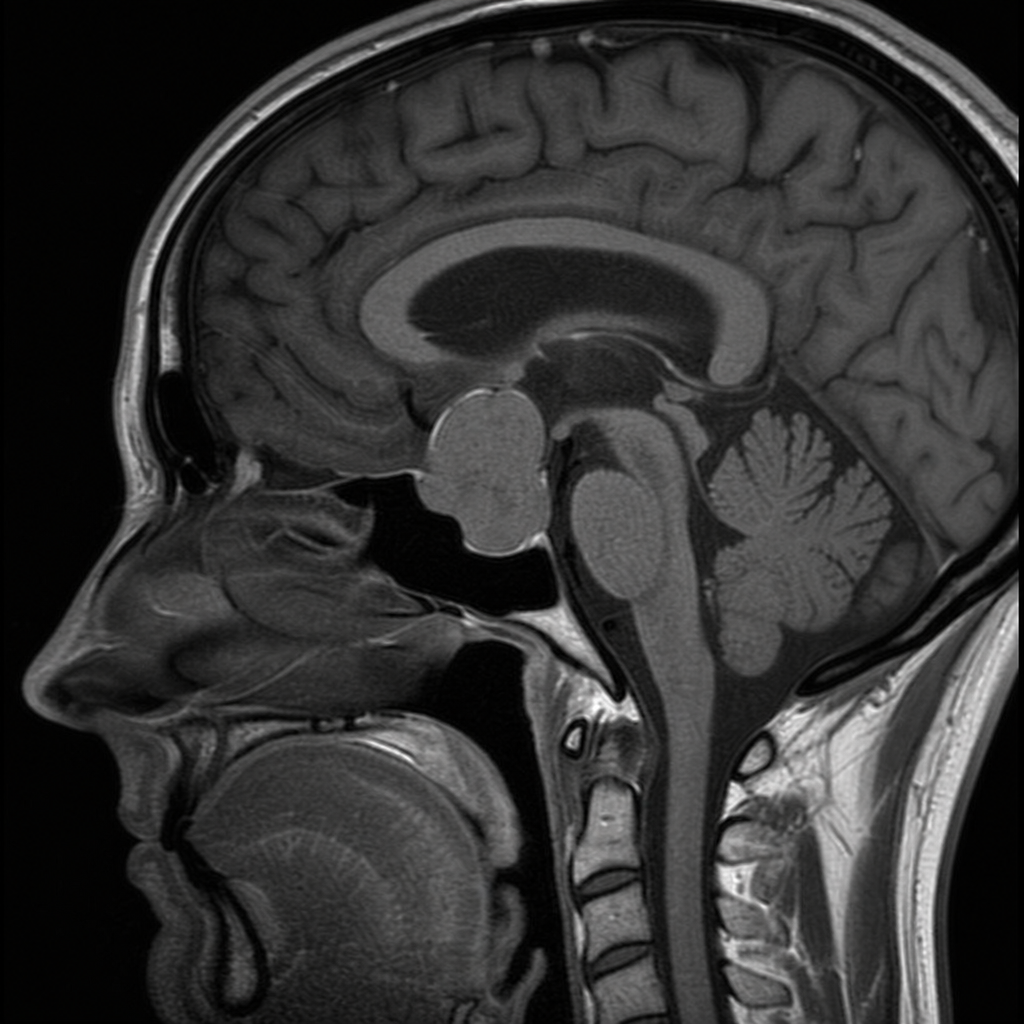
A 70-year-old woman is brought to the office after her nurse noticed her being apathetic, easily distracted, and starting to urinate in bed. Her medical history is relevant for hypertension, under control with medication. Physical examination reveals a blood pressure of 138/76 mm Hg, a heart rate of 70/min, and a respiratory rate 14/min and regular. On neurological examination, she has a broad-based shuffling gait, and increased muscle tone in her limbs that is reduced by distracting the patient. There is decreased coordination with exaggerated deep tendon reflexes, decreased attention and concentration, and postural tremor. Which of the following additional features would be expected to find in this patient?
Q525
A 27-year-old Caucasian female presents complaining of recent weight loss and weakness. She reports that she feels dizzy and lightheaded every morning when she gets out of bed, and often at work whenever she must rise from her desk. Physical exam reveals several areas of her skin including her elbows and knees are more pigmented than other areas. Which of the following would be consistent with the patient's disease?
Q526
A 51-year-old woman with AIDS presents to her primary care physician with fatigue and weakness. She has a history of type 2 diabetes mellitus, hypertension, infectious mononucleosis, and hypercholesterolemia. She currently smokes 1 pack of cigarettes per day, drinks a glass of wine per day, and denies any illicit drug use. Her temperature is 36.7°C (98.0°F), blood pressure is 126/74 mm Hg, pulse is 87/min, and respirations are 17/min. On physical examination, her pulses are bounding. The patient's complexion is pale. She has an enlarged cervical lymph node, and breath sounds remain clear. Further lab and tissue diagnostic evaluation reveal and confirms Burkitt's lymphoma with diffuse bulky disease. After receiving more information about her condition and treatment options, the patient agrees to start chemotherapy. Eight days after starting chemotherapy, she presents with decreased urinary output. Laboratory studies show:
Creatinine 7.9 mg/dL
BUN 41 mg/dL
Serum uric acid 28 mg/dL
Potassium 6.9 mEq/L
Which therapy is most likely to reverse the patient's metabolic abnormalities?
Q527
A 58-year-old man presents to the emergency department following a fall while walking in a grocery store. He has a history of at least 6 previous collapses to the ground with no warning. When these episodes occur, he becomes pale, diaphoretic, and recovers quickly within a few seconds. These episodes always occur when he is standing. His past medical history is significant for type 2 diabetes mellitus, hypercholesterolemia, and one myocardial infarction. His medication list includes aspirin, clopidogrel, bisoprolol, metformin, rosuvastatin, and valsartan. Further history reveals that he has constipation, early satiety, and recently lost 2.2 kg (5 lb) of weight. While lying down, his blood pressure is 145/64 mm Hg and the heart rate is 112/min. After 2 minutes of standing, the blood pressure is 120/65 mm Hg and the heart rate is 112/min. A 12-lead ECG showed Q waves in leads II, III, and aVF. Laboratory results are given below:
Hemoglobin 13.8 g/dL
White blood cell count 8500/mm3
Platelets 250,000/mm3
Sodium 142 mEq/L
Potassium 4.4 mEq/L
Calcium 9.1 mg/dL
Creatinine 1.0 mg/dL
TSH 1.4 U/mL
HbA1c 10.2%
What additional clinical feature would most likely be present in this patient?
Q528
A 63-year-old man presents with a 2-month history of increasing sensation of fullness involving his left flank. The patient reports recent episodes of constant pain. The patient is hypertensive (145/90 mm Hg) and is currently on medications including losartan and hydrochlorothiazide. His past medical history is otherwise unremarkable. He is a 30-pack-year smoker. His temperature is 37.7°C (99.9°F); pulse, 76/min; and respiratory rate, 14/min. Palpation of the left flank shows a 10 x 10-cm mass. The patient's laboratory parameters are as follows:
Blood
Hemoglobin 19.5 g/dL
Leukocyte count 5,000/mm3
Platelet count 250,000/mm3
Urine
Blood 2+
Protein negative
RBC 45/hpf without dysmorphic features
Abdominal CT scan confirms the presence of a large solid mass originating in the left kidney. These findings are most consistent with which of the following conditions?
Q529
A 62-year-old woman referred to the cardiology clinic for the evaluation of fatigue and dyspnea for 4 months. She also has loose stools (2–4 per day), palpitations, and non-pitting edema up to her mid-calf. On examination, vital signs are unremarkable, but she appears to be flushed with mild bilateral wheezes can be heard on chest auscultation. Cardiovascular examination reveals a grade 2/6 holosystolic murmur at the left mid-sternal area, which is louder during inspiration. Basic laboratory investigations are unremarkable. Echocardiography reveals moderate to severe right ventricular dilatation with severe right ventricular systolic dysfunction. A CT of the chest and abdomen reveals a solid, non-obstructing 2 cm mass in the small intestine and a solid 1.5 cm mass in the liver. What is the most likely cause of her symptoms?
Q530
A 33-year-old man comes to the emergency department because of repeated episodes of severe headache for the past 3 days. He is currently having his 2nd episode of the day. He usually has his first episode in the mornings. The pain is severe and localized to his right forehead and right eye. He had similar symptoms last summer. He works as an analyst for a large hedge fund management company and spends the majority of his time at the computer. He has been under a lot of stress because of overdue paperwork. He also has chronic shoulder pain. He has been using indomethacin every 6 hours for the pain but has had no relief. He has smoked one pack of cigarettes daily for 15 years. He appears restless. Vital signs are within normal limits. Physical examination shows drooping of the right eyelid, tearing of the right eye, and rhinorrhea. The right pupil is 2 mm and the left pupil is 4 mm. There is localized tenderness to his right supraspinatus muscle. The remainder of the examination shows no abnormalities. Which of the following is the most likely diagnosis?
Cardiology US Medical PG Practice Questions and MCQs
Question 521: A 45-year-old man comes to the physician because of worsening shortness of breath and dry cough for 6 months. The patient's symptoms get worse when he walks more than about 150 yards. He also reports fatigue and difficulty swallowing solid foods. In cold weather, his fingers occasionally turn blue and become painful. He occasionally smokes cigarettes on weekends. His temperature is 37°C (98.6°F), and respirations are 22/min, pulse is 87/min, and blood pressure is 126/85 mm Hg. The skin over his trunk and arms is thickened and tightened. Fine inspiratory crackles are heard over bilateral lower lung fields on auscultation. Which of the following additional findings is most likely in this patient?
A. Decreased diffusing capacity (Correct Answer)
B. Decreased A-a gradient
C. Decreased right atrial pressure
D. Increased lung compliance
E. Increased airway resistance
Explanation: ***Decreased diffusing capacity***
- This patient's symptoms (shortness of breath, dry cough, fingertip cyanosis in cold weather, thickened/tightened skin, bilateral lower lung crackles, dysphagia) are highly suggestive of **systemic sclerosis** with **interstitial lung disease (ILD)** and potentially **pulmonary hypertension**.
- **ILD** is a restrictive lung disease characterized by **fibrosis** of the alveolar-capillary membrane, which impairs gas exchange and leads to a **decreased diffusing capacity of the lung for carbon monoxide (DLCO)**.
*Decreased A-a gradient*
- A **decreased A-a gradient** (alveolar-arterial oxygen gradient) implies **efficient gas exchange**, which is contrary to the patient's symptoms of dyspnea and findings of ILD.
- In conditions causing hypoxemia due to gas exchange impairment, such as ILD, the A-a gradient typically **increases** as oxygen transfer from alveoli to blood is compromised.
*Decreased right atrial pressure*
- This patient is at risk for **pulmonary hypertension** secondary to systemic sclerosis and ILD, which would lead to **increased pulmonary vascular resistance** and often **increased right heart pressures**, including right atrial pressure.
- Therefore, a decreased right atrial pressure is unlikely in this clinical context and would not explain the patient's severe respiratory symptoms.
*Increased lung compliance*
- **Increased lung compliance** is characteristic of obstructive lung diseases like **emphysema**, where the elastic recoil of the lungs is reduced, making them easier to inflate.
- In contrast, interstitial lung diseases, like that seen in systemic sclerosis, cause **pulmonary fibrosis**, leading to **decreased lung compliance** (stiffer lungs) and increased work of breathing.
*Increased airway resistance*
- **Increased airway resistance** is a hallmark of **obstructive lung diseases** such as asthma or COPD, where there is narrowing of the airways.
- While some reactive airway components can occur, the primary pulmonary manifestation of systemic sclerosis is **interstitial lung disease (ILD)**, which is a **restrictive defect** rather than an obstructive one, and primarily impacts gas exchange rather than airflow resistance.
Question 522: A 72-year-old man with chronic lymphocytic leukemia (CLL) comes to the physician with a 2-day history of severe fatigue and dyspnea. He regularly visits his primary care physician and has not required any treatment for his underlying disease. His temperature is 36.7°C (98.1°F), pulse is 105/min, respiratory rate is 22/min, and blood pressure is 125/70 mm Hg. The conjunctivae are pale. Examination of the heart and lungs shows no abnormalities. The spleen is palpable 3 cm below the costal margin. No lymphadenopathy is palpated. Laboratory studies show:
Hemoglobin 7 g/dL
Mean corpuscular volume 105 μm3
Leukocyte count 80,000/mm3
Platelet count 350,000/mm3
Serum
Bilirubin Total // Direct 6 mg/dL / 0.8 mg/dL
Lactate dehydrogenase 650 U/L (Normal: 45–90 U/L)
Based on these findings, this patient’s recent condition is most likely attributable to which of the following?
A. Bone marrow involvement
B. Splenomegaly
C. Evan’s syndrome
D. Autoimmune hemolytic anemia (Correct Answer)
E. Diffuse large B cell lymphoma
Explanation: ***Autoimmune hemolytic anemia***
- The patient's **anemia (Hb 7 g/dL)**, elevated **lactate dehydrogenase (LDH)**, relatively high **indirect bilirubin** (total bilirubin 6 mg/dL, direct 0.8 mg/dL, indicating mostly indirect), and **splenomegaly** are classic signs of **hemolysis**.
- Given his underlying **CLL**, autoimmune hemolytic anemia (AIHA) is a common paraneoplastic complication, where increased lymphocyte production leads to **autoantibody formation** against red blood cells.
*Bone marrow involvement*
- While CLL can infiltrate the bone marrow, causing **marrow failure** and anemia, this typically presents with **pancytopenia** (low white blood cells, red blood cells, and platelets).
- This patient has a **high leukocyte count** and **normal platelet count**, making marrow failure less likely to be the primary cause of his acute symptoms.
*Splenomegaly*
- **Splenomegaly** can contribute to anemia through **splenic sequestration** and **hypersplenism**, leading to shortened red blood cell survival.
- However, the markedly elevated **LDH** and **indirect bilirubin** point specifically to an active hemolytic process, which is often *caused* by the autoimmune activity rather than being the sole mechanism of anemia.
*Evan’s syndrome*
- **Evan's syndrome** is a rare condition characterized by the coexistence of **autoimmune hemolytic anemia** and **immune thrombocytopenia**.
- The patient's **platelet count is normal (350,000/mm3)**, ruling out Evan's syndrome as the specific diagnosis, although he does have one component (AIHA).
*Diffuse large B cell lymphoma*
- Transformation of CLL to **Diffuse Large B-cell Lymphoma (DLBCL)**, known as **Richter's transformation**, can cause rapidly worsening symptoms, including anemia.
- However, the characteristic features of **hemolysis** (elevated LDH, indirect bilirubin) are not direct indicators of Richter's transformation; instead, Richter's would typically present with rapidly enlarging lymph nodes, worsening systemic symptoms, and a mass.
Question 523: An 84-year-old man presents to the emergency department for a loss of consciousness. The patient states that he was using the bathroom when he lost consciousness and fell, hitting his head on the counter. The patient has a past medical history of diabetes, hypertension, obesity, factor V leiden, constipation, myocardial infarction, and vascular claudication. His current medications include lisinopril, atorvastatin, valproic acid, propranolol, insulin, metformin, and sodium docusate. The patient denies use of illicit substances. His temperature is 99.5°F (37.5°C), blood pressure is 167/98 mmHg, pulse is 90/min, respirations are 15/min, and oxygen saturation is 98% on room air. Physical exam reveals an elderly man sitting comfortably in his stretcher. Cardiac exam reveals a systolic murmur heard at the right upper sternal border that radiates to the carotids. Pulmonary exam reveals mild bibasilar crackles. Neurological exam reveals 5/5 strength in his upper and lower extremities with normal sensation. The patient's gait is mildly unstable. The patient is unable to give a urine sample in the emergency department and states that he almost fainted again when he tried to. Which of the following is the most likely diagnosis?
A. Seizure
B. Cardiac arrhythmia
C. Postural hypotension
D. Situational syncope (Correct Answer)
E. Transient ischemic attack
Explanation: ***Situational syncope***
- The patient's loss of consciousness while **straining during defecation** (using the bathroom) is highly suggestive of **situational syncope**, which is a type of **reflex syncope** triggered by specific actions.
- His complaint of almost fainting again when trying to provide a urine sample reinforces the diagnosis, as **micturition (urination) syncope** is another common form of situational syncope.
*Seizure*
- While a loss of consciousness occurred, the patient's presentation lacks typical features of a seizure such as a **postictal state**, tongue biting, or tonic-clonic movements.
- The trigger (straining) and the near-syncopal episode with micturition are inconsistent with a primary seizure disorder.
*Cardiac arrhythmia*
- Although the patient has a history of myocardial infarction and is on **propranolol** (a beta-blocker), there are no specific findings on physical exam or in the history to strongly suggest an arrhythmia as the cause of syncope.
- An arrhythmia-induced syncope typically doesn't have such a clear situational trigger like defecation or urination.
*Postural hypotension*
- Postural hypotension is characterized by a significant drop in blood pressure upon standing, leading to symptoms like dizziness or syncope.
- While the patient is on several medications that could contribute to hypotension (e.g., lisinopril, propranolol), the syncope was specifically associated with straining, not just standing up.
*Transient ischemic attack*
- A TIA involves **transient neurological deficits** such as weakness, sensory changes, or speech disturbances, which typically last minutes to hours.
- A transient loss of consciousness without focal neurological symptoms is not characteristic of a TIA.
Question 524: A 70-year-old woman is brought to the office after her nurse noticed her being apathetic, easily distracted, and starting to urinate in bed. Her medical history is relevant for hypertension, under control with medication. Physical examination reveals a blood pressure of 138/76 mm Hg, a heart rate of 70/min, and a respiratory rate 14/min and regular. On neurological examination, she has a broad-based shuffling gait, and increased muscle tone in her limbs that is reduced by distracting the patient. There is decreased coordination with exaggerated deep tendon reflexes, decreased attention and concentration, and postural tremor. Which of the following additional features would be expected to find in this patient?
A. Degeneration of the substantia nigra pars compacta
B. Caudate head atrophy
C. Accumulation of Lewy bodies in cortical cells
D. Dilation of the ventricular system (Correct Answer)
E. Accumulation of amyloid plaques and neurofibrillary tangles in the cerebral cortex
Explanation: ***Dilation of the ventricular system***
- The patient presents with a classic triad of **gait apraxia** (broad-based, shuffling gait), **dementia** (apathy, distractibility, decreased attention and concentration), and **urinary incontinence**, which are the hallmark symptoms of **Normal Pressure Hydrocephalus (NPH)**. NPH is characterized by **ventricular dilation without increased intracranial pressure**.
- Other features like **increased muscle tone that reduces with distraction** (frontal release sign), **exaggerated deep tendon reflexes**, and **postural tremor** further support the diagnosis of NPH, as these are often seen due to involvement of frontal lobe pathways secondary to ventricular enlargement.
*Degeneration of the substantia nigra pars compacta*
- This is characteristic of **Parkinson's disease**, which typically presents with a rest tremor, bradykinesia, rigidity, and postural instability, but not typically with prominent early dementia and urinary incontinence in this combined clinical picture.
- While Parkinson's can cause gait disturbance, the specific combination of symptoms (dementia, incontinence, and gait apraxia) points away from primary Parkinson's as the most likely diagnosis.
*Caudate head atrophy*
- **Caudate head atrophy** is a hallmark finding in **Huntington's disease**, which is characterized by chorea, psychiatric symptoms, and progressive cognitive decline.
- The patient's symptoms, particularly the broad-based shuffling gait and urinary incontinence, are inconsistent with the typical presentation of Huntington's disease.
*Accumulation of Lewy bodies in cortical cells*
- This is a pathological feature of **Lewy body dementia (LBD)**. While LBD presents with dementia and Parkinsonian features, it also typically includes **recurrent visual hallucinations** and **fluctuations in attention and alertness**, which are not specified in this patient's presentation.
- The patient's dominant features of gait apraxia and urinary incontinence along with dementia are more indicative of NPH.
*Accumulation of amyloid plaques and neurofibrillary tangles in the cerebral cortex*
- These are the pathological hallmarks of **Alzheimer's disease**, which primarily presents with progressive memory loss, executive dysfunction, and other cognitive deficits.
- While dementia is a feature in this patient, the prominent gait disturbance and urinary incontinence are not typical early or dominant features of Alzheimer's disease.
Question 525: A 27-year-old Caucasian female presents complaining of recent weight loss and weakness. She reports that she feels dizzy and lightheaded every morning when she gets out of bed, and often at work whenever she must rise from her desk. Physical exam reveals several areas of her skin including her elbows and knees are more pigmented than other areas. Which of the following would be consistent with the patient's disease?
A. Pretibial myxedema
B. Hyperkalemia (Correct Answer)
C. Hypernatremia
D. Central obesity
E. Hyperglycemia
Explanation: ***Hyperkalemia***
- The patient's symptoms (weight loss, weakness, **orthostatic hypotension**, and **hyperpigmentation**) are classic for **primary adrenal insufficiency (Addison's disease)**.
- In primary adrenal insufficiency, decreased **aldosterone** production leads to **impaired renal sodium reabsorption** and **potassium excretion**, resulting in **hyperkalemia**.
*Pretibial myxedema*
- This condition is characteristic of **Graves' disease**, which involves hyperthyroidism, not adrenal insufficiency.
- It presents as localized thickening and induration of the skin, typically on the shins.
*Hypernatremia*
- **Hyponatremia** (low sodium) is a common finding in primary adrenal insufficiency due to impaired aldosterone action and increased ADH secretion.
- **Hypernatremia** (high sodium) would be inconsistent with this diagnosis.
*Central obesity*
- **Central obesity** and **moon facies** are characteristic features of **Cushing's syndrome**, which is caused by *excess* glucocorticoids, the opposite of adrenal insufficiency.
- Patients with Addison's disease often experience **weight loss** rather than weight gain.
*Hyperglycemia*
- **Hypoglycemia** is commonly seen in primary adrenal insufficiency due to the lack of **cortisol**, which plays a crucial role in maintaining blood glucose levels.
- **Hyperglycemia** would suggest conditions like diabetes or Cushing's syndrome, not adrenal insufficiency.
Question 526: A 51-year-old woman with AIDS presents to her primary care physician with fatigue and weakness. She has a history of type 2 diabetes mellitus, hypertension, infectious mononucleosis, and hypercholesterolemia. She currently smokes 1 pack of cigarettes per day, drinks a glass of wine per day, and denies any illicit drug use. Her temperature is 36.7°C (98.0°F), blood pressure is 126/74 mm Hg, pulse is 87/min, and respirations are 17/min. On physical examination, her pulses are bounding. The patient's complexion is pale. She has an enlarged cervical lymph node, and breath sounds remain clear. Further lab and tissue diagnostic evaluation reveal and confirms Burkitt's lymphoma with diffuse bulky disease. After receiving more information about her condition and treatment options, the patient agrees to start chemotherapy. Eight days after starting chemotherapy, she presents with decreased urinary output. Laboratory studies show:
Creatinine 7.9 mg/dL
BUN 41 mg/dL
Serum uric acid 28 mg/dL
Potassium 6.9 mEq/L
Which therapy is most likely to reverse the patient's metabolic abnormalities?
A. Intravenous saline with mannitol with the goal of a daily urinary output above 2.5 L/day
B. Allopurinol 300 mg/day
C. Hemodialysis (Correct Answer)
D. Intravenous sodium bicarbonate with the goal of urinary pH > 7.0
E. Intravenous recombinant uricase enzyme rasburicase
Explanation: ***Hemodialysis***
- The patient presents with **severe acute kidney injury** (creatinine 7.9 mg/dL, BUN 41 mg/dL), **hyperkalemia** (potassium 6.9 mEq/L), and **hyperuricemia** (uric acid 28 mg/dL) following chemotherapy for Burkitt's lymphoma, indicative of **tumor lysis syndrome (TLS)**.
- Given the severely elevated creatinine and potassium, **hemodialysis** is the most effective and rapid method to correct these life-threatening metabolic abnormalities and remove excess uric acid.
*Intravenous saline with mannitol with the goal of a daily urinary output above 2.5 L/day*
- While **intravenous fluid hydration** is crucial in preventing and managing TLS, and mannitol can promote diuresis, this approach is insufficient to reverse the **severe acute kidney injury** and **life-threatening hyperkalemia** already present.
- The patient has **decreased urinary output**, indicating established renal dysfunction where aggressive fluid resuscitation alone may not be effective and could lead to fluid overload.
*Allopurinol 300 mg/day*
- **Allopurinol** inhibits **xanthine oxidase**, reducing the *production* of uric acid but does not facilitate the *removal* of pre-existing high levels of uric acid or other metabolic derangements.
- It is primarily used for **prophylaxis** or less severe cases of hyperuricemia and would be too slow to address the acute, severe hyperuricemia and renal failure.
*Intravenous sodium bicarbonate with the goal of urinary pH > 7.0*
- **Alkalinization of urine** with sodium bicarbonate can help increase the solubility of uric acid and prevent its precipitation in renal tubules, but it is less effective than rasburicase for severe hyperuricemia and carries risks of **calcium phosphate precipitation** and metabolic alkalosis.
- This approach does not address the hyperkalemia or the extent of renal failure, and its role as a primary intervention for established renal failure in TLS is limited.
*Intravenous recombinant uricase enzyme rasburicase*
- **Rasburicase** is highly effective in rapidly lowering uric acid levels by converting it to **allantoin**, a more soluble compound; however, it does not directly address the **hyperkalemia** or the underlying **acute kidney injury** that has already developed.
- While important for hyperuricemia, it's not the definitive therapy for the entire spectrum of severe abnormalities presented, especially the life-threatening hyperkalemia and renal failure.
Question 527: A 58-year-old man presents to the emergency department following a fall while walking in a grocery store. He has a history of at least 6 previous collapses to the ground with no warning. When these episodes occur, he becomes pale, diaphoretic, and recovers quickly within a few seconds. These episodes always occur when he is standing. His past medical history is significant for type 2 diabetes mellitus, hypercholesterolemia, and one myocardial infarction. His medication list includes aspirin, clopidogrel, bisoprolol, metformin, rosuvastatin, and valsartan. Further history reveals that he has constipation, early satiety, and recently lost 2.2 kg (5 lb) of weight. While lying down, his blood pressure is 145/64 mm Hg and the heart rate is 112/min. After 2 minutes of standing, the blood pressure is 120/65 mm Hg and the heart rate is 112/min. A 12-lead ECG showed Q waves in leads II, III, and aVF. Laboratory results are given below:
Hemoglobin 13.8 g/dL
White blood cell count 8500/mm3
Platelets 250,000/mm3
Sodium 142 mEq/L
Potassium 4.4 mEq/L
Calcium 9.1 mg/dL
Creatinine 1.0 mg/dL
TSH 1.4 U/mL
HbA1c 10.2%
What additional clinical feature would most likely be present in this patient?
A. Heat intolerance
B. Diplopia
C. Erectile dysfunction (Correct Answer)
D. Lipodystrophy
E. Amyotrophy
Explanation: ***Erectile dysfunction***
- The patient exhibits features of **diabetic autonomic neuropathy**, including **orthostatic hypotension with absent compensatory tachycardia** (heart rate remains 112/min despite BP drop from 145/64 to 120/65 on standing - this failure of baroreceptor reflex is pathognomonic for autonomic dysfunction), **gastroparesis** (early satiety, weight loss, constipation), and poor glycemic control (HbA1c 10.2%).
- **Erectile dysfunction** is a common manifestation of **diabetic autonomic neuropathy** due to impaired parasympathetic innervation affecting penile blood flow and nerve-mediated vasodilation.
*Heat intolerance*
- This is typically associated with **hyperthyroidism** or sometimes with impaired sweating from **sudomotor autonomic neuropathy**, but it's not the most direct or common manifestation given the other symptoms.
- The patient's TSH is normal (1.4 U/mL), ruling out a thyroid cause.
*Diplopia*
- While possible in diabetes due to **cranial nerve palsies** (e.g., CN III, IV, VI neuropathy), it is not a direct or prominent symptom of *autonomic* neuropathy.
- Diplopia would indicate a *somatic* neuropathy affecting ocular muscles, rather than an autonomic dysfunction.
*Lipodystrophy*
- This condition refers to abnormal fat distribution and is often seen with **insulin therapy** (at injection sites) or certain genetic syndromes, not directly related to diabetic autonomic neuropathy.
- There is no information to suggest the patient is on insulin, and lipodystrophy does not explain the cluster of autonomic symptoms.
*Amyotrophy*
- **Diabetic amyotrophy** (proximal motor neuropathy) primarily causes **muscle weakness** and **wasting**, typically in the quadriceps, and severe pain in the affected areas.
- This is a *somatic* neuropathy, affecting motor nerves, rather than the constellation of autonomic symptoms presented by the patient.
Question 528: A 63-year-old man presents with a 2-month history of increasing sensation of fullness involving his left flank. The patient reports recent episodes of constant pain. The patient is hypertensive (145/90 mm Hg) and is currently on medications including losartan and hydrochlorothiazide. His past medical history is otherwise unremarkable. He is a 30-pack-year smoker. His temperature is 37.7°C (99.9°F); pulse, 76/min; and respiratory rate, 14/min. Palpation of the left flank shows a 10 x 10-cm mass. The patient's laboratory parameters are as follows:
Blood
Hemoglobin 19.5 g/dL
Leukocyte count 5,000/mm3
Platelet count 250,000/mm3
Urine
Blood 2+
Protein negative
RBC 45/hpf without dysmorphic features
Abdominal CT scan confirms the presence of a large solid mass originating in the left kidney. These findings are most consistent with which of the following conditions?
A. Wilms tumor
B. Transitional cell carcinoma
C. Adenoma
D. Renal cell carcinoma (Correct Answer)
E. Angiomyolipoma
Explanation: ***Renal cell carcinoma***
- The constellation of **flank pain**, a palpable **flank mass**, and **hematuria** is the classic triad of renal cell carcinoma.
- Additional findings like **hypertension**, **polycythemia** (high hemoglobin of 19.5 g/dL due to erythropoietin production by the tumor), and **smoker status** further support this diagnosis.
*Wilms tumor*
- This is primarily a **childhood tumor**, typically presenting before the age of 5, which is inconsistent with this 63-year-old patient.
- While it can present with a palpable mass and hematuria, the patient's age makes this diagnosis highly unlikely.
*Transitional cell carcinoma*
- This cancer usually arises in the **renal pelvis** or ureter and is strongly associated with smoking and painless gross hematuria.
- However, a large solid parenchymal mass as described by the CT scan points away from transitional cell carcinoma, which generally involves the collecting system.
*Adenoma*
- Renal adenomas are typically **small, benign tumors** that are often found incidentally and rarely cause symptoms like palpable masses or flank pain.
- They are not associated with paraneoplastic syndromes such as polycythemia or significant hypertension secondary to tumor activity.
*Angiomyolipoma*
- These are **benign tumors** composed of fat, smooth muscle, and blood vessels, often associated with **tuberous sclerosis**.
- While they can cause flank pain or hemorrhage, they typically appear as **fat-containing lesions** on imaging, and this patient's presentation with polycythemia and significant hypertension points to a malignant process.
Question 529: A 62-year-old woman referred to the cardiology clinic for the evaluation of fatigue and dyspnea for 4 months. She also has loose stools (2–4 per day), palpitations, and non-pitting edema up to her mid-calf. On examination, vital signs are unremarkable, but she appears to be flushed with mild bilateral wheezes can be heard on chest auscultation. Cardiovascular examination reveals a grade 2/6 holosystolic murmur at the left mid-sternal area, which is louder during inspiration. Basic laboratory investigations are unremarkable. Echocardiography reveals moderate to severe right ventricular dilatation with severe right ventricular systolic dysfunction. A CT of the chest and abdomen reveals a solid, non-obstructing 2 cm mass in the small intestine and a solid 1.5 cm mass in the liver. What is the most likely cause of her symptoms?
A. Carcinoid tumor (Correct Answer)
B. Bronchial asthma
C. Irritable bowel syndrome
D. Systemic mastocytosis
E. Whipple’s disease
Explanation: ***Carcinoid tumor***
- The patient's symptoms of **fatigue, dyspnea, flushing, loose stools, palpitations, non-pitting edema**, and **wheezing** are all classic manifestations of **carcinoid syndrome**. The finding of a solid mass in the **small intestine** with **liver metastasis** in conjunction with right-sided heart valve involvement (holosystolic murmur louder on inspiration, right ventricular dilatation and dysfunction) is highly suggestive of a neuroendocrine tumor producing vasoactive substances.
- **Right-sided cardiac involvement** is a hallmark of **carcinoid syndrome**, as the vasoactive substances are typically metabolized by the lungs, protecting the left side of the heart.
*Bronchial asthma*
- While **wheezing** is present, it is usually the primary and often isolated respiratory symptom in asthma. Other systemic symptoms like **flushing, diarrhea, and right heart failure** are not characteristic of bronchial asthma.
- Asthma is not associated with **gastrointestinal masses** or structural **cardiac abnormalities** like right ventricular dilation and dysfunction.
*Irritable bowel syndrome*
- While **loose stools** are seen in IBS, the presence of **flushing, wheezing, palpitations, and significant cardiac pathology** makes IBS an unlikely diagnosis.
- IBS is a functional disorder and does not cause **solid masses** in the intestine or liver, nor does it lead to **right ventricular dysfunction**.
*Systemic mastocytosis*
- This condition can cause **flushing, diarrhea, and cardiac symptoms (tachycardia, hypotension)**, similar to carcinoid syndrome, due to the release of histamine and other mediators from mast cells.
- However, characteristic features of systemic mastocytosis include **urticaria pigmentosa (cutaneous mastocytomas)**, bone pain, and elevated serum tryptase, which are not described in this patient. The presence of **solid intestinal and liver masses** is also more consistent with a tumor than mastocytosis.
*Whipple’s disease*
- This disease can cause **diarrhea, malabsorption, weight loss, and fatigue**, but it is also commonly associated with **arthralgias, lymphadenopathy, and neurological symptoms**.
- **Whipple's disease** does not typically cause **flushing, wheezing, or discrete solid masses** in the intestine and liver, nor does it directly lead to **right-sided heart valve dysfunction** in this manner.
Question 530: A 33-year-old man comes to the emergency department because of repeated episodes of severe headache for the past 3 days. He is currently having his 2nd episode of the day. He usually has his first episode in the mornings. The pain is severe and localized to his right forehead and right eye. He had similar symptoms last summer. He works as an analyst for a large hedge fund management company and spends the majority of his time at the computer. He has been under a lot of stress because of overdue paperwork. He also has chronic shoulder pain. He has been using indomethacin every 6 hours for the pain but has had no relief. He has smoked one pack of cigarettes daily for 15 years. He appears restless. Vital signs are within normal limits. Physical examination shows drooping of the right eyelid, tearing of the right eye, and rhinorrhea. The right pupil is 2 mm and the left pupil is 4 mm. There is localized tenderness to his right supraspinatus muscle. The remainder of the examination shows no abnormalities. Which of the following is the most likely diagnosis?
A. Medication overuse headache
B. Migraine headache
C. Giant cell arteritis
D. Subarachnoid hemorrhage
E. Cluster headache (Correct Answer)
Explanation: ***Cluster headache***
- This patient presents with episodic, **severe unilateral headache** (right forehead and eye) accompanied by **ipsilateral autonomic symptoms** (drooping eyelid, tearing, rhinorrhea, miosis, restlessness). These are classic features of cluster headache.
- The **circadian pattern** (first episode in mornings), **seasonal recurrence** (similar symptoms last summer), and lack of response to indomethacin further support this diagnosis.
*Medication overuse headache*
- This type of headache typically results from the **chronic overuse of acute headache medications**, leading to a worsening or transformation of the baseline headache.
- While the patient is using indomethacin, his headache is acute, episodic, and has specific autonomic features, which are not characteristic of medication overuse headache.
*Migraine headache*
- Migraines are often associated with **photophobia, phonophobia**, and **nausea/vomiting**, which are not reported here.
- While they can be unilateral, the prominent ipsilateral autonomic symptoms and extreme restlessness are more indicative of cluster headache.
*Giant cell arteritis*
- Primarily affects **older individuals** (typically >50 years old) and is associated with symptoms like **jaw claudication, scalp tenderness**, and **visual disturbances**.
- The patient's age (33) and specific symptom constellation do not align with giant cell arteritis.
*Subarachnoid hemorrhage*
- Presents as a **sudden-onset, "thunderclap" headache**, often described as the "worst headache of my life."
- While severe, the patient's headaches are episodic over several days and have a clear pattern, unlike the acute onset of a subarachnoid hemorrhage, which also typically presents with meningeal signs.