A 38-year-old woman comes to the physician because of a 1-month history of progressively worsening dyspnea, cough, and hoarseness of voice. Her pulse is 92/min and irregularly irregular, respirations are 20/min, and blood pressure is 110/75 mm Hg. Cardiac examination shows a rumbling mid-diastolic murmur that is best heard at the apex in the left lateral decubitus position. Which of the following is the most likely underlying cause of this patient's condition?
Q512
A 44-year-old woman comes to the physician because of progressively worsening shortness of breath with exertion and intermittent palpitations over the last 2 months. She has had neither chest pain nor a cough. Her pulse is 124/min and irregular. Physical examination shows a grade 4/6 high-pitched holosystolic murmur that is best heard at the apex and radiates to the back. The murmur increases in intensity when she clenches her hands into fists. The lungs are clear to auscultation. Further evaluation of this patient is most likely to show which of the following findings?
Q513
A 57-year-old woman comes to the clinic complaining of decreased urine output. She reports that over the past 2 weeks she has been urinating less and less every day. She denies changes in her diet or fluid intake. The patient has a history of lupus nephritis, which has resulted in end stage renal disease. She underwent a renal transplant 2 months ago. Since then she has been on mycophenolate and cyclosporine, which she takes as prescribed. The patient’s temperature is 99°F (37.2°C), blood pressure is 172/102 mmHg, pulse is 88/min, and respirations are 17/min with an oxygen saturation of 97% on room air. Labs show an elevation in serum creatinine and blood urea nitrogen. On physical examination, she has 2+ pitting edema of the bilateral lower extremities. Lungs are clear to auscultation. Urinalysis shows elevated protein. A post-void bladder scan is normal. A renal biopsy is obtained, which shows lymphocyte infiltration and intimal swelling. Which of the following is the next best step in management?
Q514
A 68-year-old female presents to your office for her annual check-up. Her vitals are HR 85, T 98.8 F, RR 16, BP 125/70. She has a history of smoking 1 pack a day for 35 years, but states she quit five years ago. She had her last pap smear at age 64 and states all of her pap smears have been normal. She had her last colonoscopy at age 62, which was also normal. Which of the following is the next best test for this patient?
Q515
A 72-year-old woman is brought to the emergency department because of lethargy and weakness for the past 5 days. During this period, she has had a headache that worsens when she leans forward or lies down. Her arms and face have appeared swollen over the past 2 weeks. She has a history of hypertension and invasive ductal carcinoma of the left breast. She underwent radical amputation of the left breast followed by radiation therapy 4 years ago. She has smoked two packs of cigarettes daily for 40 years. Current medications include aspirin, hydrochlorothiazide, and tamoxifen. Her temperature is 37.2°C (99°F), pulse is 103/min, and blood pressure is 98/56 mm Hg. Examination shows jugular venous distention, a mastectomy scar over the left thorax, and engorged veins on the anterior chest wall. There is no axillary or cervical lymphadenopathy. There is 1+ pitting edema in both arms. Which of the following is the most likely cause of this patient's symptoms?
Q516
A 65-year-old male with a history of coronary artery disease and myocardial infarction status post coronary artery bypass graft (CABG) surgery presents to his cardiologist for a routine appointment. On physical exam, the cardiologist appreciates a holosystolic, high-pitched blowing murmur heard loudest at the apex and radiating towards the axilla. Which of the following is the best predictor of the severity of this patient's murmur?
Q517
A 20-year-old man presents to the emergency department. The patient was brought in by his coach after he fainted during a competition. This is the second time this has happened since the patient joined the track team. The patient has a past medical history of multiple episodes of streptococcal pharyngitis which were not treated in his youth. He is not currently on any medications. He is agreeable and not currently in any distress. His temperature is 99.5°F (37.5°C), blood pressure is 132/68 mmHg, pulse is 90/min, respirations are 12/min, and oxygen saturation is 98% on room air. On physical exam, you note a young man in no current distress. Neurological exam is within normal limits. Pulmonary exam reveals clear air movement bilaterally. Cardiac exam reveals a systolic murmur best heard at the lower left sternal border that radiates to the axilla. Abdominal exam reveals a soft abdomen that is non-tender in all 4 quadrants. The patient's cardiac exam is repeated while he squats. Which of the following is most likely true for this patient?
Q518
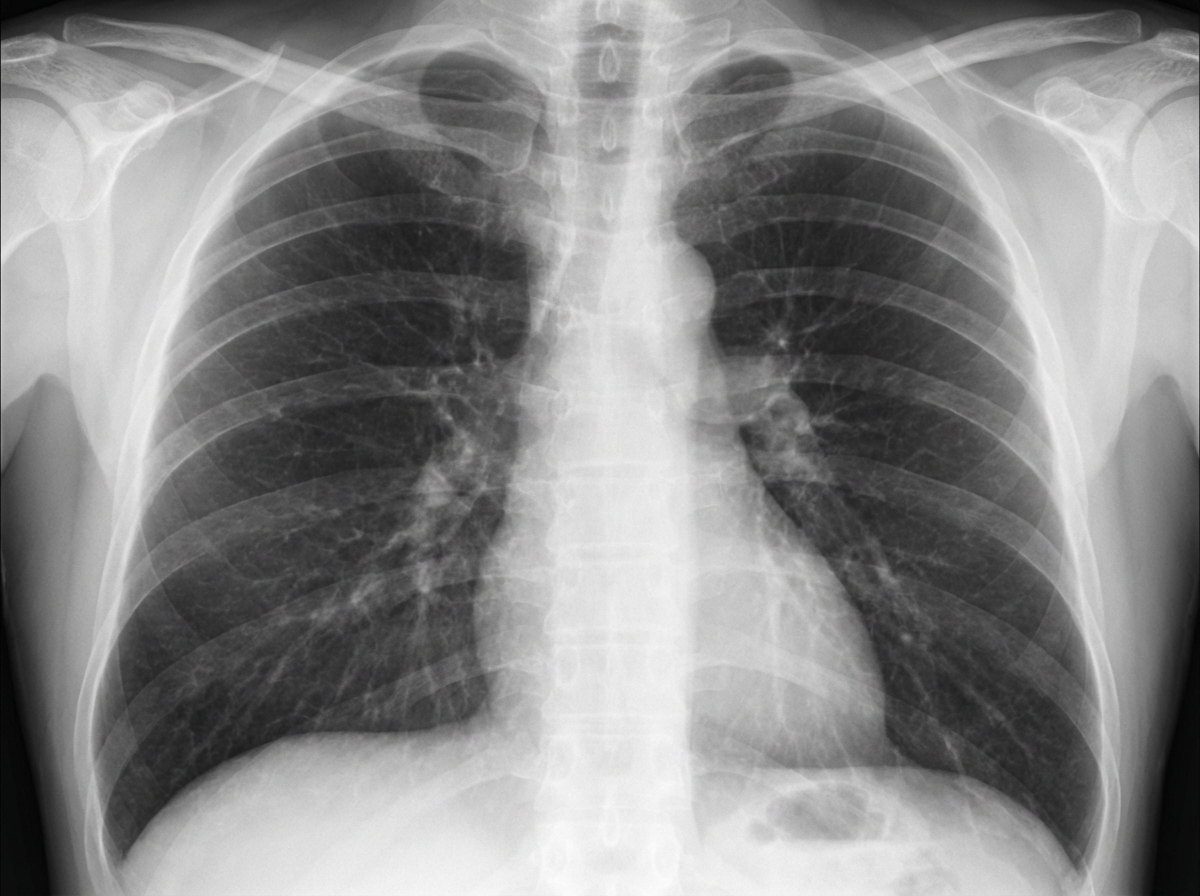
A 67-year-old man presents to his primary care physician because of a dry cough and shortness of breath for 2 months. He notes that recently he has had easy bruising of the skin without obvious trauma. He has a past history of chronic obstructive pulmonary disease and recently diagnosed with type 2 diabetes. Family history is non-contributory. He has smoked 1 pack of cigarettes daily for 35 years but quit 3 years ago. His temperature is 37.1°C (98.7°F), blood pressure is 170/80 mm Hg, and pulse is 85/min. On physical examination, the patient's face is round and plethoric and there are large supraclavicular fat pads. Breath sounds are diminished all over the chest without focal rales or wheezes. Chest X-ray is shown in the picture. Which of the following is the most likely etiology of this patient's condition?
Q519
A 56-year-old man presents to the physician for the evaluation of excess snoring over the past year. He has no history of a serious illness and takes no medications. He does not smoke. His blood pressure is 155/95 mm Hg. BMI is 49 kg/m2. Oropharyngeal examination shows an enlarged uvula. Examination of the nasal cavity shows no septal deviation or polyps. Examination of the lungs and heart shows no abnormalities. Polysomnography shows an apnea-hypopnea index of 2 episodes/h with a PCO2 of 51 mm Hg during REM sleep. Arterial blood gas analysis in room air shows:
pH 7.33
PCO2 50 mm Hg
PO2 92 mm Hg
HCO3− 26 mEq/L
Which of the following best explains these findings?
Q520
A 55-year-old woman comes to the physician because of increased blurring of vision in both eyes for the past 4 months. She has tried using over-the-counter reading glasses, but they have not helped. She has a history of hypertension, type 2 diabetes mellitus, and chronic obstructive pulmonary disease. Current medications include lisinopril, insulin, metformin, and a fluticasone-vilanterol inhaler. Vital signs are within normal limits. Examination shows visual acuity of 20/70 in each eye. A photograph of the fundoscopic examination of the right eye is shown. Which of the following is the most appropriate next step in management?
Cardiology US Medical PG Practice Questions and MCQs
Question 511: A 38-year-old woman comes to the physician because of a 1-month history of progressively worsening dyspnea, cough, and hoarseness of voice. Her pulse is 92/min and irregularly irregular, respirations are 20/min, and blood pressure is 110/75 mm Hg. Cardiac examination shows a rumbling mid-diastolic murmur that is best heard at the apex in the left lateral decubitus position. Which of the following is the most likely underlying cause of this patient's condition?
A. Antibody cross-reactivity (Correct Answer)
B. Sarcomeric gene mutation
C. Hematogenous spread of bacteria
D. Myxomatous degeneration
E. Congenital valvular defect
Explanation: ***Antibody cross-reactivity***
- The patient's symptoms (dyspnea, cough, hoarseness, irregular pulse, and a **rumbling mid-diastolic murmur** best heard at the apex) are classic for **rheumatic mitral stenosis**.
- **Rheumatic fever** is caused by an immune response to *Streptococcus pyogenes* infection, where antibodies cross-react with cardiac tissue, leading to valvular damage.
*Sarcomeric gene mutation*
- This is the underlying cause of **hypertrophic cardiomyopathy**, which typically presents with exertional dyspnea, chest pain, and syncope, but not a mid-diastolic murmur consistent with mitral stenosis.
- While it can cause heart failure symptoms, the specific murmur and valvular pathology do not align with hypertrophic cardiomyopathy.
*Hematogenous spread of bacteria*
- **Infective endocarditis** involves bacterial colonization of heart valves, which can cause valvular damage and murmurs, but usually presents with fever, new or changing murmur, and systemic emboli.
- The patient's presentation of progressive dyspnea and chronic murmur is not typical for acute infective endocarditis.
*Myxomatous degeneration*
- This is the most common cause of **mitral valve prolapse (MVP)**, where the mitral leaflets become thickened and redundant.
- MVP typically causes a **mid-systolic click** followed by a late systolic murmur, rather than a rumbling mid-diastolic murmur indicative of stenosis.
*Congenital valvular defect*
- While congenital defects can cause valvular dysfunction, a **bicuspid aortic valve** is the most common congenital defect and usually affects the aortic valve, leading to stenosis or regurgitation.
- Mitral stenosis symptoms appearing in adulthood are rarely due to an isolated congenital mitral valve defect and the overall clinical picture points strongly to rheumatic heart disease.
Question 512: A 44-year-old woman comes to the physician because of progressively worsening shortness of breath with exertion and intermittent palpitations over the last 2 months. She has had neither chest pain nor a cough. Her pulse is 124/min and irregular. Physical examination shows a grade 4/6 high-pitched holosystolic murmur that is best heard at the apex and radiates to the back. The murmur increases in intensity when she clenches her hands into fists. The lungs are clear to auscultation. Further evaluation of this patient is most likely to show which of the following findings?
A. Obstruction of the right marginal artery on coronary angiogram
B. Diffuse ST elevations on electrocardiogram
C. Dilation of left atrium on echocardiogram (Correct Answer)
D. Reversible area of myocardial ischemia on nuclear stress test
E. Pulmonary artery thrombus on computed tomography scan
Explanation: ***Dilation of left atrium on echocardiogram***
- The patient's symptoms of **shortness of breath**, **palpitations**, and an **irregular pulse** suggest a cardiac etiology, specifically a **valvular problem**. The **holosystolic murmur** best heard at the **apex** and radiating to the **back**, which increases with handgrip (a maneuver that increases afterload), is highly characteristic of **mitral regurgitation**.
- **Chronic mitral regurgitation** leads to **volume overload** in the left atrium, causing its **dilation** as it tries to accommodate the increased blood flow from both the pulmonary veins and the regurgitant jet from the left ventricle. This can also lead to **atrial fibrillation**, explaining the irregular pulse and palpitations.
*Obstruction of the right marginal artery on coronary angiogram*
- This finding would indicate **coronary artery disease** affecting the right coronary artery, typically presenting with **chest pain** or angina, which the patient explicitly denies.
- While coronary artery disease can cause shortness of breath, the distinctive **holosystolic murmur** and its radiation are not primary features of isolated coronary artery obstruction.
*Diffuse ST elevations on electrocardiogram*
- **Diffuse ST elevations** are typically seen in conditions like **pericarditis**, which often presents with pleuritic chest pain and a pericardial friction rub, none of which are described.
- It could also indicate an ST-elevation myocardial infarction (STEMI), but the 2-month history and the specific murmur point away from an acute coronary event.
*Reversible area of myocardial ischemia on nuclear stress test*
- This would suggest **ischemic heart disease**, again primarily indicated by **angina** or exertional chest discomfort, which is absent in this patient.
- While ischemia can cause shortness of breath and palpitations, it does not explain the characteristic **holosystolic murmur** and its specific radiation.
*Pulmonary artery thrombus on computed tomography scan*
- A **pulmonary artery thrombus** (pulmonary embolism) would typically cause **acute dyspnea**, pleuritic chest pain, and sometimes hemoptysis, which are not mentioned.
- While it can cause palpitations and an irregular pulse (due to right heart strain), it does not account for the **holosystolic murmur** heard at the apex and radiating to the back.
Question 513: A 57-year-old woman comes to the clinic complaining of decreased urine output. She reports that over the past 2 weeks she has been urinating less and less every day. She denies changes in her diet or fluid intake. The patient has a history of lupus nephritis, which has resulted in end stage renal disease. She underwent a renal transplant 2 months ago. Since then she has been on mycophenolate and cyclosporine, which she takes as prescribed. The patient’s temperature is 99°F (37.2°C), blood pressure is 172/102 mmHg, pulse is 88/min, and respirations are 17/min with an oxygen saturation of 97% on room air. Labs show an elevation in serum creatinine and blood urea nitrogen. On physical examination, she has 2+ pitting edema of the bilateral lower extremities. Lungs are clear to auscultation. Urinalysis shows elevated protein. A post-void bladder scan is normal. A renal biopsy is obtained, which shows lymphocyte infiltration and intimal swelling. Which of the following is the next best step in management?
A. Add diltiazem
B. Nephrectomy
C. Start intravenous steroids (Correct Answer)
D. Add ceftriaxone
E. Discontinue cyclosporine
Explanation: ***Start intravenous steroids***
- The patient presents with **decreased urine output**, elevated creatinine, and a recent kidney transplant with biopsy showing **lymphocyte infiltration** and **intimal swelling**, all highly suggestive of **acute cellular rejection**.
- **High-dose intravenous steroids** (e.g., methylprednisolone) are the first-line treatment for acute cellular rejection to suppress the immune response and preserve graft function.
*Add diltiazem*
- **Diltiazem** is a calcium channel blocker used to treat hypertension and arrhythmias, and it can also interfere with cyclosporine metabolism, potentially increasing its levels.
- While the patient has elevated blood pressure, adding diltiazem would not address the underlying **immune rejection** and would not be the primary intervention.
*Nephrectomy*
- **Nephrectomy** involves surgical removal of the transplanted kidney. This radical intervention is reserved for **irreversible graft failure** or severe complications like overwhelming infection or malignancy.
- Given the acute presentation and possibility of reversing rejection with immunosuppression, nephrectomy is **premature** and not the next best step.
*Add ceftriaxone*
- **Ceftriaxone** is an antibiotic used to treat bacterial infections.
- There is no clinical evidence in the stem (e.g., fever, signs of infection) to suggest a **bacterial infection** as the cause of her symptoms, making antibiotics inappropriate.
*Discontinue cyclosporine*
- **Cyclosporine** is an immunosuppressant essential for preventing transplant rejection. Discontinuing it would immediately increase the risk of more severe and potentially **irreversible rejection**.
- While cyclosporine can cause nephrotoxicity, the biopsy findings of **cellular infiltration** point more towards rejection rather than primary drug toxicity, and the primary treatment for rejection involves increasing immunosuppression, not withdrawing it.
Question 514: A 68-year-old female presents to your office for her annual check-up. Her vitals are HR 85, T 98.8 F, RR 16, BP 125/70. She has a history of smoking 1 pack a day for 35 years, but states she quit five years ago. She had her last pap smear at age 64 and states all of her pap smears have been normal. She had her last colonoscopy at age 62, which was also normal. Which of the following is the next best test for this patient?
A. Pap smear
B. Chest radiograph
C. Abdominal ultrasound
D. Colonoscopy
E. Chest CT scan (Correct Answer)
Explanation: ***Chest CT scan***
- This patient is a 68-year-old female with a **35-pack-year smoking history** who quit 5 years ago, placing her in a high-risk group for lung cancer.
- **Low-dose computed tomography (LDCT)** for lung cancer screening is recommended annually for individuals aged 50-80 with a 20-pack-year smoking history who currently smoke or have quit within the past 15 years.
*Pap smear*
- A Pap smear is not indicated as she had her last one at age 64 and all previous results were normal.
- Guidelines recommend discontinuing Pap smears at age 65 if there is no history of moderate or severe dysplasia and three consecutive negative results within the last 10 years.
*Chest radiograph*
- A chest radiograph is a less sensitive and specific tool for detecting early lung cancer compared to LDCT.
- It misses a significant proportion of early-stage lung cancers and is not recommended for lung cancer screening.
*Abdominal ultrasound*
- An abdominal ultrasound is generally used to screen for conditions like abdominal aortic aneurysm in specific high-risk populations (males 65-75 who have ever smoked).
- There is no indication from the provided history for an abdominal ultrasound in this patient.
*Colonoscopy*
- This patient had a normal colonoscopy at age 62.
- Current guidelines recommend repeating colonoscopy every 10 years if the previous one was normal, so she is not due for another one yet.
Question 515: A 72-year-old woman is brought to the emergency department because of lethargy and weakness for the past 5 days. During this period, she has had a headache that worsens when she leans forward or lies down. Her arms and face have appeared swollen over the past 2 weeks. She has a history of hypertension and invasive ductal carcinoma of the left breast. She underwent radical amputation of the left breast followed by radiation therapy 4 years ago. She has smoked two packs of cigarettes daily for 40 years. Current medications include aspirin, hydrochlorothiazide, and tamoxifen. Her temperature is 37.2°C (99°F), pulse is 103/min, and blood pressure is 98/56 mm Hg. Examination shows jugular venous distention, a mastectomy scar over the left thorax, and engorged veins on the anterior chest wall. There is no axillary or cervical lymphadenopathy. There is 1+ pitting edema in both arms. Which of the following is the most likely cause of this patient's symptoms?
A. Pulmonary embolism
B. Pulmonary tuberculosis
C. Lung cancer (Correct Answer)
D. Nephrotic syndrome
E. Constrictive pericarditis
Explanation: ***Lung cancer***
- The patient's history of **heavy smoking** and prior **breast cancer with radiation therapy** significantly increases her risk for developing **lung cancer**.
- Symptoms like **headache worsened by bending/lying down**, **facial/arm swelling**, **jugular venous distention**, and **engorged chest wall veins** are classic signs of **superior vena cava (SVC syndrome)**, commonly caused by lung cancer compressing the SVC.
*Pulmonary embolism*
- This typically presents with **acute onset dyspnea**, **pleuritic chest pain**, and **tachycardia**, often without the progressive facial and arm swelling or engorged chest veins seen here.
- While a possibility in a bedridden patient, the constellation of symptoms strongly points away from a primary pulmonary embolism.
*Pulmonary tuberculosis*
- Characterized by **chronic cough**, **fever**, **night sweats**, and **weight loss**, symptoms not predominantly featured in this patient's presentation.
- While it can cause lymphadenopathy and venous obstruction in rare cases, the patient's risk factors and specific symptoms are more indicative of malignancy.
*Nephrotic syndrome*
- Primarily causes widespread **edema** (anasarca) due to **severe proteinuria** and **hypoalbuminemia**, which would present as generalized swelling rather than localized facial and arm swelling with prominent venous engorgement.
- It would not typically explain the headache worsened by position or localized SVC syndrome signs.
*Constrictive pericarditis*
- Presents with signs of right-sided heart failure, including **jugular venous distention**, **ascites**, and peripheral edema, but without the specific facial/arm swelling or engorged superficial chest veins characteristic of SVC syndrome.
- It usually results from chronic inflammation of the pericardium and is less likely to cause positional headaches or localized upper body venous obstruction.
Question 516: A 65-year-old male with a history of coronary artery disease and myocardial infarction status post coronary artery bypass graft (CABG) surgery presents to his cardiologist for a routine appointment. On physical exam, the cardiologist appreciates a holosystolic, high-pitched blowing murmur heard loudest at the apex and radiating towards the axilla. Which of the following is the best predictor of the severity of this patient's murmur?
A. Enhancement with expiration
B. Presence of audible S3 (Correct Answer)
C. Enhancement with hand grip maneuver
D. Presence of audible S4
E. Enhancement with inspiration
Explanation: ***Presence of audible S3***
- An **S3 gallop** indicates rapid ventricular filling into a stiff or volume-overloaded ventricle, suggesting significant ventricular dysfunction due to severe regurgitation and increased preload.
- In the context of **mitral regurgitation (MR)**, an S3 is a strong predictor of **severe MR** and associated **left ventricular dysfunction**.
*Enhancement with expiration*
- This maneuver typically enhances **left-sided heart murmurs**, including mitral regurgitation, by increasing venous return to the left side of the heart.
- While it confirms the murmur's origin, it does not directly predict the **severity** of the regurgitation.
*Enhancement with hand grip maneuver*
- The **handgrip maneuver** increases afterload, which can enhance the intensity of murmurs associated with regurgitant lesions like mitral regurgitation.
- While helpful in identifying MR, it is not the best predictor of its **severity** compared to signs of ventricular dysfunction.
*Presence of audible S4*
- An **S4 heart sound** is associated with reduced ventricular compliance and atrial contraction against a stiff ventricle, often seen in conditions like **hypertension** or **aortic stenosis**.
- It does not directly indicate the **severity of mitral regurgitation** or current ventricular volume overload.
*Enhancement with inspiration*
- This maneuver typically enhances **right-sided heart murmurs** by increasing venous return to the right side of the heart.
- Since mitral regurgitation is a **left-sided murmur**, inspiration would likely have little to no effect or diminish its intensity.
Question 517: A 20-year-old man presents to the emergency department. The patient was brought in by his coach after he fainted during a competition. This is the second time this has happened since the patient joined the track team. The patient has a past medical history of multiple episodes of streptococcal pharyngitis which were not treated in his youth. He is not currently on any medications. He is agreeable and not currently in any distress. His temperature is 99.5°F (37.5°C), blood pressure is 132/68 mmHg, pulse is 90/min, respirations are 12/min, and oxygen saturation is 98% on room air. On physical exam, you note a young man in no current distress. Neurological exam is within normal limits. Pulmonary exam reveals clear air movement bilaterally. Cardiac exam reveals a systolic murmur best heard at the lower left sternal border that radiates to the axilla. Abdominal exam reveals a soft abdomen that is non-tender in all 4 quadrants. The patient's cardiac exam is repeated while he squats. Which of the following is most likely true for this patient?
A. Decreased murmur intensity in mitral stenosis with squatting
B. Increased murmur intensity in mitral stenosis with squatting
C. Decreased murmur intensity in hypertrophic obstructive cardiomyopathy with squatting (Correct Answer)
D. Increased murmur intensity in aortic stenosis with squatting
E. Increased murmur intensity in hypertrophic obstructive cardiomyopathy with squatting
Explanation: ***Decreased murmur intensity in hypertrophic obstructive cardiomyopathy with squatting***
- This patient presents with **syncope during exercise** in a young athletic individual, which is highly suggestive of **hypertrophic obstructive cardiomyopathy (HOCM)**.
- The **systolic murmur at the lower left sternal border radiating to the axilla** is characteristic of the **dynamic left ventricular outflow tract obstruction** seen in HOCM.
- Squatting increases **venous return** (preload) and **systemic vascular resistance** (afterload), which **increases left ventricular volume** and **reduces the outflow tract obstruction**, leading to a **decreased murmur intensity**.
- HOCM is the most common cause of **sudden cardiac death in young athletes** due to exercise-induced arrhythmias.
*Decreased murmur intensity in mitral stenosis with squatting*
- **Mitral stenosis** produces a **low-pitched diastolic rumble** best heard at the apex with the patient in the left lateral decubitus position, not a systolic murmur.
- This patient has a **systolic murmur**, which rules out mitral stenosis as the diagnosis.
- Additionally, mitral stenosis would not typically cause syncope during exercise in a young patient without significant symptoms at rest.
*Increased murmur intensity in mitral stenosis with squatting*
- While squatting does **increase flow across the mitral valve** and would increase a mitral stenosis murmur if present, this patient has a **systolic murmur**, not the diastolic murmur characteristic of mitral stenosis.
- The clinical presentation of **exercise-induced syncope** is not typical for mitral stenosis, which more commonly presents with dyspnea, orthopnea, and hemoptysis.
*Increased murmur intensity in aortic stenosis with squatting*
- **Aortic stenosis** typically presents with a **crescendo-decrescendo systolic ejection murmur** best heard at the **right upper sternal border** with radiation to the carotids, not the left lower sternal border radiating to the axilla.
- Squatting **increases afterload and preload**, which generally **increases the intensity** of aortic stenosis murmurs, but the murmur location and radiation pattern do not fit aortic stenosis.
- While aortic stenosis can cause syncope, it typically occurs in older patients with calcific disease.
*Increased murmur intensity in hypertrophic obstructive cardiomyopathy with squatting*
- This is **physiologically incorrect** for HOCM.
- Squatting **increases left ventricular volume** by increasing venous return and afterload, which **reduces the dynamic outflow tract obstruction** in HOCM.
- **Decreased obstruction leads to decreased murmur intensity**, not increased intensity.
- Maneuvers that **decrease LV volume** (standing, Valsalva, nitroglycerin) **increase** the HOCM murmur, while maneuvers that **increase LV volume** (squatting, passive leg raise, hand grip) **decrease** the murmur.
Question 518: A 67-year-old man presents to his primary care physician because of a dry cough and shortness of breath for 2 months. He notes that recently he has had easy bruising of the skin without obvious trauma. He has a past history of chronic obstructive pulmonary disease and recently diagnosed with type 2 diabetes. Family history is non-contributory. He has smoked 1 pack of cigarettes daily for 35 years but quit 3 years ago. His temperature is 37.1°C (98.7°F), blood pressure is 170/80 mm Hg, and pulse is 85/min. On physical examination, the patient's face is round and plethoric and there are large supraclavicular fat pads. Breath sounds are diminished all over the chest without focal rales or wheezes. Chest X-ray is shown in the picture. Which of the following is the most likely etiology of this patient's condition?
A. Adenocarcinoma of the lung
B. Wegener granulomatosis
C. Squamous cell carcinoma of the lung
D. Small cell lung cancer (Correct Answer)
E. Large cell carcinoma of the lung
Explanation: ***Small cell lung cancer***
- The patient's presentation with **dry cough, shortness of breath, easy bruising, rounded plethoric face, supraclavicular fat pads, and hypertension** is highly suggestive of **Cushing's syndrome**.
- **Small cell lung cancer** is the most common cause of **ectopic ACTH production**, leading to paraneoplastic Cushing's syndrome, especially in a patient with a significant smoking history.
*Adenocarcinoma of the lung*
- While **adenocarcinoma** is a common type of lung cancer, it is **less frequently associated with ectopic ACTH production** and Cushing's syndrome compared to small cell carcinoma.
- It often presents with more typical cancer symptoms such as weight loss or hemoptysis, and is more common in **non-smokers or former smokers**.
*Wegener granulomatosis*
- **Wegener's granulomatosis (granulomatosis with polyangiitis)** is a **vasculitis** that affects the respiratory tract and kidneys.
- It is characterized by symptoms like **hemoptysis, sinusitis, and renal dysfunction**, but **does not cause features of Cushing's syndrome**.
*Squamous cell carcinoma of the lung*
- **Squamous cell carcinoma** is known for producing **parathyroid hormone-related protein (PTHrP)**, leading to **hypercalcemia**, not Cushing's syndrome.
- While it can present with cough and shortness of breath, the specific features of Cushing's syndrome make it a less likely etiology in this case.
*Large cell carcinoma of the lung*
- **Large cell carcinoma** is an undifferentiated lung cancer that can present with a variety of paraneoplastic syndromes, but **ectopic ACTH production is rare**.
- Its presentation is generally less specific than small cell carcinoma or squamous cell carcinoma in terms of paraneoplastic effects.
Question 519: A 56-year-old man presents to the physician for the evaluation of excess snoring over the past year. He has no history of a serious illness and takes no medications. He does not smoke. His blood pressure is 155/95 mm Hg. BMI is 49 kg/m2. Oropharyngeal examination shows an enlarged uvula. Examination of the nasal cavity shows no septal deviation or polyps. Examination of the lungs and heart shows no abnormalities. Polysomnography shows an apnea-hypopnea index of 2 episodes/h with a PCO2 of 51 mm Hg during REM sleep. Arterial blood gas analysis in room air shows:
pH 7.33
PCO2 50 mm Hg
PO2 92 mm Hg
HCO3− 26 mEq/L
Which of the following best explains these findings?
A. Obesity hypoventilation syndrome with obstructive sleep apnea
B. Central hypoventilation syndrome with obstructive sleep apnea
C. Central hypoventilation syndrome
D. Obesity hypoventilation syndrome (Correct Answer)
E. Obstructive sleep apnea-hypopnea syndrome
Explanation: ***Obesity hypoventilation syndrome***
- This is the correct diagnosis. The patient presents with **severe obesity (BMI 49 kg/m2)** and **chronic daytime hypercapnia (PCO2 50 mm Hg)** with compensated respiratory acidosis (pH 7.33, HCO3− 26 mEq/L).
- The **apnea-hypopnea index (AHI) of 2 episodes/h is normal** and does not meet criteria for obstructive sleep apnea (OSA requires AHI ≥5).
- Despite the absence of significant obstructive events, the patient has **chronic hypercapnia both awake and during REM sleep**, indicating impaired ventilatory drive due to obesity-related restrictive mechanics rather than upper airway obstruction.
- **Obesity hypoventilation syndrome (OHS)** is diagnosed when BMI ≥30 kg/m2, daytime PCO2 ≥45 mm Hg, and sleep-disordered breathing is present without other causes of hypoventilation.
*Obesity hypoventilation syndrome with obstructive sleep apnea*
- While the patient is severely obese, the **AHI of 2 does not meet diagnostic criteria for OSA** (requires AHI ≥5).
- OHS can coexist with OSA (called "overlap" when present), but in this case, the **absence of significant obstructive events** makes pure OHS without OSA the correct diagnosis.
*Central hypoventilation syndrome with obstructive sleep apnea*
- **Central hypoventilation syndrome** is rare and typically associated with neurological disorders (brainstem lesions, Ondine's curse) or congenital conditions.
- This patient has **no neurological signs or symptoms** to suggest impaired central respiratory control.
- The AHI of 2 does not support a diagnosis of OSA.
*Central hypoventilation syndrome*
- This diagnosis requires **failure of brainstem respiratory control centers** to regulate breathing properly.
- There are **no clinical features** (neurological deficits, history of CNS pathology) to suggest a primary central cause of hypoventilation.
- The patient's hypoventilation is best explained by **obesity-related mechanical restriction** and blunted chemoreceptor response, not central nervous system pathology.
*Obstructive sleep apnea-hypopnea syndrome*
- The **AHI of 2 episodes/h is normal** and does not meet diagnostic criteria for OSA (mild OSA: AHI 5-14, moderate: 15-29, severe: ≥30).
- While obesity and enlarged uvula are risk factors for OSA, the **absence of significant obstructive events on polysomnography** excludes this diagnosis.
- The **chronic daytime hypercapnia** in the setting of normal AHI points to OHS rather than OSA as the primary pathology.
Question 520: A 55-year-old woman comes to the physician because of increased blurring of vision in both eyes for the past 4 months. She has tried using over-the-counter reading glasses, but they have not helped. She has a history of hypertension, type 2 diabetes mellitus, and chronic obstructive pulmonary disease. Current medications include lisinopril, insulin, metformin, and a fluticasone-vilanterol inhaler. Vital signs are within normal limits. Examination shows visual acuity of 20/70 in each eye. A photograph of the fundoscopic examination of the right eye is shown. Which of the following is the most appropriate next step in management?
A. Topical timolol therapy
B. Oral ganciclovir therapy
C. Laser photocoagulation (Correct Answer)
D. Ocular massage
E. Surgical vitrectomy
Explanation: ***Laser photocoagulation***
- The fundoscopic findings of a 55-year-old diabetic woman with rapidly worsening vision, along with the implied presence of **neovascularization** on the photograph (not provided but assumed from clinical context), strongly suggest **proliferative diabetic retinopathy**.
- **Panretinal photocoagulation (PRP)** is the standard treatment for proliferative diabetic retinopathy to prevent further vision loss by destroying ischemic retina and reducing the production of **vascular endothelial growth factor (VEGF)**.
*Topical timolol therapy*
- **Timolol** is a beta-blocker primarily used to treat **glaucoma** by reducing intraocular pressure.
- It does not address the underlying pathology of **diabetic retinopathy**, which involves retinal vessel damage and neovascularization.
*Oral ganciclovir therapy*
- **Ganciclovir** is an antiviral medication used predominantly for infections caused by herpesviruses, such as **cytomegalovirus (CMV) retinitis**, often seen in immunocompromised patients.
- The patient's presentation is consistent with diabetic retinopathy, not a viral infection, and there is no indication of immunosuppression.
*Ocular massage*
- **Ocular massage** is not a recognized treatment for any form of diabetic retinopathy.
- It has no role in managing retinal vascular disease or neovascularization and could potentially be harmful.
*Surgical vitrectomy*
- **Vitrectomy** is a surgical procedure considered for advanced complications of diabetic retinopathy such as **vitreous hemorrhage** that does not clear, or **tractional retinal detachment**.
- While it may be needed later if complications arise, it is not the initial or most appropriate next step for proliferative diabetic retinopathy unless these severe complications are already present, which is not indicated as the primary presentation.