A 48-year-old man presents to the ER with a sudden-onset, severe headache. He is vomiting and appears confused. His wife, who accompanied him, says that he has not had any trauma, and that the patient has no relevant family history. He undergoes a non-contrast head CT that shows blood between the arachnoid and pia mater. What is the most likely complication from this condition?
Q242
A 57-year-old construction worker presents with gradually worsening shortness of breath for the past several months and left pleuritic chest pain for 2 weeks. He denies fever, cough, night sweats, wheezing, or smoking. He is recently diagnosed with hypertension and started amlodipine 10 days ago. He has been working in construction for the last 25 years and before that, he worked at a ship dry-dock for 15 years. Physical exam reveals bilateral crackles at the lung bases. Chest X-ray reveals bilateral infiltrates at the lung bases. Pulmonary function tests show a slightly increased FEV1/FVC ratio, but total lung volume is decreased. CT scan shows pleural scarring. What of the following conditions is the most likely explanation in this case?
Q243
A 17-year-old boy comes to the physician for a follow-up visit. Two days ago, he had a routine health maintenance examination that showed 3+ proteinuria on urine dipstick testing. During the initial routine examination, the patient reported feeling well, apart from being exhausted from his day at work. He had an upper respiratory infection 1 month ago, which resolved spontaneously within 5 days of onset. He has no history of serious illness. He works as an intern at a shooting range, where he does not usually use appropriate hearing protection. Today, he appears tired and complains about the early morning doctor's appointment. He is 170 cm (5 ft 7 in) tall and weighs 81.5 kg (180 lb); BMI is 28 kg/m2. His temperature is 37°C (98.6°F), pulse is 72/min, and blood pressure is 118/70 mm Hg. Examination shows facial acne. There is mild sensorineural hearing loss bilaterally. The remainder of the examination shows no abnormalities. Laboratory studies show:
Serum
Urea 8 mg/dL
Creatinine 1.0 mg/dL
Urine
Glucose negative
Protein 1+
Blood negative
Nitrite negative
Leukocytes negative
pH 6.0
Specific gravity 1.005
Which of the following is the most likely explanation for this patient's findings?
Q244
A 71-year-old woman presents with a transient episode of right arm and hand weakness that resolved in approximately one hour. Her symptoms started while she was gardening. Her past medical history is notable for hypertension, diabetes, anxiety, and dyslipidemia. Her current medications include insulin, metformin, and fluoxetine. Examination reveals a left carotid bruit. Ultrasound duplex of her carotid arteries demonstrates right and left carotid stenosis of 35% and 50%, respectively. Which of the following is the best next step in management?
Q245
A 65-year-old woman comes to the emergency department because of blurry vision for 10 hours. She has also had urinary urgency and discomfort while urinating for the past 4 days. She has been feeling increasingly weak and nauseous since yesterday. She has a history of type 2 diabetes mellitus and arterial hypertension. One year ago she was treated for an infection of her eyes. She drinks 2–3 glasses of wine weekly. Current medications include captopril, metoprolol, metformin, and insulin. Her temperature is 37.5°C (99.5°F), pulse is 107/min, and blood pressure is 95/70 mm Hg. Visual acuity is decreased in both eyes. The pupils are equal and reactive to light. The corneal reflexes are brisk. The mucous membranes of the mouth are dry. The abdomen is soft and not distended. Cardiopulmonary examination shows no abnormalities. Which of the following is the most likely diagnosis?
Q246
A 56-year-old woman comes to the physician for follow-up after a measurement of elevated blood pressure at her last visit three months ago. She works as a high school teacher at a local school. She says that she mostly eats cafeteria food and take-out. She denies any regular physical activity. She does not smoke or use any recreational drugs. She drinks 2 to 3 glasses of wine per day. She has hypercholesterolemia for which she takes atorvastatin. Her height is 165 cm (5 ft 5 in), weight is 82 kg (181 lb), and BMI is 30.1 kg/m2. Her pulse is 67/min, respirations are 18/min, and blood pressure is 152/87 mm Hg on the right arm and 155/92 mm Hg on the left arm. She would like to try lifestyle modifications to improve her blood pressure before considering pharmacologic therapy. Which of the following lifestyle modifications is most likely to result in the greatest reduction of this patient's systolic blood pressure?
Q247
A 7-year-old boy is brought to the physician for a follow-up examination after the removal of a tooth. During the procedure, he had prolonged bleeding that did not resolve with pressure and gauze packing and eventually required suture placement. His older brother had a similar episode a year ago, but his parents and two sisters have never had problems with prolonged bleeding. Physical examination shows no abnormalities. Genetic analysis confirms an X-linked recessive disorder. Which of the following is most likely deficient in this patient?
Q248
A 68-year-old male is diagnosed with squamous cell carcinoma in the upper lobe of his right lung. A chest radiograph can be seen in image A. Which of the following would you most expect to find in this patient?
Q249
A 48-year-old female suffers a traumatic brain injury while skiing in a remote area. Upon her arrival to the ER, she is severely hypoxemic and not responsive to O2 therapy. She is started on a mechanical ventilator and 2 days later upon auscultation, you note late inspiratory crackles. Which of the following is most likely normal in this patient?
Q250
A 60-year-old man comes to the physician because of recurrent nose bleeds that occur with light trauma or at random times during the day. Over the past 6 months, the patient has felt weak and fatigued and has had a 10-kg (22-lb) weight loss. He has poor appetite and describes abdominal discomfort. He does not have night sweats. His pulse is 72/min, blood pressure is 130/70 mm Hg, and his temperature is 37.5°C (99.5°F). The spleen is palpated 10 cm below the left costal margin. Multiple bruises are noted on both upper extremities. Laboratory studies show.
Hemoglobin 9.8 g/dL
Hematocrit 29.9%
Leukocyte count 4,500/mm3
Neutrophils 30%
Platelet count 74,000/mm3
Serum
Lactate dehydrogenase 410 IU/L
A peripheral blood smear detects tartrate-resistant acid phosphatase activity. Which of the following is the most appropriate initial treatment for this patient?
Cardiology US Medical PG Practice Questions and MCQs
Question 241: A 48-year-old man presents to the ER with a sudden-onset, severe headache. He is vomiting and appears confused. His wife, who accompanied him, says that he has not had any trauma, and that the patient has no relevant family history. He undergoes a non-contrast head CT that shows blood between the arachnoid and pia mater. What is the most likely complication from this condition?
A. Hemorrhagic shock
B. Arterial Vasospasm (Correct Answer)
C. Renal failure
D. Bacterial Meningitis
E. Blindness
Explanation: **Arterial Vasospasm**
- **Arterial vasospasm** is a major delayed complication of **subarachnoid hemorrhage (SAH)**, typically occurring 3-14 days after the initial bleed.
- The presence of blood products in the subarachnoid space can irritate cerebral arteries, leading to their narrowing and subsequent **delayed cerebral ischemia** or infarction.
*Hemorrhagic shock*
- **Subarachnoid hemorrhage (SAH)** typically involves bleeding within the confines of the skull, which is usually not extensive enough to cause systemic **hypovolemia** or **hemorrhagic shock**.
- **Hemorrhagic shock** would require significant external blood loss or internal bleeding into a large body cavity, which is not characteristic of an isolated SAH.
*Renal failure*
- **Renal failure** is not a direct or common complication of **subarachnoid hemorrhage (SAH)**.
- While systemic complications can sometimes arise in critically ill patients, there is no direct pathophysiological link between SAH and primary kidney injury.
*Bacterial Meningitis*
- The presence of blood in the **subarachnoid space** can cause a **chemical meningitis** due to irritation, mimicking some symptoms of bacterial meningitis.
- However, it does not typically predispose to **bacterial infection** unless there's an iatrogenic cause (e.g., lumbar puncture contamination).
*Blindness*
- While damage to the **optic nerves** or visual pathways can occur with severe neurological events or increased intracranial pressure, **blindness** is not a common or direct complication specifically arising from the bleed itself or its immediate sequelae in SAH.
- Visual disturbances are possible due to elevated **intracranial pressure** or specific anatomical lesion, but not primary blindness.
Question 242: A 57-year-old construction worker presents with gradually worsening shortness of breath for the past several months and left pleuritic chest pain for 2 weeks. He denies fever, cough, night sweats, wheezing, or smoking. He is recently diagnosed with hypertension and started amlodipine 10 days ago. He has been working in construction for the last 25 years and before that, he worked at a ship dry-dock for 15 years. Physical exam reveals bilateral crackles at the lung bases. Chest X-ray reveals bilateral infiltrates at the lung bases. Pulmonary function tests show a slightly increased FEV1/FVC ratio, but total lung volume is decreased. CT scan shows pleural scarring. What of the following conditions is the most likely explanation in this case?
A. Asbestosis (Correct Answer)
B. Allergic bronchopulmonary aspergillosis
C. Sarcoidosis
D. Tuberculosis
E. Drug-induced interstitial lung disease
Explanation: ***Asbestosis***
- The patient's 15-year history of working at a **ship dry-dock**, a high-risk occupation for **asbestos exposure**, and the absence of smoking are highly suggestive. The presence of **gradually worsening shortness of breath**, **bilateral crackles**, **bilateral infiltrates at lung bases**, **decreased total lung volume**, and **pleural scarring** on CT are classic findings.
- **Decreased total lung volume** with a normal or slightly increased FEV1/FVC ratio indicates a **restrictive lung disease**, which is characteristic of asbestosis.
*Allergic bronchopulmonary aspergillosis*
- This condition is typically associated with **asthma** or **cystic fibrosis**, characterized by **wheezing**, tenacious sputum, and **migratory infiltrates**, none of which are present in this case.
- Diagnosis involves elevated IgE levels, positive *Aspergillus* precipitins, and peripheral eosinophilia, which are not described.
*Sarcoidosis*
- Sarcoidosis often presents with **hilar lymphadenopathy**, erythema nodosum, and systemic symptoms like fever and weight loss, which are absent here.
- While it can cause interstitial lung disease, the occupational exposure history and specific CT findings like pleural scarring point away from sarcoidosis.
*Tuberculosis*
- Tuberculosis usually presents with **fever, night sweats, cough, and weight loss**, which the patient denies.
- Chest X-ray typically shows **apical infiltrates**, cavitations, or granulomas, differing from the basilar infiltrates and pleural scarring seen here.
*Drug-induced interstitial lung disease*
- While several drugs can cause interstitial lung disease, amlodipine (started recently) is not a common cause, and its onset is very recent compared to the patient's gradually worsening symptoms.
- The extensive occupational exposure history and characteristic CT findings make an alternative, more common cause much more likely.
Question 243: A 17-year-old boy comes to the physician for a follow-up visit. Two days ago, he had a routine health maintenance examination that showed 3+ proteinuria on urine dipstick testing. During the initial routine examination, the patient reported feeling well, apart from being exhausted from his day at work. He had an upper respiratory infection 1 month ago, which resolved spontaneously within 5 days of onset. He has no history of serious illness. He works as an intern at a shooting range, where he does not usually use appropriate hearing protection. Today, he appears tired and complains about the early morning doctor's appointment. He is 170 cm (5 ft 7 in) tall and weighs 81.5 kg (180 lb); BMI is 28 kg/m2. His temperature is 37°C (98.6°F), pulse is 72/min, and blood pressure is 118/70 mm Hg. Examination shows facial acne. There is mild sensorineural hearing loss bilaterally. The remainder of the examination shows no abnormalities. Laboratory studies show:
Serum
Urea 8 mg/dL
Creatinine 1.0 mg/dL
Urine
Glucose negative
Protein 1+
Blood negative
Nitrite negative
Leukocytes negative
pH 6.0
Specific gravity 1.005
Which of the following is the most likely explanation for this patient's findings?
A. Standing for long periods of time
B. Subepithelial immune complex depositions
C. Increased production of low molecular weight proteins
D. Loss of negative charge on the glomerular basement membrane
E. Splitting of the glomerular basement membrane (Correct Answer)
Explanation: ***Splitting of the glomerular basement membrane***
- This patient's combination of **bilateral sensorineural hearing loss** and **persistent proteinuria** (3+ initially, 1+ on repeat) in a young male is most consistent with **Alport syndrome**, an X-linked disorder caused by defective **type IV collagen** leading to splitting of the glomerular basement membrane.
- While occupational noise exposure at the shooting range could contribute to hearing loss, **bilateral sensorineural hearing loss in a 17-year-old** is unusual from occupational causes alone at this age and typically requires prolonged exposure. The combination with proteinuria makes Alport syndrome the most likely unifying diagnosis.
- The decrease in proteinuria (3+ → 1+) may reflect the dilute urine specimen (specific gravity 1.005) rather than resolution. Alport syndrome typically presents with microscopic hematuria and progressive proteinuria, though early disease can have variable presentation.
*Standing for long periods of time*
- **Orthostatic (postural) proteinuria** is common in adolescents and characterized by proteinuria when upright that resolves when supine. The patient works as an intern (prolonged standing) and had 3+ proteinuria when "exhausted from work" versus 1+ at an early morning appointment.
- However, orthostatic proteinuria would not explain the **bilateral sensorineural hearing loss**, which is the key distinguishing feature. The hearing loss requires an explanation, making a systemic disorder like Alport syndrome more likely.
*Subepithelial immune complex depositions*
- Characteristic of **post-streptococcal glomerulonephritis** or **membranous nephropathy**.
- These conditions typically present with **hematuria** (absent here), more significant proteinuria with nephrotic-range in membranous disease, and do not cause sensorineural hearing loss.
- The recent URI was 1 month ago and resolved spontaneously, making post-infectious GN less likely.
*Increased production of low molecular weight proteins*
- This occurs in **overflow proteinuria** from conditions like **multiple myeloma** (light chain overproduction).
- This patient's age (17 years) makes plasma cell dyscrasias extremely unlikely, and this would not explain the sensorineural hearing loss.
*Loss of negative charge on the glomerular basement membrane*
- This is the pathophysiologic mechanism of **minimal change disease**, causing selective loss of albumin.
- Minimal change disease typically presents with **nephrotic syndrome** (heavy proteinuria >3.5 g/day, edema, hypoalbuminemia), which is not present here.
- It does not explain the **bilateral sensorineural hearing loss**, which is the critical clinical clue in this case.
Question 244: A 71-year-old woman presents with a transient episode of right arm and hand weakness that resolved in approximately one hour. Her symptoms started while she was gardening. Her past medical history is notable for hypertension, diabetes, anxiety, and dyslipidemia. Her current medications include insulin, metformin, and fluoxetine. Examination reveals a left carotid bruit. Ultrasound duplex of her carotid arteries demonstrates right and left carotid stenosis of 35% and 50%, respectively. Which of the following is the best next step in management?
A. Bilateral carotid endarterectomy
B. Left carotid endarterectomy only
C. Aspirin (Correct Answer)
D. Observation
E. Warfarin
Explanation: ***Aspirin***
- This patient suffered a **transient ischemic attack (TIA)** given her transient focal neurological deficit. Given that her carotid stenosis is **moderate (35% and 50%)**, **antiplatelet therapy** with aspirin is the initial and best next step to prevent future strokes.
- Aspirin helps prevent platelet aggregation, reducing the risk of **thrombus formation** in already stenotic vessels.
*Bilateral carotid endarterectomy*
- This is not the best next step, as **carotid endarterectomy** is generally reserved for symptomatic patients with **high-grade stenosis** (e.g., typically >70%).
- Performing bilateral procedures at once carries higher risks than staged procedures or medical management for moderate stenosis.
*Left carotid endarterectomy only*
- This is not indicated. While symptoms occurred on the right side (implying a left-sided lesion), a **left carotid endarterectomy** is primarily considered for **high-grade stenosis** in symptomatic patients.
- Her left carotid stenosis is 50%, which is considered moderate and not an immediate indication for surgery.
*Observation*
- This is inappropriate as the patient has experienced a **TIA**, indicating a high risk of future stroke.
- Without intervention, including antiplatelet therapy, the risk of a debilitating stroke is significantly increased.
*Warfarin*
- **Warfarin** is an anticoagulant used for conditions like atrial fibrillation or deep vein thrombosis but is **not the primary treatment for TIA due to carotid stenosis**.
- Its use in this context may increase the risk of bleeding without providing superior benefit to aspirin in preventing arterial clots from carotid plaques.
Question 245: A 65-year-old woman comes to the emergency department because of blurry vision for 10 hours. She has also had urinary urgency and discomfort while urinating for the past 4 days. She has been feeling increasingly weak and nauseous since yesterday. She has a history of type 2 diabetes mellitus and arterial hypertension. One year ago she was treated for an infection of her eyes. She drinks 2–3 glasses of wine weekly. Current medications include captopril, metoprolol, metformin, and insulin. Her temperature is 37.5°C (99.5°F), pulse is 107/min, and blood pressure is 95/70 mm Hg. Visual acuity is decreased in both eyes. The pupils are equal and reactive to light. The corneal reflexes are brisk. The mucous membranes of the mouth are dry. The abdomen is soft and not distended. Cardiopulmonary examination shows no abnormalities. Which of the following is the most likely diagnosis?
A. Alcoholic ketoacidosis
B. Hypoglycemia
C. Ischemic optic neuropathy
D. Hyperosmolar hyperglycemic state (Correct Answer)
E. Posterior uveitis
Explanation: ***Hyperosmolar hyperglycemic state***
- The patient's history of **type 2 diabetes mellitus**, recent **infection** (urinary urgency and discomfort), blurry vision, weakness, nausea, and signs of **dehydration** (dry mucous membranes, hypotension, tachycardia) are all consistent with Hyperosmolar Hyperglycemic State (HHS).
- HHS is characterized by severe hyperglycemia, hyperosmolarity, and dehydration without significant ketoacidosis, often triggered by stress such as infection in patients with T2DM.
*Alcoholic ketoacidosis*
- Although the patient drinks wine, the amount (2-3 glasses weekly) is not typically sufficient to induce **alcoholic ketoacidosis**.
- Alcoholic ketoacidosis usually occurs in chronic alcoholics after an acute reduction in alcohol intake and inadequate nutritional intake, leading to elevated anion gap metabolic acidosis.
*Hypoglycemia*
- While patients on insulin and metformin are at risk for hypoglycemia, the presented symptoms of **dehydration**, sustained **blurry vision**, and **weakness** over an extended period (10 hours) are not typical for hypoglycemia, which usually presents with rapid onset neuroglycopenic symptoms and resolves quickly with glucose.
- The patient's symptoms are more indicative of a state of high blood glucose rather than low.
*Ischemic optic neuropathy*
- This condition causes **sudden, painless vision loss** due to infarction of the optic nerve, often associated with diabetes and hypertension.
- While the patient has blurry vision and risk factors, the presence of systemic symptoms like **urinary infection**, **nausea**, and **dehydration** points to a broader metabolic derangement rather than an isolated ocular event.
*Posterior uveitis*
- Posterior uveitis involves **inflammation of the choroid and retina**, which can cause blurry vision, floaters, and photophobia.
- However, there are no signs of inflammation (e.g., pain, redness), and the systemic symptoms of **dehydration and infection** are not directly explained by uveitis, making a metabolic cause more likely given the patient's diabetes.
Question 246: A 56-year-old woman comes to the physician for follow-up after a measurement of elevated blood pressure at her last visit three months ago. She works as a high school teacher at a local school. She says that she mostly eats cafeteria food and take-out. She denies any regular physical activity. She does not smoke or use any recreational drugs. She drinks 2 to 3 glasses of wine per day. She has hypercholesterolemia for which she takes atorvastatin. Her height is 165 cm (5 ft 5 in), weight is 82 kg (181 lb), and BMI is 30.1 kg/m2. Her pulse is 67/min, respirations are 18/min, and blood pressure is 152/87 mm Hg on the right arm and 155/92 mm Hg on the left arm. She would like to try lifestyle modifications to improve her blood pressure before considering pharmacologic therapy. Which of the following lifestyle modifications is most likely to result in the greatest reduction of this patient's systolic blood pressure?
A. Walking for 30 minutes, 5 days per week
B. Reducing sodium intake to less than 2.4 g per day
C. Losing 15 kg (33 lb) of body weight (Correct Answer)
D. Adopting a DASH diet
E. Decreasing alcohol consumption to maximum of one drink per day
Explanation: ***Losing 15 kg (33 lb) of body weight***
- **Weight reduction** is the most effective lifestyle modification for lowering blood pressure, correlating directly with the amount of weight lost.
- A loss of 15 kg (33 lb) in this patient, who is **obese (BMI 30.1)**, could significantly reduce her systolic blood pressure, potentially by 5-20 mmHg per 10 kg weight loss.
*Walking for 30 minutes, 5 days per week*
- Regular **aerobic physical activity** is beneficial for blood pressure reduction, typically resulting in a 4-9 mmHg decrease in systolic pressure.
- While helpful, the magnitude of reduction from exercise alone is generally less than that achieved with significant weight loss in an obese individual.
*Reducing sodium intake to less than 2.4 g per day*
- **Sodium restriction** is an effective strategy, often leading to a 2-8 mmHg reduction in systolic blood pressure.
- Given the patient's diet of cafeteria and take-out food, high sodium intake is likely, making this a relevant intervention, but typically less impactful than substantial weight loss.
*Adopting a DASH diet*
- The **Dietary Approaches to Stop Hypertension (DASH) diet** emphasizes fruits, vegetables, and low-fat dairy, and can significantly lower blood pressure, by 8-14 mmHg.
- This diet is highly effective, but for an obese individual, the blood pressure reduction from achieving a healthy weight is often greater.
*Decreasing alcohol consumption to maximum of one drink per day*
- Reducing **excessive alcohol intake** can decrease systolic blood pressure by 2-4 mmHg, as the patient reports 2-3 glasses of wine daily.
- While beneficial, this reduction is likely to be less substantial compared to major weight loss or other dietary changes.
Question 247: A 7-year-old boy is brought to the physician for a follow-up examination after the removal of a tooth. During the procedure, he had prolonged bleeding that did not resolve with pressure and gauze packing and eventually required suture placement. His older brother had a similar episode a year ago, but his parents and two sisters have never had problems with prolonged bleeding. Physical examination shows no abnormalities. Genetic analysis confirms an X-linked recessive disorder. Which of the following is most likely deficient in this patient?
A. Protein C
B. Factor VIII (Correct Answer)
C. Von Willebrand factor
D. Factor IX
E. Factor XI
Explanation: ***Factor VIII***
- The presentation of **prolonged bleeding** after a minor procedure like tooth extraction, an **X-linked recessive inheritance pattern**, and a male sibling with a similar history are classic features of **Hemophilia A**, which is caused by a deficiency of **Factor VIII**.
- X-linked recessive disorders primarily affect males, who inherit the single X chromosome from their mother, while females are typically carriers and do not show symptoms, consistent with the healthy parents and sisters.
*Protein C*
- Deficiency in **Protein C** is associated with a **hypercoagulable state**, leading to an increased risk of **thrombosis**, not bleeding.
- This condition is inherited in an **autosomal dominant** manner, which does not fit the X-linked recessive pattern described.
*Von Willebrand factor*
- **Von Willebrand disease** is the most common inherited bleeding disorder, often presenting with mucocutaneous bleeding (e.g., nosebleeds, menorrhagia), and while it can cause prolonged bleeding, it is typically inherited in an **autosomal dominant** pattern.
- Though some severe forms can be autosomal recessive, an X-linked recessive pattern with affected males and unaffected females in the described family structure is less characteristic of vWD than Hemophilia A.
*Factor IX*
- A deficiency in **Factor IX** causes **Hemophilia B**, which also presents with an X-linked recessive inheritance pattern and prolonged bleeding symptoms similar to Hemophilia A.
- However, Hemophilia A (Factor VIII deficiency) is about four to five times more common than Hemophilia B (Factor IX deficiency), making Factor VIII deficiency the more statistically likely diagnosis given similar clinical presentations.
*Factor XI*
- **Factor XI deficiency** (Hemophilia C) is a milder bleeding disorder, often characterized by **autosomal recessive** inheritance, though it can also be autosomal dominant or have variable penetrance.
- Symptoms are usually less severe than hemophilia A or B, and the inheritance pattern is not typically X-linked recessive.
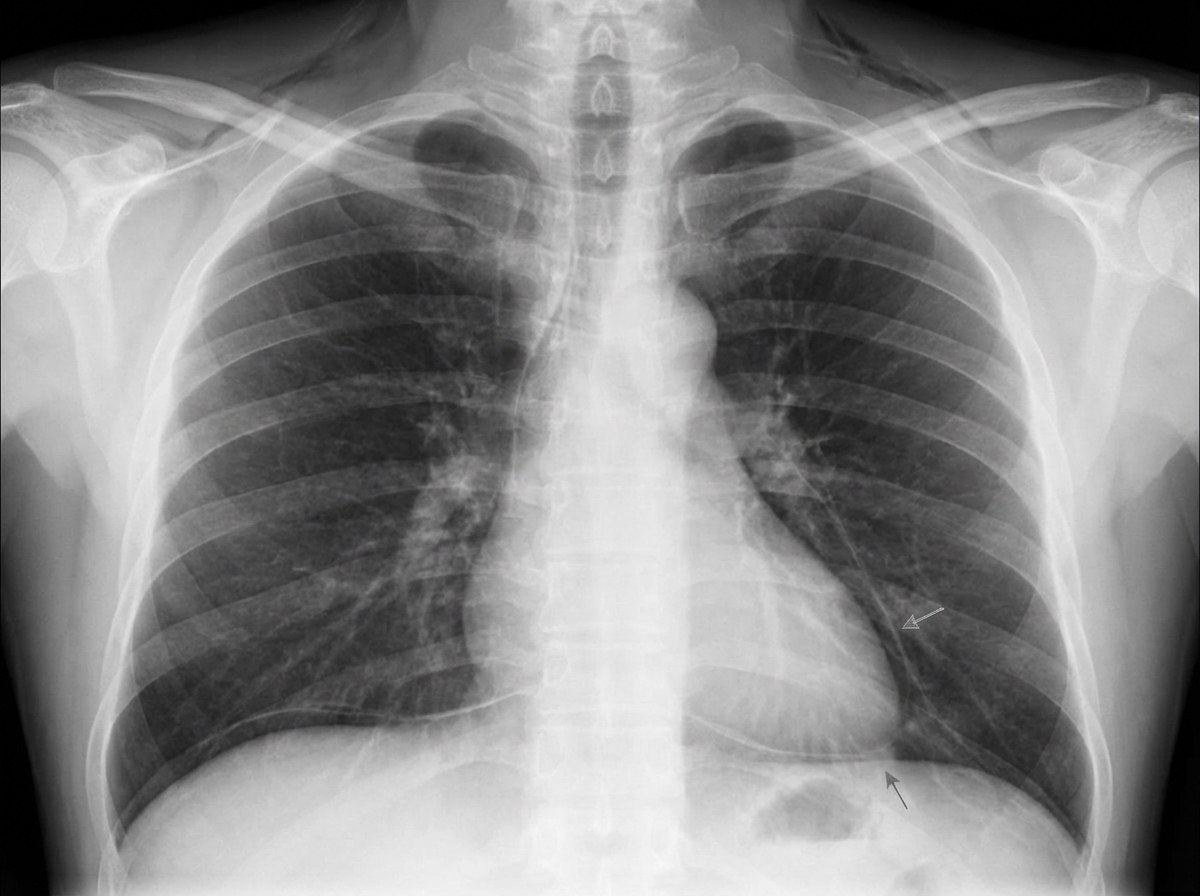
Question 248: A 68-year-old male is diagnosed with squamous cell carcinoma in the upper lobe of his right lung. A chest radiograph can be seen in image A. Which of the following would you most expect to find in this patient?
A. Anisocoria (Correct Answer)
B. Superior vena cava syndrome
C. Digital clubbing
D. Polydipsia
E. Lateral gaze palsy
Explanation: ***Anisocoria***
- A tumor in the **upper lobe of the right lung** (a **Pancoast tumor**) can compress the **sympathetic chain**, leading to **Horner's syndrome**.
- **Horner's syndrome** classically presents with unilateral symptoms on the affected side, including **miosis** (constricted pupil), **ptosis** (drooping eyelid), and **anhydrosis** (decreased sweating), which would cause an apparent **anisocoria** due to the difference in pupil size.
- This is the **most expected finding** for an upper lobe lung tumor due to direct anatomical proximity to the sympathetic chain.
*Superior vena cava syndrome*
- This syndrome is usually caused by tumors in the **upper or middle mediastinum** compressing the **superior vena cava**, leading to facial and upper extremity edema, and distended neck veins.
- While it can occur with lung cancer, a tumor specifically located in the right upper lobe is **less likely** to directly compress the SVC compared to one in the mediastinum.
*Digital clubbing*
- **Digital clubbing** is a common paraneoplastic syndrome associated with various lung diseases, including **lung cancer**, particularly **adenocarcinoma**.
- While possible with squamous cell carcinoma, it is **not location-specific** and can occur with any lung tumor, making it less specific than the neurological findings expected with a Pancoast tumor.
*Polydipsia*
- **Polydipsia** (excessive thirst) can be a symptom of **hypercalcemia**, a paraneoplastic syndrome sometimes associated with **squamous cell carcinoma of the lung** due to the production of **parathyroid hormone-related peptide (PTHrP)**.
- While a possible paraneoplastic syndrome, it is a **metabolic feature** rather than a direct anatomical finding highly specific to an upper lobe tumor compressing local structures.
*Lateral gaze palsy*
- A **lateral gaze palsy** is caused by damage to the **abducens nerve (CN VI)** or its nucleus, leading to an **inability to move the eye laterally**.
- This symptom is **not typically associated** with a primary lung tumor in the upper lobe unless there is widespread metastatic disease affecting the brainstem or cranial nerves, which is not directly indicated.
Question 249: A 48-year-old female suffers a traumatic brain injury while skiing in a remote area. Upon her arrival to the ER, she is severely hypoxemic and not responsive to O2 therapy. She is started on a mechanical ventilator and 2 days later upon auscultation, you note late inspiratory crackles. Which of the following is most likely normal in this patient?
A. Alveolar-arterial gradient
B. Left atrial pressure (Correct Answer)
C. Type II pneumocytes
D. Type I pneumocytes
E. Chest X-ray
Explanation: ***Left atrial pressure***
- A normal left atrial pressure would be expected in a patient with **Non-Cardiogenic Pulmonary Edema**, which is implied by her severe hypoxemia refractory to oxygen, crackles, and history of **Traumatic Brain Injury**.
- **Neurogenic Pulmonary Edema**, a form of non-cardiogenic pulmonary edema, is a known complication of severe TBI and does not primarily involve left heart failure, thus maintaining a normal left atrial pressure.
*Alveolar-arterial gradient*
- The patient's severe **hypoxemia** unresponsive to oxygen therapy indicates a significant **ventilation-perfusion mismatch** or shunt, which would lead to an *increased* alveolar-arterial gradient.
- An increased A-a gradient is characteristic of pulmonary edema, where fluid in the alveoli impairs oxygen diffusion into the capillaries.
*Type II pneumocytes*
- In **acute respiratory distress syndrome (ARDS)**, which is strongly suggested by the patient's presentation (non-cardiogenic pulmonary edema), **Type II pneumocytes often proliferate** in the reparative phase.
- While they are normally involved in **surfactant production**, their function can be impaired, and their numbers might increase to replace damaged Type I cells, so they would not be "normal."
*Type I pneumocytes*
- **Type I pneumocytes** are the primary cells responsible for **gas exchange** and are highly susceptible to injury in conditions like ARDS or pulmonary edema.
- In such a critically ill patient with diffuse alveolar damage, these cells would likely be damaged or destroyed, thus *not* normal.
*Chest X-ray*
- Given the patient's severe hypoxemia, late inspiratory crackles, and probable pulmonary edema, her **Chest X-ray** would likely show **bilateral infiltrates** or **diffuse haziness**, characteristic of ARDS or neurogenic pulmonary edema.
- Therefore, a normal chest X-ray is highly unlikely in this clinical scenario.
Question 250: A 60-year-old man comes to the physician because of recurrent nose bleeds that occur with light trauma or at random times during the day. Over the past 6 months, the patient has felt weak and fatigued and has had a 10-kg (22-lb) weight loss. He has poor appetite and describes abdominal discomfort. He does not have night sweats. His pulse is 72/min, blood pressure is 130/70 mm Hg, and his temperature is 37.5°C (99.5°F). The spleen is palpated 10 cm below the left costal margin. Multiple bruises are noted on both upper extremities. Laboratory studies show.
Hemoglobin 9.8 g/dL
Hematocrit 29.9%
Leukocyte count 4,500/mm3
Neutrophils 30%
Platelet count 74,000/mm3
Serum
Lactate dehydrogenase 410 IU/L
A peripheral blood smear detects tartrate-resistant acid phosphatase activity. Which of the following is the most appropriate initial treatment for this patient?
A. Cladribine (Correct Answer)
B. Melphalan
C. Rituximab
D. Transfusion of platelets
E. Transfusion of packed red blood cells
Explanation: ***Cladribine***
- The patient's presentation with **recurrent nosebleeds**, **splenomegaly**, **pancytopenia** (anemia, leukopenia, thrombocytopenia), **weight loss**, and **elevated LDH** is highly suggestive of **hairy cell leukemia (HCL)**. The detection of **tartrate-resistant acid phosphatase (TRAP)** activity on a peripheral blood smear is **pathognomonic for HCL**.
- **Cladribine** (2-chlorodeoxyadenosine) is a **purine analog** that is **highly effective** as a first-line treatment for HCL, leading to high rates of complete remission.
*Melphalan*
- **Melphalan** is an **alkylating agent** primarily used in the treatment of **multiple myeloma** and sometimes ovarian cancer, not hairy cell leukemia.
- It works by interfering with DNA replication and transcription, but it is **not the preferred agent** for the profound pancytopenia seen in HCL.
*Rituximab*
- **Rituximab** is a **monoclonal antibody** targeting the **CD20 antigen** found on B-lymphocytes, commonly used in non-Hodgkin lymphoma and chronic lymphocytic leukemia.
- While it can be used in some B-cell malignancies, it is **not the primary initial treatment** for hairy cell leukemia, where purine analogs are superior.
*Transfusion of platelets*
- While the patient has **thrombocytopenia (74,000/mm³) and nosebleeds**, indicating bleeding risk, **platelet transfusions are temporary measures** to manage acute bleeding.
- They do **not address the underlying cause** of the pancytopenia, which is the bone marrow infiltration by hairy cells.
*Transfusion of packed red blood cells*
- The patient's **anemia (Hb 9.8 g/dL)** may cause fatigue and weakness, but it is **not severe enough (Hb <7-8 g/dL)** to warrant immediate transfusion unless there is acute blood loss or significant symptomatic compromise.
- Like platelet transfusions, RBC transfusions are **supportive care** and do **not treat the underlying hairy cell leukemia**.