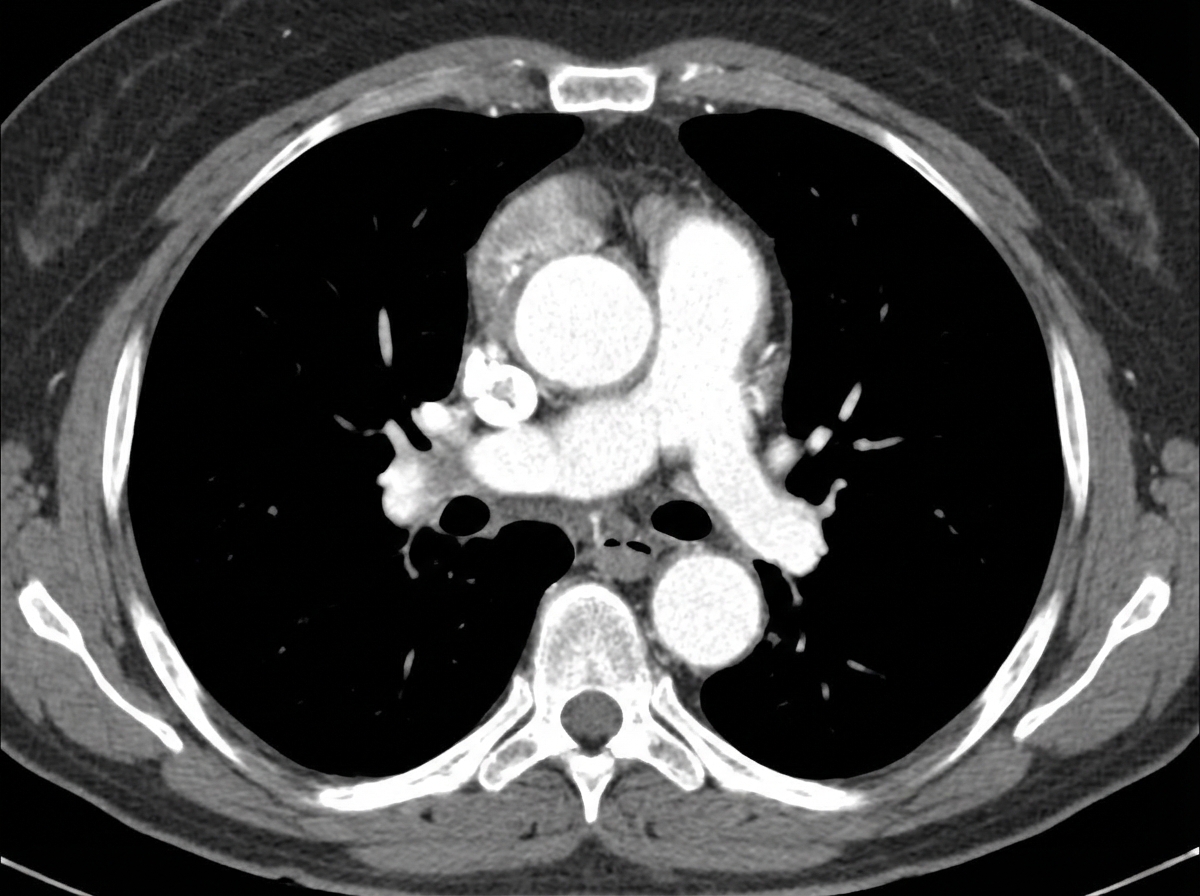
A 17-year-old boy presents to the emergency department for the evaluation of severe chest pain that started one hour ago. The pain suddenly began after he lifted a heavy object and the pain is constant. He has no history of a serious illness and takes no medications. His blood pressure is 125/85 mm Hg, the pulse is 89/min, the respiratory rate is 15/min, and the temperature is 36.7°C (98.1°F). Examination of the supraclavicular notch shows mild swelling of the skin with crepitation on palpation. Auscultation of the precordium in the left lateral decubitus position reveals a clicking sound with every heartbeat. The remainder of the physical examination shows no abnormalities. A chest X-ray is shown. Which of the following is the most appropriate next step in management?
Q232
A 52-year-old man with a history of Type 1 diabetes mellitus presents to the emergency room with increasing fatigue. Two days ago, he ran out of insulin and has not had time to obtain a new prescription. He denies fevers or chills. His temperature is 37.2 degrees Celsius, blood pressure 84/56 mmHg, heart rate 100/min, respiratory rate 20/min, and SpO2 97% on room air. His physical exam is otherwise within normal limits. An arterial blood gas analysis shows the following:
pH 7.25, PCO2 29, PO2 95, HCO3- 15.
Which of the following acid-base disorders is present?
Q233
A 71-year-old woman comes to the physician because of sudden loss of vision in her right eye for 15 minutes that morning, which subsided spontaneously. Over the past 4 months, she has had fatigue, a 4-kg (8.8-lb) weight loss, and has woken up on several occasions at night covered in sweat. She has had frequent headaches and pain in her jaw while chewing for the past 2 months. She does not smoke or drink alcohol. Her temperature is 37.5°C (99.5°F), pulse is 88/min, and blood pressure is 118/78 mm Hg. Examination shows a visual acuity of 20/25 in the left eye and 20/30 in the right eye. The pupils are equal and reactive. There is no swelling of the optic discs. Her hemoglobin concentration is 10.5 g/dL, platelet count is 420,000/mm3, and erythrocyte sedimentation rate is 69 mm/h. The patient's condition puts her at the greatest risk of developing which of the following complications?
Q234
A 39-year-old female presents with confusion. Her husband reports that she doesn't know where she is and cannot remember the date. She was recently diagnosed with small cell lung cancer. Vital signs are T 37C, HR 80, BP 120/80 mmHg, RR 14, and O2 sat 99% on room air. She is not orthostatic. Physical examination reveals moist mucous membranes and normal capillary refill. A basic metabolic profile reveals that serum sodium is 129. Regarding this patient's illness, which of the following is true?
Q235
A 70-year-old caucasian woman presents to her primary care provider complaining of a heavy cough with blood-tinged sputum. Her cough has bothered her for the last 2 weeks. Over the counter medications are no longer alleviating her symptoms. She also reports that she has unintentionally lost 6.8 kg (15 lb) in the last 5 months. Her past medical history is significant for peptic ulcer disease that was positive for H. pylori on biopsy and was treated with triple-drug therapy. She is a lifetime non-smoker and worked as a teacher before retiring at the age of 60. Today, her temperature is 36.9°C (98.4°F), blood pressure is 128/82 mm Hg, pulse is 87/min, and pulse oximetry is 90% on room air. On physical exam, her heart has a regular rate and rhythm. Auscultation of the lungs revealed scattered crackles and wheezes. A CT scan of the lungs shows an irregular mass in the peripheral region of the inferior lobe of the right lung and a CT guided biopsy is positive for malignant tissue architecture and gland formation with a significant amount of mucus. Which of the following risk factors most likely predisposed this patient to her condition?
Q236
A 23-year-old man comes to the physician because of lightening of his skin on both hands, under his eyes, and on his neck for 2 years. During this period the lesions slowly grew in size. There is no itchiness or pain. He regularly visits his family in India. Vital signs are within normal limits. Examination shows sharply demarcated, depigmented skin patches on the dorsum of both hands, in the periocular region, and on the neck. Sensation of the skin is intact. The lesions fluorescence blue-white under Wood's lamp. Which of the following findings is most likely to be associated with this patient's diagnosis?
Q237
A 50-year-old man comes to the physician because of diffuse weakness for the past several months. There is an anterior mediastinal mass on a lateral x-ray of the chest that was performed as part of a pre-employment medical evaluation. He has gastroesophageal reflux disease. His only medication is rabeprazole. He is 178 cm (5 ft 10 in) tall and weighs 77 kg (170 lb); BMI is 24.3 kg/m2. Vital signs are within normal limits. There is no cervical or axillary lymphadenopathy. Cardiopulmonary examination shows no abnormalities. The abdomen is soft and nontender; there is no splenomegaly. Further evaluation of this patient is most likely to show which of the following?
Q238
A 52-year-old Caucasian man with hypertension comes to the physician because of frequent urination and increased thirst. He drinks 4 oz of alcohol daily and has smoked 1 pack of cigarettes daily for the past 30 years. He is 180 cm (5 ft 10 in) tall and weighs 106 kg (233 lb); BMI is 33 kg/m2. His blood pressure is 130/80 mm Hg. Laboratory studies show a hemoglobin A1c of 8.5%. Which of the following is the most likely predisposing factor for this patient's condition?
Q239
An 80-year-old man presents to the emergency department because of gnawing substernal chest pain that started an hour ago and radiates to his neck and left jaw. A 12-lead ECG is obtained and shows ST-segment elevation with newly developing Q waves. He is admitted for treatment. 4 days after hospitalization he suddenly develops altered mental status, and his blood pressure falls from 115/75 mm Hg to 80/40 mm Hg. Physical examination shows jugular venous distention, pulsus paradoxus, and distant heart sounds. What is the most likely cause of this patient's condition?
Q240
A 61-year-old woman comes to the physician because of a 1-week history of dizziness, nausea, vomiting, and repeated falls. Neurologic examination shows past-pointing on a finger-nose test. She has a broad-based gait. Ophthalmologic exam shows rhythmic leftward movement of the globes. A serum antibody assay is positive for anti-Yo antibodies directed at proteins expressed by Purkinje cells. This patient's condition is most likely associated with which of the following tumors?
Cardiology US Medical PG Practice Questions and MCQs
Question 231: A 17-year-old boy presents to the emergency department for the evaluation of severe chest pain that started one hour ago. The pain suddenly began after he lifted a heavy object and the pain is constant. He has no history of a serious illness and takes no medications. His blood pressure is 125/85 mm Hg, the pulse is 89/min, the respiratory rate is 15/min, and the temperature is 36.7°C (98.1°F). Examination of the supraclavicular notch shows mild swelling of the skin with crepitation on palpation. Auscultation of the precordium in the left lateral decubitus position reveals a clicking sound with every heartbeat. The remainder of the physical examination shows no abnormalities. A chest X-ray is shown. Which of the following is the most appropriate next step in management?
A. Needle aspiration
B. Surgical exploration
C. Supplemental oxygen (Correct Answer)
D. Chest tube
E. Video-assisted thoracoscopic surgery
Explanation: ***Supplemental oxygen***
- The patient's presentation with **sudden chest pain** after lifting a heavy object, **subcutaneous emphysema** (crepitation), and a pericardial **clicking sound (Hamman's sign)** suggests spontaneous pneumomediastinum.
- Though often benign and self-limiting, the initial management involves supportive care like **supplemental oxygen** for pain and improved oxygenation.
*Needle aspiration*
- This procedure is indicated for **tension pneumothorax**, which presents with respiratory distress, tracheal deviation, and hemodynamic instability, none of which are present here.
- Pneumomediastinum involves air in the mediastinum, not the pleural space, so needle aspiration of the pleural space would be ineffective and potentially harmful.
*Surgical exploration*
- Surgical exploration is rarely needed in spontaneous pneumomediastinum unless there is evidence of an **esophageal rupture** or another critical injury, or if conservative management fails.
- The patient's stable vital signs and lack of signs of septic shock or uncontrolled bleeding make immediate surgery unnecessary.
*Chest tube*
- A **chest tube** is used to drain air or fluid from the pleural space, typically for pneumothorax or pleural effusion.
- It is not indicated for isolated pneumomediastinum, as the air is in the mediastinum and not causing lung collapse.
*Video-assisted thoracoscopic surgery*
- **VATS** is a minimally invasive surgical procedure that might be used for persistent air leaks, recurrent pneumothorax, or for diagnosis and treatment of conditions like esophageal rupture, which are not suggested by this patient's presentation.
- Given the isolated pneumomediastinum, conservative management is the first-line treatment.
Question 232: A 52-year-old man with a history of Type 1 diabetes mellitus presents to the emergency room with increasing fatigue. Two days ago, he ran out of insulin and has not had time to obtain a new prescription. He denies fevers or chills. His temperature is 37.2 degrees Celsius, blood pressure 84/56 mmHg, heart rate 100/min, respiratory rate 20/min, and SpO2 97% on room air. His physical exam is otherwise within normal limits. An arterial blood gas analysis shows the following:
pH 7.25, PCO2 29, PO2 95, HCO3- 15.
Which of the following acid-base disorders is present?
A. Respiratory alkalosis with appropriate metabolic compensation
B. Respiratory acidosis with appropriate metabolic compensation
C. Mixed metabolic and respiratory acidosis
D. Metabolic acidosis with appropriate respiratory compensation (Correct Answer)
E. Metabolic alkalosis with appropriate respiratory compensation
Explanation: ***Metabolic acidosis with appropriate respiratory compensation***
- The patient's pH of 7.25 and HCO3- of 15 indicate **metabolic acidosis**, while the PCO2 of 29 indicates **respiratory compensation**.
- The compensation is **appropriate** as suggested by Winter's formula [Expected PCO2 = (1.5 x HCO3-) + 8 +/- 2; (1.5 x 15) + 8 = 30.5, which is close to 29].
*Respiratory alkalosis with appropriate metabolic compensation*
- This would involve a **pH > 7.45** and **low PCO2** with a secondary drop in HCO3-, which is not seen here.
- The patient's primary problem is a metabolic disturbance due to insulin deficiency.
*Respiratory acidosis with appropriate metabolic compensation*
- This disorder is characterized by a **low pH** and a **high PCO2**, with a secondary rise in HCO3-.
- The patient's PCO2 is low, indicating a compensatory response rather than a primary respiratory acidosis.
*Mixed metabolic and respiratory acidosis*
- A mixed disorder would show a **low pH** due to both **low HCO3-** and **high PCO2**.
- The patient's PCO2 is low, indicating a compensatory response to metabolic acidosis, not an additional respiratory acidosis.
*Metabolic alkalosis with appropriate respiratory compensation*
- This would present with a **high pH (>7.45)** and **high HCO3-**, with compensatory **elevated PCO2**.
- The patient's pH and HCO3- are low, indicating acidosis, not alkalosis.
Question 233: A 71-year-old woman comes to the physician because of sudden loss of vision in her right eye for 15 minutes that morning, which subsided spontaneously. Over the past 4 months, she has had fatigue, a 4-kg (8.8-lb) weight loss, and has woken up on several occasions at night covered in sweat. She has had frequent headaches and pain in her jaw while chewing for the past 2 months. She does not smoke or drink alcohol. Her temperature is 37.5°C (99.5°F), pulse is 88/min, and blood pressure is 118/78 mm Hg. Examination shows a visual acuity of 20/25 in the left eye and 20/30 in the right eye. The pupils are equal and reactive. There is no swelling of the optic discs. Her hemoglobin concentration is 10.5 g/dL, platelet count is 420,000/mm3, and erythrocyte sedimentation rate is 69 mm/h. The patient's condition puts her at the greatest risk of developing which of the following complications?
A. Pulmonary artery hypertension
B. Rapidly progressive glomerulonephritis
C. Thoracic aortic aneurysm (Correct Answer)
D. Internal carotid artery stenosis
E. Myocardial infarction
Explanation: ***Thoracic aortic aneurysm***
- This patient presents with symptoms highly suggestive of **giant cell arteritis (GCA)**, including sudden, transient vision loss (amaurosis fugax), jaw claudication, headaches, fatigue, weight loss, night sweats, and an elevated ESR. GCA is a **large-vessel vasculitis** that can affect the aorta.
- **Aortic aneurysm and dissection** are serious long-term complications of GCA, affecting up to 15-30% of patients, with the thoracic aorta being particularly vulnerable.
*Pulmonary artery hypertension*
- While systemic inflammatory conditions can sometimes be associated with secondary pulmonary hypertension, it is **not a direct or common complication** of giant cell arteritis.
- Pulmonary artery hypertension is more typically associated with conditions like **scleroderma**, chronic thromboembolic disease, or left heart failure.
*Rapidly progressive glomerulonephritis*
- This condition is characterized by a rapid decline in renal function and is typically seen in **ANCA-associated vasculitides** (e.g., granulomatosis with polyangiitis, microscopic polyangiitis) or anti-GBM disease.
- While GCA is a vasculitis, it primarily affects **large and medium-sized arteries** and does not typically cause rapidly progressive glomerulonephritis.
*Internal carotid artery stenosis*
- While GCA can affect the **carotid arteries**, leading to symptoms like amaurosis fugax due to involvement of the ophthalmic artery (a branch of the internal carotid), it primarily causes **vasculitic inflammation** rather than typical atherosclerotic stenosis which is its own distinct complication.
- The risk of an aneurysm in a large vessel like the aorta is a more distinct and severe systemic complication in this context than focal stenosis of the internal carotid due to the vasculitic process itself.
*Myocardial infarction*
- GCA can increase the risk of cardiovascular events due to sustained inflammation and potential accelerated atherosclerosis, but **myocardial infarction** is not the *greatest risk* or a direct, typical complication of the vasculitic process itself in the way an aortic aneurysm is.
- The primary target of inflammation in GCA is the arterial wall, which directly predisposes to conditions like aneurysm and dissection, especially in the aorta.
Question 234: A 39-year-old female presents with confusion. Her husband reports that she doesn't know where she is and cannot remember the date. She was recently diagnosed with small cell lung cancer. Vital signs are T 37C, HR 80, BP 120/80 mmHg, RR 14, and O2 sat 99% on room air. She is not orthostatic. Physical examination reveals moist mucous membranes and normal capillary refill. A basic metabolic profile reveals that serum sodium is 129. Regarding this patient's illness, which of the following is true?
A. Urinary osmolarity will be < 100, and another potential cause of this disorder is excessive water drinking
B. Urinary sodium will be > 20 and another potential cause of this disorder is renal failure
C. Urinary sodium will be > 20 and fractional excretion of sodium will be >1%
D. Urinary osmolarity will be > 100, and this illness will not correct with normal saline infusion (Correct Answer)
E. Urinary sodium will be < 10, and fractional excretion of sodium will be <1%
Explanation: ***Urinary osmolarity will be > 100, and this illness will not correct with normal saline infusion***
- The patient's **hyponatremia** in the context of **small cell lung cancer** (a known cause of SIADH), euvolemia (normal vital signs, moist mucous membranes, normal capillary refill), suggests **SIADH**. In SIADH, **ADH** is inappropriately elevated, leading to water retention, dilute serum, and concentrated urine, so **urinary osmolarity will be > 100 mOsm/kg** (typically > 300 mOsm/kg).
- Since SIADH involves excess free water retention due to inappropriate ADH secretion and not volume depletion, administering **normal saline (0.9%)** can actually worsen the hyponatremia by providing additional free water without addressing the underlying ADH excess. The appropriate treatment for symptomatic SIADH is **hypertonic saline (3%)**, fluid restriction, and addressing the underlying cause.
*Urinary osmolarity will be < 100, and another potential cause of this disorder is excessive water drinking*
- In SIADH, the presence of inappropriately high ADH leads to increased water reabsorption in the collecting ducts, resulting in **concentrated urine**; therefore, **urinary osmolarity will be > 100 mOsm/kg**, not < 100.
- **Urinary osmolarity < 100 mOsm/kg** with hyponatremia suggests **primary polydipsia** (excessive water drinking), where ADH is appropriately suppressed and the kidneys produce maximally dilute urine. While polydipsia can cause hyponatremia, it is not consistent with the clinical picture of SIADH, where ADH is elevated and urine is concentrated.
*Urinary sodium will be > 20 and another potential cause of this disorder is renal failure*
- In SIADH, the kidneys continue to excrete sodium due to the expanded extracellular fluid volume even in the setting of hyponatremia, leading to a **urinary sodium concentration > 20 mEq/L** ✓.
- While **renal failure** can cause hyponatremia due to impaired free water excretion, it typically presents with volume overload, elevated BUN/creatinine, and other findings not seen in this euvolemic patient with SIADH. Renal failure is not a typical "other cause" when discussing SIADH specifically.
*Urinary sodium will be > 20 and fractional excretion of sodium will be >1%*
- In SIADH, the body experiences perceived volume expansion, causing natriuresis despite low serum sodium, resulting in **urinary sodium > 20 mEq/L** ✓.
- The **fractional excretion of sodium (FENa)** is typically **>1%** (usually 1-2%) in SIADH because the kidneys appropriately excrete sodium in response to the perceived volume expansion ✓. While this option is medically accurate for SIADH, it doesn't address the critical clinical point about treatment (that normal saline is contraindicated) and the urinary osmolarity, which are more defining diagnostic and therapeutic characteristics.
*Urinary sodium will be < 10, and fractional excretion of sodium will be <1%*
- **Urinary sodium < 10 mEq/L** and **FENa < 1%** typically indicate **hypovolemic hyponatremia** with effective arterial blood volume depletion (e.g., dehydration, heart failure, cirrhosis), where the kidneys are avidly conserving sodium and water.
- This is **not consistent with SIADH**, which presents as **euvolemic hyponatremia** where the urine is concentrated (not maximally dilute) and sodium continues to be excreted, making these values incompatible with the diagnosis.
Question 235: A 70-year-old caucasian woman presents to her primary care provider complaining of a heavy cough with blood-tinged sputum. Her cough has bothered her for the last 2 weeks. Over the counter medications are no longer alleviating her symptoms. She also reports that she has unintentionally lost 6.8 kg (15 lb) in the last 5 months. Her past medical history is significant for peptic ulcer disease that was positive for H. pylori on biopsy and was treated with triple-drug therapy. She is a lifetime non-smoker and worked as a teacher before retiring at the age of 60. Today, her temperature is 36.9°C (98.4°F), blood pressure is 128/82 mm Hg, pulse is 87/min, and pulse oximetry is 90% on room air. On physical exam, her heart has a regular rate and rhythm. Auscultation of the lungs revealed scattered crackles and wheezes. A CT scan of the lungs shows an irregular mass in the peripheral region of the inferior lobe of the right lung and a CT guided biopsy is positive for malignant tissue architecture and gland formation with a significant amount of mucus. Which of the following risk factors most likely predisposed this patient to her condition?
A. Family history
B. Environmental exposure
C. Previous lung disease
D. Age (Correct Answer)
E. Smoking history
Explanation: ***Age***
- The risk of developing **lung cancer** increases significantly with age, with most diagnoses occurring in individuals over 65 years old. This 70-year-old patient falls directly into the high-risk age group.
- While other risk factors exist, age is a universal and undeniable contributor to cancer risk due to accumulated cellular damage and mutations over time.
*Smoking history*
- The patient is explicitly stated to be a **lifetime non-smoker**, making smoking an unlikely risk factor for her lung cancer.
- While smoking is the most significant risk factor for lung cancer, its absence here points to other etiologies.
*Family history*
- The vignette provides **no information regarding a family history** of lung cancer or other malignancies.
- Without this information, family history cannot be confirmed or denied as a contributing factor.
*Environmental exposure*
- The patient worked as a teacher, which is generally not associated with significant **environmental carcinogen exposure** linked to lung cancer (e.g., asbestos, radon).
- While possible, there is no evidence presented in the case to suggest environmental exposure as a primary risk factor.
*Previous lung disease*
- The patient's history is significant for **peptic ulcer disease**, which is unrelated to lung pathology and does not increase the risk of lung cancer.
- Previous lung diseases like chronic obstructive pulmonary disease (COPD) or pulmonary fibrosis can increase lung cancer risk, but these are not mentioned for this patient.
Question 236: A 23-year-old man comes to the physician because of lightening of his skin on both hands, under his eyes, and on his neck for 2 years. During this period the lesions slowly grew in size. There is no itchiness or pain. He regularly visits his family in India. Vital signs are within normal limits. Examination shows sharply demarcated, depigmented skin patches on the dorsum of both hands, in the periocular region, and on the neck. Sensation of the skin is intact. The lesions fluorescence blue-white under Wood's lamp. Which of the following findings is most likely to be associated with this patient's diagnosis?
A. Renal angiomyolipoma on abdominal MRI
B. Decreased pigment with normal melanocyte count
C. Elevated anti-TPO antibody levels (Correct Answer)
D. “Spaghetti and meatballs” appearance on KOH scraping
E. Poorly developed retinal pigment epithelium
Explanation: ***Elevated anti-TPO antibody levels***
- This patient's symptoms are highly suggestive of **vitiligo**, characterized by **sharply demarcated, depigmented skin patches** that fluorescence blue-white under Wood's lamp.
- Vitiligo is an **autoimmune disease** often associated with other autoimmune conditions, particularly **Hashimoto's thyroiditis**, which is indicated by elevated **anti-thyroid peroxidase (anti-TPO) antibody levels**.
*Renal angiomyolipoma on abdominal MRI*
- **Renal angiomyolipomas** are benign tumors strongly associated with **tuberous sclerosis complex**, a genetic disorder with distinctive skin lesions like **ash-leaf spots** and facial angiofibromas, which are not described here.
- The depigmentation in tuberous sclerosis is typically well-circumscribed but does not have the progressing, widespread nature seen in vitiligo.
*Decreased pigment with normal melanocyte count*
- This finding describes **post-inflammatory hypopigmentation** or certain forms of albinism, where melanocytes are present but produce less melanin.
- In **vitiligo**, the characteristic pathology is the **destruction of melanocytes**, leading to a complete absence of pigment in the affected areas.
*"Spaghetti and meatballs" appearance on KOH scraping*
- The "spaghetti and meatballs" appearance refers to **hyphae and spores** of *Malassezia* species, typically observed in **tinea versicolor**, a superficial fungal infection.
- Tinea versicolor presents with hypo- or hyperpigmented patches, but they are usually **fine and scaly**, and the depigmentation is due to fungal interference with melanocyte function, not melanocyte destruction.
*Poorly developed retinal pigment epithelium*
- Poorly developed or absent **retinal pigment epithelium** is a hallmark of **ocular albinism** or **oculocutaneous albinism**.
- These conditions are characterized by generalized hypopigmentation (or absence of pigment) of the skin, hair, and eyes from birth, which differs significantly from the progressive, patchy depigmentation of vitiligo.
Question 237: A 50-year-old man comes to the physician because of diffuse weakness for the past several months. There is an anterior mediastinal mass on a lateral x-ray of the chest that was performed as part of a pre-employment medical evaluation. He has gastroesophageal reflux disease. His only medication is rabeprazole. He is 178 cm (5 ft 10 in) tall and weighs 77 kg (170 lb); BMI is 24.3 kg/m2. Vital signs are within normal limits. There is no cervical or axillary lymphadenopathy. Cardiopulmonary examination shows no abnormalities. The abdomen is soft and nontender; there is no splenomegaly. Further evaluation of this patient is most likely to show which of the following?
A. Increased urinary catecholamines
B. Elevated TSH and a nodular anterior cervical mass
C. Elevated serum alpha-fetoprotein level
D. Acetylcholine receptor antibodies (Correct Answer)
E. Fever, night sweats, and weight loss
Explanation: ***Acetylcholine receptor antibodies***
- The patient's **diffuse weakness** lasting several months, in conjunction with an **anterior mediastinal mass**, is highly suggestive of **myasthenia gravis**.
- Myasthenia gravis is an autoimmune disorder often associated with **thymoma** (an anterior mediastinal mass) and is characterized by **autoantibodies against acetylcholine receptors** at the neuromuscular junction.
*Increased urinary catecholamines*
- Increased urinary catecholamines are indicative of a **pheochromocytoma**, a tumor of the adrenal medulla, which typically presents with **paroxysmal hypertension**, headaches, and palpitations.
- These symptoms are not described in the patient, and a pheochromocytoma is not associated with an anterior mediastinal mass or generalized weakness in this manner.
*Elevated TSH and a nodular anterior cervical mass*
- Elevated TSH and a nodular anterior cervical mass point towards a **thyroid disorder**, such as **hypothyroidism** with a goiter or a thyroid nodule.
- While hypothyroidism can cause weakness, it does not typically present with an **anterior mediastinal mass**, and the clinical picture does not align with thyroid pathology.
*Elevated serum alpha-fetoprotein level*
- Elevated serum **alpha-fetoprotein (AFP)** is primarily a tumor marker for **hepatocellular carcinoma** or **germ cell tumors**, such as testicular or ovarian cancer.
- This finding is unrelated to an anterior mediastinal mass or the diffuse weakness described in the patient.
*Fever, night sweats, and weight loss*
- **Fever, night sweats, and weight loss** (B symptoms) are classic systemic signs associated with **lymphoma** and some other malignancies.
- While an anterior mediastinal mass could be a lymphoma, the primary symptom of **diffuse weakness** strongly points away from lymphoma as the initial leading diagnosis and towards a paraneoplastic syndrome like myasthenia gravis, given the specific presentation.
Question 238: A 52-year-old Caucasian man with hypertension comes to the physician because of frequent urination and increased thirst. He drinks 4 oz of alcohol daily and has smoked 1 pack of cigarettes daily for the past 30 years. He is 180 cm (5 ft 10 in) tall and weighs 106 kg (233 lb); BMI is 33 kg/m2. His blood pressure is 130/80 mm Hg. Laboratory studies show a hemoglobin A1c of 8.5%. Which of the following is the most likely predisposing factor for this patient's condition?
A. High calorie diet (Correct Answer)
B. Alcohol consumption
C. Smoking history
D. Caucasian ethnicity
E. HLA-DR4 status
Explanation: ***High calorie diet***
- This patient presents with **Type 2 Diabetes Mellitus**, evidenced by **polyuria**, **polydipsia**, and **HbA1c of 8.5%** (diagnostic threshold >6.5%).
- **Obesity** (BMI 33 kg/m²) resulting from chronic high-calorie intake is the **most significant predisposing factor** for Type 2 DM, as it leads to **insulin resistance** through adipose tissue accumulation and inflammatory cytokine release.
- Among all the listed risk factors, obesity from dietary excess is the **strongest and most direct modifiable risk factor** for developing Type 2 DM.
*Alcohol consumption*
- Moderate alcohol intake (4 oz daily) is not a primary predisposing factor for Type 2 DM.
- Excessive chronic alcohol consumption can affect glucose metabolism and contribute to pancreatitis-related diabetes, but this patient's moderate intake is not the primary driver of his condition.
*Smoking history*
- Smoking increases risk of **cardiovascular complications** and worsens diabetes outcomes, but it is not the primary predisposing factor for **developing** Type 2 DM.
- The strongest association with DM onset is obesity and insulin resistance, not smoking.
*Caucasian ethnicity*
- Caucasian ethnicity confers **lower risk** for Type 2 DM compared to African American, Hispanic, Native American, and Asian populations.
- While genetic factors play a role, Caucasian ethnicity is not a specific predisposing factor in this case.
*HLA-DR4 status*
- **HLA-DR4** is strongly associated with **Type 1 Diabetes Mellitus**, an autoimmune condition typically presenting in younger patients with absolute insulin deficiency.
- This patient's age, obesity, and clinical presentation are classic for **Type 2 DM**, which has no association with HLA-DR4.
Question 239: An 80-year-old man presents to the emergency department because of gnawing substernal chest pain that started an hour ago and radiates to his neck and left jaw. A 12-lead ECG is obtained and shows ST-segment elevation with newly developing Q waves. He is admitted for treatment. 4 days after hospitalization he suddenly develops altered mental status, and his blood pressure falls from 115/75 mm Hg to 80/40 mm Hg. Physical examination shows jugular venous distention, pulsus paradoxus, and distant heart sounds. What is the most likely cause of this patient's condition?
A. Pericardial inflammation
B. Compression of heart chambers by blood in the pericardial space (Correct Answer)
C. Arrhythmia caused by ventricular fibrillation
D. Rupture of papillary muscle
E. Acute pulmonary edema from left heart failure
Explanation: ***Compression of heart chambers by blood in the pericardial space***
- The patient's initial presentation with ST-elevation myocardial infarction (STEMI) and subsequent development of **hypotension**, **jugular venous distention**, **pulsus paradoxus**, and **distant heart sounds** (Beck's triad) is highly indicative of **cardiac tamponade.**
- In the context of a recent MI, this constellation of symptoms strongly suggests a **cardiac free wall rupture**, leading to blood accumulation in the pericardial sac and compression of the heart.
- Free wall rupture typically occurs **3-7 days post-MI** and is a life-threatening mechanical complication.
*Pericardial inflammation*
- While pericardial inflammation (pericarditis) can occur post-MI, it typically manifests with **pleuritic chest pain** that is relieved by leaning forward and is often associated with a **pericardial friction rub.**
- It does not typically lead to acute, severe hypotension, pulsus paradoxus, or sudden circulatory collapse in this manner without significant effusion and tamponade physiology.
*Arrhythmia caused by ventricular fibrillation*
- **Ventricular fibrillation** would cause immediate cardiac arrest and loss of consciousness, not a gradual development of hypotension, JVD, and pulsus paradoxus.
- While arrhythmias are common post-MI, the specific physical findings point away from isolated VFib as the primary cause of hemodynamic collapse.
*Acute pulmonary edema from left heart failure*
- **Acute pulmonary edema** is a manifestation of **left heart failure**, characterized by severe dyspnea, orthopnea, and crackles on lung auscultation.
- While left heart failure can cause hypotension in cardiogenic shock, it would not typically present with the classic signs of cardiac tamponade such as pulsus paradoxus, distant heart sounds, and prominent JVD without pulmonary congestion findings.
*Rupture of papillary muscle*
- **Papillary muscle rupture** leads to severe **acute mitral regurgitation**, causing acute pulmonary edema, a new holosystolic murmur, and often cardiogenic shock.
- While it can lead to hypotension, it doesn't typically present with the classic signs of cardiac tamponade such as pulsus paradoxus and distant heart sounds; instead, a loud murmur would be prominent.
Question 240: A 61-year-old woman comes to the physician because of a 1-week history of dizziness, nausea, vomiting, and repeated falls. Neurologic examination shows past-pointing on a finger-nose test. She has a broad-based gait. Ophthalmologic exam shows rhythmic leftward movement of the globes. A serum antibody assay is positive for anti-Yo antibodies directed at proteins expressed by Purkinje cells. This patient's condition is most likely associated with which of the following tumors?
A. Small cell lung cancer
B. Breast cancer (Correct Answer)
C. Neuroblastoma
D. Ovarian teratoma
E. Thymoma
Explanation: ***Breast cancer***
- **Anti-Yo antibodies**, also known as anti-Purkinje cell cytoplasmic antibodies type 1 (PCA-1), are strongly associated with **paraneoplastic cerebellar degeneration** that most commonly occurs in patients with **breast or gynecological cancers** (particularly ovarian carcinoma).
- The patient's symptoms of **dizziness, nausea, vomiting, repeated falls, past-pointing, broad-based gait**, and **nystagmus** are classic signs of cerebellar dysfunction, which is consistent with paraneoplastic cerebellar degeneration.
*Small cell lung cancer*
- Small cell lung cancer is more commonly associated with other paraneoplastic syndromes and antibodies, such as **Lambert-Eaton myasthenic syndrome (anti-voltage-gated calcium channel antibodies)** or **paraneoplastic encephalomyelitis/sensory neuronopathy (anti-Hu antibodies)**.
- While it can cause paraneoplastic cerebellar degeneration, it is not the most frequent tumor type associated with **anti-Yo antibodies**.
*Neuroblastoma*
- Neuroblastoma is typically found in **children** and is associated with **opsoclonus-myoclonus syndrome (anti-Ri antibodies)**, not anti-Yo antibodies or cerebellar degeneration in an adult.
- This patient is a 61-year-old woman, making neuroblastoma highly unlikely.
*Ovarian teratoma*
- Ovarian **teratoma** is strongly associated with **anti-NMDA receptor encephalitis**, which presents with psychiatric symptoms, seizures, and dyskinesias, different from the cerebellar signs seen here.
- Anti-Yo antibodies are associated with **ovarian carcinoma** (epithelial ovarian cancer), not teratomas. The distinction between teratoma and carcinoma is important in paraneoplastic syndromes.
*Thymoma*
- Thymoma is classically linked to **myasthenia gravis (anti-acetylcholine receptor antibodies)**, which causes fluctuating muscle weakness, not cerebellar dysfunction.
- It is not associated with **anti-Yo antibodies** or paraneoplastic cerebellar degeneration.