A 40-year-old man who had recently joined a gym collapsed on the treadmill. He was rushed to the hospital where an ECG shows presence of:
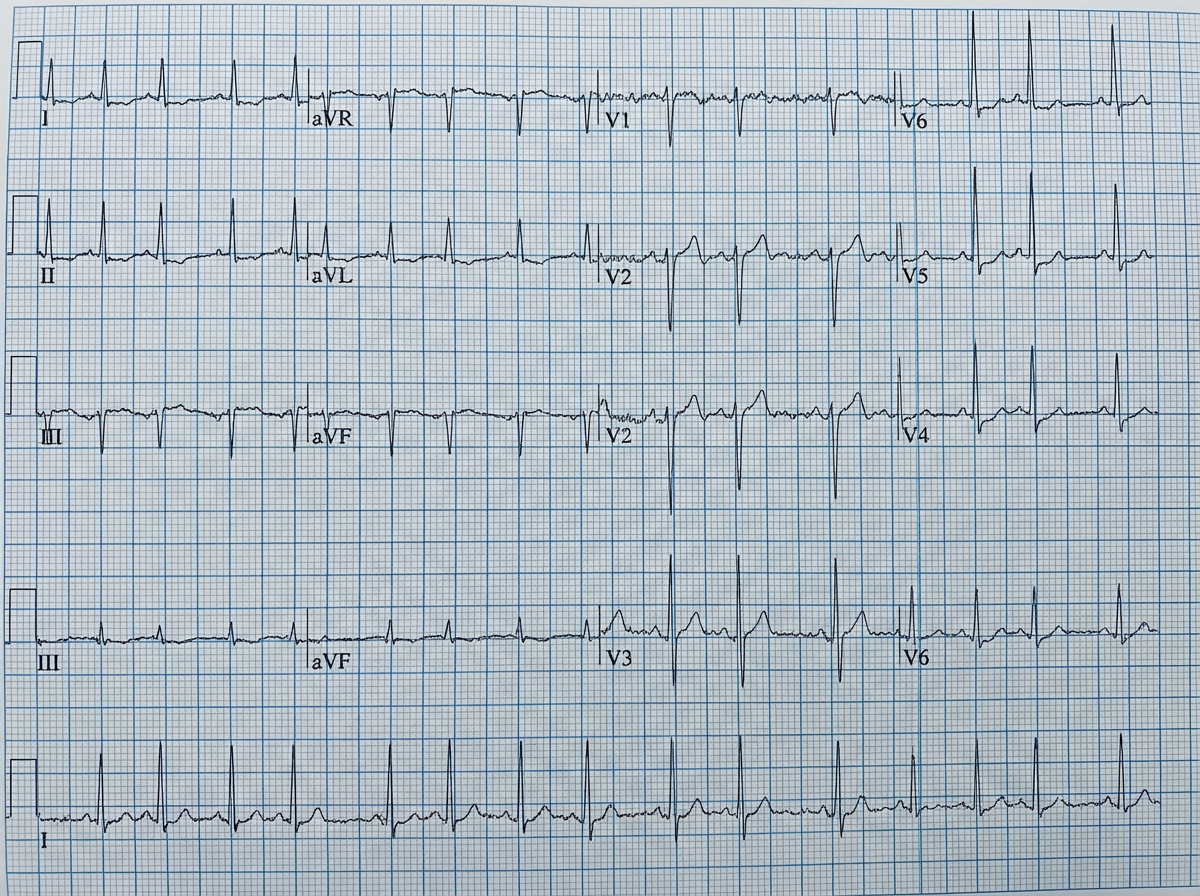
A 70-year-old hypertension patient presents with complaints of palpitations and presyncope. On examination, his heart rate is 72 bpm and BP is 150/100, ECG done shows:
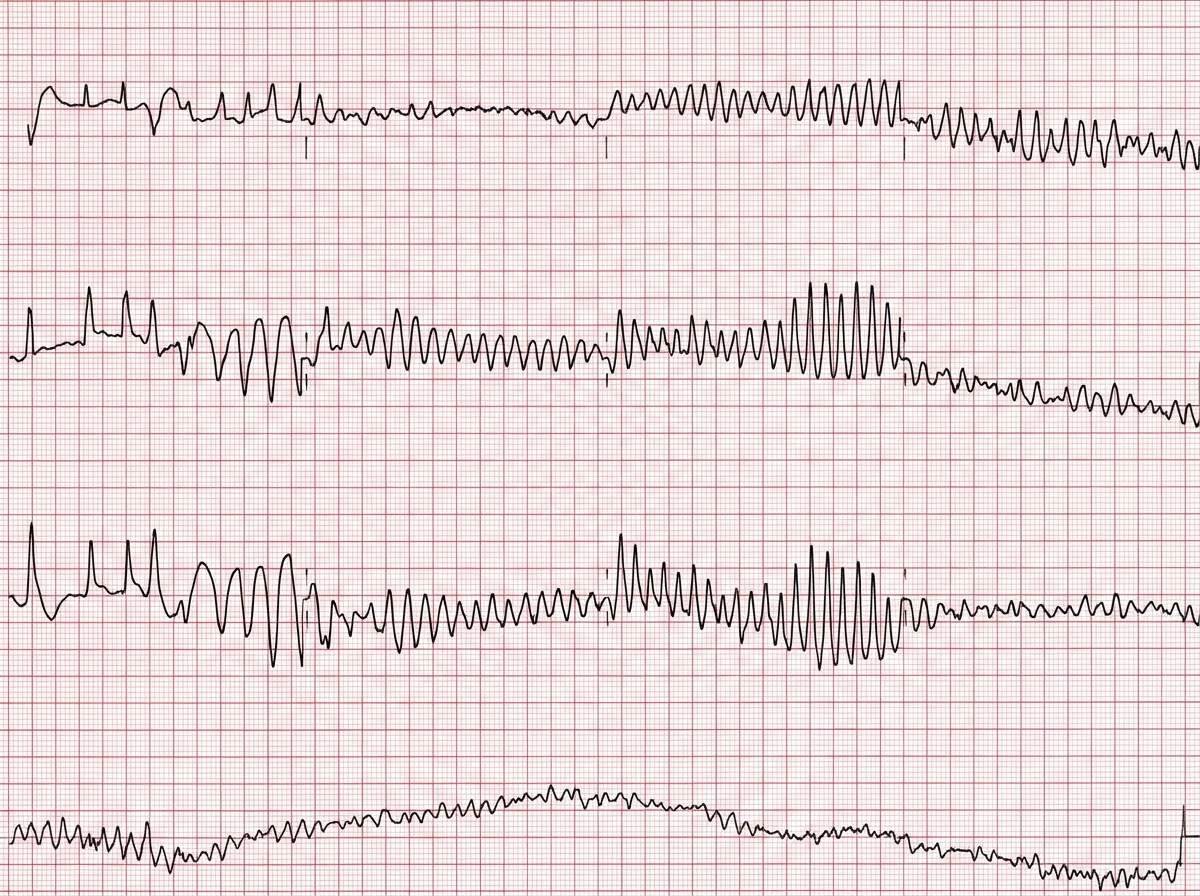
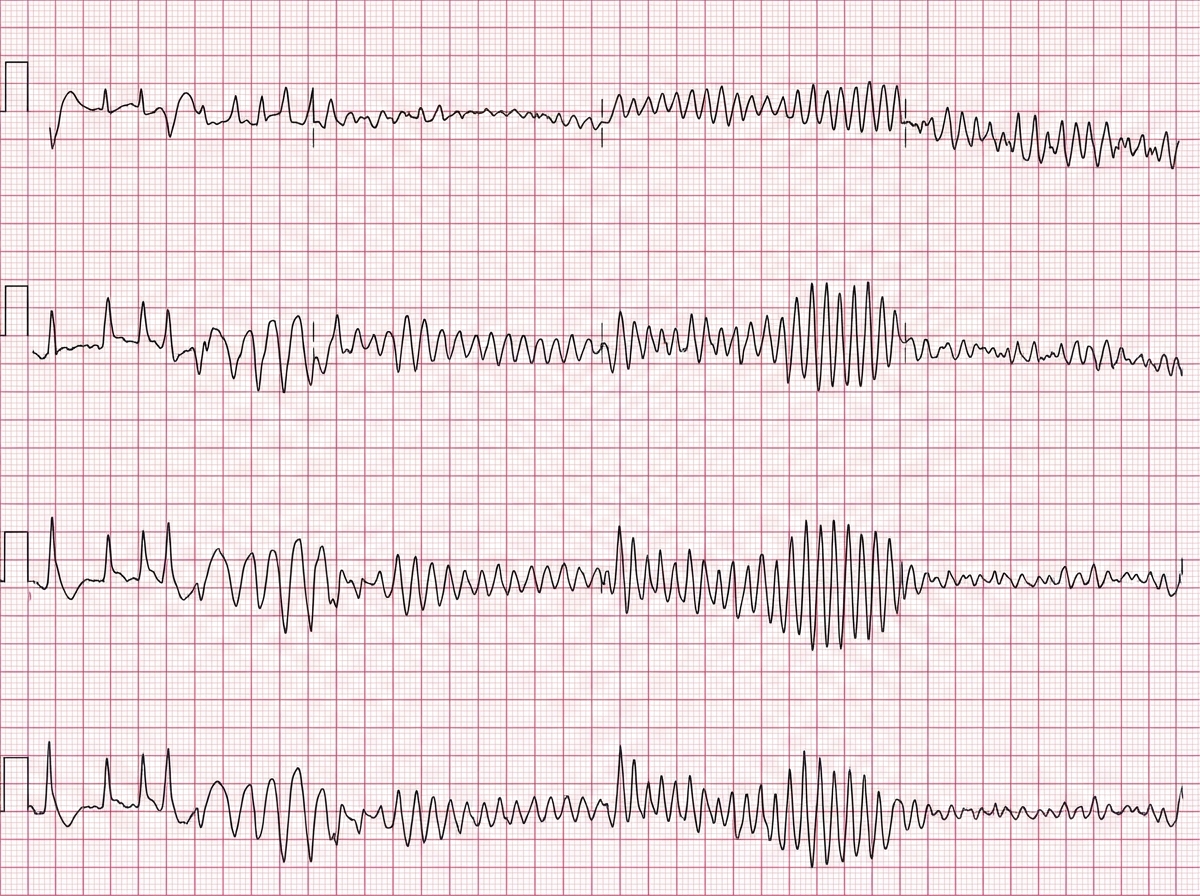
This 50-year-old patient developed syncope after having a coffee. ECG was done .Which is the most appropriate therapy for a patient suffering from the condition shown below?
A patient suffers from STEMI. He was taken to cath lab. What is the name of the Catheter shown below?

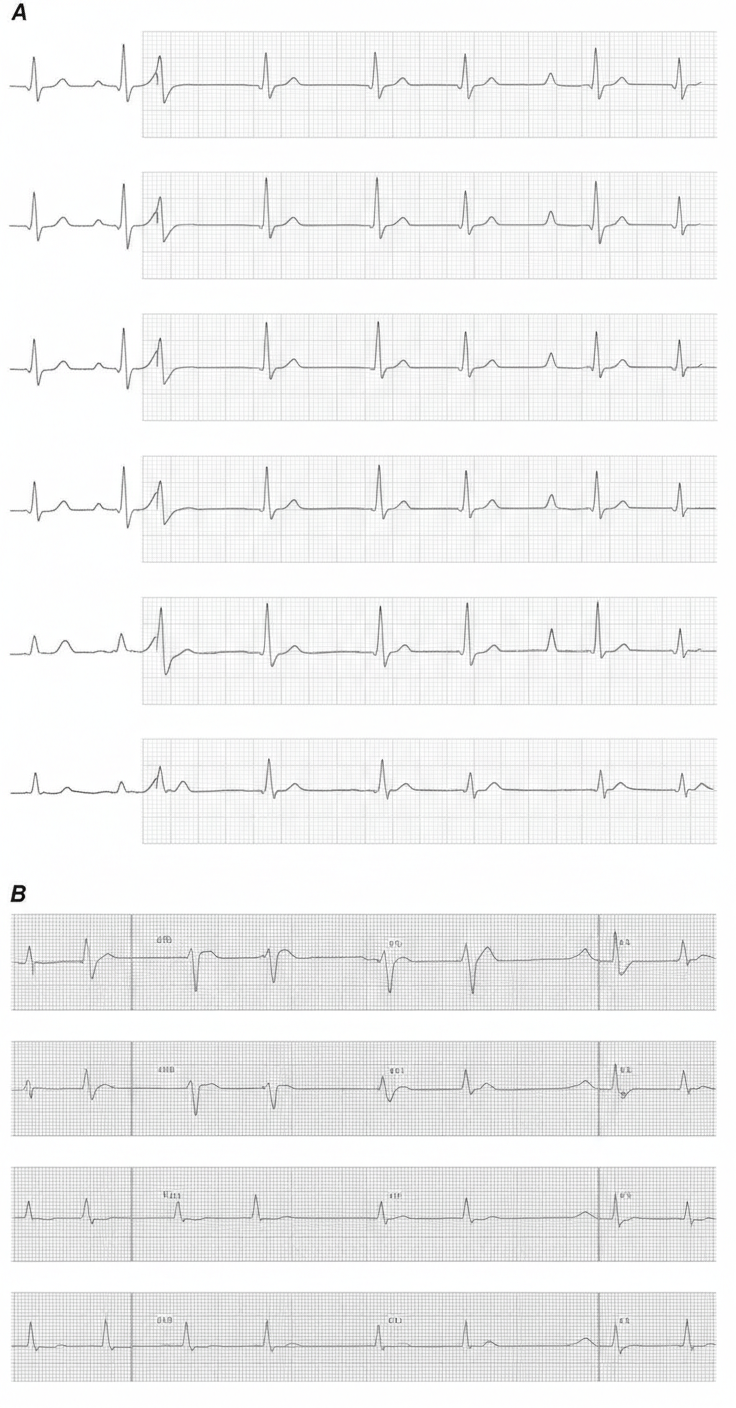
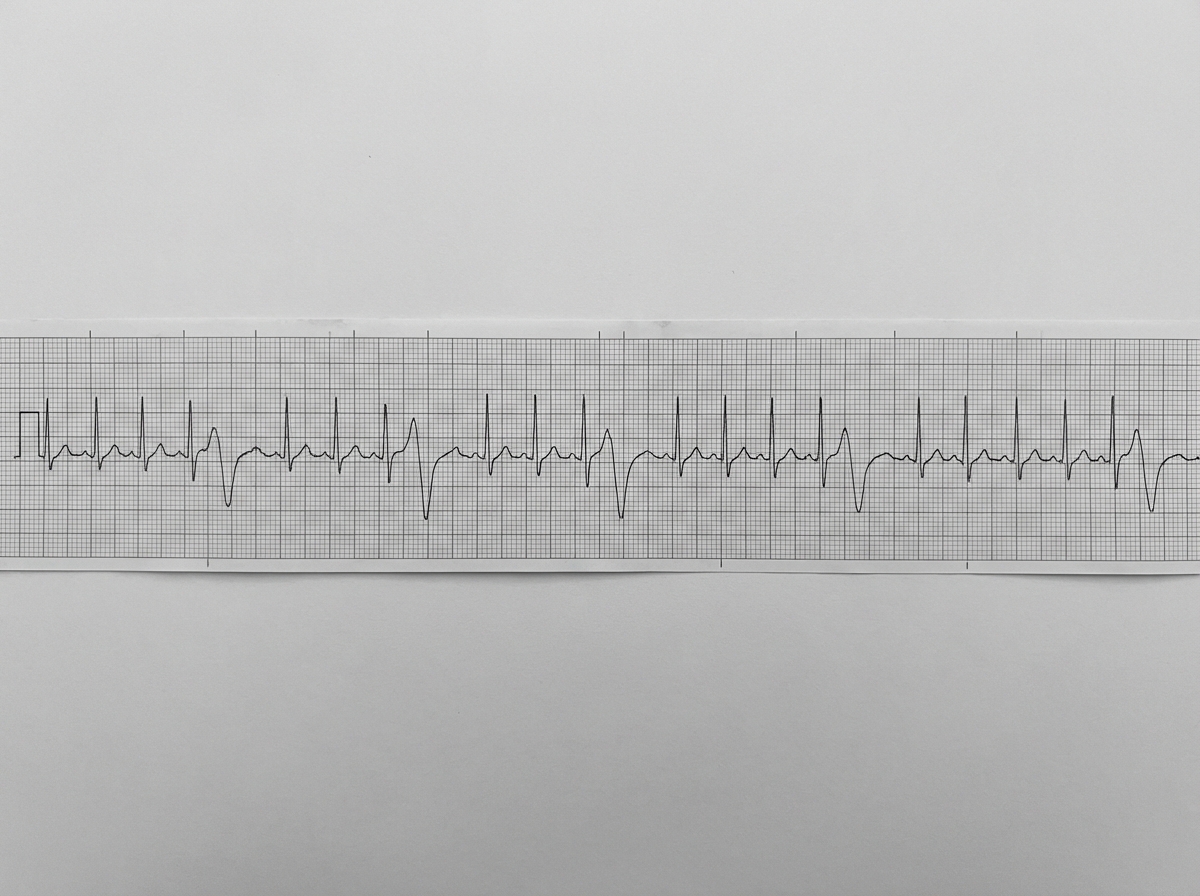
The tracing shows normal sinus rhythm alternating with premature ventricular contraction. This is diagnostic of:
A 65-year-old pensioner in ESI dispensary complains of exercise intolerance. On auscultation a systolic murmur grade 3 is heard. What does the ECG show?
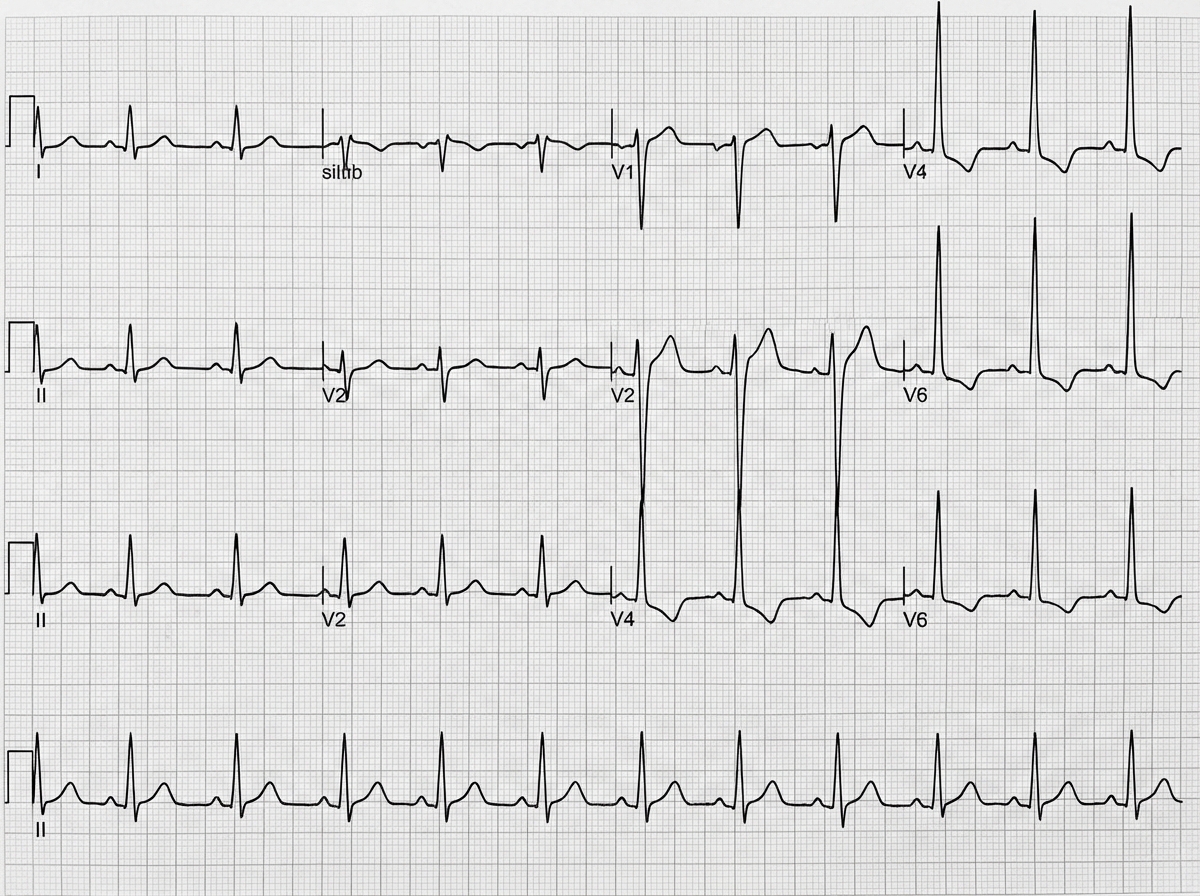
An 89-year-old man with hypertension presents for routine follow-up. ECG shows:
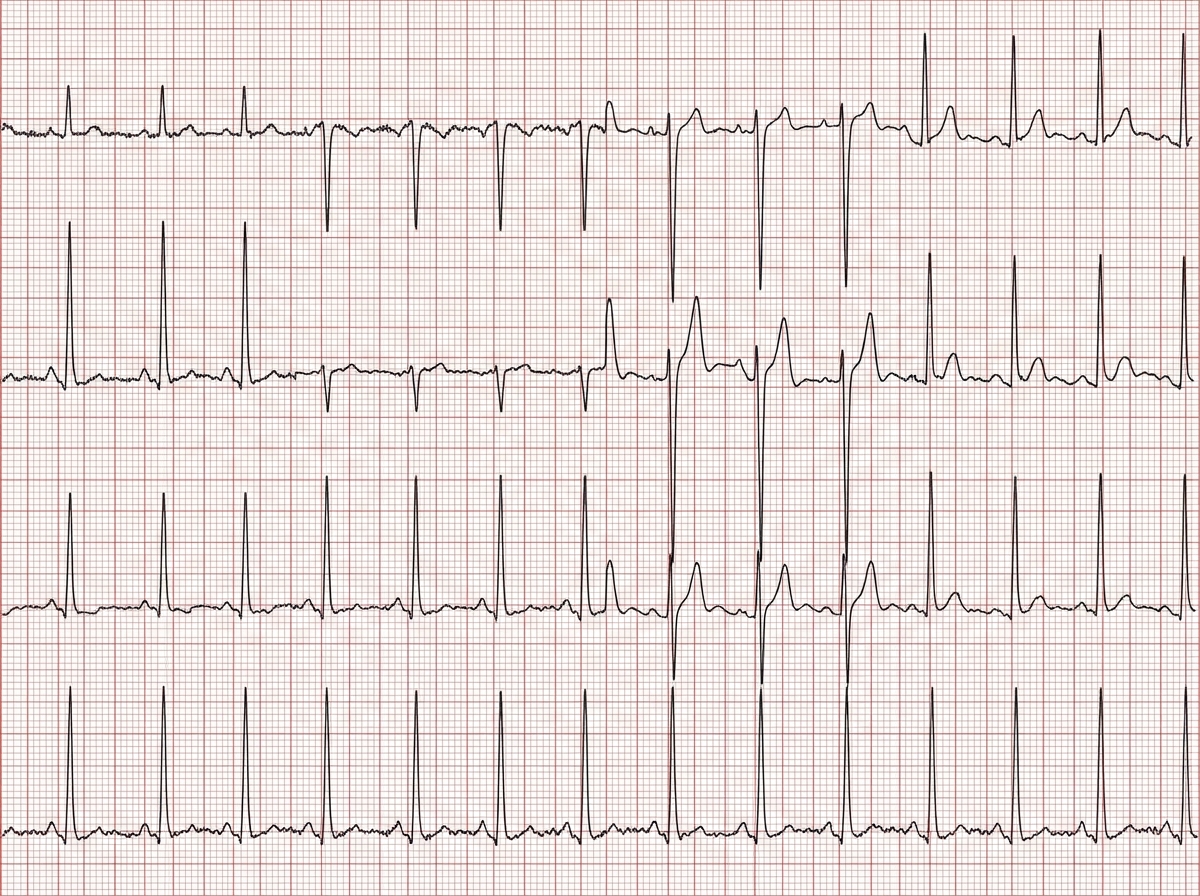
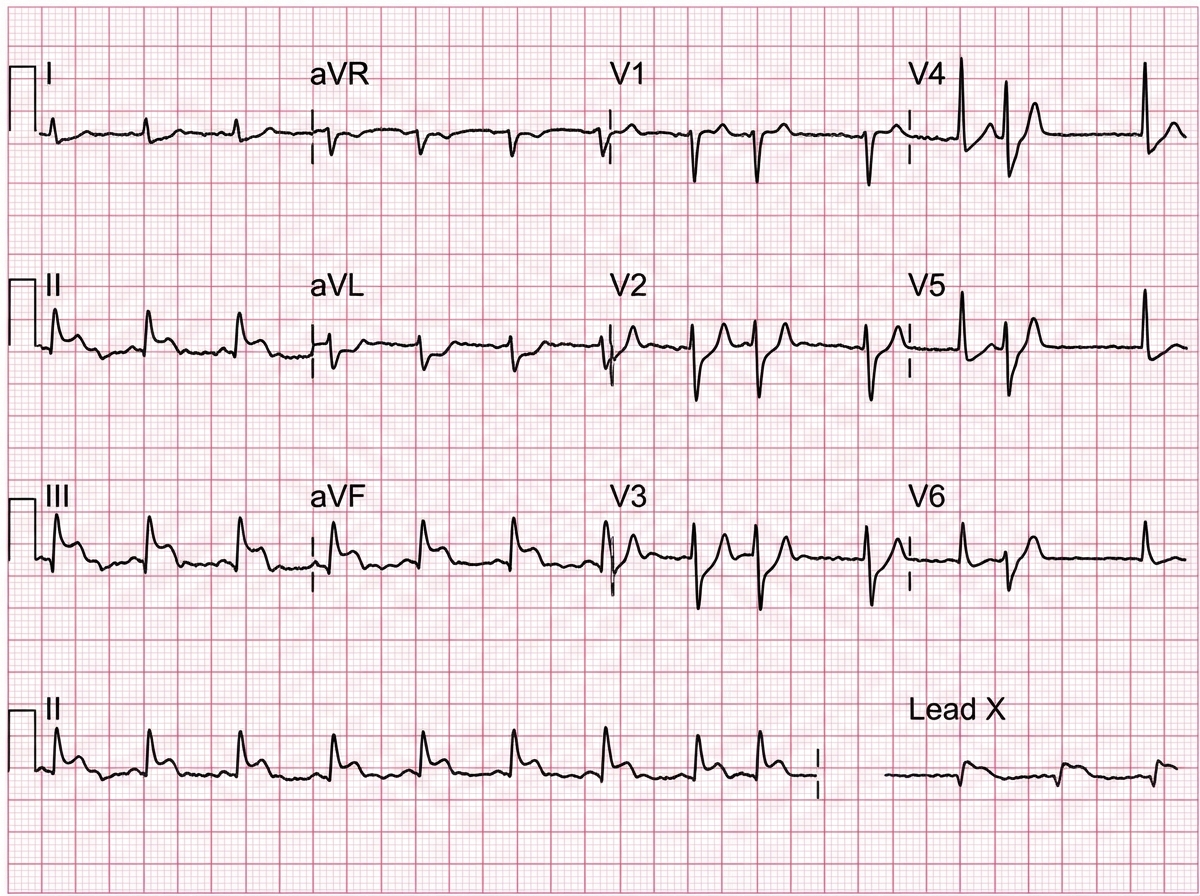
A healthy 36-year-old corporate executive has an ECG performed as part of annual health check-up. He is asymptomatic. ECG shows:

A 50-year-old smoker comes with complaints of ankle edema for last 3 months. The ECG shows all except: (Recent NEET Pattern 2016-17)

A 60-year-old hypertension patient presents with breathlessness. ECG was performed. What is the diagnosis? (Recent NEET Pattern 2016-17)

Explanation: ***Catecholamine-sensitive ventricular tachycardia*** - This ECG shows a **wide complex tachycardia** with evidence of **ventricular ectopy** that is likely exacerbated by exercise (joining a gym, collapsing on a treadmill). - The ECG does not show clear features of myocardial infarction (e.g., significant ST elevation in contiguous leads), Brugada pattern (Type 1 coved ST elevation in V1-V3), or ARVD (epsilon waves). The presentation of exercise-induced syncope with ventricular arrhythmia fits well with a diagnosis of **catecholamine-sensitive polymorphic VT** (also known as CPVT). *Acute extensive anterior wall MI* - An extensive anterior wall MI would typically present with **ST-segment elevation** in leads V1-V6, I, and aVL, along with reciprocal changes. - While there are some elevated ST segments, they are not consistent across the anterior leads to diagnose an extensive anterior MI, and the **wide QRS complexes** suggest a ventricular arrhythmia rather than changes primarily due to ischemia. *Brugada syndrome* - Brugada syndrome is characterized by a specific ECG pattern: **ST-segment elevation** with a **coved or saddle-back morphology** in leads V1-V3, often with an inverted T wave. - This ECG does not display the characteristic **Type 1 coved ST-segment elevation** required for a diagnosis of Brugada syndrome; the morphology of the QRS complexes is too broad and varied for this diagnosis. *Arrhythmogenic right ventricular dysplasia* - ARVD is characterized by **epsilon waves** (small positive deflections at the end of the QRS complex) and **T-wave inversions** in right precordial leads (V1-V3), along with wide QRS complexes in the right ventricular outflow tract. - While the patient has wide QRS complexes, the characteristic **epsilon waves** and widespread T-wave inversions indicative of ARVD are not clearly visible on this ECG. *Long QT syndrome* - Long QT syndrome typically presents with **prolonged QT interval** (QTc >450 ms in men) and can cause exercise-induced syncope due to torsades de pointes. - However, this ECG shows a **regular wide complex tachycardia** rather than the characteristic polymorphic VT with "twisting of the points" seen in torsades de pointes. The QT interval cannot be accurately assessed during tachycardia, making this diagnosis less likely in this context.
Explanation: ***Atrial fibrillation*** - The ECG shows **irregularly irregular R-R intervals** and the **absence of distinct P waves**, which are classic hallmarks of atrial fibrillation. - The disorganized atrial activity results in a fibrillatory baseline, especially visible in leads like V1, and is consistent with the patient's complaints of palpitations and presyncope in the setting of hypertension. *Atrial flutter* - Characterized by distinct **sawtooth flutter waves**, typically in leads II, III, and aVF, and usually regular atrial activity with a fixed AV conduction ratio. - While atrial activity is rapid, it is organized, unlike the chaotic rhythm seen in this ECG. *Multifocal atrial tachycardia* - Defined by at least **three different P wave morphologies** and an irregular rhythm. - Although the rhythm is irregular, the absence of clear, distinct P waves rules out multifocal atrial tachycardia. *PSVT* - Paroxysmal supraventricular tachycardia (PSVT) typically presents with a **regular, narrow-complex tachycardia** with an abrupt onset and termination. - The ECG in question exhibits an **irregular ventricular rhythm** and lacks the regular P waves or pseudo-R' waves often seen in typical PSVT. *Sinus rhythm with premature atrial contractions* - While PACs can cause an irregular rhythm, they occur against a background of **regular sinus rhythm with identifiable P waves**. - In this ECG, there is complete absence of organized P waves and a continuously irregular baseline, which distinguishes atrial fibrillation from occasional PACs.
Explanation: ***DC shock*** - The ECG shows **polymorphic ventricular tachycardia (PVT)**, characterized by rapid, irregular QRS complexes that vary in morphology. This is consistent with **Torsades de Pointes**, a type of PVT. - In a patient presenting with syncope (indicating **hemodynamic instability**), **immediate synchronized direct current (DC) cardioversion** is the most appropriate and life-saving therapy to terminate the arrhythmia. - Unstable patients require **immediate electrical cardioversion** before pharmacological measures. *Magnesium sulfate* - **Magnesium sulfate (2g IV bolus)** is the **first-line pharmacological treatment** for **stable Torsades de Pointes** and helps prevent recurrence. - It works by stabilizing cardiac membranes and shortening the QT interval. - However, in this **unstable patient with syncope**, **DC cardioversion takes priority** over magnesium administration, though magnesium should be given immediately after successful cardioversion to prevent recurrence. *Lignocaine* - **Lignocaine (Lidocaine)** is a Class IB antiarrhythmic drug primarily used for **monomorphic ventricular tachycardia** and ventricular fibrillation. - It is **contraindicated** in Torsades de Pointes because it can prolong the QT interval further, worsening the arrhythmia. *Amiodarone* - **Amiodarone** is a Class III antiarrhythmic drug effective for various arrhythmias, including some ventricular tachycardias. - It is **not the first-line treatment for Torsades de Pointes** due to its slower onset of action and potential to prolong the QT interval, which can worsen Torsades de Pointes. *Esmolol* - **Esmolol** is a short-acting beta-blocker that primarily works to lower heart rate and can be used in some supraventricular tachycardias or to control ventricular rate in atrial fibrillation/flutter. - It is **not effective for Torsades de Pointes** and could potentially worsen the condition by further slowing the heart rate or increasing QT prolongation in some underlying conditions.
Explanation: ***Judkin's catheter*** - The image displays the characteristic pre-formed curved tip of a **Judkin's catheter** designed to selectively engage the **coronary arteries** from the ascending aorta. - Judkin's catheters come in different curves (e.g., JL for left, JR for right) to optimally cannulate the specific coronary ostia for angiography or intervention. *Amplatz catheter* - An **Amplatz catheter** is another type of pre-formed coronary catheter with different curve configurations (e.g., AL for left, AR for right) used for selective coronary engagement. - Amplatz catheters have a wider, more circular primary curve compared to Judkin's catheters and are particularly useful when Judkin's catheters fail to engage or in cases of unusual coronary anatomy. - The catheter shown has the characteristic Judkin's curve rather than the Amplatz configuration. *Aubaniac catheter* - The term "Aubaniac catheter" is not a standard or recognized catheter type used in modern interventional cardiology. - This option is likely a distractor and does not correspond to any known catheter morphology or function. *Pig tail catheter* - A **pigtail catheter** has a distinctive curved tip with multiple side holes, resembling a pig's tail, primarily used for **LV ventriculography** or non-selective angiography in large vessels. - Its design is for safe, high-volume contrast injection in a chamber like the left ventricle, not for selective coronary cannulation as depicted. *Malecot catheter* - A **Malecot catheter** is a type of self-retaining catheter with wing-like side flanges near the tip, commonly used for **drainage purposes** in urology or gastroenterology (e.g., nephrostomy, gastrostomy). - Its structure and function are entirely different from the catheter shown, which is used for vascular access and cannulation.
Explanation: ***Ventricular bigeminy*** - This rhythm is characterized by a **normal sinus beat** followed by a premature **ventricular contraction (PVC)**, and this pattern then repeats. - The provided ECG tracing clearly shows this alternating pattern, with a narrow QRS complex (sinus beat) followed by a wide, bizarre QRS complex (PVC). *Ventricular couplets* - This term refers to **two consecutive PVCs** occurring together, which is not the pattern seen in the tracing. - In a couplet, there would be no intervening normal sinus beat between the PVCs. *Ventricular trigeminy* - This rhythm involves **two normal sinus beats** followed by a single PVC, and this sequence repeats. - The tracing shows a 1:1 ratio of normal beats to PVCs, not a 2:1 ratio. *Ventricular quadrigeminy* - This rhythm pattern consists of **three normal sinus beats** followed by a single PVC, and this sequence repeats. - The tracing shows a 1:1 alternating pattern, not a 3:1 ratio characteristic of quadrigeminy. *Ventricular tachycardia* - This is defined as **three or more consecutive PVCs** occurring at a rapid rate, leading to a sustained rhythm of wide QRS complexes. - The tracing shows isolated PVCs alternating with normal beats, not a sustained run of wide QRS complexes.
Explanation: ***Left ventricular hypertrophy*** - The ECG shows significantly **tall R waves** in leads V4-V6 and deep S waves in V1-V2, indicating increased left ventricular mass. - This finding is consistent with **left ventricular hypertrophy (LVH)**, which often develops in patients with aortic stenosis, a condition that can cause a systolic murmur and exercise intolerance. *Normal tracing* - A normal ECG would not exhibit such pronounced voltage criteria for LVH or significant ST-T wave changes. - The elevated R wave amplitude in lateral leads and deep S waves in precordial leads are beyond normal limits. *Atrial fibrillation* - Atrial fibrillation is characterized by an **irregularly irregular rhythm** and absence of distinct P waves, neither of which is present on this ECG. - The rhythm here appears regular with clear P waves preceding each QRS complex. *Left bundle branch block* - Left bundle branch block (LBBB) is characterized by a **widened QRS complex** (>0.12 seconds) and a dominant S wave in V1, with broad, notched R waves in lateral leads (I, aVL, V5, V6). - While there are tall R waves in lateral leads, the QRS duration is not significantly widened, and the characteristic morphology of LBBB is absent. *Right ventricular hypertrophy* - Right ventricular hypertrophy (RVH) typically shows **tall R waves in V1-V2** with deep S waves in V5-V6, which is the opposite pattern of what is seen here. - RVH is associated with conditions like pulmonary stenosis or chronic lung disease, and would present with right axis deviation, not the left-sided voltage criteria seen in this ECG.
Explanation: ***LBBB*** - This ECG shows **broad QRS complexes (>0.12 seconds)**, consistent with a bundle branch block. - The presence of a **dominant S wave in V1** and broad, notched R waves (or monophasic R waves) in **leads I, aVL, V5, and V6** are characteristic features of Left Bundle Branch Block (LBBB). *RBBB* - RBBB typically presents with **wide QRS complexes**, but with an **RSR' pattern in V1** and wide S waves in leads I and V6, which is not seen here. - The **dominant S wave in V1** observed in the given ECG rules out typical RBBB. *ST elevation* - While there is some **ST-segment deviation** in several leads (e.g., depression in V1-V3, elevation in V5-V6), these are often **secondary repolarization abnormalities** associated with LBBB and do not represent primary ST elevation of myocardial infarction unless there are specific, unequivocal Sgarbossa criteria. - The primary and most striking finding is the wide QRS morphology, not significant ST elevation indicative of acute injury. *Extreme axis deviation* - The mean QRS axis appears to be within the normal range, or perhaps slightly leftward, but not an **extreme axis deviation** (e.g., superior axis > -90 degrees) which would manifest as dominant negative QRS complexes in leads I, II, and III. - While LBBB can sometimes shift the electrical axis, this ECG does not demonstrate the specific criteria for extreme axis deviation. *Left ventricular hypertrophy* - LVH can present with **increased QRS voltage** in precordial leads and may show ST-T wave changes, which could be seen in a hypertensive patient. - However, LVH does not typically produce the **markedly widened QRS complexes (>0.12 seconds)** with the characteristic LBBB morphology (dominant S in V1, broad R in I, aVL, V5-V6) seen in this ECG. - While LVH and LBBB can coexist, the dominant finding here is the bundle branch block pattern.
Explanation: ***Early repolarization variant*** - The ECG shows **widespread ST-segment elevation** (most prominent in leads V4-V6 and II, III, aVF) with notching/slurring at the J-point. These findings, particularly in a young, asymptomatic individual, are characteristic of a benign early repolarization pattern. - This is a common and **physiologically normal variant** typically seen in young, healthy individuals, athletes, and males of African descent. It is generally not associated with adverse cardiac events. *ST segment depression in chest leads* - The ECG actually demonstrates ST-segment **elevation**, not depression, especially prominent in the chest leads V4-V6. - **ST depression** suggests myocardial ischemia or subendocardial injury, which is not consistent with the presented ECG. *Delta wave* - A **delta wave** is a slurred upstroke of the QRS complex, indicating WPW syndrome or pre-excitation. This ECG does not show any slurring or widening of the initial QRS complex. - The PR interval appears normal, and the QRS duration is within normal limits, ruling out a delta wave. *J wave* - A **J wave** (Osborn wave) is a positive deflection at the J-point, prominent in hypothermia, severe hypercalcemia, or Brugada syndrome. While there is J-point notching, a true J wave is much more pronounced and often associated with specific clinical conditions. - The notching seen here is consistent with the benign variant of early repolarization, which is distinct from the pathological J wave seen in hypothermia or other conditions. *Acute pericarditis* - While **acute pericarditis** can also present with widespread ST-segment elevation, it is typically accompanied by **clinical symptoms** such as pleuritic chest pain, fever, and a pericardial friction rub. - Pericarditis characteristically shows **PR segment depression** (especially in lead II) and reciprocal PR elevation in aVR, which helps differentiate it from early repolarization. - This patient is **asymptomatic**, making acute pericarditis highly unlikely.
Explanation: ***Right bundle branch block*** - This ECG does **NOT** show features of right bundle branch block, which would require a **wide QRS (≥120 ms)** with an **RSR' (M-shaped) pattern in V1-V3** and wide, slurred S waves in lateral leads (I, V5-V6). - In cor pulmonale, the QRS is typically **narrow** without the RBBB morphology, making RBBB the finding that is **absent** — the correct "EXCEPT" answer. *P pulmonale* - The P waves in leads II, III, and aVF are **tall and peaked** (amplitude ≥2.5 mm in lead II), characteristic of **P pulmonale**, indicating right atrial enlargement/increased right atrial pressure. - This is consistent with **cor pulmonale** from chronic obstructive pulmonary disease (COPD) in a long-term smoker presenting with ankle edema. *Right axis deviation* - The QRS complex is **predominantly negative in lead I** and **positive in aVF**, indicating a **right axis deviation** (axis > +90°). - This reflects **right ventricular hypertrophy or strain**, classic in cor pulmonale due to COPD-induced pulmonary hypertension. *Left axis deviation* - The ECG shows **right axis deviation**, not left axis deviation. - Left axis deviation (axis −30° to −90°) would show a **predominantly positive QRS in lead I and negative in aVF** — the opposite of what is seen here. - Left axis deviation is therefore **NOT present** on this ECG; it is a distracter option. *T wave inversion in II, III, V1-V2* - The ECG shows **T wave inversions** in leads II, III, and V1-V2. - These inversions over the inferior and right precordial leads reflect **right ventricular strain/hypertrophy**, a well-recognised pattern in cor pulmonale.
Explanation: ***Left ventricular hypertrophy*** - The ECG shows significantly **increased QRS voltage in leads V1-V6**, particularly prominent R waves in V5/V6 and deep S waves in V1/V2, indicating left ventricular hypertrophy as per criteria like **Sokolow-Lyon index** (S in V1 + R in V5/V6 > 35mm). - The presence of **T-wave inversion and ST depression** (strain pattern) in lateral leads (V5, V6), especially in a patient with **hypertension**, further supports the diagnosis of left ventricular hypertrophy. *LBBB* - **LBBB** (Left Bundle Branch Block) is characterized by a **wide QRS complex** (>120 ms) with a **notched or slurred R wave** in lateral leads (I, aVL, V5, V6) and a deep S wave in V1, none of which are definitively seen here. - The QRS duration is not significantly widened, and the morphology is not typical for LBBB. *Normal tracing* - This ECG is not normal due to the **grossly elevated QRS voltages** in precordial leads and the presence of **ST-T wave abnormalities** (strain pattern). - A normal ECG would not exhibit such pronounced voltage criteria for chamber enlargement. *Complete heart block* - Complete heart block is characterized by **dissociation between atrial (P waves) and ventricular (QRS complexes) activity**, where P waves and QRS complexes occur independently. - This ECG shows a regular rhythm with P waves followed by QRS complexes, indicating normal AV conduction and **absence of AV dissociation**. *Right ventricular hypertrophy* - **Right ventricular hypertrophy** (RVH) is characterized by **tall R waves in V1-V2** with **right axis deviation** and **deep S waves in V5-V6**. - This ECG shows the opposite pattern (tall R waves in V5-V6 and deep S waves in V1-V2), which is consistent with **left ventricular** rather than right ventricular hypertrophy.
Hypertension diagnosis and management
Practice Questions
Stable coronary artery disease
Practice Questions
Peripheral arterial disease
Practice Questions
Aortic diseases
Practice Questions
Valvular heart disease
Practice Questions
Pericardial diseases
Practice Questions
Adult congenital heart disease
Practice Questions
Cardiac tumors
Practice Questions
Cardiac manifestations of systemic diseases
Practice Questions
Pre-operative cardiac risk assessment
Practice Questions
Cardiac imaging modalities
Practice Questions
Preventive cardiology
Practice Questions
Cardiac rehabilitation
Practice Questions
Get full access to all questions, explanations, and performance tracking.
Start For Free