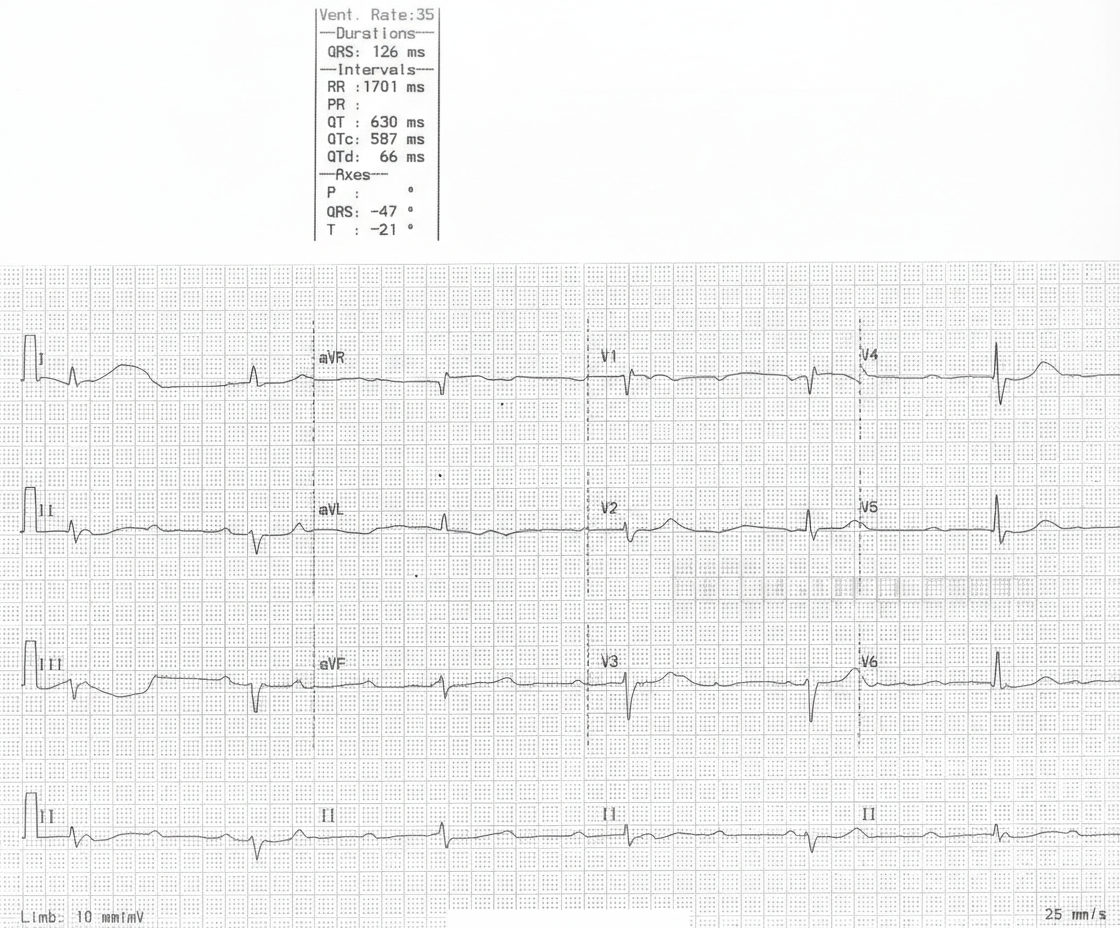
A 58-year-old man presents to the emergency department for evaluation of intermittent chest pain over the past 6 months. His history reveals that he has had moderate exertional dyspnea and 2 episodes of syncope while working at his factory job. These episodes of syncope were witnessed by others and lasted roughly 30 seconds. The patient states that he did not have any seizure activity. His vital signs include: blood pressure 121/89 mm Hg, heart rate 89/min, temperature 37.0°C (98.6°F), and respiratory rate 16/min. Physical examination reveals a crescendo-decrescendo systolic murmur in the right second intercostal area. An electrocardiogram is performed, which shows left ventricular hypertrophy. Which of the following is the best next step for this patient?
Q1202
An 82-year-old comes to the physician for a routine checkup. He feels well. He has a history of hypertension, peripheral vascular disease, carotid stenosis, and mild dementia. His father had Parkinson's disease and died of a stroke at the age of 74 years. He has smoked one-half pack of cigarettes daily for 30 years but quit at the age of 50 years. He drinks alcohol in moderation. Current medications include aspirin and lisinopril. He appears healthy. His temperature is 36.9°C (98.4°F), pulse is 73/min, respirations are 12/min, and blood pressure is 142/92 mmHg. Examination shows decreased pedal pulses bilaterally. Ankle jerk and patellar reflexes are absent bilaterally. Sensation to light touch, pinprick, and proprioception is intact bilaterally. Muscle strength is 5/5 bilaterally. He describes the town he grew up in with detail but only recalls one of three words after 5 minutes. Which of the following is the most appropriate next step in management for these findings?
Q1203
A 48-year-old female complains of tingling sensation in her fingertips as well as the skin around her mouth which woke her up from sleep. She is in the postoperative floor as she just underwent a complete thyroidectomy for papillary thyroid cancer. Her temperature is 37° C (98.6° F), respirations are 15/min, pulse is 67/min, and blood pressure is 122/88 mm Hg. While recording the blood pressure, spasm of the muscles of the hand and forearm is seen. What is the next best step in the management of this patient?
Q1204
A 65-year-old man presents to his primary care physician for a pre-operative evaluation. He is scheduled for cataract surgery in 3 weeks. His past medical history is notable for diabetes, hypertension, and severe osteoarthritis of the right knee. His medications include metformin, hydrochlorothiazide, lisinopril, and aspirin. His surgeon ordered blood work 1 month ago, which showed a hemoglobin of 14.2 g/dL, INR of 1.2, and a hemoglobin A1c of 6.9%. His vital signs at the time of the visit show BP: 130/70 mmHg, Pulse: 80, RR: 12, and T: 37.2 C. He has no current complaints and is eager for his surgery. Which of the following is the most appropriate course of action for this patient at this time?
Q1205
A 34-year-old Caucasian female presents at the ER with fever and sharp pain in her chest upon coughing and inhalation. Three weeks earlier she presented to her rheumatologist with a butterfly rash, joint pain and fatigue and was given a diagnosis of systemic lupus erythematosus. A friction rub is present upon physical exam. Which of the following do you most suspect in this patient?
Q1206
A 52-year-old man presents to the emergency department because of pain and swelling in his left leg over the past few hours. He traveled from Sydney to Los Angeles 2 days ago. He has had type 2 diabetes mellitus for 10 years and takes metformin for it. He has smoked a pack of cigarettes daily for 25 years. His temperature is 36.9°C (98.4°F), the blood pressure is 140/90 mm Hg, and the pulse is 90/min. On examination, the left calf is 5 cm greater in circumference than the right. The left leg appears more erythematous than the right with dilated superficial veins. Venous duplex ultrasound shows non-compressibility. Which of the following best represents the mechanism of this patient’s illness?
Q1207
A 53-year-old man is brought to the emergency department following an episode of loss of consciousness 1 hour ago. He had just finished micturating, when he fell down. His wife heard the noise and found him unconscious on the floor. He regained consciousness after 30 seconds and was able to talk normally with his wife immediately. There was no urinary incontinence. On arrival, he is alert and oriented. Cardiopulmonary examination shows no abnormalities. Neurologic examination shows no focal findings. Serum concentrations of glucose, creatinine, and electrolytes are within the reference range. An electrocardiogram shows no abnormalities. Which of the following is the most likely diagnosis?
Q1208
A 35-year-old woman with type 1 diabetes mellitus comes to the emergency department for evaluation of a 1-month history of fever, fatigue, loss of appetite, and a 3.6-kg (8-lb) weight loss. She has also had a cough for the last 2 months. She reports recent loss of pubic hair. The patient immigrated from the Philippines 7 weeks ago. Her mother has systemic lupus erythematosus. She has never smoked and does not drink alcohol. Her only medication is insulin, but she sometimes misses doses. She is 165 cm (5 ft 5 in) tall and weighs 49 kg (108 lb); BMI is 18 kg/m2. She appears lethargic. Her temperature is 38.9°C (102°F), pulse is 58/min, and blood pressure is 90/60 mm Hg. Examination shows decreased sensation to touch and vibration over both feet. The remainder of the examination shows no abnormalities. Serum studies show:
Na+ 122 mEq/L
Cl- 100 mEq/L
K+ 5.8 mEq/L
Glucose 172 mg/dL
Albumin 2.8 g/dL
Cortisol 2.5 μg/dL
ACTH 531.2 pg/mL (N=5–27 pg/mL)
CT scan of the abdomen with contrast shows bilateral adrenal enlargement. Which of the following is the most likely underlying mechanism of this patient's symptoms?
Q1209
A 47-year-old female with a history of hypertension presents to your outpatient clinic for numbness, tingling in her right hand that has been slowly worsening over the last several months. She has tried using a splint but receives minimal relief. She is an analyst for a large consulting firm and spends most of her workday in front of a computer. Upon examination, you noticed that the patient has a prominent jaw and her hands appear disproportionately large. Her temperature is 99 deg F (37.2 deg C), blood pressure is 154/72 mmHg, pulse is 87/min, respirations are 12/min. A fasting basic metabolic panel shows: Na: 138 mEq/L, K: 4.1 mEq/L, Cl: 103 mEq/L, CO2: 24 mEq/L, BUN: 12 mg/dL, Cr: 0.8 mg/dL, Glucose: 163 mg/dL. Which of the following tests would be most helpful in identifying the underlying diagnosis?
Q1210
A 71-year-old man comes to the emergency department because of a 2-month history of severe muscle cramps and back pain. He says that he is homeless and has not visited a physician in the past 20 years. He is 183 cm (6 ft 0 in) tall and weighs 62 kg (137 lb); BMI is 18.5 kg/m2. His blood pressure is 154/88 mm Hg. Physical examination shows pallor, multiple cutaneous excoriations, and decreased sensation over the lower extremities. Serum studies show:
Calcium 7.2 mg/dL
Phosphorus 5.1 mg/dL
Glucose 221 mg/dL
Creatinine 4.5 mg/dL
An x-ray of the spine shows alternating sclerotic and radiolucent bands in the lumbar and thoracic vertebral bodies. Which of the following is the most likely explanation for these findings?
Cardiology US Medical PG Practice Questions and MCQs
Question 1201: A 58-year-old man presents to the emergency department for evaluation of intermittent chest pain over the past 6 months. His history reveals that he has had moderate exertional dyspnea and 2 episodes of syncope while working at his factory job. These episodes of syncope were witnessed by others and lasted roughly 30 seconds. The patient states that he did not have any seizure activity. His vital signs include: blood pressure 121/89 mm Hg, heart rate 89/min, temperature 37.0°C (98.6°F), and respiratory rate 16/min. Physical examination reveals a crescendo-decrescendo systolic murmur in the right second intercostal area. An electrocardiogram is performed, which shows left ventricular hypertrophy. Which of the following is the best next step for this patient?
A. Transthoracic echocardiography (Correct Answer)
B. Chest radiograph
C. Computed tomography (CT) chest scan without contrast
D. Cardiac chamber catheterization
E. Transesophageal echocardiography
Explanation: ***Transthoracic echocardiography***
- The patient's symptoms (chest pain, exertional dyspnea, syncope) and physical exam findings (**crescendo-decrescendo systolic murmur at the right second intercostal space**, ECG showing **left ventricular hypertrophy**) are highly suggestive of **aortic stenosis**.
- **Transthoracic echocardiography** is the gold standard for diagnosing and assessing the severity of valvular heart diseases like aortic stenosis, quantifying valve area, pressure gradients, and ventricular function.
*Chest radiograph*
- A chest radiograph provides information about lung fields, cardiac size, and aortic calcification, but it cannot directly visualize or assess the function of heart valves.
- While it may show signs of heart failure (e.g., **pulmonary congestion**) or **cardiomegaly**, it is insufficient for a definitive diagnosis or severity assessment of valvular lesions.
*Computed tomography (CT) chest scan without contrast*
- A CT scan can detect calcification of the aortic valve, but it is not the primary imaging modality for assessing valvular function or the severity of stenotic lesions.
- CT is more useful for evaluating the **aorta for aneurysm** or dissection, or for **pulmonary pathology**, neither of which is the most likely diagnosis given the presenting symptoms.
*Cardiac chamber catheterization*
- Cardiac catheterization is an **invasive procedure** that is typically reserved for cases where non-invasive imaging is inconclusive or when planning for intervention (e.g., prior to valve replacement).
- It involves risks and is not the initial best step for diagnosis when a less invasive and highly informative test like echocardiography is available.
*Transesophageal echocardiography*
- **Transesophageal echocardiography (TEE)** provides more detailed images of the heart and valves compared to TTE because it avoids acoustic shadowing from the ribs and lungs.
- However, TEE is more invasive than TTE and is usually reserved for situations where TTE is inadequate or when a higher resolution view is needed, such as for infective endocarditis, prosthetic valve dysfunction, or before/during surgical procedures.
Question 1202: An 82-year-old comes to the physician for a routine checkup. He feels well. He has a history of hypertension, peripheral vascular disease, carotid stenosis, and mild dementia. His father had Parkinson's disease and died of a stroke at the age of 74 years. He has smoked one-half pack of cigarettes daily for 30 years but quit at the age of 50 years. He drinks alcohol in moderation. Current medications include aspirin and lisinopril. He appears healthy. His temperature is 36.9°C (98.4°F), pulse is 73/min, respirations are 12/min, and blood pressure is 142/92 mmHg. Examination shows decreased pedal pulses bilaterally. Ankle jerk and patellar reflexes are absent bilaterally. Sensation to light touch, pinprick, and proprioception is intact bilaterally. Muscle strength is 5/5 bilaterally. He describes the town he grew up in with detail but only recalls one of three words after 5 minutes. Which of the following is the most appropriate next step in management for these findings?
A. Lumbar puncture
B. Prescribe thiamine supplementation
C. CT scan of the head
D. Carbidopa-levodopa
E. No further workup required (Correct Answer)
Explanation: ***No further workup required***
- The patient's **depressed ankle and patellar reflexes** are common in **elderly patients** and can be part of normal aging, especially given his history of **peripheral vascular disease**.
- His memory impairment, specifically the inability to recall three words after 5 minutes while retaining detailed long-term memories, is consistent with his **known mild dementia** and represents expected age-related cognitive changes that do not require additional workup in an otherwise stable, well-functioning individual.
*Lumbar puncture*
- A lumbar puncture is an **invasive procedure** typically reserved for investigating suspected **meningitis**, **encephalitis**, **subarachnoid hemorrhage**, or certain **neurological disorders** not suggested by this patient's presentation.
- There are no signs of acute infection, inflammation, or rapidly progressing neurological decline to warrant an immediate lumbar puncture.
*Prescribe thiamine supplementation*
- **Thiamine supplementation** is primarily indicated for patients with suspected **Wernicke-Korsakoff syndrome** due to chronic alcohol abuse or severe malnutrition.
- This patient reports moderate alcohol use and shows no other signs of thiamine deficiency, such as **ataxia**, **ophthalmoplegia**, or **confusion** typical of Wernicke encephalopathy.
*CT scan of the head*
- A CT scan of the head is typically indicated for acute neurological changes like **stroke symptoms**, **severe headaches with focal deficits**, or to evaluate for **hydrocephalus** or **brain tumors**.
- While the patient has a history of mild dementia, his current cognitive findings are mild and stable, making an immediate CT scan unnecessary for routine follow-up in the absence of acute changes.
*Carbidopa-levodopa*
- **Carbidopa-levodopa** is a treatment for **Parkinson's disease**, characterized by specific motor symptoms like **bradykinesia**, **rigidity**, **tremor**, and **postural instability**.
- This patient does not exhibit any signs of Parkinson's disease, and his father's history of the disease does not automatically warrant treatment in an asymptomatic individual.
Question 1203: A 48-year-old female complains of tingling sensation in her fingertips as well as the skin around her mouth which woke her up from sleep. She is in the postoperative floor as she just underwent a complete thyroidectomy for papillary thyroid cancer. Her temperature is 37° C (98.6° F), respirations are 15/min, pulse is 67/min, and blood pressure is 122/88 mm Hg. While recording the blood pressure, spasm of the muscles of the hand and forearm is seen. What is the next best step in the management of this patient?
A. No treatment is necessary, this is expected following surgery
B. Magnesium replacement
C. Albumin infusion
D. Calcium replacement (Correct Answer)
E. Propylthiouracil
Explanation: ***Calcium replacement***
- The patient's symptoms of **perioral tingling**, **fingertip paresthesias**, and **carpopedal spasm** (Chvostek's or Trousseau's sign when blood pressure cuff is inflated) are classic signs of **hypocalcemia**, a common complication following total thyroidectomy due to inadvertent parathyroid gland removal or damage.
- **Immediate calcium replacement** is crucial to prevent life-threatening complications such as laryngospasm and cardiac arrhythmias.
*No treatment is necessary, this is expected following surgery*
- While potential complications can arise after surgery, **symptomatic hypocalcemia** is not an expected or benign finding and requires prompt intervention.
- Ignoring these symptoms could lead to severe consequences, including **respiratory distress** and **cardiac arrest**.
*Magnesium replacement*
- Although **hypomagnesemia** can sometimes cause symptoms similar to hypocalcemia or exacerbate it, the classic presentation described here points primarily to calcium deficiency.
- While magnesium levels should be checked if calcium replacement is not fully effective, **calcium replacement** is the immediate priority for symptomatic hypocalcemia.
*Albumin infusion*
- **Albumin infusion** is primarily used to address low serum albumin levels, typically in states of significant fluid shifts, malnutrition, or ascites, to help maintain oncotic pressure.
- There is no indication of hypoalbuminemia or related issues in this patient's presentation; it would not address the underlying hypocalcemia.
*Propylthiouracil*
- **Propylthiouracil (PTU)** is an antithyroid medication used to treat hyperthyroidism by inhibiting thyroid hormone synthesis.
- The patient has just undergone a **total thyroidectomy** and has symptoms of **hypocalcemia**, not hyperthyroidism; therefore, PTU is completely inappropriate.
Question 1204: A 65-year-old man presents to his primary care physician for a pre-operative evaluation. He is scheduled for cataract surgery in 3 weeks. His past medical history is notable for diabetes, hypertension, and severe osteoarthritis of the right knee. His medications include metformin, hydrochlorothiazide, lisinopril, and aspirin. His surgeon ordered blood work 1 month ago, which showed a hemoglobin of 14.2 g/dL, INR of 1.2, and a hemoglobin A1c of 6.9%. His vital signs at the time of the visit show BP: 130/70 mmHg, Pulse: 80, RR: 12, and T: 37.2 C. He has no current complaints and is eager for his surgery. Which of the following is the most appropriate course of action for this patient at this time?
A. Tell the patient he will have to delay his surgery for at least 1 year
B. Medically clear the patient for surgery (Correct Answer)
C. Repeat the patient's CBC and coagulation studies
D. Schedule the patient for a stress test and ask him to delay surgery for at least 6 months
E. Perform an EKG
Explanation: **Medically clear the patient for surgery**
- The patient's **blood pressure is well-controlled** (130/70 mmHg), and his **hemoglobin A1c of 6.9%** indicates good glycemic control, both of which are favorable for elective surgery.
- He is currently on **aspirin**, which, for cataract surgery (a low-risk bleeding procedure), can generally be continued, and his **INR of 1.2 is within a safe range** for surgery.
*Tell the patient he will have to delay his surgery for at least 1 year*
- There are **no indications for such a prolonged delay** based on the provided clinical information.
- His chronic conditions (diabetes, hypertension) are **adequately managed**, and his lab values are acceptable.
*Repeat the patient's CBC and coagulation studies*
- The **existing blood work from 1 month ago is recent enough** for a pre-operative evaluation for cataract surgery, especially with no new symptoms.
- Repeating these tests without a clinical indication would be **unnecessary and inefficient**.
*Schedule the patient for a stress test and ask him to delay surgery for at least 6 months*
- The patient has **no active cardiac symptoms** (e.g., chest pain, shortness of breath), and his well-controlled hypertension does not automatically warrant a stress test for low-risk surgery.
- A stress test and a **6-month delay are not indicated** for a low-risk procedure like cataract surgery in an asymptomatic patient.
*Perform an EKG*
- While an EKG might be considered in some pre-operative evaluations for patients with cardiac risk factors, there are **no specific symptoms or significant new risk factors** presented that necessitate an EKG for this low-risk cataract surgery.
- Given his stable condition and controlled hypertension, an EKG is **not a mandatory part of medical clearance** for this procedure.
Question 1205: A 34-year-old Caucasian female presents at the ER with fever and sharp pain in her chest upon coughing and inhalation. Three weeks earlier she presented to her rheumatologist with a butterfly rash, joint pain and fatigue and was given a diagnosis of systemic lupus erythematosus. A friction rub is present upon physical exam. Which of the following do you most suspect in this patient?
A. Pericardial tamponade
B. Pericarditis (Correct Answer)
C. Acute myocardial infarction
D. Pulmonary hypertension
E. Interstitial lung disease
Explanation: ***Pericarditis***
- The patient's symptoms of **sharp chest pain** worsened by coughing and inhalation, along with a **friction rub** upon examination, are classic signs of pericarditis.
- Her recent diagnosis of **systemic lupus erythematosus (SLE)** makes pericarditis a highly suspect complication, as SLE can affect the pericardium.
*Pericardial tamponade*
- While pericarditis can lead to tamponade, the clinical presentation here (chest pain, friction rub) more strongly points to **inflammation of the pericardium** rather than the signs of **hemodynamic compromise** seen in tamponade (e.g., muffled heart sounds, hypotension, jugular venous distention).
- There are no specific signs of **Beck's triad** (hypotension, muffled heart sounds, JVD) which would indicate tamponade.
*Acute myocardial infarction*
- The described **sharp chest pain worsened by inspiration and coughing** is atypical for myocardial infarction, which usually involves crushing or pressure-like pain.
- The presence of a **friction rub** is highly characteristic of pericarditis, not an MI.
*Pulmonary hypertension*
- Pulmonary hypertension typically presents with **dyspnea, fatigue, and signs of right-sided heart failure**, none of which are highlighted in this patient's acute presentation.
- **Chest pain** in pulmonary hypertension is usually exertion-related or due to right ventricular ischemia, not pleuritic.
*Interstitial lung disease*
- Interstitial lung disease primarily causes **progressive dyspnea and cough**, often with crackles on auscultation.
- The acute, pleuritic chest pain and **friction rub** are not characteristic findings of interstitial lung disease.
Question 1206: A 52-year-old man presents to the emergency department because of pain and swelling in his left leg over the past few hours. He traveled from Sydney to Los Angeles 2 days ago. He has had type 2 diabetes mellitus for 10 years and takes metformin for it. He has smoked a pack of cigarettes daily for 25 years. His temperature is 36.9°C (98.4°F), the blood pressure is 140/90 mm Hg, and the pulse is 90/min. On examination, the left calf is 5 cm greater in circumference than the right. The left leg appears more erythematous than the right with dilated superficial veins. Venous duplex ultrasound shows non-compressibility. Which of the following best represents the mechanism of this patient’s illness?
A. Impaired venous blood flow (Correct Answer)
B. Subcutaneous soft-tissue infection that may extend to the deep fascia
C. Infection of the dermis and subcutaneous tissues
D. Impaired arterial blood flow
E. Impaired lymphatic flow
Explanation: ***Impaired venous blood flow***
- The patient's symptoms (unilateral leg pain and swelling, erythema, dilated superficial veins, recent long-haul travel) and the **venous duplex ultrasound** finding of **non-compressibility** are highly indicative of **deep vein thrombosis (DVT)**, which results from impaired venous outflow.
- Risk factors such as **long-haul travel** (venous stasis), **smoking** (endothelial damage), and potentially **diabetes** contribute to a hypercoagulable state.
*Impaired lymphatic flow*
- This typically presents as **lymphedema**, characterized by chronic, often pitting edema, and skin changes like thickening (peau d'orange), but usually without acute erythema or dilated superficial veins in this context.
- **Venous duplex ultrasound** would not show non-compressibility in cases of impaired lymphatic flow, as veins themselves would be clear.
*Subcutaneous soft-tissue infection that may extend to the deep fascia*
- This describes **necrotizing fasciitis**, a severe infection often characterized by rapid progression, severe pain disproportionate to examination findings, blistering, and systemic toxicity, which are not clearly evident here.
- While there is erythema, the key diagnostic finding is the **non-compressible vein**, not signs of crepitus or rapidly spreading infection.
*Infection of the dermis and subcutaneous tissues*
- This describes **cellulitis**, which presents with localized redness, warmth, swelling, and tenderness, often with an entry point.
- While some symptoms overlap (erythema, swelling), the **venous duplex ultrasound finding of non-compressibility** definitively points away from a simple skin infection and towards a vascular obstruction.
*Impaired arterial blood flow*
- This presents as **acute limb ischemia**, characterized by the "6 Ps": pain, pallor, pulselessness, paresthesias, poikilothermia (coldness), and paralysis.
- The patient's leg is swollen and erythematous, not pale and cold, and the ultrasound directly implicates venous rather than arterial occlusion.
Question 1207: A 53-year-old man is brought to the emergency department following an episode of loss of consciousness 1 hour ago. He had just finished micturating, when he fell down. His wife heard the noise and found him unconscious on the floor. He regained consciousness after 30 seconds and was able to talk normally with his wife immediately. There was no urinary incontinence. On arrival, he is alert and oriented. Cardiopulmonary examination shows no abnormalities. Neurologic examination shows no focal findings. Serum concentrations of glucose, creatinine, and electrolytes are within the reference range. An electrocardiogram shows no abnormalities. Which of the following is the most likely diagnosis?
A. Emotional syncope
B. Situational syncope (Correct Answer)
C. Cardiovascular syncope
D. Arrhythmogenic syncope
E. Neurocardiogenic syncope
Explanation: ***Situational syncope***
- The episode of **loss of consciousness** occurred immediately after **micturition**, which is a classic trigger for situational syncope.
- The rapid recovery, absence of focal neurological deficits, and normal workup findings support a **vasovagal reflex** triggered by specific physiological stresses.
*Emotional syncope*
- This typically occurs in response to **fear, pain, or emotional distress**, none of which are explicitly mentioned as triggers in this case.
- While emotional factors can sometimes contribute to vasovagal responses, the direct temporal association with micturition points more specifically to situational syncope.
*Cardiovascular syncope*
- **Cardiac syncope** is often associated with underlying structural heart disease (e.g., valvular stenosis, cardiomyopathy) or significant arrhythmias.
- The patient's normal **cardiopulmonary examination** and **normal electrocardiogram** make a primary cardiac cause less likely.
*Arrhythmogenic syncope*
- This type of syncope is caused by **cardiac arrhythmias**, leading to transient cerebral hypoperfusion.
- The normal **electrocardiogram** and absence of any reported palpitations or pre-syncopal symptoms suggesting an arrhythmia make this diagnosis less probable.
*Neurocardiogenic syncope*
- While **situational syncope** is a subtype of **neurocardiogenic syncope** (also known as vasovagal syncope), situational syncope (like micturition syncope) describes the specific triggering event.
- **Neurocardiogenic syncope** is a broader category, and since a specific trigger is identified, the more precise term is situational (micturition) syncope.
Question 1208: A 35-year-old woman with type 1 diabetes mellitus comes to the emergency department for evaluation of a 1-month history of fever, fatigue, loss of appetite, and a 3.6-kg (8-lb) weight loss. She has also had a cough for the last 2 months. She reports recent loss of pubic hair. The patient immigrated from the Philippines 7 weeks ago. Her mother has systemic lupus erythematosus. She has never smoked and does not drink alcohol. Her only medication is insulin, but she sometimes misses doses. She is 165 cm (5 ft 5 in) tall and weighs 49 kg (108 lb); BMI is 18 kg/m2. She appears lethargic. Her temperature is 38.9°C (102°F), pulse is 58/min, and blood pressure is 90/60 mm Hg. Examination shows decreased sensation to touch and vibration over both feet. The remainder of the examination shows no abnormalities. Serum studies show:
Na+ 122 mEq/L
Cl- 100 mEq/L
K+ 5.8 mEq/L
Glucose 172 mg/dL
Albumin 2.8 g/dL
Cortisol 2.5 μg/dL
ACTH 531.2 pg/mL (N=5–27 pg/mL)
CT scan of the abdomen with contrast shows bilateral adrenal enlargement. Which of the following is the most likely underlying mechanism of this patient's symptoms?
A. Infection with acid-fast bacilli (Correct Answer)
B. Adrenal infarction
C. Pituitary tumor
D. Autoimmune adrenalitis
E. Adrenal hemorrhage
Explanation: ***Infection with acid-fast bacilli***
- The patient's symptoms (fever, weight loss, cough, fatigue, low blood pressure, hyponatremia, hyperkalemia, low cortisol, elevated ACTH, and **bilateral adrenal enlargement**) are highly suggestive of **primary adrenal insufficiency** with an infectious etiology.
- Given her recent immigration from the **Philippines** (an endemic area for tuberculosis), the prolonged cough (2 months), and **bilateral adrenal enlargement**, **adrenal tuberculosis caused by acid-fast bacilli** is the most likely diagnosis.
- Adrenal TB is the most common cause of adrenal insufficiency in developing countries and causes adrenal enlargement (unlike autoimmune causes which cause atrophy).
*Adrenal infarction*
- Adrenal infarction typically presents with **acute, severe flank pain** and rapid onset of adrenal insufficiency, which does not match the patient's **subacute presentation over 1-2 months**.
- While it can cause bilateral adrenal damage, it is not associated with a prolonged cough, fever, or history from a TB-endemic area.
*Pituitary tumor*
- A pituitary tumor causing adrenal insufficiency (secondary adrenal insufficiency) would lead to **low ACTH levels**, whereas this patient has markedly **elevated ACTH (531.2 pg/mL)**, indicating a primary adrenal problem.
- A pituitary tumor would not explain the bilateral adrenal enlargement or the constitutional symptoms like cough, fever, and weight loss.
*Autoimmune adrenalitis*
- While autoimmune adrenalitis is the most common cause of **primary adrenal insufficiency** in developed countries, it typically causes **adrenal atrophy rather than enlargement**.
- The patient's country of origin, prolonged cough, fever, and **adrenal enlargement** point more strongly towards an infectious cause like tuberculosis.
*Adrenal hemorrhage*
- Adrenal hemorrhage usually presents as an **acute, life-threatening event** with sudden onset of severe abdominal or flank pain and rapid hemodynamic collapse.
- It often occurs in settings of **sepsis, anticoagulant use, trauma, or stress**, none of which are described in this patient's subacute presentation over months.
Question 1209: A 47-year-old female with a history of hypertension presents to your outpatient clinic for numbness, tingling in her right hand that has been slowly worsening over the last several months. She has tried using a splint but receives minimal relief. She is an analyst for a large consulting firm and spends most of her workday in front of a computer. Upon examination, you noticed that the patient has a prominent jaw and her hands appear disproportionately large. Her temperature is 99 deg F (37.2 deg C), blood pressure is 154/72 mmHg, pulse is 87/min, respirations are 12/min. A fasting basic metabolic panel shows: Na: 138 mEq/L, K: 4.1 mEq/L, Cl: 103 mEq/L, CO2: 24 mEq/L, BUN: 12 mg/dL, Cr: 0.8 mg/dL, Glucose: 163 mg/dL. Which of the following tests would be most helpful in identifying the underlying diagnosis?
A. Measurement of insulin-like growth factor 1 and growth hormone levels after oral glucose (Correct Answer)
B. Measurement of serum morning cortisol levels and dexamethasone suppression test
C. Measurement of thyroid stimulating hormone
D. Measurement of insulin-like growth factor 1 levels alone
E. Measurement of serum growth hormone alone
Explanation: ***Measurement of insulin-like growth factor 1 and growth hormone levels after oral glucose***
- This combination is the **most definitive diagnostic test for acromegaly**, as it assesses both the baseline levels of IGF-1 (a stable indicator of GH activity) and the failure of GH to suppress after glucose administration.
- The patient's symptoms of **prominent jaw (prognathism)**, **disproportionately large hands**, **numbness/tingling in the hand (carpal tunnel syndrome)**, **hypertension**, and **elevated fasting glucose** are highly suggestive of acromegaly.
*Measurement of serum morning cortisol levels and dexamethasone suppression test*
- This is used to diagnose **Cushing's syndrome**, which involves cortisol excess. While Cushing's can present with hypertension and glucose intolerance, the physical exam findings of a prominent jaw and large hands are not typical.
- The patient shows no other classic signs of Cushing's like central obesity, striae, or facial plethora.
*Measurement of thyroid stimulating hormone*
- This test is used to assess **thyroid function (e.g., hypothyroidism or hyperthyroidism)**. While thyroid dysfunction can cause some non-specific symptoms, it does not explain the characteristic physical findings of acromegaly such as a prominent jaw and large hands.
- Carpal tunnel syndrome can be seen in hypothyroidism but without the other classic features of acromegaly.
*Measurement of insulin-like growth factor 1 levels alone*
- While **elevated IGF-1 is a key diagnostic indicator for acromegaly**, it is not as definitive as combining it with the oral glucose tolerance test.
- IGF-1 can be influenced by other factors (e.g., liver disease, malnutrition), and a confirmatory test using GH suppression is crucial.
*Measurement of serum growth hormone alone*
- A single measurement of **serum GH is generally not sufficient for diagnosing acromegaly** due to its pulsatile secretion, which can lead to fluctuating levels even in healthy individuals.
- The **oral glucose tolerance test (OGTT)** is essential to confirm the lack of GH suppression, which is pathognomonic for acromegaly.
Question 1210: A 71-year-old man comes to the emergency department because of a 2-month history of severe muscle cramps and back pain. He says that he is homeless and has not visited a physician in the past 20 years. He is 183 cm (6 ft 0 in) tall and weighs 62 kg (137 lb); BMI is 18.5 kg/m2. His blood pressure is 154/88 mm Hg. Physical examination shows pallor, multiple cutaneous excoriations, and decreased sensation over the lower extremities. Serum studies show:
Calcium 7.2 mg/dL
Phosphorus 5.1 mg/dL
Glucose 221 mg/dL
Creatinine 4.5 mg/dL
An x-ray of the spine shows alternating sclerotic and radiolucent bands in the lumbar and thoracic vertebral bodies. Which of the following is the most likely explanation for these findings?
A. Primary hypoparathyroidism
B. Secondary hyperparathyroidism (Correct Answer)
C. Multiple myeloma
D. Pseudohypoparathyroidism
E. Tertiary hyperparathyroidism
Explanation: ***Secondary hyperparathyroidism***
- This patient presents with **hypocalcemia** (7.2 mg/dL) and **hyperphosphatemia** (5.1 mg/dL) in the context of **renal insufficiency** (creatinine 4.5 mg/dL), which are hallmarks of chronic kidney disease (CKD).
- **Secondary hyperparathyroidism** is a common complication of CKD, where the parathyroid glands overproduce PTH in response to low serum calcium and impaired phosphate excretion, leading to characteristic bone changes like **osteomalacia** and **osteitis fibrosa**, which can manifest as alternating sclerotic and radiolucent bands on X-ray (rugger-jersey spine).
*Primary hypoparathyroidism*
- This condition is characterized by **low PTH**, leading to both **hypocalcemia** and **hyperphosphatemia**.
- However, it would not typically present with the severe **renal insufficiency** seen in this patient, and the bone changes would differ.
*Multiple myeloma*
- Multiple myeloma is a plasma cell malignancy that often causes **hypercalcemia** due to bone destruction.
- It would not typically present with **hypocalcemia** and hyperphosphatemia, nor would it cause the specific rugger-jersey spine appearance (alternating sclerotic and radiolucent bands).
*Pseudohypoparathyroidism*
- This is a rare genetic disorder where target tissues are resistant to PTH, resulting in **hypocalcemia** and **hyperphosphatemia** despite **high PTH levels**.
- While it shares some lab findings, it is typically diagnosed in childhood and often associated with specific physical features (e.g., short stature, brachydactyly), which are not mentioned.
*Tertiary hyperparathyroidism*
- This condition develops in patients with long-standing **secondary hyperparathyroidism** where the parathyroid glands become autonomous, leading to **hypercalcemia** and **hyperphosphatemia** or normal phosphate levels.
- The patient's **hypocalcemia** makes tertiary hyperparathyroidism unlikely, as it typically involves elevated calcium levels due to uncontrolled PTH secretion.