
Adult congenital heart disease — MCQs

A 27-year-old woman, who recently immigrated from Bangladesh, presents to her primary care physician to discuss birth control. During a review of her past medical history, she reports that as a child she had a recurrent sore throat and fever followed by swollen and aching hip and knee joints. These symptoms returned every season and were never treated but went away on their own only to return with the next typhoon season. When asked about any current complaints, the patient says that she sometimes has shortness of breath and palpitations that do not last long. A physical exam is performed. In which of the auscultation sites will a murmur most likely be heard in this patient?
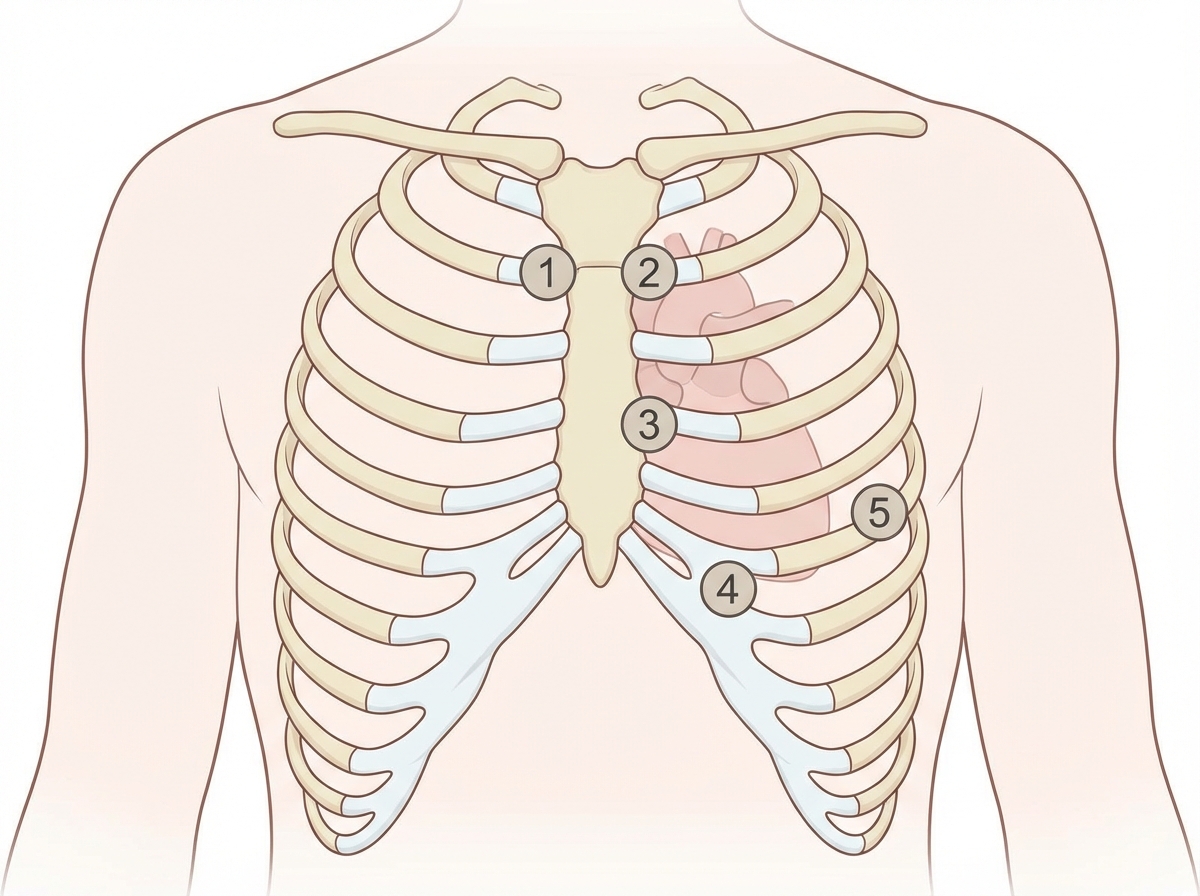
A 21-year-old Cambodian patient with a history of rheumatic heart disease presents to his primary care physician for a routine check-up. He reports being compliant with monthly penicillin G injections since being diagnosed with rheumatic fever at age 15. He denies any major side effects from the treatment, except for the inconvenience of organizing transportation to a physician's office every month. On exam, the patient is found to have a loud first heart sound and a mid-diastolic rumble that is best heard at the apex. Which of the following is the next best step?
A 4-year-old Caucasian male suffers from cyanosis and dyspnea relieved by squatting. Which of the following abnormalities is most likely present?
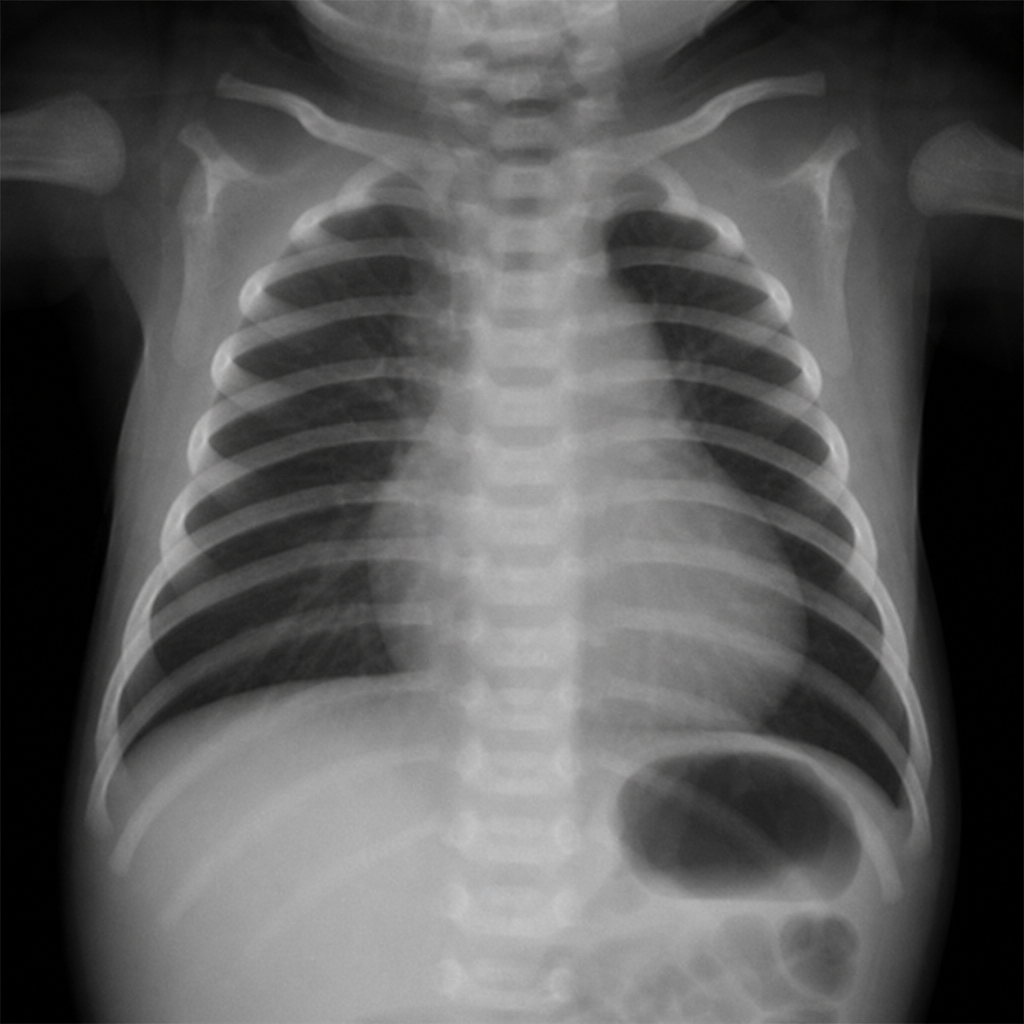
A 1-day-old infant born at full term by uncomplicated spontaneous vaginal delivery is noted to have cyanosis of the oral mucosa. The baby otherwise appears comfortable. On examination, his respiratory rate is 40/min and pulse oximetry is 80%. His left thumb is displaced and hypoplastic. A right ventricular lift is palpated, S1 is normal, S2 is single, and a harsh 3/6 systolic ejection murmur is heard at the left upper sternal border. Chest X-ray is shown. Which of the following is the most likely diagnosis?
A 7-year-old boy is brought by his parents to his pediatrician due to progressive fatigue and shortness of breath while playing sports. He is otherwise healthy with no known medical disorders and no other symptoms. The boy was born at 39 weeks gestation via spontaneous vaginal delivery. He is up to date on all vaccines and is meeting all developmental milestones. On physical examination, his temperature is 36.9ºC (98.4ºF), pulse rate is 90/min, blood pressure is 100/70 mm Hg, and respiratory rate is 18/min. Pulses in all four extremities are equal and normally palpated; there is no radio-femoral delay. The pediatrician suspects a congenital heart disease after auscultation of the heart. Which of the following congenital heart diseases is most likely to present with the clinical features listed above?
A 3-year-old boy is brought to the physician because of recurrent nosebleeds and fatigue for the past 2 months. He also frequently complains his head hurts. The patient has met all motoric milestones for his age but does not like to run because his legs start to hurt if he does. He is at the 40th percentile for both height and weight. His temperature is 37.0°C (98.6°F), pulse is 125/min, respirations are 32/min, and blood pressure in the right arm is 130/85 mm Hg. A grade 2/6 systolic murmur is heard in the left paravertebral region. Further evaluation of this patient is most likely to show which of the following findings?
A 36-year-old healthy man presents to his physician to discuss his concerns about developing heart disease. His father, grandfather, and older brother had heart problems, and he has become increasingly worried he might be at risk. He takes no medications and his past medical history is only significant for an appendectomy at 20 years ago. He is married happily with 2 young children and works as a hotel manager and exercises occasionally in the hotel gym. He drinks 3–5 alcoholic beverages per week but denies smoking and illicit drug use. Today his blood pressure is 146/96 mm Hg, pulse rate is 80/min, and respiratory rate is 16/min. He has a body mass index of 26.8 kg/m2. His physical examination is otherwise unremarkable. Laboratory tests show: Laboratory test Serum glucose (fasting) 88 mg/dL Serum electrolytes Sodium 142 mEq/L Potassium 3.9 mEq/L Chloride 101 mEq/L Serum creatinine 0.8 mg/dl Blood urea nitrogen 10 mg/dl Cholesterol, total 350 mg/dL HDL-cholesterol 40 mg/dL LDL-cholesterol 280 mg/dL Triglycerides 130 mg/dL Besides appropriate medications for his cholesterol and a follow-up for his hypertension, which of the following supplements is thought to provide a protective cardiovascular effect?
A 20-year-old man comes to the emergency room because of palpitations and mild dyspnea for the last 2 hours. He has had similar episodes in the past that resolved within 20 minutes, but they have been worsening since he started training for his first marathon 1 month ago. Ten years ago, he was treated for streptococcal pharyngitis with a 10-day course of penicillin. His maternal uncle passed away unexpectedly from a heart condition at age 40. He is 180 cm (5 ft 11 in) tall and weighs 85 kg (187 lb); BMI is 26.2 kg/m2. His temperature is 36.5°C (97.7°F), pulse is 70/min, respirations are 18/min, and blood pressure is 132/60 mm Hg. On examination, there is a decrescendo early diastolic murmur heard best along the left sternal border. His head slightly bobs about every second. The remainder of the examination shows no abnormalities. Which of the following is most likely to be present?
A 68-year-old man is brought to the emergency department because of right-sided weakness for 2 hours. He has hypertension, dyslipidemia, and type 2 diabetes. Current medications include hydrochlorothiazide, metoprolol, amlodipine, pravastatin, and metformin. His pulse is 87/min and blood pressure is 164/98 mm Hg. Neurological examination shows right-sided weakness, facial droop, and hyperreflexia. Sensation is intact. Which of the following is the most likely cause of these findings?
A 14-year-old boy is brought to the emergency department from school after falling in gym class. He was unable to stand after the accident and has a painful and swollen knee. On presentation he says that he has never had an incident like this before; however, he does suffer from hard to control nosebleeds and prolonged bleeding after minor cuts. Based on his presentation a panel of bleeding tests is obtained with the following results: Bleeding time: Prolonged Prothrombin time: Normal Partial thromboplastin time: Prolonged Which of the following describes the function of the component that is defective in the most likely cause of this patient's symptoms?
Want unlimited practice?
Get full access to all questions, explanations, and performance tracking.
Scan to download app