Anesthesiology
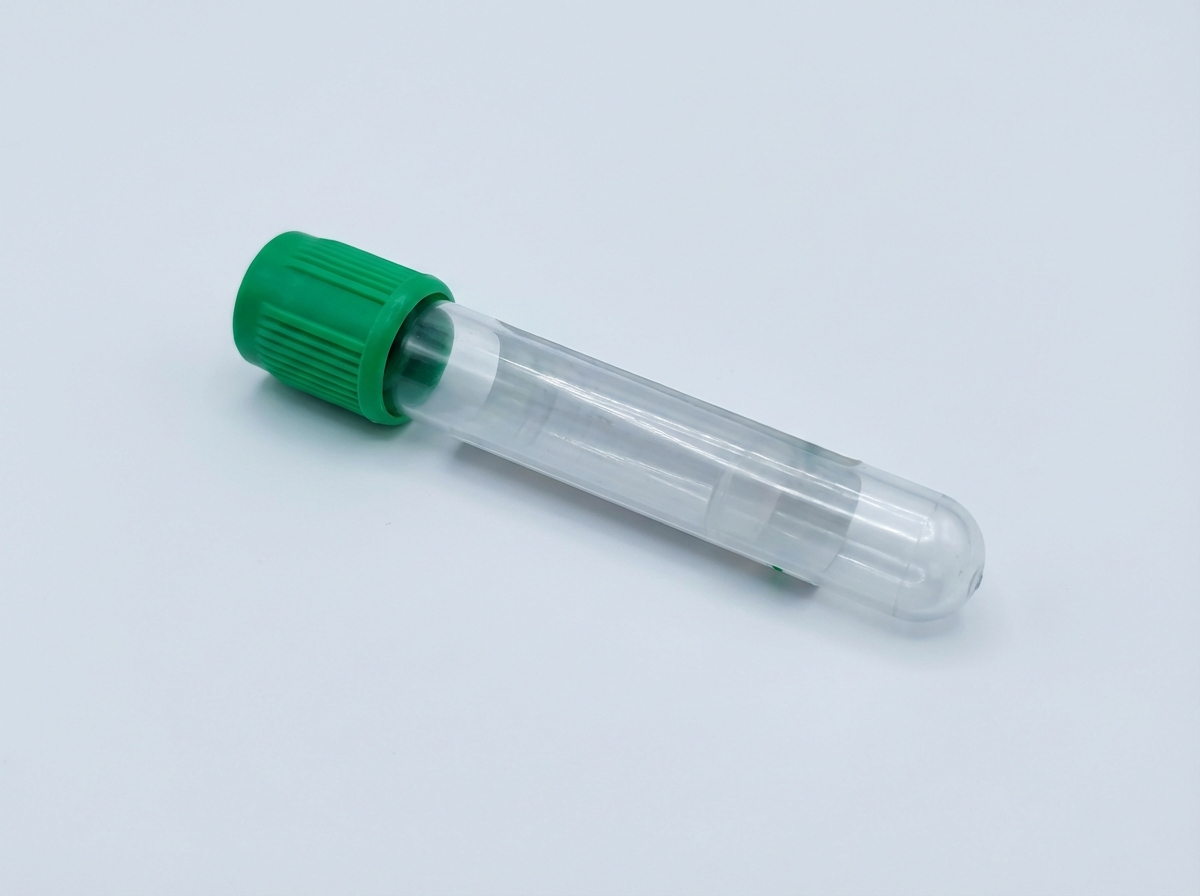
1 questionsWhich is not true regarding the procedure done with the needle shown below?

INI-CET 2017 - Anesthesiology INI-CET Practice Questions and MCQs
Question 101: Which is not true regarding the procedure done with the needle shown below?
- A. Breath holding is not necessary (Correct Answer)
- B. Bevel should be facing upwards while inserting the needle
- C. To be done in lateral recumbent position
- D. Coagulopathy is not an absolute contraindication
Explanation: ***Breath holding is not necessary*** - This statement is **FALSE** - breath holding **IS necessary** during lumbar puncture to maximize **opening pressure** measurement and reduce **CSF pressure variations**. - Patients are typically instructed to hold their breath in **expiration** to minimize movement artifacts and obtain accurate pressure readings. *Coagulopathy is not an absolute contraindication* - This statement is **TRUE** - coagulopathy is considered a **relative contraindication**, not an absolute one for lumbar puncture. - The procedure can often be performed safely after **correcting clotting abnormalities** or with careful risk-benefit assessment and meticulous technique. *Bevel should be facing upwards while inserting the needle* - This statement is **TRUE** - the needle should be inserted with the **bevel facing upwards** (or laterally in lateral position) to minimize **dural trauma**. - This orientation allows dural fibers to **spread rather than cut**, reducing the risk of **post-dural puncture headache (PDPH)**. *To be done in lateral recumbent position* - This statement is **TRUE** - **lateral recumbent position** is one of the standard positions for lumbar puncture, especially for measuring **opening pressure** accurately. - Alternative **sitting position** may be used for obese patients or those with difficult anatomical landmarks, but lateral recumbent remains a correct approach.
Physiology
3 questionsThere are two blood vessels shown below. Assuming that pressure along both the vessels is same and both of them follow linear flow pattern, what will be the amount of blood flow in A compared to B?

A patient has a blood glucose level of $200 \mathrm{mg} \%$ and GFR of 90. The transport maximum of the patient is as shown in the picture given below. What is the amount of glucose excreted?

Calculate the FEV1/FVC ratio from the spirometry reading shown below.

INI-CET 2017 - Physiology INI-CET Practice Questions and MCQs
Question 101: There are two blood vessels shown below. Assuming that pressure along both the vessels is same and both of them follow linear flow pattern, what will be the amount of blood flow in A compared to B?
- A. 4 times
- B. 8 times
- C. 16 times
- D. 32 times (Correct Answer)
Explanation: ***32 times*** - According to **Poiseuille-Hagen equation**: Q = (ΔP × π × r⁴) / (8 × η × L), where flow is directly proportional to the fourth power of radius and inversely proportional to vessel length. - From the diagram: Vessel A has diameter 2D and length 2L, while Vessel B has diameter d and length l. - **Key interpretation**: For the answer to be 32 times, the diameter of A must be twice that of B (radius_A = 2r), while the length of A is half that of B (length_A = L/2). - **Calculation**: - Q_A ∝ (2r)⁴ / (L/2) = 16r⁴ × 2/L = 32r⁴/L - Q_B ∝ r⁴ / L - **Q_A/Q_B = 32** - This demonstrates the **powerful effect of radius** (fourth power relationship) combined with **inverse length relationship** on blood flow. - **Clinical relevance**: Small changes in vessel diameter cause dramatic changes in blood flow, which is why vasoconstriction/vasodilation are potent mechanisms for regulating tissue perfusion. *Incorrect Option: 4 times* - Would require a different radius-to-length ratio than what's given in the problem. *Incorrect Option: 8 times* - This would result if diameter of A is 2× that of B AND length of A is also 2× that of B (not half). - Calculation: (2r)⁴/(2L) ÷ (r⁴/L) = 16r⁴/2L ÷ r⁴/L = 8 *Incorrect Option: 16 times* - This would occur if radius of A is 2× that of B but both vessels have the same length. - Calculation: (2r)⁴/L ÷ (r⁴/L) = 16
Question 102: A patient has a blood glucose level of $200 \mathrm{mg} \%$ and GFR of 90. The transport maximum of the patient is as shown in the picture given below. What is the amount of glucose excreted?
- A. 30 mg/min (Correct Answer)
- B. 50 mg/min
- C. 90 mg/min
- D. 180 mg/min
Explanation: ***30 mg/min*** - The amount of **glucose filtered** by the kidneys is calculated as GFR × plasma glucose concentration, which is 90 mL/min × 2 mg/mL = **180 mg/min**. - The **transport maximum (Tm)** for glucose is 150 mg/min, meaning the kidneys can reabsorb a maximum of 150 mg/min of glucose per minute. - Since more glucose is filtered (180 mg/min) than can be reabsorbed (150 mg/min), the excess is excreted in urine. - **Glucose excreted** = Filtered - Reabsorbed = 180 mg/min - 150 mg/min = **30 mg/min**. *Incorrect: 50 mg/min* - This would be incorrect as it doesn't match the calculation based on the given values. *Incorrect: 90 mg/min* - This represents the GFR value, not the amount of glucose excreted. *Incorrect: 180 mg/min* - This represents the total amount of glucose filtered, not the amount excreted after reabsorption.
Question 103: Calculate the FEV1/FVC ratio from the spirometry reading shown below.
- A. 60-69 %
- B. 70-79 %
- C. 80-89 % (Correct Answer)
- D. 90-99 %
Explanation: ***80-89 %*** - **Normal FEV1/FVC ratio is >70% in adults, with healthy individuals typically showing 80-90%.** - From the spirometry graph, the total vital capacity (FVC) after full exhalation is approximately **4500 mL**. The volume exhaled in the first second (FEV1) is approximately **4000 mL**. - Therefore, FEV1/FVC = (4000 mL / 4500 mL) × 100% = **88.8%**. This falls within the 80-89% range, indicating **normal lung function**. *60-69 %* - This percentage indicates **severe airflow obstruction**, where the FEV1 is significantly reduced relative to the FVC, which is not supported by the graph's values of **FEV1 ~4000 mL** and **FVC ~4500 mL**. - A ratio of 60-69% is seen in **moderate to severe obstructive lung disease** (COPD, severe asthma). *70-79 %* - This range suggests **mild airflow obstruction**, corresponding to an **FEV1/FVC ratio** that is borderline or slightly reduced (below the normal 80% threshold but above the diagnostic cutoff for obstruction at 70%). - While less severe than 60-69%, it still implies some degree of airway limitation, which is not the case with the calculated ratio of 88.8%. *90-99 %* - This percentage implies an **FEV1/FVC ratio** of 0.9 or higher, meaning that nearly all of the vital capacity is exhaled in the first second. While **88.8%** is close to this range, it does not fall within it. - A ratio this high might be seen in individuals with **excellent lung function** or paradoxically in some cases of **restrictive lung disease** where both FEV1 and FVC are proportionally reduced, but the exact calculated value from the graph is 88.8%, which falls just below 90%.