What is the pathognomonic feature of Alport syndrome?
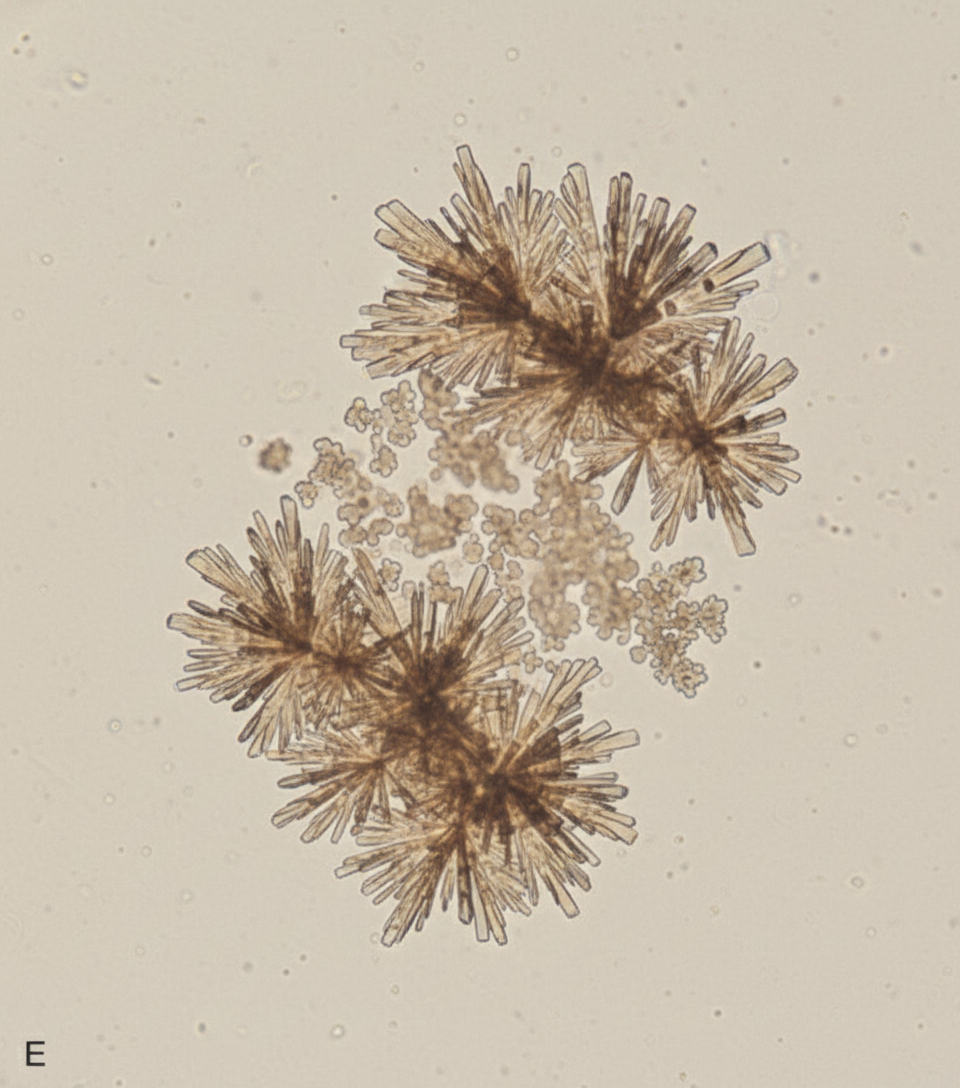
Which is the most likely source of Red Blood Cell (RBC) casts in a urinalysis?
All are true about post-streptococcal glomerulonephritis except?
A large kidney is seen in all of the following conditions, except?
Papillary necrosis is seen in all of the following conditions except:
A 2-year-old child with leukemia develops nephrotic syndrome. Light microscopic studies are normal. Electron microscopic studies demonstrate fusion of epithelial foot processes. What is the current hypothesis for the pathogenesis of this change?
Contracted kidneys are seen in all of the following conditions except?
All of the following are true of Benign nephrosclerosis except?
All of the following about Xanthogranulomatous pyelonephritis is true EXCEPT?
Which of the following is NOT true about membranous glomerulonephritis?
Explanation: **Explanation:** Alport Syndrome is a hereditary nephritis caused by mutations in the genes encoding the **α-chains of Type IV collagen** (most commonly *COL4A5*), which is a crucial structural component of basement membranes in the kidney, eye, and cochlea [1]. **Why Option A is Correct:** While hematuria is the most common presenting symptom [1], **Anterior Lenticonus** (a cone-shaped protrusion of the lens surface into the anterior chamber) is considered the **pathognomonic** clinical feature. It occurs in approximately 15–25% of patients and is virtually diagnostic of Alport syndrome. The combination of persistent microscopic/gross hematuria and lenticonus strongly confirms the diagnosis. **Analysis of Incorrect Options:** * **Option B & C:** While **Sensorineural Hearing Loss (SNHL)** is a classic part of the Alport triad (alongside renal failure and ocular defects), it is not pathognomonic [1]. SNHL can be found in many other genetic syndromes and environmental conditions. * **Option D:** Hyperextensibility of joints is characteristic of connective tissue disorders like Ehlers-Danlos Syndrome, not Alport syndrome. **High-Yield Clinical Pearls for NEET-PG:** * **Inheritance:** Most common is **X-linked Dominant** (85%) [1]. * **Electron Microscopy (EM):** The classic finding is the **"Basket-weave appearance"** due to irregular thinning and thickening of the Glomerular Basement Membrane (GBM) with splitting of the lamina densa. * **The Triad:** 1. Progressive Hematuria/Renal failure, 2. Sensorineural deafness, 3. Ocular abnormalities (Lenticonus, maculopathy). * **Differential:** Thin Basement Membrane Lesion (Benign Familial Hematuria) shows only diffuse thinning of the GBM without the "basket-weave" pattern or extra-renal features [1]. **References:** [1] Kumar V, Abbas AK, et al.. Robbins and Cotran Pathologic Basis of Disease. 9th ed. The Kidney, pp. 929-930.
Explanation: **Explanation:** The presence of **Red Blood Cell (RBC) casts** in urine is a pathognomonic finding for **glomerular bleeding** [1] or inflammation within the nephron. **Why the Kidney is the correct source:** Casts are cylindrical structures formed exclusively in the **distal convoluted tubules and collecting ducts** of the kidney. They are composed of a matrix of **Tamm-Horsfall mucoprotein** (secreted by the thick ascending limb). When RBCs leak through a damaged glomerular basement membrane (as seen in Glomerulonephritis), they become trapped within this protein matrix as it solidifies [1]. Because this molding process only occurs within the renal tubules, the presence of RBC casts localizes the source of hematuria to the renal parenchyma (specifically the glomeruli). **Why other options are incorrect:** * **Ureter, Bladder, and Urethra:** These represent the lower urinary tract. While bleeding from these sites (due to stones, trauma, or malignancy) causes hematuria, it will **not** contain casts. This is because the protein matrix required to "mold" the cells into a cast is absent in the lower tract, and the flow dynamics do not allow for cast formation. Hematuria from these sites typically shows "morphic" (normal-shaped) RBCs. **High-Yield Clinical Pearls for NEET-PG:** * **Dysmorphic RBCs (Acanthocytes):** Like RBC casts, these strongly suggest a glomerular origin (e.g., Post-streptococcal Glomerulonephritis). * **WBC Casts:** Suggest Pyelonephritis or Tubulointerstitial nephritis. * **Fatty Casts ("Maltese cross"):** Characteristic of Nephrotic Syndrome. * **Broad, Waxy Casts:** Seen in Chronic Renal Failure (due to dilated, sluggish tubules). **References:** [1] Cross SS. Underwood's Pathology: A Clinical Approach. 6th ed. Common Clinical Problems From Diseases Of The Urinary And Male Genital Tracts, pp. 520-521.
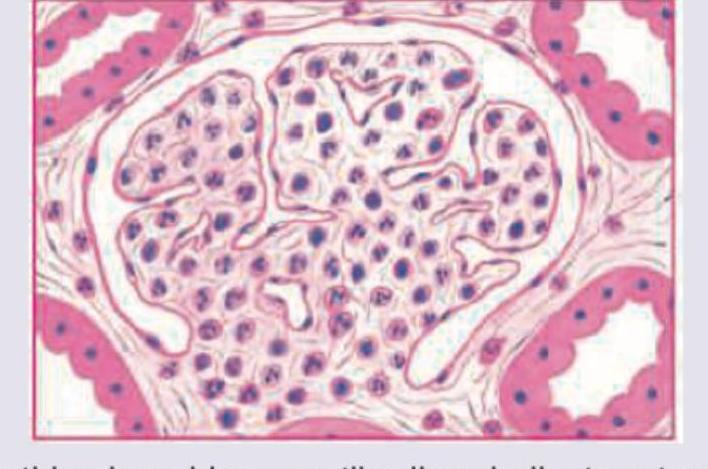
Explanation: **Explanation:** Post-Streptococcal Glomerulonephritis (PSGN) is a classic example of a **Type III hypersensitivity reaction** (immune-complex mediated) occurring 1–4 weeks after a group A streptococcal infection (pharyngitis or impetigo) [1]. **Why Option D is the Correct Answer:** PSGN is characterized by the deposition of **IgG and Complement (C3)** along the glomerular basement membrane [1]. **IgA deposition** is the hallmark of **IgA Nephropathy (Berger’s disease)** or Henoch-Schönlein Purpura, not PSGN. Therefore, Option D is the false statement. **Analysis of Other Options:** * **Option A (Crescent formation):** While PSGN typically presents as a diffuse proliferative glomerulonephritis, severe cases can progress to **Rapidly Progressive Glomerulonephritis (RPGN)**, which is histologically characterized by crescents [1]. * **Option B (Subepithelial deposits):** Electron microscopy (EM) characteristically shows large, "hump-shaped" **subepithelial deposits**, which are immune complexes trapped between the podocytes and the basement membrane [1]. * **Option C (Granular deposits of IgG):** Immunofluorescence (IF) reveals a **"starry sky"** or "lumpy-bumpy" appearance due to the coarse granular deposition of IgG and C3 [1]. **High-Yield Clinical Pearls for NEET-PG:** * **Serology:** Low C3 levels (hypocomplementemia) are diagnostic; levels usually return to normal within 6–8 weeks. ASOT titers are elevated after pharyngitis, while Anti-DNase B is more sensitive after skin infections (impetigo). * **Light Microscopy:** Shows "hypercellular" glomeruli due to infiltration of neutrophils and monocytes (Exudative GN) [1]. * **Prognosis:** Excellent in children (>95% recover completely); more likely to lead to chronic renal failure in adults [1]. **References:** [1] Kumar V, Abbas AK, et al.. Robbins and Cotran Pathologic Basis of Disease. 9th ed. The Kidney, pp. 910-917.
Explanation: ### Explanation The size of the kidney is a crucial diagnostic clue in renal pathology. Most chronic kidney diseases (CKD) lead to shrunken, scarred kidneys; however, certain conditions are classic exceptions where the kidneys remain normal or become enlarged. **Why Benign Nephrosclerosis is the correct answer:** Benign nephrosclerosis occurs due to long-standing, well-controlled hypertension [1]. It leads to **hyaline arteriolosclerosis**, causing chronic ischemia [2]. Over time, this results in cortical atrophy and diffuse scarring, leading to **symmetrically shrunken (small) kidneys** with a characteristic "grainy" or finely granular surface [1]. **Why the other options are incorrect:** * **Amyloidosis:** This is the most common cause of "large pale kidneys." The deposition of amyloid protein in the interstitium and glomeruli increases the organ's bulk and weight [4]. * **Diabetes Mellitus:** In the early stages (hyperfiltration phase), the kidneys enlarge due to hypertrophy and hyperplasia. Even in later stages of diabetic nephropathy, kidneys often remain normal-sized or enlarged rather than shrunken. * **Lymphoma:** Infiltration of the renal parenchyma by malignant lymphoid cells (leukemic or lymphomatous infiltration) causes significant bilateral renal enlargement. **NEET-PG High-Yield Pearls:** * **Mnemonic for Large Kidneys in CKD:** **"A-D-P-L-H"** * **A**myloidosis [4] * **D**iabetes Mellitus * **P**olycystic Kidney Disease (ADPKD) [3] * **L**eukemia/Lymphoma * **H**ydronephrosis / **H**IV-associated nephropathy (HIVAN) * **Small Kidneys:** Seen in Chronic Glomerulonephritis, Chronic Pyelonephritis (asymmetric), and Benign Nephrosclerosis [1]. * **Flea-bitten Kidney:** Seen in Malignant Hypertension (due to petechial hemorrhages), not benign nephrosclerosis. **References:** [1] Kumar V, Abbas AK, et al.. Robbins and Cotran Pathologic Basis of Disease. 9th ed. The Kidney, pp. 943-945. [2] Cross SS. Underwood's Pathology: A Clinical Approach. 6th ed. Common Clinical Problems From Diseases Of The Urinary And Male Genital Tracts, pp. 541-542. [3] Cross SS. Underwood's Pathology: A Clinical Approach. 6th ed. Common Clinical Problems From Diseases Of The Urinary And Male Genital Tracts, pp. 544-545. [4] Kumar V, Abbas AK, et al.. Robbins and Cotran Pathologic Basis of Disease. 9th ed. The Kidney, pp. 942-943.
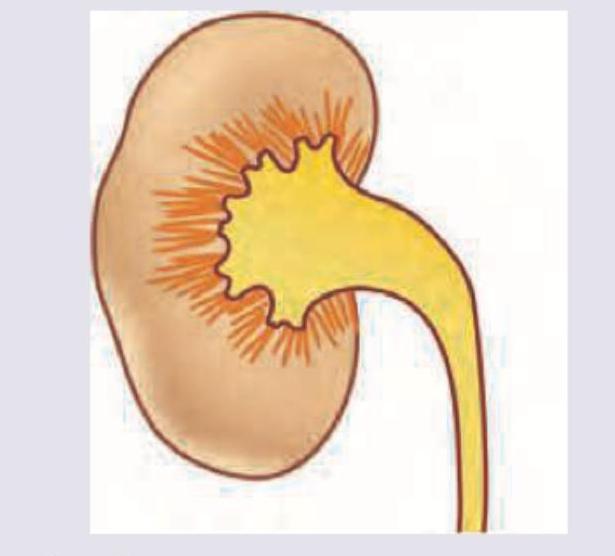
Explanation: **Explanation:** Renal Papillary Necrosis (RPN) is characterized by ischemic necrosis of the renal papillae, which are particularly vulnerable because they represent the "watershed" zone of the kidney with a naturally low oxygen tension. **Why Shock is the correct answer:** In conditions of **Shock**, the primary renal pathology is **Acute Tubular Necrosis (ATN)** [3]. While shock causes systemic hypotension and reduced renal perfusion, it typically affects the metabolically active tubular cells of the cortex and outer medulla first [4]. It does not classically present with isolated papillary necrosis, as the entire kidney suffers global ischemic insult rather than the localized vascular compromise seen in RPN. **Why the other options are incorrect:** * **Diabetes Mellitus:** The most common cause of RPN [1]. It causes microangiopathy (hyaline arteriolosclerosis), which reduces blood flow to the vasa recta, leading to ischemia of the papillae. * **NSAID use (Analgesic Nephropathy):** NSAIDs inhibit prostaglandin synthesis (vasodilators). This leads to vasoconstriction of the vasa recta and direct toxic damage to the medullary cells. * **Sickle cell anemia:** Sickling of RBCs occurs in the hypertonic, hypoxic environment of the renal medulla, leading to micro-infarctions and subsequent necrosis of the papillae [2]. **NEET-PG High-Yield Pearls:** * **Mnemonic for RPN (POSTCARDS):** **P**yelonephritis, **O**bstruction, **S**ickle cell, **T**uberculosis, **C**irrhosis, **A**nalgesics, **R**enal vein thrombosis, **D**iabetes, **S**ystemic vasculitis. * **Clinical Presentation:** Often presents with gross hematuria and "renal colic" as necrotic tissue sloughs off and obstructs the ureter [1]. * **Radiology:** "Ring sign" or "Egg-in-a-cup" appearance on IVP (Intravenous Pyelogram). **References:** [1] Cross SS. Underwood's Pathology: A Clinical Approach. 6th ed. Common Clinical Problems From Diseases Of The Urinary And Male Genital Tracts, pp. 543-544. [2] Kumar V, Abbas AK, et al.. Robbins and Cotran Pathologic Basis of Disease. 9th ed. The Kidney, pp. 948-949. [3] Cross SS. Underwood's Pathology: A Clinical Approach. 6th ed. (Basic Pathology) introduces the student to key general principles of pathology, both as a medical science and as a clinical activity with a vital role in patient care. Part 2 (Disease Mechanisms) provides fundamental knowledge about the cellular and molecular processes involved in diseases, providing the rationale for their treatment. Part 3 (Systematic Pathology) deals in detail with specific diseases, with emphasis on the clinically important aspects., pp. 150-151. [4] Cross SS. Underwood's Pathology: A Clinical Approach. 6th ed. (Basic Pathology) introduces the student to key general principles of pathology, both as a medical science and as a clinical activity with a vital role in patient care. Part 2 (Disease Mechanisms) provides fundamental knowledge about the cellular and molecular processes involved in diseases, providing the rationale for their treatment. Part 3 (Systematic Pathology) deals in detail with specific diseases, with emphasis on the clinically important aspects., pp. 149-150.
Explanation: **Explanation:** The clinical presentation describes a child with **Minimal Change Disease (MCD)**, the most common cause of nephrotic syndrome in children [1]. Characteristically, light microscopy appears normal, while electron microscopy reveals the hallmark **effacement (fusion) of podocyte foot processes** [1]. **Why the Correct Answer (C) is Right:** While MCD is classically considered a "podocytopathy" driven by T-cell dysfunction, recent high-yield research (and specific exam patterns) highlights the role of **immune complex-mediated mechanisms** in certain secondary associations. In the context of malignancies like leukemia or lymphoma, the pathogenesis involves the deposition of circulating immune complexes or antigens that trigger podocyte injury. Furthermore, recent discoveries of **anti-nephrin antibodies** in a subset of MCD patients suggest that the disease can be viewed as an immune-mediated process involving the formation of in-situ immune complexes at the slit diaphragm. **Analysis of Incorrect Options:** * **A. Consumption of complement factors:** This is seen in conditions like Post-Streptococcal Glomerulonephritis (PSGN) or MPGN. MCD typically presents with normal serum complement levels (C3, C4). * **B. IgG directed against basement membrane:** This describes **Goodpasture Syndrome** (Anti-GBM disease), which presents as a nephritic syndrome with linear immunofluorescence, not nephrotic syndrome with normal light microscopy [2]. * **D. Lymphokine production by T cells:** Traditionally, this was the primary hypothesis (Shalhoub hypothesis), suggesting T-cell derived "permeability factors" (like IL-13) cause podocyte injury. While still relevant, current advanced pathology trends often emphasize the broader immune-complex/antibody-mediated pathways in specific clinical scenarios. **NEET-PG High-Yield Pearls:** * **MCD + Hodgkin Lymphoma:** A classic association often tested. * **Drug of Choice:** Steroids (Prednisolone); MCD is highly steroid-responsive [1]. * **Most sensitive finding:** Effacement of foot processes on Electron Microscopy [1]. * **Immunofluorescence:** Typically negative (hence "Minimal Change") [1]. **References:** [1] Kumar V, Abbas AK, et al.. Robbins and Cotran Pathologic Basis of Disease. 9th ed. The Kidney, pp. 927-928. [2] Cross SS. Underwood's Pathology: A Clinical Approach. 6th ed. Common Clinical Problems From Diseases Of The Urinary And Male Genital Tracts, pp. 526-527.
Explanation: **Explanation:** The hallmark of end-stage renal disease (ESRD) is typically **contracted kidneys**, characterized by a reduction in size, loss of parenchyma, and fibrosis [4]. However, **Amyloidosis** is a classic exception to this rule. **Why Amyloidosis is the correct answer:** In Amyloidosis, the kidneys are typically **enlarged, pale, and waxy**. This occurs because the extracellular deposition of amyloid fibrils (AL or AA type) in the glomeruli, tubules, and interstitium physically increases the organ's volume [2]. Even as renal function declines toward failure, the massive proteinaceous infiltration prevents the kidney from shrinking. **Analysis of Incorrect Options:** * **Chronic Glomerulonephritis (CGN):** This is the most common cause of symmetrically contracted kidneys. Chronic inflammation leads to diffuse fibrosis and hyalinization of glomeruli, resulting in a granular cortical surface and reduced size. * **Chronic Renal Failure (CRF):** This is a clinical syndrome representing the end stage of various renal diseases. Most etiologies of CRF (except those listed below) culminate in "End-Stage Contracted Kidneys." * **Analgesic Nephropathy:** This condition causes chronic interstitial nephritis and renal papillary necrosis. The subsequent scarring and atrophy of the medulla and cortex lead to irregularly contracted kidneys. **High-Yield Clinical Pearls for NEET-PG:** * **Large Kidneys in Renal Failure (The "Exceptions"):** 1. Amyloidosis (Most common exam answer) [2] 2. Diabetes Mellitus (Early to mid-stages; may remain normal/large even in late stages) 3. Polycystic Kidney Disease (ADPKD) [3] 4. Multiple Myeloma (Myeloma kidney) [1] 5. Rapidly Progressive Glomerulonephritis (RPGN) 6. Renal Hydronephrosis * **Amyloid Staining:** Remember the **Apple-green birefringence** under polarized light with **Congo Red** stain. **References:** [1] Kumar V, Abbas AK, et al.. Robbins and Cotran Pathologic Basis of Disease. 9th ed. The Kidney, pp. 942-943. [2] Cross SS. Underwood's Pathology: A Clinical Approach. 6th ed. (Basic Pathology) introduces the student to key general principles of pathology, both as a medical science and as a clinical activity with a vital role in patient care. Part 2 (Disease Mechanisms) provides fundamental knowledge about the cellular and molecular processes involved in diseases, providing the rationale for their treatment. Part 3 (Systematic Pathology) deals in detail with specific diseases, with emphasis on the clinically important aspects., pp. 135-136. [3] Cross SS. Underwood's Pathology: A Clinical Approach. 6th ed. Common Clinical Problems From Diseases Of The Urinary And Male Genital Tracts, pp. 544-545. [4] Kumar V, Abbas AK, et al.. Robbins and Cotran Pathologic Basis of Disease. 9th ed. The Kidney, pp. 953-954.
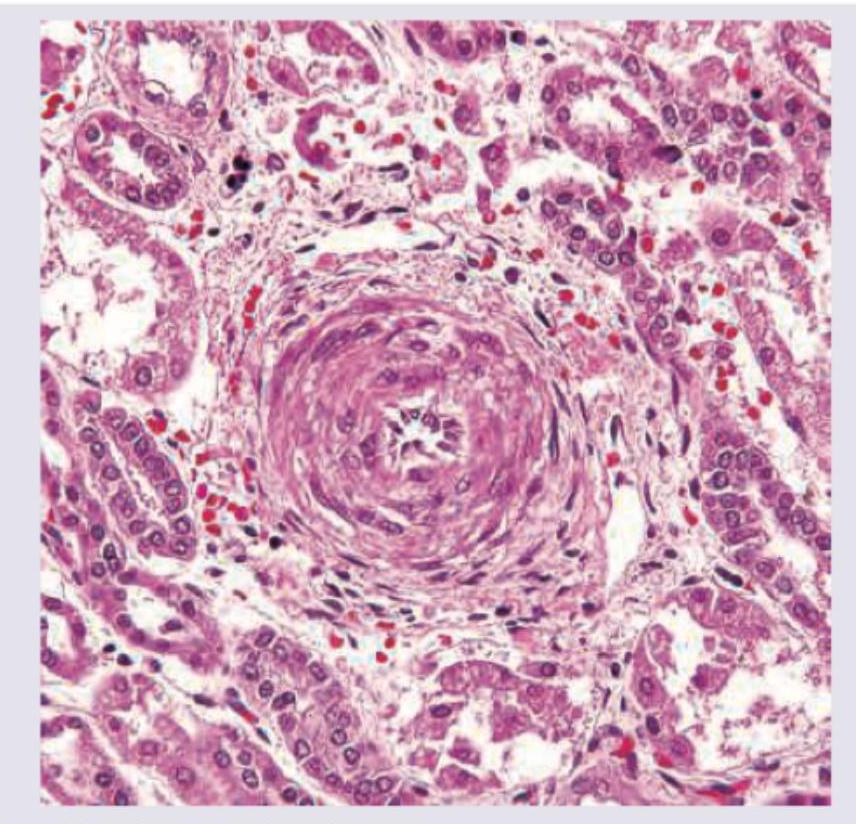
Explanation: Benign nephrosclerosis refers to the renal changes associated with **benign hypertension** [1]. The core concept to understand is the distinction between the vascular changes seen in chronic, stable hypertension versus those seen in acute, malignant hypertension [4]. **Why Option C is the correct answer:** **Hyperplastic arteriolitis** is the hallmark of **Malignant Nephrosclerosis** (associated with hypertensive crisis) [2]. It is characterized by "onion-skin" thickening of the arteriolar walls due to the proliferation of smooth muscle cells and basement membrane duplication [3]. In contrast, benign nephrosclerosis involves hyaline changes, not hyperplastic ones. **Analysis of other options:** * **Option A (Small kidneys with fine granularity):** Chronic ischemia leads to diffuse cortical atrophy [1]. The contraction of fibrous scars between preserved nephrons creates a characteristic **"leather-grain"** appearance (fine granularity) on the subcapsular surface. * **Option B (Hyaline arteriolosclerosis):** This is the classic histological finding in benign nephrosclerosis [1]. Plasma proteins leak across injured endothelium, depositing as homogenous, pink hyaline material that narrows the lumen [2]. * **Option C (Fibroelastic hyperplasia):** This occurs in larger muscular arteries (interlobular and arcuate arteries) [1]. It involves a reduplication of the internal elastic lamina and fibrous thickening of the media. **High-Yield Clinical Pearls for NEET-PG:** * **Benign Nephrosclerosis:** Hyaline arteriolosclerosis + Granular contracted kidney [1]. * **Malignant Nephrosclerosis:** Hyperplastic arteriolitis + Fibrinoid necrosis + "Fleabitten kidney" (petechial hemorrhages) [3]. * **Key Risk Factors:** African American descent and Diabetes Mellitus significantly increase the severity of benign nephrosclerosis. * **Pathogenesis:** The primary mechanism is hemodynamic stress leading to endothelial injury and extravasation of plasma proteins [1]. **References:** [1] Kumar V, Abbas AK, et al.. Robbins and Cotran Pathologic Basis of Disease. 9th ed. The Kidney, pp. 943-945. [2] Kumar V, Abbas AK, et al.. Robbins and Cotran Pathologic Basis of Disease. 9th ed. Diseases of Infancy and Childhood, pp. 498-499. [3] Kumar V, Abbas AK, et al.. Robbins and Cotran Pathologic Basis of Disease. 9th ed. The Kidney, p. 945. [4] Cross SS. Underwood's Pathology: A Clinical Approach. 6th ed. Common Clinical Problems From Diseases Of The Urinary And Male Genital Tracts, pp. 541-542.
Explanation: **Xanthogranulomatous Pyelonephritis (XGP)** is a rare, chronic form of destructive pyelonephritis characterized by the replacement of renal parenchyma with granulomatous tissue containing lipid-laden macrophages [1]. ### **Why Option B is the Correct Answer (The "Except" Statement)** Xanthogranulomatous pyelonephritis is **not** associated with Tuberculosis. It is a chronic inflammatory response to **recurrent bacterial urinary tract infections (UTIs)**, most commonly caused by **Proteus mirabilis** and **Escherichia coli** [1]. In contrast, Renal Tuberculosis is caused by *Mycobacterium tuberculosis* and typically presents with "putty kidney" and caseous necrosis, which is a distinct pathological entity. ### **Analysis of Other Options** * **Option A (Yellowish nodules):** On gross examination, the kidney shows large, orange-yellowish nodules that can mimic Renal Cell Carcinoma (RCC) [1]. This is due to the heavy accumulation of lipids within the inflammatory cells. * **Option C (Foam cells):** The hallmark histological feature of XGP is the presence of **lipid-laden macrophages**, also known as **xanthoma cells** or **foam cells** [1]. * **Option D (Giant cells):** As a chronic granulomatous process, histology reveals a mixture of plasma cells, lymphocytes, and **multinucleated giant cells** surrounding the areas of necrosis [1]. ### **Clinical Pearls for NEET-PG** * **The "Great Mimicker":** XGP is often mistaken for Renal Cell Carcinoma (RCC) radiologically and macroscopically [1]. * **Staghorn Calculus:** It is strongly associated with **obstructive uropathy**, specifically staghorn (struvite) calculi [1]. * **Bear’s Paw Sign:** On CT scan, the replacement of renal parenchyma with low-attenuation areas (representing dilated calyces and inflammatory masses) creates the classic "Bear’s Paw" appearance. * **Demographics:** It is more common in middle-aged females with a history of diabetes or recurrent stones. **References:** [1] Kumar V, Abbas AK, et al.. Robbins and Cotran Pathologic Basis of Disease. 9th ed. The Kidney, pp. 939-940.
Explanation: **Explanation:** Membranous Nephropathy (MGN) is characterized by the formation of **subepithelial deposits** (located between the visceral epithelial cells/podocytes and the glomerular basement membrane), not subendothelial deposits [1]. 1. **Why Option B is correct (The False Statement):** In MGN, immune complexes deposit on the **epithelial side** (subepithelial) of the basement membrane [2]. Deposits located between the endothelium and the basement membrane (subendothelial) are characteristic of **MPGN Type I** or **Lupus Nephritis (Class IV)**, not MGN [3]. 2. **Why Option A is incorrect:** The "membranous" nomenclature refers to the diffuse, uniform **thickening of the glomerular capillary wall/basement membrane** seen on light microscopy, which occurs in response to these deposits [1]. 3. **Why Option C is incorrect:** MGN remains the **most common cause of primary nephrotic syndrome in Caucasian adults** (though Focal Segmental Glomerulosclerosis is increasing in prevalence globally) [1]. 4. **Why Option D is incorrect:** While 75% are idiopathic (linked to **PLA2R antibodies**), secondary MGN is frequently associated with **SLE (Class V)**, solid tumors (lung/colon), infections (Hepatitis B), and drugs (NSAIDs, Penicillamine, Gold) [1]. **High-Yield Clinical Pearls for NEET-PG:** * **Silver Stain (Jones):** Shows a characteristic **"Spike and Dome"** pattern (spikes of basement membrane protruding between deposits) [2]. * **Immunofluorescence:** Shows a **granular** pattern of IgG and C3 [2]. * **Electron Microscopy:** The gold standard for identifying the subepithelial location of deposits [2]. * **Primary MGN Marker:** Antibodies against the **Phospholipase A2 Receptor (PLA2R)** are highly specific. **References:** [1] Kumar V, Abbas AK, et al.. Robbins and Cotran Pathologic Basis of Disease. 9th ed. The Kidney, pp. 919-921. [2] Kumar V, Abbas AK, et al.. Robbins and Cotran Pathologic Basis of Disease. 9th ed. The Kidney, p. 921. [3] Kumar V, Abbas AK, et al.. Robbins and Cotran Pathologic Basis of Disease. 9th ed. The Kidney, pp. 925-926.
Congenital Anomalies of the Kidney
Practice Questions
Glomerular Diseases
Practice Questions
Tubular and Interstitial Diseases
Practice Questions
Vascular Diseases of the Kidney
Practice Questions
Cystic Diseases of the Kidney
Practice Questions
Urinary Tract Obstruction and Stones
Practice Questions
Renal Tumors
Practice Questions
Kidney in Systemic Diseases
Practice Questions
Renal Transplantation Pathology
Practice Questions
Urinary Tract Infections
Practice Questions
Get full access to all questions, explanations, and performance tracking.
Start For Free