
Cystic Diseases of the Kidney — MCQs

A 45-year-old patient presents with hypertension, hematuria, and flank pain. An MRI scan is performed, and the image provided shows multiple cystic lesions in both kidneys. What is the most likely diagnosis?
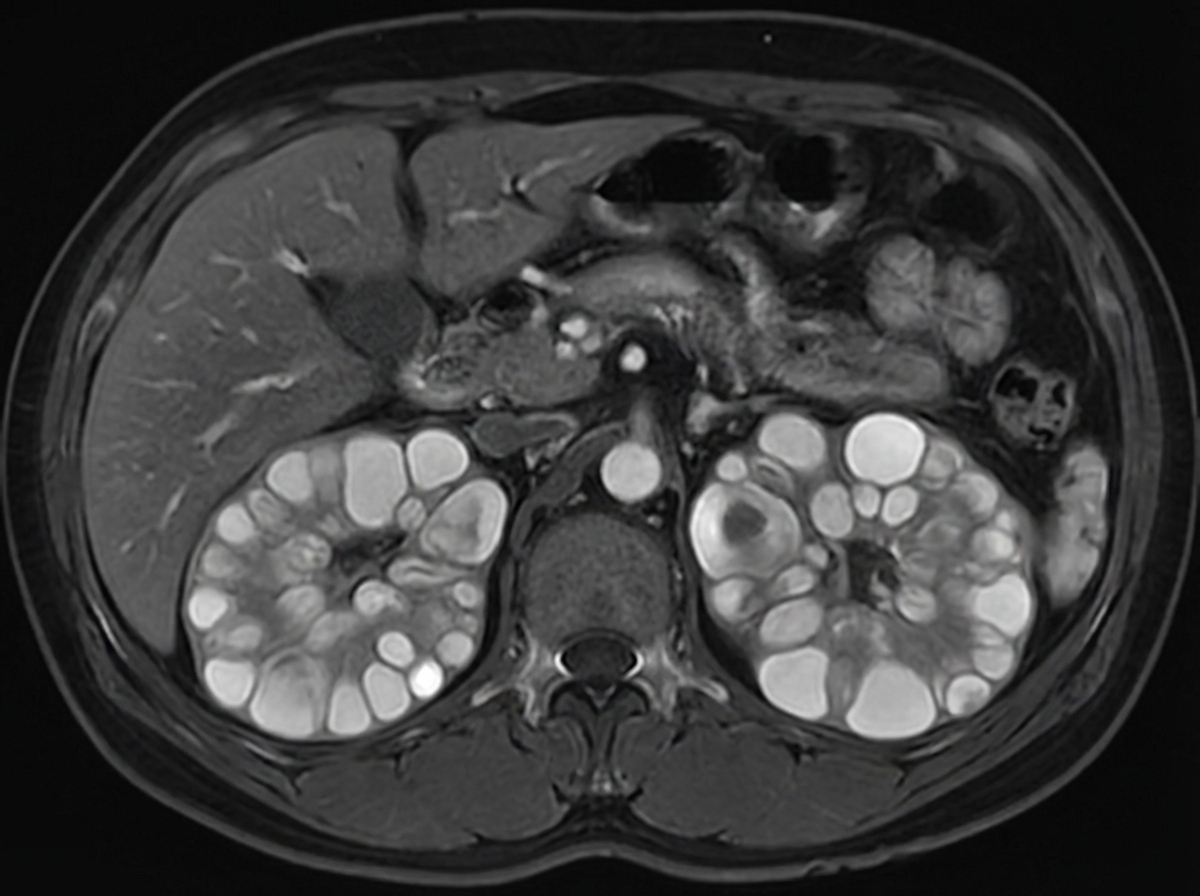
An 8 years old child suffering from recurrent attacks of polyuria since childhood presents to the pediatrics OPD. On examination, the child has short stature. Vitals and B.P. are normal. S. Creatinine - 6 mg/dL, HCO3 - 16 meq/L, S Na+ - 134 meq/L. On USG, bilateral small kidneys are seen. Diagnosis is:
Chromosomes associated with autosomal dominant polycystic kidney disease (ADPKD).
Baby born at 30 weeks to an 18-year-old primigravida weighing 2 kg, who died after 48 hours, with Apgar scores of 5 and 8 at 1 and 5 minutes, respectively. On autopsy, bilateral enlarged kidneys with multiple radially arranged cysts were found. Which of the following findings is expected to be associated with this?
A 40-year-old man with a known case of hypertension presented with multiple episodes of hematuria and loin pain. His elder brother passed away due to a stroke at the age of 40. What is the probable diagnosis based on the clinical presentation?
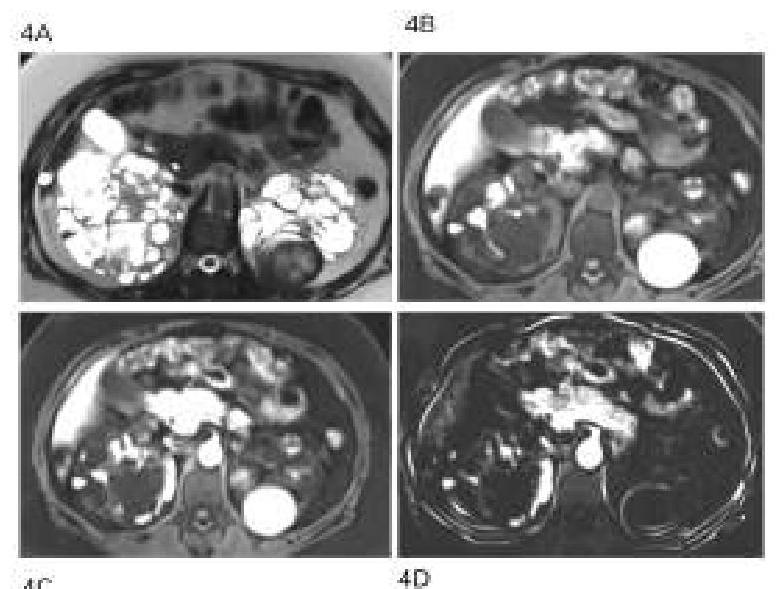
A 45-year-old patient presented with vague abdominal pain. On USG, he was found to have a renal cyst of Bosniak class III. CECT was done, as shown below. What imaging modality is shown?
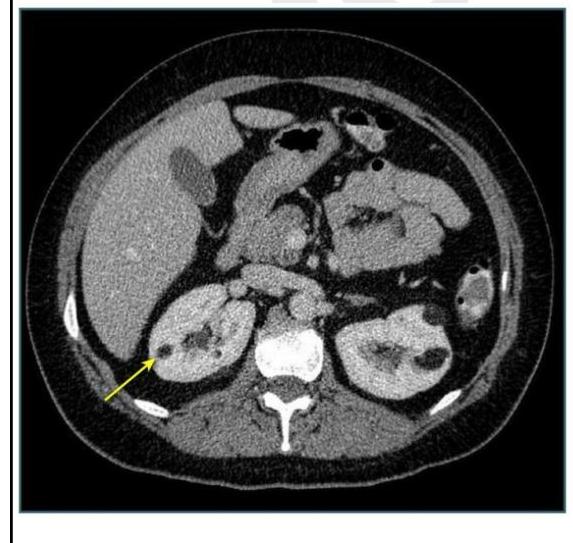
All the following are features of Polycystic disease of kidneys EXCEPT:
IgA nephropathy is not associated with which of the following?
A 7 year old boy presented with generalized edema. Urine examination revealed marked albuminuria. Serum biochemical examinations showed hypoalbuminemia with hyperlipidemia. Kidney biopsy was undertaken. On light microscopic examination, the kidney appeared normal. Electron microscopic examination is most likely to reveal
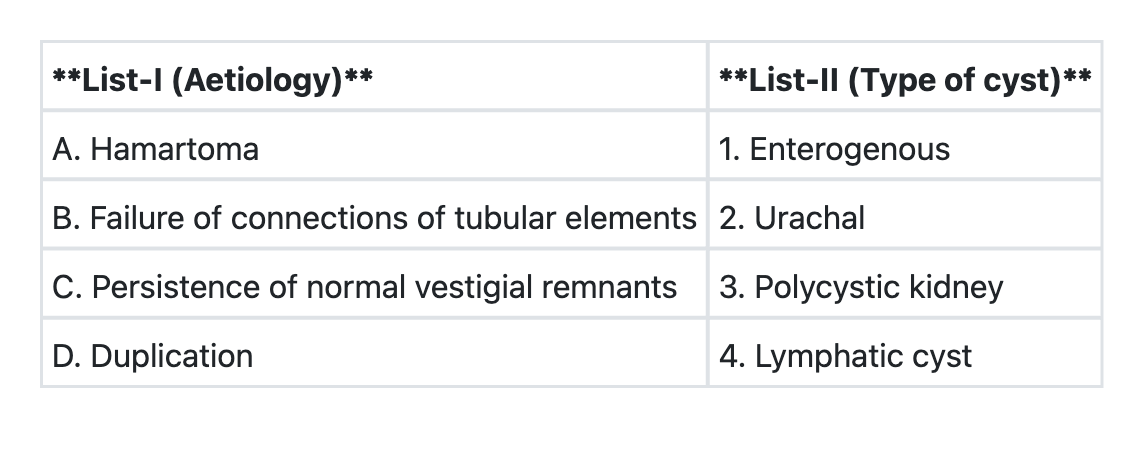
Match List-I with List-II and select the correct answer using the code given below the Lists:
Want unlimited practice?
Get full access to all questions, explanations, and performance tracking.
Scan to download app